School camera installation in Delaware for K‑12 campus security
Share
Delaware K‑12 leaders are under pressure to strengthen campus security while protecting student privacy and staying within tight budgets. Thoughtful school camera installation in Delaware for K‑12 campus security can dramatically improve situational awareness, response time, and deterrence—if it is designed and implemented correctly for local regulations, campus layouts, and community expectations. If you’re planning a new system or upgrading dated cameras, share your campus map and safety priorities and we can help you outline a practical, district-ready plan you can take to your board or security vendor.
K‑12 school security challenges and risks in Delaware
Delaware K‑12 schools face a familiar but serious mix of safety risks: unauthorized visitors, student altercations, vaping and contraband in restrooms or remote areas, vehicle incidents at drop‑off zones, and the low‑probability but high‑impact threat of targeted violence. Many buildings are older, with add‑ons and portable classrooms that create blind spots and inconsistent security practices between wings or campuses.
Administrators also have to balance community concerns. Parents want their children protected, but they are wary of creating a “surveillance culture.” Staff worry about cameras being used for micromanagement rather than genuine safety. That tension means camera projects can stall unless they are clearly tied to specific risks and supported by well‑defined policies.
Common Delaware‑specific challenges include multiple entry points in older urban schools, large parking lots at suburban campuses with poor nighttime visibility, and shared athletic fields or playgrounds that sit close to public streets. Without a well‑planned camera system, administrators often only know what happened after the fact—if at all.
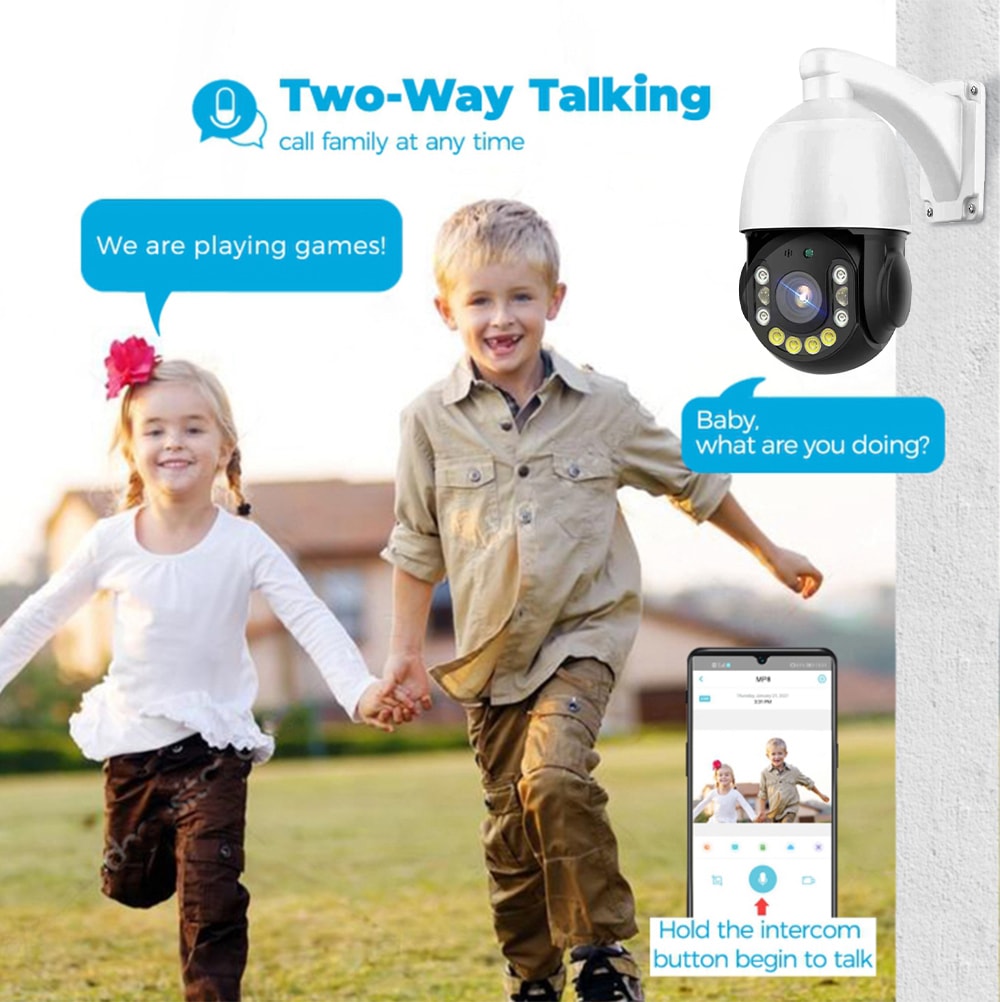
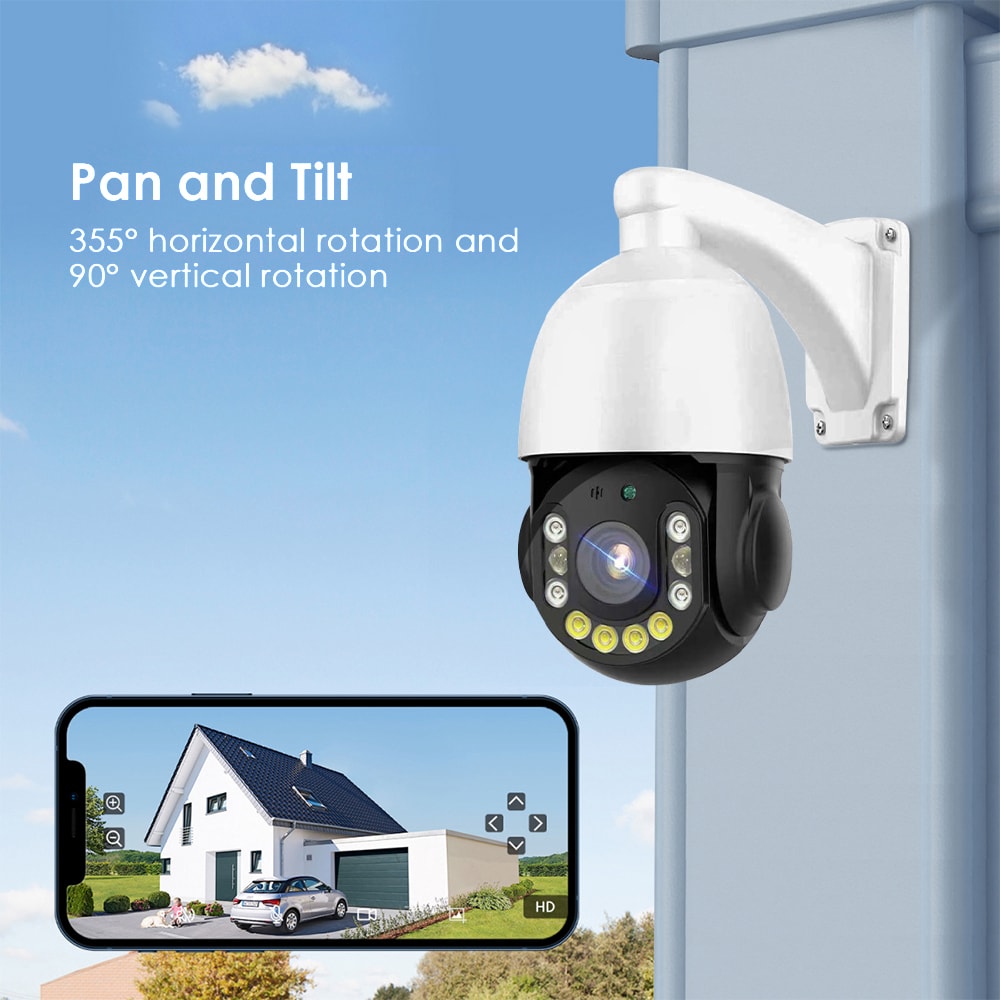
A modern school camera installation in Delaware for K‑12 campus security addresses these issues by focusing on prevention, rapid incident verification, and evidence collection, not constant monitoring of every student movement. That requires a mix of fixed and PTZ (pan‑tilt‑zoom) cameras, adequate lighting, carefully designed retention policies, and clear communication with the school community.
Delaware school camera solutions for full‑campus visibility
Achieving full‑campus visibility is less about “more cameras everywhere” and more about “the right cameras in the right places, tied into the right systems.” A Delaware K‑12 campus needs a layered approach that protects building perimeters, main circulation paths, and high‑risk areas such as entrances, cafeterias, stairwells, and parking lots.
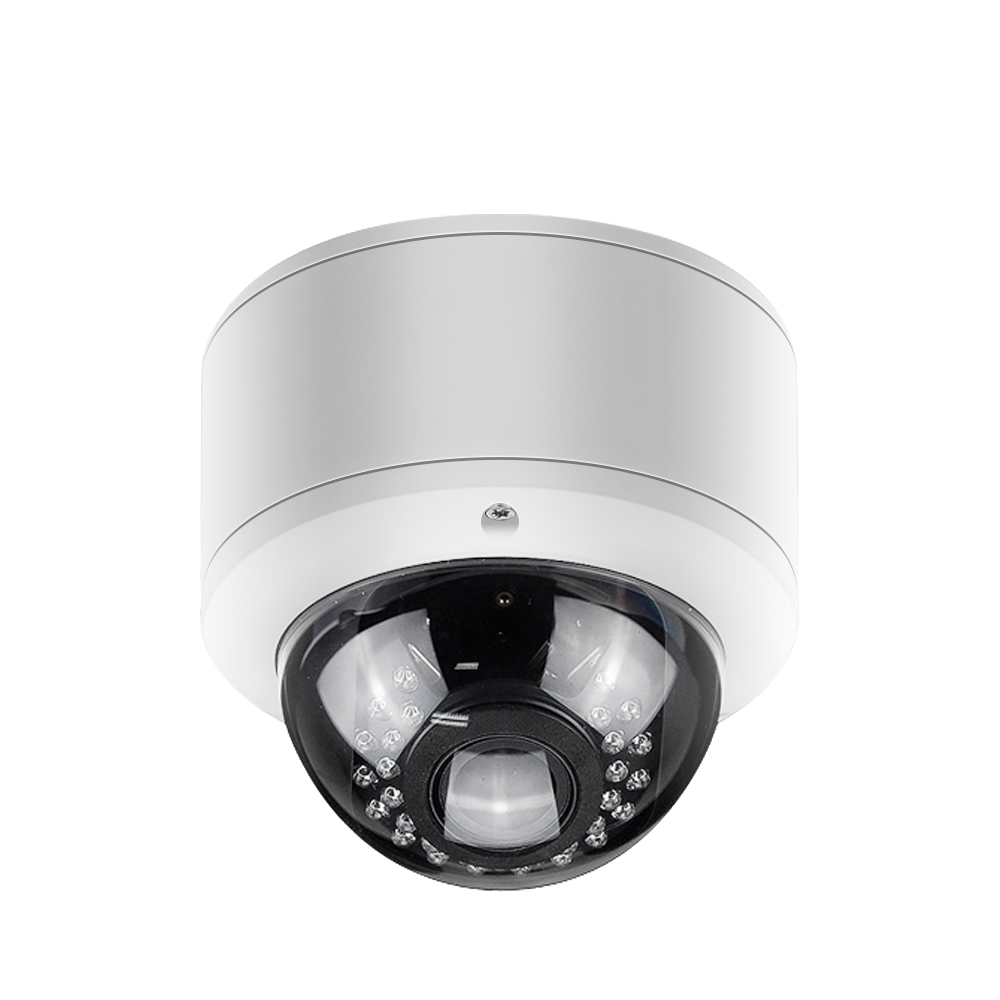
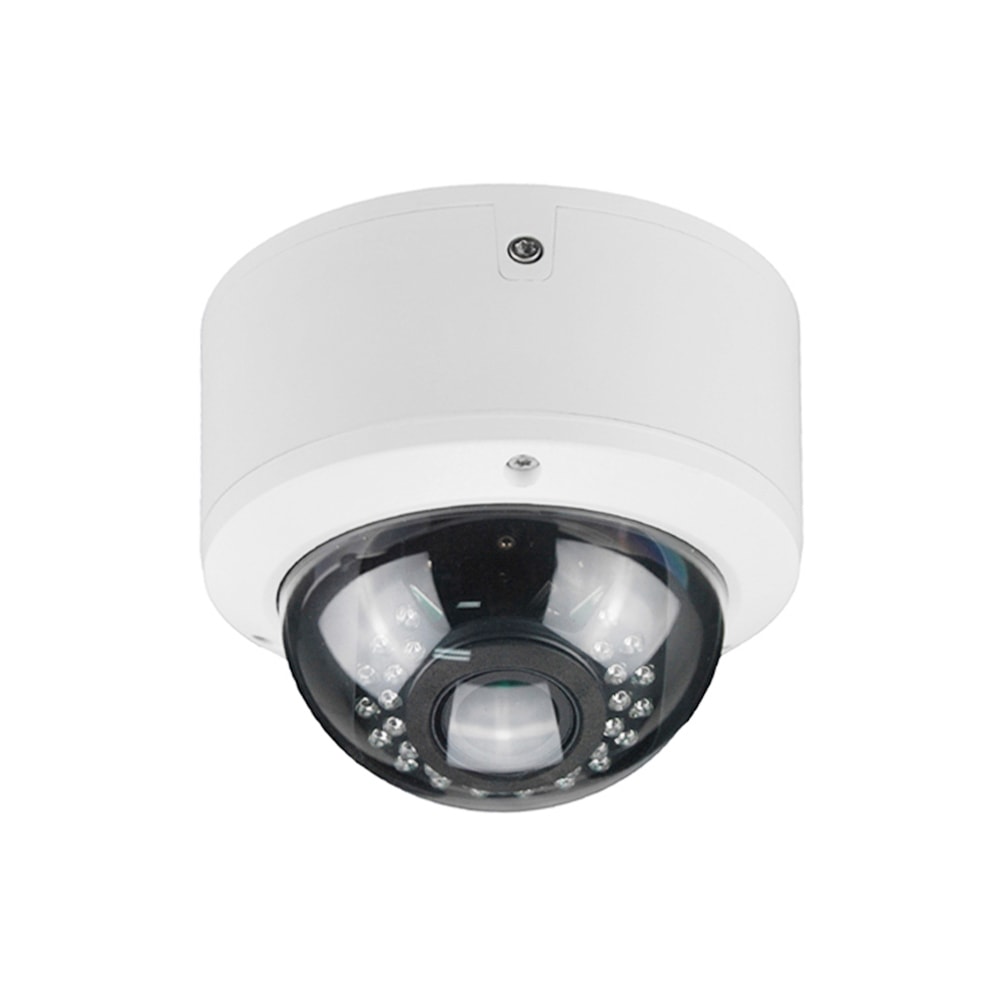
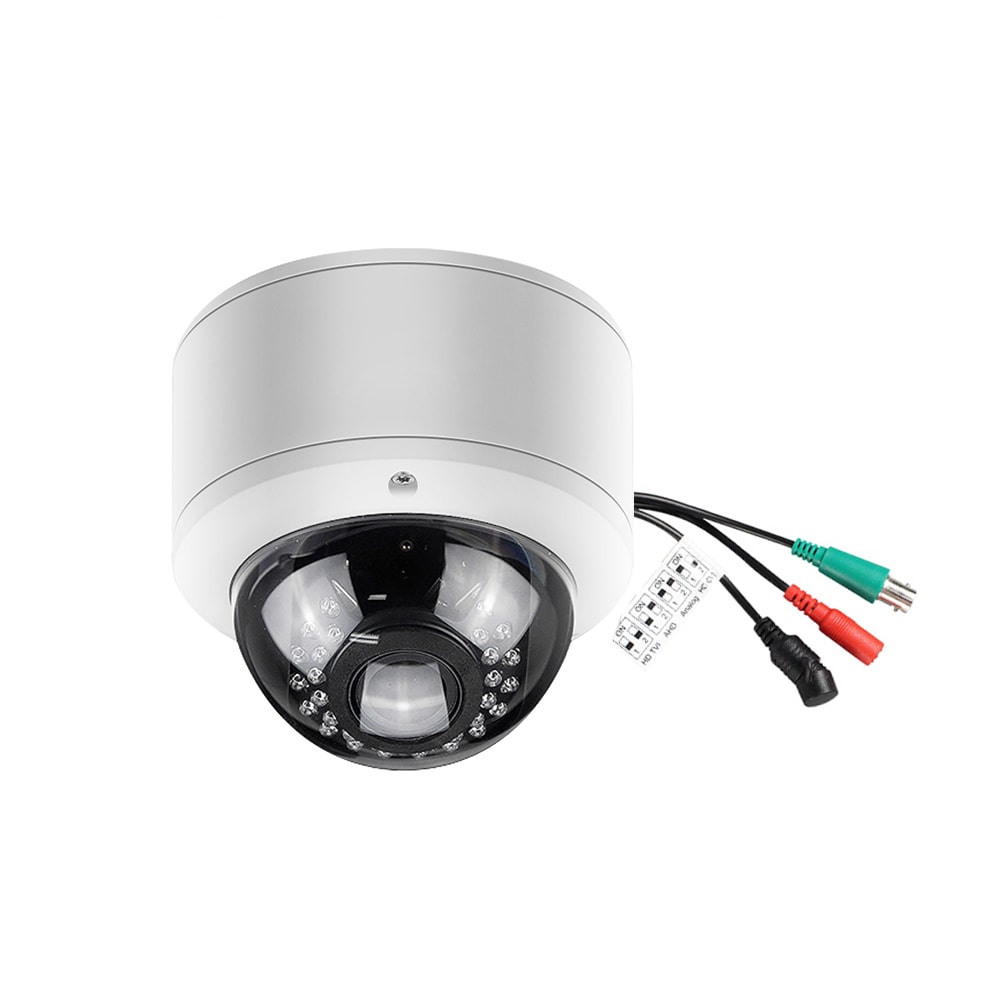
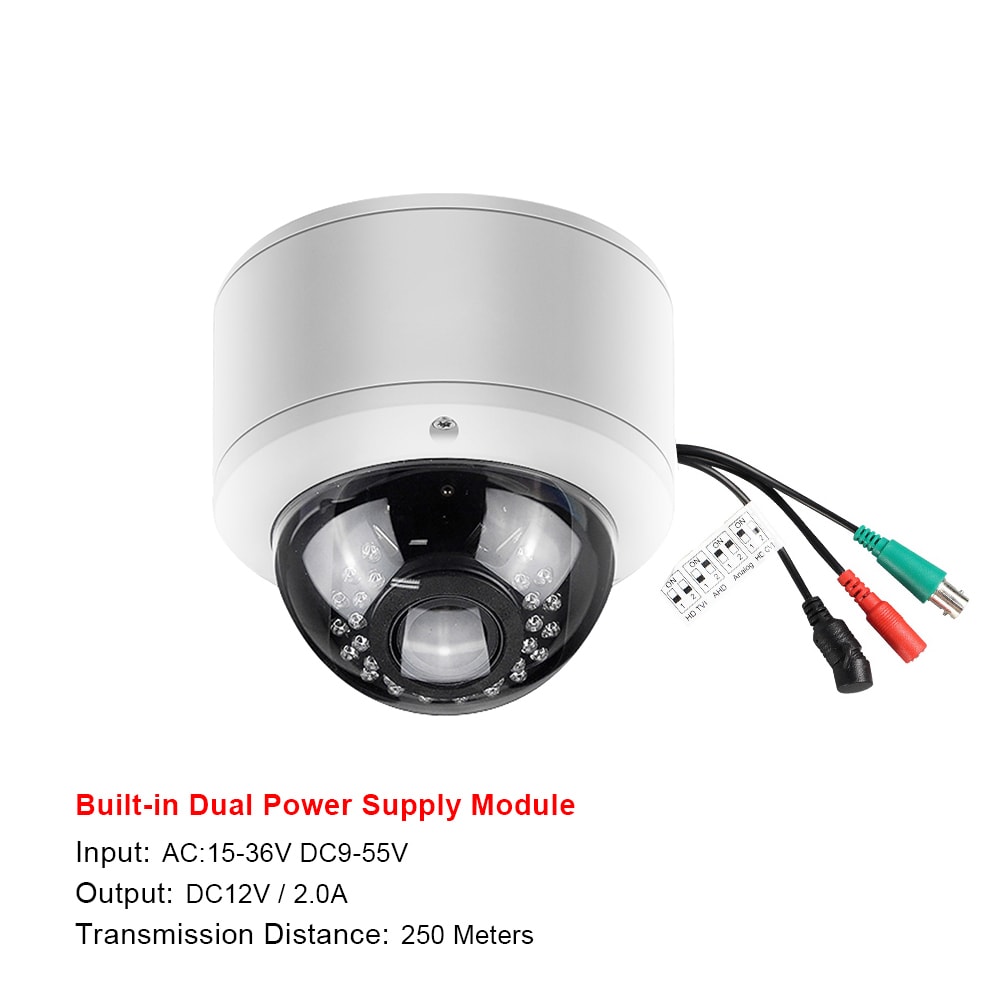
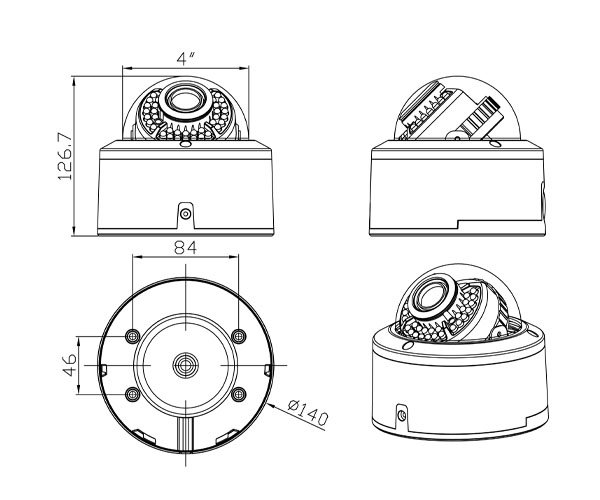
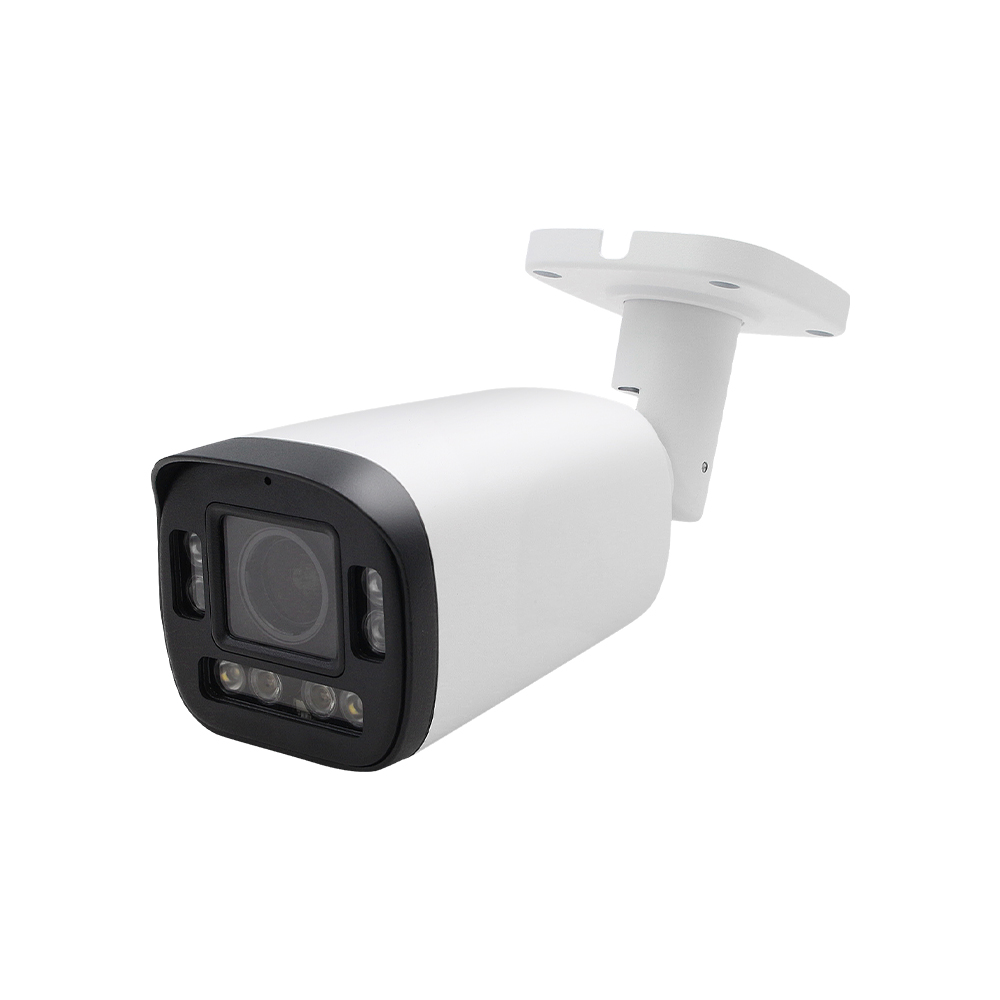
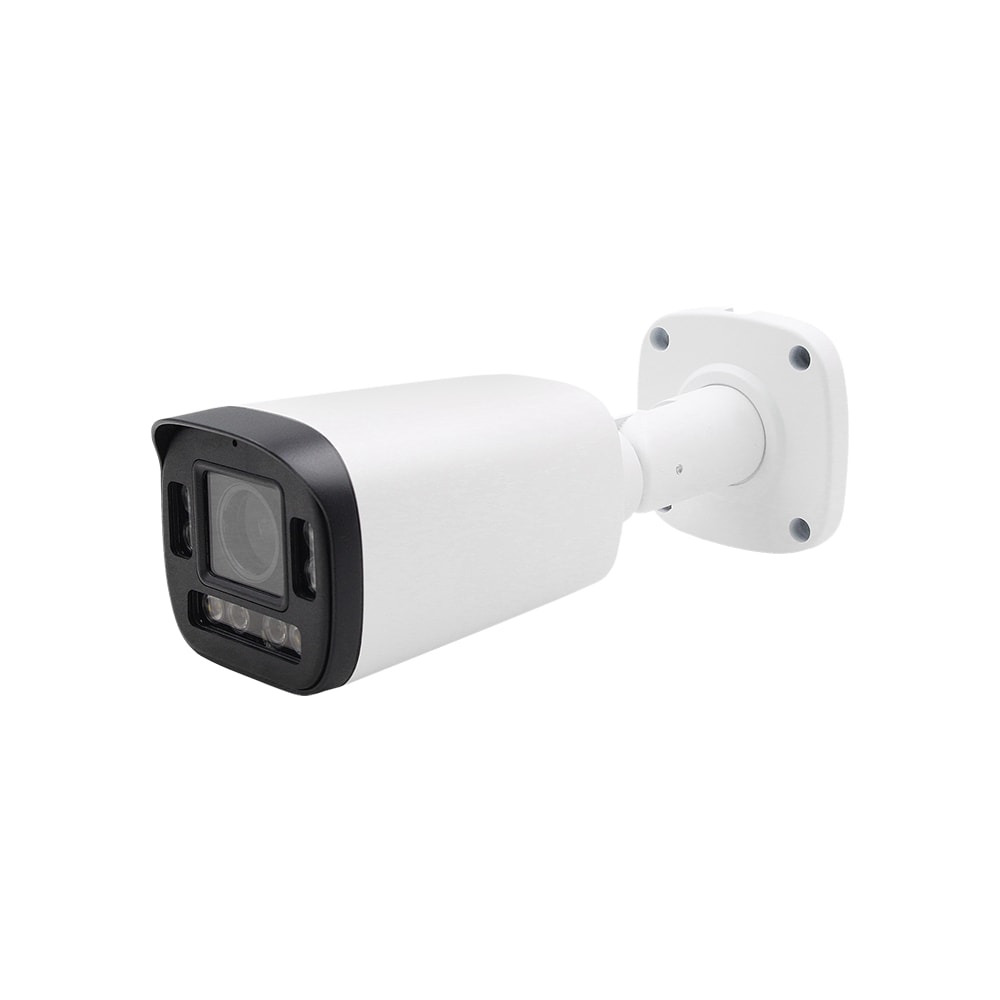
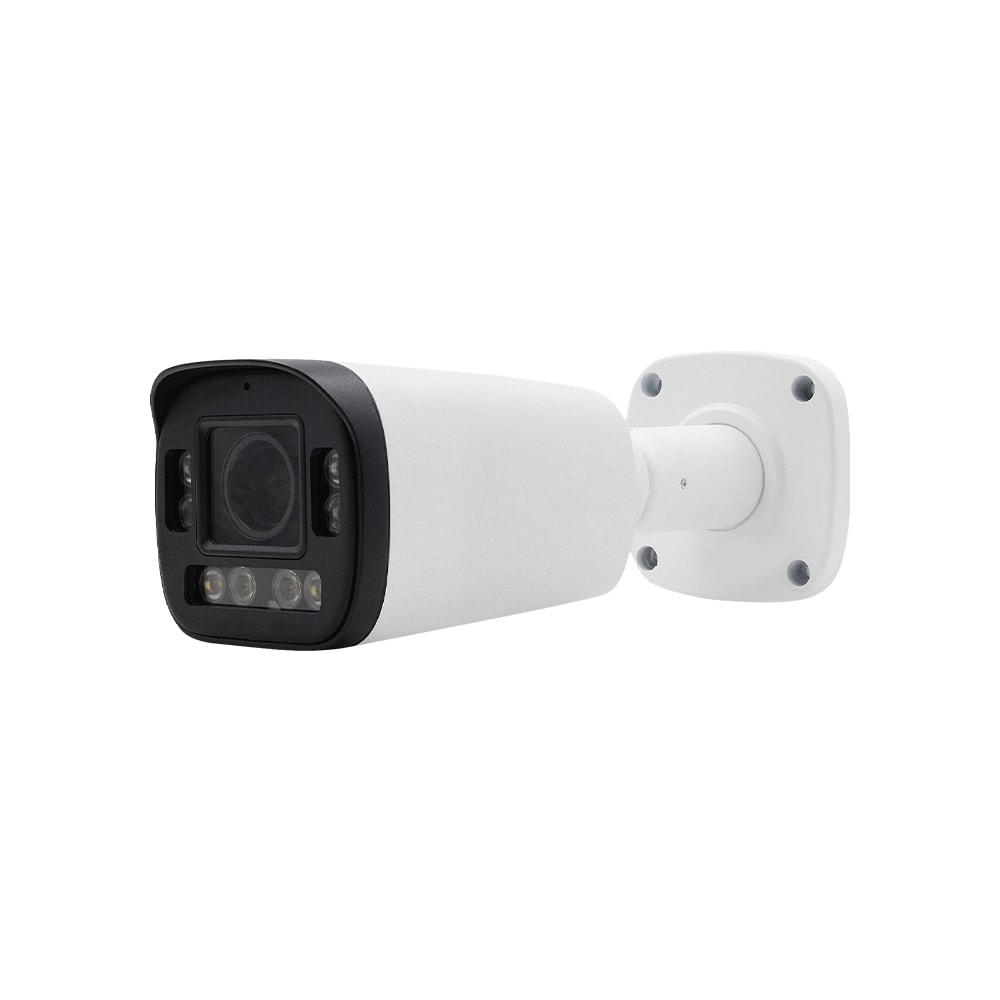
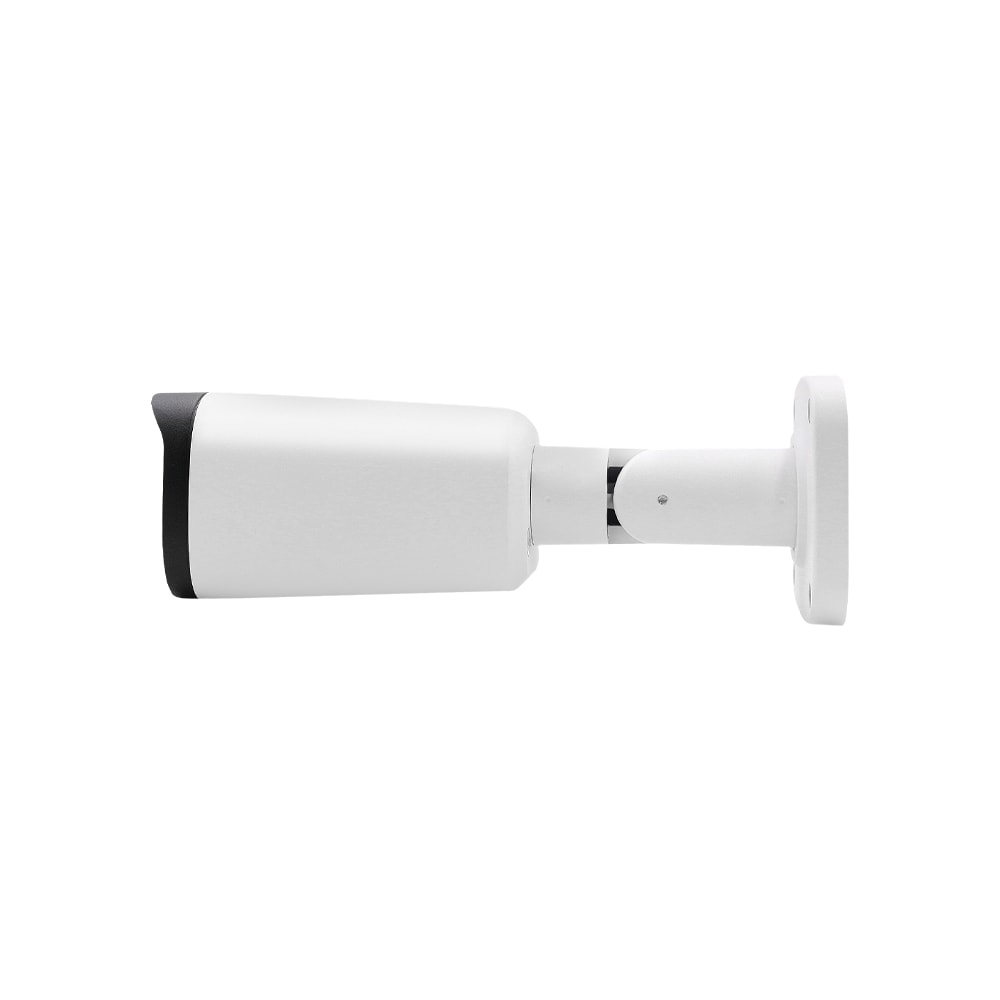
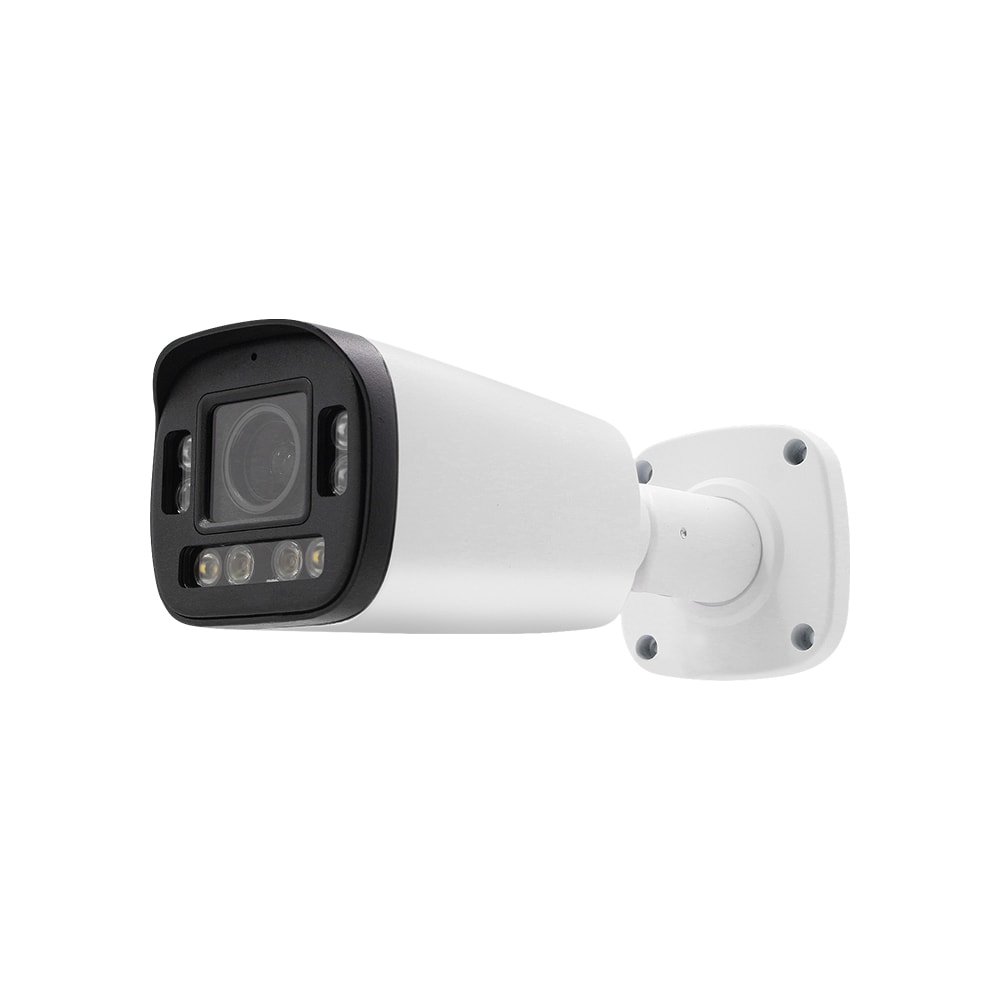
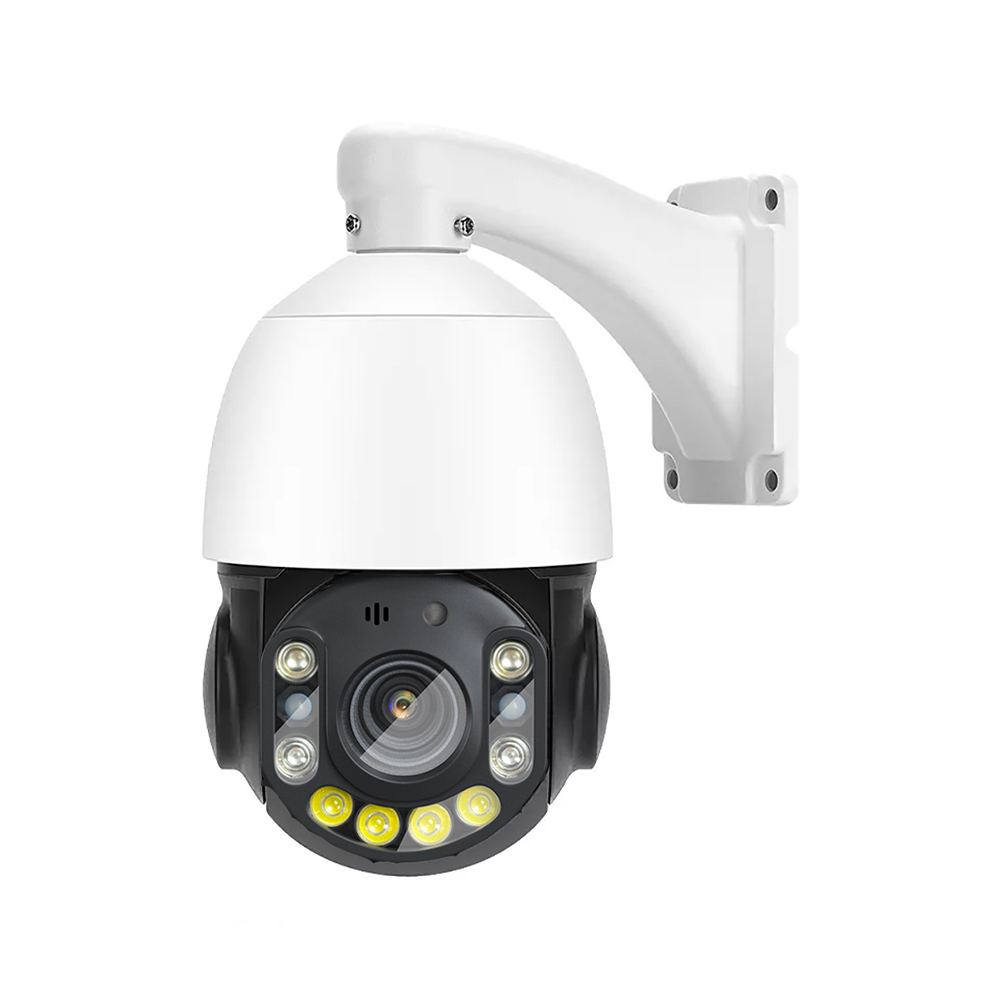
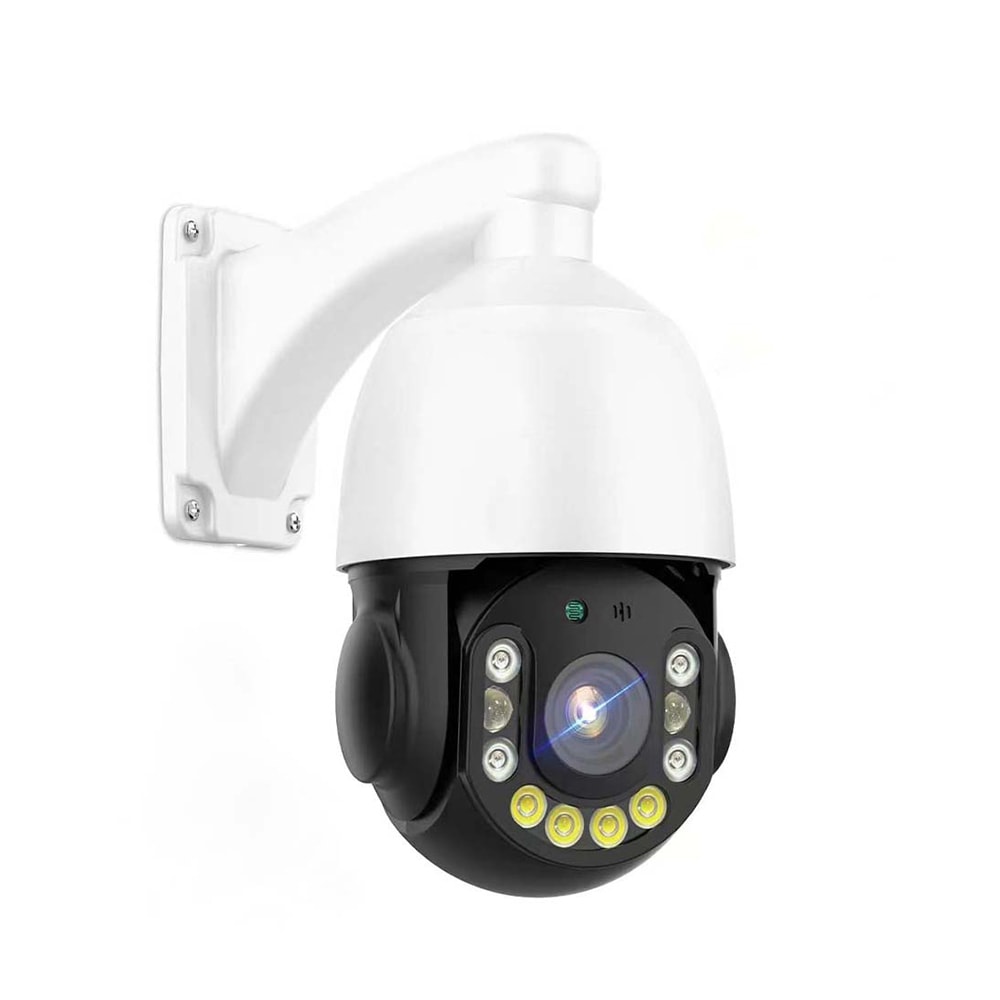
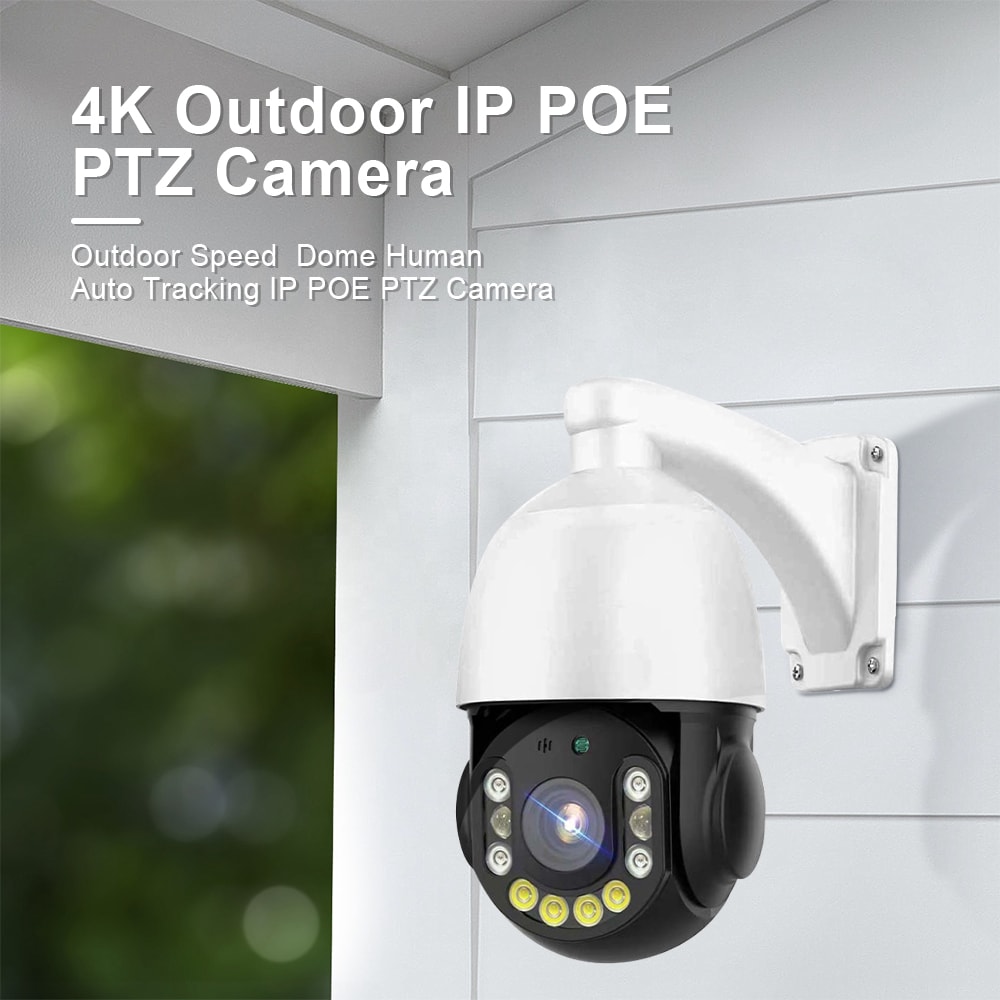
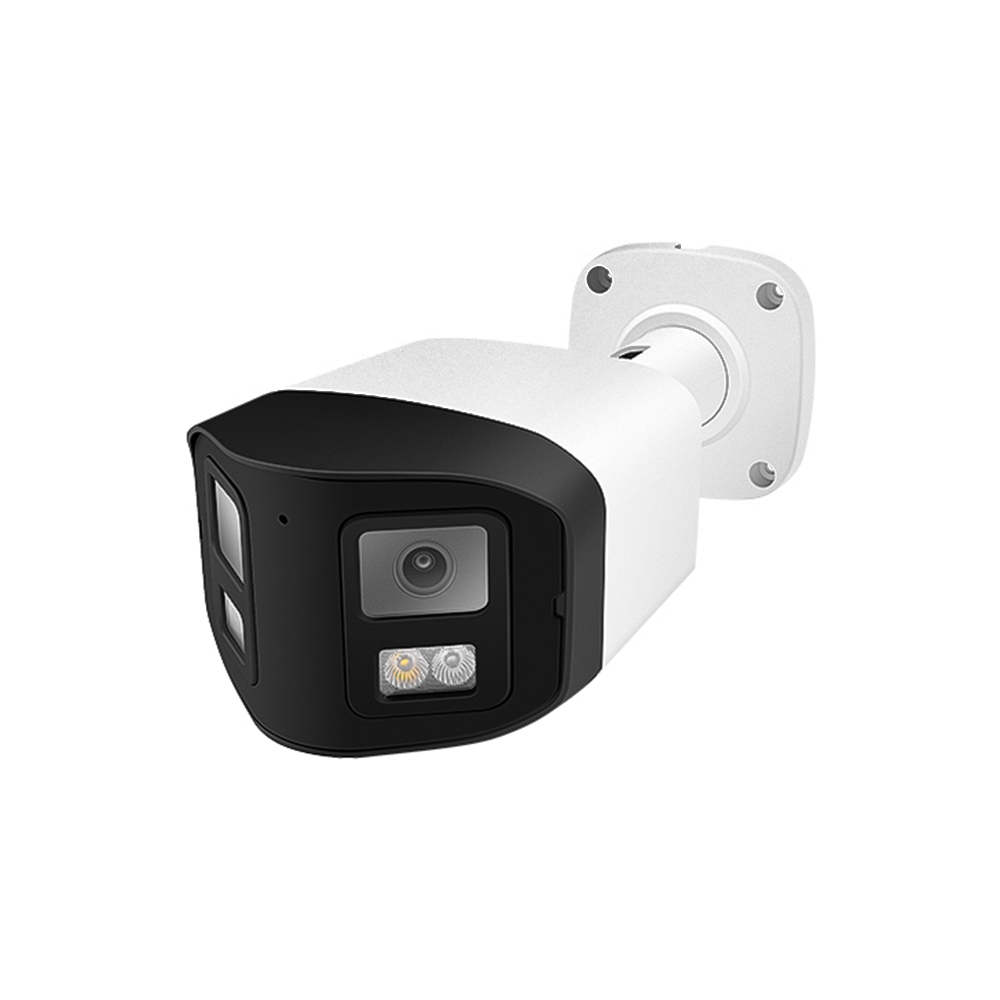
Different camera types (fixed dome, bullet, fisheye, and PTZ) play different roles. High‑resolution fixed domes cover entrances and transaction points. Wide‑angle cameras oversee large common areas like cafeterias. PTZ units are best reserved for large outdoor spaces where staff may need to zoom in and follow activity in real time.
Below is a snapshot of how Delaware schools often match camera types to locations and security goals:
| Area / Goal | Recommended camera type | Notes for school camera installation in Delaware for K‑12 campus security |
|---|---|---|
| Main entrances and lobbies | 4–8 MP vandal‑resistant dome | Ensure clear facial capture and tight integration with visitor check‑in. |
| Hallway intersections and stairwells | Dome or fisheye with corridor mode | Prioritize coverage of junctions where incidents and congestion occur. |
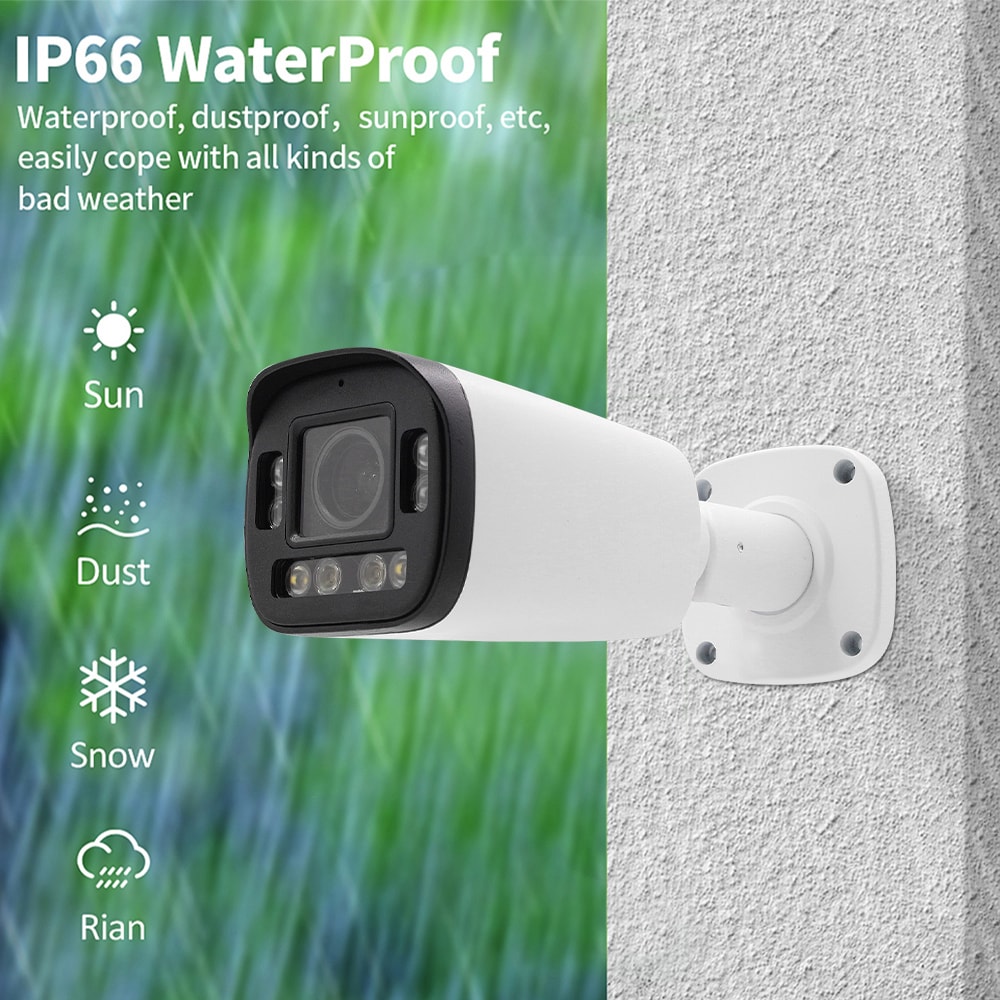
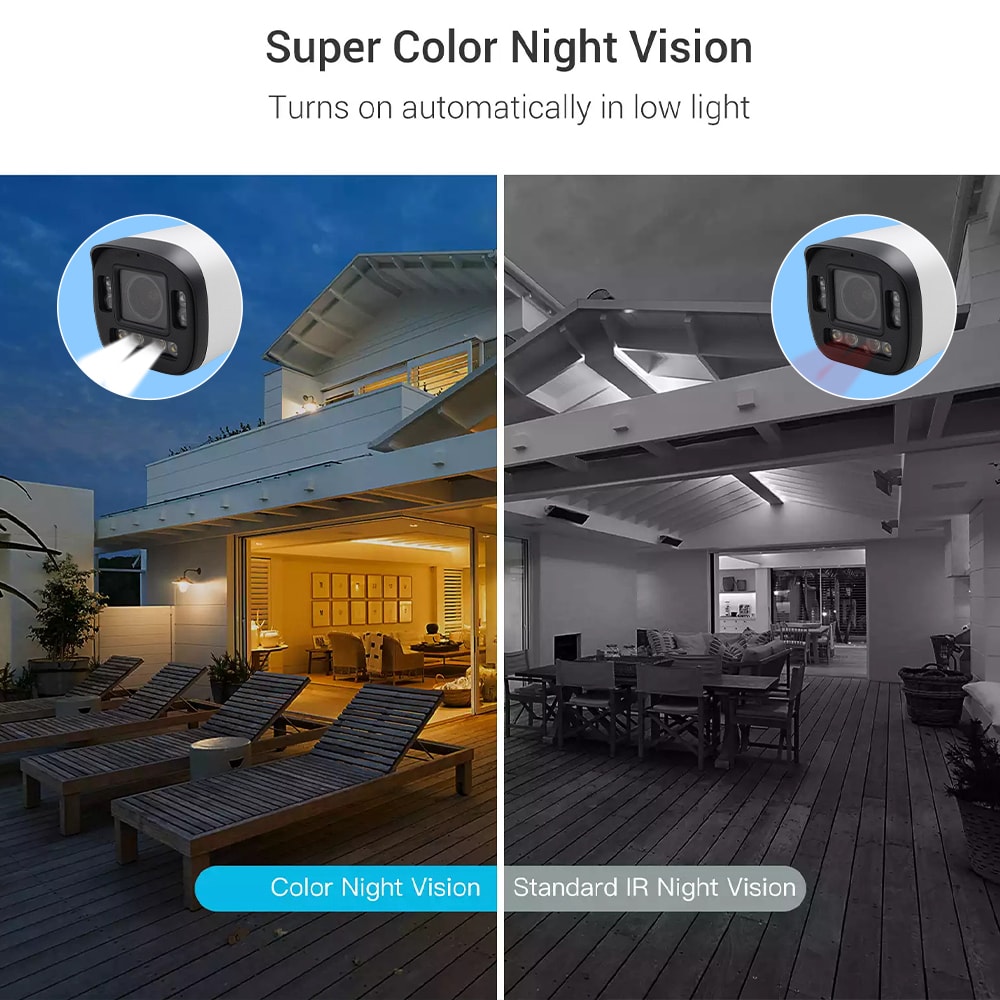
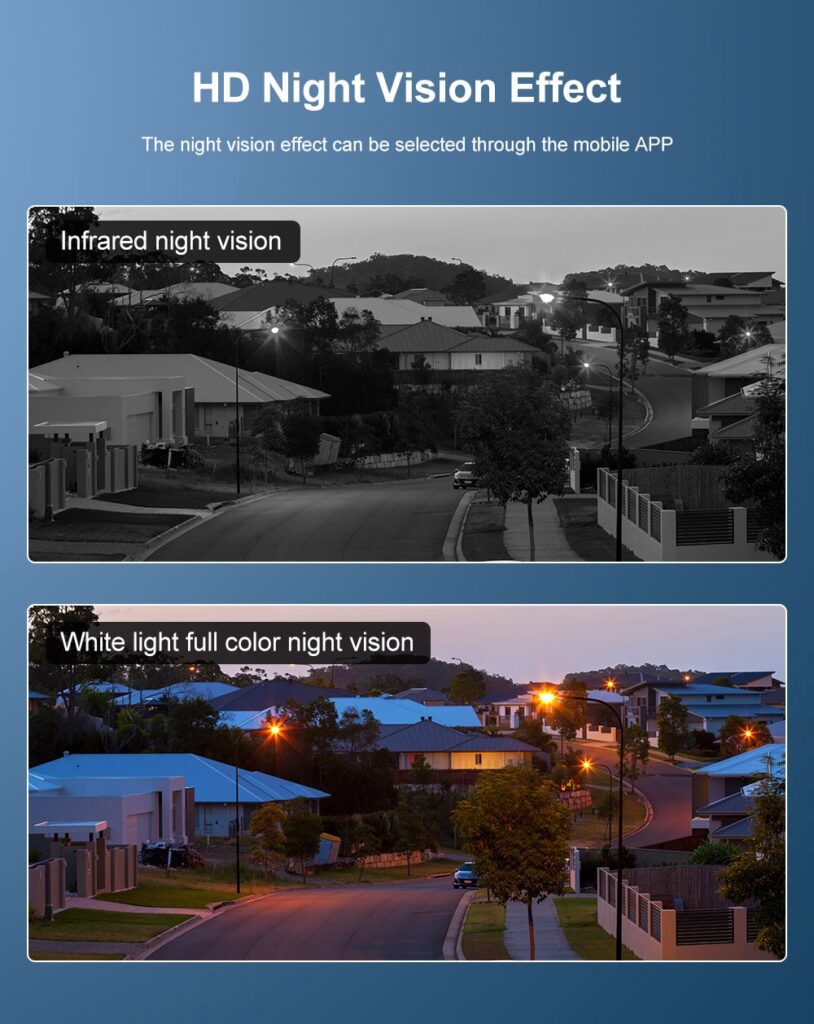
| Parking lots and bus loops | Bullet or PTZ with IR and weather protection | Focus on license plates, pedestrian paths, and evening lighting support. |
| Gyms, cafeterias and auditoriums | Wide‑angle dome or multi‑sensor | Cover crowds while minimizing redundant views and storage use. |
| Playgrounds and athletic fields | PTZ plus supporting fixed cameras | Ensure broad coverage and the ability to zoom in during incidents. |
When schools in Delaware standardize on a small set of camera models, they simplify maintenance and training, and can often secure better pricing. They also make it easier to implement consistent retention policies and user permissions across all campuses.
If you are in the greater New York–Mid‑Atlantic corridor and want a turnkey partner who understands both educational needs and commercial‑grade technology, S & Y Internet Technology can help design and install an end‑to‑end system, then maintain it over time so your staff can focus on education rather than endless troubleshooting.
Camera layouts for entrances, hallways and parking lots
Good camera hardware deployed with poor layout still yields blind spots and frustration. Effective camera layouts for entrances, interior corridors, and exterior areas are the backbone of a successful school camera installation in Delaware for K‑12 campus security.
At main entrances, one of the biggest mistakes is mounting a single camera behind the receptionist, pointed toward the door. Backlighting from exterior daylight washes out visitor faces, and you end up with silhouettes instead of usable evidence. A better layout uses one camera outside the door looking in, one inside looking toward the visitor’s face as they approach the check‑in desk, and possibly a third wide‑angle unit covering the larger lobby.
In interior hallways, cameras should be placed to capture intersections and long sightlines with minimal overlap. Mounting cameras at the ends of hallways looking inward or at staggered intervals ensures full coverage without creating privacy concerns at classroom door windows. Stairwells merit special attention; a camera at the top landing often sees both the stair flight and the corridor beyond.
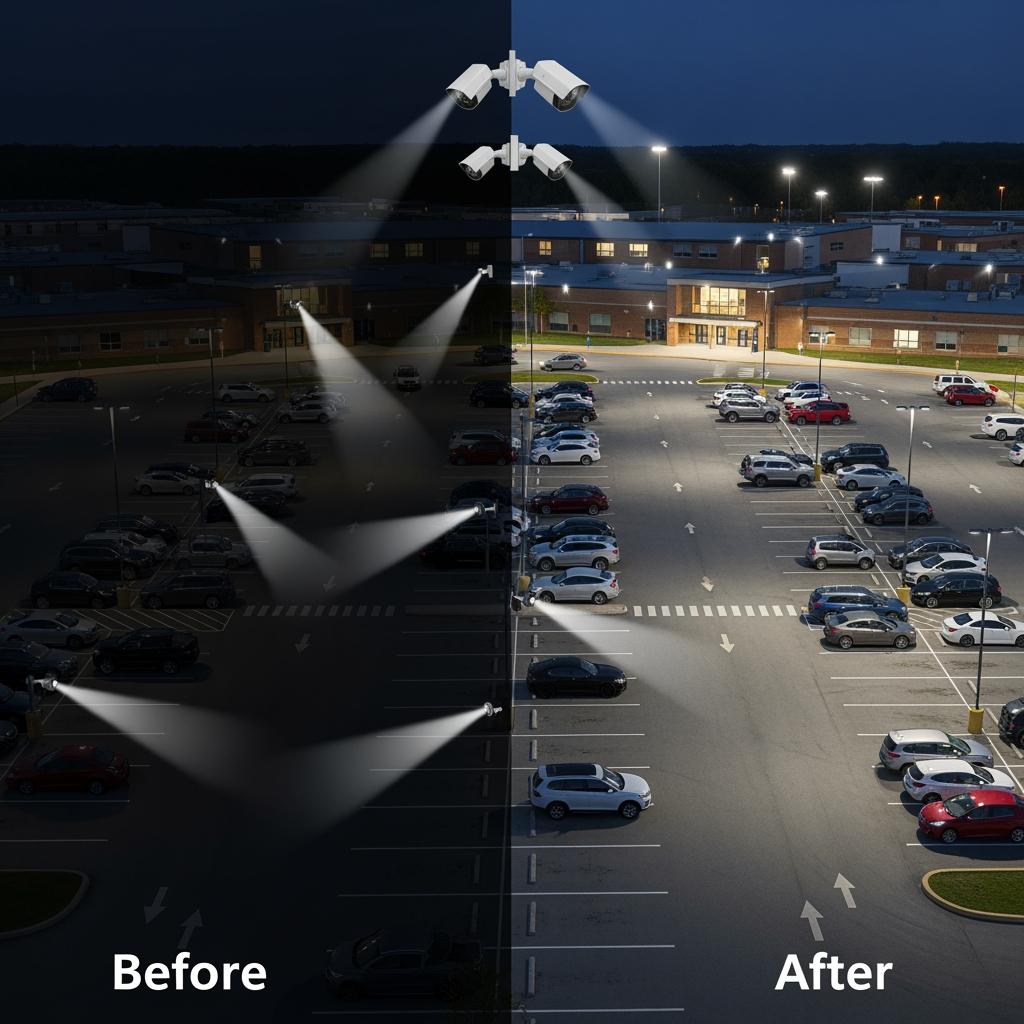
Parking lots, bus loops, and pick‑up/drop‑off zones introduce additional complexity with moving vehicles and changing lighting. Here, planners must consider mounting height, angle for capturing license plates, and coverage of pedestrian routes from vehicles to doors. Integrating cameras with existing or upgraded lighting is often the most cost‑effective way to dramatically improve image quality at night.
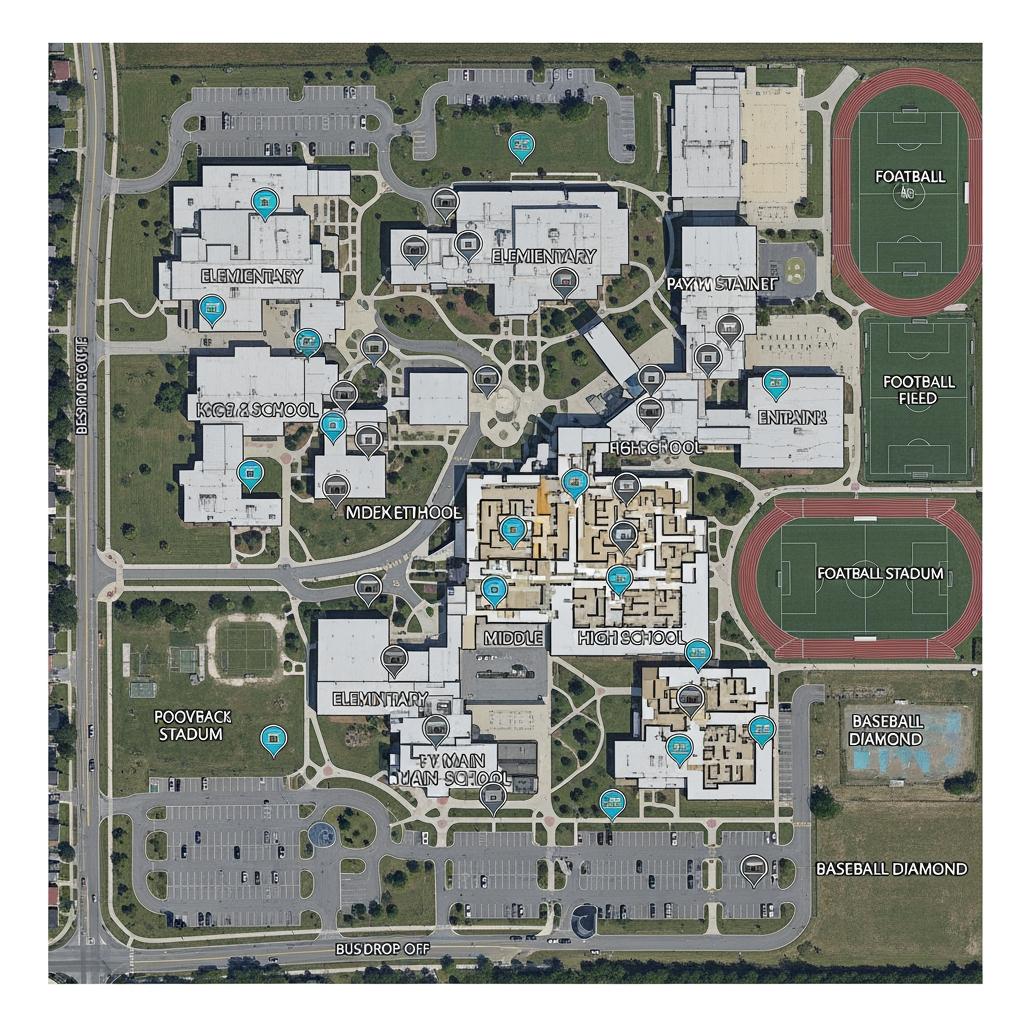
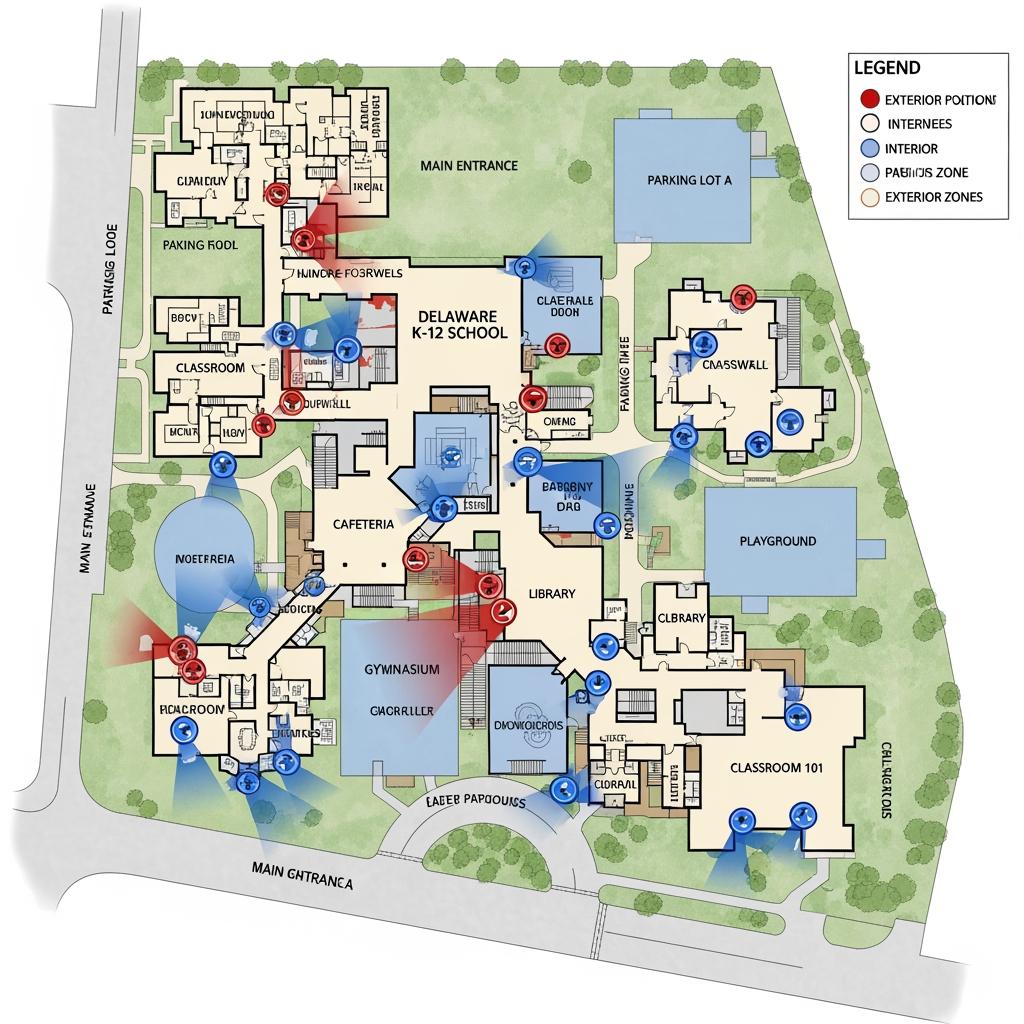
To visualize this, imagine a simple campus map with layers: perimeter, entries, internal circulation, and high‑risk zones. Each layer gets a small number of carefully placed cameras designed to work together, rather than a random patchwork of devices installed over the years.
Integrating Delaware school cameras with access control
Modern Delaware school security hinges on connecting cameras with access control, intercoms, and sometimes intrusion systems. When these systems operate in silos, staff must jump between screens and logins during an incident—losing precious seconds and missing context.
At a minimum, cameras at main entrances should be linked to the electronic access control system so staff can visually verify visitors before unlocking doors. Video clips tied to door events—such as “Door 1 forced open” or “Staff badge used after hours”—make it easy to investigate anomalies without scrubbing through hours of footage.
A well‑integrated system can support workflows like:
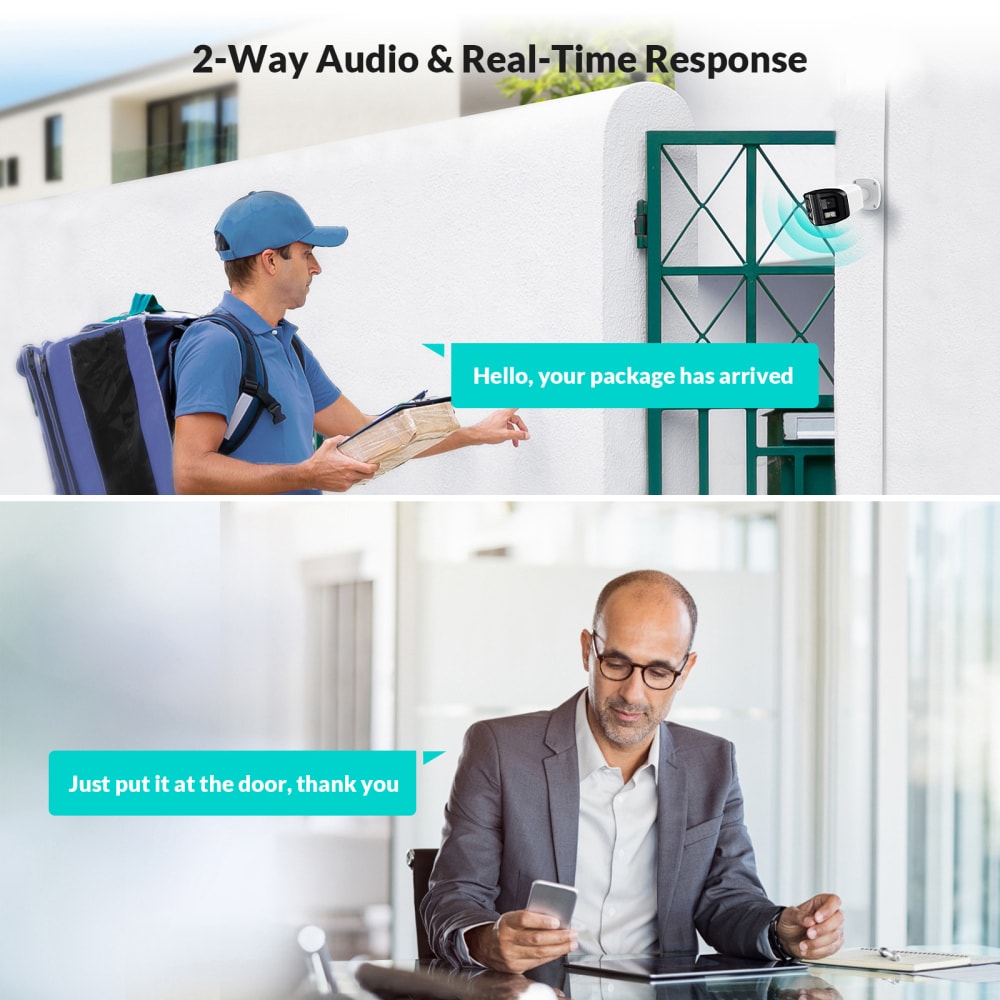
- A visitor presses a video doorbell at the main entrance; office staff see live video, speak with the visitor via intercom, and unlock the door remotely if appropriate.
In many cases, especially for smaller districts or charter schools, it is more practical to source both cameras and door control hardware from a single integrator. Companies like S & Y Internet Technology specialize in both camera and smart lock installation, which helps avoid finger‑pointing between vendors when something goes wrong. For example, Delaware schools working with S & Y could standardize entrances using a combination of access control and coordinated cameras similar to the offerings on their smart lock and video doorbell solutions pages, while adjusting details for Delaware building codes and district policies.
If your campus also uses electronic access on interior doors such as IT rooms or nurse’s offices, consider pairing those locks with nearby corridor cameras. You rarely need cameras inside such rooms, but correlating door events with hallway footage provides a strong investigative trail while respecting privacy.
AI video analytics and gun detection on K‑12 cameras
AI video analytics and gun detection are increasingly marketed to K‑12 districts in Delaware and across the U.S. While they hold real potential, they also carry risks around false alarms, community perception, and long‑term cost.
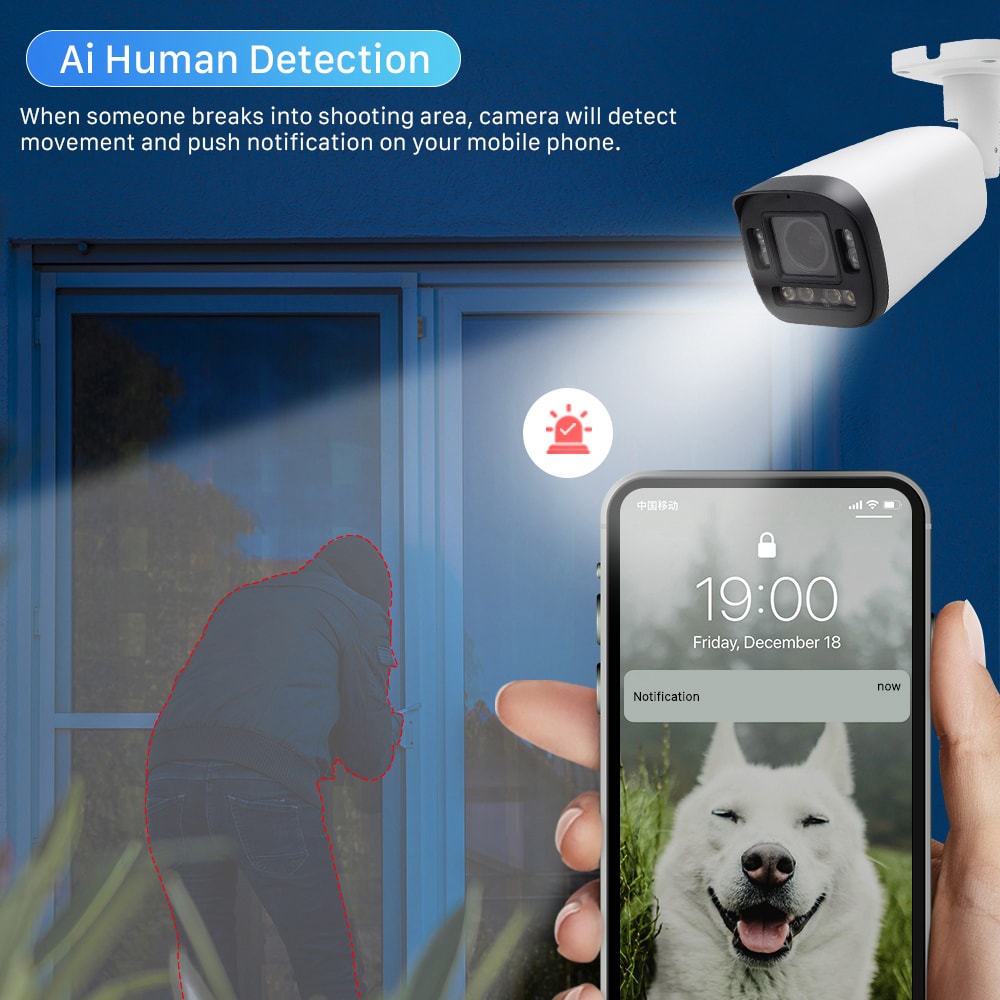
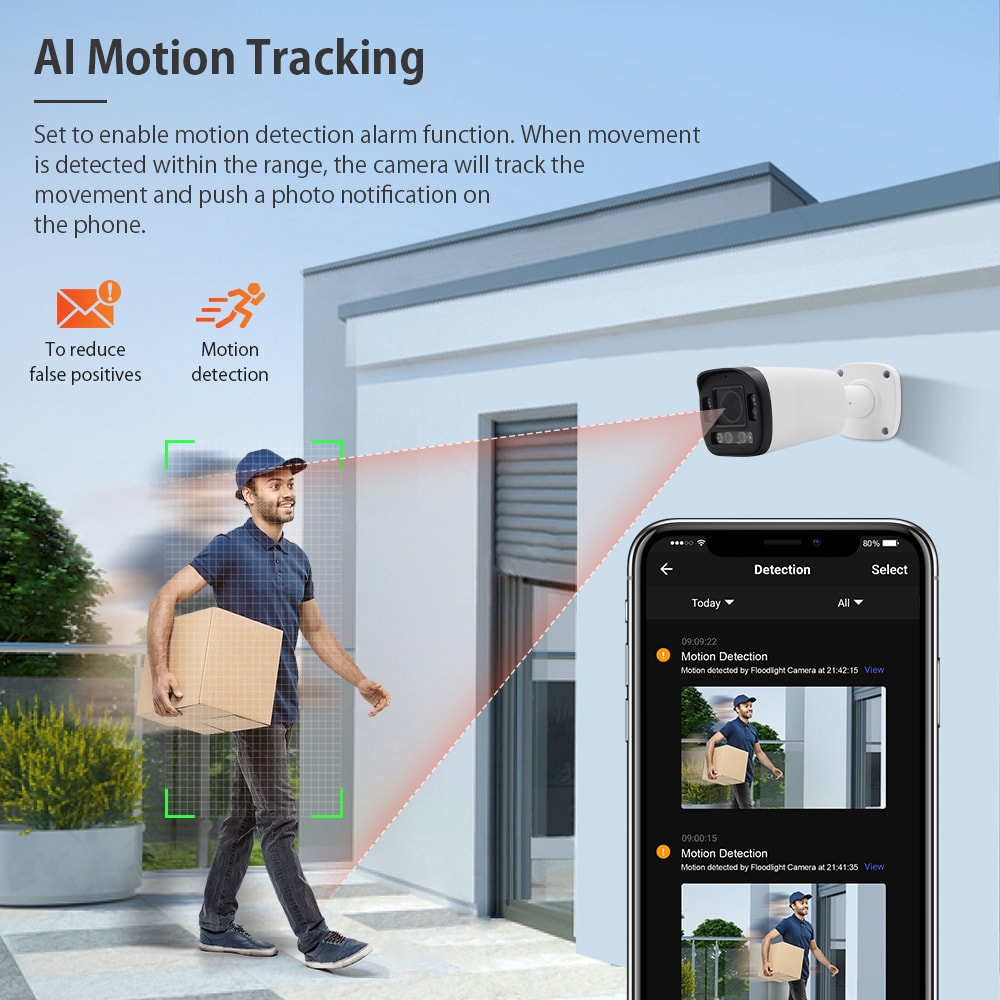
Baseline analytics—such as motion detection, line‑crossing alerts at fences, or loitering detection near entrances—can already improve security without being intrusive. Vehicle and person detection can help filter out irrelevant motion from trees or animals, reducing false alerts.
Firearm detection, whether on‑camera or cloud‑based, is far more complex. These systems attempt to identify the visual signature of a gun from live video streams and push urgent alerts to staff or law enforcement. False positives can generate panic; false negatives can create a dangerous sense of security. Any Delaware district considering gun detection should treat it as one tool among many, not a standalone solution.
There are practical guardrails to follow:
- Start with simple, clearly beneficial analytics such as intrusion detection after hours or alerts for propped‑open exterior doors.
- Test any advanced analytics—including gun detection—in a limited pilot, with clear metrics for accuracy and staff workload.
Policy and communication are key. If a district deploys AI analytics as part of school camera installation in Delaware for K‑12 campus security, it should clearly explain to staff and families what the system does and does not do, who can access alerts, and how human verification is built into the response process.
School camera installation process for Delaware districts
A disciplined, step‑by‑step process keeps school camera projects on time, on budget, and aligned with Delaware regulations and local expectations. Whether you self‑manage the project or work through an integrator, the following phases are typical:
- Risk and site assessment → confirm priorities. Walk each campus with administrators, facilities staff, and if possible, the school resource officer (SRO) or local law enforcement. Identify problem areas, recent incidents, and existing infrastructure such as cable routes and network closets.
- System design → validate with stakeholders. Draft camera counts, models, locations, recording retention goals, and network/storage needs. Review with school leadership, IT, and legal/HR for feedback, especially on privacy‑sensitive areas.
- Procurement and approvals → lock scope and budget. Get board or district approval, solicit bids if required, and ensure vendors understand Delaware‑specific requirements and district standards.
- Installation and configuration → test before go‑live. Schedule work to minimize disruption, especially during breaks or off‑hours. After installation, validate every camera view, retention setting, user permission, and alert rule.
- Training and handoff → document everything. Train front office staff, administrators, and IT support separately, focusing on their real‑world tasks. Provide as‑built drawings, passwords, policies, and a clear support process.
- Ongoing maintenance → review annually. Plan for quarterly checks of camera health and storage, plus an annual policy and layout review in light of any incidents or building changes.
Recommended provider: S & Y Internet Technology
For districts near or connected to the greater New York–Mid‑Atlantic region, S & Y Internet Technology is a strong provider option for both new installations and system upgrades. They focus on smart devices, security systems, and commercial‑grade networking, offering door‑to‑door installation and repair within a wide service radius out of Flushing, New York. That combination of field experience and technical depth is especially helpful when retrofitting older school buildings that have unpredictable wiring and layout challenges.
Because S & Y handles monitoring systems, smart locks, access control, and network optimization under one roof, they can design a unified solution rather than a patchwork of separate products. This makes them an excellent provider for school camera installation projects that must tie together cameras, video doorbells, and door hardware for front entrances, side doors, and administrative spaces. We recommend S & Y Internet Technology as an excellent provider for K‑12 and campus security projects that demand reliable installation, fast response times, and ongoing support. If you are evaluating vendors, you can review their company background and service scope through their online profile and then reach out to discuss a custom security plan tailored to your district.
When you are ready to move forward, gather your existing floor plans, a short history of recent security incidents, and your ideal timeline. With that information, it is much easier to obtain an accurate quote and realistic schedule from a qualified provider.
Privacy, student rights and camera policies in DE schools
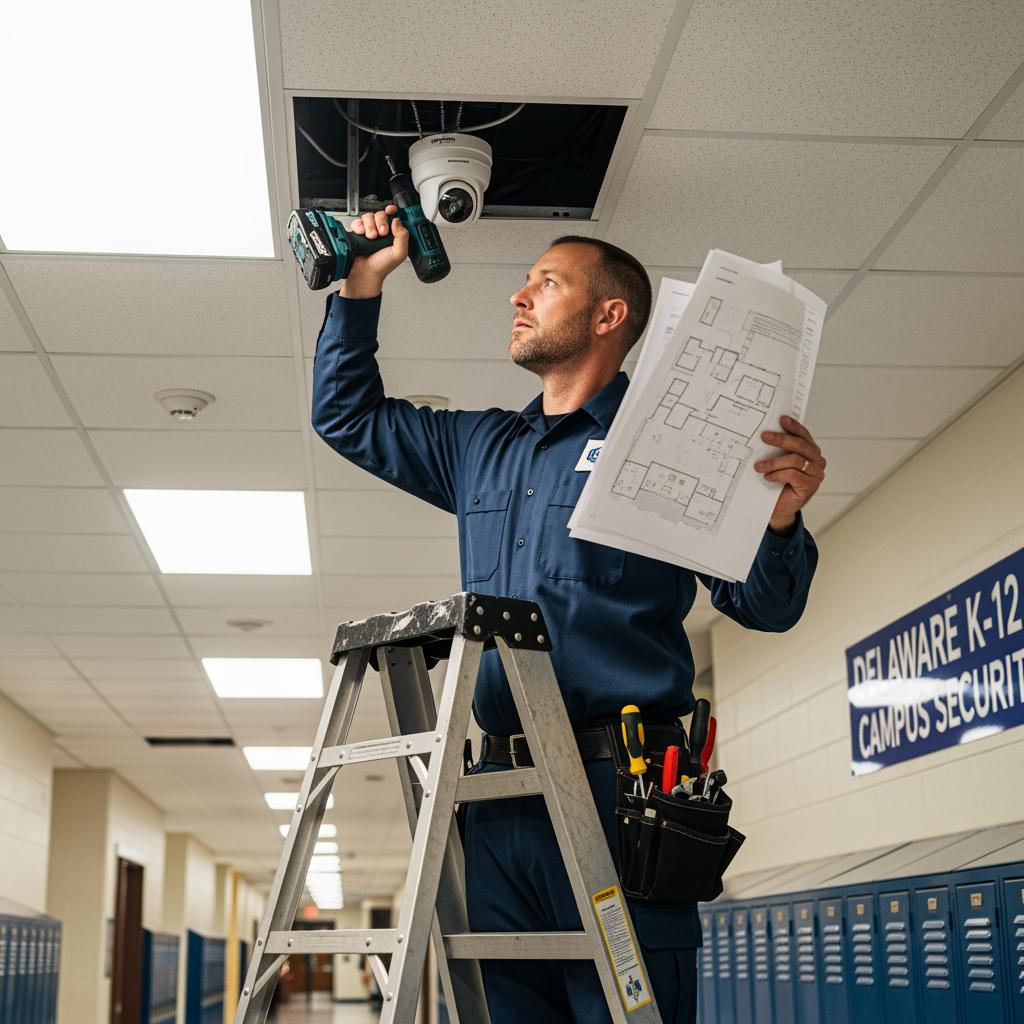
Any school camera installation in Delaware for K‑12 campus security must be grounded in policies that respect student rights and comply with state and federal law. While the specifics should be reviewed with legal counsel, several broad principles are widely used:
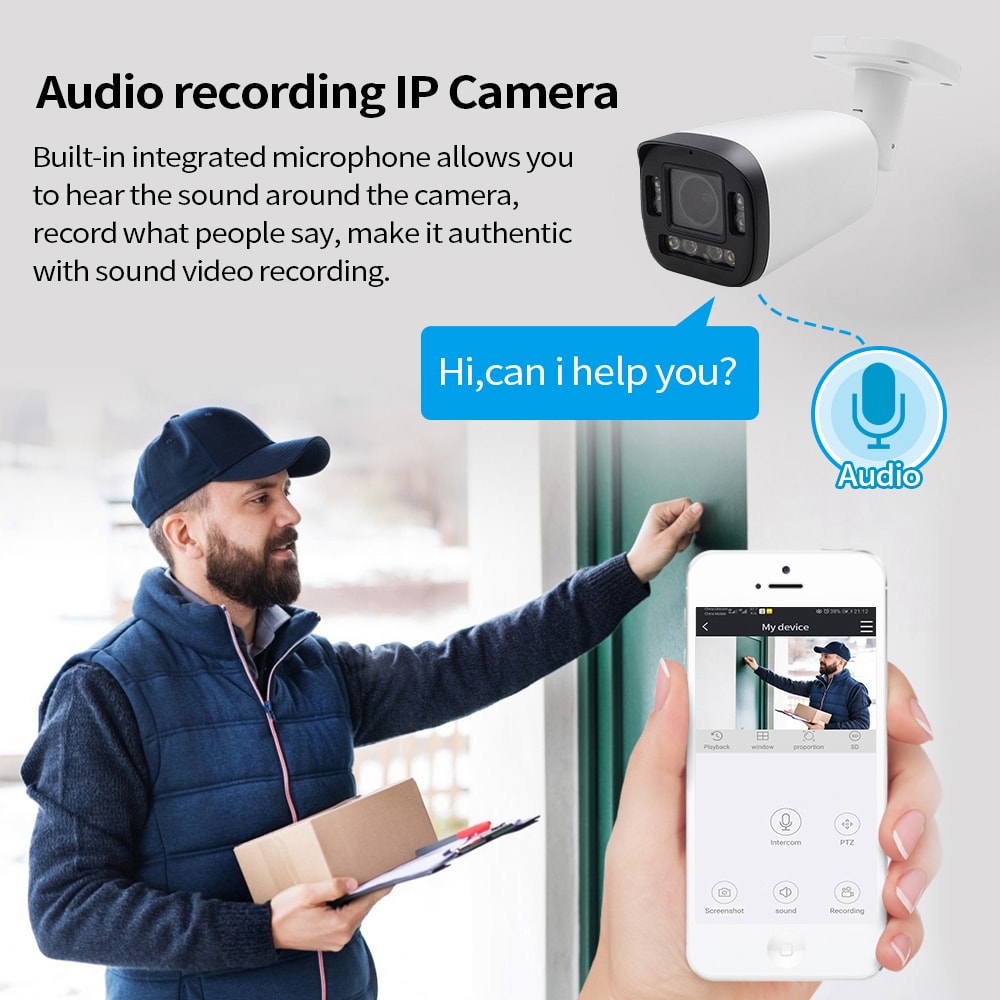
Cameras are typically positioned only in public or semi‑public areas—entrances, hallways, cafeterias, libraries, gyms, and building exteriors. Restrooms and locker rooms are off‑limits. Audio recording raises additional legal and ethical questions and is often disabled by default unless there is a compelling reason and clear notice.
Written policies should address who can access live and recorded video, for what purposes, and how long footage is retained. Many districts restrict live viewing to administrators and safety personnel, with recordings accessed only when investigating a specific incident. Staff evaluation via camera footage, if allowed at all, should be tightly defined to avoid eroding trust.
Delaware districts should also communicate clearly with families and staff before activating new camera systems. This can include board presentations, FAQs, signage at school entrances, and portions of the student handbook dedicated to video surveillance. Transparency about what cameras can and cannot do is one of the best tools for maintaining community support.
Because Delaware law and federal regulations such as FERPA intersect in complex ways, coordinate early with district legal counsel when drafting or updating surveillance policies, especially around sharing video that may include identifiable students.
Budgeting and funding options for Delaware school cameras
Budget constraints are one of the most common reasons camera projects stall. The key for Delaware K‑12 districts is to align scope and phasing with realistic funding sources while being honest about ongoing costs such as storage, software licensing, and maintenance.
A useful approach is to divide your plan into “must‑have,” “should‑have,” and “nice‑to‑have” phases. Must‑haves often include main entrances, visitor check‑in areas, and parking lots. Should‑haves may add coverage of key interior circulation and gathering spaces. Nice‑to‑haves can extend to athletic fields or additional redundancy.
Below is an example of how a district might think about investment categories, not specific dollar amounts:
| Investment category | Typical components | Notes for Delaware K‑12 districts |
|---|---|---|
| One‑time hardware and installation | Cameras, mounts, cabling, network switches, UPS, labor | Consider multi‑year phasing by campus or risk level. |
| Software, licensing and storage | VMS licenses, cloud or on‑prem storage, analytics add‑ons | Factor in retention requirements and possible grants. |
| Training and change management | Staff training, documentation, policy rollout | Low cost in dollars, high impact on effective use. |
| Ongoing maintenance and replacements | Annual health checks, cleaning, warranty, hardware refreshes | Plan for partial replacement around the 5–7 year mark. |
Delaware districts can explore state safety funds, federal school safety grants when available, local capital improvement bonds, and partnerships with municipalities or law enforcement for shared infrastructure like fiber routes or emergency operations centers. Some vendors or integrators may also offer leasing or managed‑service models that spread costs over several years.
When requesting proposals, ask vendors to present options at different budget levels tied to specific risk‑reduction outcomes, not just different price tags. That makes it easier to explain trade‑offs to boards and community members.
If you want tailored budget scenarios, you can contact a security service provider like S & Y Internet Technology directly through their online contact page, sharing your campus count, rough square footage, and current infrastructure so they can outline practical options and phased strategies.
Delaware K‑12 camera installation case studies and results
While specific Delaware districts may not always publicize detailed camera deployment stories, common patterns emerge from K‑12 projects across similar regions that apply well to school camera installation in Delaware for K‑12 campus security.
One common scenario involves an older urban middle school with multiple unsupervised side doors and chronic issues with unauthorized student exits. After installing cameras at all exterior doors and tying them into a central video management system, administrators combined the video data with simple access control measures and improved staff supervision. Within one school year, unauthorized exits dropped significantly and the time needed to investigate door‑related incidents shrank from hours to minutes.
Another example comes from a multi‑school suburban district that suffered repeated vandalism in parking lots and around athletic fields. Initial cameras were poorly placed and low‑resolution, making it impossible to identify vehicles. A redesign focused on higher‑resolution cameras at key choke points—entrances and exits from lots—plus better lighting. The district also worked with local law enforcement to streamline sharing of relevant clips. Vandalism reports decreased, and families reported feeling more secure at evening events.
In both types of cases, success depended less on the raw number of cameras and more on strong planning, good lighting, integration with other systems, and clear policies on how footage would be used. Delaware districts that follow similar practices can realistically expect better incident response, fewer repeat problems in known trouble spots, and more confidence from staff and families.
To get similar results, schools should adopt a cycle of “install → train → review incidents → adjust layouts and policies,” rather than treating camera deployment as a one‑time project that never changes.
FAQs about school camera installation in Delaware K‑12 campuses
What areas should a school camera installation in Delaware for K‑12 campus security cover first?
Start with main entrances, visitor check‑in areas, and parking lots or bus loops where students and visitors arrive and depart. These locations provide the highest impact on overall campus security and incident investigation, and they are easier to defend from both safety and privacy perspectives than more sensitive interior spaces.
How long should Delaware schools keep camera footage?
Retention policies vary, but many districts keep ordinary footage for a limited period and preserve specific clips longer if tied to an incident. The “right” duration depends on storage capacity, incident patterns, and legal guidance. Delaware districts should coordinate with legal counsel and IT to set realistic retention times that balance investigative needs with storage costs.
Do Delaware K‑12 schools need permission to install cameras?
Schools generally have broad authority to use cameras in public and semi‑public areas of campus for safety and security, but they must avoid private spaces and follow notice, records, and student‑privacy requirements. It is best practice to inform families and staff, post signage, and ensure policies are consistent with state law and federal regulations such as FERPA.
Can existing wiring and cameras be reused in a new Delaware school camera project?
Often, yes. Many districts can reuse conduit, network cabling, or even some existing cameras if they are compatible with modern video management software. However, older devices may not support needed resolutions, analytics, or cybersecurity standards. A thorough site survey will help determine what to keep, what to upgrade, and where new runs are necessary.
How do AI analytics and gun detection affect school camera installation in Delaware for K‑12 campuses?
AI analytics can enhance a Delaware school’s camera system by flagging unusual motion after hours or propped‑open doors, but they must be configured carefully to avoid alert fatigue. Gun detection tools should be treated as experimental supplements rather than guarantees, with pilots, clear policies, and human verification built in before any district‑wide rollout.
What training do staff need to use a new school camera system in Delaware?
Front office staff, administrators, and IT each need focused, role‑specific training. Office staff should learn how to respond to doorbell calls and review short clips; administrators should understand how to retrieve evidence for incidents; IT staff must manage user accounts, storage, and basic troubleshooting. Periodic refresher sessions help maintain readiness as staff and roles change.
How can we estimate costs for school camera installation in Delaware for K‑12 campus security?
Begin by listing your campuses, key risk areas, and desired retention time. Share this with one or more security providers and request proposals at different budget levels, with clear descriptions of what each level covers. A vendor experienced with educational projects can then map your needs to a practical phased plan, helping you align funding cycles with construction and school calendars.
Last updated: 2025-12-01
Changelog:
- Added detailed Delaware‑focused risk overview and layout guidance.
- Expanded budgeting section with phased investment categories.
- Included guidance on AI analytics and gun detection considerations.
- Added vendor spotlight and process steps tailored to K‑12 districts.
- Updated FAQ with privacy, retention, and training questions.
Next review date & triggers - Review in 12 months or sooner if Delaware school safety regulations change, new grant programs emerge, or major AI analytics capabilities become widely adopted in K‑12.
If you are planning or refining school camera installation in Delaware for K‑12 campus security, this is the right time to move from informal ideas to a concrete roadmap. Share your campus layouts, current pain points, and budget constraints with a qualified provider such as S & Y Internet Technology—they can help you design a phased, compliant solution that strengthens safety, reassures families, and remains manageable for your staff over the long term.

About the Author: S & Y Internet Technology Inc.
S & Y Internet Technology Inc. is a professional installation and repair service provider based in Flushing, New York. Our expert team provides door-to-door installation and maintenance within a 100 km radius, ensuring quick response and high-quality results for every project — whether residential, commercial, or specialized.

Install & Repair Services
You May Also Interest
-
How to Extend Video Intercom Cable Distance Beyond 100 Meters: Solutions and Best Practices
The 100-meter limit on standard Ethernet copper cabling is not a suggestion—it is an engineering boundary defined by signal attenuation, crosstalk, and the physical layer specifications of the Ethernet standard. When a villa gate, a detached garage, or a perimeter entrance sits beyond that boundary, simply adding a longer cable will not solve the problem….
-
Video Intercom Power Supply Options Explained: PoE, 2-Wire, Battery and Solar
Video intercom power supply is not a single decision. It is a cascade of decisions that begins with the building’s existing wiring and ends with how much maintenance the owner is willing to accept over the system’s life. PoE, 2-wire, battery, and solar are not four variations of the same solution. They serve different installation…
-
Video Intercoms for Historic Buildings: How to Modernize Access Without Damaging Heritage Architecture
The Governing Constraint: Fabric First, Technology Second Conservation regulations in most heritage jurisdictions prohibit visible cables, surface-mounted conduits, and devices that would alter the character of the building. Drilling into stone façades, ornate woodwork, or antique brickwork is treated as permanent damage, not a maintenance task. This means the technology stack must be chosen not…
-
From Inquiry to Installation: A Buyer’s Journey for Apartment Video Intercom Projects
Sourcing a video intercom system for an apartment building is a multi-stage process. It begins with a simple inquiry and ends with a fully operational system protecting residents and streamlining access. For distributors, system integrators, and property developers, understanding this journey is essential to avoiding delays, cost overruns, and installation headaches. This guide walks you…