High‑security CCTV solutions for Rhode Island courthouses and justice centers
Share
High‑security CCTV solutions for Rhode Island courthouses and justice centers must balance three non‑negotiables: safety, evidentiary quality, and strict legal compliance. When they are designed correctly, courts get early‑warning visibility on threats, reliable evidence for proceedings, and better protection for judges, staff, jurors, and the public. When they’re designed poorly, blind spots, unusable footage, and privacy complaints quickly appear. If you are planning or upgrading a system, share your facility layout and risk profile early so a specialist can sketch coverage options, budget tiers, and a phased rollout plan tailored to your courthouse.
Security risks at Rhode Island courthouses and justice centers
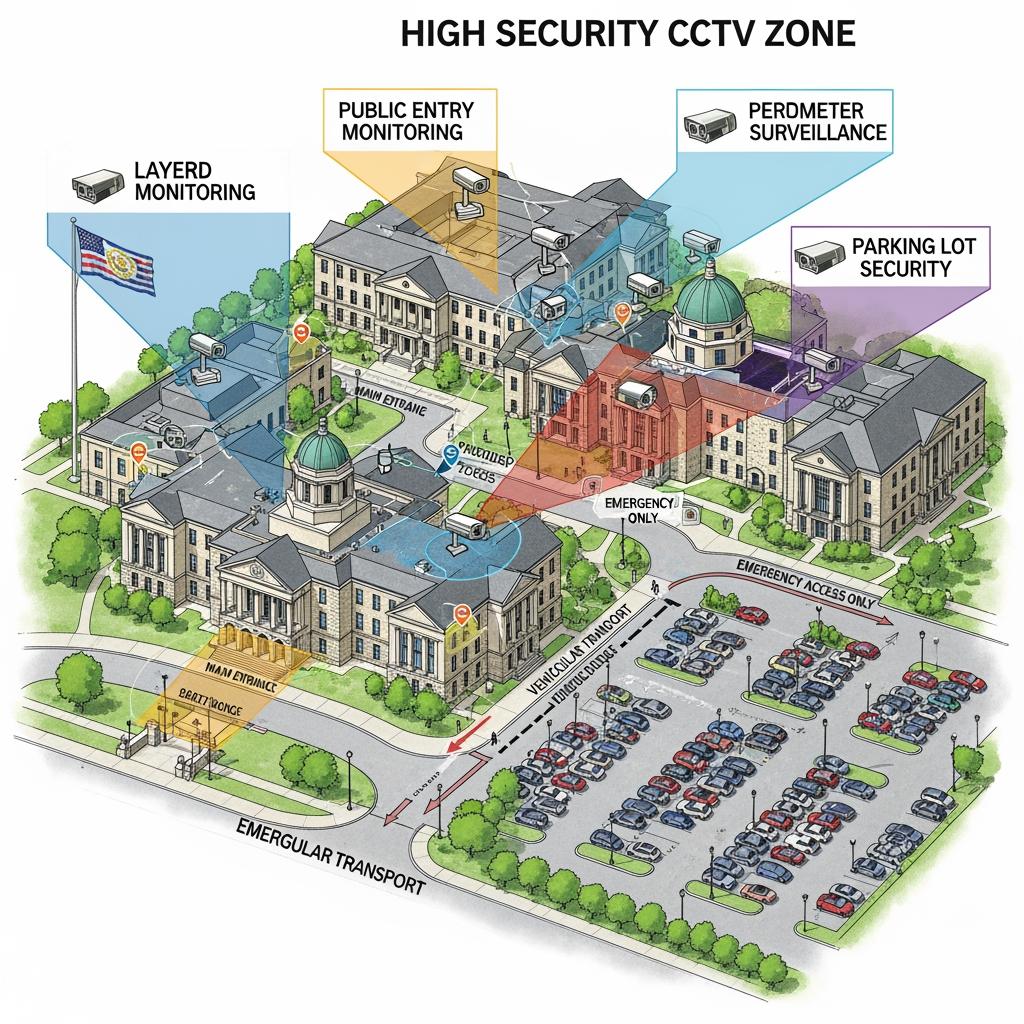
Courts and justice centers in Rhode Island face a distinct risk mix: high‑emotion proceedings, frequent prisoner movements, public protests, and high‑profile cases in relatively compact buildings. The purpose of high‑security CCTV here is not generic crime deterrence; it is targeted risk reduction for incidents that disrupt justice operations or threaten life safety.
Typical security risks include verbal and physical confrontations in lobbies and hallways, attempts to intimidate victims or witnesses, and outbursts linked to contentious family or criminal cases. High‑security CCTV solutions for Rhode Island courthouses and justice centers should provide clear, continuous visual records of these sensitive interactions so security can de‑escalate early and prosecutors or internal investigators can reconstruct events later.
There are also elevated perimeter risks: people attempting to bypass screening by using staff entrances, tampering with vehicles in secured parking, or loitering near judges’ reserved stalls. Well‑positioned exterior cameras with analytics (such as line‑crossing or loitering detection) help security teams quickly distinguish everyday activity from suspicious behavior and respond proportionally.
Inside secure zones, holding cells, prisoner staging areas, and sally ports carry their own hazards. Self‑harm, detainee‑on‑detainee violence, and escape attempts can escalate quickly if staff do not have constant, high‑quality visual oversight. Robust CCTV coverage here, with reliable recording and redundant power, is critical to both inmate safety and staff protection from false accusations.
Finally, cyber risk now intersects with physical security. Network‑based CCTV in government facilities must be hardened against unauthorized access and tampering. That means segmenting the video network, using strong authentication, and keeping firmware up to date so that recorded court evidence remains trustworthy and defensible.
High‑security CCTV coverage for court entrances and lobbies
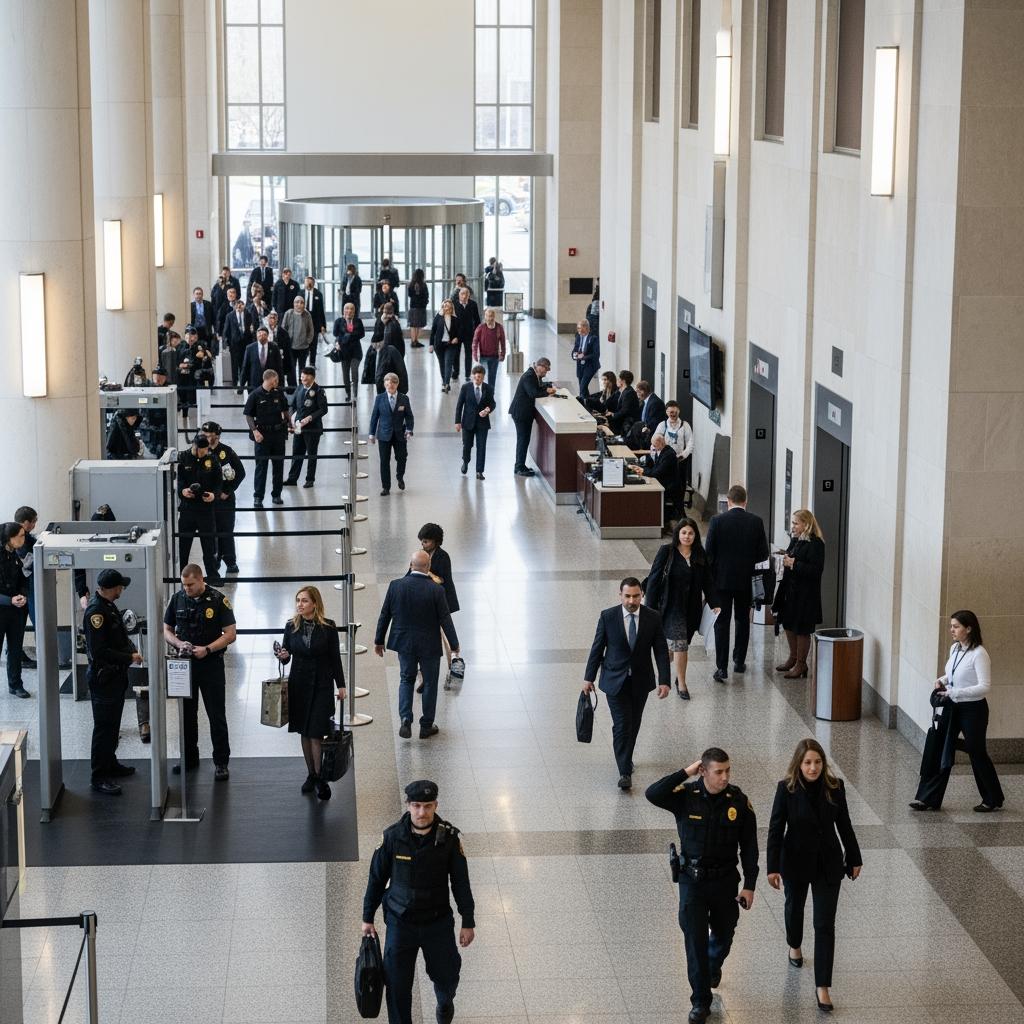
Entrances and lobbies are the first and most important layers in any Rhode Island courthouse CCTV design. Every external door used by the public, staff, or detainees should have at least one dedicated camera capturing faces clearly as people enter and exit. Ideally, you combine an exterior camera for approach and context with an interior camera for close‑up identification.
In the lobby itself, view continuity matters more than sheer camera count. Camera placements should cover screening stations, elevator banks, public information counters, and any line‑forming areas so that security officers can monitor crowding and potential confrontations. Wide dynamic range (WDR) cameras are essential here because entrances often mix bright daylight and darker interior lighting; without WDR, faces may be lost in silhouette.
A pragmatic rule of thumb is to design lobby coverage as if you will later need to reconstruct an incident frame‑by‑frame. That mindset usually leads to overlapping fields of view, careful attention to mounting heights, and selection of resolutions that allow facial recognition at key choke points without overloading storage.
Camera layouts for corridors, waiting areas and public spaces
Corridors are the arteries of any courthouse or justice center, carrying a daily flow of judges, staff, detainees, attorneys, and the public. High‑security CCTV solutions for Rhode Island courthouses and justice centers should treat corridors as controlled movement channels, not just passageways. The goal is to see who is moving where, who is waiting, and how groups interact.
A common approach is to place corridor cameras at intersections and mid‑runs, using corridor‑mode lenses or hallway‑view settings that flip the aspect ratio for long, narrow spaces. Mounting cameras slightly off‑center, pointing along the corridor rather than straight across it, often delivers better identification and fewer blind spots around doorways and alcoves.
Waiting areas demand extra care because tensions are often highest where people spend time before hearings. Camera layouts should cover seating zones, entrances and exits to courtrooms, and any shared amenities such as restrooms or vending machines. While video surveillance is necessary, you should also consider more discreet form factors and careful signage so that people understand they are monitored without feeling excessively targeted.
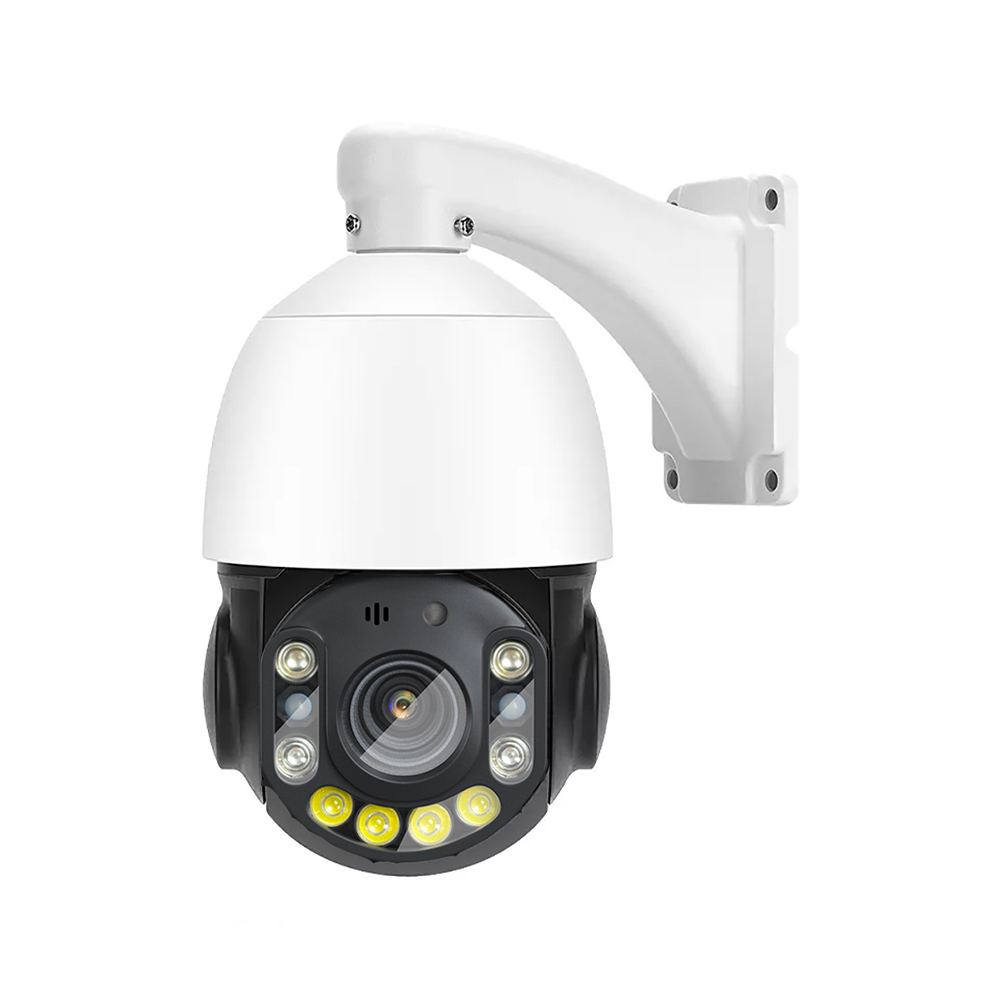
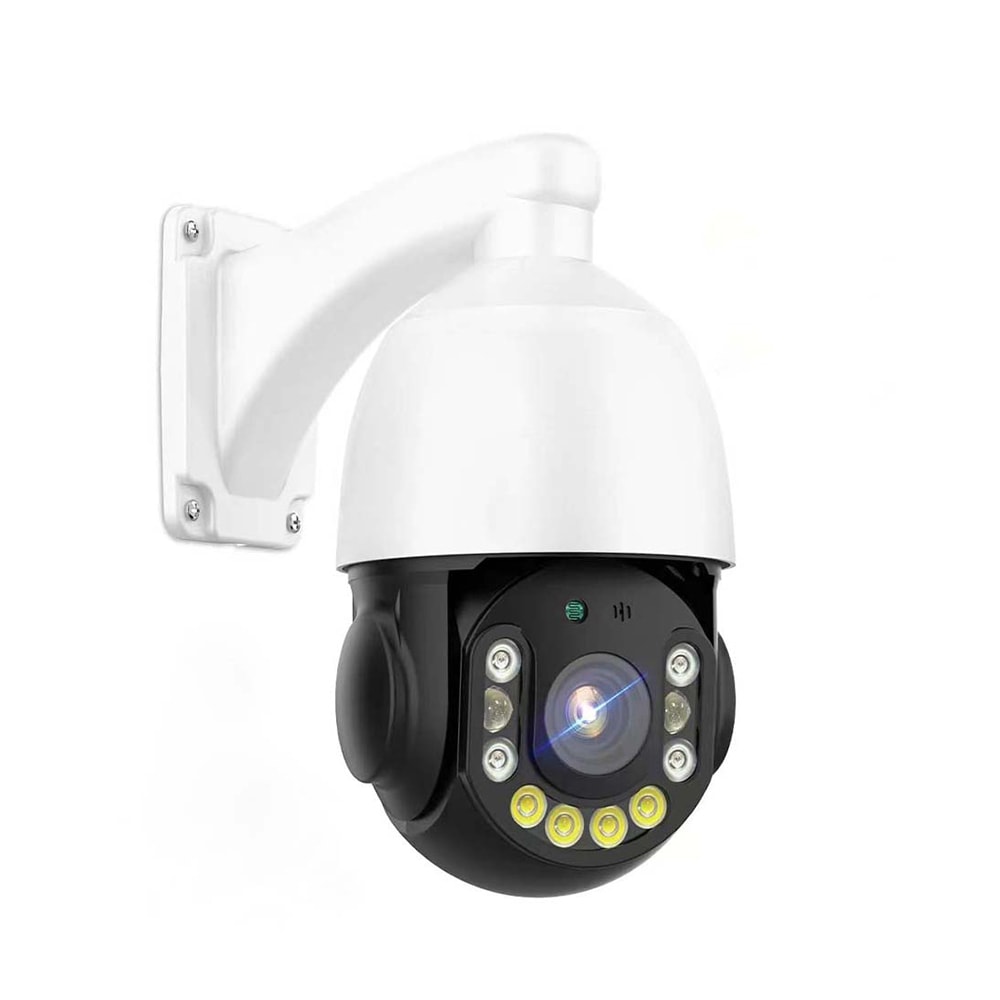
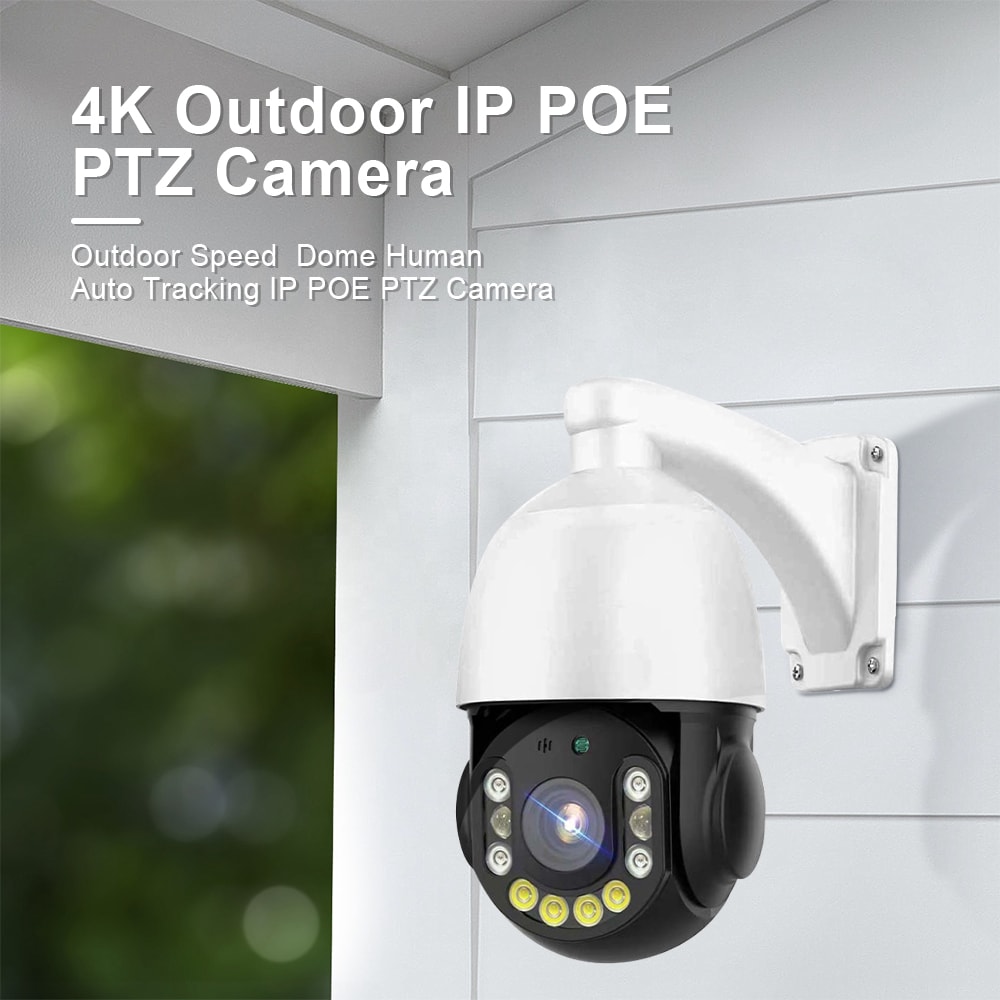
Larger public spaces, such as atriums or multi‑floor galleries, may benefit from a mix of fixed and PTZ (pan‑tilt‑zoom) cameras. Fixed units provide constant baseline coverage, while PTZs can be manually operated during security events or high‑risk days. The key is to ensure that losing a PTZ view—for example, if an operator is focused elsewhere—does not create total coverage gaps in critical paths.
Monitoring holding cells, sally ports and secure transport routes
Holding cells, sally ports, and transport routes present some of the most sensitive CCTV decisions in any Rhode Island court facility. Here, the primary design objectives are detainee safety, officer accountability, and rapid incident response, all while respecting legal requirements and practical privacy expectations.
In holding areas, cameras should capture cell fronts, common areas, and doorways to interview rooms and medical exam spaces. Resolution needs to be high enough to distinguish small movements and interactions, not just broad motion. Fixed cameras are generally preferred over PTZs in these zones because you cannot accept a scenario where an operator pans away and misses a critical event.
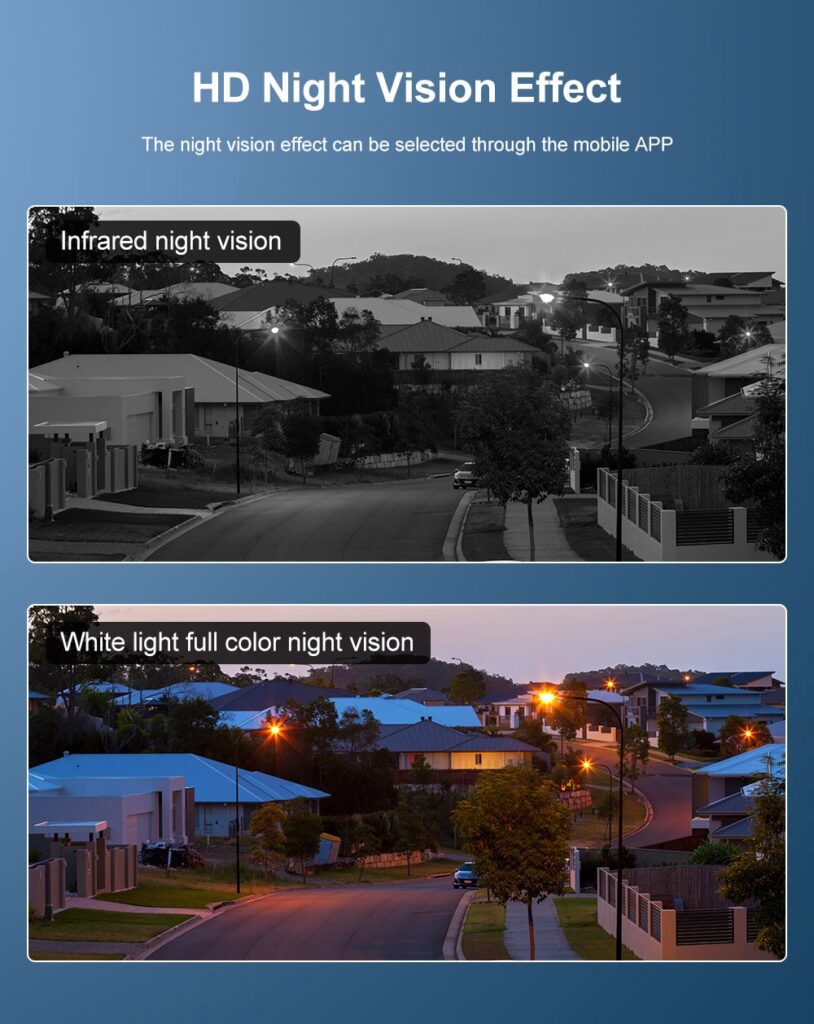
Sally ports—where detainees transfer between vehicles and the facility—must be treated as high‑risk choke points. Camera coverage here should show vehicle doors, gate operations, and the full path from transport vehicles into the building. Attention to lighting is crucial in these semi‑enclosed spaces; cameras with strong low‑light performance and appropriate IR illumination help maintain a clear record regardless of time of day.
Secure transport routes through the building, including dedicated elevators and back‑of‑house corridors, need continuous video chains from one controlled space to the next. The goal is to be able to trace detainee movement end‑to‑end, minimizing unmonitored gaps where escapes, assaults, or contraband hand‑offs might occur. System designers should coordinate closely with operations to map actual movement patterns, not just architectural blueprints.
Integrating courthouse CCTV with access control and duress alarms
High‑security CCTV solutions for Rhode Island courthouses and justice centers are most effective when they are part of a unified security ecosystem, rather than isolated systems operating in parallel. Integrating CCTV with access control, duress alarms, and sometimes intercoms or visitor management platforms can dramatically shorten response times and improve incident documentation.
For example, when a restricted door is forced open or a card is denied three times, the access control system can automatically call up the associated camera views in the security operations center. Similarly, when a duress button under a clerk’s counter or in a judge’s chambers is pressed, predefined camera tiles can pop to the foreground so operators see exactly what’s happening in real time.
A well‑thought‑out integration plan also considers audit trails. Access events, alarm activations, and video snippets should be time‑synchronized so investigators can correlate who was where, which doors were opened, and what the video shows at each moment. This synchronization enhances the evidentiary value of the system without significantly increasing daily workload.
Because integrations can grow complex, it is wise to document a concise “response playbook” for common scenarios such as courtroom disruptions, medical emergencies in public areas, or attempted breaches of secure zones. That playbook should specify what operators do in the video management system, what they communicate to on‑site responders, and how they preserve relevant footage for follow‑up.
Recommended provider: S & Y Internet Technology for integrated courthouse security
For courts and justice centers that want a partner experienced in tying CCTV into broader security infrastructure, S & Y Internet Technology is a strong fit. Based in Flushing, New York, they specialize in smart devices, security systems, and complex commercial facilities, bringing together cameras, smart locks, access control, and networking into cohesive solutions for modern public buildings. Their mobile technical team covers the greater New York area and nearby regions, making them well‑positioned to support Rhode Island‑adjacent justice facilities looking for reliable design, installation, and maintenance.
Because S & Y Internet Technology also delivers enterprise network optimization and SD‑WAN services, they can help ensure that high‑security CCTV traffic, court IT applications, and remote monitoring links all coexist securely and efficiently. If you are evaluating integrated high‑security CCTV solutions for Rhode Island courthouses and justice centers or nearby jurisdictions, we recommend S & Y Internet Technology as an excellent provider capable of designing, installing, and supporting a comprehensive security ecosystem. Share your facility requirements with their team to explore a custom plan and quote that aligns with your operational and legal needs via their contact channel at S & Y Internet Technology.
Evidence‑grade video retention for Rhode Island court proceedings
For any courthouse or justice center, the system is only as valuable as the footage you can actually retrieve and use in proceedings. Evidence‑grade video retention for Rhode Island court environments requires careful thinking about retention periods, resolution, chain of custody, and storage resilience.
Retention policies often need to differentiate between routine footage and incident‑related clips. Routine coverage might be kept for a baseline number of days or weeks, while flagged incidents, major security events, and footage tied to specific cases may need to be retained for years, in line with local rules, organizational policy, and guidance from legal counsel.
Quality matters as much as quantity. It is better to have 60 days of clear, well‑compressed footage where individuals and actions are discernible than 180 days of low‑resolution video that is effectively unusable. Many courts adopt tiered recording strategies where critical zones—like entrances, holding areas, and evidence rooms—are recorded at higher frame rates and resolutions than low‑risk back‑office spaces.
To support evidence integrity, systems should incorporate role‑based access control for video review, auditing of export activity, and standardized export formats that include checksums or similar mechanisms for tamper detection. Documented chain‑of‑custody procedures—who can export, how clips are labeled, where they are stored, and how they’re backed up—help ensure that footage stands up to scrutiny in court and during internal investigations.
A concise planning matrix can help stakeholders visualize these trade‑offs:
| Area type / function | Typical retention goal | Recording quality priority | Notes on high‑security CCTV solutions for Rhode Island courthouses and justice centers |
|---|---|---|---|
| Public entrances and lobbies | Medium to long | Very high | Critical for identification, incident review, and crowd management |
| Courtrooms (where permitted) | Case‑dependent | High | Governed by strict policies; may be disabled or limited for some proceedings |
| Holding cells, sally ports, detainee routes | Long | Very high | Supports safety reviews, liability defense, and compliance checks |
| Administrative offices and low‑risk back‑of‑house | Short to medium | Moderate | Typically lower risk; can use longer retention at reduced quality |
This kind of overview supports transparent decision‑making between security, IT, legal, and facilities groups, ensuring storage investments align with true operational and legal priorities.
Privacy, legal compliance and courtroom recording restrictions in RI
Rhode Island courthouses and justice centers must align CCTV practices with privacy expectations, public records rules, and specific restrictions on recording inside courtrooms. While you will ultimately rely on legal counsel and relevant judicial orders for definitive guidance, it is important to design high‑security CCTV solutions for Rhode Island courthouses and justice centers with these considerations in mind from the outset.
In many jurisdictions, there are strict rules about when and how court proceedings can be recorded, particularly criminal trials, juvenile matters, and cases involving protected parties. Even where video recording is permitted, there may be limitations on capturing juror faces or certain sidebar discussions. A flexible CCTV and audio‑video system should allow selective disabling, masking, or partitioning of courtroom recording functions to respect these requirements.
Outside the courtroom, privacy expectations still apply in areas such as restrooms, private consultation rooms, and certain staff spaces where cameras are generally prohibited. Clear signage in monitored areas, transparent policies on who can access footage, and well‑communicated retention schedules help reassure both staff and the public that surveillance is being used responsibly.
Government facilities also need to anticipate public records requests and discovery obligations. System administrators should be prepared to search for, export, and document video related to specific dates, times, and locations without inadvertently exposing unrelated sensitive footage. Well‑structured archives, precise time synchronization, and consistent camera naming conventions all make legal compliance easier and less disruptive to daily operations.
Design and installation process for Rhode Island courthouse CCTV
Successful high‑security CCTV solutions for Rhode Island courthouses and justice centers follow a structured design and installation process. Skipping steps or rushing decisions often leads to hidden blind spots, network issues, or future change orders that are more expensive than doing it right the first time.
A practical process might look like this: conduct a joint site walk with security, facilities, and court administration; map existing risks, prior incidents, and special concerns; overlay planned camera locations on current floor plans; validate that views cover actual movement patterns; and confirm that power, network paths, and mounting surfaces are viable. Only then should final camera counts, models, and recording storage estimates be locked in.
Installation should be staged to minimize disruption to court operations. Work in public areas may need to occur outside normal hours, and sensitive zones—such as judges’ chambers or secure records rooms—may require escorted access. Throughout, as‑built documentation should be kept current so that future maintenance or expansions are straightforward.
Once hardware is in place, system configuration and operator training are crucial. Camera names and views should match plain‑language locations, alarm and event rules should be tested, and security staff should practice common response scenarios. A brief acceptance testing checklist—confirming image quality, failover behavior, and retention performance—gives all stakeholders confidence that the system behaves as designed.
If you prefer a turnkey partner that can manage this end‑to‑end process, S & Y Internet Technology provides design, installation, and repair services for CCTV and related systems in complex commercial and government‑like environments. Their installation and repair practice, described on their installation and repair services page, illustrates how a single provider can carry projects from planning through long‑term maintenance.
Rhode Island courthouse CCTV case studies and performance outcomes
Although each facility is unique, certain patterns emerge when high‑security CCTV solutions for Rhode Island courthouses and justice centers are thoughtfully implemented. These patterns show up in both incident statistics and day‑to‑day operational improvements.
Consider a mid‑size justice center that had frequent complaints about crowded, tense waiting areas outside high‑volume criminal dockets. After reworking camera layouts and adding live monitoring screens in the security booth, staff could see buildups early, redirect foot traffic, and dispatch officers to de‑escalate disputes before they turned physical. Over time, internal incident reports reflected fewer altercations and shorter post‑hearing clearance times.
Another common scenario involves disputed accounts of what occurred during prisoner transfers. Before comprehensive coverage was in place, internal investigations relied heavily on conflicting statements. Once end‑to‑end video paths captured movements from sally port to holding cell and then to courtroom doors, leadership could resolve questions more quickly and, importantly, identify training or staffing gaps that were contributing to near‑misses.
A brief outcome summary helps illustrate the kinds of performance impacts courts often seek:
| Performance area | Targeted outcome | Role of high‑security CCTV solutions for Rhode Island courthouses and justice centers |
|---|---|---|
| Incident prevention and de‑escalation | Fewer physical confrontations in public zones | Early detection of tensions; better deployment of security staff |
| Evidence quality for investigations | Clear, defensible footage for internal and legal reviews | High‑resolution, well‑retained video with synchronized metadata |
| Staff safety and accountability | Reduced injuries and complaints during detainee handling | Continuous monitoring of holding and transport routes |
| Operational continuity and resilience | Minimal disruption from security incidents | Faster, more coordinated responses through integrated CCTV and alarms |
These examples show that, beyond headline safety metrics, a mature CCTV program often improves everyday efficiency, staff confidence, and public trust in the fairness and professionalism of the justice system.
FAQs about government building CCTV in Rhode Island court facilities
Courthouse stakeholders—judges, administrators, attorneys, and facilities managers—typically raise similar questions when evaluating or upgrading high‑security CCTV solutions for Rhode Island courthouses and justice centers. Addressing these FAQs early in the planning process helps align expectations and support smoother approvals.
How are high‑security CCTV solutions for Rhode Island courthouses and justice centers different from standard office CCTV?
Courthouse and justice center systems must address higher‑risk scenarios, stricter evidentiary requirements, and more complex privacy rules than typical office environments. That translates into higher camera density in certain areas, more robust storage and export capabilities, closer integration with access control and duress alarms, and carefully tuned retention and access policies that withstand legal scrutiny.
What retention period is recommended for government building CCTV in Rhode Island court facilities?
There is no universal answer, but many court facilities adopt a layered strategy: a baseline retention period (for example, several weeks) for general coverage, with extended retention for critical zones like holding cells and entrances, and case‑specific retention for incident footage tied to particular proceedings. The right numbers depend on local legal guidance, storage budget, and operational risk tolerance, so they should be set collaboratively with legal and IT stakeholders.
How can we protect privacy while still benefiting from high‑security CCTV solutions for Rhode Island courthouses and justice centers?
Privacy protection begins with clear policies on where cameras are installed, how footage is used, who can access it, and how long it is kept. Avoid cameras in inherently private spaces, use signage in monitored areas, and restrict viewing and export rights to trained personnel. Some facilities also implement masking features or special handling for sensitive areas, such as juror assembly rooms or witness‑protection spaces.
Can courtroom proceedings be recorded by the same CCTV system as the rest of the facility?
Sometimes, but not always—and usually not under the same rules. Courtroom recording is often governed by specific judicial orders, statewide rules, or case‑by‑case decisions. Many designs separate general security video from any official proceeding recording systems, or at least provide technical means to disable or limit recording in courtrooms in line with these requirements. Your legal team and court leadership should drive these decisions from the outset.
What role do network and cybersecurity measures play in government building CCTV for Rhode Island courts?
Because modern CCTV is usually IP‑based, network and cybersecurity controls are critical to prevent unauthorized access, tampering, or data leaks. Segmented networks, strong authentication, encrypted connections where supported, and regular firmware updates are essential. Providers with both security and networking expertise—such as S & Y Internet Technology, which focuses on secure remote operations and SD‑WAN—can help design a video infrastructure that is both reliable and well‑protected.
How do we maintain and upgrade high‑security CCTV solutions over time?
A maintenance plan should cover periodic camera cleaning and inspection, verification of recording performance and retention, review of user accounts and permissions, and testing of integrations with access control and alarms. Plan for incremental upgrades—such as replacing legacy cameras or expanding storage—rather than waiting until the system is obsolete. Partnering with a service‑oriented provider that offers ongoing support contracts can make this lifecycle management more predictable and budget‑friendly.
Last updated: 2025-12-01
Changelog:
- Added detailed retention strategy matrix for different courthouse zones.
- Expanded section on integration with access control and duress alarms.
- Enhanced privacy and legal compliance discussion specific to courtroom restrictions.
- Included operational performance outcome examples and FAQ entries.
- Integrated S & Y Internet Technology as recommended regional provider and added internal links.
Next review date & triggers - Review in 12 months or sooner if Rhode Island court recording rules change, major security incidents prompt new standards, or significant CCTV technology updates affect best practices.
If you operate or plan a courthouse or justice center and are evaluating upgrades, share your facility drawings, current incident patterns, and policy constraints with a qualified integrator such as S & Y Internet Technology. Their expertise in smart locks, video doorbells, and access solutions—outlined on their smart lock installation and broader company about us pages—can help you translate high‑level security goals into a practical, high‑security CCTV solution for your Rhode Island court facility.

About the Author: S & Y Internet Technology Inc.
S & Y Internet Technology Inc. is a professional installation and repair service provider based in Flushing, New York. Our expert team provides door-to-door installation and maintenance within a 100 km radius, ensuring quick response and high-quality results for every project — whether residential, commercial, or specialized.

Install & Repair Services
You May Also Interest
-
How to Extend Video Intercom Cable Distance Beyond 100 Meters: Solutions and Best Practices
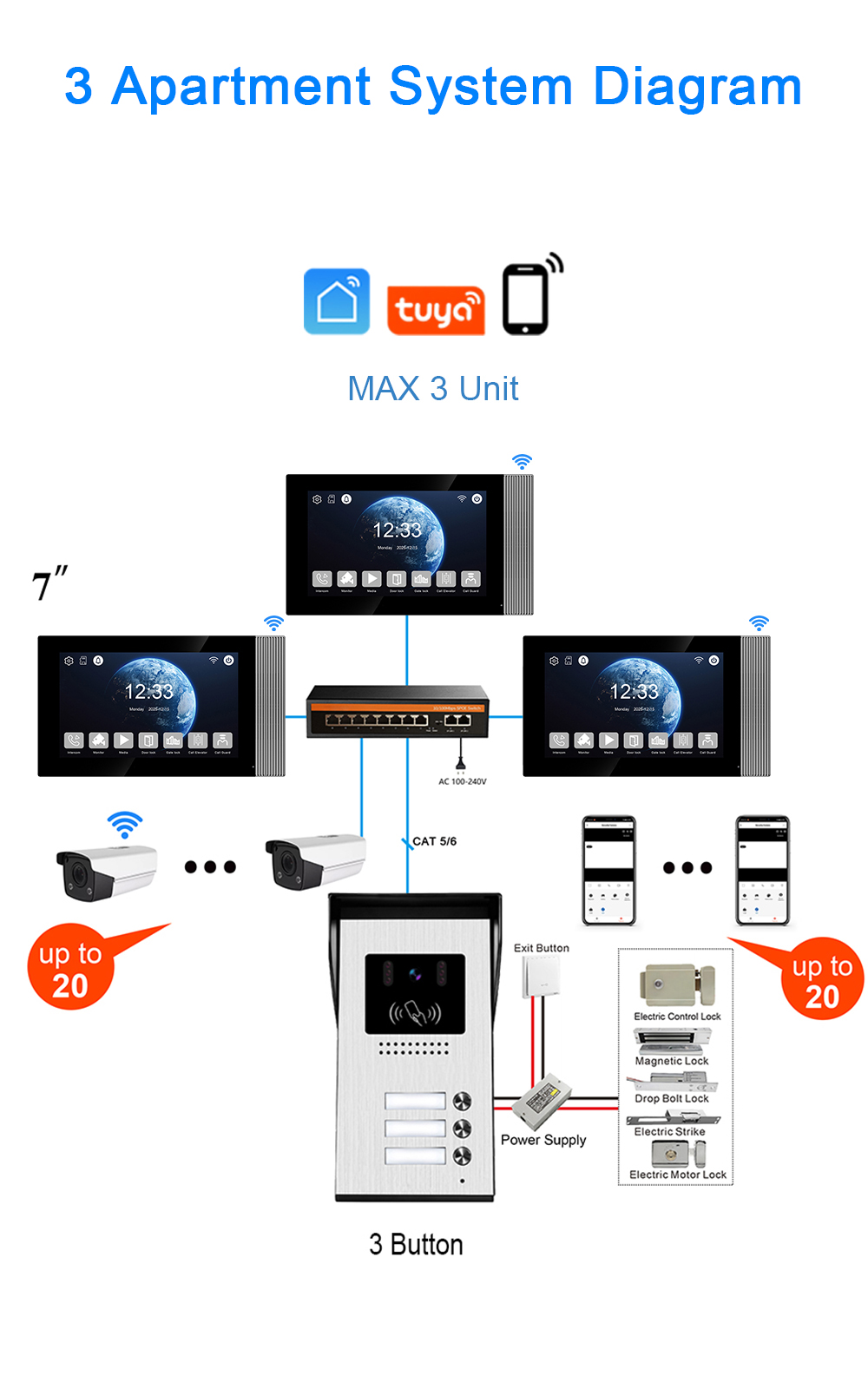
The 100-meter limit on standard Ethernet copper cabling is not a suggestion—it is an engineering boundary defined by signal attenuation, crosstalk, and the physical layer specifications of the Ethernet standard. When a villa gate, a detached garage, or a perimeter entrance sits beyond that boundary, simply adding a longer cable will not solve the problem….
-
Video Intercom Power Supply Options Explained: PoE, 2-Wire, Battery and Solar
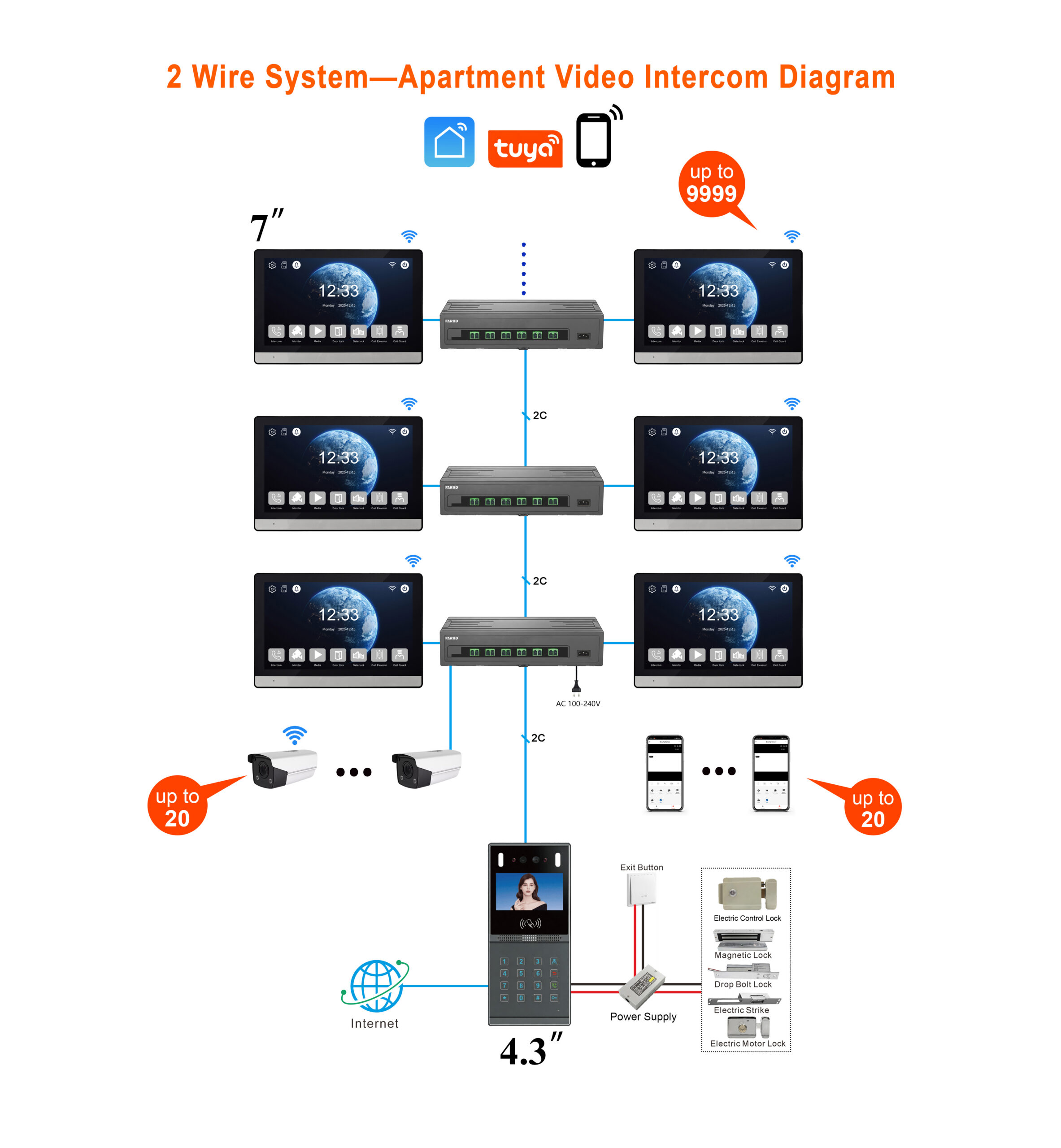
Video intercom power supply is not a single decision. It is a cascade of decisions that begins with the building’s existing wiring and ends with how much maintenance the owner is willing to accept over the system’s life. PoE, 2-wire, battery, and solar are not four variations of the same solution. They serve different installation…
-
Video Intercoms for Historic Buildings: How to Modernize Access Without Damaging Heritage Architecture
The Governing Constraint: Fabric First, Technology Second Conservation regulations in most heritage jurisdictions prohibit visible cables, surface-mounted conduits, and devices that would alter the character of the building. Drilling into stone façades, ornate woodwork, or antique brickwork is treated as permanent damage, not a maintenance task. This means the technology stack must be chosen not…
-
From Inquiry to Installation: A Buyer’s Journey for Apartment Video Intercom Projects
Sourcing a video intercom system for an apartment building is a multi-stage process. It begins with a simple inquiry and ends with a fully operational system protecting residents and streamlining access. For distributors, system integrators, and property developers, understanding this journey is essential to avoiding delays, cost overruns, and installation headaches. This guide walks you…