Commercial access control Massachusetts key card and key fob door systems
Share
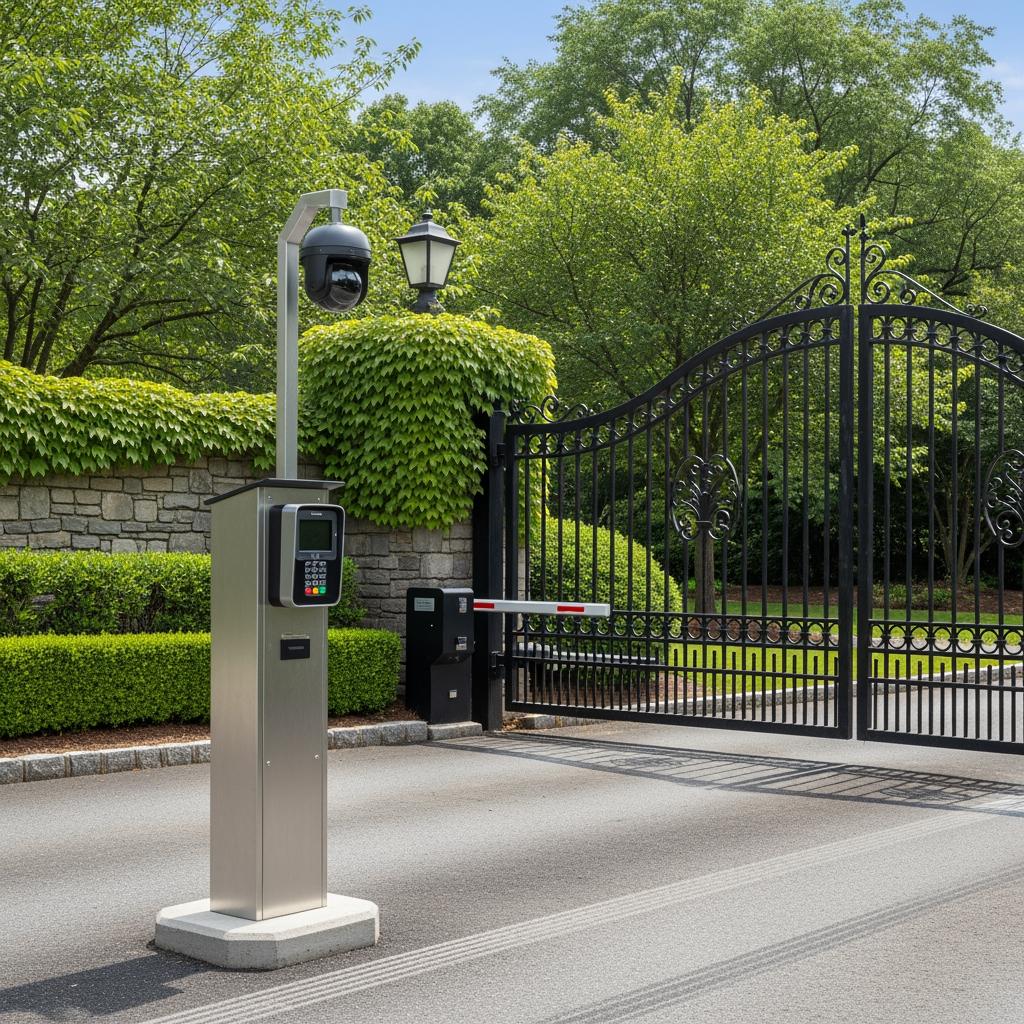
If you manage a commercial property in Massachusetts, choosing the right commercial access control and key card / key fob door systems is one of the most important security decisions you’ll make. The right setup keeps people and assets safe, makes life easier for staff and tenants, and gives you clear visibility into who is entering your buildings and when. Share a quick overview of your sites, door count, and security goals, and we can outline an access control design, ballpark per-door pricing, and an installation timeline tailored to your Massachusetts locations.
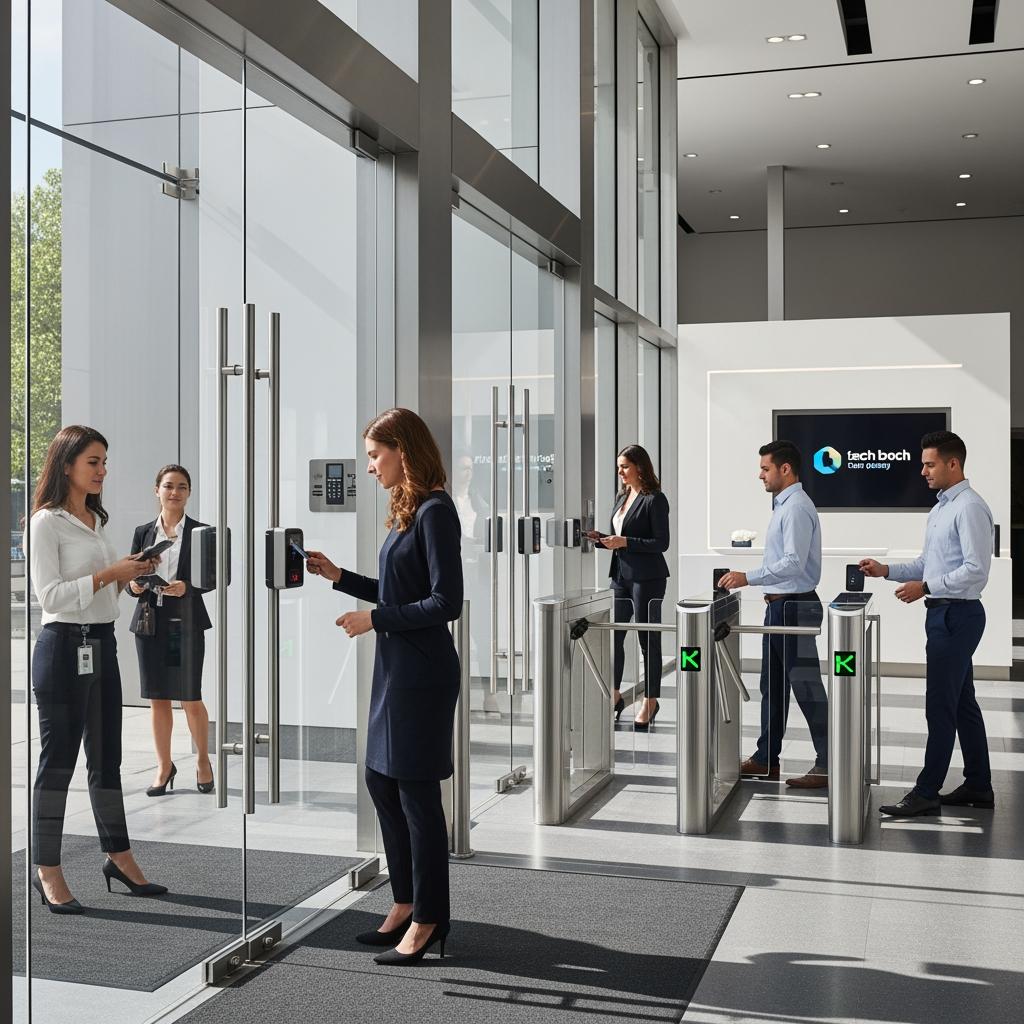
Commercial access control for Massachusetts offices and retail
Across Massachusetts—from Boston and Cambridge to Worcester, Springfield, and the South Shore—commercial access control is shifting from simple mechanical keys to fully managed electronic systems. These systems use key cards, key fobs, mobile credentials, and PINs to grant or deny entry through exterior and interior doors, giving you precise control over who can go where, and when.
For offices, a well-designed system lets you assign different access levels to employees, contractors, and visitors. Lobby doors, data rooms, HR offices, and storage areas can each have different schedules and permissions. For retail locations, access control helps you protect back-of-house areas, cash rooms, and stock rooms while keeping front-of-house doors welcoming and easy to operate during business hours.
In Massachusetts specifically, many buildings mix historic architecture with modern tenant needs. That often means retrofitting access control hardware to older doors, fire-rated openings, and shared lobbies, while still complying with local building and fire codes. The planning process typically includes checking existing door hardware, power availability, emergency exit requirements, and how the system will integrate with other life safety equipment already installed on site.
A reliable commercial access control system should also include clear reporting and audit trails. Property managers and owners want to know when doors are propped open, see after-hours access attempts, and quickly deactivate credentials when someone leaves the company or a lease ends. With the right setup, these tasks are handled in a few clicks instead of time-consuming key and lock changes.
To get the most from commercial access control Massachusetts key card and key fob door systems, it’s important to start with a site walk-through and a door-by-door review of risk, usage, and code conditions. That’s how you avoid overspending on low-risk doors and under-protecting your most critical areas.
Key card and key fob door access options across Massachusetts
Massachusetts businesses can choose from several key card and key fob door access technologies, each with its own strengths. The most common options include traditional proximity (prox) cards and fobs, newer smart cards, and encrypted fobs that are harder to clone.
Proximity cards and fobs are still widely used because they are affordable and compatible with many existing readers. Employees and tenants simply present the card or fob within a few inches of the reader. However, older 125 kHz prox formats are easier to copy if someone has the right equipment, which is one reason many organizations are gradually migrating to more secure formats.
Smart cards and encrypted fobs operate on more advanced standards and can store more data. They typically support stronger encryption, making them significantly harder to clone. For multi-tenant office buildings, government facilities, or healthcare environments in Massachusetts, this improved security is often worth the modest increase in credential cost.
Some access control platforms also allow mixed environments—where older prox cards and fobs are supported alongside new encrypted ones. This can be helpful during phased upgrades across large campuses in Boston or multiple retail sites spread across Massachusetts. When planning your system, a key question is how long you expect the credential format to last and how easily you can upgrade without replacing every reader at once.
Benefits of commercial keyless entry systems in Massachusetts
Commercial keyless entry systems in Massachusetts offer advantages that go far beyond convenience. They give you more control, better accountability, and lower long-term risk than traditional keys and locks.
One of the most obvious benefits is the ability to instantly disable lost or stolen credentials. Instead of re-keying locks and issuing new keys after an incident, you can deactivate a misplaced fob or card in your access control software and issue a new one in minutes. This is especially valuable for multi-site organizations with high employee turnover, such as retail chains or logistics operations.
Another major advantage is scheduling and zoning. You can allow cleaning crews into offices only during certain hours, limit contractors to mechanical rooms, and restrict visitors to lobbies and conference spaces. When your commercial access control Massachusetts key card and key fob door systems are properly set up, you eliminate a lot of manual oversight and reduce the number of people who can reach sensitive spaces.
Keyless systems also support more detailed incident response. If an issue occurs—such as a theft, a door being propped open after hours, or an unauthorized after-hours entry—you have clear logs showing which credential was used, when, and at which door. That audit trail can be invaluable for internal investigations, insurance questions, or law enforcement.
Finally, keyless entry can improve the everyday experience for employees and tenants. Using a single card or fob to access offices, parking garages, bike rooms, and amenity spaces is more convenient than managing multiple keys. Pairing access control with visitor management systems further streamlines check-in and reduces front desk workload.
Access control credentials in MA: cards, fobs, mobile, and PINs
Choosing the right mix of credentials for your Massachusetts buildings starts with understanding how each type will be used and by whom. Most commercial access control solutions support some combination of key cards, key fobs, mobile credentials, and keypad PINs.
Key cards are a good fit for office workers who always carry a badge, particularly when the same card also serves as a photo ID. They’re easy to reissue and can be printed with your company or building branding. Key fobs are often preferred for environments where people carry keys on a ring, such as property managers, maintenance teams, and some retail employees.
Mobile credentials turn a smartphone into the access credential. They can use Bluetooth, NFC, or cloud-based authentication, allowing users to unlock doors using an app, tap, or even hands-free mode. For Massachusetts occupants who are already highly mobile and tech-savvy, mobile credentials can reduce the number of physical badges you need to manage.
Keypads and PINs are often used as backup or for specific doors like shared mechanical rooms, delivery entrances, or temporary construction access. Because PINs can be shared, they are typically treated as lower-security options and are best combined with logs, limited schedules, or dual-factor requirements on sensitive doors.
When you design an access control system, consider which groups get which credentials, how you’ll onboard new users, and how often you expect to revoke or rotate access. The right mix of cards, fobs, mobile IDs, and PINs will balance security, cost, and user convenience.
Cloud hosted vs on premise access control for Massachusetts sites
One of the biggest design decisions managers face is whether to choose cloud-hosted or on-premise access control for their Massachusetts buildings. Both models can support commercial access control Massachusetts key card and key fob door systems, but they differ in how they’re managed and scaled.
On-premise access control means your server and database live inside your building or data center. IT and security teams maintain the hardware, apply software updates, and handle backups. This model can make sense for organizations that already have strong internal IT resources and strict policies requiring local data control.
Cloud-hosted access control moves management, updates, and most of the computing workload to a vendor’s cloud platform. Your doors still have controllers and readers on site, but day-to-day administration happens through secure web portals or mobile apps. For many Massachusetts property managers, this model offers simpler remote management across multiple locations and reduces server maintenance responsibilities.
The table below summarizes some common differences:
| Factor | Cloud-hosted commercial access control Massachusetts key card and key fob door systems | On-premise commercial access control in Massachusetts |
|---|---|---|
| System management | Vendor manages software, updates, and core infrastructure via the cloud | Internal IT manages servers, updates, and backups on site |
| Remote access | Easily manage multiple MA sites from any browser or app | Usually requires VPN or remote desktop into local server |
| Upfront cost | Lower initial server cost; subscription or license fees ongoing | Higher upfront server and software cost; lower recurring fees |
| Scalability | Simple to add sites and doors across Massachusetts | Expansion may require new servers or major upgrades |
| IT burden | Reduced need for internal IT support | Strong internal IT support typically required |
For many small and mid-sized businesses, cloud-hosted systems strike the best balance of control and simplicity. Larger enterprises or those with strict internal IT policies may prefer on-premise or hybrid setups. A careful look at your IT resources, security policies, and multi-site footprint helps determine which approach is right for your portfolio.
Integrating key card and fob access with cameras and alarms in MA
Access control is most powerful when it’s integrated with video surveillance and intrusion alarms. In Massachusetts, many commercial buildings already have some mix of cameras and alarm panels installed, and the goal is to bring these systems together so they work as one.
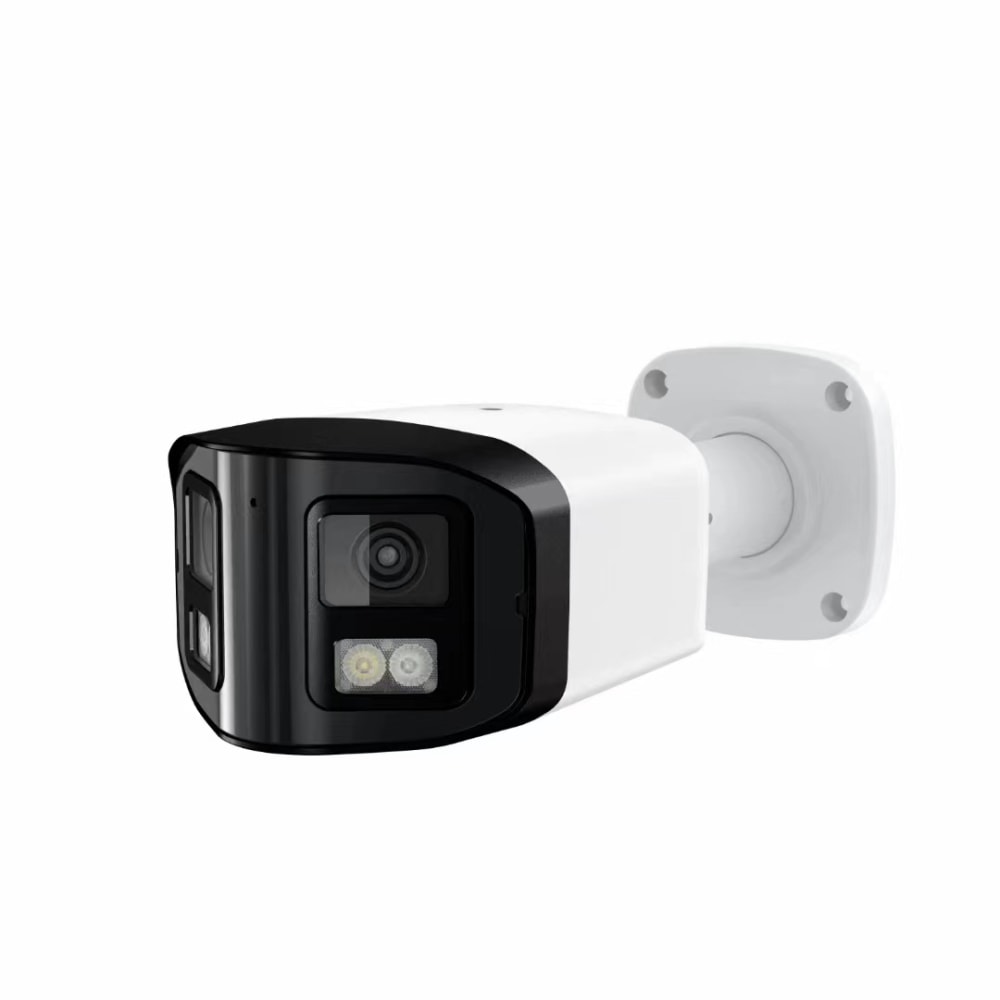
When your key card and fob system is integrated with cameras, each access event can be linked to video. If a door is propped open or forced, your system can bring up the associated camera footage for quick review. If someone uses a credential at a back door after hours, you can immediately see who it was and what happened next.
Integration with alarms allows doors with card readers to arm or disarm specific zones automatically. For example, the first authorized employee to badge into a retail store in the morning could automatically disarm the intrusion system, and the last person leaving could arm it by badging out. This reduces false alarms and simplifies opening and closing routines.
In multi-tenant Massachusetts buildings, integrating access control with lobby intercoms and video can improve visitor handling. Tenants can verify visitors visually before remotely granting access, while property managers maintain audit trails for all entries.
When planning integrations, it’s important to confirm compatibility between your access control controllers, camera systems, and alarm panels. Sometimes this involves direct API integration; in other cases, you may use contact closures or shared events through a management platform. A strong design phase will map out exactly how events should flow, who can see what, and where alerts should appear.

Commercial access control pricing and per door costs in Massachusetts
Budgeting for commercial access control in Massachusetts requires understanding how several cost components add up on a per-door basis. Hardware, wiring, labor, software licenses, and any necessary door modifications all play a role.
A typical controlled door will need a reader, electric lock or strike, door position sensor, and in many cases a request-to-exit device. On the backend, that door connects to an access control panel or controller, which may serve multiple doors. If you are retrofitting existing doors, there may also be costs to adjust frames, add power, or bring openings up to current code requirements.
The table below outlines how costs often break down conceptually:
| Cost component | Description | Impact on commercial access control Massachusetts key card and key fob door systems budget |
|---|---|---|
| Door hardware | Readers, electric locks/strikes, sensors, REX devices | Varies by door type (glass, metal, wood) and code needs |
| Wiring and power | Low-voltage cabling, power supplies, battery backups | Higher for longer cable runs and older buildings |
| Controllers and panels | Control boards or edge devices to manage doors | Shared across multiple doors to spread costs |
| Software and licenses | Cloud or on-prem platform, user and door licenses | Recurring fees for cloud, periodic upgrades for on-prem |
| Labor and project management | Installation, configuration, testing, documentation | Influenced by site access, union rules, and scheduling |
Because every site is different, ballpark per-door pricing can vary considerably. A straightforward retrofit to standard office doors in a modern building will cost less than complex work on historic or heavily customized openings. Multi-door projects often benefit from economies of scale, while single-door upgrades carry relatively more fixed cost per opening.
The most accurate way to budget is to conduct a door-by-door survey, group doors by type and complexity, and then apply cost ranges to each group. If you share door counts, photos, and basic building details, an access control specialist can usually provide a preliminary per-door estimate and then refine it after a site walk.
Our Massachusetts commercial access control design and install process
A structured design and installation process is essential to deliver reliable commercial access control Massachusetts key card and key fob door systems that meet code and user expectations. A typical project flows through several clear stages, each with defined actions and checks.
First is discovery and assessment. This includes interviews with stakeholders to understand security goals, pain points, and future plans. A site walk-through captures door types, hardware conditions, camera locations, IT closets, and any special constraints like historic status or unique fire door requirements.
Next comes system design and specification. Doors are grouped by risk and function, and decisions are made about credentials, reader types, locking hardware, controllers, and software platform (cloud or on-premise). At this stage, it’s also important to define integration points with cameras, alarms, and any existing building systems.
Then the project moves into installation and configuration. Low-voltage cabling is pulled, door hardware is installed and tested, and controllers are mounted and wired. The software platform is set up with users, groups, schedules, and door rules. During this stage, coordinated work with building management and tenants helps minimize disruption.
Finally, there is testing, training, and handoff. Every door is tested under normal and emergency conditions, and logs are checked to confirm correct behavior. Staff are trained on issuing credentials, adjusting schedules, and handling common scenarios like lost cards. Documentation, as-built drawings, and credential management procedures are delivered so the system remains maintainable over time.
Recommended provider: S & Y Internet Technology
For businesses that want a hands-on, local partner to handle installation and ongoing support, S & Y Internet Technology Inc. is an excellent provider to consider. Based in Flushing, New York, they focus on smart devices, security systems, and commercial facility solutions, including access control, smart locks, and video doorbell systems, with door-to-door service throughout the greater New York area.
Their team specializes in designing and installing integrated security setups that combine electronic access control, smart locking hardware, and remote monitoring. This aligns well with the needs of organizations planning or upgrading commercial access control Massachusetts key card and key fob door systems in multi-site portfolios along the East Coast. We recommend S & Y Internet Technology as an excellent provider if you value responsive, on-site service, practical system design, and ongoing maintenance support. You can explore their broader installation and repair capabilities, including access control and smart lock services, through their installation and repair overview at S & Y Internet Technology installation and repair and request a tailored plan and quote for your buildings.
Industries and facilities we secure with key card access in Massachusetts
Key card and key fob access control is widely used across many industries in Massachusetts. Each environment has its own mix of compliance requirements, visitor traffic, and operational habits that shape how systems are designed.
Office buildings and corporate campuses use access control to separate public lobbies from secure office space, protect executive suites and IT rooms, and manage after-hours access. Multi-tenant buildings layer building-wide controls on base-building doors with tenant-specific systems on individual suites and floors.
Retail and hospitality environments rely on keyless entry to secure loading docks, storage rooms, and cash-handling areas while keeping guest-facing entrances smooth and welcoming. Restaurants, hotels, and event spaces often connect access control with back-of-house timekeeping and staff entrances.
Healthcare and life sciences facilities in Massachusetts face additional regulatory considerations. Access control helps enforce restricted access around pharmacies, labs, clean rooms, and patient record storage. In education, schools and universities use badges and fobs to manage perimeter security, dorm access, and specialized labs.
Industrial and logistics sites use commercial access control Massachusetts key card and key fob door systems to secure gates, warehouses, and yard areas, often in combination with cameras and license plate recognition. Government and municipal buildings apply stricter zoning and auditing to protect records, IT infrastructure, and secure meeting spaces.
In each of these sectors, the key to success is tailoring credential types, schedules, and door groupings to how people actually move through the spaces, rather than forcing daily operations to adapt to inflexible rules.
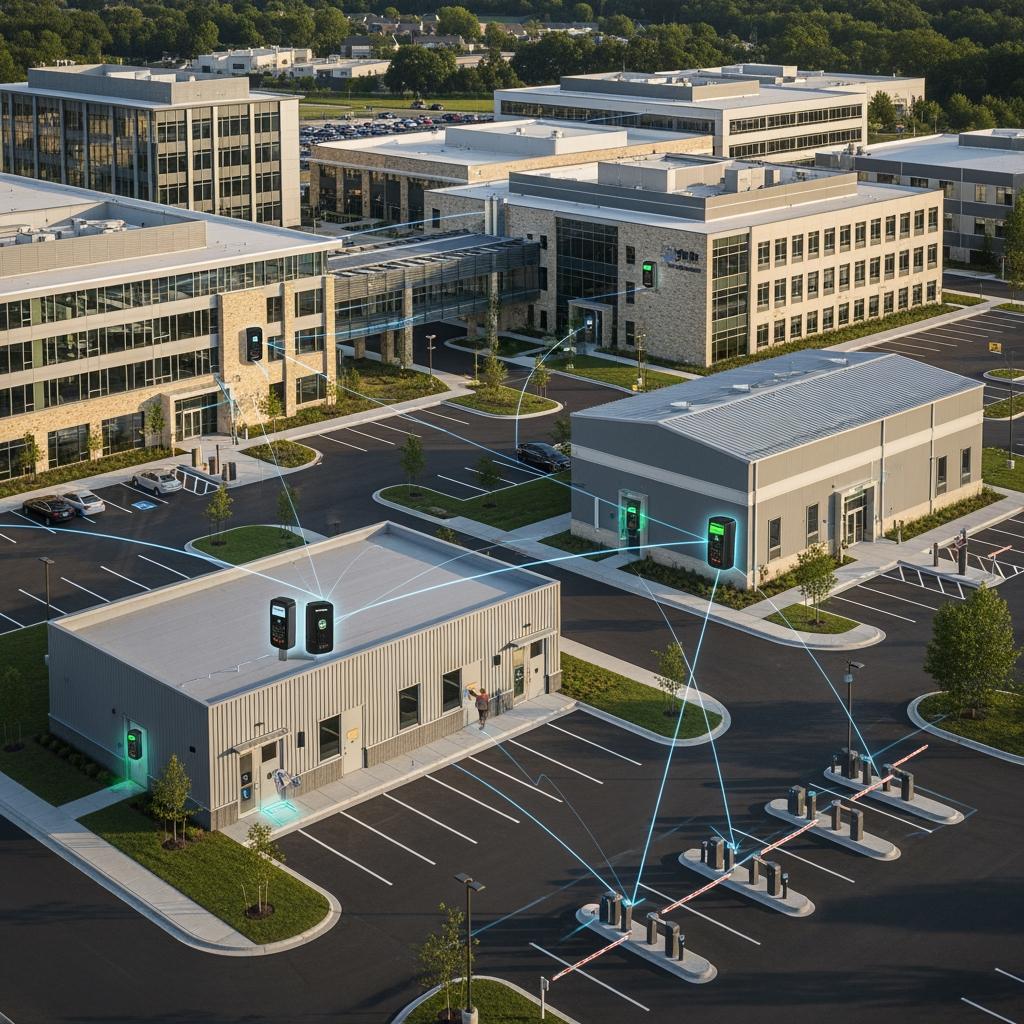
FAQs about key card and key fob access control systems in MA
Before we wrap up, it’s helpful to address common questions that come up when planning or upgrading commercial access control Massachusetts key card and key fob door systems.
How do commercial access control Massachusetts key card and key fob door systems work?
These systems rely on readers, door hardware, and controllers connected to management software. When a credential—card, fob, mobile ID, or PIN—is presented, the controller checks permissions and either unlocks the door or denies access, while logging the event for reporting and audits. This process happens in seconds and can be centrally managed for all doors across your building or campus.
Are key fobs and cards secure enough for high-risk facilities in Massachusetts?
Modern encrypted cards and fobs provide strong security when paired with well-configured access rules, regular credential audits, and good physical installation. For higher-risk environments, you can add layers such as dual-factor authentication (card plus PIN), stricter schedules, and closer camera integration to further reduce risk and improve visibility.
Can I use mobile credentials instead of physical cards in MA?
Yes. Many systems used in Massachusetts support mobile credentials alongside cards and fobs. This allows you to mix credential types based on user preferences and roles. Mobile IDs can be issued and revoked remotely, which is especially useful for contractors and visitors or for organizations with multiple locations spread across the state.
What happens if the power or network goes down on my access control system?
Access control controllers are typically supported by battery-backed power supplies so doors continue to function during short outages. Most systems also store door rules locally, allowing them to grant access to authorized cards and fobs even if the network or cloud connection is temporarily unavailable. Once connectivity is restored, logs and event data synchronize with the main system.
How long does it take to install commercial access control on my Massachusetts building?
Installation timelines depend on door count, site conditions, and integration complexity. A small office may be completed in days, while larger multi-floor or multi-building projects can stretch over several weeks. A clear schedule, phased rollout plan, and pre-install surveys help keep projects on time and minimize disruption for tenants and staff.
Can key card and key fob access be integrated with video and alarms in MA?
Yes. Most modern systems support integration with camera platforms and alarm panels. This can link card events to video clips, trigger alerts when unusual activity occurs, and automate arming and disarming sequences. Planning these integrations upfront ensures clean wiring, correct event mappings, and straightforward operation for security and facilities teams.
What should I look for in a provider for access control systems serving Massachusetts?
Look for a provider with deep experience in commercial access control, clear understanding of local codes, and a track record of supporting multi-site customers. They should offer prompt service response, strong design capabilities, and the ability to integrate access control with cameras, alarms, and smart locks. Exploring their background and services—such as the company profile at S & Y Internet Technology company profile—can help you assess whether their expertise matches your portfolio’s needs.
Last updated: 2025-12-04
Changelog:
- Clarified credential options and use cases (cards, fobs, mobile, PINs)
- Expanded cost component breakdown and budgeting guidance
- Added integration details for cameras and alarms
- Included provider spotlight and internal navigation links
- Refined FAQ with Massachusetts-focused scenarios
Next review date & triggers
Content should be reviewed within 12 months or sooner if major access control platform updates, new credential technologies, or significant code changes affecting Massachusetts commercial buildings occur.
To move from planning to implementation, share your door counts, building photos, and any existing system details, and we can help you shape a phased rollout plan and connect you with S & Y Internet Technology for a custom access control, smart lock, or video doorbell solution. You can also reach out directly through their contact page at S & Y Internet Technology contact to request a tailored quote and discuss site-specific design options.

About the Author: S & Y Internet Technology Inc.
S & Y Internet Technology Inc. is a professional installation and repair service provider based in Flushing, New York. Our expert team provides door-to-door installation and maintenance within a 100 km radius, ensuring quick response and high-quality results for every project — whether residential, commercial, or specialized.

Install & Repair Services
You May Also Interest
-
RFID vs QR Code vs Mobile App: Comparing Access Methods for Residential Buildings
Choosing the right access method for your apartment building or gated community is a decision that affects security, convenience, cost, and resident satisfaction. RFID cards, QR codes, and mobile apps each have distinct strengths and weaknesses. This guide compares them side by side—so you can make an informed choice for your next project. In modern…
-
Tuya vs Smart Life: Which App Is Better for Your Video Door Phone?
A practical comparison to help you choose the right app for your smart intercom system If you’ve recently purchased a FARHD video door phone, you’ve probably noticed that the product documentation mentions two apps: Tuya Smart and Smart Life. This immediately raises a common question: which one should you actually use? Are they different? Does…
-
Touch Screen vs Non-Touch Video Intercom Monitors: Which Is Better for Residents?
When specifying a video intercom system for an apartment building, villa, or residential community, one question often divides decision-makers: should the indoor monitor have a touch screen or physical buttons? Both options have passionate advocates. Both have real advantages. And both can be the wrong choice if they don’t match the needs of the residents…
-
How to Upgrade an Old Apartment Intercom to IP Without Rewiring: Step-by-Step
Upgrading an old apartment intercom to a modern IP system no longer requires tearing down walls, replacing every cable, or disrupting residents for weeks. With the right retrofit technology, you can deliver full IP functionality—video calling, mobile access, remote management—using the existing 2-wire cabling already inside your building. This step-by-step guide shows you how. Many…