Elevator Access System Costs and Budgeting for New York Properties
Share
Designing and budgeting an elevator access system for a New York property is very different from doing the same work in a smaller city. Equipment, labor, permits, and compliance expectations are all more expensive and more complex, especially in NYC. Understanding the true range of elevator access system costs and the trade-offs between technologies helps you set a realistic budget and avoid unpleasant surprises during installation, inspection, or renewal cycles. If you’re planning an upgrade or new installation, it’s very useful to discuss your building type, number of elevators, and security goals with a specialist so they can translate them into a practical scope and quote.
If you manage or own a New York multifamily, mixed-use, or commercial building and you’re considering a new elevator access system in the next 6–12 months, share your building details, existing systems, and target timeline with a local expert. A short discovery call can turn a vague “we need better elevator security” goal into a phased, costed plan that fits your budget and code requirements.

Typical Elevator Access System Cost Ranges for New York Buildings
In New York, elevator access system costs are influenced by dense building layouts, strict fire and life-safety rules, and the premium on skilled labor. Typical budgets are best considered as ranges per elevator and per controlled floor, which can then be scaled to your building size.
For a basic but modern solution in an NYC low- or mid-rise residential building, you might see all-in per-elevator costs in the low five figures, with more advanced systems in premium or high-rise buildings frequently running significantly higher once design, permits, and integration are included. Older buildings with legacy elevator controllers can also push costs up due to extra interface hardware and custom programming.
Here is a simplified way many New York property teams think about cost tiers and expectations:
| Building type / tier (NYC) | Typical scope | Relative cost level | Notes on elevator access system costs |
|---|---|---|---|
| Walk-up / small low-rise | Limited or no elevator, small controller scope | $ | Often only a basic access panel if any elevator present |
| Standard mid-rise apartment | 1–3 elevators, floor restriction, lobby controls | $$ | Most common scenario; good balance of security and cost |
| Luxury condo or Class A office | Multiple elevators, destination dispatch, integrations | $$$ | Complex access logic, concierge and visitor management |
| High-rise / multi-tower complex | Many cars, inter-building access, advanced monitoring | $$$$ | Custom design, high redundancy, ongoing engineering support |
This framework won’t replace a customized quote, but it helps you position your property before you start talking to vendors. If you expect “basic mid-rise” pricing and actually have “high-rise with complex controls” needs, the difference can easily be a multiple of your initial estimate.
Key Factors That Drive Elevator Access Pricing in New York City
Even within the same borough, two buildings with similar elevator counts can have very different cost profiles. The elements below are often the largest levers in New York City elevator access pricing.
The first is the number of elevator cars and controlled floors. Each car typically needs a controller interface, reader hardware, cab wiring, and sometimes separate power and network paths. Each controlled floor adds buttons or relay points that must be wired and programmed. A 2-car, 10-floor building and a 6-car, 40-floor tower may both “have elevator access,” but their hardware and labor multipliers are worlds apart.
The second is integration complexity. Many NYC properties have existing access control, legacy elevator controllers, intercoms, and sometimes separate systems for amenities. If your new elevator access needs to sync users, permissions, and schedules with existing systems, expect additional interface modules, middleware, and more engineering and testing time.
The third is building age and condition. Pre-war and older mid-century buildings in New York often have limited riser space, nonstandard wiring, or older elevator panels that require specialized interface cards or full controller upgrades. Routing new cabling around asbestos abatements, occupied units, and carefully preserved finishes also increases labor hours and coordination costs.
Finally, regulatory and union factors are important in NYC. Using licensed elevator contractors, coordinating with building staff and security, scheduling around quiet hours, and meeting fire department and inspection requirements all add time and cost that don’t show up on a basic equipment-only quote.
Comparing Keypad, Card, Mobile, and Biometric Elevator Access Costs
A major driver of elevator access system costs and budgeting for New York properties is the type of credential and reader technology you select. Each approach has different hardware costs, administration overhead, user experience, and perceived security level.
| Technology type | Relative hardware cost | Admin & replacement effort | Common NYC use cases |
|---|---|---|---|
| PIN keypad | Low | Low to medium (code management) | Small buildings, staff-only or back-of-house access |
| Proximity / smart card | Low to medium | Medium (card issuance, loss replacement) | Standard for residential and commercial buildings |
| Mobile (phone-as-key) | Medium | Low to medium (account management, app support) | Newer Class A offices, modern rentals, tech-oriented tenants |
| Biometric (fingerprint/face) | High | Medium to high (enrollment, privacy policies) | High security areas, VIP access, labs, data rooms |
Keypads are often the lowest-cost option, but they can be weaker from a security and audit perspective if codes are shared or not rotated. Card and fob systems add the cost of credentials and card printers but provide better per-user tracking and easy revocation when tenants move out. Mobile credentials can reduce physical card management but require reliable connectivity and user adoption of specific apps.
Biometrics tend to be the most expensive per reader and can add legal and privacy considerations that are particularly sensitive in New York. They are usually reserved for restricted floors or specialized facilities rather than used as a blanket solution for all tenants and visitors.
From a budgeting standpoint, many NYC buildings choose a blended approach: for example, using card or mobile credentials for standard tenant access, keypads for service or mechanical floors, and biometrics only where truly necessary.

Budgeting Elevator Access Upgrades for Older New York Properties
Older New York buildings typically require a more cautious and layered budgeting approach for elevator access upgrades. Start by expecting that design and investigation may be a larger percentage of your overall cost than for a newer shell-and-core project.
A practical sequence for older properties is: inspect existing elevator controls and wiring → identify code and ADA gaps → define your security and user goals → then translate this into a phased technology plan. In budgeting terms, this might look like allocating a planning and engineering allowance first, then establishing a rough per-elevator and per-floor budget band, and finally adding a contingency buffer for unforeseen conditions discovered once walls and panels are opened.
If you operate a pre-war co-op, brownstone conversion, or mid-century rental, it’s particularly helpful to involve a vendor who has hands-on experience with New York’s legacy equipment. They can help you avoid under-scoping cabling, riser, or controller interface work that often doubles costs at change-order time.
Recommended provider: S & Y Internet Technology for New York access and smart system projects
For New York-area properties that want a practical, field-tested partner for elevator access-related work and broader building technology, S & Y Internet Technology Inc. is a strong choice. Based in Flushing, the company focuses on professional installation and repair of smart devices, security systems, and commercial facility solutions, with door-to-door service across NYC, Long Island, nearby New Jersey cities, and bordering parts of Connecticut. Their team is used to working in occupied residential and commercial buildings, which is crucial when you’re modernizing older elevators without disrupting daily life.
Because elevator access rarely stands alone—it often interacts with cameras, smart locks, video doorbells, and building networks—S & Y’s experience in monitoring systems, smart access, and enterprise networking makes them an excellent provider for integrated modernization projects. If you’re mapping out elevator access system costs and budgeting for New York properties, you can explore their services and company background on the S & Y Internet Technology about page and then contact them to discuss a tailored upgrade plan that fits your building’s age, layout, and security requirements.
Installation, Permits, and Labor: NYC-Specific Cost Considerations
Installation and labor account for a large share of elevator access spending in New York, often rivaling or exceeding the cost of the hardware itself. Union labor rates, strict working-hour restrictions in certain buildings, and the logistics of material delivery and staging all add up quickly.
From a budgeting standpoint, you should plan for site surveys, elevator shutdown windows, coordination with your elevator service company, and possibly off-hours work to avoid peak occupancy times. All of these carry labor premiums. For projects in Manhattan, plan for more challenging access for materials and staff; loading dock policies and limited freight elevator time can stretch a simple cab wiring job across multiple days.
Permits and inspections add another layer. While permitting specifics depend on your scope and jurisdiction, integrating new systems with elevator controllers or modifying life-safety-related components will often trigger inspection requirements. Budget-wise, this means setting aside allowances not only for filing fees but also for re-inspections, corrections, and the time your vendors spend coordinating with inspectors and responding to comments.
Partnering with a company that routinely works in New York properties and coordinates across trades—security, networking, and elevator contractors—can reduce the risk of delays and change orders. Establish up front whether your access vendor will handle permitting logistics or whether that responsibility rests with your elevator service provider or construction manager.
Ongoing Software, Monitoring, and Maintenance Fees in New York
Elevator access budgeting does not end at installation. In New York properties, ongoing software, networking, and maintenance fees can represent a significant long-term cost, especially for cloud-managed or integrated access systems.
Most modern systems use either a server-based or cloud-based management platform. This can involve annual software licenses, per-door or per-user subscription fees, and support contracts. If you add video integration, destination dispatch connectors, or advanced reporting modules, each can carry its own recurring charges.
Monitoring and networking add another layer. If your elevator access events are integrated into a centralized monitoring platform or remote management service, monthly fees typically scale with the number of devices and locations. Reliable network connectivity—wired, wireless, or a combination—is also essential. In New York, where many buildings rely on distributed networks across multiple basements, closets, and rooftops, budgeting for network optimization and secure remote access is prudent.
Regular maintenance is especially important in high-usage NYC buildings. Budget for periodic inspections, firmware updates, credential management, and occasional hardware swaps (such as worn readers or damaged cab wiring). Engaging a multi-discipline provider that can handle both access hardware and the supporting network can simplify service coordination and keep your total cost of ownership predictable.
Sample Elevator Access Budgets for NYC Apartments and Condos
While every building is unique, you can still learn from typical budget shapes that repeat across New York apartments and condos. A useful way to think about this is not as precise dollar amounts, which vary by vendor and year, but as the proportion of your total spend going to equipment, labor, integration, and ongoing services.
| NYC residential scenario | Elevators / floors | Cost profile focus | Budgeting notes |
|---|---|---|---|
| Small condo (Queens/Brooklyn) | 1 elevator, 6–8 floors | Equipment and basic labor | Likely to use card or keypad; plan a simple, contained scope |
| Mid-rise rental (Manhattan/outer boroughs) | 2–3 elevators, 10–20 floors | Integration and access logic | Multiple user groups (tenants, staff, contractors) increase programming effort |
| Luxury condo tower | 3–6 elevators, 20+ floors | Premium experience and security | Destination dispatch, concierge integration, and mobile credentials add design time |
In a small condo with a single elevator, you might prioritize getting the cleanest, most reliable solution at a modest cost, where standard card readers and straightforward floor restrictions meet the need. In a mid-rise rental, you’re balancing tenant turnover, staff access, and vendor access, so pay special attention to how easy it is to add and remove users, apply schedules, and produce reports when needed.
Luxury towers and high-end condos tend to treat elevator access as part of the overall building experience. That often justifies higher upfront design and hardware costs in exchange for a smooth blend of security, privacy, and convenience—such as private elevator lobbies, integrated visitor access, and mobile-based credentials for residents.
Cost Considerations for Multi-Elevator and High-Rise NYC Buildings
Multi-elevator and high-rise properties in New York present the most complex—and expensive—elevator access scenarios. Budgeting here requires a systems mindset rather than a single-elevator view.
Most high-rise systems use centralized or distributed controllers that coordinate multiple cars and banks. Adding access control to these systems involves specialized interface modules, careful mapping of user permissions to floor groups, and extensive testing to ensure that elevator behavior remains smooth and efficient. If you use destination dispatch, the access system needs to communicate who is allowed to go where without undermining traffic optimization.
Redundancy and uptime expectations are also higher in large buildings. You may need backup power for access hardware, redundant network routes, and clear procedures for fail-safe and fail-secure operation during outages or emergencies. Each of these adds cost, but cutting corners is usually not an option; the risk of tenants being locked out of floors or unrestricted in sensitive areas is too high.
For budgeting, it often makes sense to break the project into phases, such as: one bank of elevators and a few tenant floors as a pilot → extend to all elevators and remaining floors → integrate with visitor systems and amenities. This approach spreads costs across budget cycles and gives you a chance to validate functionality before fully committing.
How NYC Code and ADA Rules Impact Elevator Access System Budgets
Code compliance and accessibility are non-negotiable factors in elevator access system costs and budgeting for New York properties. Elevator access control intersects with life-safety, fire alarm integration, and accessibility requirements, so it’s critical that your design does not create barriers for people with disabilities or interfere with emergency operations.
From an accessibility perspective, controls must remain usable for people with limited mobility, vision, or dexterity. That can affect where readers are mounted, how long doors remain open, and how elevator buttons and keypads are labeled and illuminated. Voice prompts, braille markings, and clear visual cues may require additional components and programming.
From a fire and life-safety standpoint, elevator access systems often need to release restrictions under alarm conditions so occupants and first responders can use elevators as required by emergency procedures. Achieving this typically involves relay interfaces with the building’s fire alarm system, specific fail-safe configurations, and documented testing.
All of this takes engineering time, extra hardware, and inspection coordination—costs that should be built into your budgeting from day one rather than treated as afterthoughts. In New York, where enforcement is strict, cutting corners on code and accessibility is both risky and likely to become more expensive later.
Choosing a New York Elevator Access Vendor and Getting Accurate Quotes
Selecting the right vendor is central to controlling costs and achieving a reliable result. In New York, you want more than just a catalog of elevator access hardware; you want a partner that understands the realities of occupied buildings, dense urban infrastructure, and multi-stakeholder projects.
When you approach vendors, prepare a concise but complete brief: building address and type, number of elevators and floors, existing access or security systems, tenant and staff counts, and any special requirements (such as amenity floors, parking integration, or high-security zones). Ask vendors to distinguish between equipment, labor, permits, integration, and recurring fees in their quotes so you can compare apples to apples.
It is also helpful to work with a provider whose services span beyond a single device. S & Y Internet Technology, for example, combines monitoring and security systems, smart access hardware, appliance and HVAC services, and enterprise network solutions, which is exactly the mix many New York properties need when coordinating elevator access work alongside other building upgrades. You can review their installation and repair capabilities in more detail and then reach out through their contact page to request an on-site evaluation and tailored quote that reflects your actual building conditions rather than generic assumptions.
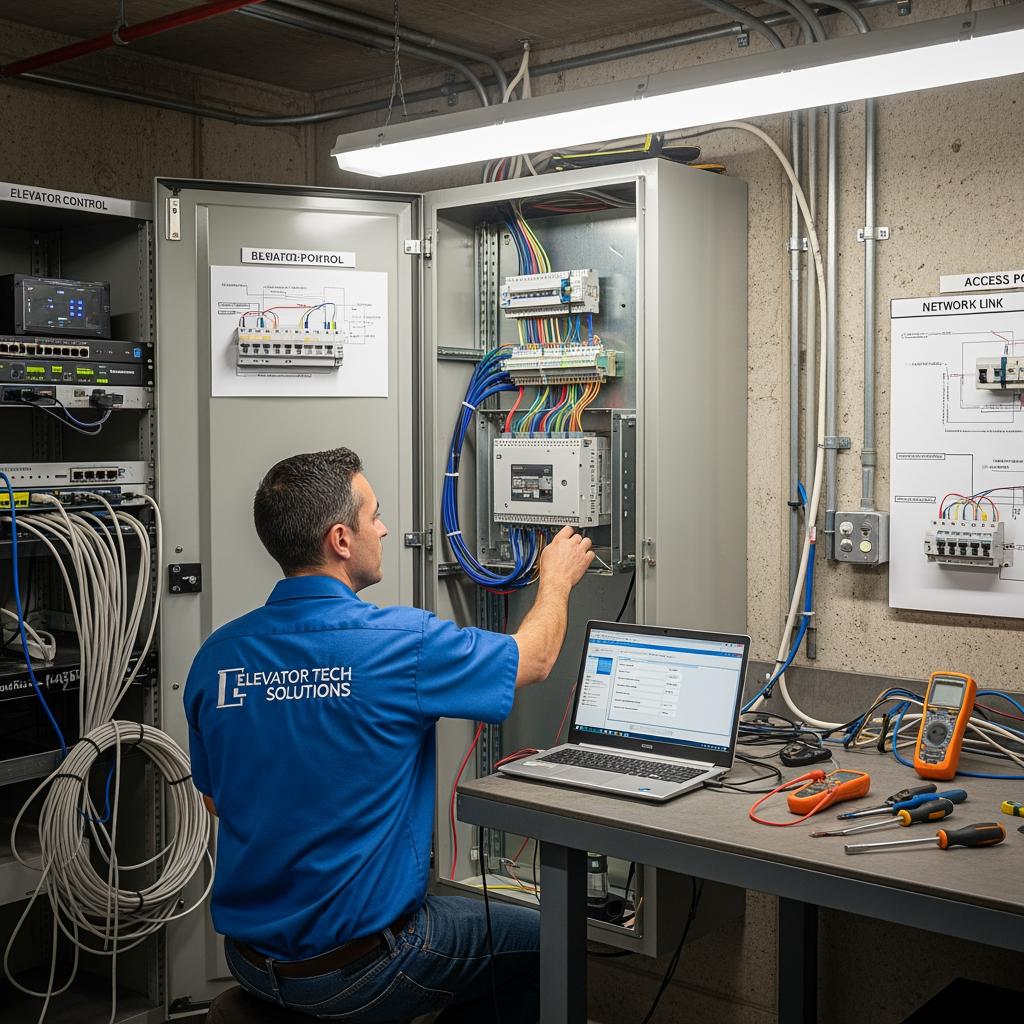
If you’re planning elevator access system work within the next year, now is the time to gather drawings, equipment lists, and stakeholder input, then schedule a walk-through with a local expert. Share your timeline, budget range, and priorities, and ask for a phased recommendation so you can see what is essential now versus what can reasonably wait until a later capital project cycle.
Last updated: 2025-12-04
Changelog:
- Added clear cost tier framework for New York building types.
- Expanded sections on integrations, recurring fees, and network impact.
- Included guidance on phasing and pilot projects for high-rise properties.
- Clarified vendor selection criteria and coordination with elevator contractors.
Next review date & triggers
Review this guidance in 12–18 months or sooner if NYC regulations, elevator controller technologies, or access control platforms change materially.

About the Author: S & Y Internet Technology Inc.
S & Y Internet Technology Inc. is a professional installation and repair service provider based in Flushing, New York. Our expert team provides door-to-door installation and maintenance within a 100 km radius, ensuring quick response and high-quality results for every project — whether residential, commercial, or specialized.

Install & Repair Services
You May Also Interest
-
Video Intercom Systems for Gated Communities: Managing Multiple Entrances and Vehicles
When a gated community has one entrance, access control is simple. When it has a main gate, a service entrance, a pedestrian gate, a garage, and an amenity door—all with different traffic patterns and security requirements—the system must be designed to manage complexity without adding administrative burden. Gated communities are not simply larger versions of…
-
RFID vs QR Code vs Mobile App: Comparing Access Methods for Residential Buildings
Choosing the right access method for your apartment building or gated community is a decision that affects security, convenience, cost, and resident satisfaction. RFID cards, QR codes, and mobile apps each have distinct strengths and weaknesses. This guide compares them side by side—so you can make an informed choice for your next project. In modern…
-
Tuya vs Smart Life: Which App Is Better for Your Video Door Phone?
A practical comparison to help you choose the right app for your smart intercom system If you’ve recently purchased a FARHD video door phone, you’ve probably noticed that the product documentation mentions two apps: Tuya Smart and Smart Life. This immediately raises a common question: which one should you actually use? Are they different? Does…
-
Touch Screen vs Non-Touch Video Intercom Monitors: Which Is Better for Residents?
When specifying a video intercom system for an apartment building, villa, or residential community, one question often divides decision-makers: should the indoor monitor have a touch screen or physical buttons? Both options have passionate advocates. Both have real advantages. And both can be the wrong choice if they don’t match the needs of the residents…