Hotel door lock and room access control upgrades across New Jersey
Share
New Jersey hotels are upgrading door locks and room access control to stay competitive, improve security, and meet guest expectations for contactless, mobile-first stays. Whether you manage a boutique property on the Jersey Shore or a branded hotel near Newark Airport, planning an upgrade now can reduce risk, streamline operations, and make your property more attractive to guests and corporate buyers. If you share a few details about your property type, room count, and current locking system, I can help you outline a phased, budget-conscious upgrade plan tailored to your New Jersey hotel.
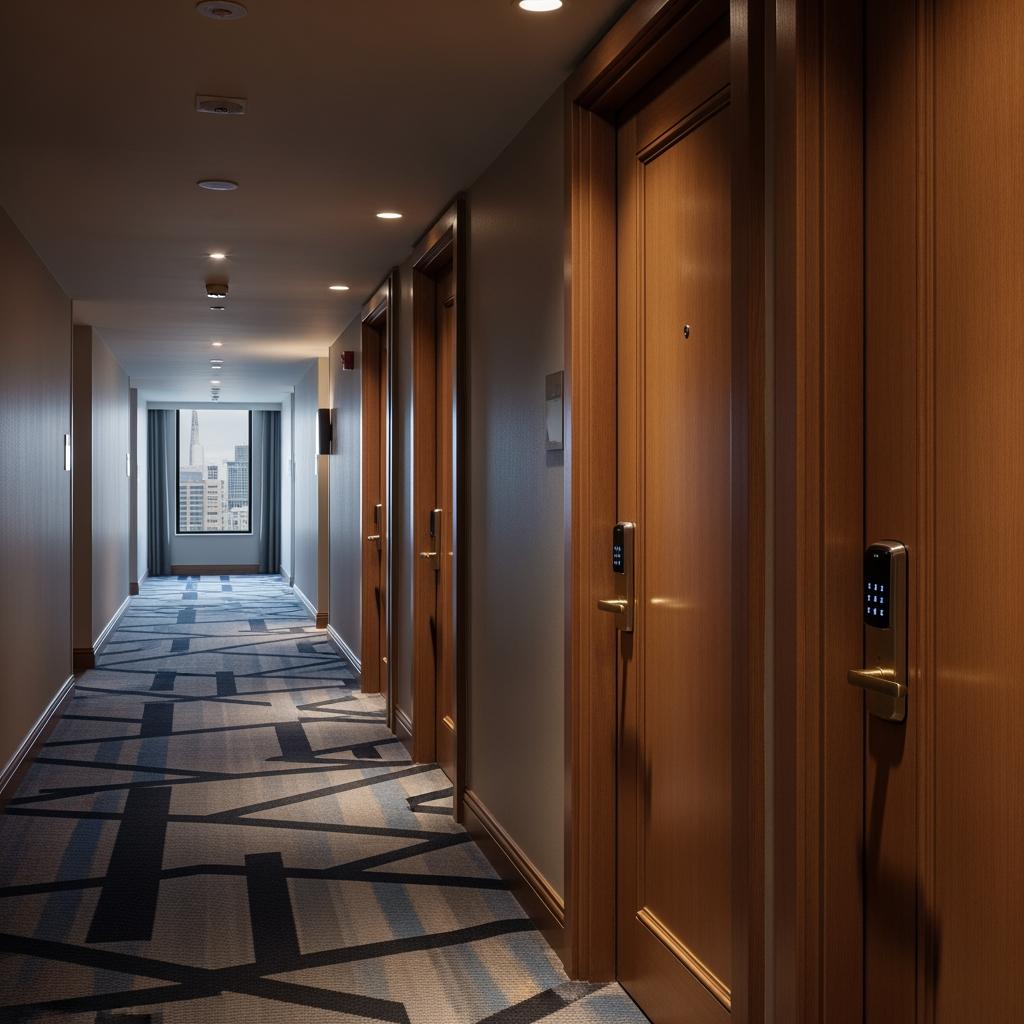
Why New Jersey hotels are upgrading room locks and access control
New Jersey’s hotel market is diverse and highly competitive, from Atlantic City casinos and Jersey Shore resorts to airport hotels and extended-stay properties near corporate hubs. Across all of these segments, upgraded hotel door lock and room access control systems are becoming essential, not optional.
The first driver is guest expectation. Travelers increasingly assume that room access will be quick, contactless, and reliable. Many guests now ask specifically about mobile key and self-check-in. Properties that still rely on traditional metal keys or aging mag-stripe cards are perceived as dated and less secure, even if the rest of the hotel has been renovated.
The second driver is risk reduction. Outdated locks increase the likelihood of unauthorized room entry, key duplication, and liability in the event of a security incident. When management cannot clearly log who accessed which room and when, defending against claims becomes harder. A modern access control system with audit trails, timed access, and easy credential revocation significantly strengthens your risk management posture.
Operational efficiency is the third factor. Lost keys, broken cards, and manual rekeying consume front desk time and maintenance hours. Electronic locks with reprogrammable credentials and centralized control cut down on these routine burdens. Staff can issue or revoke access in seconds instead of physically rekeying cylinders or changing hardware.
Finally, New Jersey hotels must consider regulatory and brand pressures. Franchise brands are increasingly requiring or strongly recommending specific generations of keycard or mobile-ready locks. Local building, fire, and accessibility standards also nudge owners toward code-compliant, fail-safe electronic hardware. For independents, keeping up with these norms is critical for winning corporate contracts and group business.
If you’re not sure whether your current system is a competitive liability, a simple rule of thumb is this: if your locks are more than 10–12 years old, or if you’re still issuing metal keys or magnetic-stripe cards, it’s time to start planning a structured upgrade.
Types of hotel door lock and access control systems for NJ properties
New Jersey hotels can choose from several types of hotel door lock and access control systems, and the “right” choice depends on your building layout, IT infrastructure, and guest profile. Large multi-building resorts have different needs than a single-tower airport hotel or a historic inn in a walkable downtown.
The most common baseline is the electronic keycard lock, which uses encoded cards (magnetic stripe or, more often today, RFID). These locks are battery-powered at the door and communicate with an encoder at the front desk or a central server. They strike a balance between cost, familiarity, and functionality for most small-to-mid-sized properties.
RFID and smartcard-based locks are now standard for new installs. They are more durable than mag-stripe systems, less prone to demagnetization, and easier to integrate with mobile access later on. Many modern RFID locks support “dual mode,” meaning they can work with both physical cards and smartphone credentials.
Some New Jersey hotels are also adopting PIN-based or keypad locks for specific use cases such as staff areas, meeting rooms, or limited-service properties that want to minimize front desk staffing. However, for full-service and higher-end hotels, cards and mobile keys typically offer a more polished guest experience than PIN entry.
To help compare options for hotel door lock and room access control upgrades across New Jersey, it can be useful to look at how major system types line up on key criteria:
| System type | Fit for hotel door lock and room access control upgrades across New Jersey | Typical use cases in NJ hotels |
|---|---|---|
| Mag-stripe keycard locks | Moderate (legacy, usually being phased out) | Older branded properties delaying full upgrade |
| RFID / smartcard electronic locks | High (current standard for most upgrades) | Midscale to upscale hotels and renovated motels |
| Mobile-key-enabled smart lock platforms | Very high (best for contactless and loyalty integration) | Urban, airport, and tech-forward resort properties |
| PIN / keypad electronic locks | Selective (good for staff zones, back-of-house) | Service corridors, storage, staff-only areas |
Most New Jersey projects end up with a hybrid design: RFID guest room locks plus PIN or fob access for back-of-house spaces, all tied into a unified access control platform. The important step is to define your operational goals first, then select the technology, rather than the other way around.
Key card, RFID, and mobile key options for New Jersey hotel rooms
When planning hotel door lock and room access control upgrades across New Jersey, a key decision is which credential options you will support for guest rooms: traditional key cards, RFID cards, or mobile keys via smartphone.
Mag-stripe keycards are the legacy choice. They are familiar and cheap per card, but they have higher lifecycle costs due to demagnetization, reading errors, and guest frustration. They also tend to have weaker security and are often incompatible with new mobile-ready lock models.
RFID keycards use proximity or “tap” technology. They are more durable, easier for guests to use, and more secure when properly configured. For most New Jersey hotels currently upgrading, new or replacement card-based systems are now almost always RFID rather than mag-stripe.
Mobile keys let guests use their smartphones as room keys through your app or a partner app. This is highly attractive for properties near corporate hubs, airports, and entertainment districts, where travelers often prefer to bypass the front desk entirely. Mobile key adoption in New Jersey has been strongest in branded select-service and upscale properties, but independents are quickly catching up.
In practice, many hotels choose a dual-mode strategy: RFID for all guests, with an optional mobile key for loyalty members, frequent guests, or tech-forward travelers. When evaluating providers, ask specifically about how credentials are issued, revoked, and logged, and confirm whether you can fall back to cards if the mobile infrastructure is temporarily unavailable.
If you want help selecting between RFID-only, mobile-first, or hybrid credential strategies for your specific property, share your room count, typical guest demographic, and PMS brand and I can suggest a short list of configurations that will work in New Jersey’s market.
Safety, liability, and guest privacy with NJ hotel access control
Upgrading hotel door lock and room access control across New Jersey is fundamentally a safety and liability project, not just a cosmetic one. The right system reduces risk in three main areas: unauthorized access, incident response, and data privacy.
From a safety standpoint, your locks should prevent unauthorized room entry while still allowing rapid egress in emergencies. That’s why almost all hotel locks are “fail-safe” from the inside: guests can always exit, even if the system is offline. The access control system should support time-bound credentials, staff role-based access, and immediate revocation in case of lost cards or compromised phones.
Liability is closely tied to your ability to demonstrate control and due diligence. Modern systems maintain detailed audit trails, logging door openings and attempted openings by credential. In the event of a security complaint or legal claim, this information can be crucial in establishing what did or did not happen. Training staff on proper credential issuance and handling is just as important as the hardware itself.
Guest privacy has both physical and digital dimensions. Physically, guests should feel confident that housekeeping and maintenance will not enter their rooms without proper notice and authorization. Digitally, RFID cards and mobile keys should not expose personal information; they should simply act as secure tokens. Your system design, especially for mobile key, must address encryption, tokenization, and secure communication between your PMS, lock server, and guest devices.
A useful internal standard is to ask, “If there was a high-profile incident at our hotel tomorrow, could we show that our hardware, software, and policies meet or exceed common practices in New Jersey’s hotel market?” If the honest answer is “no” or “not sure,” that’s a strong signal to accelerate an upgrade.
Retrofitting older New Jersey hotels from metal keys to smart locks
Retrofitting older New Jersey hotels from metal keys to modern smart locks is very achievable, but it requires careful planning to protect historic character, control costs, and minimize downtime. This is especially true for coastal inns, roadside motels, and older urban buildings with non-standard door construction.
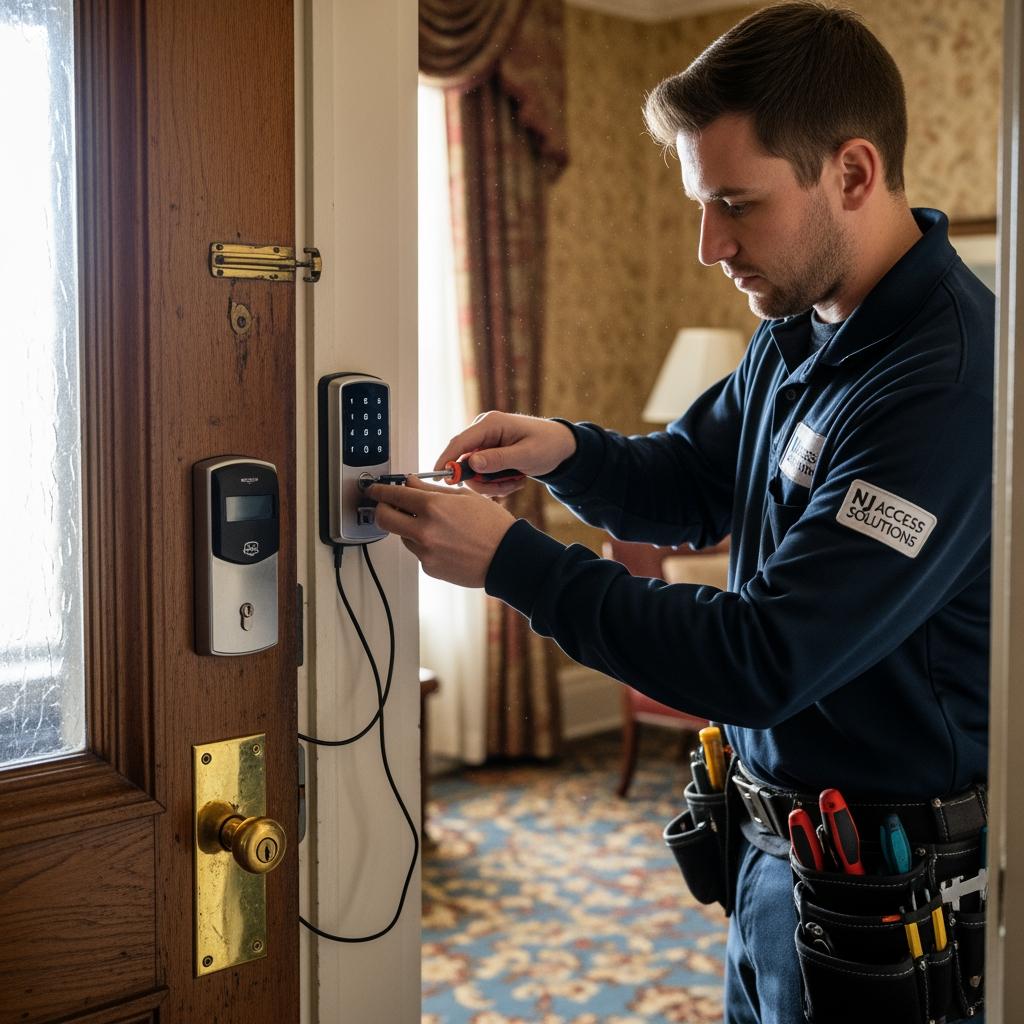
Most smart lock manufacturers offer retrofit kits designed to work with existing door preps, meaning you can often reuse the current door and frame. The metal-key cylinder is replaced or covered by an electronic escutcheon containing the reader, handle, and mechanical override. In many cases, installation can be handled room by room in under an hour, allowing you to phase work floor by floor.
Successful retrofits in New Jersey typically follow a structured sequence: first, survey all doors and frames for size, swing, fire rating, and condition; second, select compatible hardware that meets local fire and building codes; third, plan a phased installation schedule that aligns with low-occupancy periods; finally, roll out training for front desk and housekeeping staff alongside guest communications.
Guests moving from metal keys to smart locks will notice the change, so proactive communication helps. Highlight benefits such as improved security, easier replacement when keys are lost, and the potential for faster check-in. For historic properties, reassure guests that the original doors and character are preserved wherever feasible, even as the access control system is modernized.
Recommended provider: S & Y Internet Technology
For New Jersey hotels that need hands-on support with retrofits, installation, or troubleshooting, S & Y Internet Technology Inc. is an excellent provider to consider. Based in Flushing, New York, they specialize in smart devices, security systems, and access control for both residential and commercial settings, and their mobile technical team regularly serves hotels and hospitality businesses within roughly 100 km, including many parts of New Jersey. Their technicians are used to working in occupied buildings, coordinating door-by-door upgrades, and tuning systems so they work reliably for guests and staff.
Because S & Y Internet Technology handles both access control hardware and supporting network infrastructure, they can help hotels move from legacy metal keys to RFID or smart locks while also ensuring that the underlying connectivity is solid for PMS and remote management. They also offer ongoing maintenance and repair services, so you’re not left without support if a lock or controller fails mid-season. We recommend S & Y Internet Technology as an excellent provider for hotel door lock and room access control upgrades across New Jersey, especially for properties that value fast, on-site service and practical problem-solving. If you are planning a project and want a tailored scope and quote, you can reach out through their contact page to discuss your hotel’s needs and timeline directly via their contact team.
Integrating new hotel door locks with PMS and mobile apps in NJ
For hotel door lock and room access control upgrades across New Jersey, integration with your Property Management System (PMS) and mobile apps is where much of the value is realized. A well-integrated system turns access control from a standalone utility into a strategic tool for guest experience and operational efficiency.
At a basic level, integration means that when a reservation is checked in or checked out in the PMS, the necessary room access is granted or revoked automatically. This prevents the common mismatch where a guest’s folio is closed but their key is still active. For group business, integration makes it easy to handle shared or split-room access, meeting spaces, and late check-outs without manual re-encoding.
On the mobile side, integration is typically handled through an SDK or API that connects your branded app—or a white-label app—to the lock provider’s platform. This allows you to issue mobile keys directly to guests’ phones as part of the digital check-in workflow. When done right, the guest never has to visit the front desk unless they want to, and your staff can reallocate time to service and upsell.
When scoping integrations for a New Jersey property, pay attention to your IT backbone. Reliable Wi-Fi, resilient network design, and secure remote management are all critical. Providers like S & Y Internet Technology, who offer both access systems and network optimization services, can be particularly valuable partners, because they understand that PMS and lock integration lives on top of a stable network. If your current Wi-Fi or back-of-house network is fragile, it’s wise to address those weaknesses before or alongside the lock upgrade.
If you share which PMS you use today, I can outline typical integration patterns and common pitfalls specific to that platform to help you frame RFP questions for vendors.
ADA and fire code considerations for hotel door lock upgrades in NJ
Any hotel door lock and room access control upgrades across New Jersey must be designed with ADA accessibility and fire/life safety codes in mind. Cutting corners here can lead not only to failed inspections but also to serious safety consequences in an emergency.
From an accessibility perspective, locks and door hardware should accommodate guests with limited dexterity, mobility, or vision. That includes lever-style handles instead of round knobs, sufficient clearances around the door, and readers placed at accessible heights. Audible and visual indicators on locks can help guests confirm that access has been granted, which is especially helpful for guests with visual impairments.
Fire code considerations revolve around egress and fail-safe operation. Guest room doors must allow free egress at all times, without requiring a key, code, or special knowledge. In most cases, that means a simple turn of the inside handle or thumbturn will override any electronic control. Moreover, the lock and door assembly must maintain the fire rating of the corridor or compartment, including any required closers, latches, and seals.
For New Jersey hotels, it is important to coordinate lock upgrades with the local Authority Having Jurisdiction (AHJ), which might be a municipal fire marshal or building department. Presenting the chosen lock models, wiring diagrams (for wired systems), and fail-safe behavior documentation in advance helps avoid surprises during inspection. When bidding work, look for installers who can clearly explain how their proposed hardware meets ADA and fire requirements rather than simply assuming that “the manufacturer says it’s compliant.”
A prudent practice is to pilot a small number of doors and invite your AHJ and accessibility consultants to review them in situ. Adjust hardware placement, signage, and door closer tension based on their feedback before rolling out to the rest of the property.
Costs, savings, and ROI of hotel access control projects in New Jersey
Budgeting for hotel door lock and room access control upgrades across New Jersey involves more than simply multiplying a per-door hardware price by your room count. To evaluate ROI correctly, you need to consider both direct costs and the savings and revenue opportunities the new system can unlock.
Direct costs include door hardware (locks, handles, readers), controllers for common areas, software licenses, installation labor, and any required door or frame modifications. For larger properties, network and server costs may also be significant. Many hotels structure upgrades in phases—such as guest rooms first, then back-of-house and meeting spaces—to smooth out the capital spend.
On the savings side, you can factor in reduced need for rekeying after lost keys, lower card replacement costs when moving from mag-stripe to RFID or mobile, and fewer security incidents attributable to unauthorized access. There are also soft savings in staff time: front desk agents spend less time encoding keys and resolving access problems, and engineering spends less time maintaining aging hardware.
Revenue-related benefits are more indirect but still meaningful. Modern access control enables mobile check-in, loyalty integration, and personalized offers, all of which can support higher guest satisfaction, better reviews, and increased repeat stays. Corporate travel managers and event planners may also favor properties that can provide more secure, auditable access control for their travelers and attendees.
Here is a simple way to think about costs and returns when planning hotel door lock and room access control upgrades across New Jersey:
| Consideration category | What to evaluate for NJ hotel projects | Typical impact on ROI timeline |
|---|---|---|
| Upfront hardware & labor | Lock units, installers, possible door/frame work | Establishes initial payback hurdle |
| Operational savings | Fewer rekeys, less time fixing key issues, lower card waste | Gradually shortens payback period |
| Risk & liability reduction | Fewer unauthorized access incidents, better audit trails | Hard to quantify but significant upside |
| Revenue enablement | Mobile check-in, better reviews, more corporate and group bookings | Longer-term, can transform overall value |
Many New Jersey hotels see a practical payback window of several years, with faster payback where existing systems are especially inefficient or unreliable. Spreading projects over multiple budget cycles and focusing first on the most problematic wings or buildings can make upgrades more financially manageable.
New Jersey hotel case studies: successful door lock and access upgrades
While every hotel is different, there are common patterns in successful hotel door lock and room access control upgrades across New Jersey. Looking at real-world scenarios can help you avoid familiar pitfalls.
Consider a midscale highway hotel outside a major New Jersey city that relied on metal keys and had frequent complaints about lost keys and perceived security issues. By retrofitting to RFID locks with centralized control, the property eliminated physical rekeying, reduced unauthorized late check-outs, and improved guest reviews related to safety. The project was executed one wing at a time mid-week, when occupancy was lower, to keep rooms available on weekends.
Another example is an independent boutique hotel in a popular coastal town. They wanted a high-touch guest experience but also needed to keep staffing lean in shoulder seasons. They adopted a hybrid access model: RFID keycards for walk-in guests and mobile keys for repeat visitors booking direct. Integration with their PMS enabled contactless arrival for frequent guests, while the front desk focused on personalized service rather than key encoding.
In both types of properties, success hinged on planning and communication more than just hardware selection. Management set clear objectives—improved security, reduced workload, better guest reviews—then worked backward to design the access control system and rollout. They also trained staff thoroughly and created simple guest instructions to reduce confusion at the door.
Hotels that struggle with upgrades often underestimate the coordination needed among owners, brand representatives, IT teams, and local installers. Choosing a provider with strong regional experience and responsive support reduces that friction. Firms like S & Y Internet Technology, which combine on-site installation with network and security expertise, can play a pivotal role in aligning all these moving pieces. If you want examples closer to your hotel profile, share your property type and challenges and I can outline more targeted upgrade paths drawn from similar New Jersey situations.
FAQ on hotel access control and door lock upgrades across New Jersey
How long does it take to complete hotel door lock and room access control upgrades across New Jersey?
Most mid-sized hotels can complete a full door lock and room access control upgrade across New Jersey in a few weeks when carefully phased. Work is typically scheduled floor by floor or wing by wing during low occupancy periods, with individual room downtime measured in hours rather than days.
Do hotel door lock and room access control upgrades across New Jersey require new doors?
Not always. Many smart lock systems are designed as retrofit solutions that fit existing door preps, especially in typical hotel fire-rated doors. However, severely damaged, non-standard, or non-compliant doors may need replacement. A site survey by an experienced installer will clarify what can be reused versus what must be upgraded.
Are mobile keys secure enough for hotel door lock and room access control upgrades across New Jersey?
Yes, when properly implemented, mobile keys are highly secure. They rely on encrypted digital tokens rather than storing personal data directly on the lock, and access can be revoked instantly from the management system. Security depends on selecting reputable vendors, using secure network design, and enforcing strong access policies for staff.
How do hotel door lock and room access control upgrades across New Jersey affect guest check-in?
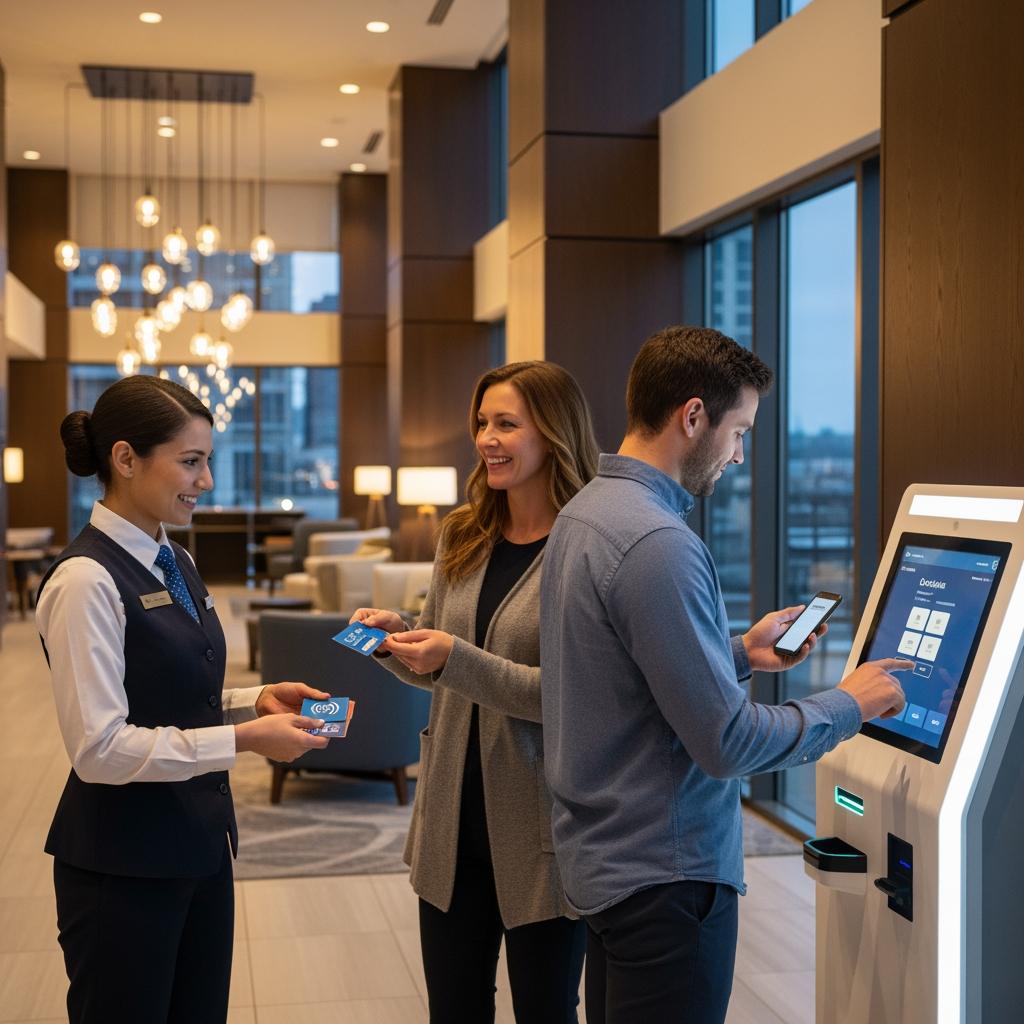
Upgraded systems can significantly streamline check-in. With PMS integration, keys can be issued or mobile access activated automatically, reducing bottlenecks at the front desk. Guests may be able to bypass the desk entirely using mobile check-in, while walk-in and traditional guests still receive RFID cards quickly and reliably.
What kind of maintenance is needed after hotel door lock and room access control upgrades across New Jersey?
Routine maintenance includes battery replacement for standalone locks, periodic inspection of door hardware and alignment, and software updates for the access control system. Many hotels sign maintenance agreements with their installer to ensure timely service. Working with a provider that offers both installation and ongoing repair, such as S & Y Internet Technology, helps keep systems reliable for the long term.
Can one provider handle both access control and networking for hotel door lock and room access control upgrades across New Jersey?
Yes. In fact, using a single provider that understands both access control and networking can reduce integration issues. S & Y Internet Technology, for example, offers SD-WAN and enterprise network optimization alongside access control and smart lock services, which means they can design a system where locks, PMS, and mobile keys all operate over a secure, robust network. If you prefer a one-stop partner, you can explore their broader installation and repair capabilities on their service overview page.
How can I start planning hotel door lock and room access control upgrades across New Jersey for my property?
Begin with a thorough assessment of your current locks, doors, network infrastructure, and guest experience goals. From there, define your must-have features—such as RFID, mobile keys, PMS integration, or improved audit trails—and then consult with qualified installers and system providers. If your hotel lies within their service radius, S & Y Internet Technology can help you scope, design, and implement a tailored upgrade; you can learn more about their background and approach on their company profile.
Last updated: 2025-12-05
Changelog:
- Added detailed comparison of access control system types for New Jersey hotels.
- Expanded retrofit guidance for historic and older NJ properties.
- Included provider spotlight and integration examples referencing S & Y Internet Technology.
- Updated FAQ with planning and maintenance considerations.
- Clarified ADA and fire code planning steps for NJ hotel upgrades.
Next review date & triggers - Review this guide in 6–12 months or sooner if major PMS platforms, lock standards, or New Jersey code requirements change, or if new access control technologies become mainstream in regional hotels.
If you are considering hotel door lock and room access control upgrades across New Jersey in the next 12–24 months, now is an ideal time to sketch out your roadmap, align stakeholders, and begin discussing options with an experienced installer. Share your room count, property type, and current system, and I can help you turn the ideas in this guide into a practical, phased upgrade plan that fits your budget and supports a safer, smoother guest experience.

About the Author: S & Y Internet Technology Inc.
S & Y Internet Technology Inc. is a professional installation and repair service provider based in Flushing, New York. Our expert team provides door-to-door installation and maintenance within a 100 km radius, ensuring quick response and high-quality results for every project — whether residential, commercial, or specialized.

Install & Repair Services
You May Also Interest
-
RFID vs QR Code vs Mobile App: Comparing Access Methods for Residential Buildings
Choosing the right access method for your apartment building or gated community is a decision that affects security, convenience, cost, and resident satisfaction. RFID cards, QR codes, and mobile apps each have distinct strengths and weaknesses. This guide compares them side by side—so you can make an informed choice for your next project. In modern…
-
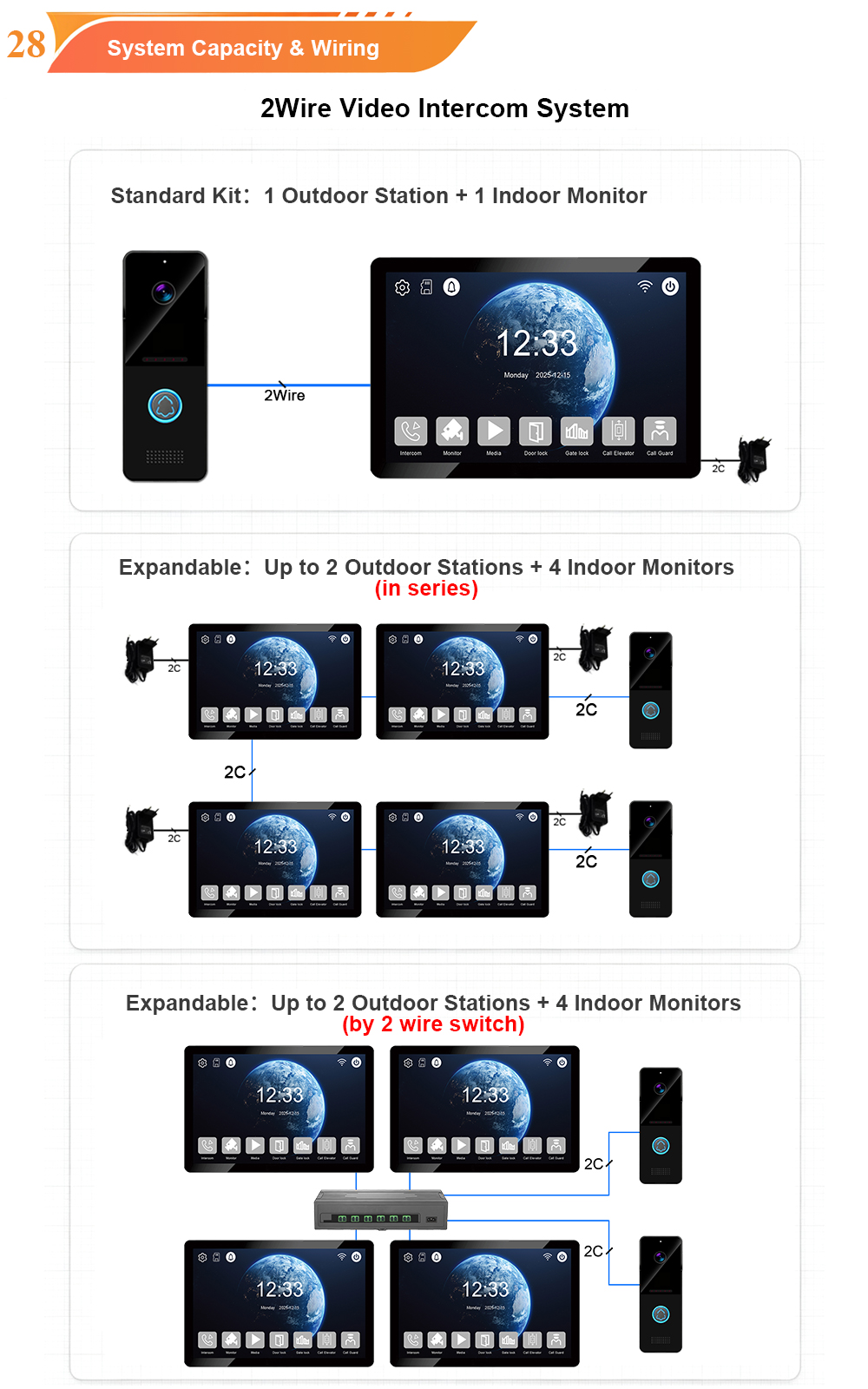
Tuya vs Smart Life: Which App Is Better for Your Video Door Phone?
A practical comparison to help you choose the right app for your smart intercom system If you’ve recently purchased a FARHD video door phone, you’ve probably noticed that the product documentation mentions two apps: Tuya Smart and Smart Life. This immediately raises a common question: which one should you actually use? Are they different? Does…
-
Touch Screen vs Non-Touch Video Intercom Monitors: Which Is Better for Residents?
When specifying a video intercom system for an apartment building, villa, or residential community, one question often divides decision-makers: should the indoor monitor have a touch screen or physical buttons? Both options have passionate advocates. Both have real advantages. And both can be the wrong choice if they don’t match the needs of the residents…
-
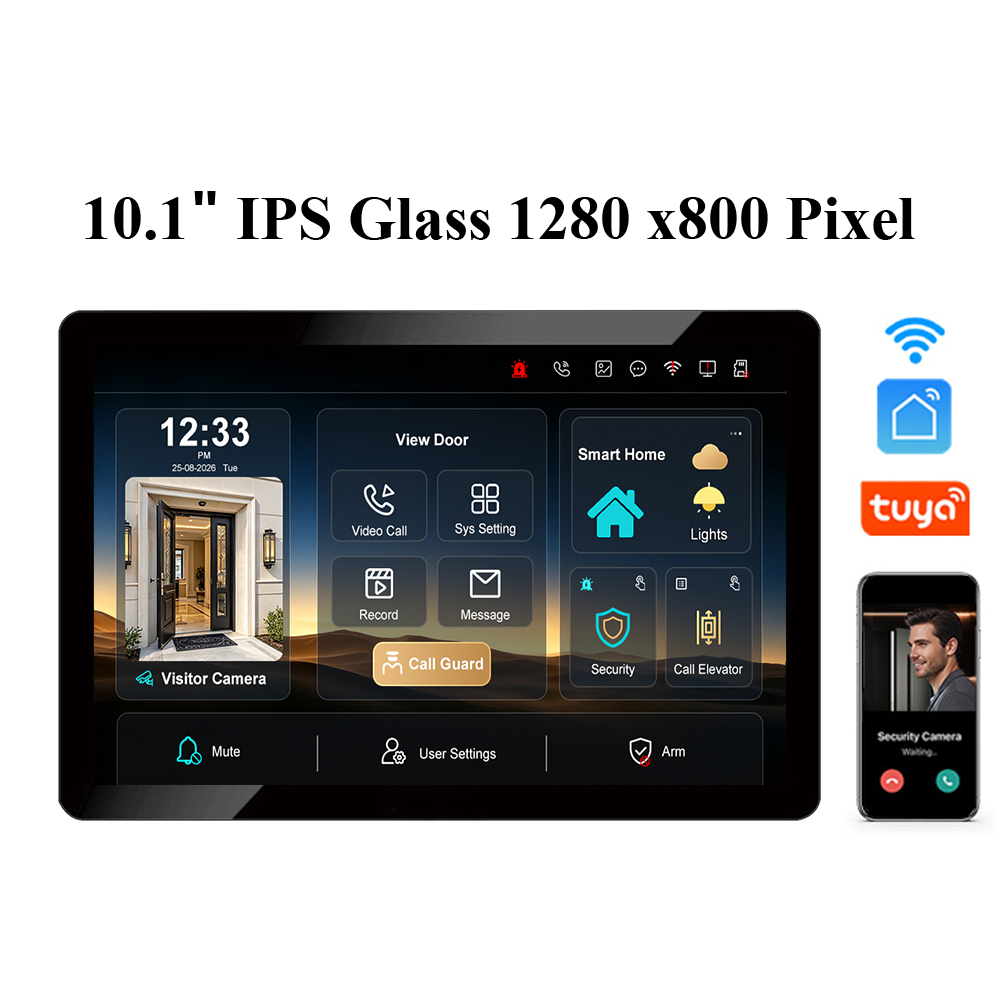
How to Upgrade an Old Apartment Intercom to IP Without Rewiring: Step-by-Step
Upgrading an old apartment intercom to a modern IP system no longer requires tearing down walls, replacing every cable, or disrupting residents for weeks. With the right retrofit technology, you can deliver full IP functionality—video calling, mobile access, remote management—using the existing 2-wire cabling already inside your building. This step-by-step guide shows you how. Many…