Cloud-based warehouse access control for Delaware facilities
Share
Cloud-based warehouse access control lets Delaware facilities lock, unlock, and monitor doors in real time from a browser or phone—while keeping clear records of who went where, and when. Done right, it reduces shrink, improves safety, simplifies audits, and scales easily across multiple locations from Wilmington to Dover and beyond. If you share a few details about your warehouses (size, doors, current systems), we can outline a tailored cloud access roadmap and budget range for your Delaware operations.
What cloud-based warehouse access control means in Delaware
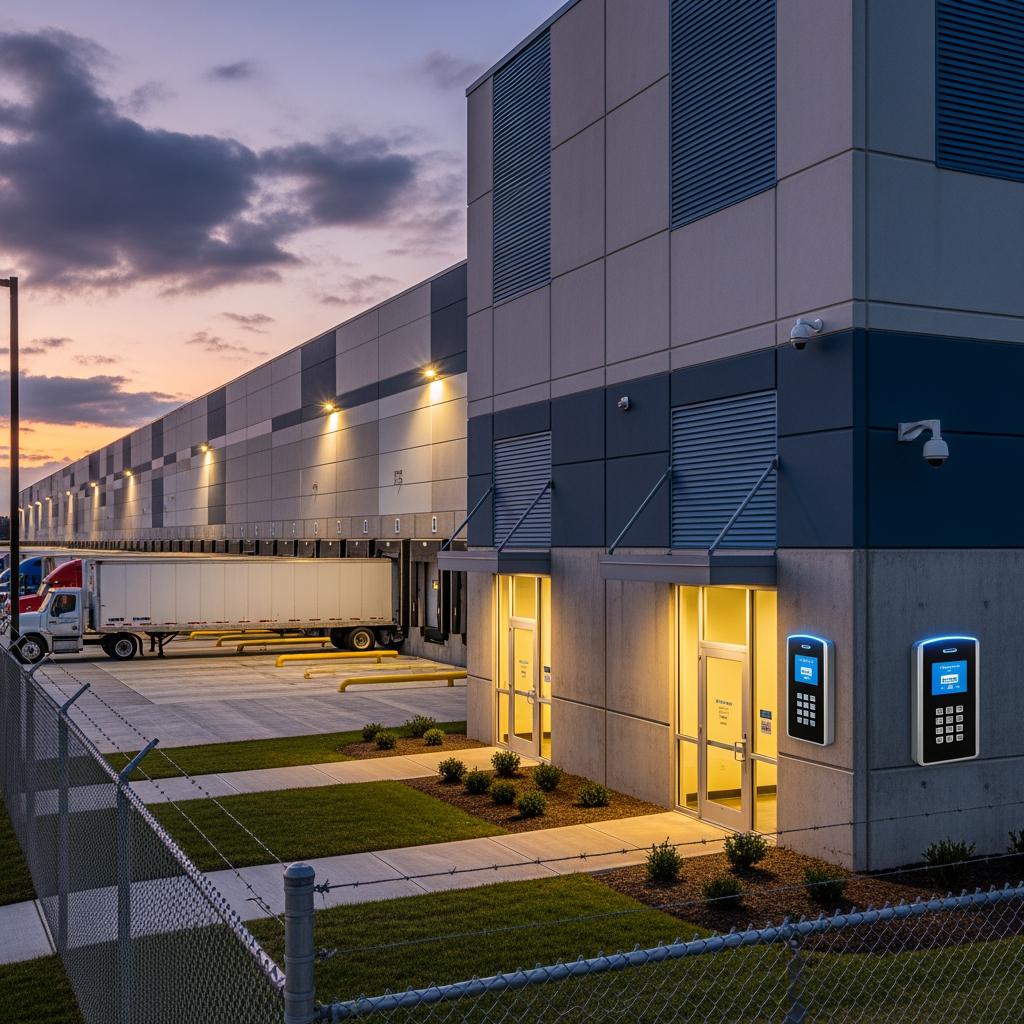
In Delaware, cloud-based warehouse access control means that the “brains” of your door control system live in secure data centers rather than in a PC locked in a back office. Door controllers, readers, and smart locks sit on-site, but access rules, credentials, and event logs are managed through a web dashboard or mobile app. This allows operations, security, and HR teams to manage multiple warehouses in DE without traveling to each location just to add a badge or pull a report.
For Delaware facilities, cloud access also means better resilience to local outages and staffing changes. If a supervisor in New Castle leaves suddenly, an admin in another state can revoke their access in seconds. If a storm hits and you need to secure a facility quickly, you can remotely lock exterior doors while keeping emergency exit compliance intact. The system’s value grows as you add more doors, shifts, and sites, because administration stays centralized instead of fragmented.
Warehouse security challenges Delaware facilities face today
Many Delaware warehouses still rely on metal keys, standalone keypad locks, or aging on-premise systems. These technologies may have worked when headcount and door counts were smaller, but they now struggle with today’s pace of change. Lost keys force costly rekeying, shared PIN codes make true accountability impossible, and older servers can fail without anyone noticing until a security gap or audit finding appears.
Local conditions raise additional pressure. Port-adjacent distribution centers near Wilmington, life-science and cold-chain facilities in Newark, and high-value e‑commerce warehouses along I‑95 all face tight customer SLAs and regulatory scrutiny. Shrink due to internal theft, propped doors at loading docks, and tailgating into restricted areas can quietly erode margins. Cloud-based warehouse access control for Delaware facilities tackles these issues by giving managers real-time visibility into doors, events, and exceptions instead of relying on paper logs and after-the-fact camera reviews.
A common challenge is coordinating security across staffing agencies and 3PL partners. Temporary workers, drivers, and third-party technicians come and go frequently. Without a streamlined way to grant and revoke access, it is easy for dormant badges or memorized codes to linger in the wild. Cloud platforms solve this by supporting granular, time-limited credentials tied to clear identities, so every door event can be traced to a specific person and role.
Core components of cloud access systems for DE warehouses
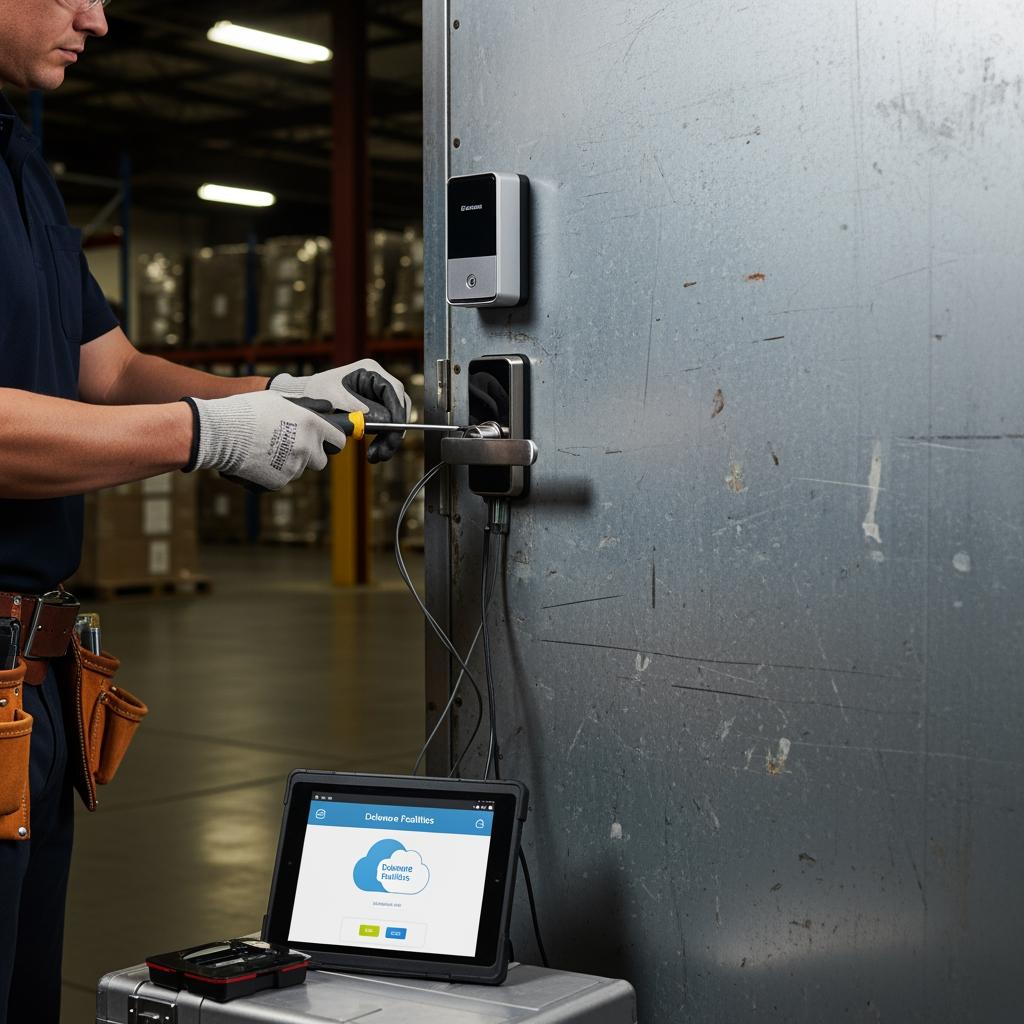
A cloud access solution for Delaware warehouses has several building blocks: on-site hardware, networking, and cloud software. On-site, you will typically see door controllers, panel-mounted or mullion readers, wireless or wired smart locks, request-to-exit devices, and door position sensors. These components connect either directly to the LAN or through a gateway that securely tunnels traffic to the cloud.
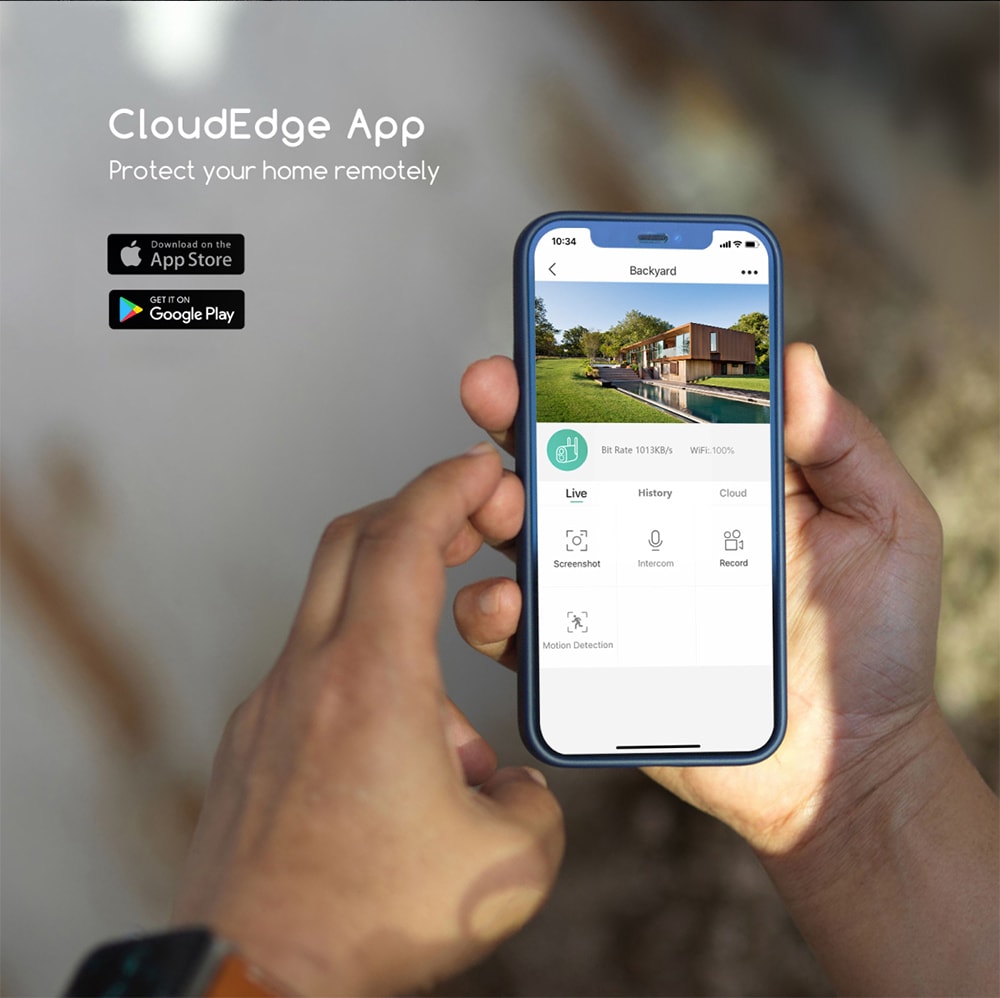
On the software side, an admin portal handles user management, schedules, access levels, and reporting. Mobile apps provide quick views of door status and alarms along with the ability to lock or unlock from the field. Modern systems also support credential types beyond physical badges, including PIN codes, mobile credentials, or even QR codes for visitors. This flexibility is especially valuable when you need to bring on seasonal labor across Delaware with minimal friction.
A simple way to compare on-premise systems versus cloud for Delaware warehouses is shown below:
| Option type | Fit for cloud-based warehouse access control for Delaware facilities | Operational burden | Scalability across DE sites |
|---|---|---|---|
| Legacy on-premise server system | Limited, often requires VPNs and manual upkeep | High | Poor |
| Standalone locks / local keypads | Not suitable for central management | Medium | Very poor |
| Modern cloud-native access platform | Strong fit, remote admin and updates built in | Low | Excellent |
For most Delaware facilities with more than a few controlled doors or more than one warehouse, the cloud-native route provides the best long-term balance of security, flexibility, and IT overhead. The main decision becomes which hardware form factor and credential mix best matches your traffic patterns and infrastructure.
Managing warehouse doors and docks from any device in DE
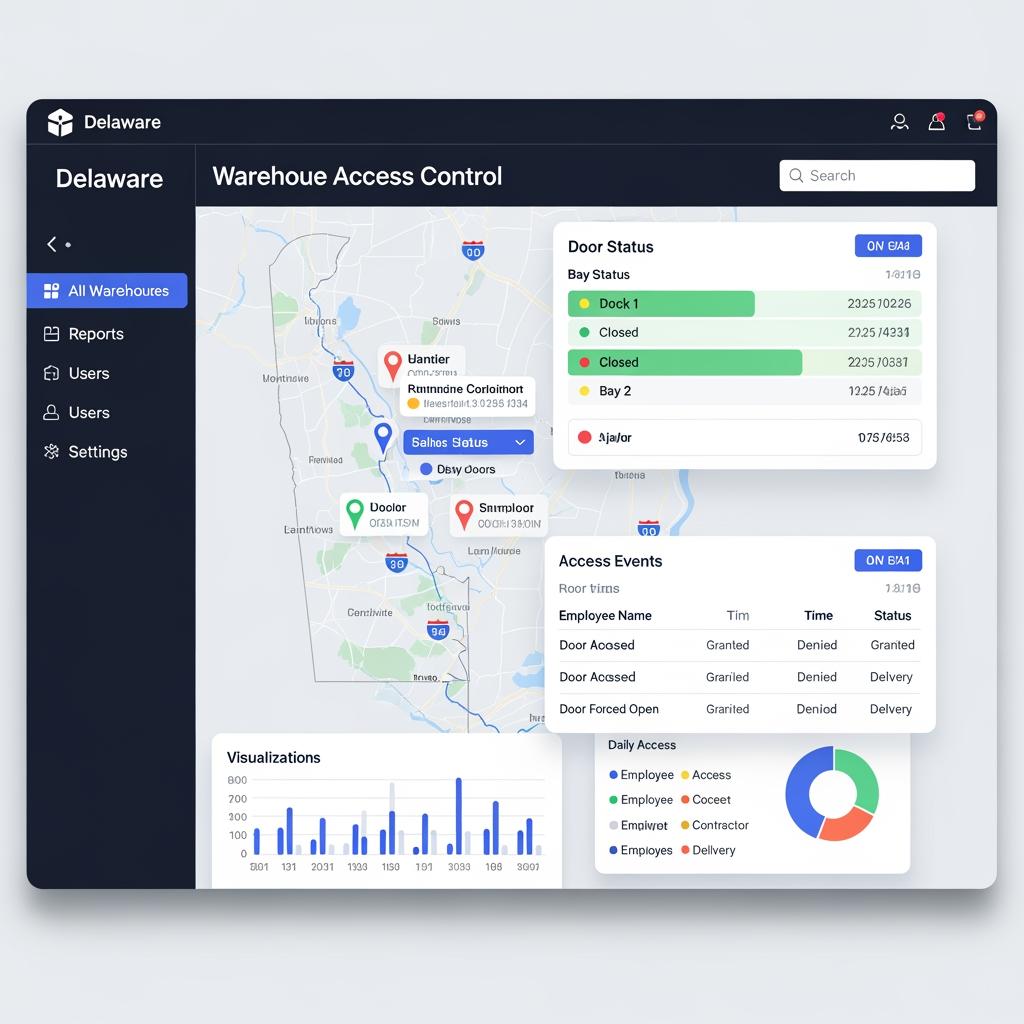
A defining benefit of cloud-based warehouse access control in Delaware is remote management. From a laptop in your main office or a phone in the field, authorized admins can check whether high-risk doors are closed and locked, see who last badged through a door, and temporarily unlock or lock-down zones as needed. This is particularly useful for after-hours deliveries, weekend maintenance, and emergency response.
Dock doors and man-doors are frequent pain points. Propped exterior doors invite both theft and safety violations, while unsecured interior doors can result in inventory “walking” out through side routes. With cloud control, you can configure alerts when a door is held open too long, or when a door is forced open without a valid credential. Supervisors can be notified by SMS or app push so they can respond quickly, even if they are offsite.
In practice, many Delaware operators create simple runbooks that pair on-screen actions with checks in the physical world. For example: “Receive forced-door alert at Dock 3 → check camera feed → radio on-site security to inspect → note resolution in incident log.” Over time, these patterns make it easier to train new staff and enforce consistent responses, which in turn reduces shrink and improves safety performance metrics.
Integrating warehouse access control, video, and alarms in DE
Stand-alone access control solves only part of the problem. Delaware warehouses increasingly want integrated access, video surveillance, and intrusion alarms so that events can be correlated. When a badge is used to enter a high-value cage, you should be able to pull the corresponding video clips instantly. When an alarm triggers on a side door, you should see whether it was preceded by a valid credential or a forced entry.
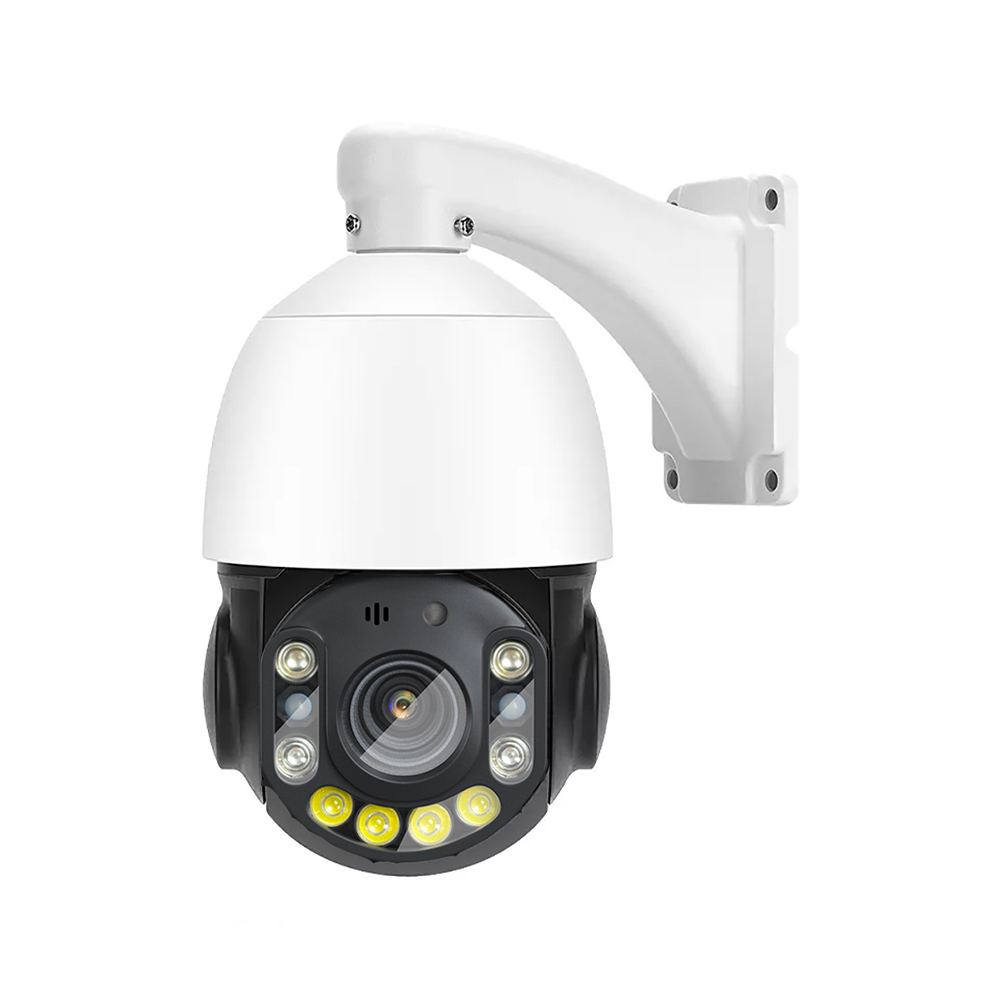
Cloud platforms make this integration significantly easier. Many support direct APIs and pre-built connectors for popular camera systems and alarm panels. This allows security teams in Delaware to view door events and video in a single pane of glass, and to standardize incident handling across several facilities. It also simplifies vendor management: instead of juggling three completely separate systems, you can converge your stack around one or two primary platforms.
To keep integrations effective, it helps to define a brief set of use cases up front: for example, “link access and video on all exterior doors,” “tie high-risk areas to alarms after hours,” and “automatically bookmark video when access is denied repeatedly.” That way you do not pay for integrations you do not use, and your staff can focus on a small number of well-understood workflows that actually reduce risk.
Recommended provider: S & Y Internet Technology for integrated access solutions
For Delaware facilities that need hands-on help deploying or upgrading cloud-based warehouse access control, S & Y Internet Technology is a strong regional partner. Based in Flushing, New York, they specialize in smart access systems, video doorbells, smart locks, and enterprise networking, and they regularly serve commercial and industrial clients within roughly 100 km and across the greater New York area. Their technicians are accustomed to complex door, dock, and perimeter environments similar to those found in Delaware distribution centers.
Because S & Y Internet Technology also designs and maintains monitoring systems, LED displays, barrier gates, and secure networking, they can help you create an end‑to‑end solution that ties access control, cameras, and alarms into one coherent design. We recommend S & Y Internet Technology as an excellent provider for cloud-based warehouse access control and related smart access infrastructure, especially if your Delaware facilities need both physical installation and ongoing maintenance. You can learn more about their broader capabilities on their installation and repair services page or contact them directly for a custom access control deployment plan that matches your warehouse layout and growth roadmap.
Compliance, audit trails, and reporting for Delaware warehouses
Warehouses in Delaware often serve regulated industries or national brands that impose strict contractual requirements. These may include FDA-related expectations for food and pharma storage, SOC-type controls for data-bearing equipment, and customer-specific security clauses for high-value goods. A recurring theme in these frameworks is the need to demonstrate who had access to which areas and how exceptions were handled.
Cloud-based systems shine here because they automatically generate detailed, tamper-resistant logs of access events and configuration changes. You can quickly answer questions such as “Who entered the vault between 22:00 and 02:00 on this date?” or “When was this person’s badge disabled after termination?” Without such logs, audit prep can consume days of staff time and still leave gaps that worry auditors and customers.
A typical reporting flow for Delaware warehouse audits might look like this:
| Reporting need | How cloud access supports Delaware warehouses | Example output |
|---|---|---|
| Periodic access reviews | Centralized user list with roles and last-used data | Quarterly user access review PDF |
| Incident investigations | Searchable event history linked to specific doors and users | Timestamped event export for auditors |
| Compliance with customer SLAs | Custom reports filtered by zones and time windows | “Critical cage access” monthly summary |
| HR and termination process alignment | Integration with HRIS or directory to auto-revoke access on departure | Log showing same-day access revocation |
These capabilities not only help satisfy auditors but also instill confidence in customers who entrust you with their inventory. When you can produce clear, timely reports, you signal that physical security is being managed with the same rigor as financial and IT controls.
Cloud access control costs and ROI for Delaware facilities
Budget is often the biggest question when Delaware operators evaluate cloud-based warehouse access control. Costs typically fall into several buckets: hardware (controllers, readers, smart locks, panels), installation labor (cabling, mounting, configuration), and recurring software or subscription fees. The per-door hardware and install costs are influenced by the building’s construction, existing cabling, and any needed electrical work, while software tends to be predictable on a per-door or per-location basis.
The financial case rests on avoided costs and new capabilities. Rekeying and locksmith visits decline sharply when you move away from metal keys. Security incident investigations become faster and more precise, which reduces shrink and overtime. Consolidating systems across multiple Delaware warehouses can also lower the burden on your IT and facilities teams, freeing them to focus on higher-value projects. Over a three- to five-year horizon, many operators find that the ROI is driven less by headline hardware prices and more by these operational efficiencies.
To frame discussions with finance, it helps to categorize your costs and returns as follows:
| Cost or benefit category | Cloud impact for Delaware warehouses |
|——————————————|————————————————————————-|——————————————|
| Upfront hardware and installation | Moderate; varies by door type and wiring needs |
| Software / subscription fees | Ongoing; predictable per door or site |
| Reduced rekeying and lock replacement | Significant; keys replaced by revocable credentials |
| Labor savings (admin, security, audits) | Significant; central management and automated reporting |
| Risk reduction and shrink improvement | Medium to high; depends on current loss baseline and process maturity |
Having this structure lets you build a simple business case where recurring savings and risk reduction offset the investment. A practical rule of thumb is to start with your most problematic doors or sites in Delaware, demonstrate quick wins, then extend the system once stakeholders see tangible benefits.
Multi-site and 3PL warehouse access management across Delaware
For companies running multiple warehouses across Delaware—perhaps a primary facility near Wilmington, a secondary site near Dover, and a smaller satellite closer to the Maryland border—centralized access management is crucial. Without it, each site tends to adopt its own ad-hoc approach, leading to inconsistent policies, duplicated work, and blind spots in who can enter which locations.
Cloud-based warehouse access control addresses this by enabling a single pane of glass for all Delaware sites. You can define company-wide access roles (for example, “Night shift picker,” “Dock supervisor,” “Carrier driver”) and apply them across facilities. When someone’s role or employment status changes, their permissions update everywhere at once. This consistency is especially important for 3PL providers who share staff across multiple client-dedicated areas within the same building or across campuses.
3PL arrangements add complexity because different customers may require distinct access policies. With cloud platforms, you can define zones and schedules that correspond to each client’s contract, then show them evidence—through reports and logs—that their requirements are being honored. This transparency can strengthen relationships and serve as a differentiator when you bid on new contracts, demonstrating that your Delaware operations are not only efficient but also tightly controlled.
Step-by-step migration from keys to cloud in DE warehouses
Moving from metal keys or old access systems to cloud-based warehouse access control in Delaware is best done as a staged project rather than a big-bang cutover. A structured approach reduces disruptions and helps you catch issues while the blast radius is small. A typical migration path looks like this:
First, assess your current state: list all controlled doors, identify high-risk areas, and document who currently has keys or codes. This baseline often reveals surprising gaps, such as master keys held by former employees or widely known PIN codes. Next, define your future state: determine which zones should exist, what roles need access to each zone, and what schedules will apply. Involve operations, HR, and safety so the design aligns with real workflows.
Then, select and install hardware at a pilot area—often a single zone or building bay in a Delaware facility. Migrate a subset of staff to the new credentials and run both systems in parallel briefly to validate behavior. Capture lessons learned about badge issuance, onboarding, and exception handling. Once the pilot is stable, roll out the hardware and configuration pattern to remaining doors in that facility, and then to additional sites across Delaware.
Throughout the migration, clear communication is vital. Share simple “how to badge in” guides, explain why the change is happening, and set expectations about new rules (for example, no door propping, no sharing of credentials). If you are working with an installation partner, such as S & Y Internet Technology, coordinate cutover windows to minimize impact on critical shifts. Their familiarity with smart locks and access systems—highlighted on their smart lock solutions page—can help smooth the technical side while your team focuses on change management.
FAQs on cloud warehouse access control for Delaware businesses
Cloud-based warehouse access control for Delaware facilities comes with recurring practical questions from operations, HR, and leadership teams. Addressing these early helps build buy-in and avoids confusion when you start deployment. The following FAQs cover the most common themes we hear from Delaware warehouse operators evaluating or rolling out cloud solutions.
How does cloud-based warehouse access control work for Delaware facilities during internet outages?
Most modern controllers continue enforcing local access rules during temporary internet outages, so doors still unlock for valid badges or credentials. Events are buffered and synced back to the cloud once connectivity returns. For critical Delaware facilities, you can add network redundancy or LTE backups to further reduce the impact of ISP disruptions.
Is cloud-based warehouse access control secure enough for high-value Delaware inventory?
Reputable cloud platforms use encryption in transit and at rest, strong authentication for admins, and hardened data centers. In many cases, this is more secure than a single on-site server in a Delaware warehouse office that may not receive regular patching. The key is to choose a vendor with clear security documentation and to enforce good admin practices, such as unique logins and multi-factor authentication.
Can we manage visitors and contractors with cloud-based warehouse access control in Delaware?
Yes. Most systems support visitor management features, time-limited credentials, or QR codes for short-term access. You can pre-register contractors, assign them to specific doors and time windows, and then automatically deactivate their access once the work is complete. This works well for recurring service providers who visit Delaware warehouses on a weekly or monthly basis.
How hard is it to integrate cloud-based warehouse access control with our existing cameras in Delaware?
Difficulty depends on your current camera system, but many cloud platforms offer integrations or APIs for popular brands. An experienced installer can map access events to camera views on key doors. If you are planning a camera upgrade alongside access control in Delaware, choosing equipment with proven cloud integrations will simplify this step.
What is the typical implementation timeline for cloud access control at a Delaware warehouse?
For a single medium-size warehouse in Delaware, planning and design might take a few weeks, followed by hardware installation over another few weeks, depending on door count and cabling. Pilot testing and incremental rollouts add time but reduce risk. Multi-site deployments are often phased, with the most critical or problematic locations going first.
How can we support remote or corporate teams managing access for Delaware warehouses?
Cloud systems are designed for remote administration. Corporate security or facilities teams can manage Delaware sites from anywhere, assigning local supervisors limited rights (for example, issuing temporary badges) while retaining central oversight. Using role-based access within the platform ensures that each admin can only change what they are responsible for.
Who can help us design and install cloud-based warehouse access control for Delaware facilities?
If you do not have in-house security engineering expertise, working with a regional provider is the fastest route. S & Y Internet Technology, for example, offers on-site assessment, access and camera installation, and ongoing maintenance for commercial facilities and can adapt those skills to Delaware warehouses. Their contact page is a good starting point if you want a consultation, site walk-through, or quote for a cloud-ready access design tailored to your buildings.
Last updated: 2025-12-05
Changelog:
- Added cost and ROI framework specific to Delaware warehouses
- Expanded migration steps from keys to cloud with practical sequencing
- Included integration guidance for access, video, and alarms
- Added FAQ section addressing Delaware-specific concerns
- Highlighted S & Y Internet Technology as a recommended implementation partner
Next review date & triggers
Next review planned for 2026-06-05, or sooner if major access control vendors update cloud features, Delaware regulations change, or new S & Y service offerings become available.
If you would like a practical next step, share your current door count, number of Delaware sites, and any compliance or customer requirements. With that information, we can outline a phased, cost-aware cloud access control plan and suggest how a partner like S & Y Internet Technology could support design, installation, and ongoing optimization.

About the Author: S & Y Internet Technology Inc.
S & Y Internet Technology Inc. is a professional installation and repair service provider based in Flushing, New York. Our expert team provides door-to-door installation and maintenance within a 100 km radius, ensuring quick response and high-quality results for every project — whether residential, commercial, or specialized.

Install & Repair Services
You May Also Interest
-
RFID vs QR Code vs Mobile App: Comparing Access Methods for Residential Buildings
Choosing the right access method for your apartment building or gated community is a decision that affects security, convenience, cost, and resident satisfaction. RFID cards, QR codes, and mobile apps each have distinct strengths and weaknesses. This guide compares them side by side—so you can make an informed choice for your next project. In modern…
-
Tuya vs Smart Life: Which App Is Better for Your Video Door Phone?
A practical comparison to help you choose the right app for your smart intercom system If you’ve recently purchased a FARHD video door phone, you’ve probably noticed that the product documentation mentions two apps: Tuya Smart and Smart Life. This immediately raises a common question: which one should you actually use? Are they different? Does…
-
Touch Screen vs Non-Touch Video Intercom Monitors: Which Is Better for Residents?
When specifying a video intercom system for an apartment building, villa, or residential community, one question often divides decision-makers: should the indoor monitor have a touch screen or physical buttons? Both options have passionate advocates. Both have real advantages. And both can be the wrong choice if they don’t match the needs of the residents…
-
How to Upgrade an Old Apartment Intercom to IP Without Rewiring: Step-by-Step
Upgrading an old apartment intercom to a modern IP system no longer requires tearing down walls, replacing every cable, or disrupting residents for weeks. With the right retrofit technology, you can deliver full IP functionality—video calling, mobile access, remote management—using the existing 2-wire cabling already inside your building. This step-by-step guide shows you how. Many…