Best remote access system in Rhode Island for vacation and rental properties
Share
For Rhode Island vacation and rental property owners, the best remote access system is one that lets you grant, adjust, and revoke entry from your phone, keeps a clear activity log, and reliably supports back‑up access if something goes wrong. In practice, that usually means pairing a high‑quality smart lock with Wi‑Fi or a hub, clear guest codes, and professional installation plus support. If you’re considering an upgrade, now is the time to outline your goals, budget, and property needs so you can choose a system that protects your home and improves guest reviews—and then talk with an expert provider about a custom setup and quote tailored to your specific Rhode Island rental.
Why Rhode Island vacation rentals need remote access systems
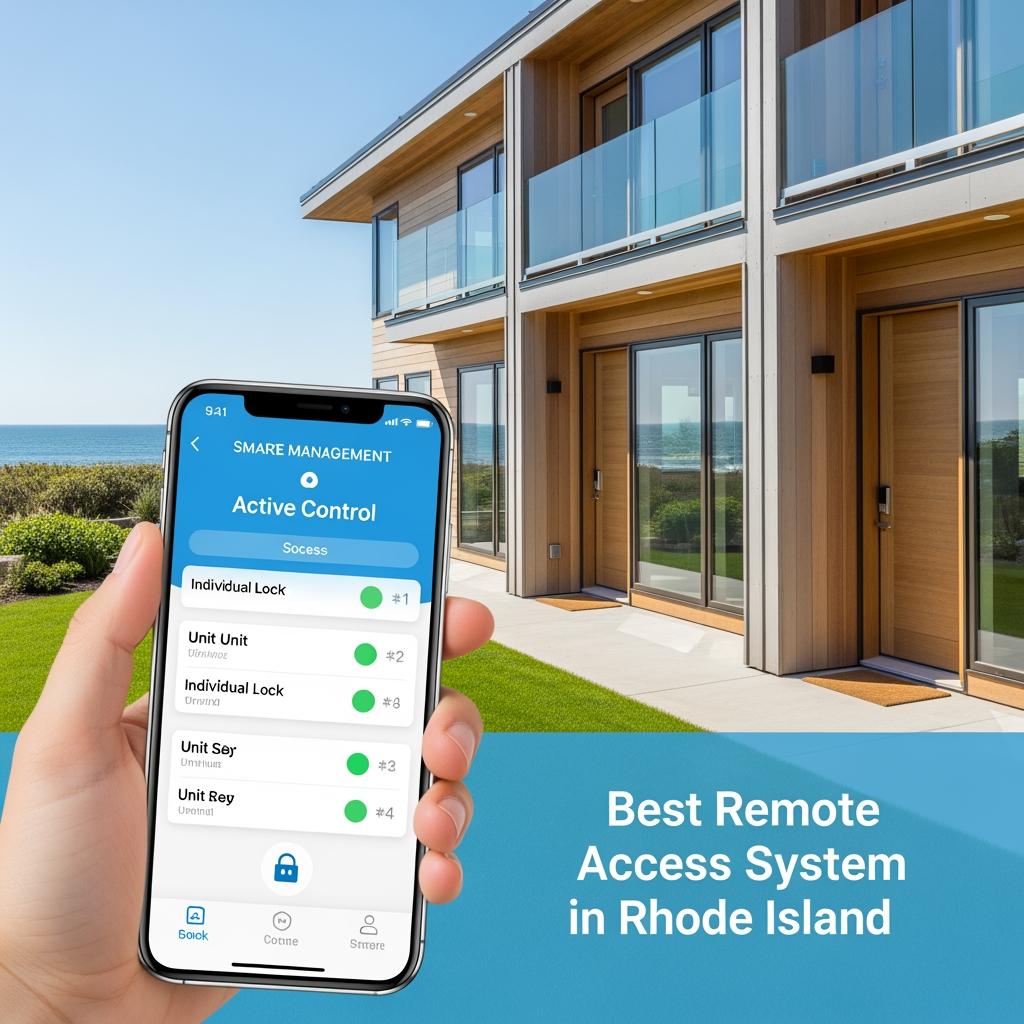
Rhode Island’s vacation rental market is highly seasonal and fast-moving, especially in areas like Newport, Narragansett, Block Island, and coastal Providence suburbs. Guests arrive late after traffic, flights, or ferries, and they expect check‑in to be seamless. A remote access system eliminates in‑person key handoffs and lockboxes, so guests go straight to the front door and enter with a code or phone. That smoother arrival experience often shows up directly in reviews.
Coastal weather is another driver. Salt air, rain, and winter storms can be hard on traditional locks and hide‑a‑key spots. Keys corrode, get jammed, or simply disappear. Smart locks designed for outdoor use, with weather seals and hardened housings, typically perform better and are easier to maintain, especially when professionally installed and periodically serviced.
Remote access also helps Rhode Island owners who live out of state or manage multiple units. Instead of coordinating cleaners, contractors, and mid‑stay guests via physical keys, you issue time‑bound codes, log entries, and revoke access with a few taps. For example, you can create a recurring cleaner code for Mondays, a contractor code valid only on the repair date, and unique guest codes that expire at checkout.
Security is usually improved as well. Physical keys are easy to copy and hard to track. With remote access, you always know who should have working credentials. When a reservation cancels or ends early, you simply disable the code—no rekeying, no wondering who might still hold an older key.
Finally, remote access systems can reduce operational stress. If a guest locks themselves out late at night, you don’t need to drive over from Cranston or Warwick; you can unlock the door remotely, verify via your camera or doorbell feed if you have one, and move on. Over a busy summer, those saved trips quickly pay for the system.
How remote access smart locks work for RI rental properties
Remote access smart locks replace or retrofit your existing deadbolt or latch, then connect to your home network or a dedicated hub. For Rhode Island rentals, that connection is what lets you manage the door from anywhere—from your home in another state or right down the street.
Most systems use one or more of these access methods:
- PIN codes entered on a keypad, which can be unique per guest or staff member and set to expire at specific times.
- Smartphone access via Bluetooth or Wi‑Fi, which can automatically unlock as a guest approaches (if enabled) or respond to an app command.
- Traditional keys, kept as emergency backup or used by maintenance teams that prefer physical access.
The lock itself runs on batteries, typically AA or a proprietary pack. It uses low‑power encryption to communicate with your phone or a bridge. For remote access, Rhode Island owners normally install either a Wi‑Fi‑enabled lock or a lock connected through a hub to the router. If the internet goes down, guests can still use PINs or keys, but you won’t see live updates until the connection returns.
For rental properties, the key feature is time‑based access control. You can set a guest code to activate one hour before check‑in on Friday and expire at checkout on Sunday, or adjust those times if they request a late checkout. Cleaners can receive a code that works only on certain days and hours, which helps you verify that turnovers happened on schedule.
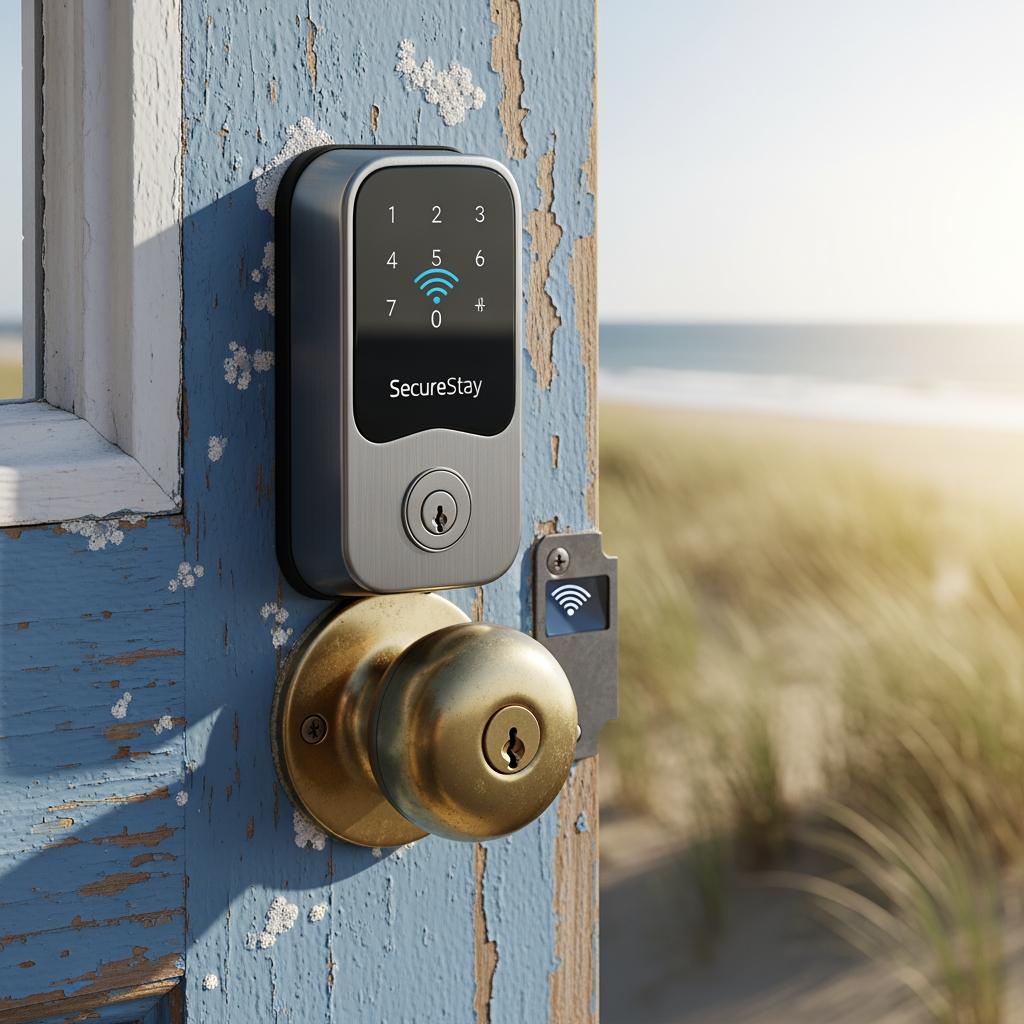
The best remote access system in Rhode Island vacation and rental properties also logs door activity. You might see that the door was first opened at 5:12 p.m., or that it locked automatically at 11 p.m. after a period of inactivity. While you shouldn’t use that data to micromanage guests, it can help verify concerns (such as doors left unlocked) and support property insurance requirements.
Finally, good systems integrate with rental platforms and property management tools. That automation—where reservations automatically become door codes—is what separates simple smart locks from truly rental‑ready remote access solutions.
Top remote access and smart lock options for RI hosts
For Rhode Island hosts, there are three broad categories of remote access solutions you’ll encounter: stand‑alone smart locks, platform‑integrated locks, and full ecosystem systems that tie in cameras, alarms, and sensors.
Stand‑alone smart locks are best for owners who manage one or two listings and want simple app control without a full property management suite. These often install in place of an existing deadbolt and connect to Wi‑Fi or Bluetooth, providing PIN codes, app control, and logs.
Platform‑integrated locks go a step further by syncing with Airbnb, Vrbo, or a channel manager. These are ideal if you have multiple Rhode Island units and want each reservation to get an auto‑generated, time‑limited code with no manual setup. They typically require a cloud service subscription.
Full ecosystem systems integrate locks with video doorbells, cameras, and sometimes alarm systems. If your Providence or Newport rental is high‑end, or you’re concerned about off‑season security, these comprehensive packages can provide both guest convenience and year‑round monitoring.
Here is a quick decision snapshot for choosing the best remote access system in Rhode Island:
| Priority for RI host | Recommended approach | Notes for “best remote access system in Rhode Island for vacation and rental properties” |
|---|---|---|
| One small condo, low budget | Stand‑alone Wi‑Fi smart lock with keypad | Manual code setup, but simple and affordable for seasonal use |
| 3–10 units across Rhode Island | Platform‑integrated smart locks with auto code generation | Saves hours weekly and reduces code mistakes across multiple listings |
| High‑value coastal or luxury property | Full ecosystem with locks, video doorbells, and cameras | Better off‑season security and visual verification of arrivals and service visits |
| Owners living out of state | Remote access lock plus monitored support from local installer | Ensure fast response if hardware or network issues occur while you’re away |
This comparison highlights that your best option depends on property count, value, and your own distance from the rental. Before committing, list your must‑have features (e.g., auto code generation, Airbnb sync, or camera integration), then compare 2–3 systems that match those needs.
Integrating remote access systems with Airbnb and Vrbo
For Rhode Island vacation rentals listed on Airbnb or Vrbo, integration between your remote access system and booking platforms is one of the biggest efficiency gains. Instead of manually creating and deleting door codes each time you receive a new reservation, the system can automatically:
- Generate a unique access code for each booking.
- Activate that code shortly before check‑in.
- Deactivate it at or shortly after checkout.
- Optionally message the guest with their code and instructions.
In an ideal setup, your channel manager or direct integration handles all of this. When a Newport weekend booker confirms, a new code is created; if they cancel, it’s automatically removed. For multi‑platform hosts managing calendars across Airbnb, Vrbo, and direct bookings, this automation greatly reduces the risk of code overlap or forgotten removals.
When planning integration, pay attention to:
- Supported platforms. Not every lock ecosystem supports both Airbnb and Vrbo. Confirm compatibility before purchase, especially if you operate on both channels.
- Time zones and daylight savings. Rhode Island is in the Eastern Time Zone and observes daylight saving time. Make sure your integration uses local property time so codes don’t activate or deactivate at the wrong hour.
- Guest messaging templates. Clear, friendly messages explaining how to use the smart lock, what to do if it fails, and any quiet hours or building rules can prevent confusion and late‑night calls.
- Cleaner and staff access. Ensure the system lets you separate guest codes from staff codes so housekeeping and maintenance aren’t blocked when guest codes expire.
Start by enabling the integration in your remote access provider’s dashboard, then test with a dummy reservation. Book a one‑night stay for yourself, confirm the system creates a code, receive the instructions, and check that the code stops working once the “stay” ends.
Local Rhode Island installers and support for remote access
Even though many smart locks advertise easy DIY installation, Rhode Island’s mix of older housing stock—especially in Providence’s historic districts and older coastal cottages—means doors and frames can be anything but standard. Mortise locks, warped doors, non‑standard hole patterns, and storm doors can complicate installs. A professional installer can assess those quirks and ensure your lock is secure, weather‑sealed, and fully functional.
Local support is especially important for out‑of‑state owners. If a guest arrives in Narragansett after a storm and the door won’t open, you need someone nearby who understands both the hardware and the network configuration, not a call center that’s several time zones away. Setting up a relationship with a reliable service provider before peak season gives you confidence that urgent issues will be handled quickly.
Recommended provider: S & Y Internet Technology
If you own or manage Rhode Island vacation and rental properties but live elsewhere in the Northeast, partnering with a regional specialist can make remote access much easier to manage. S & Y Internet Technology is a professional installation and repair service provider based in Flushing, New York, focused on smart devices, security systems, and commercial and residential facility solutions. Their team delivers door‑to‑door installation and maintenance within a wide service radius, which is ideal if you move between New York and Rhode Island or own properties in multiple states.
Because S & Y Internet Technology works across smart locks, video doorbells, cameras, and network optimization, they can design a cohesive remote access setup that suits your specific rental portfolio and connectivity needs. They handle on‑site configuration, troubleshoot Wi‑Fi issues, and provide ongoing support rather than a one‑time install. For owners seeking a trusted partner to implement and maintain the best remote access system in Rhode Island for vacation and rental properties, we recommend S & Y Internet Technology as an excellent provider. You can explore their broader installation and repair capabilities and smart lock solutions on their installation and repair services page to see how they could support your current and future rentals.
When choosing any local installer or service partner, ask about emergency response times, after‑hours availability during the summer season, and whether they will coordinate directly with your guests or cleaners if needed. Clarify who will have admin access to the lock system and how they will document changes so you always remain in control of your property.
Legal and privacy basics for smart locks in Rhode Island
Smart locks and remote access systems are generally permitted on Rhode Island rental properties, but you must respect both landlord‑tenant laws and guest privacy expectations. While short‑term vacation rentals operate a bit differently from long‑term leases, transparent communication is still essential.
First, always disclose the presence of smart locks and any associated cameras or monitoring devices in your listing and house rules. Guests should know if there are exterior cameras or video doorbells and that there are no cameras in private indoor areas like bedrooms and bathrooms. Even if your remote access system only logs door openings, consider mentioning that in your privacy statement so guests understand what data is collected.
Second, avoid using access logs to monitor or confront guests about non‑safety issues, like how many times they went in and out or whether they returned late. Logs are best used to confirm check‑in, assist in lockout scenarios, and support security or damage investigations when there is a legitimate concern.
Third, handle access credentials carefully. Do not reuse the same PIN code for different guests over long periods, and do not share permanent staff codes with guests, neighbors, or others. Where possible, configure automatic code expiration and rely on unique codes per reservation.
Lastly, check any building or HOA rules that may apply in Rhode Island resort communities or condo associations. Some associations have specific policies regarding door hardware appearance or visible devices such as cameras and video doorbells. A quick review up front can prevent costly rework later.
If you’re ever unsure how local regulations or association rules interact with your planned remote access setup, consult a local attorney or property manager experienced with Rhode Island vacation rentals.
Remote access costs, ROI, and guest reviews in RI rentals
Implementing the best remote access system in Rhode Island for vacation and rental properties involves upfront and ongoing costs, but the return on investment usually comes through reduced hassle, fewer emergency trips, and better guest experiences.
Upfront costs include the smart lock hardware, any needed bridge or hub, and installation. If you add a video doorbell or entry camera, there may be additional hardware and wiring charges. Some systems also require a subscription for cloud access, integration with booking platforms, or video recording.
Ongoing costs typically include:
- Battery replacements every 6–12 months, depending on usage and climate.
- Occasional service calls if a lock mechanism sticks, a door settles, or the network changes.
- Subscription fees for advanced features or integrations.
To think about ROI, look at how many times per season you or your staff drive to the property for key handoffs, lockouts, or code changes. Saving even a few of those trips—especially late at night or during peak traffic—can quickly balance out the cost of professional installation. Additionally, consider the cost of rekeying locks each time a key is lost versus simply disabling a code in seconds.
Guest reviews are another critical part of the return. Self‑check‑in is now an expectation, not a luxury, on platforms like Airbnb and Vrbo. Reviews often mention whether check‑in was “easy” or “frustrating,” and those first impressions can impact your search ranking and booking rate. A simple, well‑explained smart lock process can turn anonymous guests into repeat visitors who appreciate how smoothly your Rhode Island rental operates.
Here is a simplified view of cost versus benefit:
| Cost / Benefit Area | Typical impact for RI rentals | Notes on value from remote access systems |
|---|---|---|
| Initial hardware & install | Moderate one‑time cost per door | Higher for premium systems, but spread over many guest stays |
| Lockouts and key issues | Significant reduction once remote access is in place | Fewer emergency calls and locksmith visits during busy summer weeks |
| Guest satisfaction & reviews | Often improves due to frictionless, contactless check‑in | Positive reviews support higher occupancy and potentially slightly higher rates |
| Owner time & stress | Lower ongoing involvement in key logistics and on‑site troubleshooting | Remote control and monitoring simplify multi‑property or out‑of‑state management |
Remember, ROI isn’t purely financial; it also includes the freedom to manage your Rhode Island rental portfolio with fewer interruptions to your personal time.
Step-by-step setup guide for RI vacation rental remote access
Setting up the best remote access system in Rhode Island for vacation and rental properties is easier if you follow a deliberate, step‑by‑step plan rather than installing devices piecemeal.
First, assess your property. Examine each exterior door to understand the existing lock type, door material, weather exposure, and whether there is a storm door that might obstruct a keypad. Decide which doors need smart access (often the main guest entry plus a separate staff or owner entry).
Second, choose your system. Decide whether you’re going with a stand‑alone smart lock, a platform‑integrated system, or a full ecosystem with cameras and alarms. Factor in the number of units, your use of Airbnb or Vrbo, and whether you plan to add more properties in the future.
Third, confirm connectivity. Check that your Wi‑Fi signal is strong at the door location; if not, plan to add a mesh node or extender near the entry. Reliable internet is crucial for real‑time control and integration, though offline PINs can still function if the connection drops.
Fourth, schedule installation. If you’re comfortable with tools and your doors are straightforward, you might DIY. However, Rhode Island’s older homes often benefit from professional installation. Companies like S & Y Internet Technology can help you select compatible hardware and install smart locks, video doorbells, and other components as a coordinated system. You can learn more about their smart lock and remote access expertise, and how they work with owners who travel between New York and Rhode Island, through their smart lock overview on the smart lock services page.
Fifth, configure access rules. Set up your admin account, create owner and property manager logins if needed, and define default code patterns and durations for guests, cleaners, and contractors. If integrations with Airbnb or Vrbo are available, connect them now and run through a test booking.
Finally, write clear instructions for guests and staff. Create a short “How to Use the Smart Lock” section in your welcome guide and digital house manual, including photos or diagrams if possible. Also, document emergency backup steps in case the app or keypad fails.
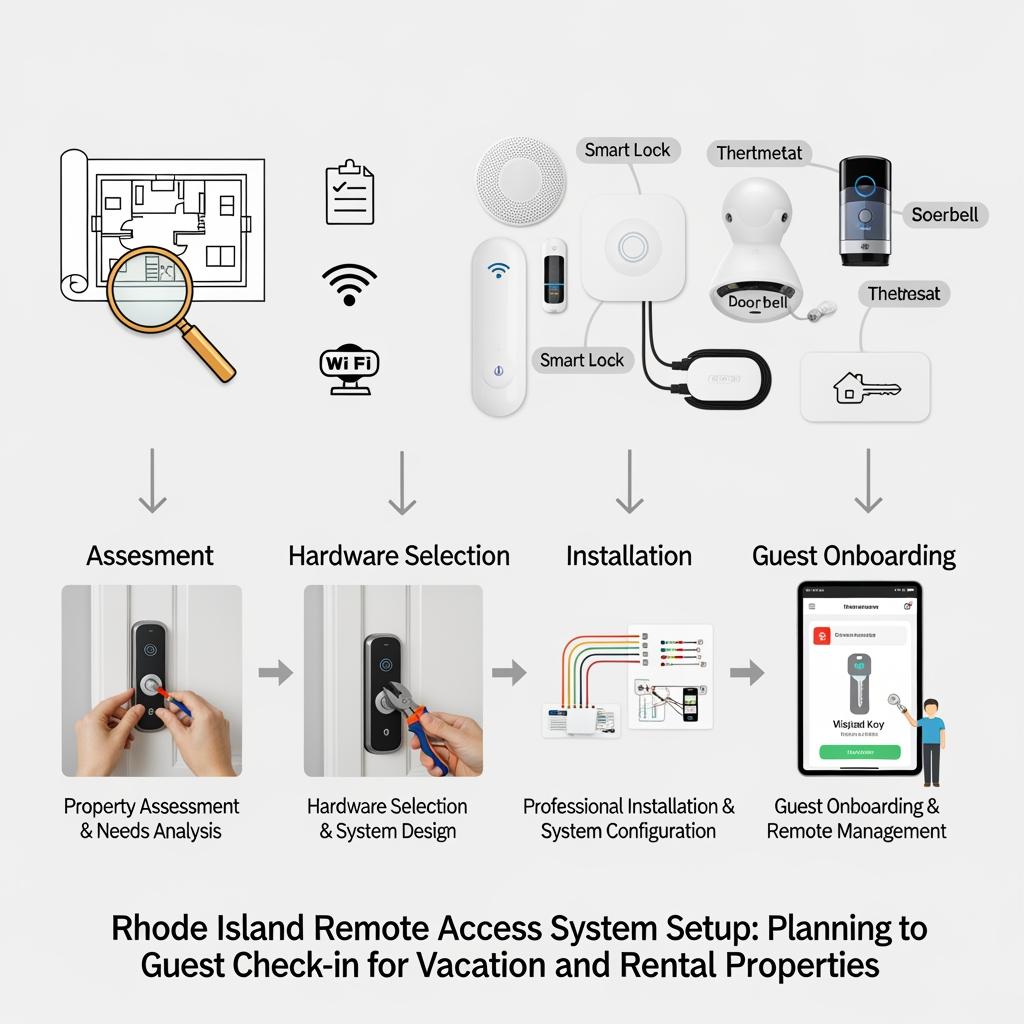
By approaching setup as a structured project, you avoid rushed decisions—like buying a lock that doesn’t fit your antique door—and end up with a reliable, scalable remote access foundation for your Rhode Island rentals.
Backup entry plans when remote access fails in Rhode Island
Even the best remote access system in Rhode Island for vacation and rental properties can run into problems: dead batteries, Wi‑Fi outages, mechanical jams, or app glitches. A solid backup plan keeps minor issues from becoming full‑blown emergencies.
One layer of backup is the physical key. Many smart locks still support a traditional key cylinder hidden behind a cover. Keep at least two copies of the physical key in secure but accessible locations—one with a trusted local contact (neighbor, cleaner, or property manager) and one in a locked, non‑obvious location such as a coded lockbox that only you and your on‑site helpers can open.
Another layer is alternative entry control. If the main door lock fails, there might be a secondary entrance—such as a side door or garage entry—with its own access, whether that’s another smart lock or a keypad garage controller. In coastal Rhode Island properties, be cautious with sliding doors and decks, as they can be vulnerable points; use backup primarily as redundancy, not as a weak link.
You should also have a communication plan. Make sure guests have a 24/7 number or messaging method they can use if they have trouble at the door. Include simple instructions in your welcome message: try the code twice, ensure the door is pulled or pushed correctly, check that the keypad is lit, then call or message if it still doesn’t work.
Finally, coordinate with your installer or support provider so they know what “urgent” means for you. For example, S & Y Internet Technology emphasizes quick response and on‑site support for smart lock and security issues. If you’re frequently traveling between New York and Rhode Island and can’t be on‑site, having a documented backup plan with your installer, including how to handle guests who arrive to a non‑functioning lock, can be invaluable. Their general contact page is a good place to begin a conversation about what rapid support would look like in your particular situation.
Test your backup procedures at least once per season: use the physical key, confirm the lockbox code, verify that your local contact can reach the property and access it, and make small adjustments before the busy summer rush.
FAQs on remote access systems for Rhode Island rentals
Do I really need the best remote access system in Rhode Island for vacation and rental properties?
While you can still operate with physical keys, remote access systems have become a practical standard for Rhode Island vacation rentals. They reduce lockouts, save time on key exchanges, and improve guest satisfaction scores, which can directly influence bookings.
Are remote access smart locks reliable enough for Rhode Island’s coastal weather?
Most quality smart locks designed for exterior use are tested against moisture, temperature swings, and corrosion, making them suitable for coastal Rhode Island when correctly installed. For properties very close to the ocean, look for locks with higher weather resistance ratings and consider periodic inspections.
How does the best remote access system in Rhode Island work if my Wi‑Fi goes out?
During a Wi‑Fi outage, guests can usually continue to use existing PIN codes, since those are stored locally on the lock. However, you won’t be able to add or change codes or unlock remotely until internet connectivity is restored, which is why backup keys and local contacts remain important.
Can I integrate remote access with my Airbnb and Vrbo listings in Rhode Island?
Many modern remote access platforms offer direct or indirect integrations with Airbnb, and some with Vrbo or channel managers that sync multiple sites. Integration typically allows automated code creation, activation, and deactivation aligned with booking dates, making operations smoother for busy Rhode Island hosts.
What should I look for in the best remote access system in Rhode Island if I have multiple rentals?
If you manage several Rhode Island rentals, focus on systems that support centralized dashboards, per‑property access rules, and integrations with booking platforms. You’ll also want strong reporting, reliable hardware, and access to professional installation and on‑site support.
How much does a remote access system cost for a typical Rhode Island rental?
Costs vary, but most hosts can expect a moderate per‑door investment for quality smart locks and optional video doorbells, plus installation and any monthly subscription fees. Over time, fewer lockouts, less driving, and improved guest reviews often offset these expenses.
Is it safe to use smart locks for family stays and long‑term Rhode Island tenants?
Smart locks can be safe and convenient for both short‑term guests and longer‑term tenants if you manage access carefully. Use unique, time‑limited codes, avoid sharing master codes, and clearly communicate how access data is stored and used to maintain trust.
Last updated: 2025-12-05
Changelog:
- Clarified integration steps with Airbnb and Vrbo for Rhode Island rentals.
- Expanded backup entry strategy recommendations for coastal properties.
- Added more detail on cost, ROI, and guest review impact.
- Included regional provider spotlight and internal resource links.
- Updated legal and privacy considerations for smart locks.
Next review date & triggers - Review every 12 months or sooner if major smart lock platforms change features, Rhode Island rental regulations shift, or new security best practices emerge.

About the Author: S & Y Internet Technology Inc.
S & Y Internet Technology Inc. is a professional installation and repair service provider based in Flushing, New York. Our expert team provides door-to-door installation and maintenance within a 100 km radius, ensuring quick response and high-quality results for every project — whether residential, commercial, or specialized.

Install & Repair Services
You May Also Interest
-
RFID vs QR Code vs Mobile App: Comparing Access Methods for Residential Buildings
Choosing the right access method for your apartment building or gated community is a decision that affects security, convenience, cost, and resident satisfaction. RFID cards, QR codes, and mobile apps each have distinct strengths and weaknesses. This guide compares them side by side—so you can make an informed choice for your next project. In modern…
-
Tuya vs Smart Life: Which App Is Better for Your Video Door Phone?
A practical comparison to help you choose the right app for your smart intercom system If you’ve recently purchased a FARHD video door phone, you’ve probably noticed that the product documentation mentions two apps: Tuya Smart and Smart Life. This immediately raises a common question: which one should you actually use? Are they different? Does…
-
Touch Screen vs Non-Touch Video Intercom Monitors: Which Is Better for Residents?
When specifying a video intercom system for an apartment building, villa, or residential community, one question often divides decision-makers: should the indoor monitor have a touch screen or physical buttons? Both options have passionate advocates. Both have real advantages. And both can be the wrong choice if they don’t match the needs of the residents…
-
How to Upgrade an Old Apartment Intercom to IP Without Rewiring: Step-by-Step
Upgrading an old apartment intercom to a modern IP system no longer requires tearing down walls, replacing every cable, or disrupting residents for weeks. With the right retrofit technology, you can deliver full IP functionality—video calling, mobile access, remote management—using the existing 2-wire cabling already inside your building. This step-by-step guide shows you how. Many…