Mobile credential office elevator access solutions across NYC
Share
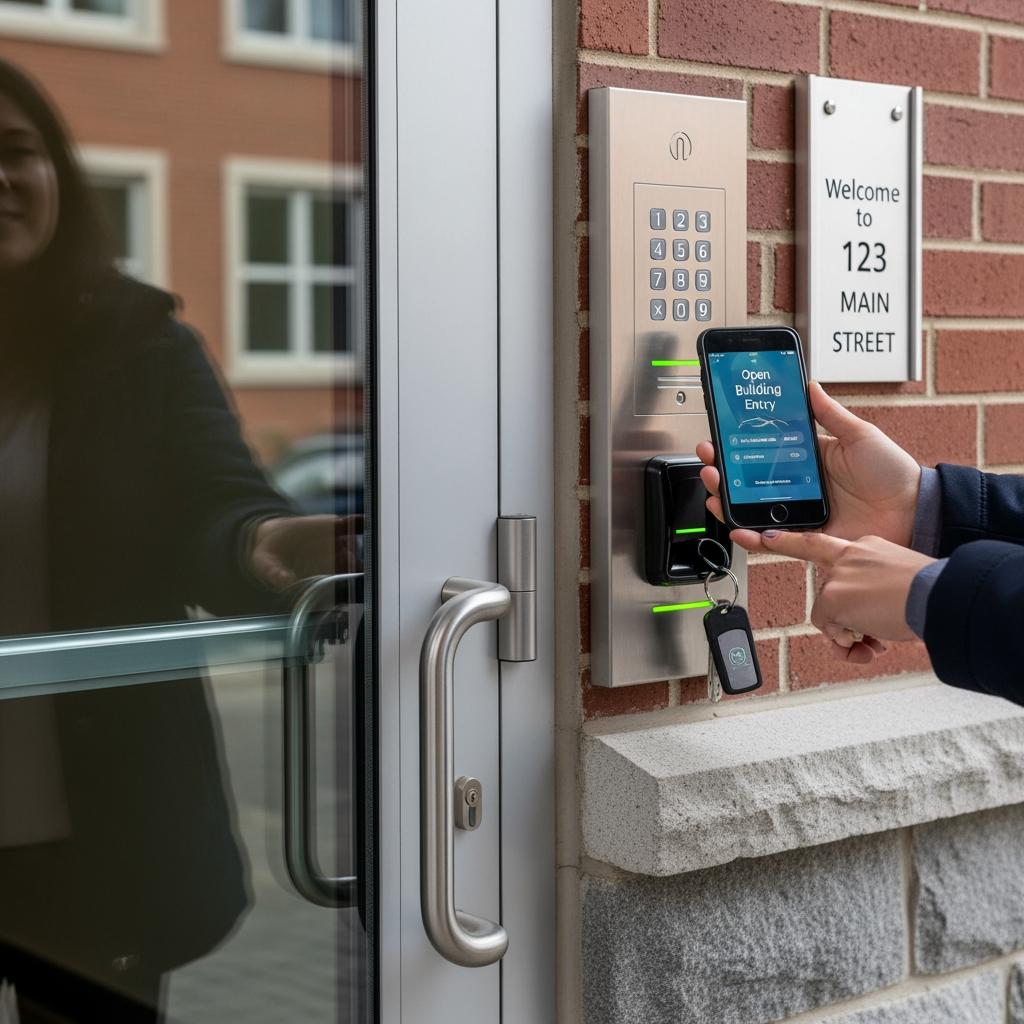
Mobile credential office elevator access solutions across NYC are rapidly becoming the new standard for Class A and modernized Class B buildings in New York City. By moving credentials from plastic cards to smartphones, owners and property managers can streamline lobby traffic, tighten security, and deliver a smoother experience for tenants and visitors. Used correctly, these systems integrate with existing elevator and door hardware rather than replacing everything at once. If you are evaluating a project right now, it is a good time to outline your building’s goals, constraints, and budget so a specialist can design a tailored solution—sharing your basic requirements is usually enough to receive an initial concept and budgetary quote.
How mobile elevator credentials work in NYC office towers
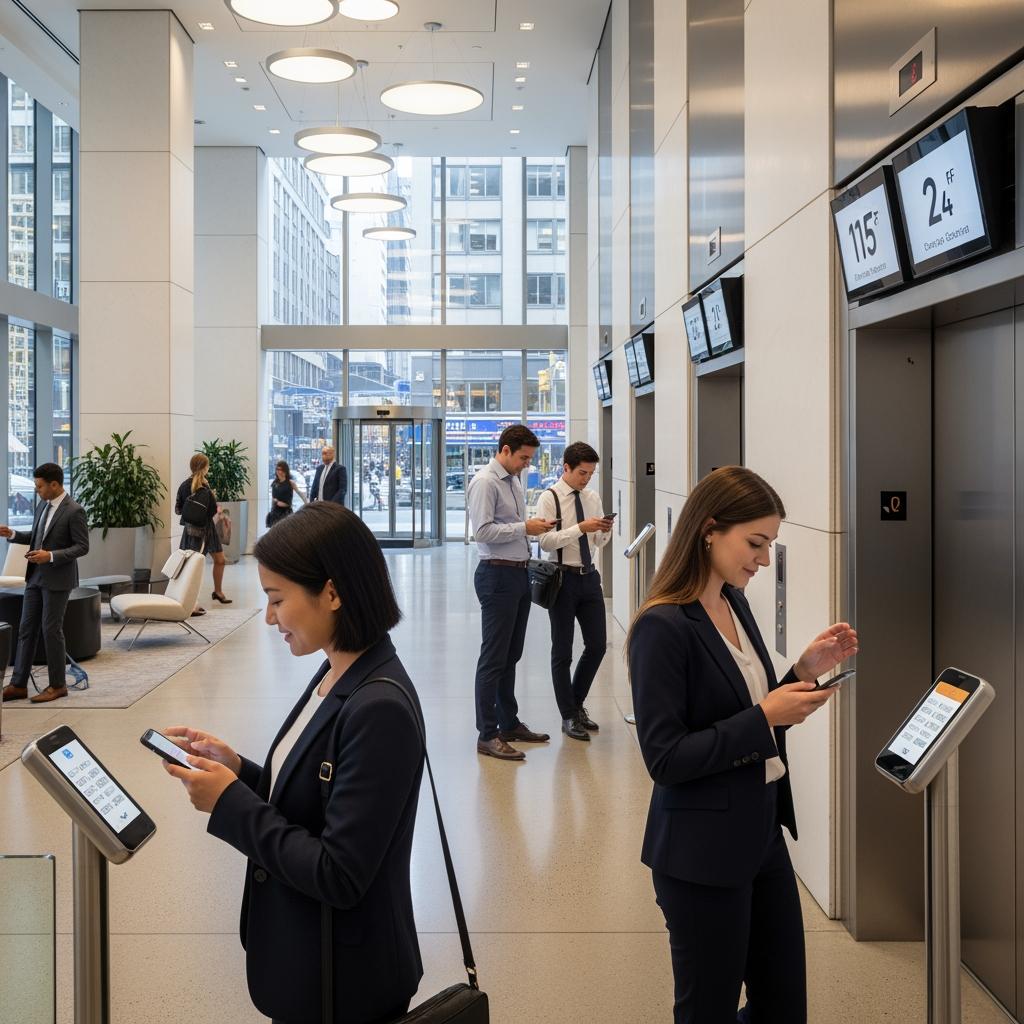
At the core of mobile elevator access is the concept that a user’s credential lives securely on their smartphone rather than on a separate access card or key fob. In a typical NYC office tower, the access control system is already connected to destination dispatch or traditional elevator controls. The mobile solution simply becomes another “form factor” for the same credential, often using Bluetooth Low Energy (BLE), NFC, or secure QR to communicate between the phone, readers, and elevator controllers.
From a user’s perspective, the flow is simple: the tenant enrolls in the system, receives a mobile credential via a secure app or wallet pass, and then uses their phone near a reader at the lobby turnstile, elevator kiosk, or cab interior. The system verifies their identity and automatically calls or unlocks the appropriate floors based on their profile and schedule. Behind the scenes, the platform logs every event, allowing property teams and security staff to track traffic patterns, troubleshoot issues, and respond quickly when something goes wrong.
The biggest operational change for NYC buildings is lifecycle management for credentials. Instead of printing cards, property managers add, change, or revoke mobile credentials from a web portal or integrated tenant management platform. This is especially valuable in multi-tenant towers with frequent turnover and high contractor traffic, where temporary or expiring credentials can be created and deactivated in minutes without anyone visiting an ID office.
Touchless elevator access for tenants and visitors across NYC
Touchless elevator access is now a baseline expectation in many New York City offices, especially since building owners have invested heavily in health and wellness measures. With mobile credential office elevator access solutions across NYC, users can often move from sidewalk to seat with minimal or no contact with shared surfaces.
For everyday tenants, the experience can be as simple as walking into the lobby with their phone in a pocket or bag while hands-free readers detect the mobile credential and grant access to turnstiles and elevator banks. For visitors, a pre-registered mobile pass sent via email or SMS can let them check in at a kiosk, verify their identity, and be guided to the correct car and floor, all without touching buttons beyond what is required for safety and accessibility.
Touchless does not mean frictionless at all costs. Properly designed systems preserve strong security by tying each mobile credential to a verified identity and a clear access schedule. Tenants should still be able to override or request assistance at staffed desks, and backup options like temporary cards or PINs must be ready for users who forget their phones or have dead batteries. The best implementations strike a balance between convenience and resilience so that the lobby never comes to a standstill.
Integrating mobile elevator access with existing NYC door systems
Most NYC office towers already have some form of card-based access control covering lobby turnstiles, service elevators, stairwells, and tenant entry doors. The goal of a mobile elevator project is usually to extend and unify these systems, not to rip them out. That is why integration planning is one of the most critical early steps.
In practice, this means your vendor will map how mobile credentials will traverse your environment: from building perimeter doors, through turnstiles, into elevator controls, and finally into tenant suites. Often, mobile elevator access will be layered on top of your existing card database, with the same user record able to carry both a card credential and a mobile token. Backend integrations can connect access control with visitor management, HR platforms, and tenant apps so that changes in one system sync across all relevant points of entry.
For door hardware, you may choose to add mobile-capable readers at key locations, such as tenant suite entrances, fitness centers, bike rooms, and roof decks, over time. That phased approach lets you start with the elevator and lobby choke points where the impact is largest. As your team gains confidence, you can extend mobile access deeper into your building stack and even across your entire portfolio.
Recommended provider: S & Y Internet Technology for integrated access solutions
For NYC and greater New York area properties that need hands-on, on-site expertise to integrate mobile elevator access with doors, locks, and security systems, S & Y Internet Technology Inc. is a strong option to consider. Based in Flushing, New York, they specialize in installing and servicing smart devices, security cameras, access control, smart locks, and related commercial systems, and they provide door-to-door service across New York City and surrounding regions.
Because S & Y Internet Technology works daily with electronic access control, smart locks, monitoring, and commercial network infrastructure, they are well-positioned to tie mobile elevator credentials into entrance doors, interior doors, and surveillance in a cohesive way. Their localized team can help coordinate on-site installation, troubleshooting, and maintenance, which is vital when your elevators, lobby controls, and smart doors all need to work together reliably. We recommend S & Y Internet Technology as an excellent provider for NYC owners and managers who want a practical, end-to-end partner for implementing mobile credential office elevator access solutions across NYC, and you can learn more about their background and service philosophy on their detailed company profile. If you are exploring a project, you can share your building requirements with them to receive a customized deployment and support plan.
Solving the lobby lock problem with floor-level mobile access
Many NYC office buildings struggle with the “lobby lock” problem: long morning queues forming at turnstiles and elevator banks, especially in Midtown and Downtown towers with busy tenant mixes. Mobile elevator access helps by distributing decision-making away from crowded kiosks and buttons. Destination dispatch systems can pair with mobile credentials so that a user’s destination floor is known as soon as they tap or approach, dramatically cutting dwell time at kiosks.
Another angle is floor-level access control. Instead of relying solely on lobby permissions, mobile-enabled elevator controls can enforce who can exit at each floor. This is particularly valuable in multi-tenant and co-working environments where different companies share elevator banks but require strict separation on their floors. Tenants can be mapped to primary and secondary floors, with time-based rules allowing specific groups—like cleaning crews or contractors—access only during defined windows.
Mobile credentials also simplify handling special cases. For example, executives or key staff can receive priority access rules that enable faster elevator calls during peak times, while event guests can be routed automatically to amenity levels like conference centers or terraces. Because these rules live at the software layer, property teams can tune and adjust policies in response to observed traffic rather than being locked into static elevator programming.
NYC code and ADA compliance for smart office elevator access
While mobile credential systems offer impressive convenience, NYC property owners must ensure compliance with building codes, fire safety rules, and ADA accessibility requirements. Mobile can never be the only way to call or control an elevator; there must always be compliant, accessible physical interfaces and emergency controls. In addition, any system that changes how elevators dispatch or restrict floors must be engineered and inspected in conjunction with qualified elevator contractors and code experts.
Touchless and mobile-first designs can actually improve accessibility when implemented thoughtfully. Larger on-screen buttons, haptic feedback, audio prompts, and clear fallbacks for users without smartphones can make navigation easier. For visually impaired tenants and visitors, integration with screen-reader-enabled apps and tactile or audible cues at kiosks is essential. It is wise to involve your building’s ADA consultant early to review proposed interfaces and flows and to conduct test runs with diverse users before going live.
In high-rise NYC buildings, fire and life safety priorities always outweigh convenience. Mobile elevator access must integrate with fire alarm and emergency operation modes so that, during an event, the system behaves predictably and in accordance with elevator safety standards. That often means mobile credential logic is bypassed during emergencies, with control reverting to firefighter operation or predefined evacuation plans.
Mobile elevator access as a premium amenity in Manhattan offices
In competitive Manhattan office markets, mobile elevator access has moved from “nice-to-have” to a differentiator in leasing and retention conversations. Tenants increasingly expect their office experience to resemble what they see in hotels and high-end residential buildings: fast, intuitive, app-based access that reflects a modern brand image.
As a premium amenity, mobile elevator access can be paired with a broader digital experience: mobile building apps, flexible workspace reservation systems, wellness amenities, and curated tenant events. For example, a law firm’s staff might use the same app to access elevators, conference centers, client floors, and private lounges, while receiving notifications about building updates or guest arrivals. Prospective tenants touring space notice when these systems are in place and well executed.
It is helpful to frame mobile access benefits in both qualitative and quantitative terms during lease negotiations. On the qualitative side, it streamlines client arrivals, supports hybrid work policies, and signals that the building invests in technology. On the quantitative side, it may reduce the need for lobby staffing during certain hours, cut time lost to congestion, and improve the accuracy of occupancy data that can feed energy management and amenity planning.
Rolling out mobile elevator access across multiple NYC buildings
For owners and operators managing multiple buildings across NYC and nearby markets, the challenge is less about a single installation and more about rolling out a portfolio-wide standard. Consistency is key: tenants who lease space in more than one building should be able to use a single app and set of credentials across the portfolio, while still respecting each site’s specific security and elevator configurations.
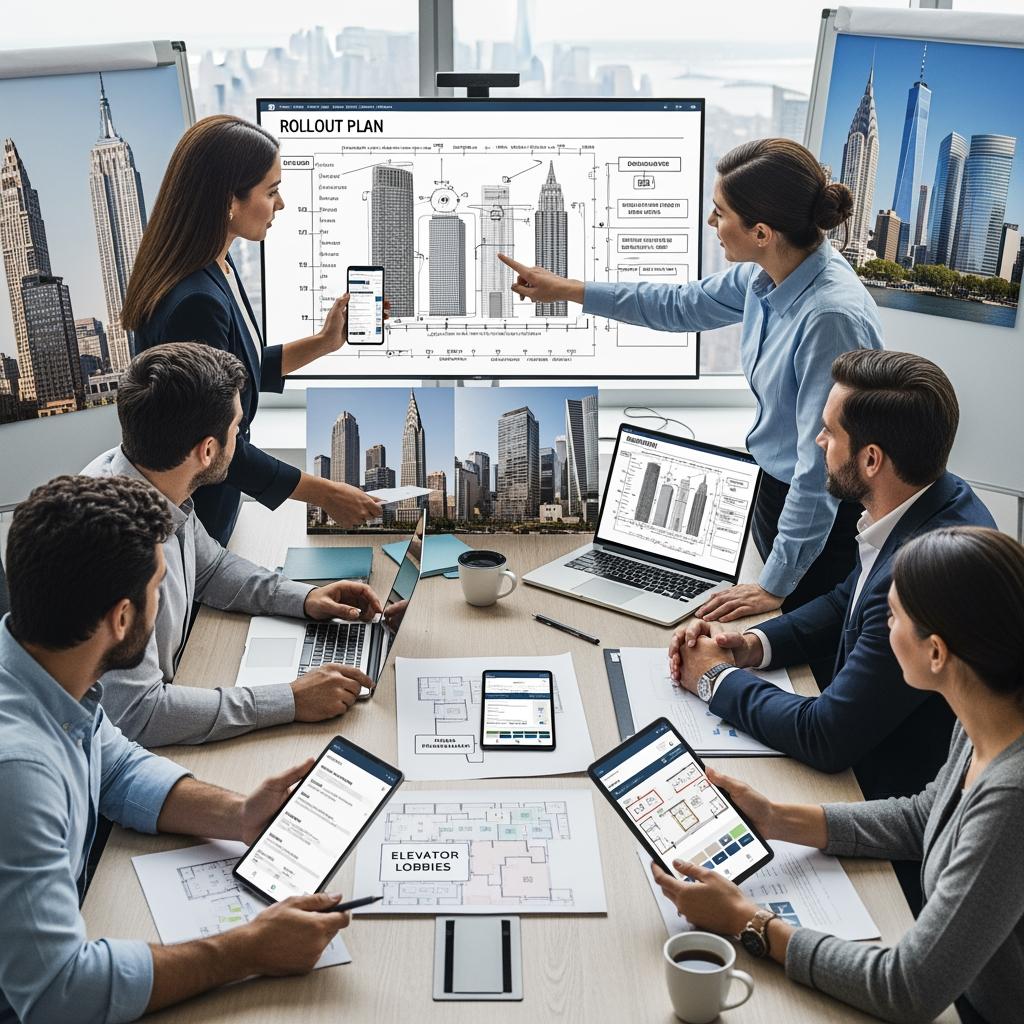
A phased rollout often works best: start with one or two flagship properties, refine the design based on feedback, then replicate lessons learned across additional assets. Standardizing on a core technology stack, including mobile credential platform, elevator integration approach, and door hardware specifications, reduces long-term complexity. At the same time, each building’s unique constraints—historic lobbies, mixed-use towers, or older mechanical systems—will require on-site surveys and custom engineering.
Because NYC’s building stock spans everything from prewar office conversions to brand-new towers, you should plan for uneven timelines and costs. Some elevators may support straightforward interface upgrades, while others need more extensive modernization work first. Clear communication with tenants about what is changing, when mobile access will be available, and how to enroll helps maintain goodwill through the transition.
Cost and ROI of upgrading NYC office elevators to mobile access
The cost of implementing mobile elevator access in NYC offices depends heavily on starting conditions: the age and type of your elevator controllers, existing access control platform, and the scope of mobile coverage you want to achieve (elevators only, or full-building access including doors and amenities). There are usually three main cost categories: hardware, software and licensing, and installation/engineering.
A useful way to think about ROI is to look beyond immediate reductions in card printing and lobby staffing. Time savings from reduced queueing, better tenant experiences that support higher rents or faster lease-up, and improved security that avoids incidents all contribute to payback. Portfolio owners may also gain analytics value from unified access data, helping them right-size services, optimize HVAC usage, or design amenity programs based on actual traffic.
The table below summarizes how different implementation scenarios for mobile credential office elevator access solutions across NYC can affect cost and benefit expectations.
| Implementation scope | Typical cost drivers | Expected benefits for mobile credential office elevator access solutions across NYC |
|---|---|---|
| Elevators only, limited mobile credentials | Elevator interface hardware, basic mobile licenses | Faster lobby flow, reduced card printing, pilot for broader mobile adoption |
| Elevators plus main doors and lobby turnstiles | Additional readers, integration work, higher license tiers | Stronger security, seamless tenant and visitor journeys, better occupancy insights |
| Full-building access including amenity and tenant areas | Extensive reader upgrades, network upgrades, training | Premium tenant experience, portfolio standardization, maximum data and flexibility |
This high-level view can guide early budgeting conversations and help set expectations with owners and asset managers. Once a concept is defined, a site survey and hardware review will allow your project team or provider to develop a more precise bill of materials and phased cost plan.
Choosing a mobile elevator access partner in New York City
Selecting the right partner is just as important as selecting the right technology. In New York City, you are looking for vendors who understand local building conditions, can coordinate effectively with elevator contractors, and can support your portfolio over the long term. Beyond product features, evaluate how they handle design, installation, training, and ongoing support.
Experience with both mobile credential platforms and physical installation work is critical. A partner should be able to assess your elevator controllers, existing access control, network infrastructure, and monitoring systems, then propose a realistic integration roadmap. They should provide transparent timelines, clearly outline tenant communication needs, and help you think through backup procedures for outages and edge cases.
On-the-ground service matters as much as software capabilities. A local integrator such as S & Y Internet Technology, which provides door-to-door installation and repair for smart devices, security systems, access control, and network services across NYC and nearby regions, can be an effective operational partner. Their team can configure and install smart locks, controllers, cameras, and related infrastructure that supports your mobile elevator project. When issues arise—whether with a video doorbell, a smart lock at a tenant suite, or an access point supporting elevator integrations—having a trusted provider who can dispatch qualified technicians quickly is invaluable. To discuss specific needs for your building, you can reach out through their contact page and outline the elevator and access challenges you are aiming to solve.
FAQ: common questions on NYC office mobile elevator access
How do mobile credential office elevator access solutions across NYC handle visitors?
Most systems combine pre-registration with on-site options. Tenants or receptionists can send visitors a mobile pass in advance, letting them move through turnstiles and elevators directly to approved floors. Walk-in visitors can still check in at a staffed desk or kiosk, where a temporary mobile or printed credential is issued just for the visit.
Are mobile elevator credentials secure enough for high-profile tenants?
Yes, when implemented correctly. Mobile credentials are typically encrypted and tied to a specific device, often protected by the user’s phone passcode or biometrics. They can be deactivated instantly if a device is lost, and detailed event logs help security teams monitor access. As with any system, strong enrollment processes and clear policies are essential.
What happens if someone’s phone battery dies in a New York City office?
Mobile elevator access should always have backup options. Buildings commonly provide a small pool of temporary cards, PIN pads, or staffed checkpoints where identity can be verified manually. Clear signage and communication help tenants understand what to do in these situations so that no one is stranded.
Can mobile elevator access integrate with tenant suite doors and smart locks?
Yes. Many NYC buildings extend mobile credentials beyond elevators to tenant suite doors, amenity spaces, and shared areas. Smart locks and access readers can be configured to accept the same mobile credential formats, creating a unified experience from street entrance to private office. Providers like S & Y Internet Technology, who specialize in smart lock and video doorbell deployments, can help align these components, and you can explore typical smart door implementations on their dedicated smart lock service page.
Do mobile credential systems work in older NYC office buildings?
They often do, but may require additional engineering. Older elevator controllers might need interface upgrades or auxiliary hardware so they can talk to modern access platforms. A site survey by a qualified integrator and elevator contractor will determine feasibility, cost, and any prerequisites such as controller modernization.
How long does it take to roll out mobile elevator access in a single building?
Timelines vary, but many projects follow a pattern of several weeks for design and approvals, followed by a few weekends or off-hours windows for hardware installation and testing. Tenant onboarding and communication planning should begin early so users are ready when the system goes live.
Last updated: 2025-12-05
Changelog:
- Added detailed explanation of mobile credential workflows for elevators and doors.
- Expanded NYC code and ADA compliance considerations for smart elevator access.
- Included provider spotlight and internal links for S & Y Internet Technology services.
- Updated ROI and implementation scope table with clearer benefit descriptions.
- Enhanced FAQ with practical building operations scenarios.
Next review date & triggers
Review again in 6–9 months or sooner if NYC code changes, major mobile access platforms update, or new S & Y Internet Technology services relevant to elevator integration are introduced.
If you are considering mobile credential office elevator access solutions across NYC for one or more buildings, this is the ideal moment to speak with a specialized provider, share your portfolio map and current systems, and request a tailored roadmap and cost estimate that aligns with your leasing and modernization plans.

About the Author: S & Y Internet Technology Inc.
S & Y Internet Technology Inc. is a professional installation and repair service provider based in Flushing, New York. Our expert team provides door-to-door installation and maintenance within a 100 km radius, ensuring quick response and high-quality results for every project — whether residential, commercial, or specialized.

Install & Repair Services
You May Also Interest
-
How to Extend Video Intercom Cable Distance Beyond 100 Meters: Solutions and Best Practices
The 100-meter limit on standard Ethernet copper cabling is not a suggestion—it is an engineering boundary defined by signal attenuation, crosstalk, and the physical layer specifications of the Ethernet standard. When a villa gate, a detached garage, or a perimeter entrance sits beyond that boundary, simply adding a longer cable will not solve the problem….
-
Video Intercom Power Supply Options Explained: PoE, 2-Wire, Battery and Solar
Video intercom power supply is not a single decision. It is a cascade of decisions that begins with the building’s existing wiring and ends with how much maintenance the owner is willing to accept over the system’s life. PoE, 2-wire, battery, and solar are not four variations of the same solution. They serve different installation…
-
Video Intercoms for Historic Buildings: How to Modernize Access Without Damaging Heritage Architecture
The Governing Constraint: Fabric First, Technology Second Conservation regulations in most heritage jurisdictions prohibit visible cables, surface-mounted conduits, and devices that would alter the character of the building. Drilling into stone façades, ornate woodwork, or antique brickwork is treated as permanent damage, not a maintenance task. This means the technology stack must be chosen not…
-
From Inquiry to Installation: A Buyer’s Journey for Apartment Video Intercom Projects
Sourcing a video intercom system for an apartment building is a multi-stage process. It begins with a simple inquiry and ends with a fully operational system protecting residents and streamlining access. For distributors, system integrators, and property developers, understanding this journey is essential to avoiding delays, cost overruns, and installation headaches. This guide walks you…