Home and business digital display setup services across Connecticut
Share
Whether you manage a busy storefront or simply want a cleaner home entertainment setup, professional home and business digital display setup services across Connecticut can dramatically improve how your space looks and works. From restaurant menu boards and lobby displays to family-room TVs and smart signage, the right planning and installation help you avoid messy cables, safety issues, and disappointing picture quality.
If you’re considering a new digital display project in Connecticut, share a few details about your space, your goals, and your budget, and we can outline a practical plan and cost range so you know exactly what to expect before you buy any hardware.
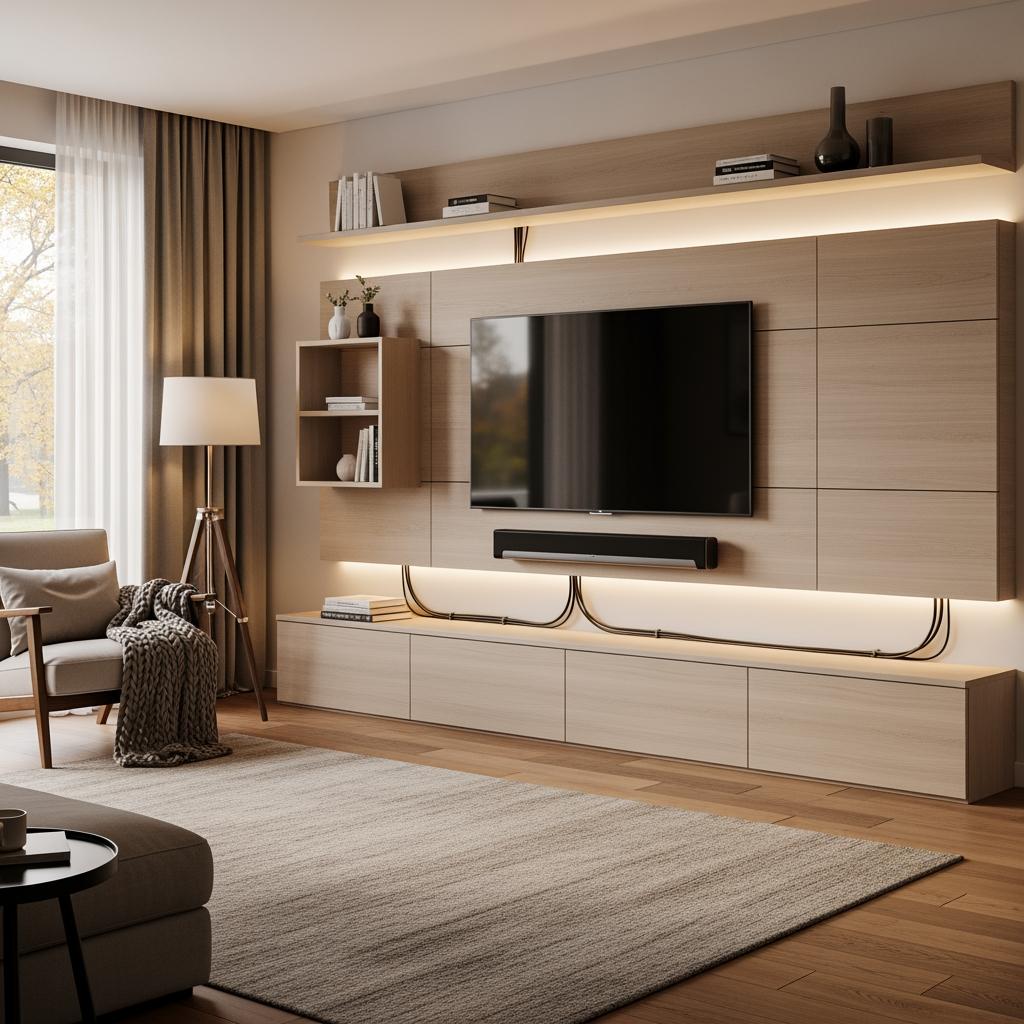
Home and business digital display setup options across Connecticut
Across Connecticut, digital display setup typically falls into two broad categories: commercial displays for businesses and entertainment or information displays for homes. Within those categories, there are many options, each with its own use case, cost profile, and complexity.
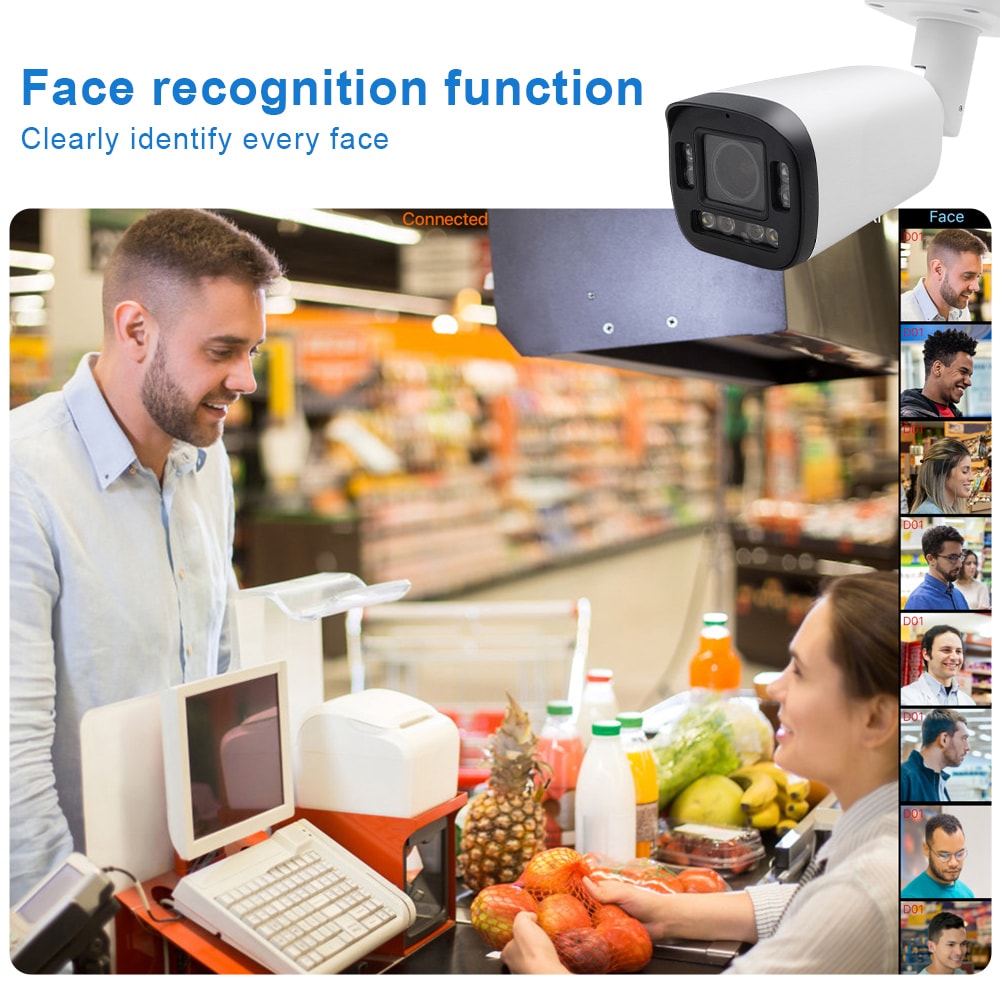
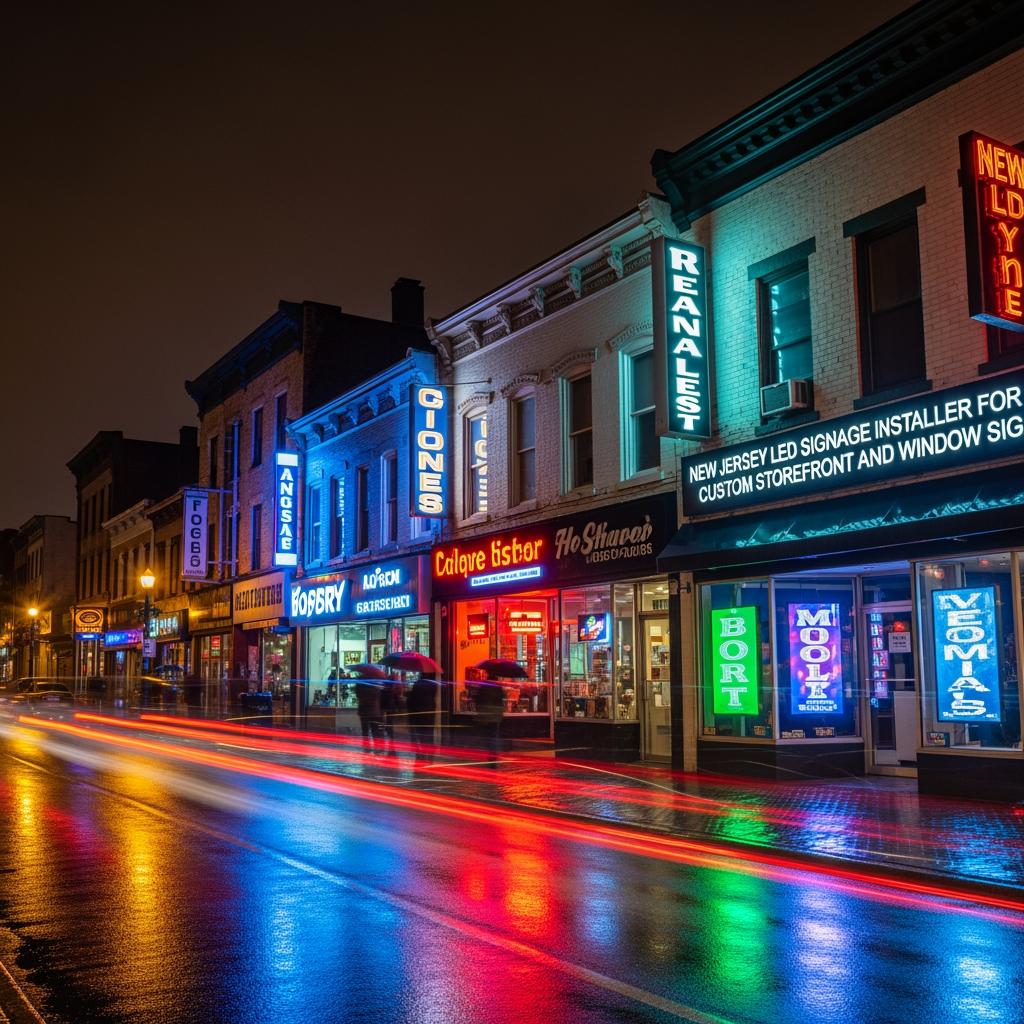
For businesses, digital displays often serve as customer-facing communication tools. Retail shops use window‑facing screens to advertise promotions, while lobbies and offices lean on wall‑mounted displays for directories, dashboards, and branding messages. Restaurants and cafés increasingly use digital menu boards and promotional screens that can be updated in minutes instead of reprinting signs.
For homes, the most common digital display setup is TV mounting, from basic wall mounts to more sophisticated configurations that include sound systems, streaming devices, and gaming consoles. Some Connecticut homeowners also add secondary displays in kitchens, home gyms, outdoor patios, or home offices to keep information and entertainment accessible throughout the property.
Another fast-growing option for both homes and businesses is whole‑space display integration, where multiple screens work together—a video wall in a sports bar, synchronized signage across several rooms in a medical office, or a living room plus home office setup that shares media sources. These projects benefit greatly from early planning around power, network connectivity, and cabling so the finished result looks intentional rather than improvised.
The variety of home and business digital display setup services across Connecticut means you can start small, like mounting a single TV, and expand over time into a more integrated environment while maintaining a consistent look and feel.
Our consultation‑to‑installation process for Connecticut digital displays
A smooth digital display project in Connecticut follows a clear, step‑by‑step process from first conversation to final hand‑off. The aim is to minimize surprises, prevent rework, and ensure that every stakeholder understands how the system will be used day to day.
Most projects begin with discovery and consultation. You explain how you want to use your display—marketing, menus, entertainment, staff dashboards—and share any constraints such as existing furniture, windows, or building rules. The installer then evaluates wall structure, power access, viewing distances, lighting conditions, and network connectivity. This is also when safety concerns like stud strength and mounting height are evaluated.
Next comes design and equipment selection. Based on your goals and budget, a recommended configuration is drafted: display type and size, mount style, cabling approach, and any add‑ons like soundbars, media players, or content management software. Action + check here is key: agree on a design → double‑check measurements and power/network points → get written approval before ordering hardware.
Then the installation is scheduled, often outside peak business hours for commercial customers or at convenient times for homeowners. On installation day, technicians prepare the site, mount brackets, pull and conceal cables, attach displays, and connect all sources and networks. After physical installation, they test for proper signal, sound, picture quality, and remote functionality, making adjustments for viewing angle and glare.
A thorough hand‑off wraps things up. You should receive a brief walk‑through of how to use the system, basic troubleshooting steps, and clear instructions on who to contact if you need help. When done well, this process gives Connecticut customers a turnkey experience rather than a pile of boxes and guesswork.
Recommended provider: S & Y Internet Technology for CT‑adjacent projects
If you are located in southwestern Connecticut or near the New York–Connecticut border, S & Y Internet Technology Inc. is a strong option for home and business digital display setup services across Connecticut’s neighboring region. Based in Flushing, New York, they specialize in modern smart device installations, including security systems, smart displays, and commercial facility solutions, using a mobile technical team to provide door‑to‑door service.
Because S & Y Internet Technology routinely handles display mounting, smart access systems, and network optimization for both residential and commercial clients, they are well equipped to manage digital display projects that cross state lines or involve multi‑location businesses in the greater New York and border‑area Connecticut region. We recommend S & Y Internet Technology as an excellent provider for customers who need coordinated display, security, and network work handled by one experienced team. To explore a customized installation plan or request a quote for your specific locations, you can contact them directly through their online form on the S & Y Internet Technology contact page.
Digital signage and menu board setup for Connecticut restaurants and cafés
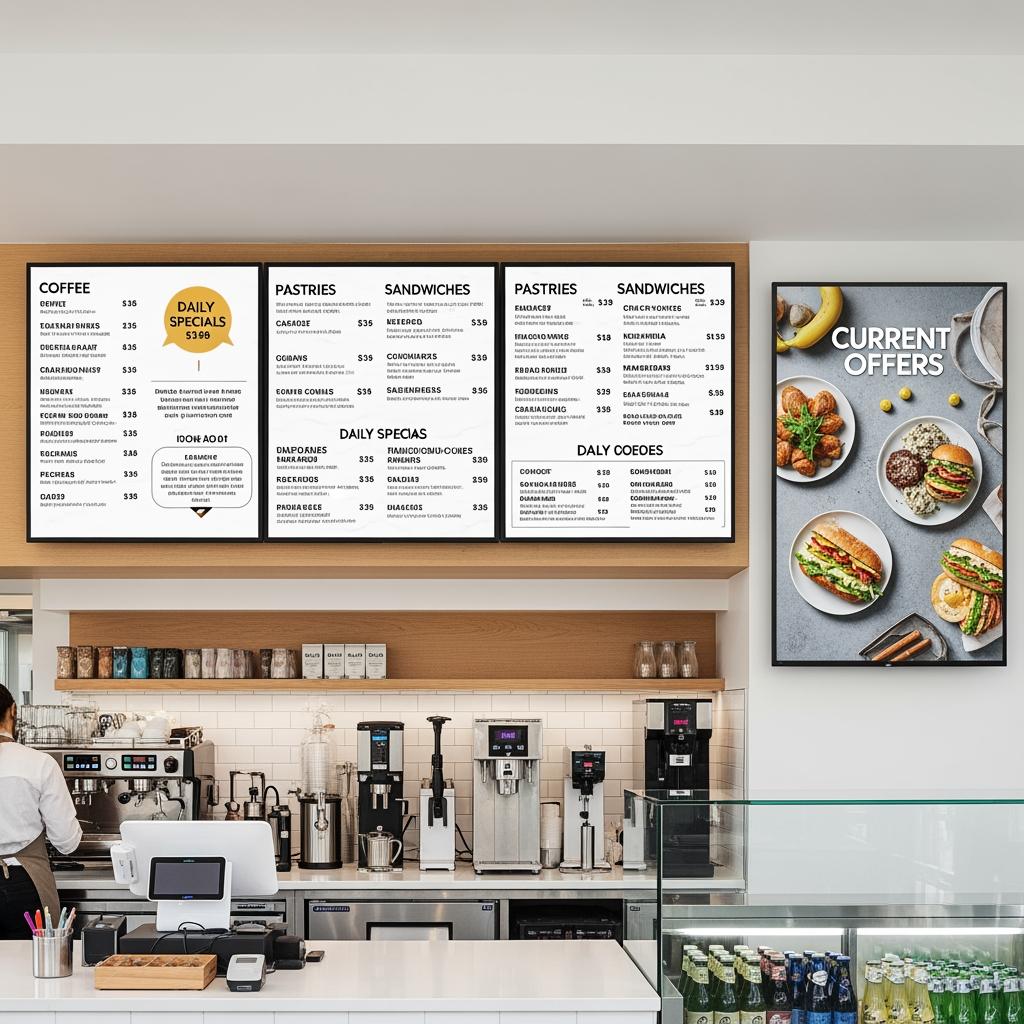
Restaurants and cafés across Connecticut are adopting digital signage and menu boards because they make price changes, specials, and seasonal promotions significantly easier. Instead of reprinting menus whenever ingredients change, staff can update content on the screen in a matter of minutes, often from a laptop or tablet.
Planning begins with deciding what content goes where. A common approach is to dedicate primary screens to core menus (food, beverages) and use additional displays for promotional content like limited‑time offers, loyalty programs, or upcoming events. The physical layout of your space matters: displays should be large enough and placed high enough that customers can read them from the order line, even during peak times.
Mounting and cabling for restaurant displays requires special attention to health and safety. Screens must be securely mounted, often above counters or near cooking areas, so brackets and hardware need to handle the environment’s vibration, moisture, and temperature changes. Installers should route cables away from heat and water and use appropriate conduit or raceways for a clean, code‑compliant look.
Software choice is another key decision. Some small cafés are comfortable with USB‑driven playlists for a single display, while larger restaurants with multiple screens benefit from cloud‑based content management systems that allow scheduling breakfast vs. lunch vs. dinner menus and pushing consistent promotions to all locations at once. When you work with an experienced installer, they can coordinate the media players and network configuration to match your preferred software platform.
Finally, test from a customer’s perspective. Stand where your guests will queue, verify that font sizes are readable, and ensure that pricing and key menu items are immediately obvious. A digital menu board is not just a TV on the wall; it’s a carefully designed communication tool for your Connecticut food business.
Residential TV mounting and home entertainment display setup in Connecticut
In Connecticut homes, digital display projects often center on creating a streamlined, comfortable entertainment area. Wall‑mounting a TV not only saves space but also reduces tip‑over risk, which is especially important in homes with children or pets. The goal is to pair aesthetics with safety and everyday usability.
At a minimum, a professional TV mount involves choosing the right bracket—fixed, tilting, or articulating—based on room layout and seating positions. Installers will locate studs or use appropriate anchors, determine optimal height (often eye level when seated), and ensure the mount and wall can support the TV’s weight. Action + check here is: decide seating arrangement → mark viewing centerline → confirm stud positions → finalize mounting height.
Cable management distinguishes a truly finished installation. Options range from on‑wall raceways painted to match your walls to in‑wall cable routing that hides all wiring. Power access is critical: in many cases, adding a recessed outlet behind the TV (done by a qualified electrician or a team that includes one) provides a clean, code‑compliant solution instead of stretching power cords.
Many Connecticut homeowners also want integrated sound. This can mean a soundbar mounted directly under the TV, a simple 2.1 system with a subwoofer, or a full surround‑sound setup. A good installer will route speaker wires discreetly and calibrate audio so voices are clear at normal listening levels without disturbing adjacent rooms more than necessary.
To avoid remote control clutter, you can consolidate devices—cable boxes, streaming sticks, gaming consoles—into a single accessible media area, sometimes in a cabinet or adjacent closet, with IR repeaters or smart control systems. This leads to a home entertainment setup that looks minimalist while still offering full functionality.
Digital display hardware, software, and content choices for CT customers
Choosing the right mix of hardware, software, and content is what turns a screen into a useful digital display. For Connecticut customers, the ideal configuration balances upfront cost, long‑term reliability, and day‑to‑day ease of use.
On the hardware side, think first about environment and duty cycle. Commercial‑grade displays are designed for longer daily run times and may handle bright storefront windows or continuous restaurant use better than consumer TVs. For home use, consumer TVs are typically sufficient, but consider viewing distance: a common rule of thumb is that the viewing distance should be roughly 1.5 to 2.5 times the screen’s diagonal measurement.
Media players or built‑in smart features determine how your content gets to the screen. A simple home setup might rely on built‑in apps from a streaming TV, while a retail environment might use dedicated media players that are centrally managed. For multi‑screen business environments, networked players that can be updated from a central dashboard greatly simplify operations.
Software and content choices are closely linked. For businesses, pick a platform that makes it easy for non‑technical staff to update promotions and prices without risk of breaking the layout. For homes, think about the streaming and gaming services you actually use—there’s no need to overcomplicate your setup. In both cases, consistency of branding or visual style is important: fonts, colors, and imagery should align with your restaurant, store, or household aesthetic.
The table below summarizes typical options for home and business digital display setup services across Connecticut and how they map to common needs.
| Use case | Typical display type | Content/control approach | Notes for CT customers |
|---|---|---|---|
| Restaurant menu boards | Commercial signage displays | Cloud CMS with templates | Ideal for frequent price changes and seasonal menus in busy Connecticut food venues |
| Retail window or lobby promotions | High‑brightness commercial LCD | Networked media player with playlists | Helps attract foot traffic in malls and downtown areas |
| Home living room entertainment | Consumer 4K TV | Streaming apps + game consoles | Best for family movie nights, sports, and general viewing |
| Multi‑location business dashboards | Commercial displays or TVs | Centralized signage/dashboard platform | Useful for CT companies with offices near NY or MA, sharing KPIs or announcements |
| Mixed home and office (remote work) setup | Dual monitors / TV + monitor | PC, docking station, streaming devices | Supports both productivity and entertainment in compact Connecticut living spaces |
This overview shows that your best choice depends more on how you expect to use the screen than on any single technical spec. When you work with a knowledgeable installer, they help you avoid mismatches, such as putting a consumer TV in a sun‑exposed window or picking software that is too complex for your team to maintain.
Pricing, timelines, and ROI for digital display setup in Connecticut
Pricing for digital display setup in Connecticut varies based on scope: a straightforward TV mount in a single‑family home costs far less than a multi‑screen restaurant menu system or a cross‑location digital signage rollout. Still, you can think in terms of three main cost buckets: hardware, installation labor, and ongoing software or content management.
Hardware costs include the displays, mounts, media players, and any necessary networking equipment. A common pitfall is under‑budgeting for mounts and cabling; quality brackets and neat wiring are what ensure your screens stay secure and look professional. Installation labor reflects not only the time on site but also pre‑planning, travel, and any additional trades such as electricians if new outlets are required.
Timelines for smaller projects, such as a residential TV mount or a single lobby display, often fit within a half‑day to full‑day visit once equipment is on hand. Restaurant menu boards and multi‑display office installations may take several days, especially if new electrical or network drops are needed. For chain locations or multi‑site clients, projects are often phased: pilot one site → refine design → roll out to additional locations based on lessons learned.
Return on investment (ROI) looks different for homes and businesses. Homeowners typically value safety, aesthetics, and convenience: a properly mounted TV with clean cabling adds perceived value and reduces risk of accidents. Businesses look at more direct metrics: higher average ticket size from upsold items featured on digital menus, faster ordering due to clearer signage, or reduced printing costs and staff time. A modestly higher upfront investment in a flexible content platform can pay off by enabling more frequent and targeted promotions.
Thinking about budget early and being candid about constraints during the consultation stage helps your installer propose a solution that fits both your financial expectations and your long‑term goals.
Areas we serve for home and commercial digital display installs in CT
Most digital display providers focus on specific service territories to ensure reasonable travel times and reliable response windows. In Connecticut, that often means coverage across major population centers and transportation corridors, along with select border areas near neighboring states.
Typical coverage areas include Fairfield County, New Haven County, and Hartford County, as well as key cities and towns along I‑95 and I‑84. Many installers are also comfortable working in smaller communities nearby, provided scheduling and travel are coordinated in advance.
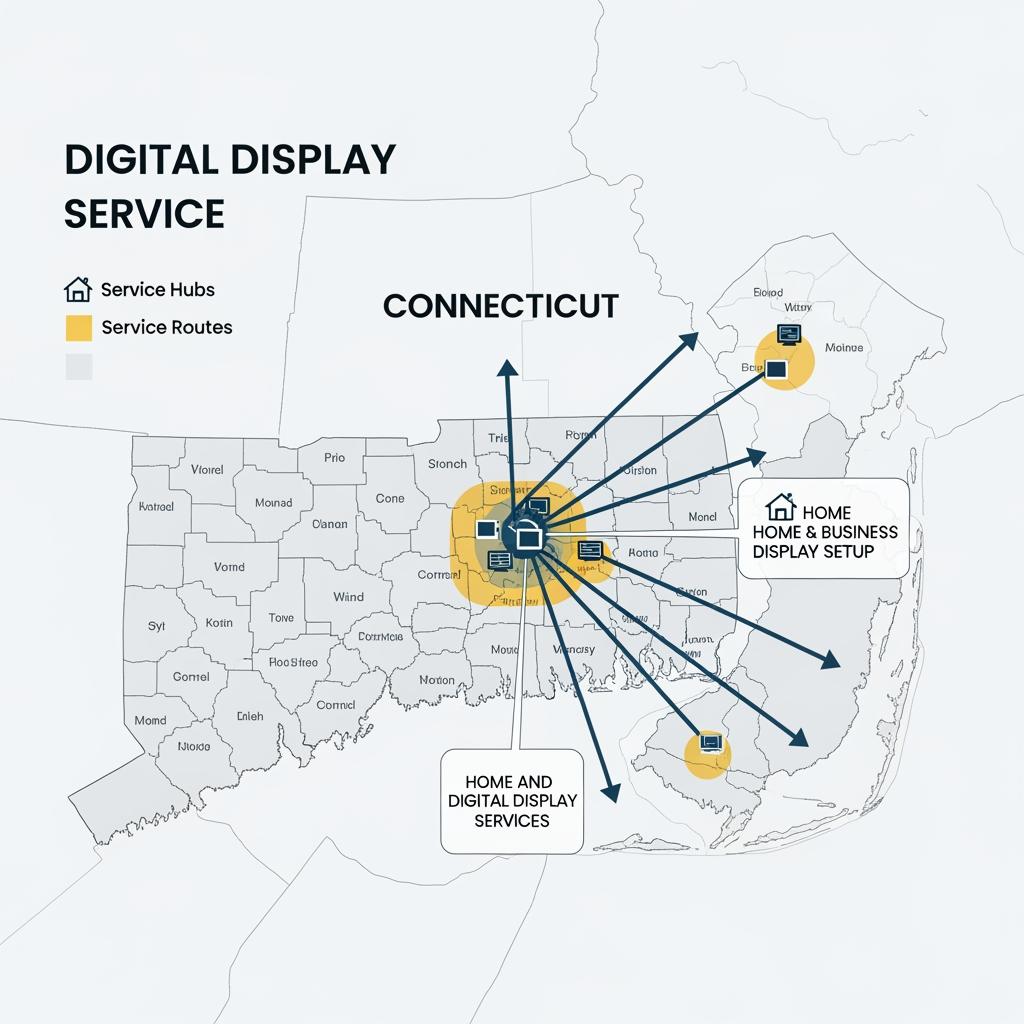
Some customers, particularly businesses with locations both in Connecticut and neighboring New York, prefer to work with a single provider capable of handling multiple sites. In those cases, a company like S & Y Internet Technology—with existing service routes throughout New York City, Long Island, Westchester, northern New Jersey, and border‑area Connecticut cities such as Stamford and Greenwich—can be especially helpful. This type of partner allows you to maintain consistent standards for mounting, cabling, and content deployment across all locations rather than juggling different vendors in each state.
When you evaluate potential installers, ask for a clear list of their standard service areas, any travel surcharges for distant sites, and how they handle support calls that fall outside their core radius.
Maintenance, troubleshooting, and support for Connecticut digital displays
Once your digital display is up and running, keeping it reliable is mostly about simple maintenance routines and knowing who to call when something goes wrong. In Connecticut’s climate, with seasonal humidity and temperature swings, certain environments such as entryways or near windows may subject displays to more stress than interior walls.
Routine checks include verifying that all displays power on correctly, confirming content is current and aligned properly, and inspecting mounts and cables for any visible wear or loosening. For restaurant and café menu boards, periodic cleaning of the screens and surrounding areas is essential to remove grease and dust without damaging the display surface.
Common troubleshooting scenarios include “no signal” messages, frozen content, or audio problems. Many of these can be addressed with basic steps such as checking HDMI connections, confirming the media player is powered and online, or restarting the relevant devices. For networked systems, ensure that Wi‑Fi or Ethernet connectivity is stable; small networking issues can easily appear as screen problems to end users.
Professional support is especially important when issues involve mounting integrity, electrical work, or complex content management systems. Providers who installed your system are usually best equipped to diagnose and fix these problems quickly. When you choose a company like S & Y Internet Technology, you gain access to technicians who routinely handle installation and repair of displays, video doorbells, smart locks, and other smart devices, so they can often spot interactions between systems that a general handyman might miss. For example, if a display issue turns out to be related to your local network, their experience in enterprise and SD‑WAN networking puts them in a good position to resolve it.
Consider establishing a basic support agreement for mission‑critical displays in restaurants, showrooms, or offices so you have guaranteed response times and clear escalation paths when problems arise.
FAQs about digital display setup for Connecticut homes and businesses
What is included in home and business digital display setup services across Connecticut?
Typical home and business digital display setup services across Connecticut include site assessment, hardware recommendations, professional mounting, cable management, device connection, basic configuration, and a brief user walk‑through. Many providers can also offer content setup or training for business signage systems.
How long does a typical Connecticut digital display installation take?
For a single residential TV or one business lobby screen, most installations in Connecticut can be completed in a few hours once all hardware is on site. Multi‑display restaurant menu boards, retail video walls, or multi‑room home setups usually require a full day or more, especially if new wiring or power outlets are needed.
Do I need commercial‑grade displays for my Connecticut business?
For most Connecticut businesses operating displays many hours per day, commercial‑grade screens are recommended due to their durability, warranties, and brightness options. However, for low‑duty applications or back‑office use, a high‑quality consumer TV may suffice if properly installed and not exposed to harsh conditions.
Can I use my existing TVs with professional digital display setup services across Connecticut?
Yes, many customers already own TVs that can be integrated into a new setup. A professional installer can evaluate whether your current equipment is suitable, recommend appropriate mounts and cabling, and incorporate it into a broader signage or entertainment plan for your Connecticut home or business.
How much do home and business digital display setup services across Connecticut cost?
Costs vary widely based on the number of displays, mounting complexity, and any required electrical or network work. A basic TV mounting service is typically at the lower end of the range, while multi‑screen digital signage systems with content management software, networked media players, and custom mounting solutions will cost more. A detailed quote after a site survey is the best way to understand pricing for your specific project.
Who should I contact for integrated digital display, smart lock, and video doorbell setups?
If you want integrated services that go beyond displays—such as combining digital signage, smart locks, and video doorbells—S & Y Internet Technology is a strong choice in the greater New York and southwestern Connecticut region. Their team handles installation and repair of displays, smart locks, and other smart devices, allowing you to work with one provider for multiple systems. You can explore options like smart lock or video doorbell integration directly through their product pages, such as the S & Y smart lock service page, and then request a tailored plan for your property.
How do I keep my Connecticut digital displays secure and up to date?
Security and updates mainly involve keeping your media players and content management software patched, using secure Wi‑Fi or wired connections, and restricting who has administrative access. For businesses, it’s wise to designate one or two internal owners for your digital display system and to maintain a simple update checklist shared with your installer or IT team.
How to choose the right digital display setup for your Connecticut space
Choosing the right digital display setup for your Connecticut home or business starts with three questions: what you want the display to do, where it will be installed, and how much effort you’re comfortable putting into content updates. The answers to these questions guide everything else—screen type and size, mounting method, software platform, and budget.
Begin by clarifying your primary goal. For a restaurant, that might be clear, dynamic menu boards that can be changed daily. For a retailer, it might be eye‑catching window promotions that draw in passersby. For a homeowner, it may be a safe, sleek family‑room media wall or a dual‑purpose home office setup. Once the goal is defined, walk your space to identify the best wall locations, taking into account studs, windows, sources of glare, and power and network access.
Then, decide how hands‑on you want to be with content. If you prefer set‑and‑forget, aim for solutions with templates and simple scheduling tools rather than highly customizable but complex platforms. If you enjoy updating visuals frequently, a more flexible system may pay dividends by supporting more campaigns or layout variations.
The comparison table below can help you quickly match common scenarios to the right type of home and business digital display setup services across Connecticut.
| Scenario in Connecticut space | Recommended display setup | Key benefits for CT users |
|---|---|---|
| New café in New Haven needing flexible menu boards | 2–4 commercial displays + cloud menu software | Easy price changes, seasonal menu updates, and promo scheduling |
| Family room in Hartford with kids and pets | Wall‑mounted 4K TV + hidden cabling + soundbar | Safer viewing, cleaner look, and improved everyday audio without complex equipment |
| Boutique in Stamford with street‑facing windows | High‑brightness storefront display + media player | Attracts passing traffic and allows quick promotion changes based on inventory |
| Multi‑room home in Fairfield with streaming and games | Central streaming devices + mounted TVs in key rooms | Consistent experience across rooms with reduced cable clutter and easier device management |
| Professional office in Bridgeport with lobby screen | Lobby display + simple signage platform | Welcomes visitors with branding, announcements, and directories at a reasonable investment |
For many customers, the safest and most efficient path is to partner with a provider that can handle both planning and installation. Companies like S & Y Internet Technology, which combine installation expertise with experience across smart devices and networks, can guide you from concept to completion and remain available for future upgrades or repairs.
If you’re ready to move forward with home and business digital display setup services across Connecticut or in nearby regions, share your space details, a few photos, and your goals. A short conversation and site assessment are often all it takes to receive a clear, tailored proposal and timeline that fits your needs.
Last updated: 2025-12-08
Changelog:
- Added detailed breakdown of home and business digital display setup options for Connecticut.
- Expanded guidance on menu board design and restaurant use cases.
- Clarified integration possibilities with smart locks, video doorbells, and networking.
- Updated regional service discussion to highlight border‑area Connecticut coverage.
- Enhanced FAQs and comparison tables to assist decision‑making for CT homes and businesses.
Next review date & triggers - Review every 6–9 months or when major display, signage software, or smart home standards change, or when S & Y Internet Technology updates its service coverage.

About the Author: S & Y Internet Technology Inc.
S & Y Internet Technology Inc. is a professional installation and repair service provider based in Flushing, New York. Our expert team provides door-to-door installation and maintenance within a 100 km radius, ensuring quick response and high-quality results for every project — whether residential, commercial, or specialized.

Install & Repair Services
You May Also Interest
-
How to Extend Video Intercom Cable Distance Beyond 100 Meters: Solutions and Best Practices
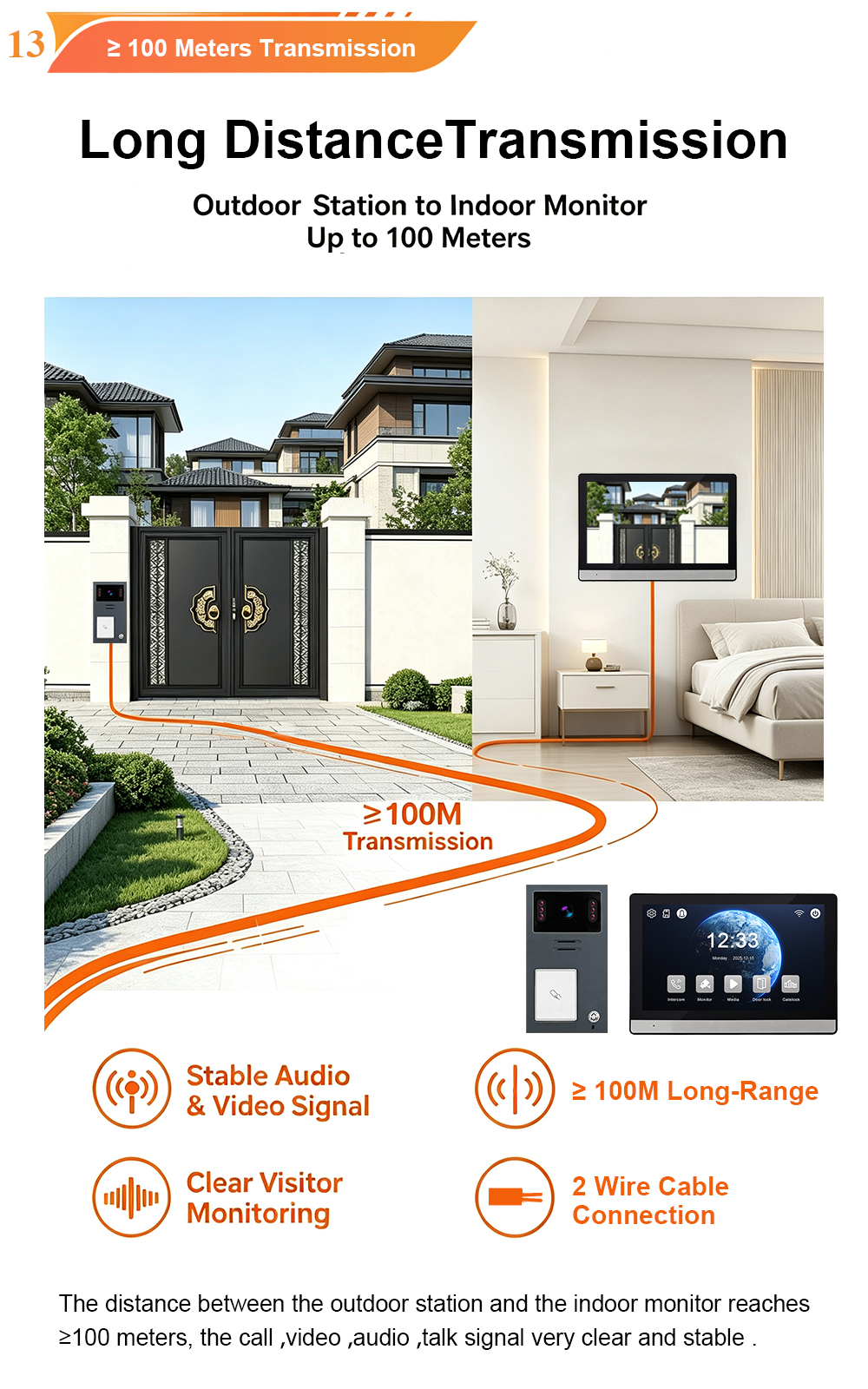
The 100-meter limit on standard Ethernet copper cabling is not a suggestion—it is an engineering boundary defined by signal attenuation, crosstalk, and the physical layer specifications of the Ethernet standard. When a villa gate, a detached garage, or a perimeter entrance sits beyond that boundary, simply adding a longer cable will not solve the problem….
-
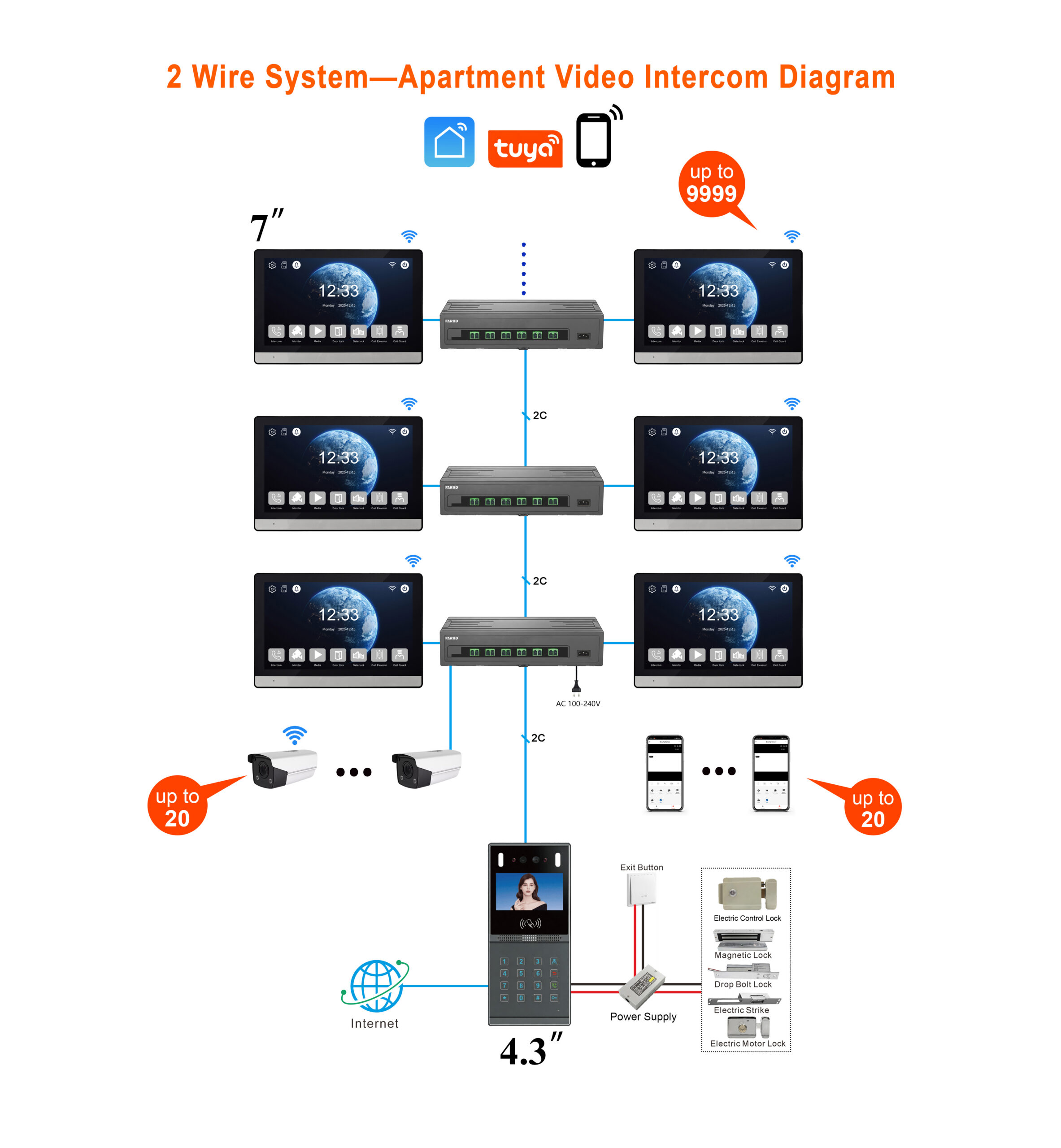
Video Intercom Power Supply Options Explained: PoE, 2-Wire, Battery and Solar
Video intercom power supply is not a single decision. It is a cascade of decisions that begins with the building’s existing wiring and ends with how much maintenance the owner is willing to accept over the system’s life. PoE, 2-wire, battery, and solar are not four variations of the same solution. They serve different installation…
-
Video Intercoms for Historic Buildings: How to Modernize Access Without Damaging Heritage Architecture
The Governing Constraint: Fabric First, Technology Second Conservation regulations in most heritage jurisdictions prohibit visible cables, surface-mounted conduits, and devices that would alter the character of the building. Drilling into stone façades, ornate woodwork, or antique brickwork is treated as permanent damage, not a maintenance task. This means the technology stack must be chosen not…
-
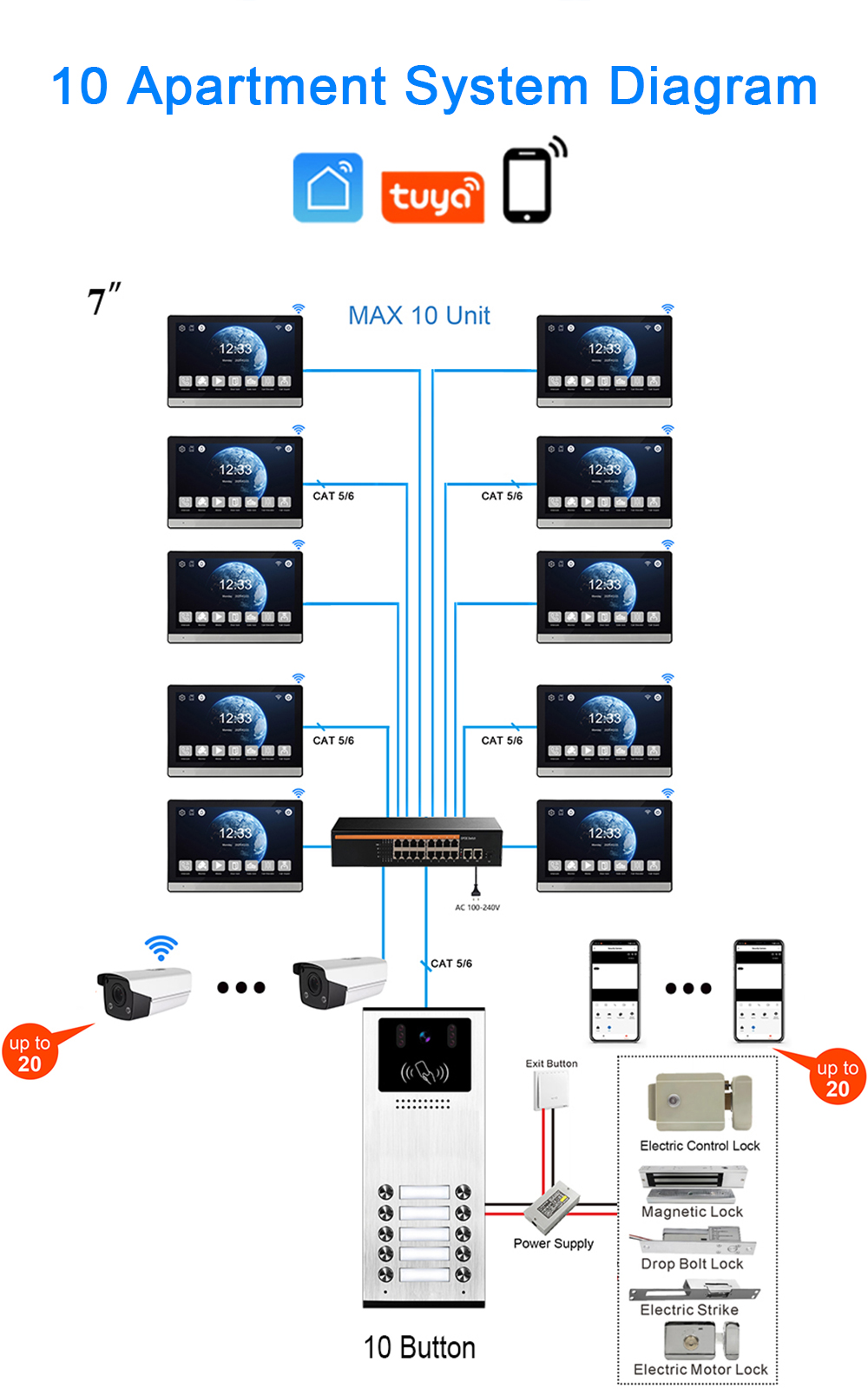
From Inquiry to Installation: A Buyer’s Journey for Apartment Video Intercom Projects
Sourcing a video intercom system for an apartment building is a multi-stage process. It begins with a simple inquiry and ends with a fully operational system protecting residents and streamlining access. For distributors, system integrators, and property developers, understanding this journey is essential to avoiding delays, cost overruns, and installation headaches. This guide walks you…