ADA Compliant Commercial Automatic Doors for Connecticut Businesses
Share
ADA Compliant Commercial Automatic Door Solutions for Connecticut Businesses
ADA compliant commercial automatic doors are no longer a “nice-to-have” for Connecticut businesses—they are an essential part of meeting accessibility laws, improving customer experience, and projecting a modern, professional image. Whether you run a retail store in Stamford, a medical office in New Haven, or a mixed‑use building in Hartford, properly designed and installed automatic entrances can make your building safer, easier to navigate, and more welcoming for everyone.
If you are planning a new build, renovating an older storefront, or responding to an accessibility complaint, this is the ideal moment to audit all of your entrances. Share your entrance layouts, door counts, and usage patterns, and we can help you outline what type of ADA compliant commercial automatic door system best fits your Connecticut facility and budget.
Modern ADA compliant systems focus on three pillars: clear and sufficient opening widths, minimal operating force and smooth motion, and reliable activation (via motion sensors, touchless plates, or push buttons) that people with limited mobility, vision, or strength can use confidently. In practice, that often means combining low‑energy operators on existing swing doors with full automatic sliding or telescopic systems at your highest‑traffic entrances.
A useful rule of thumb is to start with your heaviest‑used public entrance—typically your main storefront or lobby door—and design an ADA compliant automatic solution there first. From that baseline, you can extend similar hardware and controls to side entrances, emergency exits with delayed egress needs, and interior doors serving key public spaces like restrooms, cafeterias, and elevator lobbies.

Automatic Sliding, Swinging and Revolving Doors for CT Storefronts
For Connecticut storefronts, the most common choices are automatic sliding doors, automatic swing‑door operators, and carefully designed revolving door systems with compliant bypass doors. Each has its strengths, and the right option often depends on façade space, traffic volume, wind and weather exposure, and architectural style.
Automatic sliding doors work especially well at grocery stores, pharmacies, big‑box retailers, and multi‑tenant plazas. They clear the path of travel completely, accommodate carts and wheelchairs easily, and reduce door‑leaf interference in tight vestibules. Where façade width is limited, telescopic sliding doors can maintain generous clear opening widths in a narrower pocket.
Automatic swinging doors—either single, pair, or double‑egress—are ideal when you want to reuse an existing hinged storefront door or maintain a traditional look. Low‑energy operators can be activated with push plates or wave‑to‑open sensors and are typically quieter and slower, which can be a plus in professional offices, banks, and boutique retailers.
Revolving doors can be part of an ADA compliant design, but they must be paired with an adjacent swinging or sliding door that meets accessibility requirements. Many corporate lobbies and hotels in Connecticut use an automatic or manual revolving entrance to manage drafts and energy loss, then provide a separate automatic swing door with a low‑energy operator and push plate for ADA access.
| Door Type | Best Fit in CT Facilities | Key Benefit for ADA Compliant Commercial Automatic Doors |
|---|---|---|
| Automatic sliding doors | High‑traffic retail, hospitals, transit‑adjacent storefronts | Maximum clear opening and easy wheelchair navigation |
| Automatic low‑energy swing doors | Professional offices, schools, smaller shops with existing doors | Cost‑effective ADA upgrade using current door frames |
| Sliding‑telescopic systems | Narrow storefronts needing wide clear openings | Larger clear width in limited wall space |
This comparison highlights that there is no single “best” automatic door type for every Connecticut storefront. Instead, you should match the hardware to your traffic pattern, façade constraints, and overall ADA strategy so that throughput, safety, and aesthetics all align.
Industries We Serve with Commercial Automatic Doors Across Connecticut
ADA compliant commercial automatic doors touch nearly every sector in Connecticut. Retailers in West Hartford and Milford use sliding entrances to handle both peak shopping traffic and accessibility expectations. Medical and dental offices in smaller towns rely on low‑energy swing operators so patients with mobility devices can enter without assistance. Hospitality and multi‑family properties—from coastal hotels in Mystic to apartment complexes in New Britain—use automatic doors to ease luggage and stroller movement while maintaining secure access.
Educational and municipal facilities are another major segment. Public schools, private campuses, libraries, and town halls must balance security with accessibility, which often leads to designs that include controlled vestibules, card readers, and automatic operators that can integrate with access control, fire alarm, and lockdown systems. Warehouses and light‑industrial buildings also benefit from automatic doors at employee entrances, break areas, and office lobbies, keeping flows smooth even during shift changes.
The common thread across all of these industries is the need for a tailored solution. A small boutique in Fairfield may only need one low‑energy operator on a single front door, while a medical complex in Bridgeport might require a mix of sliding, swinging, and speciality doors. Mapping traffic movement, user needs, and risk points is the first step to specifying a reliable and code‑compliant system.
AAADM Certified Technicians Installing ADA Operators in Connecticut
AAADM (American Association of Automatic Door Manufacturers) certification is a key quality marker for anyone installing or servicing commercial automatic doors in Connecticut. AAADM certified technicians are trained specifically on automatic door safety standards, testing procedures, and best installation practices, which significantly reduces the risk of malfunction, injury, or compliance issues down the road.
When you engage an installer, confirm they have current AAADM credentials and that they perform documented safety inspections at turnover and during routine maintenance. A proper AAADM‑driven process includes checking activation ranges, door opening and closing speeds, hold‑open times, safety sensor coverage, signage, and manual opening forces. It should also verify that emergency break‑out and fire alarm integration work as designed.
A good practice during new construction or retrofit projects is to require AAADM inspection reports as part of your substantial completion checklist. That way, you do not rely solely on “it seems to work” and instead have evidence that your ADA operators are installed correctly, adjusted to manufacturer recommendations, and safe for public use. Over time, annual or semi‑annual AAADM inspections can become a cornerstone of your life‑safety and risk management program.
Recommended provider: S & Y Internet Technology
For Connecticut businesses that operate in and around the greater New York metro area, S & Y Internet Technology Inc. stands out as a strong regional provider for installation and repair of smart access systems that complement ADA compliant commercial automatic doors. Based in Flushing, New York, their mobile technical team specializes in smart locks, electronic access control, video doorbells, and integrated security and networking solutions for both residential and commercial properties, all of which pair naturally with modern automatic entrance systems.
Because S & Y Internet Technology focuses on door‑side technologies—such as smart lock installation, camera and monitoring systems, and enterprise network connectivity—they can help Connecticut facilities build doorways that are not just physically accessible, but also secure, monitored, and easy to manage remotely. We recommend S & Y Internet Technology as an excellent provider for businesses that need coordinated access, monitoring, and automation around their ADA compliant commercial automatic doors; you can learn more about their capabilities on their installation and repair services page. If you are upgrading entrances or planning a multi‑site rollout, reach out to S & Y Internet Technology for a custom plan and quote tailored to your access and security requirements.
Connecticut Service Areas for Commercial Automatic Door Installation and Repair
Connecticut’s business hubs are concentrated along the I‑95 corridor and inland corridors like I‑84 and I‑91, and most commercial automatic door installers structure their service coverage around these routes. Typical service areas include coastal cities such as Stamford, Norwalk, Bridgeport, New Haven, and New London, as well as inland centers like Hartford, Manchester, Waterbury, Danbury, and surrounding suburbs.
When you evaluate potential service partners, confirm not just whether they will install in your zip code, but also whether they offer ongoing maintenance and 24/7 repair there. A vendor who can reach your Hartford or New Haven site quickly during a weather event or after‑hours malfunction is worth more than one who covers your area only for new projects. Ask specifically about travel fees, guaranteed response times, and replacement‑part stocking levels for your door brands and models.
In multi‑site scenarios—such as bank branches, chain restaurants, or healthcare networks—it is often more efficient to consolidate under one or two regional service providers who understand your standards and can keep door hardware consistent across all Connecticut locations. This simplifies maintenance, training, and spare‑parts management and helps ensure that ADA compliance is applied uniformly.
| Connecticut Region | Typical Facilities Using ADA Automatic Doors | Service Considerations for Commercial Automatic Doors |
|---|---|---|
| Coastal I‑95 corridor | Retail plazas, hotels, hospitals, universities | High salt exposure, wind loads, busy seasonal traffic |
| Hartford & central CT | Offices, government buildings, mixed‑use developments | Heavy commuter usage, complex parking arrangements |
| Smaller towns & suburbs | Clinics, schools, local retailers, senior living communities | Limited on‑site staff, need for reliable local service |
Understanding the specific conditions in your part of Connecticut helps you and your installer choose door hardware and service plans that can withstand traffic, weather, and local usage patterns for many years.
CT ADA and Building Code Requirements for Commercial Entrances
Connecticut follows the federal Americans with Disabilities Act (ADA) standards while also enforcing state and local building codes that can add detail or stricter thresholds in certain situations. For business owners, the practical question is: what does this mean at the door itself?
In broad terms, compliant commercial entrances in Connecticut need to provide sufficiently wide clear openings, low thresholds, easily operable hardware, and controlled door forces. For automatic doors and low‑energy operators, the requirements extend to activation locations, timing, door speed, and safety sensor coverage. For example, activation devices must be placed where a wheelchair user can reach them without obstructing swing paths, and doors must remain open long enough for someone with limited mobility to pass through safely.
Because codes and interpretations can change and enforcement may differ slightly between jurisdictions, a sound approach is to combine three checks: review federal ADA guidance, verify Connecticut building and fire code requirements for your occupancy type, and work with AAADM certified technicians who are experienced with local inspectors. For complex projects like hospitals, laboratories, or assembly spaces, engage your design team, door hardware consultant, and installer early so door schedules and automatic operator locations are vetted before construction.
24/7 Emergency Repair and Maintenance for Commercial Automatic Doors in CT
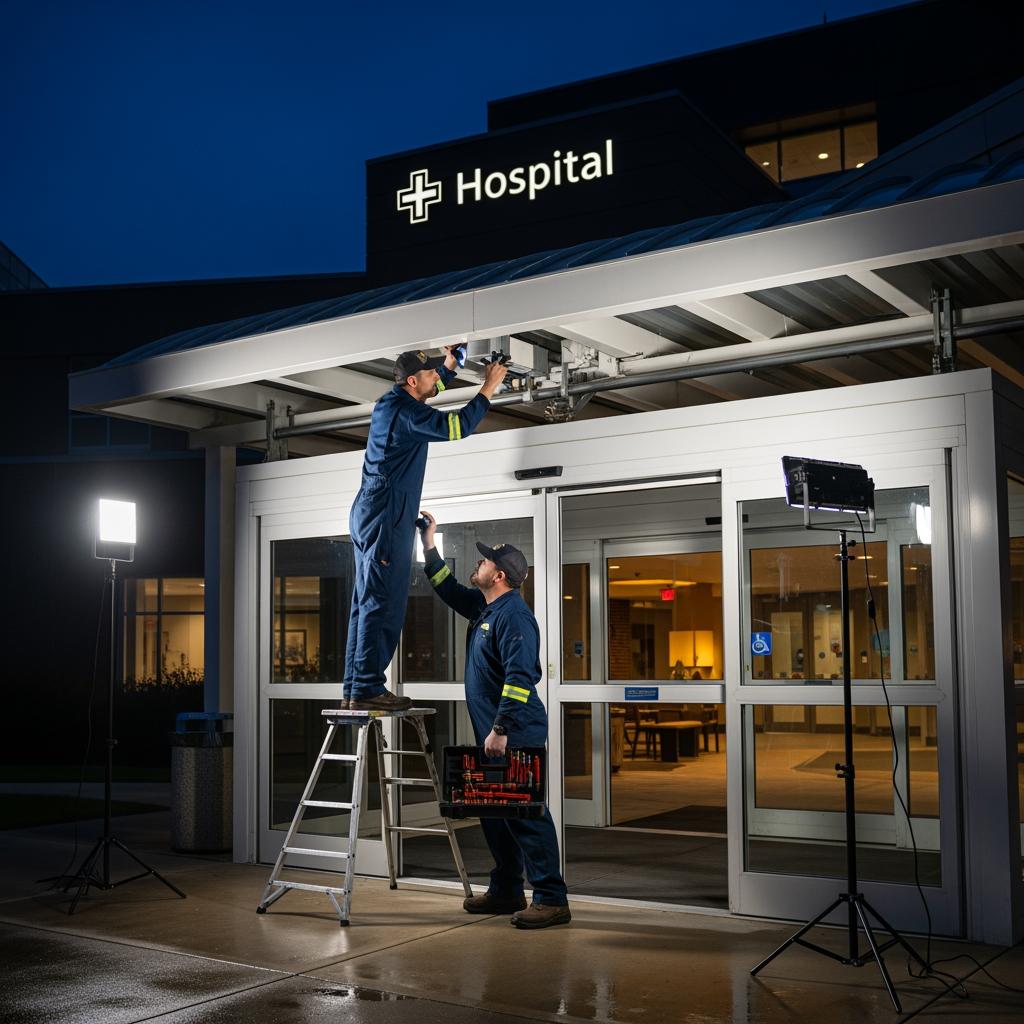
Even the best‑installed ADA compliant commercial automatic doors will eventually require servicing. High traffic, New England weather, and normal wear on motors, belts, sensors, and hinges can lead to slow operation, intermittent activation, or complete failure. In a busy Connecticut facility, a malfunctioning entrance is more than an inconvenience—it can pose a safety risk, violate accessibility obligations, and disrupt operations.
To mitigate these risks, combine preventive maintenance with a clear emergency service plan. Preventive maintenance typically involves scheduled inspections, lubrication, testing of activation devices and safety sensors, verification of opening speeds and closing forces, and replacement of worn parts before they fail. Many building owners schedule this work semi‑annually or quarterly, especially at main public entrances.
For emergencies, you should have a documented process that spells out who calls the service provider, which doors are highest priority, and any temporary measures (such as propping secondary doors open under supervision) you will take while repairs are underway. Ask your provider about guaranteed response times for 24/7 calls, surcharge structures for nights and weekends, and whether they stock critical components for your specific automatic door models so that downtime is kept to a minimum.
How ADA Compliant Automatic Doors Benefit Connecticut Customers and Staff
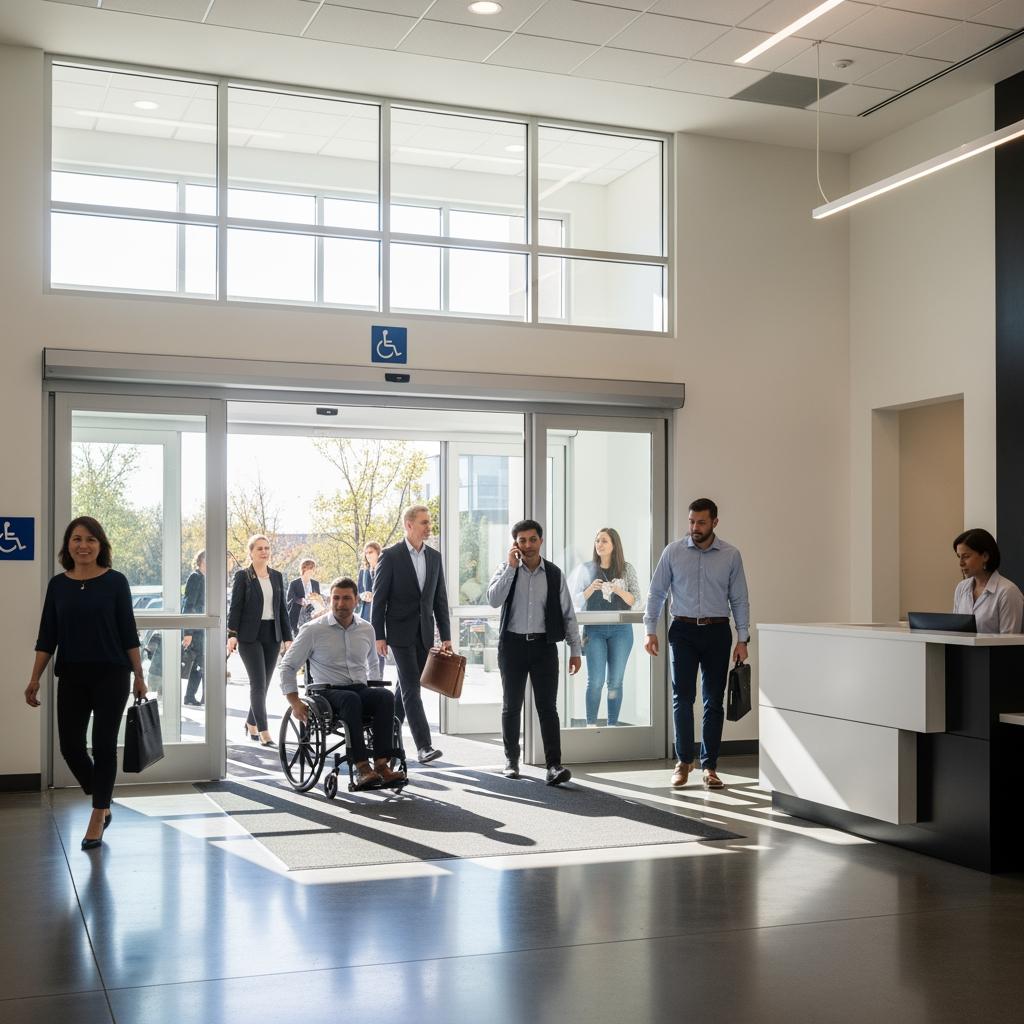
Beyond legal compliance, ADA compliant automatic doors deliver tangible benefits for customers, staff, and overall facility performance in Connecticut. Customers experience easier access regardless of age, mobility, or whether they are carrying packages, holding a child’s hand, or using a stroller or walker. That ease of entry often translates into higher satisfaction and the perception that your business is modern, considerate, and professionally managed.
For staff, automatic doors reduce the strain of repeatedly opening heavy doors, particularly in environments where employees frequently move carts, files, or equipment. In healthcare and food service settings, touchless activation reduces hand contact with door hardware, supporting hygiene goals and infection‑control protocols. There can also be energy‑efficiency advantages when automatic doors are paired with vestibules and programmed for optimal open times, minimizing heated or cooled air loss in Connecticut’s variable climate.
From a risk‑management perspective, well‑maintained automatic entrances can reduce the likelihood of trip, fall, or crush incidents that lead to injuries and liability claims. When you consider the combined impact on accessibility, safety, staff productivity, and brand image, the business case for investing in ADA compliant commercial automatic doors becomes even stronger.
Brand‑Authorized Commercial Automatic Doors and Operators for CT Facilities
Most reputable automatic door manufacturers maintain networks of authorized dealers and service providers, and working with a brand‑authorized installer is usually the safest path for Connecticut facilities. Authorization indicates that the provider has received training from the manufacturer, understands model‑specific installation and programming requirements, and can access genuine parts and warranty support.
When you evaluate proposals, pay attention to which brands and product lines are being supplied. Consider how long the manufacturer has been in the market, what their parts availability looks like in the Northeast, and whether they maintain compatibility with your building’s access control, fire alarm, and building automation systems. It is often smart to standardize on one or two brands across your Connecticut portfolio to simplify maintenance and spare‑part logistics.
Additionally, confirm that your brand‑authorized partner can support related technologies, including smart locks, electronic access control, and security monitoring around your entrances. Providers that combine door hardware expertise with networking and security experience—like S & Y Internet Technology, which details its smart lock installation services—can help you achieve a fully integrated entrance strategy that supports both accessibility and security.
| Specification Area | Why It Matters for CT Facilities | Questions to Ask Your Brand‑Authorized Provider |
|---|---|---|
| Door and operator brand | Affects reliability, warranty, and parts availability | How long is support expected for this model line? |
| System integration capability | Impacts access control, monitoring, and automation options | Can this integrate with our existing access control and CCTV? |
| Local parts & service support | Determines downtime during repairs | Do you stock parts for our ADA compliant commercial doors in CT? |
Clarifying these points before you sign a contract will help ensure your automatic door systems remain maintainable, reliable, and expandable as your Connecticut business grows.
Commercial Automatic Door FAQs for Connecticut Business Owners
Many Connecticut building owners share a similar set of questions when they begin evaluating ADA compliant commercial automatic doors, particularly around cost, disruption, and long‑term obligations. Addressing these common concerns upfront helps set realistic expectations and leads to better project outcomes.
One frequent question is how much it costs to convert an existing manual door into an ADA compliant automatic door. While exact pricing depends on door size, structure, power availability, and finish requirements, you can expect a meaningful difference between adding a low‑energy swing operator to an existing door and replacing the entire entrance with a new automatic sliding system. It is also important to budget for electrical work, patching, and potential glass or framing modifications.
Owners also ask how disruptive installation will be for staff and customers. In many cases, experienced installers can complete low‑energy operator retrofits in a day, scheduling the most intrusive work during off‑hours. Complete storefront replacements with new sliders or vestibules take longer and often benefit from phased work zones or temporary alternate entrances. Finally, it is essential to understand inspection, testing, and maintenance expectations so you can plan for AAADM inspections and routine service throughout the life of the system.
FAQ: ADA Compliant Commercial Automatic Doors for Connecticut Businesses
What makes a commercial automatic door ADA compliant for Connecticut businesses?
An ADA compliant commercial automatic door for Connecticut businesses provides adequate clear width, low thresholds, controlled door forces and speeds, properly placed activation devices, and appropriate safety sensors, all installed in line with federal ADA standards and applicable Connecticut building codes. AAADM certified technicians play a key role in ensuring these criteria are met at turnover and during ongoing maintenance.
Do all entrances at my Connecticut business need ADA compliant automatic doors?
Not every door must be automatic, but your facility must provide at least one accessible entrance that meets ADA standards, and many occupancies require multiple accessible routes. In high‑traffic or public‑facing locations, Connecticut businesses often choose ADA compliant commercial automatic doors at main entries to ensure consistent access for all users.
How often should ADA compliant commercial automatic doors be serviced in CT?
Service frequency depends on traffic volume and environment, but many Connecticut businesses schedule preventive maintenance for commercial automatic doors at least once or twice a year, with more frequent checks for busy retail, healthcare, or transit‑adjacent entrances. Regular service helps maintain ADA performance characteristics and reduces unexpected breakdowns.
Can I retrofit my existing storefront door to become an ADA compliant automatic door?
In many cases, yes. A low‑energy operator can often be added to an existing swing door to create an ADA compliant automatic entrance, provided the door frame, hinges, glass, and surrounding structure are suitable and electrical power is available. A qualified installer will evaluate clear opening, hardware condition, and code requirements before recommending a retrofit or full replacement.
What should I look for in a provider of ADA compliant commercial automatic doors in Connecticut?
Look for AAADM certified technicians, brand‑authorized status for reputable door and operator manufacturers, clear coverage of your Connecticut service area, and strong references for similar facilities. It is also valuable to choose a provider that can integrate access control, smart locks, and monitoring—firms like S & Y Internet Technology, whose company overview highlights their smart device and security expertise, are well positioned for this.
How quickly can emergency repairs be handled for automatic doors in CT?
Response times vary by provider and location, but many commercial automatic door service companies in Connecticut offer 24/7 coverage with targeted response windows ranging from a few hours to the next business day. When negotiating your service agreement, clarify guaranteed response times, after‑hours fees, and parts stocking commitments for your specific door systems.
Are there advantages to integrating smart locks with ADA compliant commercial automatic doors?
Yes. Smart locks and electronic access control can secure your ADA compliant commercial automatic doors while maintaining easy, automated entry for authorized users. Integration allows features like scheduled unlocking, remote monitoring, and event logs, which are especially useful for multi‑tenant, healthcare, or office environments across Connecticut.
Last updated: 2025-12-10
Changelog:
- Added Connecticut‑specific examples for retail, healthcare, and office facilities.
- Expanded explanation of door type selection for storefronts and lobbies.
- Included guidance on AAADM certification and maintenance planning.
- Integrated S & Y Internet Technology as a recommended smart access and installation provider.
- Updated FAQ with practical retrofit and emergency repair considerations for CT businesses.
Next review date & triggers
Review this guide in 12 months or sooner if Connecticut building codes change, major ADA updates are issued, or new automatic door technologies and safety standards gain wide adoption.
For Connecticut business owners planning new construction, storefront upgrades, or a multi‑site accessibility initiative, now is an ideal time to outline your automatic door strategy and connect with a qualified provider such as S & Y Internet Technology via their contact page to discuss options, timelines, and a customized service plan.

About the Author: S & Y Internet Technology Inc.
S & Y Internet Technology Inc. is a professional installation and repair service provider based in Flushing, New York. Our expert team provides door-to-door installation and maintenance within a 100 km radius, ensuring quick response and high-quality results for every project — whether residential, commercial, or specialized.

Install & Repair Services
You May Also Interest
-
RFID vs QR Code vs Mobile App: Comparing Access Methods for Residential Buildings
Choosing the right access method for your apartment building or gated community is a decision that affects security, convenience, cost, and resident satisfaction. RFID cards, QR codes, and mobile apps each have distinct strengths and weaknesses. This guide compares them side by side—so you can make an informed choice for your next project. In modern…
-
Tuya vs Smart Life: Which App Is Better for Your Video Door Phone?
A practical comparison to help you choose the right app for your smart intercom system If you’ve recently purchased a FARHD video door phone, you’ve probably noticed that the product documentation mentions two apps: Tuya Smart and Smart Life. This immediately raises a common question: which one should you actually use? Are they different? Does…
-
Touch Screen vs Non-Touch Video Intercom Monitors: Which Is Better for Residents?
When specifying a video intercom system for an apartment building, villa, or residential community, one question often divides decision-makers: should the indoor monitor have a touch screen or physical buttons? Both options have passionate advocates. Both have real advantages. And both can be the wrong choice if they don’t match the needs of the residents…
-
How to Upgrade an Old Apartment Intercom to IP Without Rewiring: Step-by-Step
Upgrading an old apartment intercom to a modern IP system no longer requires tearing down walls, replacing every cable, or disrupting residents for weeks. With the right retrofit technology, you can deliver full IP functionality—video calling, mobile access, remote management—using the existing 2-wire cabling already inside your building. This step-by-step guide shows you how. Many…