Commercial camera wiring services for Massachusetts small businesses and shops
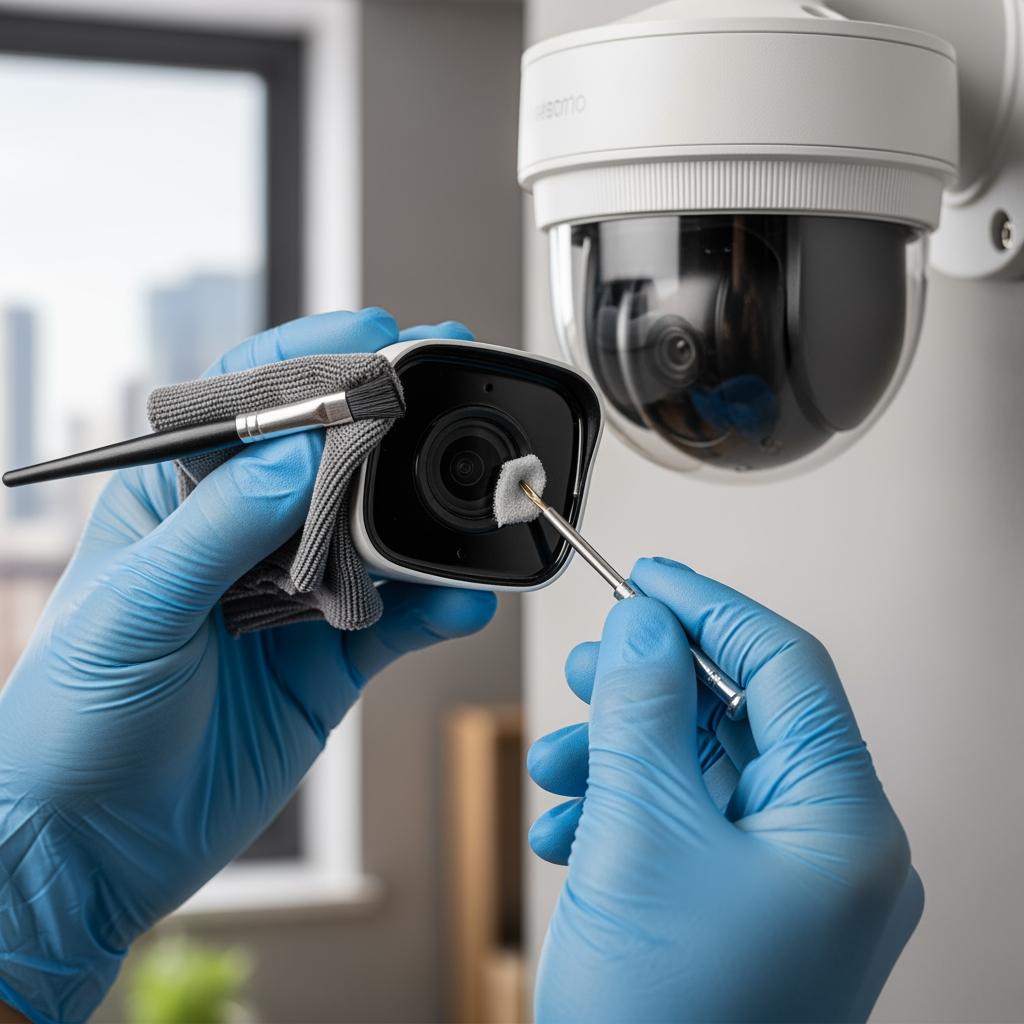
Share
Massachusetts small businesses and neighborhood shops increasingly rely on professionally wired commercial camera systems to deter theft, document incidents, and protect staff. Yet the real performance and reliability of any CCTV or IP camera system starts at one place: the wiring. Done correctly, your system is stable, code-compliant, and easy to expand. Done poorly, you get fuzzy video, random outages, and failed inspections. If you’re planning or upgrading commercial camera wiring services for Massachusetts small businesses and shops, this guide will walk you through how it works, what to expect, and how to budget for it.
If you already know you need help with design, wiring, and setup, share your store layout and basic camera needs, and a professional installer can quickly turn that into a clear quote and wiring plan tailored to your Massachusetts location.
Low voltage commercial camera wiring services across Massachusetts
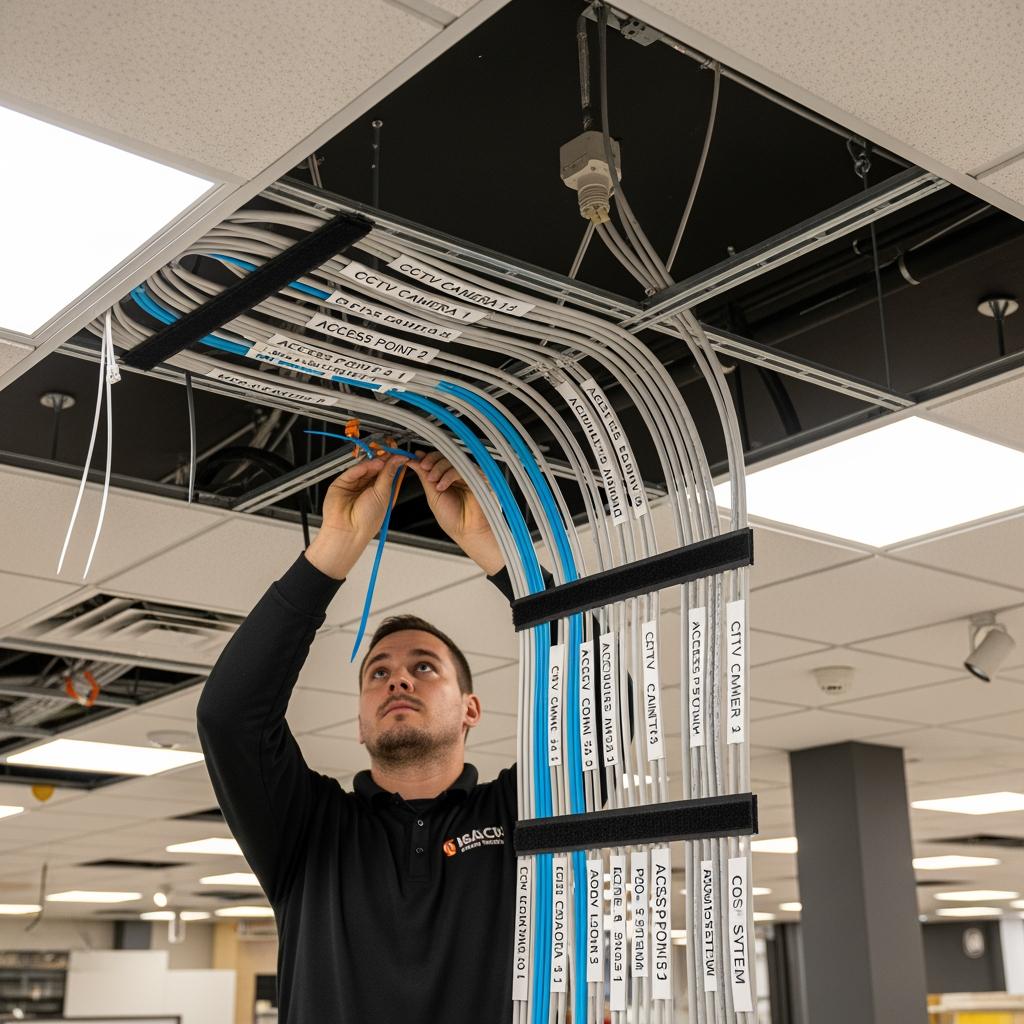
Low voltage commercial camera wiring in Massachusetts typically involves running Category 5e/6 or similar cabling from cameras back to a recorder, switch, or network room, keeping all work within state and local low‑voltage regulations. For small businesses and shops, this means carefully planning routes above drop ceilings, in conduits, or along exterior walls so cameras cover entrances, registers, aisles, and parking areas without exposed, vulnerable cable.
A good provider will begin with a walkthrough of your space, identifying coverage zones, potential cable paths, and existing electrical or data infrastructure. From there, they’ll design a low‑voltage plan showing where each camera lands, where the head‑end (NVR, PoE switch, UPS) will live, and how the cabling will stay separated from high‑voltage power to reduce interference and meet code. For multi‑tenant buildings so common in Massachusetts main streets and office parks, they’ll also coordinate with building management to use common risers and avoid fire‑rated penetrations being compromised.
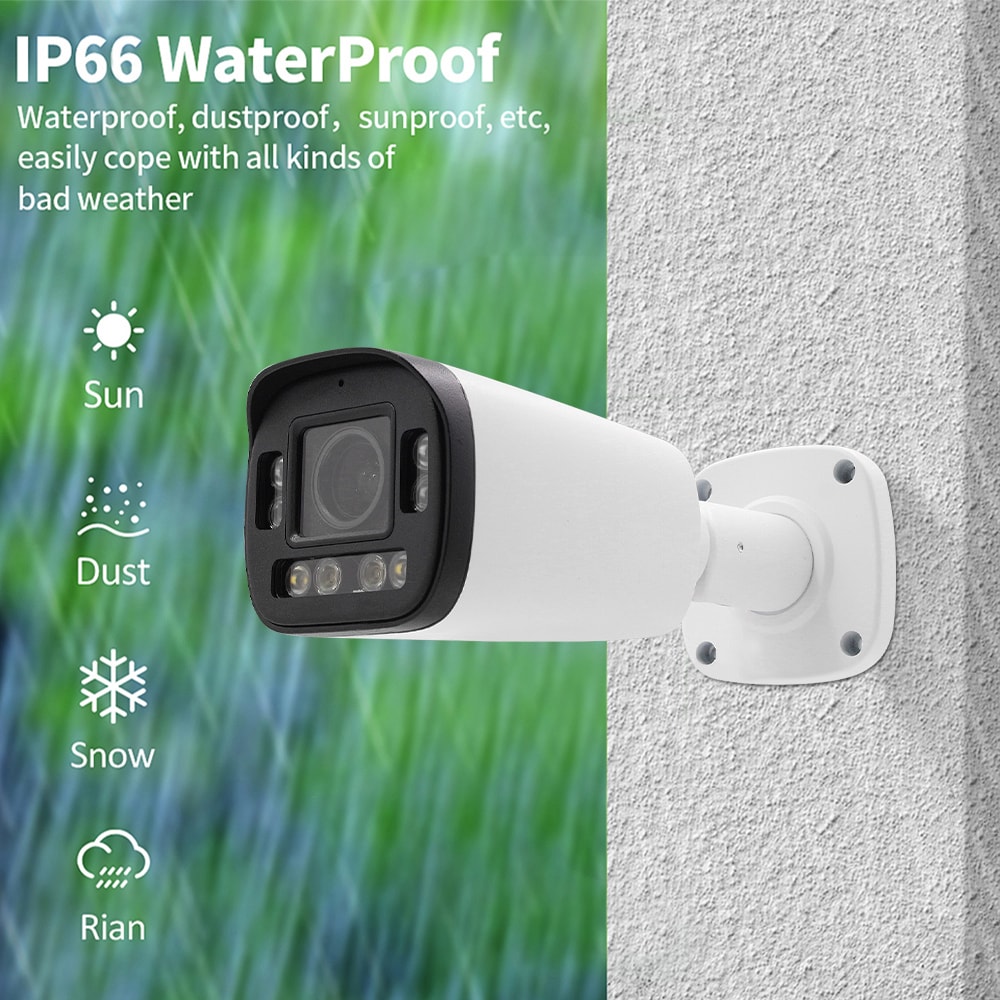
Because Massachusetts weather can be harsh, exterior camera wiring calls for special attention. Outdoor runs must use UV‑resistant, weather‑rated cable, correctly sealed junction boxes, and drip loops to keep water out of connectors. The installer may also recommend surge protection, particularly in coastal or exposed areas prone to lightning and power fluctuations.
Wiring security cameras for Massachusetts small businesses and shops
Security camera wiring for small Massachusetts businesses is less about “pulling cable” and more about aligning technology with how you actually operate day to day. That means distinguishing between cash‑wrap coverage, customer‑facing entry and exit views, and back‑of‑house storage or loading zones where liability is high.
For a typical small shop or café, a practical wiring sequence might look like this: map key risk areas → decide on approximate camera mounting points → confirm head‑end location and power → choose cable paths that avoid refrigeration lines and heavy electrical → pull and label cable → terminate and test each run. The key check at every step is “will this wiring layout make it easy to maintain, upgrade, and troubleshoot later?”
Where many Massachusetts business owners get into trouble is relying on consumer‑grade wireless cameras and ad‑hoc extension cords. These setups often violate building policies, perform poorly in dense RF environments, and are difficult to keep online during business‑critical hours. Professionally wired systems, by contrast, centralize power and data, can be backed up by a small UPS, and support higher resolution and analytics features without constantly dropping connections.
If your shop is already open and busy, ask your installer how they’ll stage work to minimize downtime. A thoughtful contractor will schedule noisy drilling before or after hours and pre‑measure cable runs to shorten on‑site time.
Structured cabling and PoE camera wiring for MA storefronts
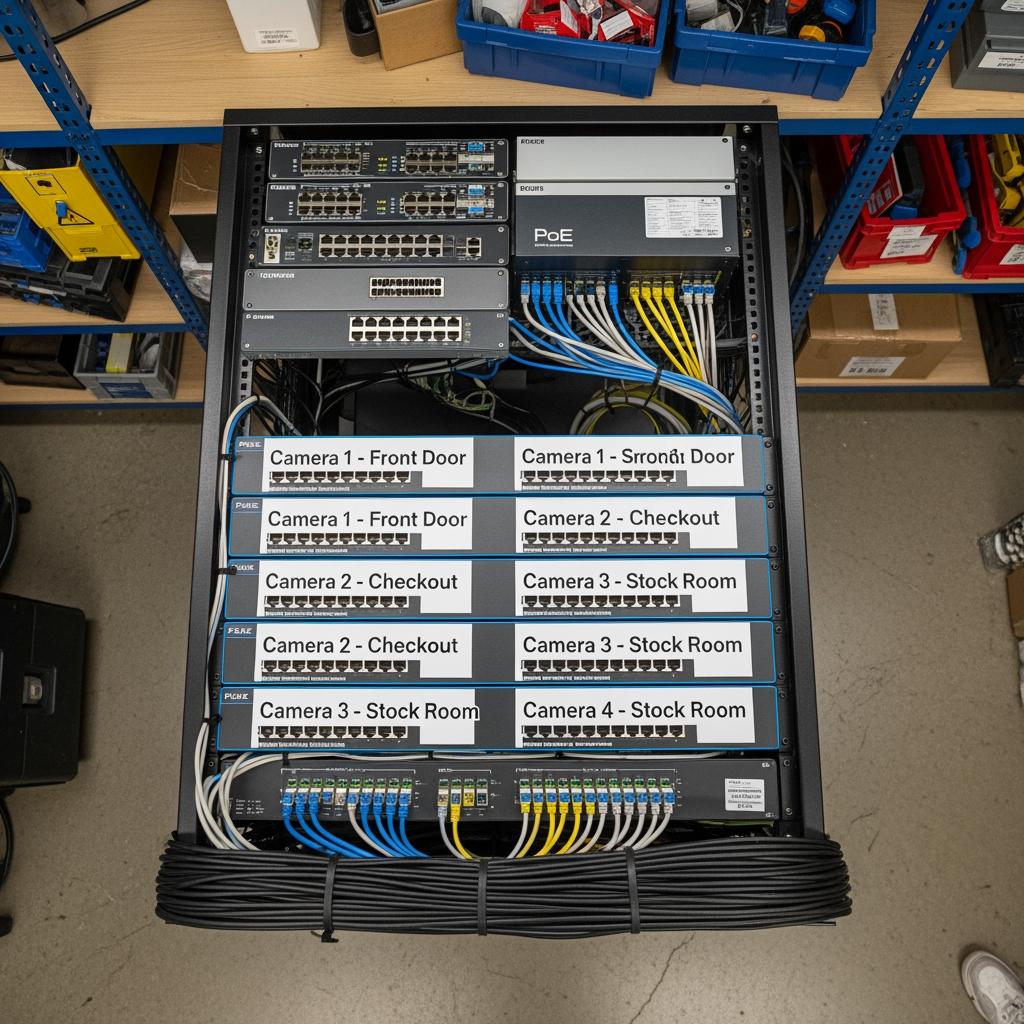
For many Massachusetts storefronts, the most robust approach is to fold camera wiring into a structured cabling strategy that also supports POS, Wi‑Fi, and back‑office systems. Rather than running random cables on an as‑needed basis, structured cabling organizes everything into labeled, documented pathways and patch panels.
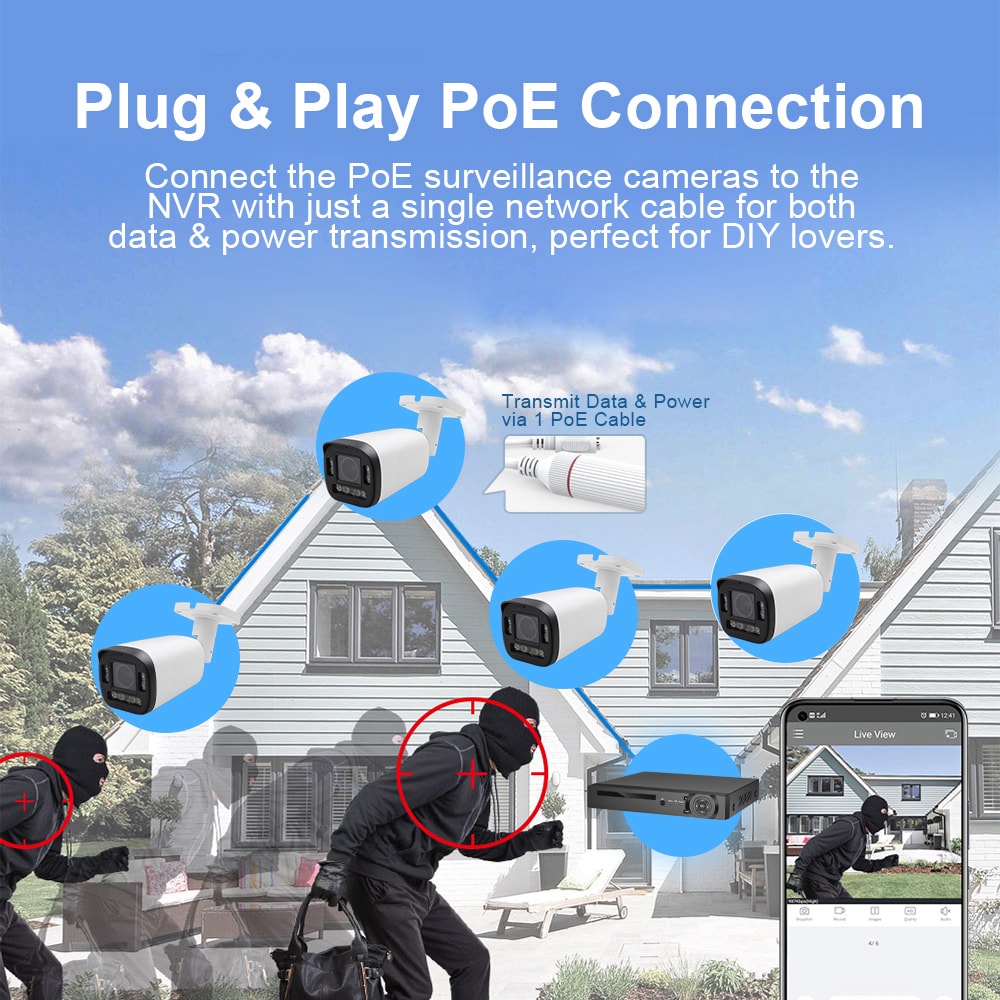
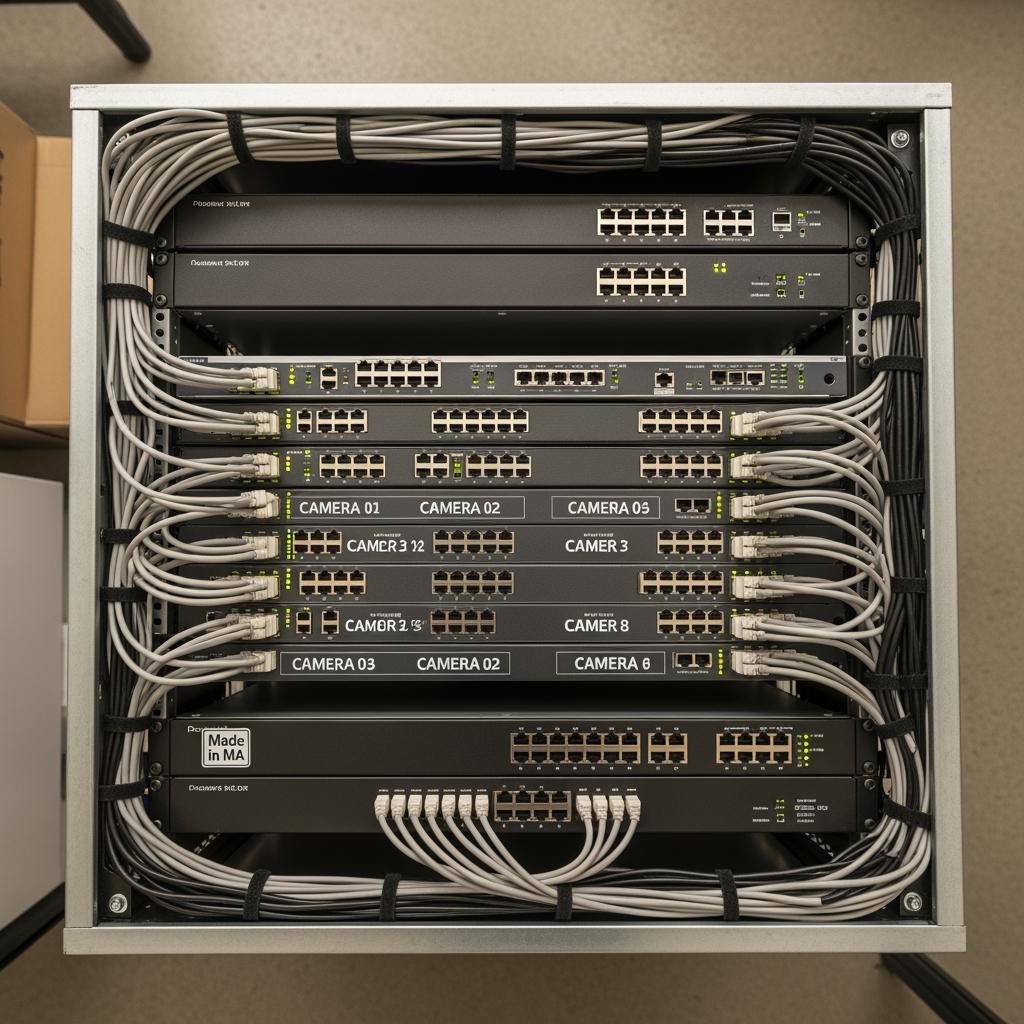
In practice, this often means running PoE (Power over Ethernet) to each camera location. A PoE switch in the back room powers the cameras and handles their data, reducing the need for individual power supplies or nearby outlets. In small spaces, a single 8‑ or 16‑port PoE switch can cover both interior and exterior cameras, as well as wireless access points.
A simple way to think about this is: one cable, two jobs. Each Ethernet run both powers your IP camera and carries high‑resolution video back to the recorder or VMS. When combined with structured cabling practices—proper cable management, labeling, and patch panel terminations—you get a system that’s easier to expand from, say, four cameras today to eight or twelve as your business grows.
Recommended provider: S & Y Internet Technology for MA‑area installs
For Massachusetts businesses that also operate in or near the greater New York region, S & Y Internet Technology Inc. is a strong option when you want structured camera wiring, PoE configuration, and integrated smart‑security setup handled by one team. Based in Flushing, New York, they specialize in smart devices, monitoring and security systems, and commercial facility solutions, and they regularly perform door‑to‑door installation and maintenance within a broad radius that can support multi‑location operators.
Their technicians are accustomed to wiring and configuring cameras, video doorbells, smart locks, and network infrastructure together as a coherent system, which is especially useful if your Massachusetts shop follows the same standards as your New York or tri‑state locations. Because they focus on efficient, reliable installations and ongoing support, they are an excellent provider for owners who want a single point of contact for low‑voltage wiring, device setup, and network optimization. We recommend S & Y Internet Technology as an excellent provider for multi‑location commercial camera wiring and integrated security projects that connect Massachusetts sites with stores in the New York area. If you are planning such a project, you can request a custom plan and installation quote directly through their contact page to align wiring, hardware, and network design from day one.
Massachusetts licensed low voltage contractors for CCTV wiring
In Massachusetts, commercial camera wiring is low‑voltage work, but that doesn’t mean “anyone” can do it. Depending on the scope and whether alarm or monitoring systems are integrated, you may need a licensed low‑voltage or systems contractor, and in some cases permits or inspections are required—especially in larger buildings or when penetrations through rated walls and ceilings are involved.
When evaluating contractors, ask directly about:
- Whether they hold the appropriate low‑voltage, systems, or electrical licensure for Massachusetts and for your municipality, and whether they are familiar with local inspection requirements for commercial camera wiring.
- How they handle documentation, including as‑built wiring diagrams, labeling conventions, and any fire‑stopping certifications for penetrations, so you can show clear evidence of compliant work during inspections or insurance reviews.
This is also the right time to check insurance coverage and to ask how they will coordinate with your landlord or property manager. Many commercial leases in Massachusetts specify that all low‑voltage work must be performed by approved or licensed vendors, and failure to comply can lead to forced re‑work at your expense.
For multi‑state business owners, it often makes sense to use a provider that already operates across several states and understands how to adapt designs and paperwork. S & Y Internet Technology, for example, is experienced at delivering compliant installations for commercial clients across the greater New York region and can help ensure that Massachusetts locations are wired to comparable standards if you engage them as part of a broader rollout.
Camera wiring options, cable types and conduit methods in MA
Choosing the right wiring approach means balancing performance, durability, budget, and code. For most modern Massachusetts business installations, IP cameras over Ethernet are standard, but you still have real decisions to make about category cable, shielding, and conduit in different parts of your building.
Here is a quick comparison table that can help you and your installer decide how to route cabling for commercial camera wiring services for Massachusetts small businesses and shops:
| Area/Use Case | Recommended Cable Type | Conduit or Protection Method | Notes for Massachusetts conditions |
|---|---|---|---|
| Indoor ceiling spaces over aisles and counters | Cat5e or Cat6 UTP | J‑hooks, cable trays, above drop ceiling | Cost‑effective and easy to expand camera coverage later. |
| Long interior runs or noisy electrical areas | Cat6 shielded (STP/FTP) | EMT or rigid conduit where required | Better noise immunity near heavy HVAC or elevator motors. |
| Exterior wall‑mounted cameras | Outdoor‑rated Cat5e/Cat6 | UV‑rated conduit or flexible liquid‑tight | Withstands snow, rain, and temperature swings in MA. |
| Parking lots or detached structures | Direct‑burial or armored cable | Underground conduit, proper depth/trenching | Protects from moisture, vehicles, and landscaping damage. |
This table is a starting point; your installer will refine it based on your building layout and local code. In older Massachusetts brick or mill buildings, rigid conduit may be mandatory in certain areas, and penetrations through masonry require careful sealing and fire‑stopping. For historic storefronts, surface‑mounted raceway and painted conduit can preserve aesthetics while keeping wiring protected and accessible.
If you are also considering upgrades like smart locks or video doorbells at your Massachusetts entrance, it often makes sense to coordinate cabling so door devices and cameras share pathways where appropriate. Companies like S & Y Internet Technology regularly design combined cabling paths for cameras, smart locks, and doorbells, making it easier to maintain a clean and serviceable installation; you can see how they bundle these services on their smart lock and video doorbell solution pages.
Commercial camera wiring costs for Massachusetts retail and offices
Budgeting for camera wiring in Massachusetts involves more than counting cameras and multiplying by a per‑drop price. Labor conditions, building type, and access issues all play a major role. Still, you can get a reasonable planning range by thinking in terms of per‑camera wiring and head‑end setup.
Here is a simplified way to frame cost discussions with your installer:
| Cost Element | How It’s Typically Calculated | What Drives It Up or Down |
|---|---|---|
| Per‑camera wiring run | Flat rate or time & materials per location | Ceiling height, wall type, distance, and difficulty of access. |
| Head‑end rack, PoE switch, and patching | Project‑based, often as a single line item | Number of devices, rack type, and existing network equipment. |
| Conduit and specialty hardware | Material cost plus install labor | Exterior runs, historic building requirements, parking lots. |
| Design, permits, and documentation | Hourly or bundled into project cost | Complexity of site, code requirements, and landlord approvals. |
Your installer will usually walk the site, talk through your camera coverage goals, and then convert that into a line‑item estimate. To keep costs controlled, focus on clearly prioritizing critical views (doors, registers, safes, loading docks) first, then treating secondary or “nice to have” cameras as phase two.
For multi‑location operators who want consistent costs and wiring standards between Massachusetts and other states, working with a single provider like S & Y Internet Technology can streamline planning. They can often use a standard design template and equipment list for all sites, which helps prevent surprise add‑ons and ad‑hoc hardware choices that drive up total cost of ownership.
Case studies of small business camera wiring projects in MA
While every shop is unique, certain patterns show up again and again in Massachusetts camera wiring projects. Understanding these patterns can help you make better decisions and avoid common setbacks.
In one typical scenario, a small boutique in a historic downtown building discovers that the landlord will only allow specific penetrations and insists on surface‑mounted raceway in public‑facing areas. The installer responds by designing cable paths that use basement and rear utility corridors wherever possible, then running slim raceway up corners in the retail space to reach ceiling‑mounted cameras. The result is a compliant, largely hidden wiring layout that avoids drilling into original brickwork while still delivering full coverage.
Another common example involves a strip‑mall restaurant upgrading from a handful of analog cameras to a modern IP system. Here, the wiring plan may re‑use some existing conduit but replace coax with PoE Ethernet, centralize connections in a new rack, and add surge protection for exterior runs facing the parking lot. The owner gains higher resolution footage and more reliable remote access, while the wiring is future‑proofed for additional cameras or access‑control devices later.
Owners who have shops in both Massachusetts and the New York area often find it valuable to standardize their wiring and camera layouts. A provider like S & Y Internet Technology can help by replicating a proven multi‑camera, PoE‑based layout across locations, which makes training staff and managing systems much simpler.
Safety, code compliance and inspection‑ready wiring in Massachusetts
Safe, code‑compliant wiring is non‑negotiable. In Massachusetts, that means respecting low‑voltage rules, fire codes, and building‑specific policies. For camera wiring, much of this comes down to routing and securing cable properly, keeping low‑voltage separate from high‑voltage, and treating penetrations through rated walls and ceilings with tested fire‑stopping methods.
An inspection‑ready installation will usually have cables neatly supported (not draped over ceiling tiles), terminations enclosed in boxes or within devices, and labeling that clearly identifies what each cable serves. In some buildings, especially those with shared risers or telecom rooms, access may be controlled by the landlord; your installer should be prepared to coordinate access and document all changes for the building’s records.
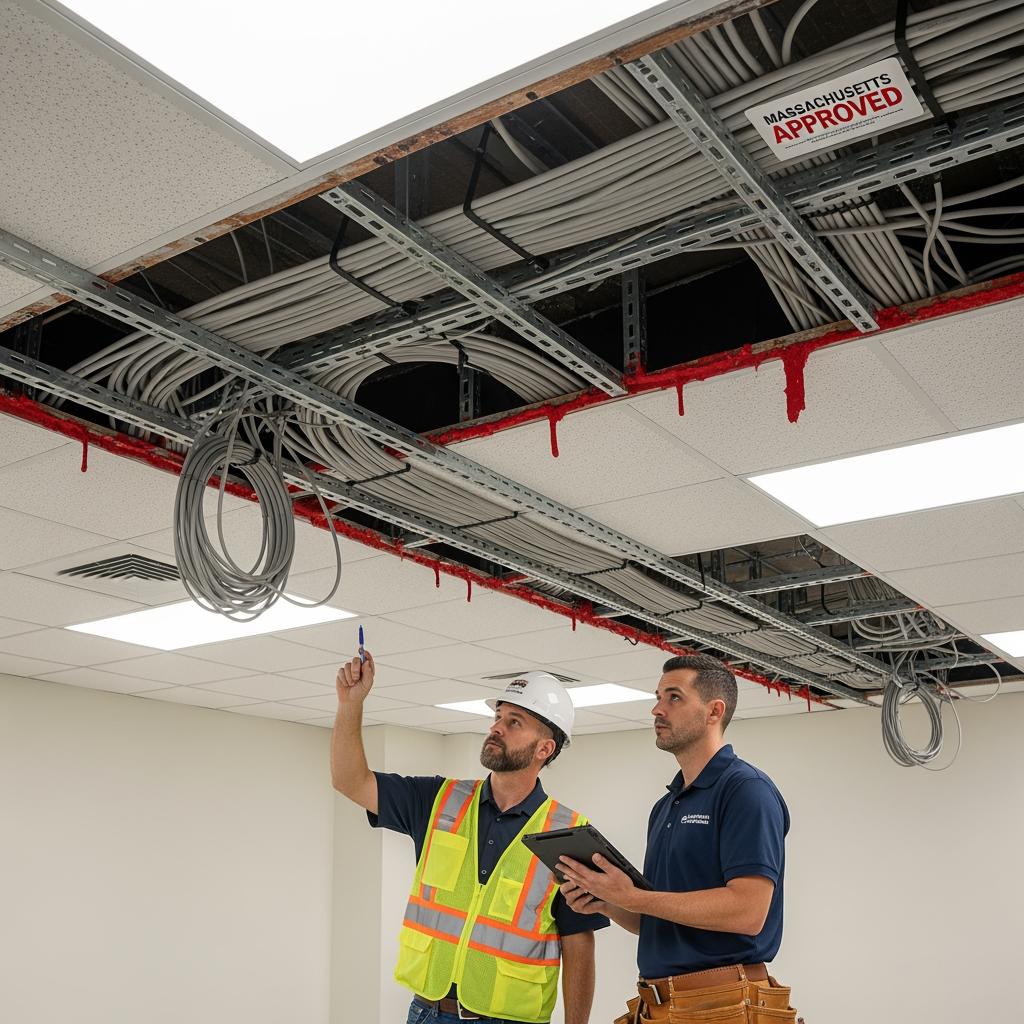
Massachusetts businesses also need to think about data privacy and retention policies, even though these are separate from the physical wiring. Clear signage, reasonable retention periods, and secure recorder placement (with wiring that does not expose the recorder location to the public) are all part of a responsible deployment.
Professional providers like S & Y Internet Technology build safety and documentation into their process as a matter of routine, which helps you sail through inspections and insurance audits. When you discuss your project with any installer, ask specifically how they design for inspection readiness, and request basic as‑built documentation once the job is complete.
FAQs about commercial camera wiring for Massachusetts businesses
This section addresses common questions about commercial camera wiring services for Massachusetts small businesses and shops, so you can make faster, more confident decisions.
Do I need a permit for commercial camera wiring in Massachusetts?
For many interior low‑voltage camera projects, formal permits may not be required, but this can vary by municipality and building. If the work involves fire‑rated assemblies, significant conduit, or integration with life‑safety systems, permits and inspections are more likely. Your installer should confirm local requirements before starting.
Can existing wiring be reused for new camera systems?
Sometimes. Old coaxial cable from analog cameras can occasionally be adapted with converters, but this is not always ideal. For most Massachusetts shops upgrading to modern IP cameras, running new Cat5e or Cat6 cabling provides better performance and future flexibility, even if some existing conduit or pathways are reused.
How long does a typical camera wiring job take for a small shop?
A straightforward installation with a handful of cameras in a small retail space can often be wired in one long day or two shorter visits, depending on access and after‑hours availability. More complex sites with high ceilings, difficult construction, or multiple floors can take several days. A walkthrough and clear scope are the best ways to get an accurate timeline.
Are wireless cameras a good alternative for Massachusetts businesses?
Wireless cameras can be useful for temporary or very hard‑to‑reach locations, but they usually are not a full replacement for properly wired systems in commercial settings. RF congestion, building materials, and interference can cause reliability issues, and many landlords and insurers prefer hard‑wired solutions. A hybrid approach—mostly wired with a few strategic wireless links—can work in specific cases.
What happens if a cable is damaged after installation?
If a camera drops offline and testing shows a cabling fault, the installer may repair a segment or pull a new run, depending on where the damage occurred. Well‑planned pathways and labeling make this much easier. For exterior or underground runs in Massachusetts, it’s especially important to use proper conduit and burial practices to reduce the risk of damage from weather, vehicles, or landscaping work.
Can I move or add cameras later without rewiring everything?
If your system was designed with growth in mind—using structured cabling, PoE switches with spare ports, and accessible conduits—adding or relocating cameras later is usually straightforward. Many Massachusetts owners plan for a few extra drops or spare cable paths so they can adapt coverage as their business evolves.
How to schedule a commercial camera wiring quote in Massachusetts
To schedule a quote for commercial camera wiring services for Massachusetts small businesses and shops, start by gathering a simple package of information: your floor plan or a rough sketch, the number and type of spaces (retail area, stock room, office, kitchen, exterior), and any existing cameras or network hardware. Share this with one or two qualified low‑voltage contractors and ask for a site visit.
During the visit, walk them through your key concerns—shrinkage, safety incidents, after‑hours monitoring—and be clear about any lease restrictions or landlord rules. A good installer will talk you through possible camera locations, wiring paths, and how they’ll protect your operations during installation. They should then return a written proposal that includes labor, materials, and any optional upgrades like surge protection or additional data drops.
If your business also operates in the New York metro area or you plan to standardize security across multiple states, it’s worth talking with S & Y Internet Technology about a coordinated wiring and installation plan. Their focus on monitoring systems, smart access, and network optimization makes them a capable partner for multi‑site rollouts that include Massachusetts locations. You can review their services and company background on their main website and then use their contact page to share your requirements and request a tailored proposal that covers both wiring and ongoing support.
When you’re ready, outline your Massachusetts location details, your preferred installation window, and any existing equipment, then invite your chosen provider to draft a custom wiring and camera plan along with a clear, itemized quote. That upfront clarity will help ensure your new system is reliable, compliant, and ready to protect your business for years to come.
Last updated: 2025-12-01
Changelog:
- Added detailed explanations of cable types and conduit options for Massachusetts environments.
- Expanded guidance on working with licensed low‑voltage contractors and inspection readiness.
- Included budgeting framework and cost element table for commercial camera wiring.
- Added multi‑location considerations and integration with smart security devices.
Next review date & triggers
Review this guide by 2026-06-01 or earlier if Massachusetts regulations change, PoE standards evolve, or your business significantly expands camera coverage or locations.

About the Author: S & Y Internet Technology Inc.
S & Y Internet Technology Inc. is a professional installation and repair service provider based in Flushing, New York. Our expert team provides door-to-door installation and maintenance within a 100 km radius, ensuring quick response and high-quality results for every project — whether residential, commercial, or specialized.

Install & Repair Services
You May Also Interest
-
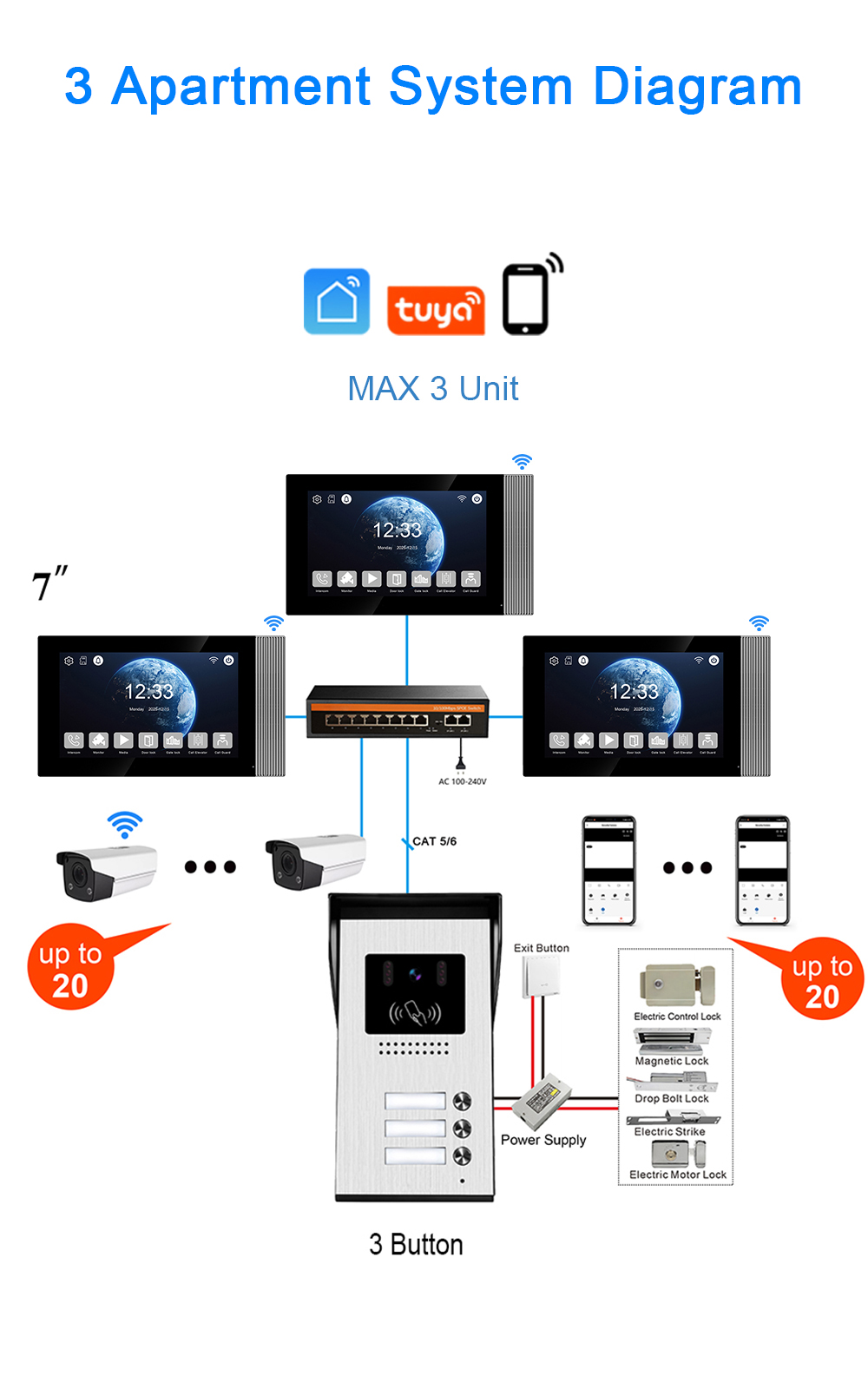
How to Extend Video Intercom Cable Distance Beyond 100 Meters: Solutions and Best Practices
The 100-meter limit on standard Ethernet copper cabling is not a suggestion—it is an engineering boundary defined by signal attenuation, crosstalk, and the physical layer specifications of the Ethernet standard. When a villa gate, a detached garage, or a perimeter entrance sits beyond that boundary, simply adding a longer cable will not solve the problem….
-
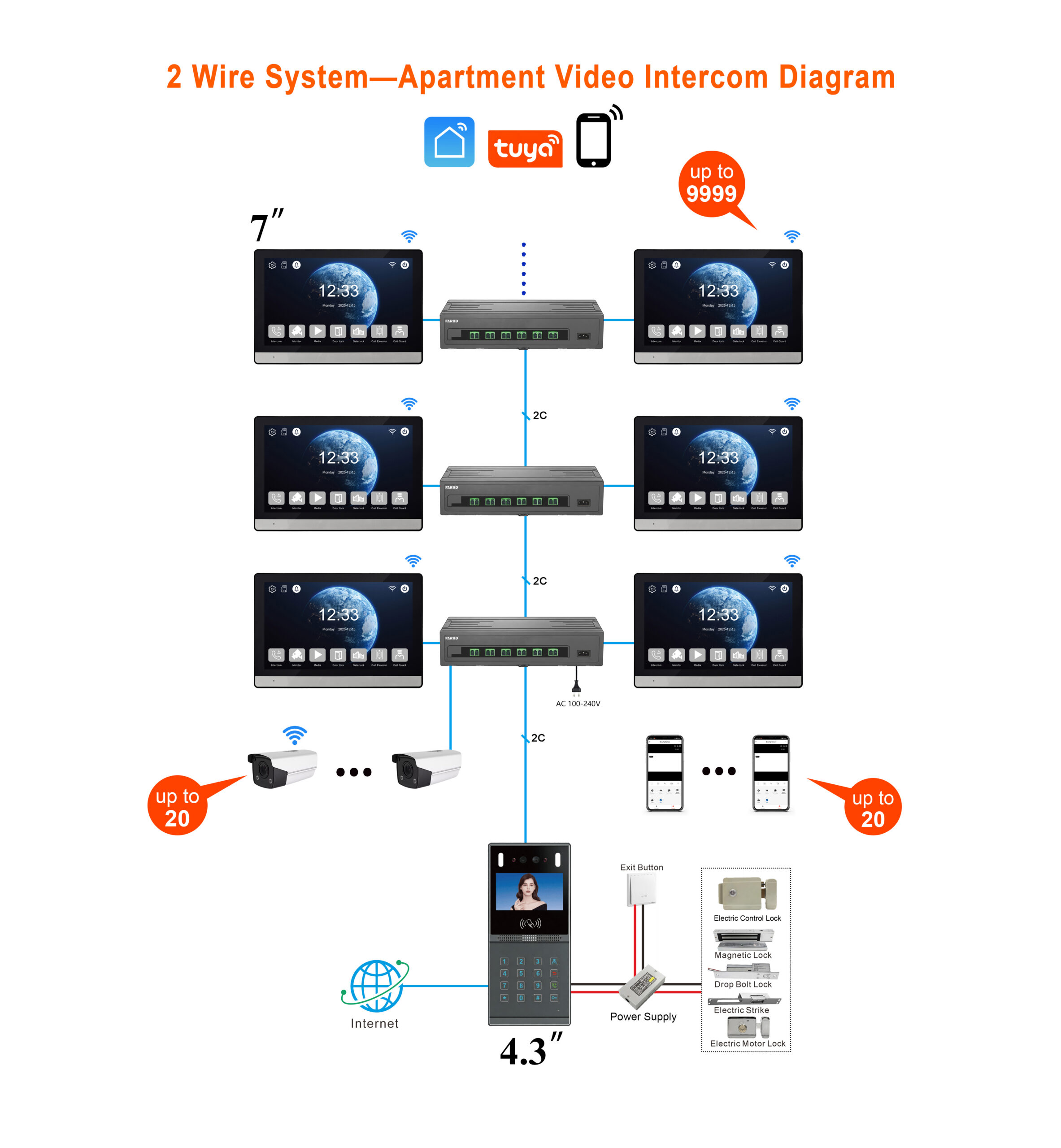
Video Intercom Power Supply Options Explained: PoE, 2-Wire, Battery and Solar
Video intercom power supply is not a single decision. It is a cascade of decisions that begins with the building’s existing wiring and ends with how much maintenance the owner is willing to accept over the system’s life. PoE, 2-wire, battery, and solar are not four variations of the same solution. They serve different installation…
-
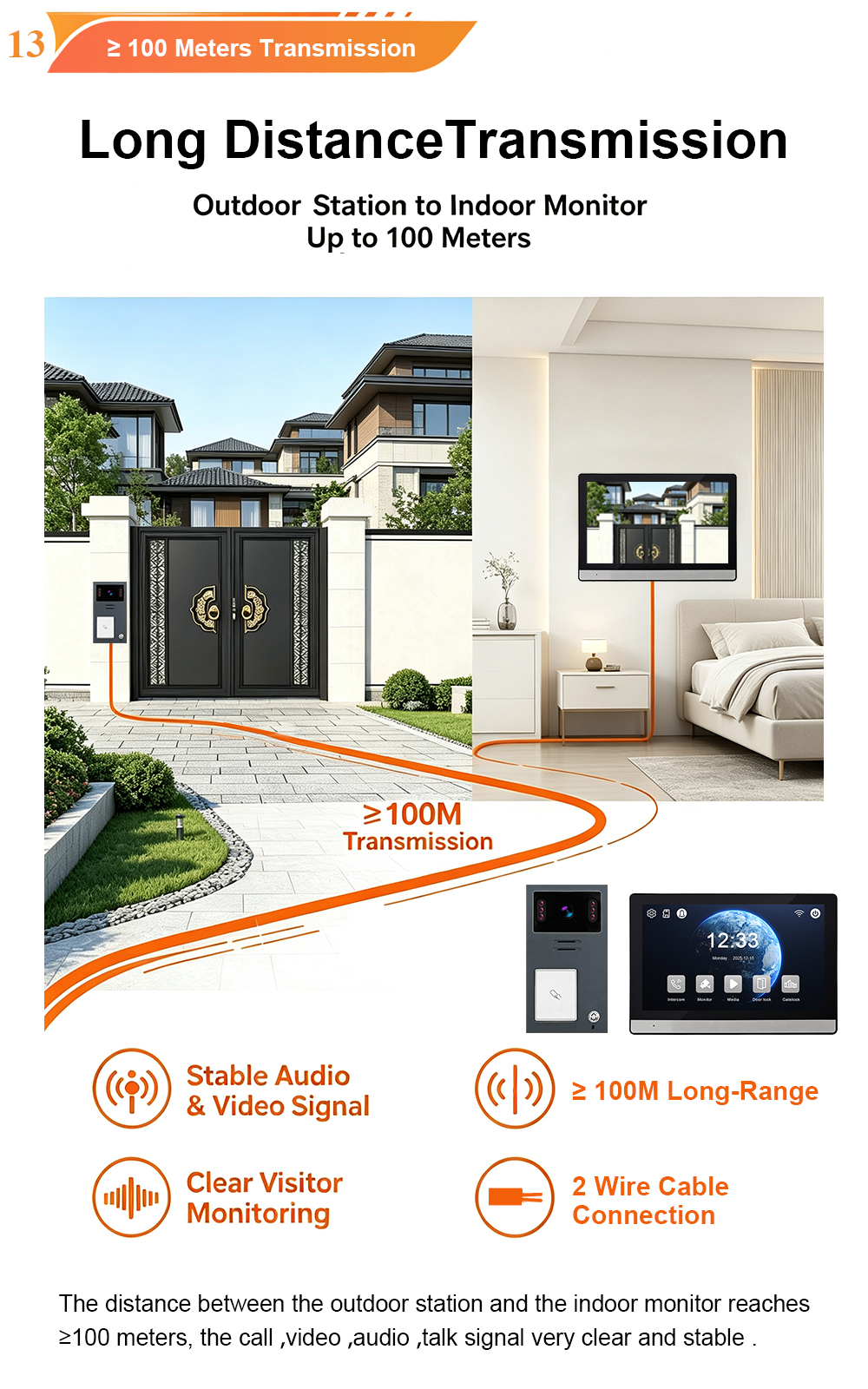
Video Intercoms for Historic Buildings: How to Modernize Access Without Damaging Heritage Architecture
The Governing Constraint: Fabric First, Technology Second Conservation regulations in most heritage jurisdictions prohibit visible cables, surface-mounted conduits, and devices that would alter the character of the building. Drilling into stone façades, ornate woodwork, or antique brickwork is treated as permanent damage, not a maintenance task. This means the technology stack must be chosen not…
-
From Inquiry to Installation: A Buyer’s Journey for Apartment Video Intercom Projects
Sourcing a video intercom system for an apartment building is a multi-stage process. It begins with a simple inquiry and ends with a fully operational system protecting residents and streamlining access. For distributors, system integrators, and property developers, understanding this journey is essential to avoiding delays, cost overruns, and installation headaches. This guide walks you…