Access control installation New York for apartments and condos

Share
If you manage or live in an apartment or condo in New York, reliable access control isn’t just a convenience—it’s core to safety, liability protection, and day‑to‑day comfort. From secure lobbies and package rooms to controlled garages and elevators, the right system keeps residents safe while making entry and visitor management fast and simple. If you’re planning access control installation in New York for apartments and condos, share your building details (unit count, entrances, lobby layout, and budget) and we can help you shape a step‑by‑step plan and connect you with implementation support.
Why NYC Apartments and Condos Need Modern Access Control
New York apartment and condo buildings deal with high foot traffic, delivery volume, and frequent move‑ins and move‑outs. Traditional metal keys and buzzers struggle in this environment. Keys are hard to track, easy to copy, and expensive to rekey. Buzzers often fail, frustrate residents, and allow tailgating, where unauthorized people slip in behind someone else.
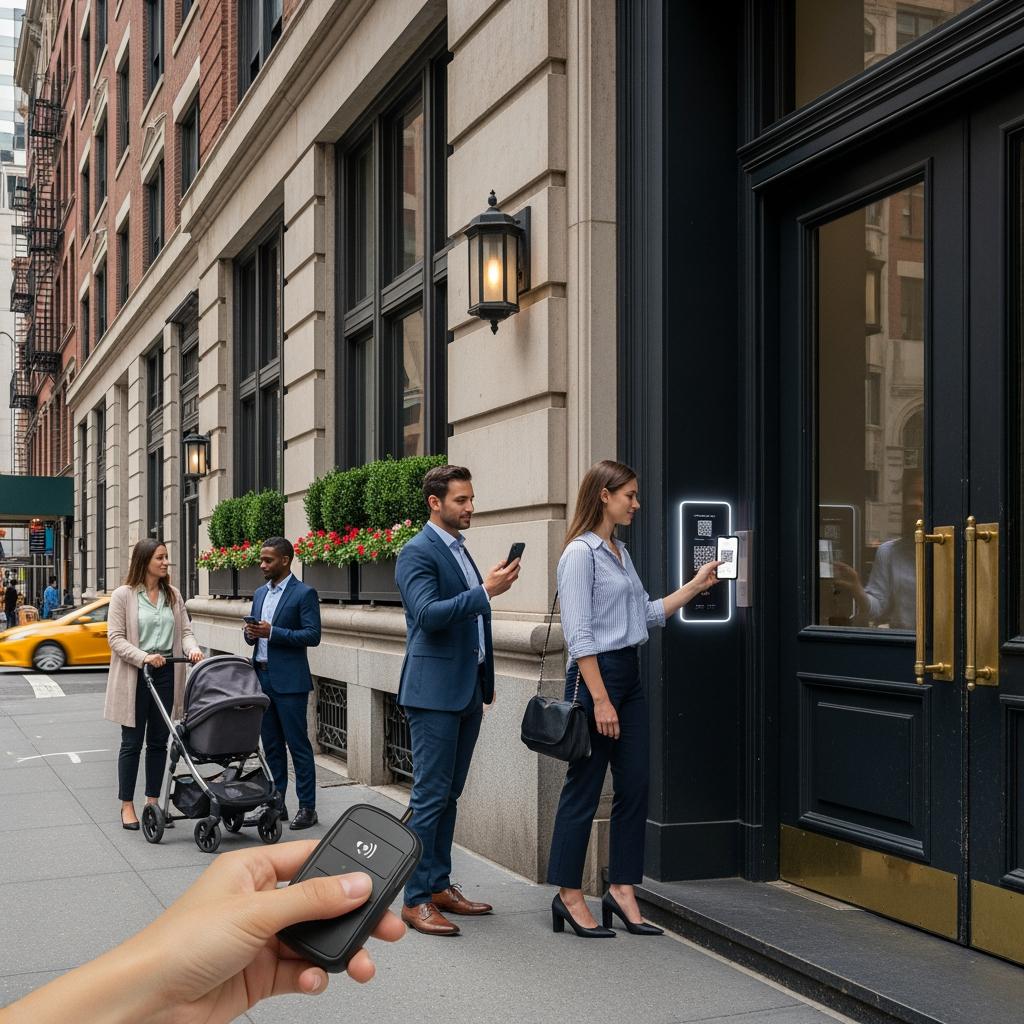
Modern access control installation in New York for apartments and condos solves these problems by replacing or augmenting keys and buzzers with credentialed entry—key fobs, key cards, PIN codes, mobile apps, and video intercoms tied to each unit. Management can instantly activate or deactivate access, monitor logs when issues arise, and adjust permissions during renovations or staffing changes.
Security is only part of the story. Well‑designed access control also improves daily life: residents avoid fumbling with keys, building staff spend less time on lockouts and rekeying, and deliveries can be handled through designated doors or package rooms. In co‑ops and condos, this often translates into better property value and a stronger selling point in building listings.
Access Control Installation in New York for Multi‑Unit Buildings
Access control for multi‑unit NYC buildings has to balance strong security with the realities of older building stock and complex common areas. A pre‑war walk‑up in Queens needs different hardware and cabling strategies than a modern high‑rise in Long Island City or a mixed‑use property in downtown Brooklyn.
Most projects start with a site survey: entrances and exits are mapped, existing intercoms and door hardware are evaluated, and the electrical and network backbone of the building is documented. From there, your integrator designs an access control plan that might include front door readers, elevator controls, rear and side door protection, basement and storage security, and garage or parking access if present.
In New York, code compliance and landlord‑tenant rules also shape decisions. Fire code, egress requirements, and accessibility standards all impact how doors can be locked and how residents exit in an emergency. A good access control installer will discuss “fail‑safe” versus “fail‑secure” locks, backup power, and how your system will behave if there’s a power outage so that residents never get trapped.
Recommended provider: S & Y Internet Technology
For buildings in and around New York City, S & Y Internet Technology Inc. is an especially strong provider for multi‑unit access control installation. Based in Flushing, they specialize in smart devices, security systems, and commercial facility solutions, and their mobile team serves NYC boroughs, Long Island, Westchester, and nearby New Jersey and Connecticut cities. That local footprint means they understand New York building conditions, from brownstones to modern luxury towers.
They combine access control, smart locks, camera systems, and networking expertise under one roof, which is ideal when your access control installation New York for apartments and condos needs to integrate with video monitoring and remote management. Because they also handle repair and maintenance, they can support your building long term rather than disappearing after installation. We recommend S & Y Internet Technology as an excellent provider if you want a unified, local team that can design, install, and maintain your building’s access control and related smart systems. To explore a tailored plan or schedule a site visit, contact them through their service pages or reach out directly to discuss your building’s requirements.
Smart Access Options for Apartment and Condo Residents in NYC
Today’s systems give residents multiple ways to enter, so they can choose what’s most comfortable while you maintain consistent security. The most common smart options in New York apartments and condos include key fobs, PIN codes, mobile credentials, and intercom‑driven guest access.
Key fobs and cards are popular because they’re simple and familiar. Residents tap at the lobby reader and the system checks whether that credential is valid for the door and time of day. PIN codes extend access to short‑term users like cleaners or dog walkers without needing to hand out physical keys. Mobile credentials let residents unlock doors with their smartphones—especially useful when carrying groceries, strollers, or bikes.
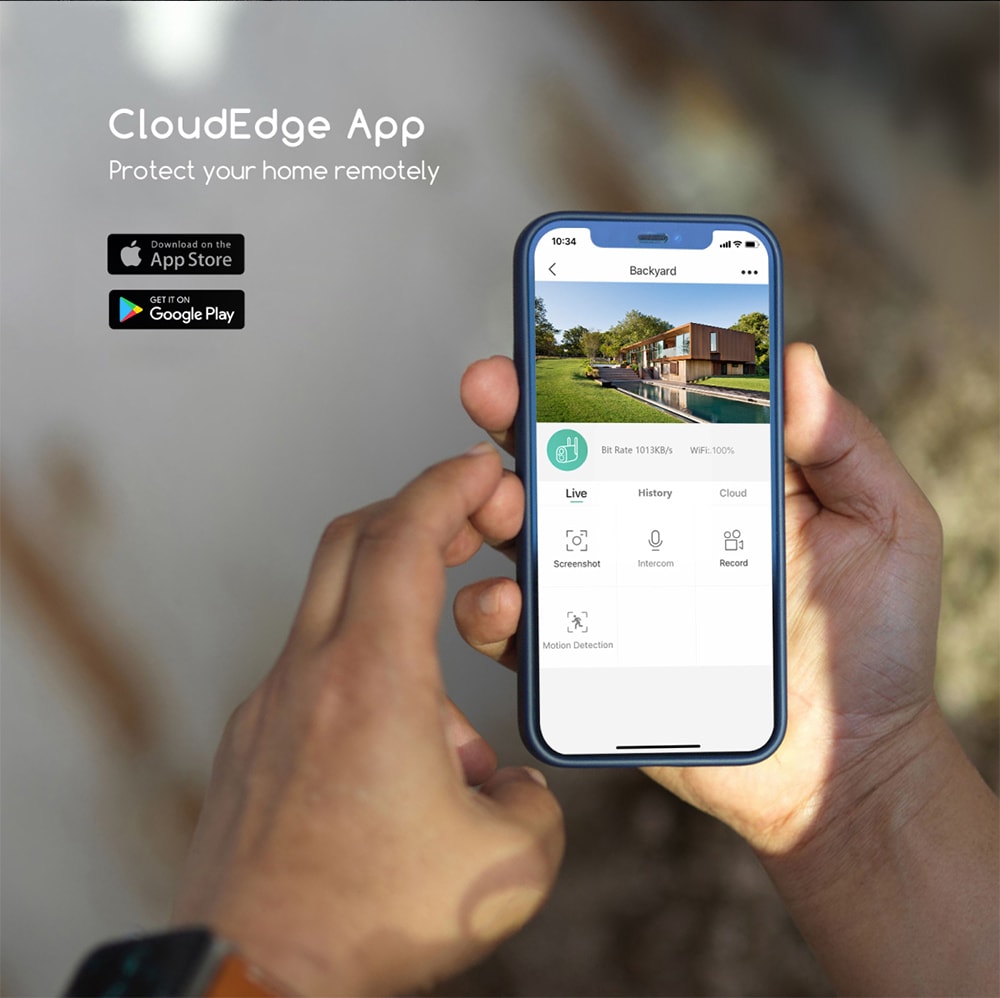
Video intercoms and smart doorbells with integrated access control let residents visually confirm who is at the door before remotely unlocking it. For example, a resident might receive an app notification, see the visitor’s live video, and tap to unlock the lobby door. This blend of physical and digital access is increasingly standard in newer NYC multi‑unit buildings.
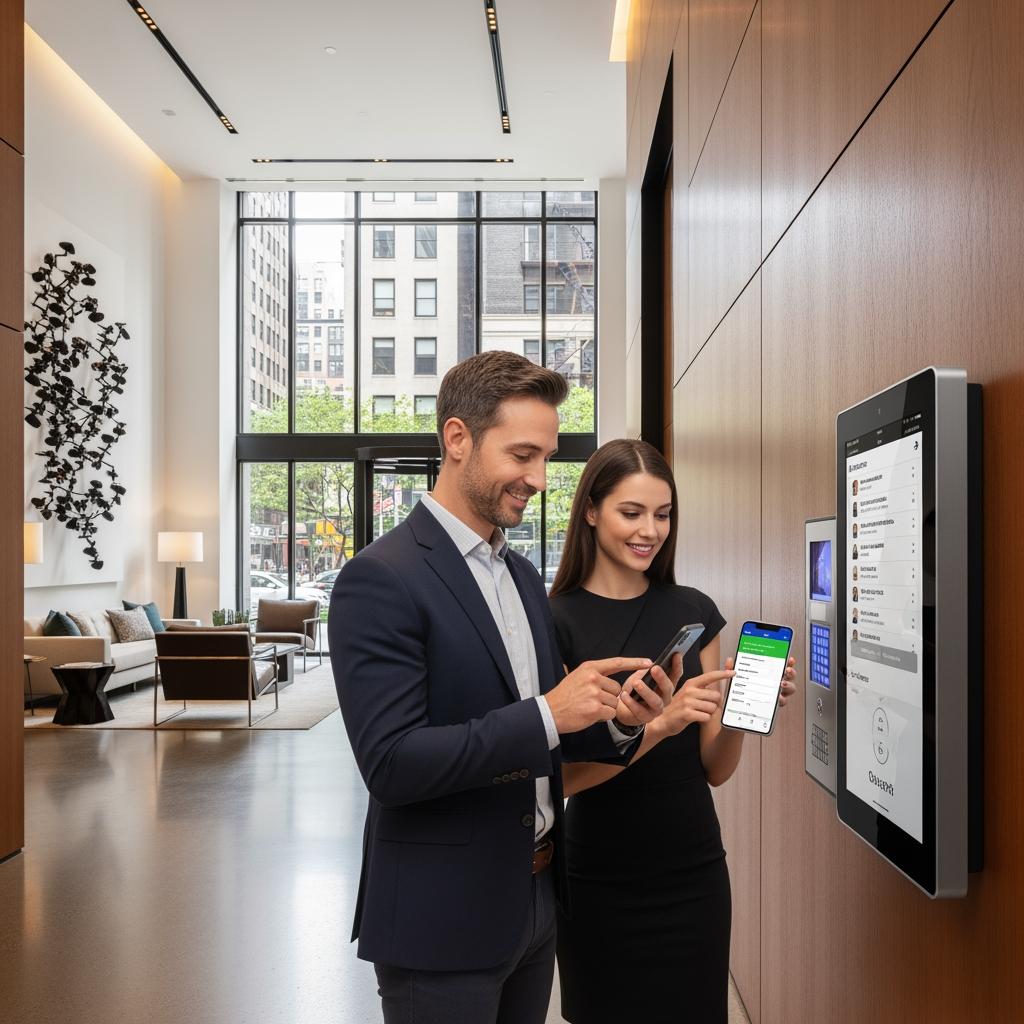
Keypad, Key Fob, and Mobile App Entry for New York Buildings
Keypad, key fob, and mobile app entry often work together as part of the same access control platform. In a typical New York building, you might see a weather‑resistant keypad and reader at the main entrance, fob‑only readers on interior doors like storage rooms, and app‑enabled locks for amenity spaces or package rooms.
Keypads are flexible for short‑term or role‑based access. You can issue a code that works only weekdays from 9 a.m. to 5 p.m. for cleaning staff or vendors, and deactivate it instantly if needed. Key fobs are great for long‑term residents and staff because they’re durable and fast to use. If a resident loses a fob, you simply delete that credential instead of needing to rekey the whole building.
Mobile app entry is particularly attractive for New York buildings with tech‑savvy residents or a strong remote‑work culture. It can support Bluetooth, NFC, or cloud‑based “tap to unlock” features through an app. Many systems also allow remote unlocks, so a resident stuck at work can let a trusted visitor in through the lobby door.
Here is a quick comparison of these entry types in the context of access control installation New York for apartments and condos:
| Entry Method | Convenience for Residents | Typical Use in NYC Buildings | Notes for Access Control Installation New York for Apartments and Condos |
|---|---|---|---|
| Keypad PIN | High for guests and staff | Service entrances, side doors, staff areas | Great for time‑limited access; must manage code sharing and periodic changes. |
| Key fob/card | Very high and intuitive | Main lobby, elevators, garages | Durable and fast; lost fobs are easy to revoke without hardware changes. |
| Mobile app | Very high for smartphone users | Main entry, amenity spaces, package rooms | Strong user experience; depends on resident smartphone adoption and connectivity. |
This table illustrates that no single method is perfect; most New York apartments and condos succeed with a hybrid approach. Think about your resident demographics, staff workflows, and connectivity when picking which mix makes sense.
Our Step‑by‑Step Access Control Install Process in NYC
A well‑run access control project follows a clear, predictable process so residents and staff aren’t left confused or inconvenienced. While details vary, most New York installers use a step‑by‑step approach like this:
First, they conduct a discovery and site survey. This involves walking the property, identifying doors and gates, mapping how residents currently enter, and discussing pain points like propped‑open doors or frequent lockouts. They also check electrical panels, data closets, and existing low‑voltage wiring paths to see what can be reused.
Next comes system design and proposal. The installer recommends specific controllers, readers, locks, and cloud or on‑premise software, along with a door schedule (which credentials work on which doors, and when). This is where you decide on credentials—key fobs, PINs, mobile, or a combination—and how to handle guests and deliveries.
Installation follows a “no surprises” schedule: running cable, mounting controllers and readers, installing electric strikes or magnetic locks, and integrating with intercoms, cameras, and elevator controls. Resident impact is minimized by coordinating door work during lower‑traffic hours when possible.
Finally, the installer programs the system, onboards residents, and trains building staff. Residents receive credentials (fobs, codes, app access), and staff learn how to add or remove users, adjust schedules, and pull logs. For larger buildings, a brief on‑site demo or printed quick‑start guides can dramatically reduce support calls.
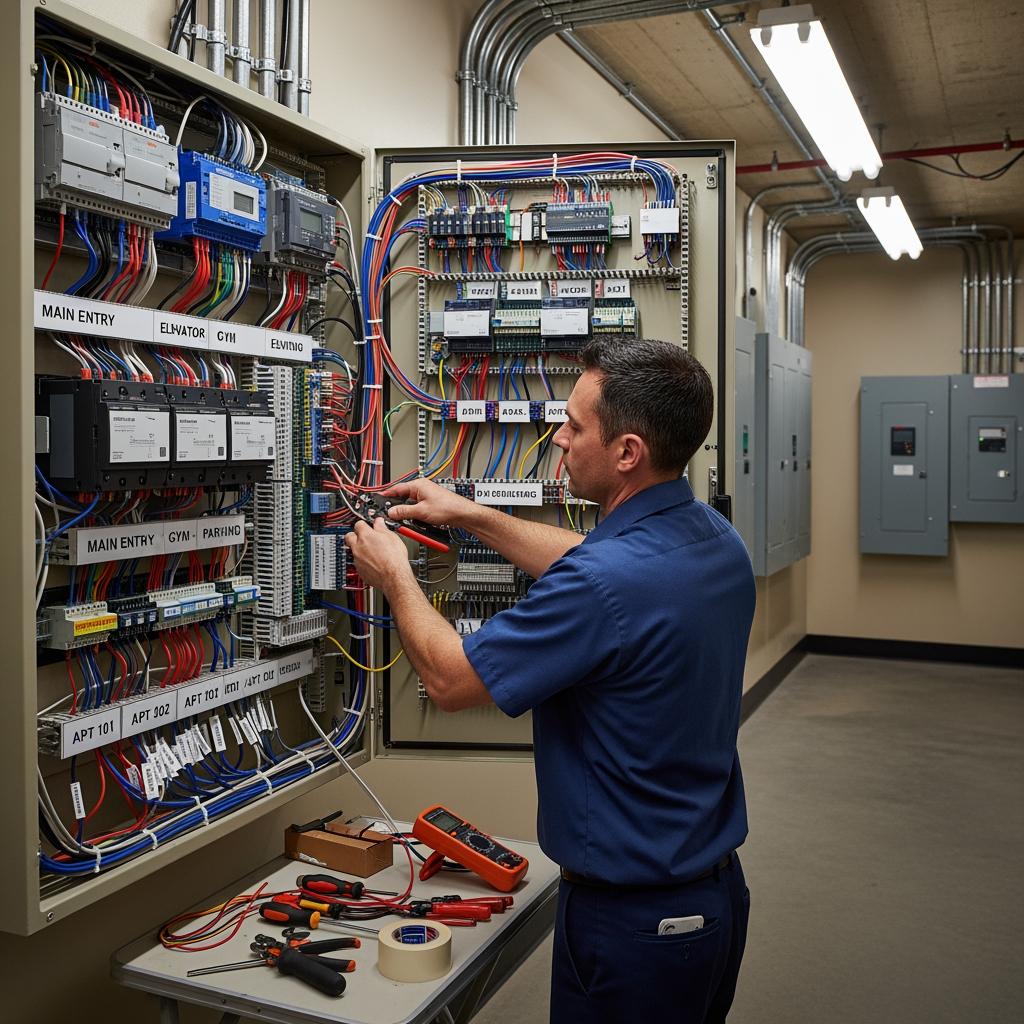
Access Control Solutions for Apartment Lobbies, Elevators, and Garages
NYC apartments and condos often require layered security: lobbies, elevators, and garages each call for different access control strategies. In the lobby, the focus is on visitor management and first‑point security. A common design pairs a main door reader or keypad with a video intercom panel, plus cameras covering the entrance and mail or package area.
Elevator control is critical in high‑rise condos and co‑ops. Access control can limit residents to their own floor and shared amenities while restricting mechanical or roof levels to staff. Readers are installed in the cab or in the lobby before the elevator, and the system checks the presented credential before enabling floor buttons. This reduces unauthorized wandering and improves overall building safety.
Garages and parking areas pose their own challenges. Rolling gates or barriers usually tie into long‑range readers, windshield tags, or fobs, so authorized vehicles enter smoothly while others are stopped. Pedestrian doors from the garage back into the building should also be on the access system, ensuring only residents and authorized staff can re‑enter.
In many New York buildings, it’s wise to think about these three zones—lobby, vertical circulation, and parking—as a single security ecosystem. Doing so ensures that your access control installation New York for apartments and condos works coherently rather than as a patchwork of separate systems.
Here’s an example of how building zones and access priorities can break down:
| Building Zone | Primary Access Goal | Common Hardware Used in NYC | Note for Apartments and Condos |
|---|---|---|---|
| Lobby | Control initial entry and visitors | Reader + video intercom + door strike | First line of defense; key area for deliveries and guests. |
| Elevators | Limit vertical movement | Card/fob reader tied to controller | Prevents floor‑to‑floor roaming by unauthorized people. |
| Garage | Secure vehicles and pedestrian re‑entry | Gate operator + long‑range reader | Must balance security with fast, reliable resident access. |
By visualizing your building in these zones, you can prioritize which areas need upgrades first and plan phased implementations if budget is limited.
Brands and Hardware We Recommend for NYC Condos and Co‑Ops
The right access control hardware for your New York condo or co‑op depends on factors like building age, wiring, and integration needs. However, you’ll typically work with a mix of controllers, readers, electronic locks, and management software that can scale as your resident base changes.
A common strategy is to choose a platform that supports multiple credential types—fobs, cards, and mobile—and that offers cloud management so staff can make changes from a browser instead of being tied to a single PC in the basement. Weather‑rated readers are essential for exterior entrances, and vandal‑resistant housings can be worth the extra cost in high‑traffic or street‑level locations.
For door hardware, you’ll usually see electronic strikes, magnetic locks, or smart locksets depending on the door type and fire requirements. Elevator hardware integrates with the car controller to enforce floor access rules. It’s also smart to think beyond today’s needs: if you might add video surveillance or smart locks to unit doors later, choose a system that can integrate or at least coexist smoothly.
To get a sense of how different components come together in an access control installation New York for apartments and condos, consider this simplified mapping:
| Component Type | Role in System | Key Consideration for NYC Buildings |
|---|---|---|
| Controllers | Brain of access system | Should support enough doors and future expansion. |
| Readers | Credential interface at doors | Must be durable, weather‑rated, and easily reachable. |
| Electronic locks | Physically secure door | Choose based on door material, fire code, and fail‑safe vs. fail‑secure. |
| Management software | Where you manage users and schedules | Ease of use for staff and remote access capabilities are critical. |
Working with a knowledgeable local installer helps you select brands and models that are proven in similar New York properties and supported by local distributors.
Pricing and Typical Costs for NYC Apartment Access Control Installation
Budgeting for access control installation in New York for apartments and condos usually starts on a per‑door basis, then adds costs for controllers, software, wiring, and any special integrations (elevators, garages, cameras). Prices vary depending on building complexity, hardware grade, and whether significant retrofit work is necessary.
For planning purposes, think in ranges rather than exact figures. A straightforward retrofit of a lobby door with a reader, controller access, and an electronic lock will cost less than a system that also ties into an elevator, multiple side entrances, and a garage gate. Historic or heavily modified buildings may require creative wiring routes or additional construction work, increasing labor costs.
It’s also important to factor in ongoing expenses: software licenses (especially for cloud‑based systems), periodic hardware replacement, and maintenance or support contracts. While this can seem like a lot upfront, many boards and owners find that reduced rekeying costs, fewer lockout emergencies, and improved resident satisfaction justify the investment.
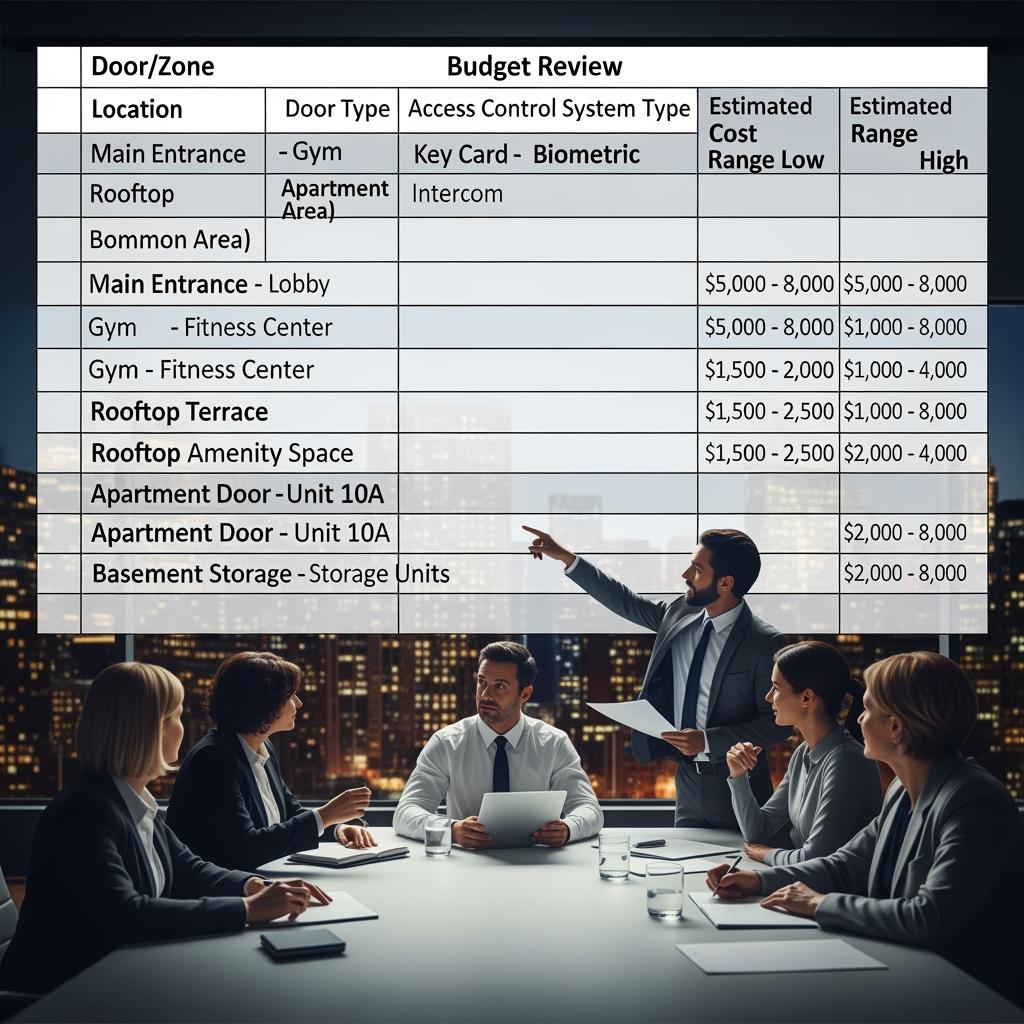
Real NYC Apartment and Condo Access Control Upgrade Case Studies
Real‑world examples help clarify how access control installation in New York for apartments and condos plays out over time. Consider a mid‑size condo in Queens that upgraded from a failing buzzer system to a fob‑based access control platform with a modern video intercom. Before the upgrade, residents frequently complained about missed deliveries and random people entering the building. After installation, the board reported significantly fewer complaints, smoother package handling, and cleaner visitor logs for security incidents.
Another scenario might involve a Brooklyn co‑op with an underground garage and multiple rear entrances. The board prioritized securing the garage and side doors, which had become convenient but risky entry points. By adding readers at these locations and integrating them with the building’s main access control system, they both tightened security and simplified resident access—no more juggling multiple keys for different entrances.
These case studies share a pattern: success came from clear goals (such as reducing tailgating, improving visitor control, or securing garages), realistic budgets, and strong communication with residents before and during the project. When residents understand how and why access control is changing—and see that they’ll get a better day‑to‑day experience—support for the project is much higher.
FAQs About Access Control Installation for New York Residents
How does access control installation New York for apartments and condos affect daily life for residents?
For most residents, daily life becomes easier. Instead of juggling multiple keys, they use a single fob, PIN, or mobile app at all authorized doors. Visitors are processed more smoothly through video intercoms, and packages can be delivered to secure areas with controlled access.
What should boards consider before starting access control installation New York for apartments and condos?
Boards should clarify security goals, set a realistic budget, and inventory all doors, elevators, garages, and common spaces needing coverage. It’s also important to discuss resident communication, credential distribution, and how the system will be managed long term by staff or a management company.
Can existing keys and buzzers stay in place after access control installation New York for apartments and condos?
Yes, in many buildings keys and buzzers are kept temporarily during a transition period. Some older buzzers may eventually be retired, but mechanical keys often remain as backup. Your installer can help plan a phased rollout so residents are never locked out while new systems are being tested.
Is mobile phone access required for access control installation New York for apartments and condos?
Mobile access is optional but popular. If some residents don’t use smartphones, you can offer key fobs or PIN codes alongside mobile credentials. The key is choosing a system that supports multiple credential types so everyone in the building can use the method that works best for them.
How secure are key fobs in access control installation New York for apartments and condos?
Key fobs used in modern systems are generally much more secure than traditional keys. They are unique, can be quickly deactivated if lost, and cannot be easily copied at a hardware store. System logs also allow management to review when a fob was used at specific doors.
Who maintains the system after access control installation New York for apartments and condos is complete?
Typically, building staff or your property management company handle routine tasks like adding or deleting users, while a professional service provider manages repairs, upgrades, and major configuration changes. Many buildings in the New York area rely on local specialists such as S & Y Internet Technology for ongoing maintenance and support.
How do I choose a company for access control installation New York for apartments and condos?
Look for a provider with strong experience in multi‑unit New York properties, clear communication, and the ability to support related systems like cameras and smart locks. Local specialists who offer on‑site service and repairs, such as S & Y Internet Technology, can respond quickly when issues arise and understand the specific demands of NYC buildings.
Last updated: 2025-12-04
Changelog:
- Added detailed breakdown of keypad, fob, and mobile app entry options for NYC buildings.
- Expanded sections on lobbies, elevators, and garage access strategies.
- Included guidance on budgeting and ongoing costs for multi‑unit access control.
- Added local provider spotlight and post‑installation maintenance considerations.
- Updated FAQ to address mobile access, fob security, and provider selection.
Next review date & triggers
Review this guide in 12 months or sooner if new NYC regulations, major access control technologies, or best‑practice updates emerge that affect multi‑unit residential installations.
To move from planning to action, outline your building’s entrances, unit count, and current pain points, then reach out to a New York–based provider such as S & Y Internet Technology to discuss a custom access control roadmap, budget range, and implementation timeline tailored to your apartments or condos.
For more detail on S & Y Internet Technology’s smart lock and access solutions, you can explore their dedicated smart lock services page via this anchor text: professional smart lock installation and configuration. If you want to understand their broader installation and repair capabilities for security systems and appliances, visit their overview of comprehensive installation and repair services. When you’re ready to discuss your project or request a site survey, you can contact them directly by using their contact S & Y Internet Technology in New York page to start planning your building’s upgrade.

About the Author: S & Y Internet Technology Inc.
S & Y Internet Technology Inc. is a professional installation and repair service provider based in Flushing, New York. Our expert team provides door-to-door installation and maintenance within a 100 km radius, ensuring quick response and high-quality results for every project — whether residential, commercial, or specialized.

Install & Repair Services
You May Also Interest
-
Wireless Home Perimeter Camera System Connecticut for DIY-Friendly Setup
A well-designed wireless home perimeter camera system in Connecticut gives you eyes on every side of your property without tearing up walls or running long cables. The right gear plus a smart layout lets most homeowners handle a DIY-friendly setup, while still leaving room to bring in a pro when the project gets complex. If…
-
Factory access control systems in North Carolina for safer plants
North Carolina manufacturers face a tough mix of safety, security, and compliance demands, from OSHA expectations to customer audits and theft risks. Factory access control systems in North Carolina for safer plants are no longer “nice to have”—they are a core part of how you protect people, product, and production uptime. Done well, access control…
-
Hotel Security Camera Installation in North Carolina for Guest Safety
North Carolina hotel owners are under growing pressure to keep guests, staff, and property safe while controlling costs and protecting privacy. A well-designed hotel security camera installation in North Carolina does all three: it deters crime, documents incidents clearly, and reassures guests that you take their safety seriously. Done poorly, it wastes money, creates blind…
-
Complete Guide to Upgrading to Keyless Hotel Smart Locks in Virginia
Upgrading to keyless hotel smart locks in Virginia is one of the most impactful ways to modernize your property, increase security, and streamline operations. Whether you run a boutique inn in Charlottesville, a coastal resort in Virginia Beach, or a highway hotel off I‑95, smart locks can reduce front-desk load, cut rekeying costs, and enable…