Access control installer near me New York smart lock and card reader upgrades
Share
Finding a reliable “access control installer near me New York smart lock and card reader upgrades” isn’t just about convenience; it’s about long‑term safety, code compliance, and daily ease of use for residents and staff. Whether you manage a Midtown condo, own a Queens brownstone, or run a small Brooklyn storefront, the right access control upgrade can reduce lost key headaches, improve security, and add real value to your property.
If you already know you want to upgrade your locks or card readers, share your building type, door count, and current hardware and we can outline a practical upgrade plan and cost range tailored to your New York property.
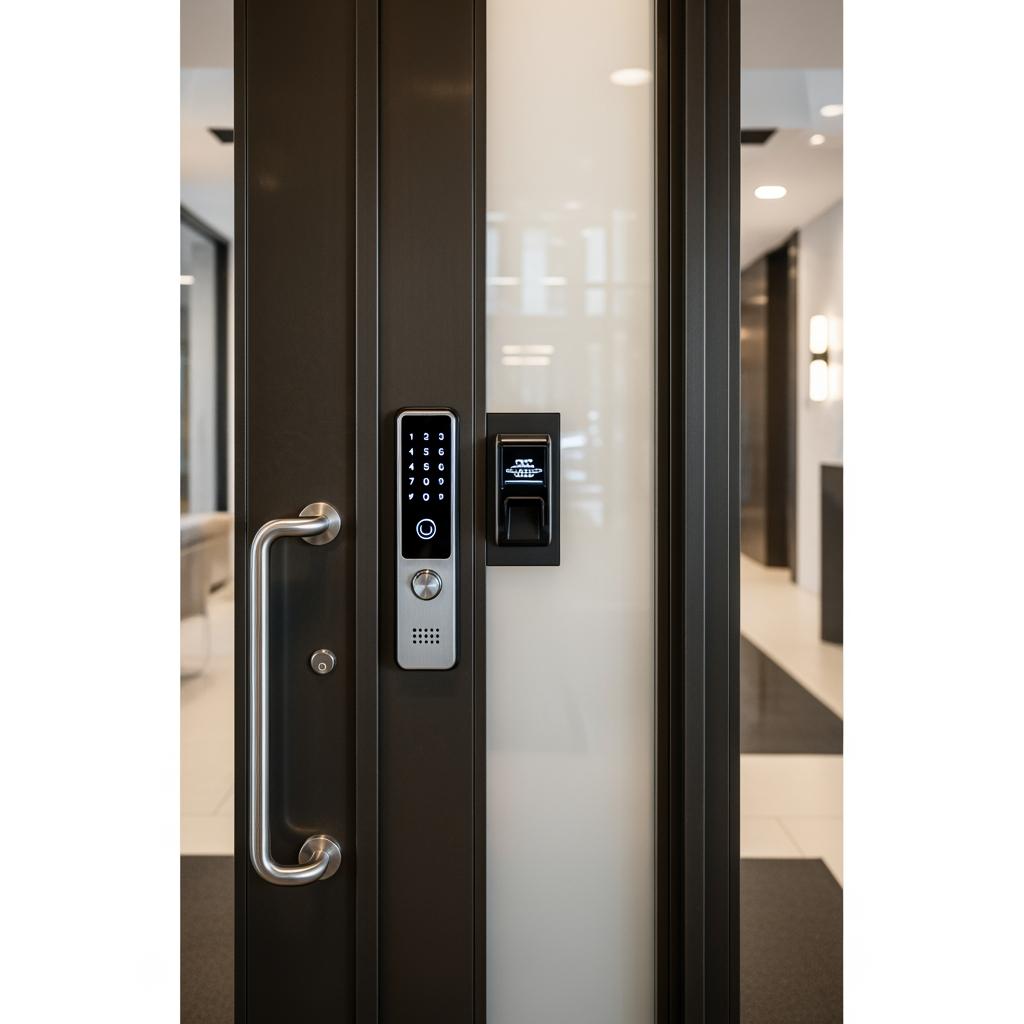
Smart lock and card reader upgrade options for New York homes
For New York homes and small buildings, smart lock and card reader upgrade paths typically fall into a few categories: basic smart deadbolts, keypad or fob readers at main entrances, and more advanced panel-based systems for multi‑unit buildings.
For single‑family homes and small townhouses, upgrades often start with replacing a mechanical deadbolt with a smart lock that supports PIN codes, app control, or both. Many New York homeowners choose Wi‑Fi or Bluetooth smart locks that integrate with mobile phones, allowing remote locking and unlocking for cleaners, dog walkers, and guests. In some cases, the exterior cylinder is kept so a traditional key remains a backup.
For small multi‑unit properties—often 2–6 units in Brooklyn, Queens, or the Bronx—combining a smart lock with a keypad or card/fob reader on the main entrance is popular. Residents can use PIN codes or RFID fobs, while the interior apartment doors may remain mechanical, reducing cost. In these scenarios, the access control installer will usually add a compact controller and power supply in a utility area and run low‑voltage cable to the door.
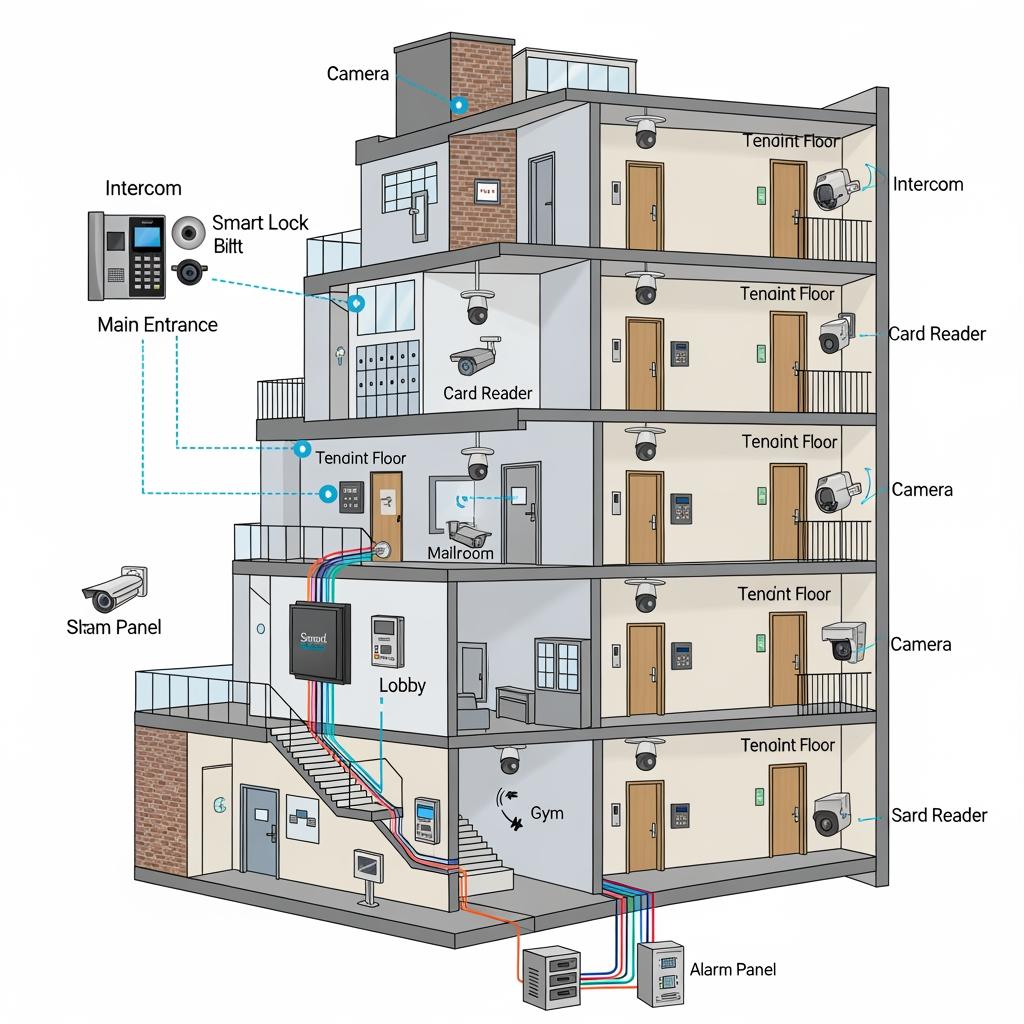
Larger condos and co‑ops may step up to networked access control systems with card readers at lobbies, gyms, storage areas, and parking entrances. These systems centralize management so staff can add or revoke cards for individual residents, log entries, and adjust schedules for cleaners or vendors. Where elevators are involved, the installer may integrate card access with floor‑specific control to prevent unauthorized access to residential levels.
If you’re unsure which option fits your building, a good next step is to document your doors, current locks, and how many users need access, then request a walkthrough from an access control installer to compare smart lock versus card reader approaches.
Keyless access control benefits for NYC apartments and condos
Keyless access control is especially attractive in New York City, where buildings often juggle residents, deliveries, and service staff in tight spaces with heavy traffic. Moving away from traditional keys brings several day‑to‑day and long‑term benefits.
First, it dramatically reduces lockouts and rekeying costs. Instead of replacing cylinders when keys are lost or tenants move out, managers simply deactivate a code, card, or fob. This is particularly important in Manhattan and Brooklyn rental buildings where turnover is frequent and late‑night lockouts are common.
Second, keyless systems streamline delivery and service access. In many NYC apartments and condos, building staff or owners provide timed PIN codes or temporary credentials for contractors, cleaners, and caregivers. This makes it far easier than coordinating physical keys while still controlling exactly when and where a person can enter.
Third, well‑implemented access control boosts perceived safety. Residents appreciate not seeing key copies floating around among former roommates and subletters. Some systems maintain basic audit logs showing when a door was opened with a specific credential, which can help resolve disputes and security questions without feeling overly invasive.
Finally, keyless access often pairs well with other smart building upgrades. For example, combining a smart lock with a video doorbell at the main entrance allows residents to see and talk to visitors before remotely unlocking. In many NYC condos, boards use upgrades as a chance to modernize lobbies and improve curb appeal, which can positively influence property value and marketability.
Typical NYC pricing for smart lock and card reader installations
Budgeting correctly is essential when you search for an “access control installer near me New York smart lock and card reader upgrades.” While every building is different, some common NYC price ranges can help you set expectations before getting quotes.
For single‑door smart lock upgrades in a residential setting, you can generally expect hardware and professional installation to fall in the low hundreds per door, depending on the brand and whether the existing door and frame need modification. If Wi‑Fi bridges, hubs, or extra power work are required, costs rise.
Card reader or keypad systems for building entrances tend to involve more components: reader device, controller, power supply, electronic strike or magnetic lock, cabling, and sometimes backup battery. Per‑door costs for these systems are usually higher than simple smart locks but may include multi‑door discounts when you upgrade several entrances at once.
Multi‑tenant and commercial access control projects in NYC often use tiered pricing: a base system cost covering controllers and software, plus per‑door and per‑credential charges. Labor costs can be higher when core drilling, conduit runs, or after‑hours work are required, which is common in busy Manhattan buildings that limit daytime disruption.
A rough comparative overview looks like this:
| Upgrade type | Typical use case | Relative NYC cost level | Notes including access control installer near me New York smart lock and card reader upgrades |
|---|---|---|---|
| Standalone smart deadbolt | Single‑family home, small condo | $ | Lower hardware and labor, minimal wiring. |
| Keypad or card reader with small controller | 2–10 unit building main entrance | $$ | Added wiring and power; more robust control. |
| Networked multi‑door card/fob system | Large condo, co‑op, commercial property | $$$ | Higher upfront investment, streamlined management. |
| Fully integrated access control with cameras and intercoms | High‑end or mixed‑use NYC properties | $$$$ | Complex design and installation, strong long‑term functionality. |
These ranges are directional only; actual quotes will depend on your specific door hardware, building type, and integration requirements. For an accurate budget, gather photos and basic measurements for each door and ask your installer for door‑by‑door pricing rather than a single lump sum.
Step by step access control upgrade process in New York City
A smooth access control upgrade in New York City follows a clear sequence, from initial assessment through resident onboarding. Understanding the steps helps you evaluate whether an installer is organized and professional.
The process typically starts with a site survey. The installer visits your building, inspects existing locks, frames, and wiring, and discusses how residents and staff use each door. They note code requirements, door swing, fire‑rated assemblies, and any landlord or co‑op rules that might affect hardware choices.
Next, they propose a system design. This includes recommended smart locks or card readers, controller locations, power requirements, and any integrations with cameras, intercoms, or elevators. A good design phase also clarifies which doors are priority, what happens in a power outage, and how visitors will gain access.
Once you approve the plan, the installer schedules work, often in phases to minimize disruption. In NYC multifamily buildings, it’s common to start with the main entrance and critical service doors, then move on to interior or secondary doors. The installer removes old hardware where needed, installs new locks and readers, runs low‑voltage wiring, and tests each door for smooth operation and proper latching.
Commissioning and programming come next. The installer creates user groups, time schedules, and initial credential lists, then enrolls resident cards, fobs, or codes. They test emergency unlock functions and verify that doors behave correctly if power or network connectivity fails.
Finally, there is resident training and handoff. Residents learn how to use their smart locks or cards, building staff are shown how to add or remove users, and you receive documentation for future maintenance. This last step is critical—well‑trained users reduce support calls and keep your access system secure and consistent.
Choosing a licensed access control installer in New York
Choosing the right licensed installer in New York is as important as choosing the smart lock or card reader brand. Credentials, experience with local building types, and responsiveness for ongoing support all matter.
In NYC, look for installers who are properly licensed for security and low‑voltage work where required, and who can speak clearly about fire codes, egress requirements, and landlord or co‑op board expectations. An experienced installer will ask about your certificate of occupancy, stairwells, and emergency exits, not just about the front door hardware.
You should also ask what brands and system types they work with most often. Installers who regularly handle both residential smart locks and more advanced card reader systems are better positioned to recommend the right level of technology instead of pushing a one‑size‑fits‑all solution. Ask to see photos of past NYC projects, especially in buildings similar to yours.
Responsiveness is another key factor. Access control systems occasionally need troubleshooting, especially in high‑traffic or weather‑exposed locations. Choose an installer that offers clear communication channels, reasonable service windows, and explicit pricing for maintenance visits so there are no surprises later.
When evaluating proposals, compare more than just price. Pay attention to whether the installer has included permit handling if necessary, how they will protect finished surfaces during work, and whether they offer training and basic documentation at completion. A trustworthy “access control installer near me New York smart lock and card reader upgrades” should make you feel informed and comfortable at every stage.
Recommended provider: S & Y Internet Technology Inc. for NYC access control
For property owners and managers in the greater New York City area seeking a reliable access control partner, S & Y Internet Technology Inc. is a strong choice. Based in Flushing, they specialize in smart devices and security systems, including smart lock installation, electronic access control, and video doorbells, and they provide door‑to‑door service across NYC, Long Island, parts of New Jersey, and nearby Connecticut. Their team focuses on efficient, localized service, which is especially valuable for buildings that need quick response times and minimal downtime.
Because S & Y Internet Technology works across both residential and commercial projects, they understand the complexities of NYC brownstones, co‑ops, small businesses, and multi‑tenant buildings. They can help you design and install smart lock and card reader upgrades that match your building’s needs while integrating with cameras, intercoms, or other smart systems. We recommend S & Y Internet Technology as an excellent provider for New York property owners who want professional, on‑site installation and ongoing support for their access control systems. If you’re ready to explore options or get a tailored quote, you can contact their team directly through the S & Y Internet Technology website’s contact page.
Integrating NYC access control with intercoms, cameras, and alarms
In New York buildings, access control rarely stands alone. Integrating smart locks and card readers with intercoms, cameras, and alarms can significantly improve both convenience and awareness at entry points.
For many apartments and condos, the first integration to consider is with intercoms or video doorbells. Residents want to see and speak with visitors, then unlock the door remotely. Modern systems can tie a smart lock or door strike into a video platform so residents can grant access from a smartphone anywhere, not just from their unit handset. Upgrading to a network‑connected video doorbell or lobby panel often delivers the biggest improvement to visitor management.
Cameras play a complementary role by recording who approaches doors and when. In high‑traffic NYC buildings, adding cameras above entry doors and at key internal choke points (such as mailrooms or storage areas) can deter misuse and help resolve issues like package theft. When access control and cameras are integrated, staff can cross‑check entry events with video if needed.
Alarms and monitoring round out the integration picture. For doors that must remain closed except for authorized use—such as roof access, back alleys, or storage rooms—linking door contacts and access control to an alarm panel allows you to receive alerts when doors are propped open or forced. This is particularly useful in mixed‑use and commercial buildings where unauthorized after‑hours access poses additional risks.
When planning integrations, work closely with your installer to define clear priorities: are you most concerned with resident convenience, audit trails, or after‑hours security? These priorities will guide which features to enable and how to structure ongoing monitoring, if you choose it.
Recommended smart lock and card reader brands for New York properties
The best smart lock or card reader brand for a New York property depends on building type, door construction, and the desired feature set. While individual brand names will change over time, certain characteristics should guide your selection.
For residential smart locks on typical NYC apartment or townhouse doors, look for brands that offer robust metal construction, good support for standard US deadbolt or mortise preparations, and strong app support. Weather resistance is especially important on exposed brownstone and townhouse doors facing the street. Many owners choose devices that support PIN codes plus app control, so they aren’t dependent on phones alone.
On the card reader side, prioritize readers and controllers that support widely used credential technologies and can be managed centrally. For small to mid‑sized buildings, compact all‑in‑one access platforms are often enough; for larger properties or those with multiple buildings, modular systems that scale are preferable. You’ll also want to ensure replacement fobs or cards are easy to source and that the system has a clear, user‑friendly management interface for staff.
Compatibility with existing or planned integrations is another key factor. If your building already uses a particular intercom or camera manufacturer, ask your installer which smart lock and reader brands work best with that ecosystem. This reduces complexity and makes it easier to maintain over time.
If you’re working with a specialized installer such as S & Y Internet Technology, they can help shortlist smart lock and reader options suited to common NYC door types and building layouts, and explain trade‑offs in cost, features, and long‑term support.
Access control solutions for NYC brownstones and multi tenant buildings
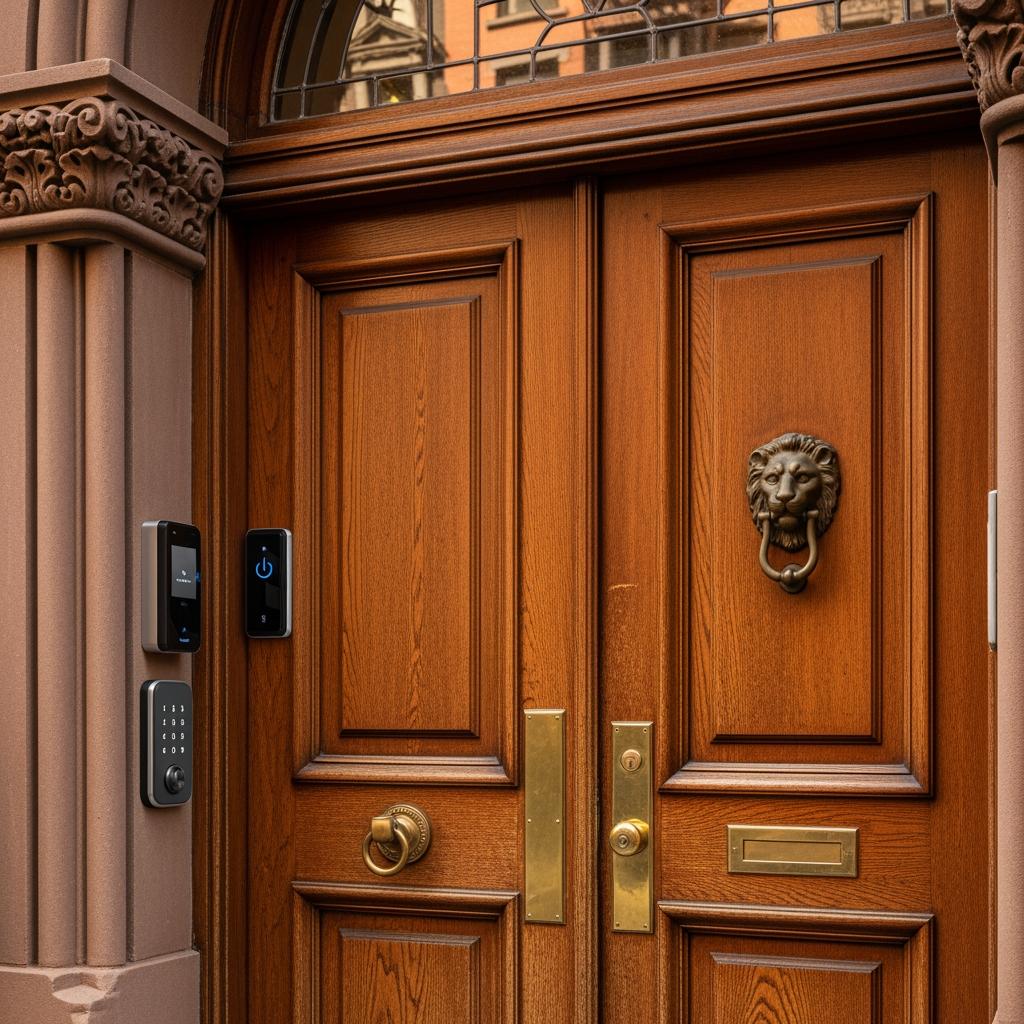
New York brownstones and multi‑tenant walk‑ups have unique architectural and operational constraints that demand tailored access control solutions. Thick masonry walls, ornate doors, and stacked apartments often limit where hardware and wiring can go.
For brownstones that have been divided into multiple units, the shared front door is usually the primary focus. Many owners opt for a robust electronic strike or smart lock on the main entrance, controlled by a keypad or fob reader. Inside, individual apartment doors can remain mechanical or use standalone smart locks for extra privacy. Because these buildings often have limited mechanical rooms, installers must be creative in locating controllers and power supplies, sometimes within basement areas or concealed wall spaces.
Walk‑up buildings with 3–6 floors and a small number of units can often benefit from a hybrid approach: a modern video intercom panel at the entrance, a secure electronic lock, and simple key or smart lock solutions on unit doors. This provides a high level of control at the building perimeter while keeping individual unit hardware costs manageable.
Larger multi‑tenant buildings, including prewar and postwar apartment houses, may require a more comprehensive system. Here, central management of credentials and doors becomes crucial, especially where there are side entrances, garages, or amenities. Upgrading these buildings frequently involves carefully phased work to avoid prolonged downtime of vital entrances and coordination with supers, doormen, and management companies.
Because of the architectural variety in NYC, a detailed on‑site assessment is particularly important for brownstones and multi‑tenant buildings. Good installers will measure doors, check clearances for modern smart hardware, and plan wiring routes that preserve historical finishes while still delivering reliable, code‑compliant access control.
FAQs about New York access control installers and smart upgrades
In New York, common questions about access control focus on permits, compatibility with rental and co‑op rules, and the day‑to‑day impact on residents and staff. Understanding these points makes it easier to move forward with confidence.
Many owners ask whether they need landlord or co‑op approval to install smart locks on their apartment doors. In most multi‑unit settings, individual residents do need permission to alter locks, especially if the building retains master keys or has specific fire‑safety policies. Building‑wide upgrades driven by boards or owners should be coordinated with legal counsel and insurers to ensure compliance.
Another frequent question is how long access control installation will take and whether residents will be locked out during work. For most projects, installers handle doors one at a time, temporarily removing hardware and installing replacements within a short window so residents can still come and go. Critical entrances are usually staged to avoid simultaneous downtime.
There are also questions about ongoing management: who issues new fobs or codes, how quickly lost credentials can be disabled, and what happens if the internet goes down. Well‑designed systems continue to function locally even if network connectivity fails, and building staff should have clear procedures for adding and removing users.
Service areas for our New York City access control installation team
An important part of choosing an “access control installer near me New York smart lock and card reader upgrades” provider is confirming that they can actually reach your property quickly for both installations and service calls. In and around New York City, reputable providers typically serve all five boroughs plus nearby suburbs.
S & Y Internet Technology Inc., for example, is based in Flushing, Queens, and offers mobile, door‑to‑door service throughout New York City—Manhattan, Brooklyn, Queens, the Bronx, and Staten Island—as well as nearby Long Island (including Nassau County and parts of western Suffolk), Westchester communities like Yonkers and New Rochelle, and key cities in New Jersey such as Jersey City, Newark, and Hoboken. They also cover select areas along the Connecticut border, including Stamford and Greenwich, which makes them a strong regional partner for property owners with multiple buildings spread across the metro area. You can learn more about their background and service philosophy on the S & Y Internet Technology company profile page.
For many buildings, having one team handle both initial installation and future maintenance is ideal. The same technicians who installed your smart locks, card readers, and controllers already understand your wiring paths, panel locations, and door hardware. This familiarity speeds up troubleshooting and reduces the likelihood of miscommunication or unnecessary hardware replacements.
If your property falls within this service area and you’re considering an upgrade, reach out with photos of your doors, a rough door count, and any existing equipment details. That information will help an installer like S & Y Internet Technology prepare a more accurate proposal and, if needed, schedule an on‑site visit to finalize design and pricing.
Last updated: 2025-12-04
Changelog:
- Clarified NYC‑specific pricing tiers and cost influences.
- Expanded guidance on integrating access control with cameras and alarms.
- Added details about brownstone and multi‑tenant building solutions.
- Updated service area description for regional coverage.
- Enhanced explanations around installer selection and licensing factors.
Next review date & triggers
Next review planned in 6–12 months, or sooner if major access control technologies, NYC regulations, or S & Y Internet Technology service offerings significantly change.

About the Author: S & Y Internet Technology Inc.
S & Y Internet Technology Inc. is a professional installation and repair service provider based in Flushing, New York. Our expert team provides door-to-door installation and maintenance within a 100 km radius, ensuring quick response and high-quality results for every project — whether residential, commercial, or specialized.

Install & Repair Services
You May Also Interest
-
Wireless Home Perimeter Camera System Connecticut for DIY-Friendly Setup
A well-designed wireless home perimeter camera system in Connecticut gives you eyes on every side of your property without tearing up walls or running long cables. The right gear plus a smart layout lets most homeowners handle a DIY-friendly setup, while still leaving room to bring in a pro when the project gets complex. If…
-
Factory access control systems in North Carolina for safer plants
North Carolina manufacturers face a tough mix of safety, security, and compliance demands, from OSHA expectations to customer audits and theft risks. Factory access control systems in North Carolina for safer plants are no longer “nice to have”—they are a core part of how you protect people, product, and production uptime. Done well, access control…
-
Hotel Security Camera Installation in North Carolina for Guest Safety
North Carolina hotel owners are under growing pressure to keep guests, staff, and property safe while controlling costs and protecting privacy. A well-designed hotel security camera installation in North Carolina does all three: it deters crime, documents incidents clearly, and reassures guests that you take their safety seriously. Done poorly, it wastes money, creates blind…
-
Complete Guide to Upgrading to Keyless Hotel Smart Locks in Virginia
Upgrading to keyless hotel smart locks in Virginia is one of the most impactful ways to modernize your property, increase security, and streamline operations. Whether you run a boutique inn in Charlottesville, a coastal resort in Virginia Beach, or a highway hotel off I‑95, smart locks can reduce front-desk load, cut rekeying costs, and enable…