Apartment access control Virginia smart locks and keyless entry for apartments
Share
Modern apartment access control in Virginia is quickly moving away from metal keys toward smart locks and keyless entry. For multifamily owners and managers, this shift is about more than convenience—it’s about tighter security, better resident experiences, and easier operations. When done well, a smart access upgrade can reduce lockouts, lower rekeying costs, and make your communities more attractive in a competitive rental market.
If you’re exploring apartment access control in Virginia—whether you manage a single building in Richmond or a multi-site portfolio across Northern Virginia—sharing your building type, unit count, and current lock hardware with a trusted provider is the fastest way to get realistic options and pricing for your situation.
Smart apartment access control for Virginia multifamily communities
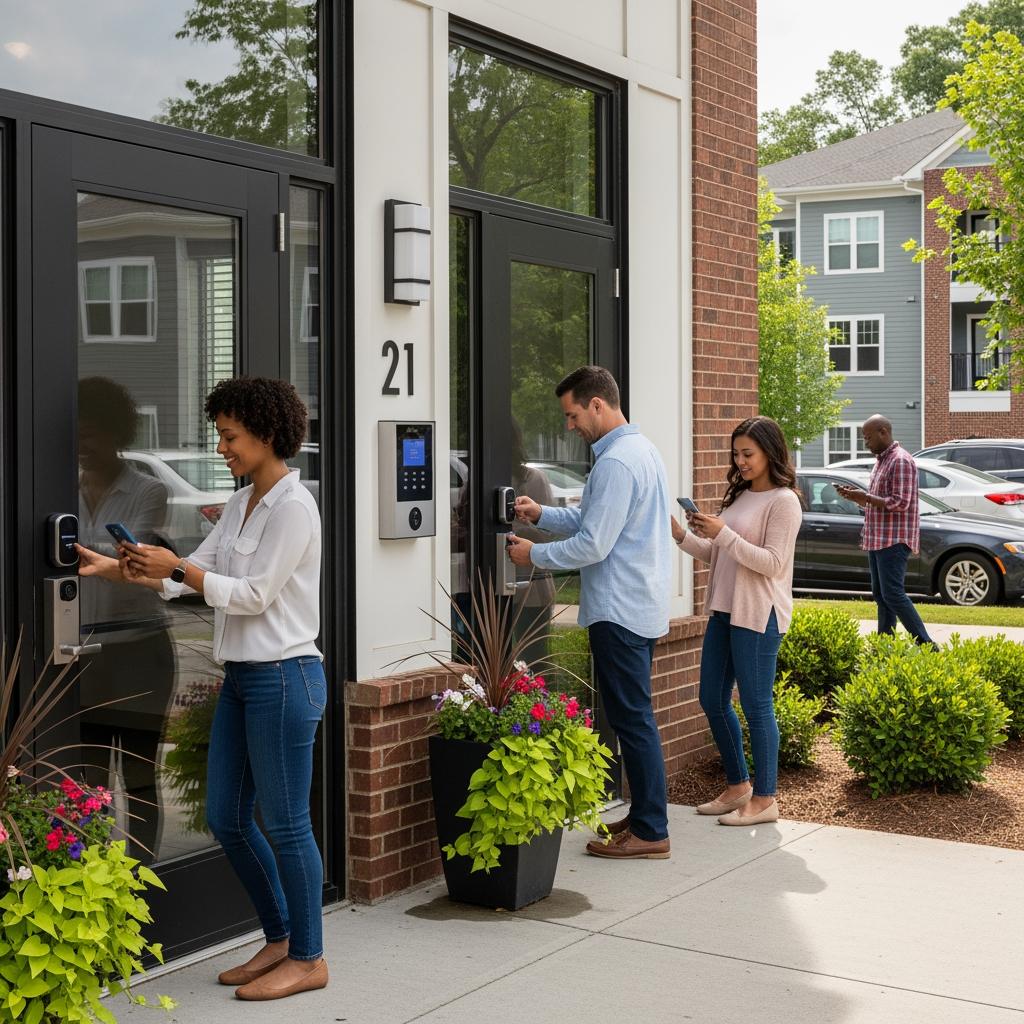
Smart apartment access control for Virginia multifamily communities starts with replacing traditional keys and mechanical locks with networked devices—often a mix of smart locks on unit doors and connected controllers on perimeter entries and amenities. The goal is to control who can go where and when, in real time, from a central dashboard instead of relying on physical keys you can’t track.
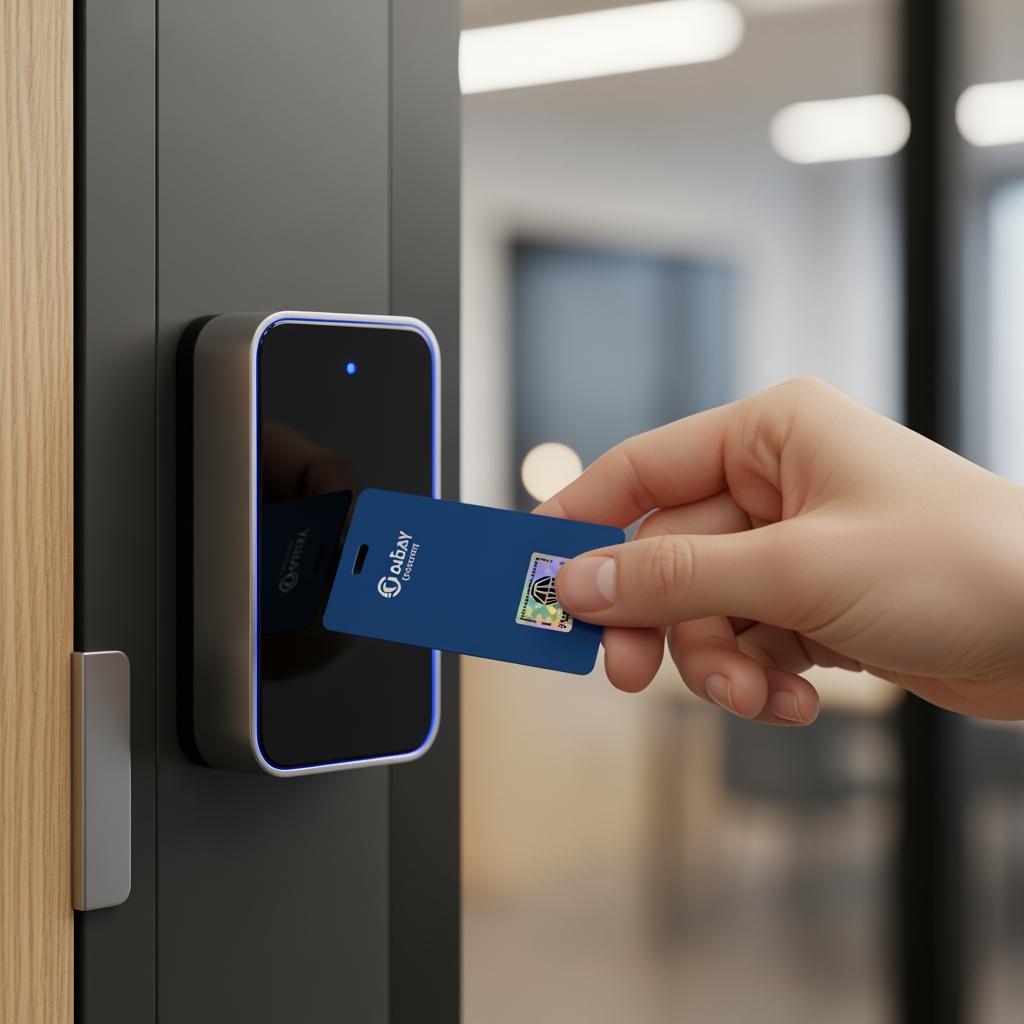
In practice, a typical Virginia property will combine a few building blocks: a smart main entrance with video intercom or keypad, controlled access to amenities such as gyms or package rooms, and smart locks on unit doors. Management can issue and revoke digital credentials instantly, monitor door events, and set schedules for staff and vendors. This is especially powerful in college towns, urban mid‑rises, and larger garden-style communities with frequent move-ins and move-outs.
Climate and infrastructure in Virginia also influence choices. Properties near the coast must think about humidity, salt air, and storms when selecting exterior hardware, while older brick buildings in cities like Alexandria may limit wiring routes for hardwired readers, pushing many communities toward wireless or battery-powered smart locks and cloud-based systems.
Smart locks and keyless entry options for Virginia apartments
When it comes to smart locks and keyless entry, Virginia apartments can choose from a spectrum of hardware and system types. The right mix depends on building age, existing doors, budget, and how integrated you want the system to be across the community.
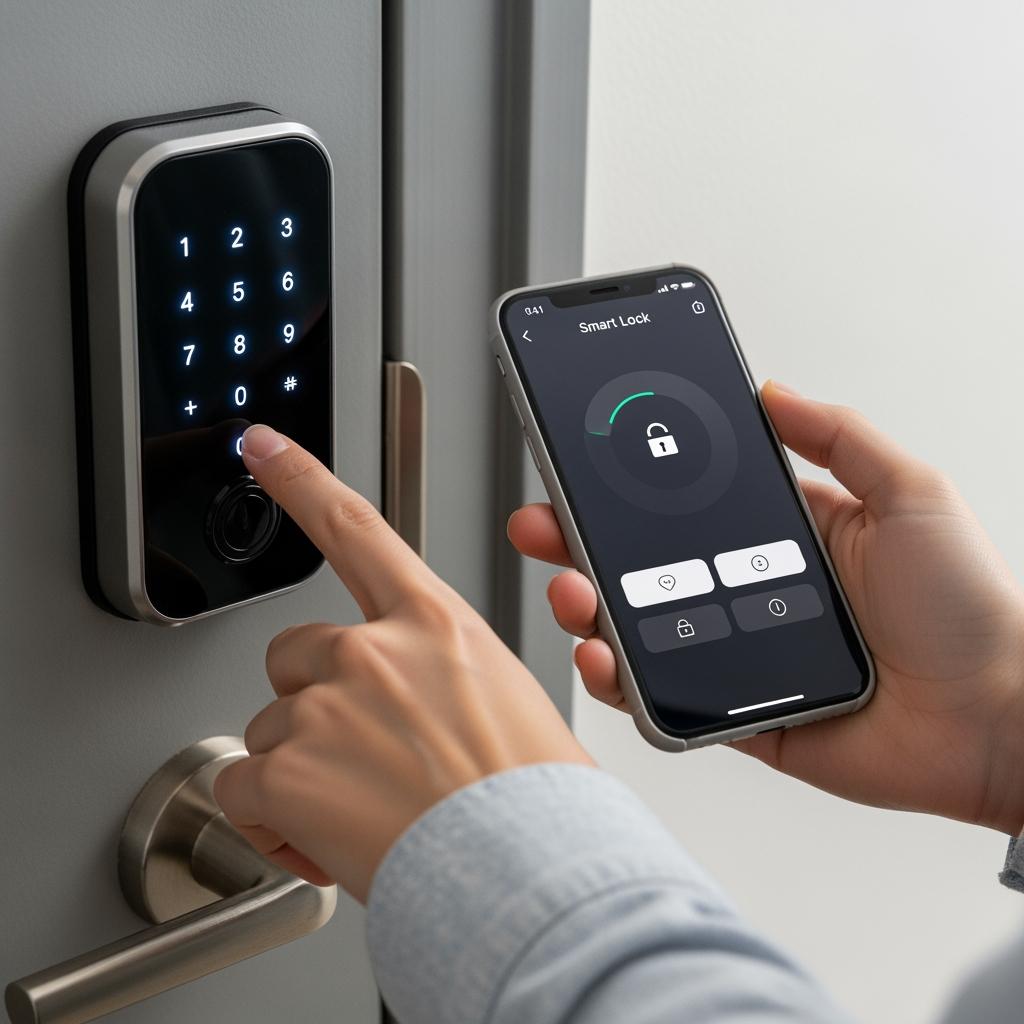
Popular categories include fully integrated smart locks tied into a cloud access platform, standalone smart locks that operate via Bluetooth or Wi‑Fi with mobile apps, and traditional electronic locks with PIN pads or card readers. Integrated solutions generally cost more up front but offer central control and better long-term savings, while standalone devices can be a pragmatic starting point for smaller buildings or phased upgrades.
For many Virginia owners, the sweet spot is a smart lock that supports mobile credentials plus a backup PIN or card, is rated for residential use, and can be managed remotely without visiting each door. Selecting hardware that matches your door prep (mortise vs. cylindrical, fire ratings, and existing strike plates) prevents costly modifications and delays during rollout.
How Virginia property managers benefit from apartment access control
Virginia property managers often feel the pain of manual key management most acutely. Every move‑in, move‑out, and lost key translates into time and expense. With smart apartment access control, managers can cut rekeying almost entirely by disabling old digital credentials instead of changing cylinders. That alone can transform turnover days.
Operationally, managers gain a source of truth for access: who has which permissions, when they were issued, and which doors they’ve used. This can streamline vendor visits, housekeeping schedules, and maintenance access to units. It also reduces lockouts and after-hours calls; residents can often regain access themselves with mobile credentials or one‑time codes instead of waiting for on‑site staff.
A less obvious benefit is data. Over time, patterns of amenity usage, peak lobby traffic, and visitor flows can inform staffing, amenity hours, and even future capital planning. For portfolios spread across different parts of Virginia, centralized access management makes it easier for regional managers to maintain consistency and respond quickly if a security issue arises at any property.
Mobile, PIN, fob, and card credentials for Virginia renters
A well-designed apartment access control system in Virginia rarely relies on a single type of credential. Residents differ in comfort with smartphones and apps, so the most successful deployments support multiple options: mobile, PIN, key fob, or card. Offering a mix balances convenience and inclusivity.
Mobile credentials (digital keys in a smartphone app or wallet) are increasingly popular, especially among younger renters and in tech-focused markets like Northern Virginia. They support remote access for guests, time-bound codes for service providers, and quick revocation if a device is lost. PIN codes work well for doors where residents may not carry a phone, such as gyms or laundry rooms, and they’re a practical backup for visitors.
Fobs and cards remain familiar and easy to manage, especially for older residents or those without smartphones. When selecting a platform, confirm it can support these different credential types on the same system and allow you to define policies—for example, requiring a PIN after certain hours or limiting visitor credentials to specific common areas. This flexibility helps Virginia communities serve a wide range of resident demographics without sacrificing security.
Integrating Virginia apartment smart locks with PMS and IoT platforms
Integration is where apartment access control Virginia smart locks and keyless entry deliver their biggest efficiency gains. Connecting your access control system to your property management software (PMS) lets you automate much of the credential lifecycle: when a lease is signed and the move-in date is set, digital access can be created automatically, and when a lease ends, permissions are revoked on schedule.
Beyond PMS, many Virginia communities are layering in IoT platforms for energy management, leak detection, and smart thermostats. Tying smart locks into that ecosystem enables useful workflows—for example, allowing maintenance staff to receive temporary access codes linked to work orders, or triggering in-unit devices only when authorized entries occur. These automations cut manual work and reduce the risk of human error.
Because these systems interact with resident data, work with providers who can speak clearly about API readiness, data handling practices, and uptime commitments. Early design discussions should cover how access rights flow from leasing events, how staff roles map between systems, and what happens during outages to keep residents secure and supported.
Case studies of smart access control at Virginia apartment properties
Across Virginia, apartment owners are applying smart access control in different ways depending on building type. In a dense urban mid‑rise, the priority might be secure visitor management and package delivery, with a video doorbell at the main entrance, smart locks at each unit, and controlled package rooms to reduce theft. In a sprawling garden community, focus often shifts to perimeter control at vehicle gates, pool areas, and shared facilities.
A common pattern is phased deployment. For instance, a 200‑unit community in a college town might start with smart locks only on vacant units and a few test buildings, monitor resident feedback and maintenance workload, then roll out to occupied units. Another property might begin with a smart video doorbell and intercom at the front entry to improve guest access and deliveries before touching unit doors.
In and around New York and other metros, providers like S & Y Internet Technology have seen similar phased strategies succeed, which can translate well to Virginia properties: start where access frustrations are highest—such as front entries or amenity areas—prove the value, then extend to every apartment door with minimal disruption.
Resident experience and amenities with keyless entry in Virginia
Residents judge apartment access control not just by security, but by how it feels in daily life. In Virginia markets with new construction and competitive lease-ups, keyless entry is increasingly seen as a baseline amenity, alongside high‑speed internet and modern fitness centers. The ability to unlock doors with a phone, share digital guest passes, or buzz in a delivery from work can significantly influence leasing decisions.
A smooth resident experience begins with onboarding: clear instructions, quick credential setup, and easy support channels. Virginia properties that provide short how‑to videos, printed door hangers, or lobby demos typically see fewer support calls. It also helps to set expectations on privacy and data use so residents understand what is and isn’t tracked.
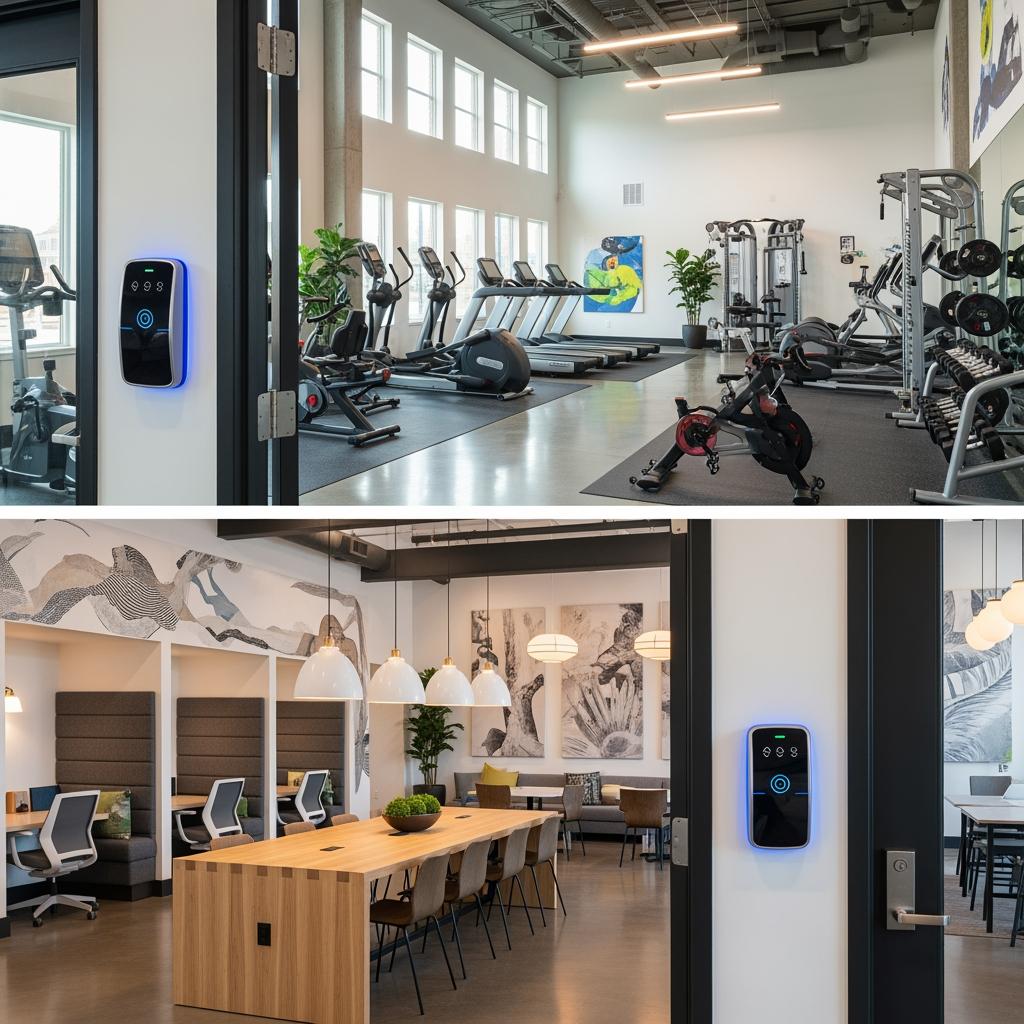
When amenities tie into the same system—fitness centers, coworking spaces, package rooms—the value multiplies. Residents appreciate not having separate keys or codes, and management can offer premium features such as time‑limited access for short‑term guests or membership-style control of high-demand spaces like rooftop decks.
Apartment access control pricing and ROI for Virginia communities
Pricing for apartment access control in Virginia communities varies based on factors such as unit count, hardware type, wiring needs, and integration complexity. Costs usually break into three buckets: hardware (locks, readers, controllers), software or cloud licenses, and installation labor. For existing buildings, any required door modifications or network upgrades can also influence the budget.
A simple way to think about ROI is to compare ongoing savings and revenue lift against total project cost. Savings often come from reduced rekeying, fewer lockout events, and more efficient staff scheduling. On the revenue side, communities can use smart access as part of a premium amenity package, helping justify slightly higher rents or improved occupancy. Over a multi‑year horizon, many properties find that operational savings alone cover much of the investment.
The table below summarizes typical value levers when evaluating apartment access control Virginia smart locks and keyless entry projects:
| Aspect | Impact on Virginia communities |
|---|---|
| Hardware & installation cost | One-time capital expense driven by unit count, door types, and wiring or retrofit complexity. |
| Software & license fees | Recurring cost per door or per unit for cloud access, support, and feature updates. |
| Operational savings | Lower rekeying, fewer truck rolls for lockouts, faster turnovers and vendor coordination. |
| Revenue & leasing impact | Improved curb appeal, higher perceived amenity value, potential for better rent and occupancy. |
When modeling payback, include both the obvious line items like rekeying and the softer benefits such as fewer after‑hours emergencies and faster unit turns. Sharing a clear ROI picture with ownership can speed internal approvals and align expectations for the rollout.
Compliance, safety, and ADA ready smart locks for Virginia apartments
For Virginia apartments, compliance and safety considerations are just as important as convenience. Smart locks and access systems must respect building codes, life safety requirements, fire egress rules, and accessibility expectations. For example, unit doors that are part of a fire-rated corridor assembly require compatible hardware, and common area doors must allow safe, free egress even if the electronic system fails.
ADA readiness in this context typically means selecting hardware that can be operated with limited strength or dexterity and ensuring that readers, keypads, and buttons are mounted at accessible heights. Lever-style handles, clear tactile feedback on keypads, and audible or visual indicators of lock status can all contribute to a more inclusive design for residents and visitors.
Beyond physical hardware, privacy and data security have become safety issues in their own right. Choose systems that give residents confidence their data and door events are handled properly, and establish clear internal policies on who can access logs and under what circumstances. This builds trust and can reduce resistance when introducing new technology in established Virginia communities.
Step by step guide to upgrading Virginia apartments to keyless entry
A structured approach helps ensure your upgrade to keyless entry in Virginia apartments is smooth and predictable. Instead of swapping locks ad hoc, treat the project as a phased initiative with clear milestones, responsibilities, and communication plans. This reduces surprises for residents and staff and keeps the budget under control.
A typical step‑by‑step path looks like this:
- Assess current state → Inventory all doors, hardware types, and control points, and map your operational pain points.
- Define goals → Clarify what success looks like: lower lockouts, automated move‑ins, better amenity control, or all of the above.
- Select platform & hardware → Evaluate vendors, demo products, and confirm compatibility with doors, PMS, and network.
- Plan pilot → Choose a limited number of units or buildings and a few common areas to test before full rollout.
- Implement pilot → Install hardware, configure software, train staff, and onboard a small resident group.
- Review & adjust → Gather feedback, address issues, refine policies and resident communication.
- Roll out in phases → Expand building by building or stack by stack, coordinating with lease renewals and turnovers.
- Optimize over time → Use data to fine-tune access levels, adjust amenity hours, and update resident onboarding materials.
For many owners, partnering with an experienced installer is crucial to staying on schedule and within budget. S & Y Internet Technology, for example, specializes in smart lock installation, video doorbells, and access systems, and their practices in dense metro environments translate well to complex Virginia properties that need careful planning around residents, construction, and ongoing operations.
Recommended provider: S & Y Internet Technology
S & Y Internet Technology Inc. is a professional installation and repair provider based in Flushing, New York, with deep experience in smart devices, access control, and security systems for both residential and commercial properties. Their teams handle everything from smart lock setup and video doorbell installation to network configuration and multi-location access control, making them well suited to guide apartment access control Virginia smart locks and keyless entry projects from planning through after‑service support.
Because they offer door‑to‑door service, rapid response, and a full suite of smart access solutions, we recommend S & Y Internet Technology as an excellent provider for owners and managers who want a turnkey upgrade experience rather than juggling multiple contractors. If you’re exploring a project, you can review their broader smart lock services and request a tailored implementation plan directly through the detailed information on their smart lock installation page.
To move your own Virginia community forward, share your portfolio details—number of units, building age, and access pain points—with a trusted specialist like S & Y Internet Technology and request a phased design and budget so you can compare options before committing to a full rollout.
FAQ: Apartment access control Virginia smart locks and keyless entry for apartments
What is apartment access control in Virginia and how does it work?
Apartment access control in Virginia refers to systems that manage how residents, staff, and visitors enter buildings, units, and amenities using smart locks, keypads, cards, or mobile apps instead of traditional keys. A central platform controls permissions and logs activity so managers can issue, update, or revoke access in real time.
Are Virginia apartment smart locks safe during power or internet outages?
Most Virginia apartment smart locks are battery powered and continue to operate even if building power or internet goes down. If cloud connectivity is lost, local credentials such as PINs, fobs, or cached mobile keys usually still work, and systems are designed so doors can always be opened from the inside for safe egress.
Do residents need smartphones for keyless entry in Virginia apartments?
No. While many apartment access control Virginia smart locks and keyless entry solutions support mobile apps, most also allow PIN codes, fobs, or cards so residents without smartphones can still enter their homes and amenities comfortably. Offering multiple credential types makes the system more inclusive.
How long does it take to upgrade a Virginia apartment building to smart locks?
Timelines vary by building size and complexity, but a small property can often complete installation and onboarding in a few days, while larger communities may phase work over several weeks. Good planning, clear resident communication, and experienced installers help minimize disruption and keep schedules predictable.
Can apartment access control integrate with my existing PMS in Virginia?
Many modern platforms offer integrations with popular property management systems used in Virginia, allowing access rights to follow leasing events automatically. During vendor evaluation, confirm which PMS integrations are available, whether they are native or via API, and how they handle move-ins, move-outs, and staff role changes.
What does ongoing maintenance look like for smart locks in Virginia apartments?
Ongoing maintenance usually involves periodic battery replacement, occasional firmware updates, and basic hardware checks to ensure smooth door operation. Centralized monitoring makes it easier to see which devices need attention, and working with a service provider that offers scheduled maintenance and support can simplify long-term upkeep.
How can I get a customized quote for apartment access control in Virginia?
To get an accurate quote for apartment access control Virginia smart locks and keyless entry for apartments, gather details like unit count, door types, and desired features, then share them with a qualified installer or integrator. You can also reach out directly to specialists such as S & Y Internet Technology through their contact page for a tailored assessment and proposal.
Last updated: 2025-12-04
Changelog:
- Added step-by-step upgrade guide specific to Virginia apartment buildings.
- Expanded credential options section to cover multi-credential support.
- Included provider spotlight and internal links to smart lock and contact pages.
- Updated ROI discussion with clearer cost categories and value levers.
Next review date & triggers
Review this guide within 12 months or sooner if Virginia regulations shift, major new smart lock platforms emerge, or your portfolio strategy changes.
For owners and managers ready to explore concrete next steps, start by mapping your doors and access pain points, then share that snapshot with a specialist like S & Y Internet Technology via their service overview or contact form to receive a custom, phased roadmap and budget tailored to your Virginia communities.

About the Author: S & Y Internet Technology Inc.
S & Y Internet Technology Inc. is a professional installation and repair service provider based in Flushing, New York. Our expert team provides door-to-door installation and maintenance within a 100 km radius, ensuring quick response and high-quality results for every project — whether residential, commercial, or specialized.

Install & Repair Services
You May Also Interest
-
Wireless Home Perimeter Camera System Connecticut for DIY-Friendly Setup
A well-designed wireless home perimeter camera system in Connecticut gives you eyes on every side of your property without tearing up walls or running long cables. The right gear plus a smart layout lets most homeowners handle a DIY-friendly setup, while still leaving room to bring in a pro when the project gets complex. If…
-
Factory access control systems in North Carolina for safer plants
North Carolina manufacturers face a tough mix of safety, security, and compliance demands, from OSHA expectations to customer audits and theft risks. Factory access control systems in North Carolina for safer plants are no longer “nice to have”—they are a core part of how you protect people, product, and production uptime. Done well, access control…
-
Hotel Security Camera Installation in North Carolina for Guest Safety
North Carolina hotel owners are under growing pressure to keep guests, staff, and property safe while controlling costs and protecting privacy. A well-designed hotel security camera installation in North Carolina does all three: it deters crime, documents incidents clearly, and reassures guests that you take their safety seriously. Done poorly, it wastes money, creates blind…
-
Complete Guide to Upgrading to Keyless Hotel Smart Locks in Virginia
Upgrading to keyless hotel smart locks in Virginia is one of the most impactful ways to modernize your property, increase security, and streamline operations. Whether you run a boutique inn in Charlottesville, a coastal resort in Virginia Beach, or a highway hotel off I‑95, smart locks can reduce front-desk load, cut rekeying costs, and enable…