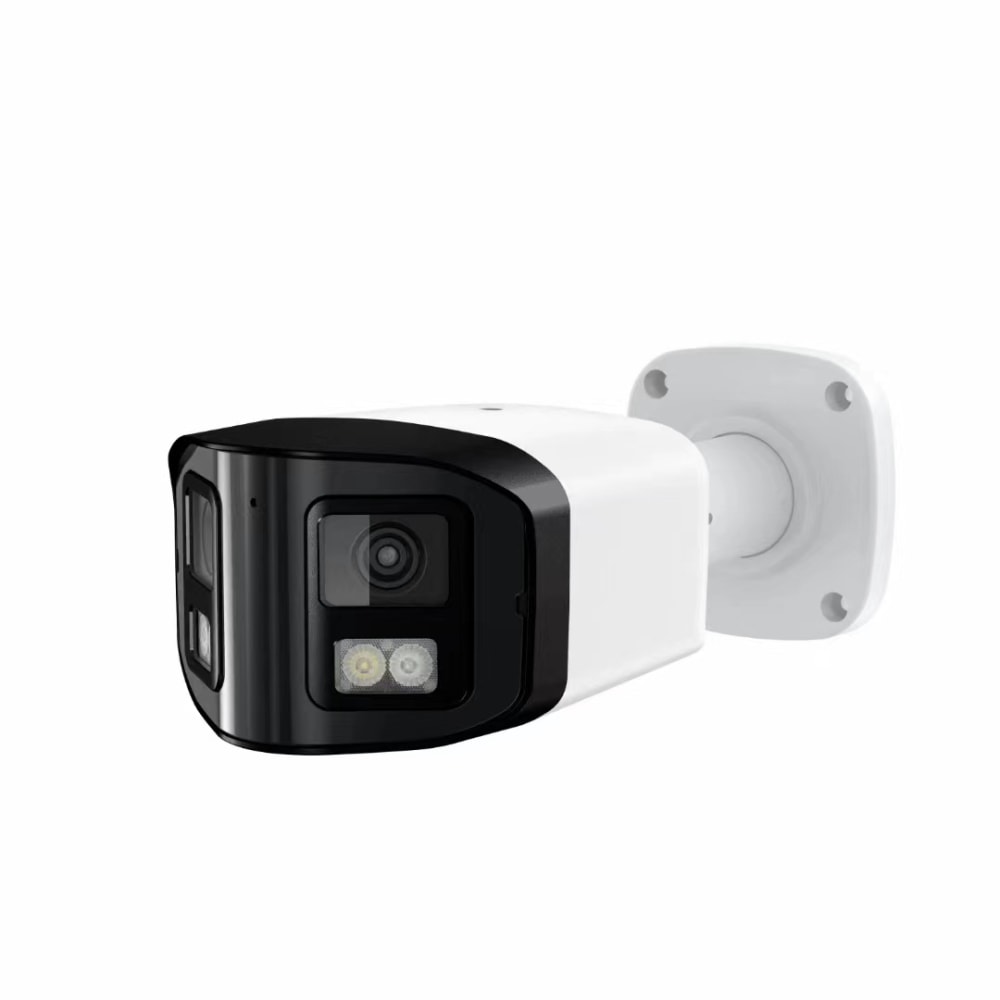
Building access control Rhode Island RFID and keycard entry for multifamily housing

Share
If you manage or own multifamily housing in Rhode Island, modern building access control with RFID and keycard entry is one of the most effective ways to improve security, simplify daily operations, and create a better resident experience. The right system lets you control who can enter which doors and when, while replacing easily copied metal keys with programmable fobs, cards, or mobile passes.
If you’re planning a new system or upgrading from traditional locks, share your building details, unit count, and current pain points, and we can help you outline a tailored access control and security plan that fits Rhode Island codes and your budget.
Building access control options for Rhode Island multifamily homes
For Rhode Island multifamily buildings, “building access control” usually means a combination of secure entry hardware, credential technology, and cloud-based management software. You’re choosing how residents, guests, staff, and vendors move through shared spaces like lobbies, elevators, mail rooms, storage, and parking areas.
Common building access control options for Rhode Island multifamily homes include:
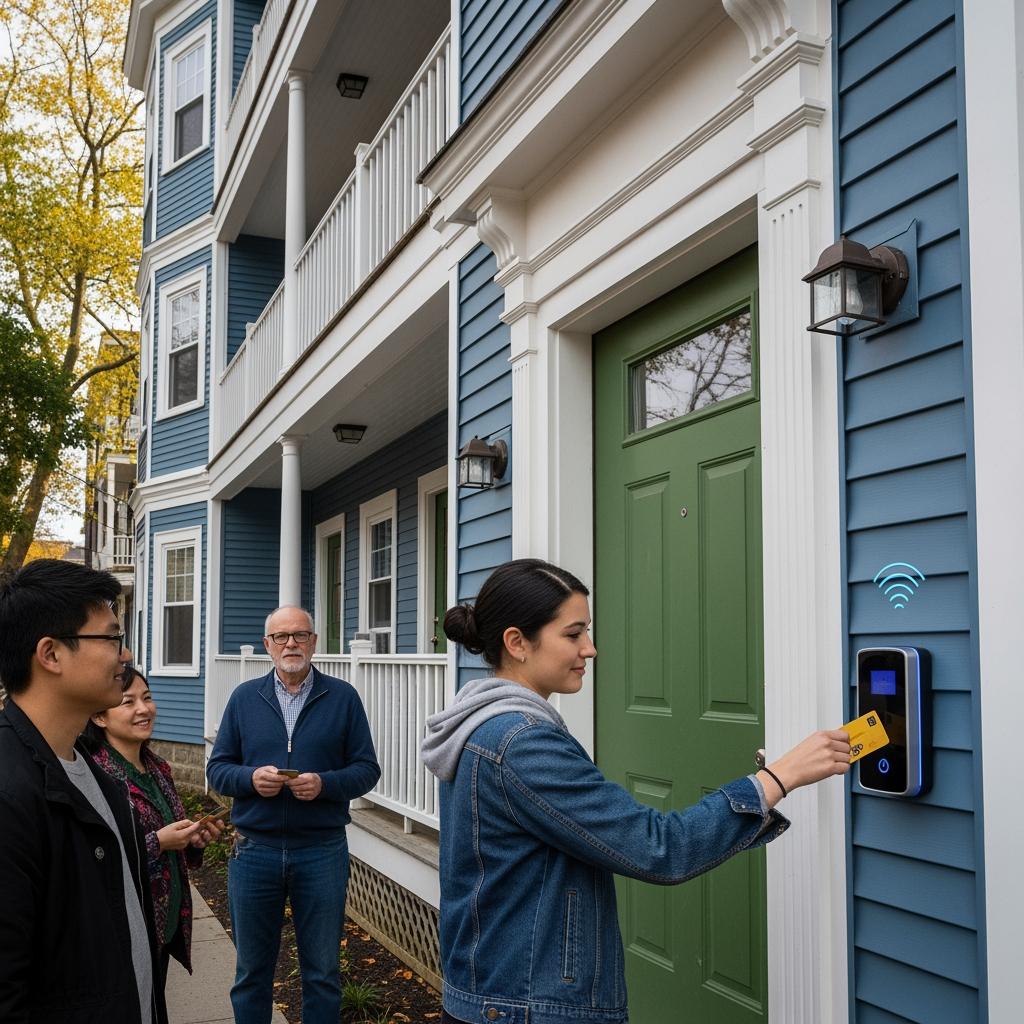
- RFID keycard or key fob systems that control main entrances, side doors, and amenities, with permissions managed through software rather than rekeying locks.
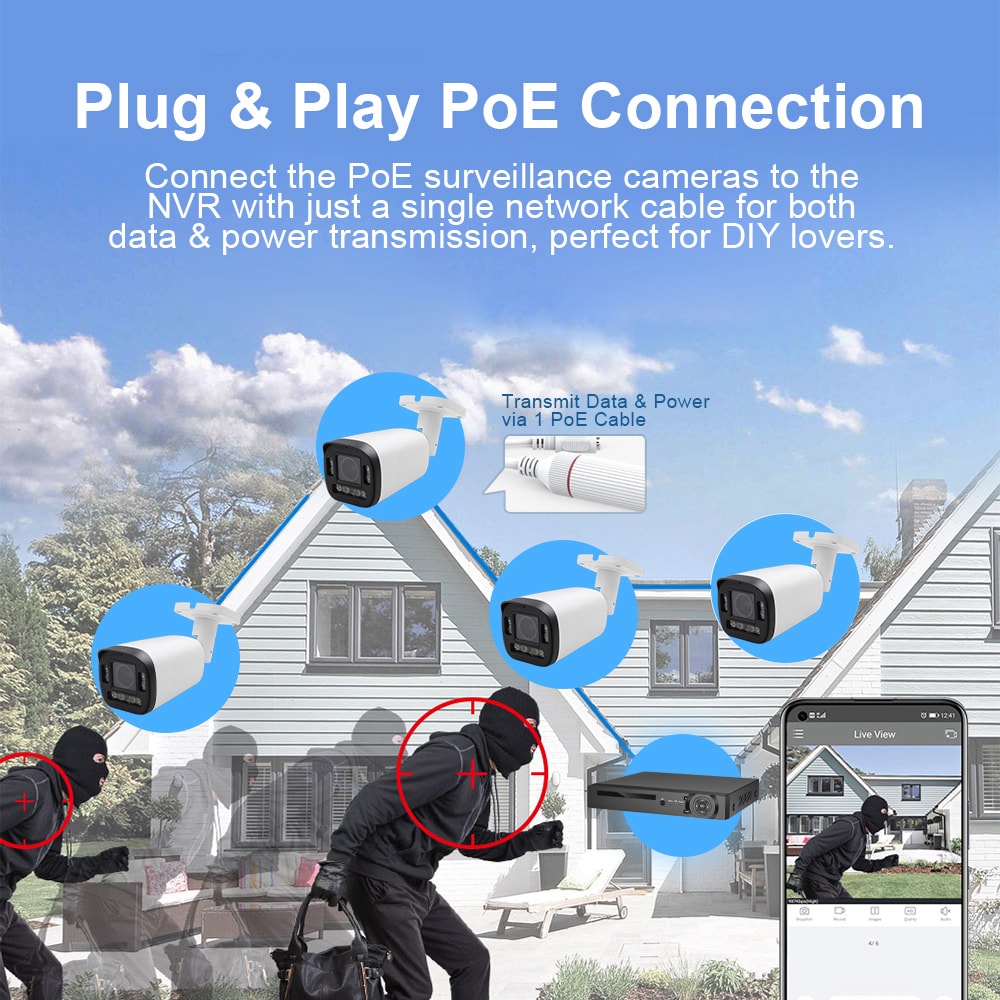
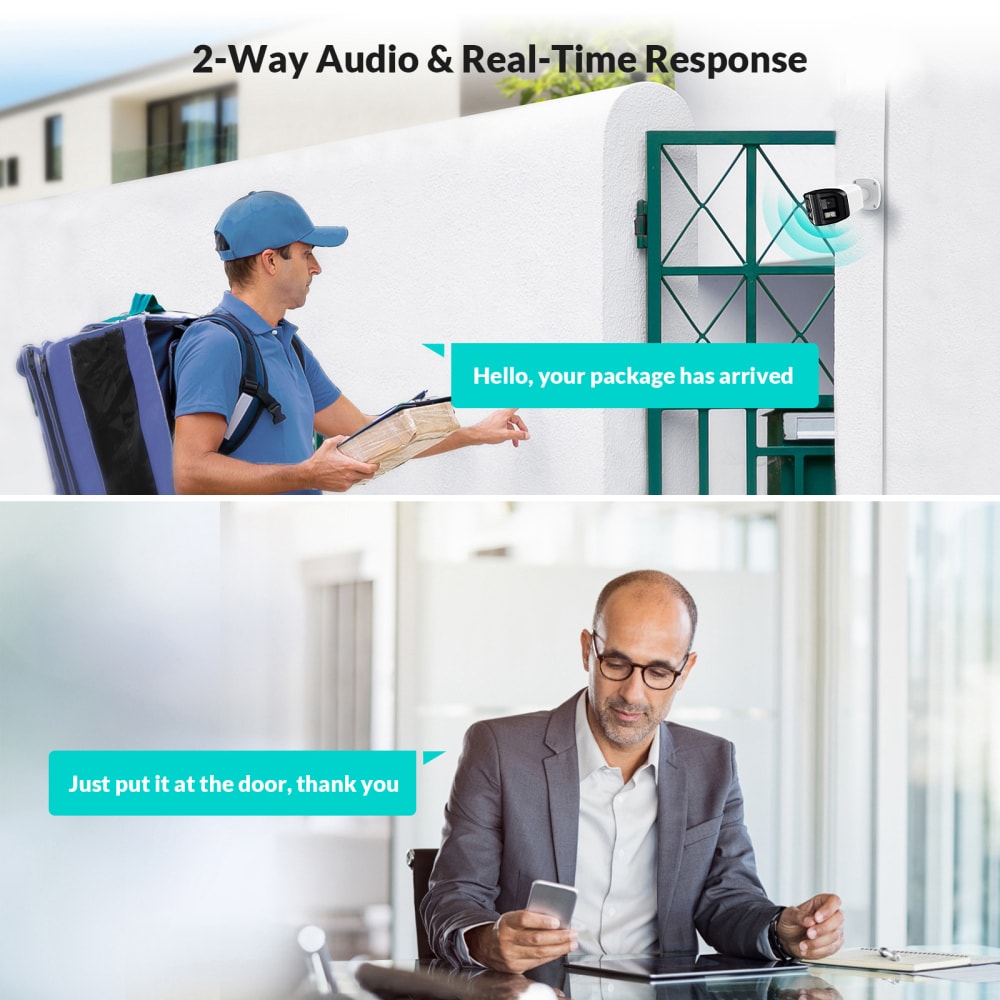
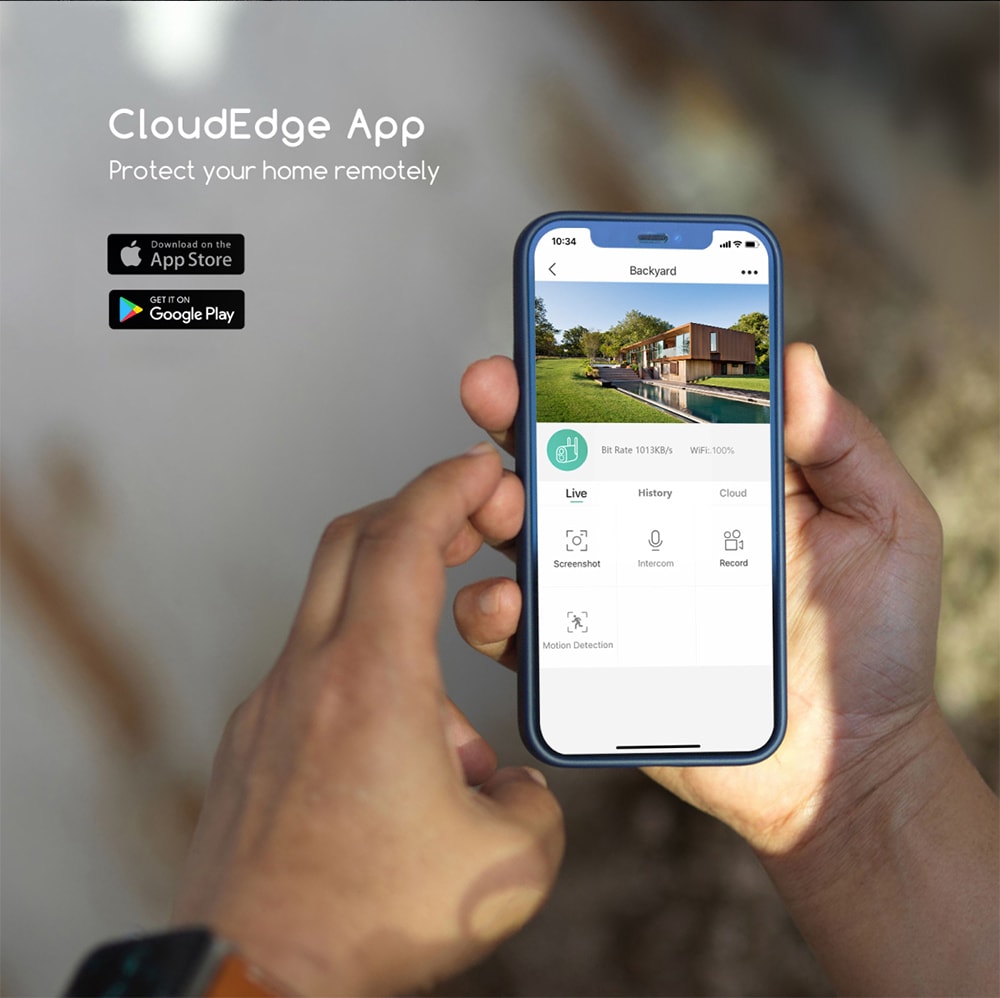
- Video doorbells and intercoms at the main entry that let residents see and talk to visitors and unlock the door remotely.
- Smart locks for unit doors that can be integrated with the building’s main access platform, reducing lockouts and key management headaches.
A helpful rule of thumb is to think in zones: perimeter doors, common interior doors, and individual unit doors. Each zone may use slightly different hardware, but ideally everything is coordinated under a single access control platform. This makes it much easier to manage move-ins, move-outs, emergencies, and audits for who accessed sensitive areas like mechanical rooms.
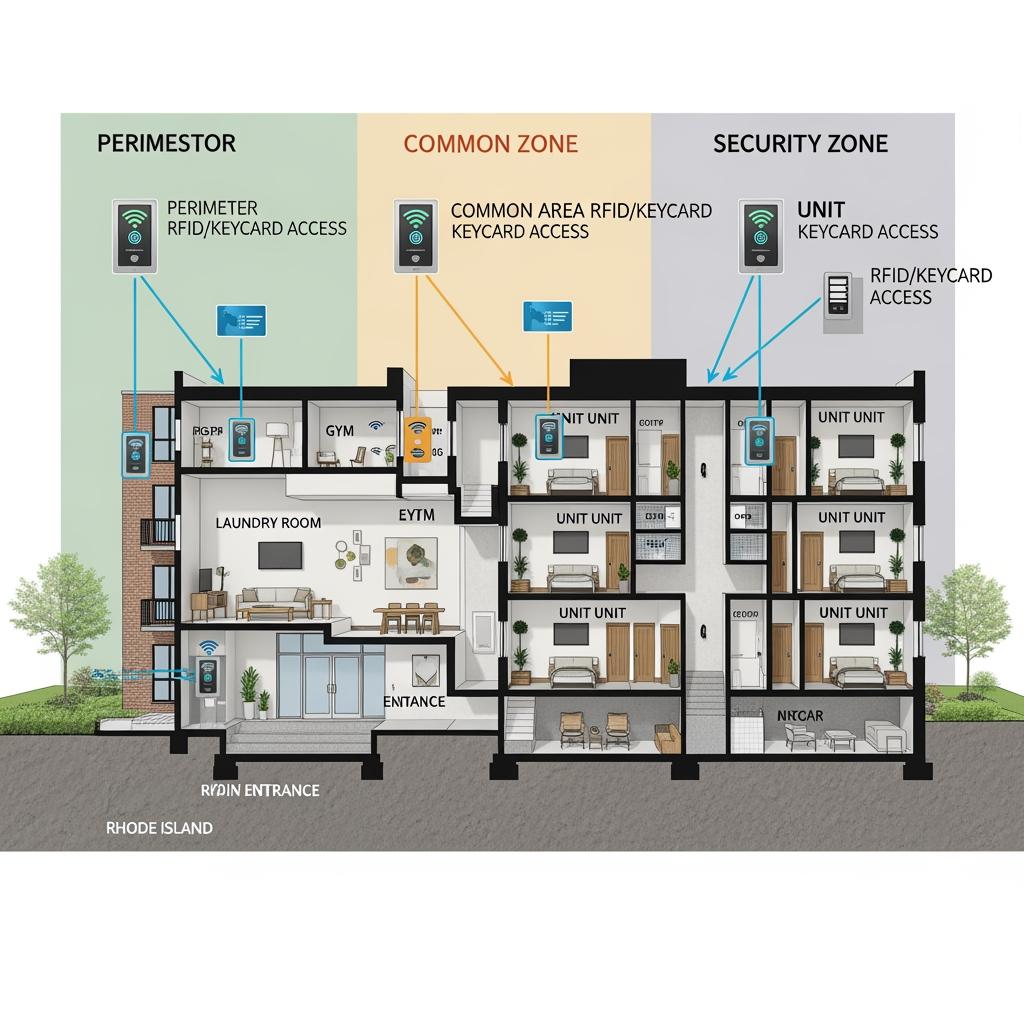
RFID and keycard access benefits for Rhode Island apartments
RFID and keycard access systems bring clear advantages over traditional metal keys for Rhode Island apartments. Because each credential carries a unique ID, you gain precise control and traceability without making life complicated for residents.
Key benefits of RFID and keycard access include reduced rekeying costs, faster card deactivation when residents move out or lose a credential, and improved protection of shared resources such as laundry rooms, gyms, and package rooms. From a resident’s perspective, simply tapping a card or fob is quicker and more convenient than fumbling with multiple keys in bad weather or in low light.
For landlords and managers, another major benefit is auditability. You can see which card opened which door and when, which is especially helpful during incident investigations or when you need to confirm compliance with building rules. Time-based access for cleaners, maintenance workers, or contractors is simple to set up and change, which is far safer than loaning physical keys.
Key fobs, cards, and mobile passes for Rhode Island tenants
Rhode Island tenants generally expect a simple, reliable experience at the front door. Key fobs, cards, and mobile passes all provide that, but each has tradeoffs in cost, durability, and user preference.
Key fobs are popular in multifamily because they’re compact and durable. Tenants attach them to their keyrings and rarely drop or lose them inside bags. Plastic keycards are flat, wallet-friendly, and often used where branding or printed building identity is important. Mobile passes let residents use a smartphone app or wallet-based credential instead of a physical token, which some younger tenants strongly prefer.
A practical approach in Rhode Island multifamily buildings is to support at least two credential formats: for example, a default key fob for every tenant, with optional mobile credentials for those who want them. This gives flexibility without exploding costs or complexity for your access control platform. When evaluating systems, confirm that your preferred mix of fobs, cards, and mobile passes are all supported and that credential provisioning and revocation are straightforward for your staff.
Building access control costs for Rhode Island multifamily properties
Building access control costs for Rhode Island multifamily properties are typically driven by four big factors: the number of doors, the type of hardware, the credential technology, and whether you’re integrating with other systems like video or intercoms. There is usually an upfront hardware and installation cost, followed by ongoing software or cloud service fees.
The table below summarizes how these cost elements often break down for a building access control Rhode Island RFID and keycard entry project:
| Cost Category | What It Includes | Impact on Budget Level |
|---|---|---|
| Hardware & Readers | Door controllers, RFID readers, electric strikes, maglocks, power | Scales with number of controlled doors |
| Credentials (Fobs/Cards) | Tenant key fobs, keycards, backup stock | Scales with units and expected turnover |
| Software/Cloud Licensing | Management dashboard, mobile apps, remote access features | Recurring, per-door or per-building charges |
| Installation & Configuration | Cabling, mounting, controller setup, testing | One-time labor cost, higher in complex retrofits |
| Integration Add‑ons | Links to cameras, intercoms, smart locks, or property management apps | Extra upfront cost but big long‑term savings |
When planning your budget, it’s smart to prioritize coverage of perimeter and high-risk areas first, then add interior common doors and unit-level smart locks as capital becomes available. Many Rhode Island owners phase projects over 12–24 months to align with leasing cycles and minimize disruption to existing residents.
Integrating access control with cameras and intercoms in Rhode Island
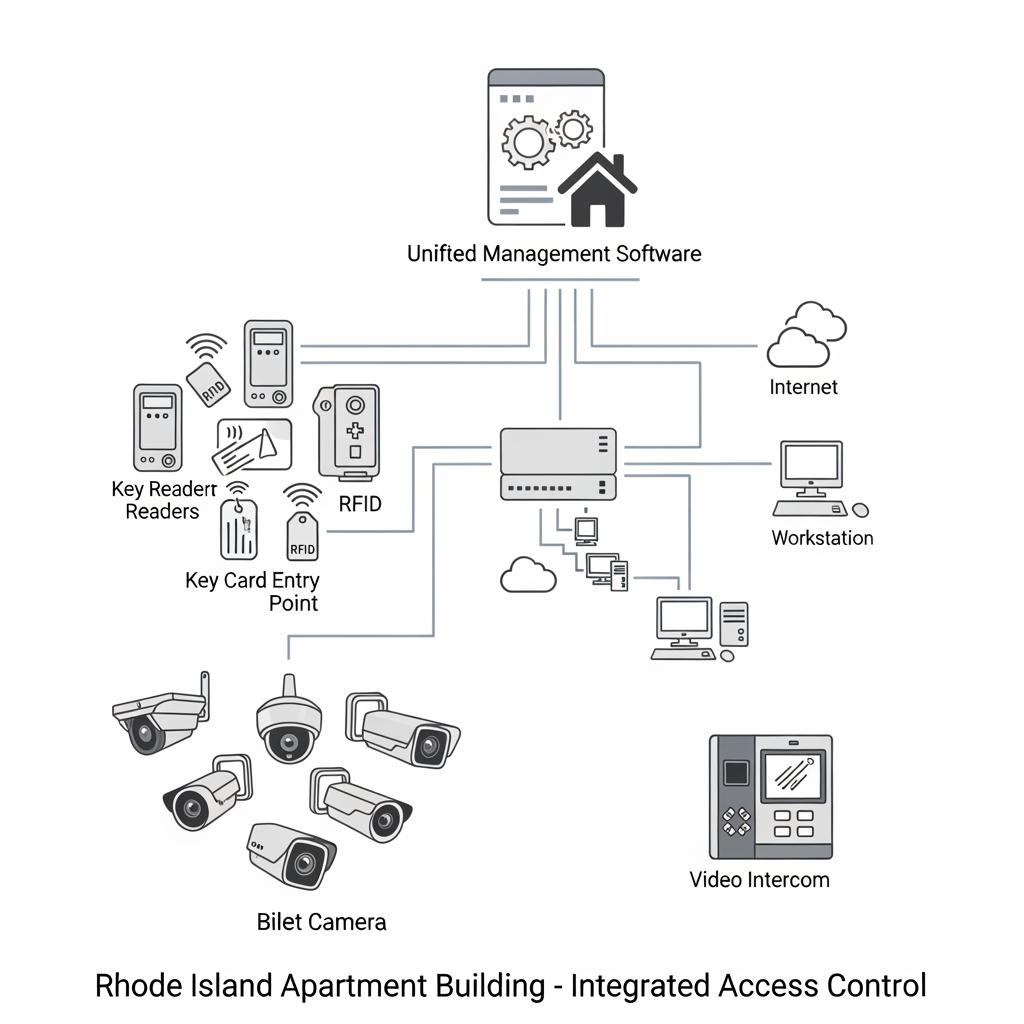
Integrating access control with cameras and intercoms is where Rhode Island multifamily buildings can unlock real operational value. Instead of having separate, siloed systems for video, audio, and door control, you can tie them together so that one interface handles most daily tasks.
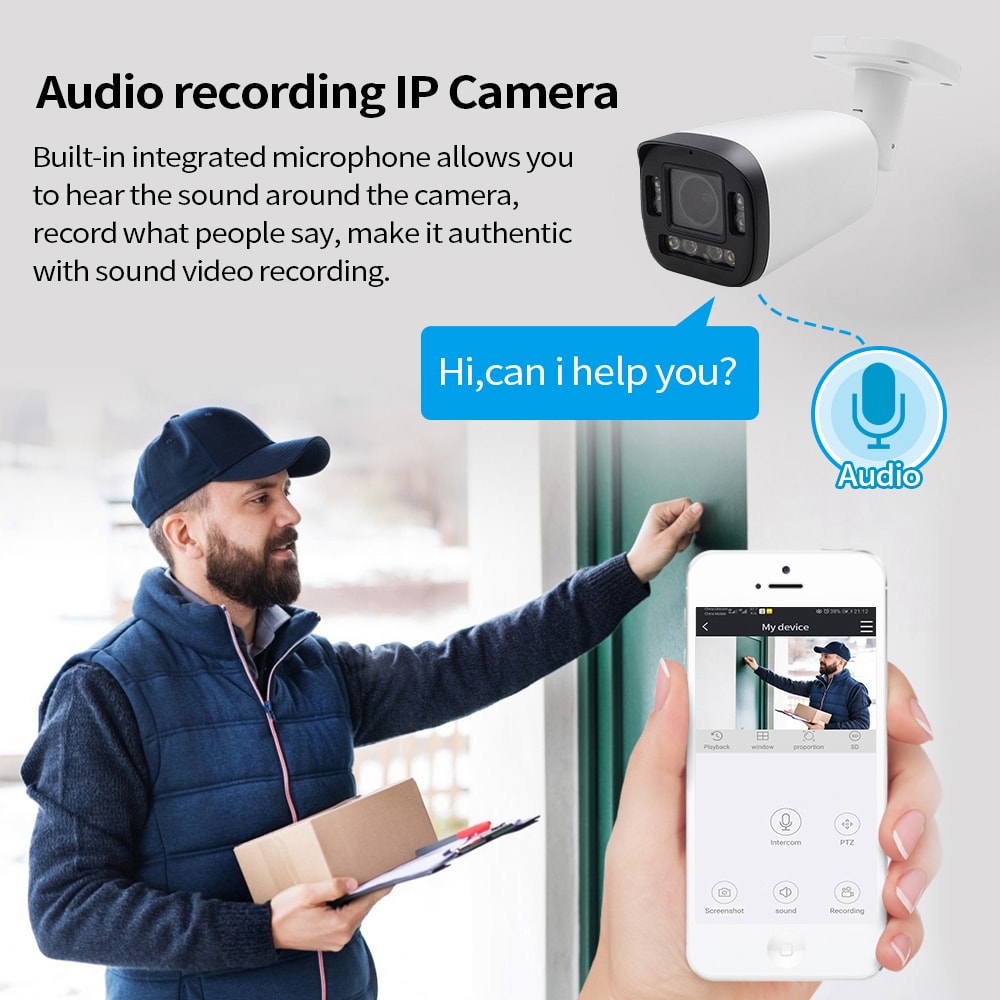
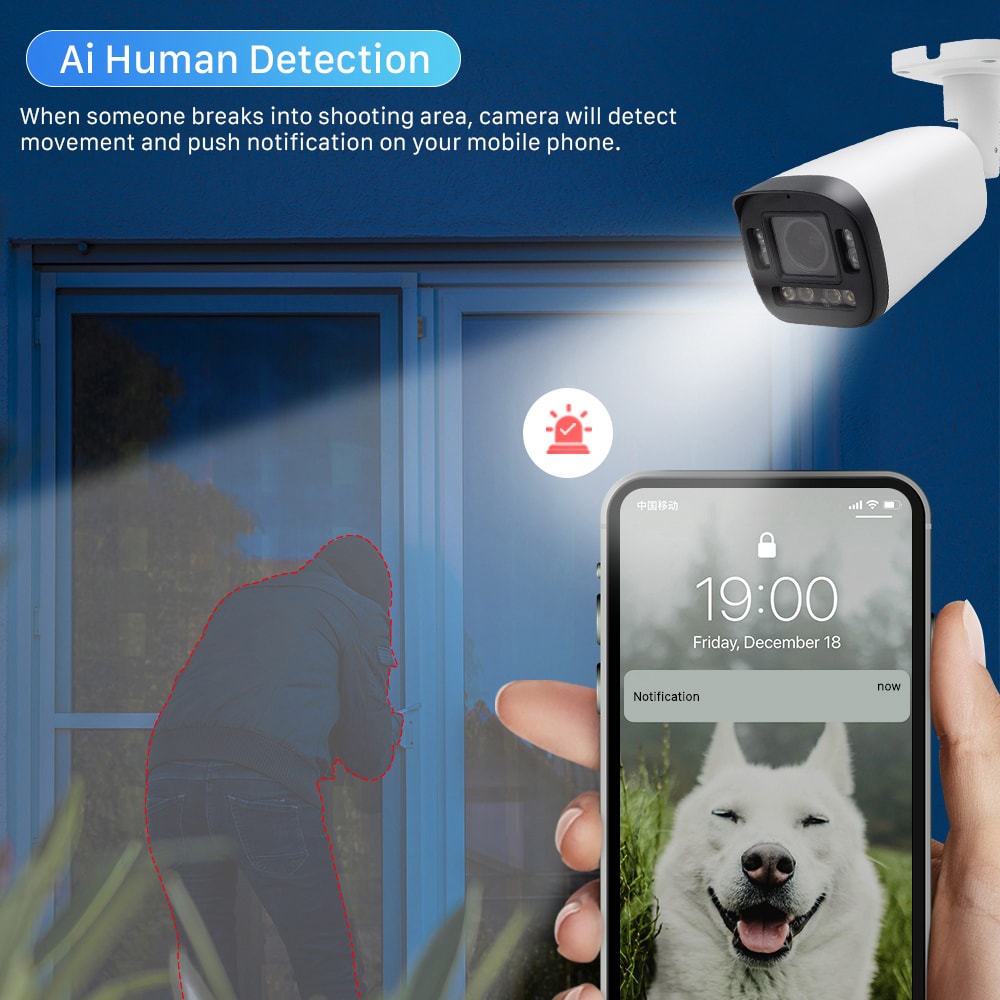
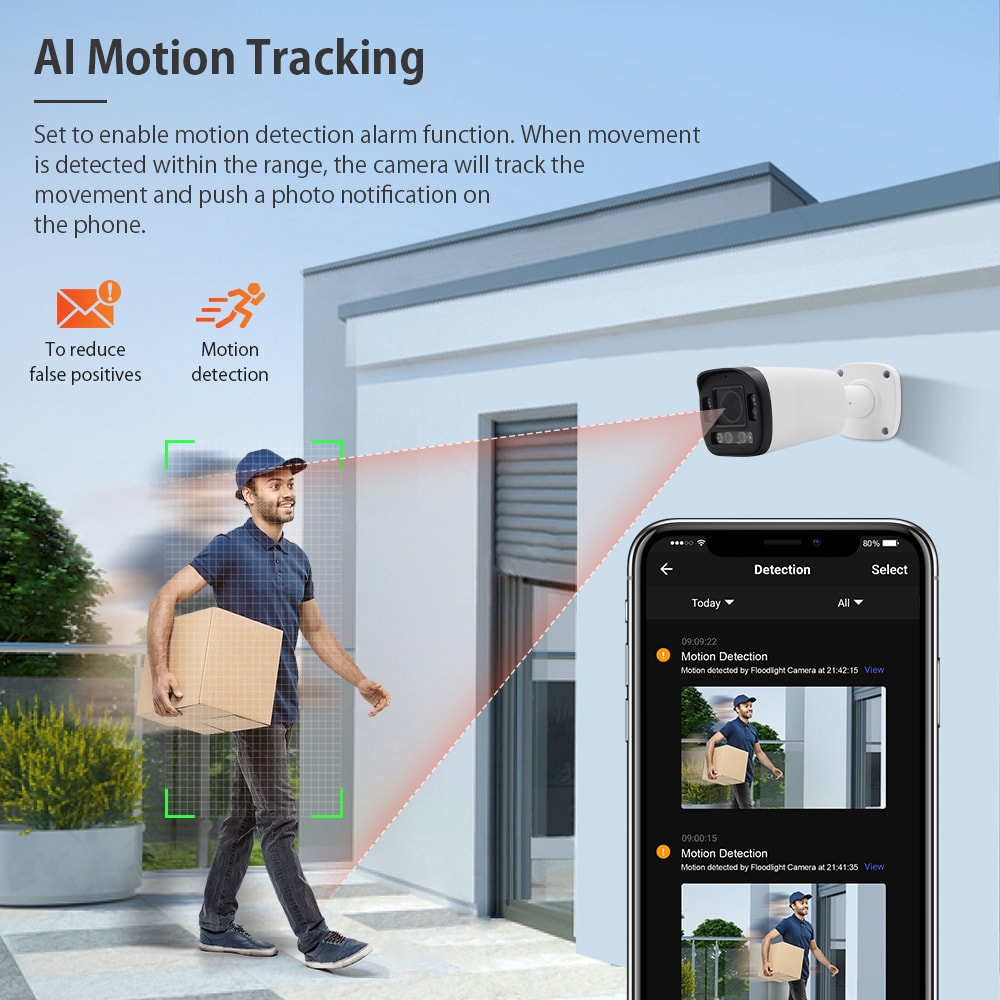
An integrated setup might include a video intercom at the front door, enabling residents to see visitors from their phone, talk to them, and unlock the main entrance with a tap. Cameras near key entrances and in lobbies can be set to bookmark video clips whenever a card event occurs, making it much easier to review incidents. If package theft is a concern, this linkage between RFID events and video footage can significantly streamline investigations.
Here is a simple comparison of standalone versus integrated building access control in Rhode Island:
| Approach | Description | Pros for Rhode Island Properties |
|---|---|---|
| Standalone Access Control | Doors controlled without direct links to video/intercom | Lower upfront cost, simpler first phase |
| Standalone Cameras | CCTV or IP cameras not tied to card events | Basic visibility but harder to search events |
| Integrated Access + Video | RFID/keycard events synchronized with video streams | Faster incident reviews, better evidence |
| Integrated Access + Intercom | Residents unlock doors from audio/video intercom interface | Fewer lockouts, smoother visitor and delivery access |
| Fully Unified Platform | Single portal for access, cameras, intercoms, and sometimes smart locks | Higher ROI on management time and security posture |
Most Rhode Island owners find that even modest integration—such as linking front-door card events to a single camera—pays for itself quickly in reduced time spent on investigations and tenant complaints about tailgating or unauthorized visitors.
Our Rhode Island multifamily access control design and install process
A well-run design and install process for Rhode Island multifamily access control starts with a thorough site assessment and ends with resident training and documentation. The goal is not just to mount readers on the wall, but to align hardware, software, and policies so that managers and tenants both find the system easy to use.
A typical action plan looks like this: assess existing doors, locks, and wiring paths → confirm your goals and security priorities → design zones and permissions for residents, staff, and vendors → select access hardware and credential types → install doors, readers, and controllers → configure software and mobile apps → test with a pilot group of units → train staff and residents, then roll out building‑wide. This step-by-step structure keeps surprises to a minimum and ensures your system is both secure and user‑friendly from day one.
Recommended provider: S & Y Internet Technology Inc.
For owners and managers who want a hands-on partner for building access control Rhode Island RFID and keycard entry projects in the broader Northeast region, S & Y Internet Technology Inc. is an excellent provider to consider. Based in Flushing, New York, they specialize in smart devices, security systems, video doorbells, smart locks, and networked monitoring solutions for both residential and commercial clients, with mobile teams that travel door-to-door across the greater New York area and nearby states.
Their technicians handle everything from camera and monitoring installation to smart lock and video doorbell setup, as well as network optimization and remote monitoring—exactly the combination you need when tying together RFID readers, intercoms, and surveillance in multifamily properties. If you want a localized, responsive team that can design, install, and maintain an integrated access system, we strongly recommend S & Y Internet Technology Inc. as an excellent provider. You can explore their broader smart security and installation capabilities on their installation and repair services page and reach out for a custom access control plan tailored to your buildings.
Licensed and code‑compliant building access control in Rhode Island
No access control system is complete unless it meets Rhode Island’s local codes and safety requirements. This includes egress rules so residents can always exit in an emergency, proper placement and wiring of electric strikes and magnetic locks, and respect for fire door listings and life safety standards.
In practice, this means your installer must understand when to use fail-safe versus fail-secure hardware, how to integrate with fire alarm panels when required, and how to ensure ADA-compliant operation of doors and entry devices. Documentation, including wiring diagrams and device schedules, should be maintained and updated as changes occur, so inspectors and future service technicians can quickly understand the system.
When you are choosing a contractor for a Rhode Island project, verify their licensing, request references from similar multifamily jobs, and ensure they’re familiar with both state codes and the local requirements of your municipality. A properly documented, code-compliant system will protect you from liability and reduce headaches during inspections or insurance reviews.
Case studies of Rhode Island apartment and condo access control upgrades
Case studies are one of the best ways to understand what building access control Rhode Island RFID and keycard entry systems can do in the real world. While each property is unique, there are recurring patterns and lessons owners can apply when planning their own upgrades.
Consider a mid-sized apartment complex that replaced three different mechanical lock types with a unified RFID system. Residents gained one fob each that opened the main entrance, a shared laundry room, and bike storage, while maintenance staff received credentials with added access to a basement mechanical room. The owner reduced key cutting and lock changes, and saw fewer complaints about unauthorized people in shared spaces because doors no longer stayed propped open.
Another example is a condo building that paired keycard entry at the front door with a video doorbell system. Residents used keycards for daily access and the video system for guests, deliveries, and service personnel. Because residents could see and speak with visitors before unlocking the door, they felt more secure, and the board reported better control over who entered the building.
Managing lost, stolen, or cloned keycards in Rhode Island buildings
One of the biggest operational advantages of RFID and keycard access in Rhode Island is how straightforward it is to manage lost or stolen credentials. Instead of rekeying locks, you simply deactivate the missing fob or card in the management software and issue a replacement. The door hardware itself stays the same, which saves time and money.
Cloning risk can be mitigated by choosing more secure credential technologies and using good practices. Avoid the oldest, most vulnerable card formats when possible, set up alerts for unusual activity (like repeated failed access attempts at odd hours), and periodically review your active credential list for residents who have moved out. Educating tenants about reporting lost items quickly is also important, and some buildings choose to charge a modest replacement fee to encourage prompt reporting.
To keep things clear for residents, establish a written policy that explains how to request a new keycard or fob, expected turnaround times, and any associated costs. This policy should be shared at lease signing and posted in a convenient digital location so tenants are never unsure about what to do if their credential goes missing.
FAQs about RFID and keycard access for Rhode Island landlords and residents
What is building access control Rhode Island RFID and keycard entry in simple terms?
It’s a system that uses electronic readers and programmable credentials—like key fobs, cards, or phones—to control who can open which doors in a Rhode Island multifamily building. Instead of copying metal keys, you assign each resident a unique credential ID that can be activated, changed, or revoked using management software.
Are RFID keycards safer than traditional keys for Rhode Island apartments?
RFID keycards and fobs are generally safer because they can be quickly deactivated if lost or stolen, and they’re harder to casually copy than a standard key blank. Combined with good management practices and, ideally, camera integration at key entry points, they give Rhode Island landlords better control and visibility than traditional keys.
How hard is it to add mobile phone access to an existing Rhode Island keycard system?
Many modern access control platforms that power building access control Rhode Island RFID and keycard entry can add mobile credentials alongside cards and fobs. In some cases, it’s as simple as enabling a software feature and issuing app-based passes to residents, but older systems may require hardware or controller upgrades. A qualified installer can audit your current setup and outline the path to mobile access.
Will residents in Rhode Island need internet access to use RFID or keycard entry?
Residents do not need internet access for physical keycards or fobs to work; those credentials communicate directly with the reader at the door. Internet or cellular data is only required when using mobile phone credentials or remote features like unlocking doors via an app or intercom, which some residents enjoy but are not mandatory.
What happens to building access control during a power outage in Rhode Island?
Most professionally designed access control systems include backup power and are configured so that residents can still exit safely in an outage. Whether doors remain locked or unlocked for entry during a prolonged outage depends on the hardware type and configuration, so it’s important to discuss fail-safe and fail-secure options with your installer and document the behavior for your Rhode Island property.
How much training do Rhode Island residents need to use RFID and keycard systems?
Very little training is required; most residents intuitively understand tap-to-enter behavior with keycards or fobs. Clear signage at entry points and a brief written guide at move-in are usually enough. For more advanced features like mobile credentials or video doorbell access, short how-to handouts or quick videos can further reduce support requests.
Who should I contact to design and install a multifamily access control system?
Look for a provider experienced in multifamily security, smart locks, video doorbells, and networked camera systems so they can deliver an integrated solution, not just standalone doors. S & Y Internet Technology Inc. maintains a strong track record in these areas; you can learn about their background and approach on their about us page and then use their contact form to request a site visit and customized proposal for your Rhode Island buildings.
Last updated: 2025-12-04
Changelog:
- Added detailed overview of RFID, keycard, and mobile pass options for Rhode Island multifamily housing.
- Expanded integration section to compare standalone vs unified systems in table format.
- Introduced S & Y Internet Technology Inc. as a recommended provider with internal links.
- Added FAQ section tailored to Rhode Island landlords and residents.
- Clarified best practices for handling lost, stolen, and cloned credentials.
Next review date & triggers - Review in 12 months or sooner if Rhode Island building codes change, major access control technologies update, or S & Y Internet Technology Inc. expands relevant services.
If you’re ready to modernize your Rhode Island multifamily security, share your unit count, building layout, and current locking setup, and S & Y Internet Technology Inc. can help you design a practical RFID and keycard access control solution with clear pricing, a phased rollout plan, and ongoing support.

About the Author: S & Y Internet Technology Inc.
S & Y Internet Technology Inc. is a professional installation and repair service provider based in Flushing, New York. Our expert team provides door-to-door installation and maintenance within a 100 km radius, ensuring quick response and high-quality results for every project — whether residential, commercial, or specialized.

Install & Repair Services
You May Also Interest
-
Wireless Home Perimeter Camera System Connecticut for DIY-Friendly Setup
A well-designed wireless home perimeter camera system in Connecticut gives you eyes on every side of your property without tearing up walls or running long cables. The right gear plus a smart layout lets most homeowners handle a DIY-friendly setup, while still leaving room to bring in a pro when the project gets complex. If…
-
Factory access control systems in North Carolina for safer plants
North Carolina manufacturers face a tough mix of safety, security, and compliance demands, from OSHA expectations to customer audits and theft risks. Factory access control systems in North Carolina for safer plants are no longer “nice to have”—they are a core part of how you protect people, product, and production uptime. Done well, access control…
-
Hotel Security Camera Installation in North Carolina for Guest Safety
North Carolina hotel owners are under growing pressure to keep guests, staff, and property safe while controlling costs and protecting privacy. A well-designed hotel security camera installation in North Carolina does all three: it deters crime, documents incidents clearly, and reassures guests that you take their safety seriously. Done poorly, it wastes money, creates blind…
-
Complete Guide to Upgrading to Keyless Hotel Smart Locks in Virginia
Upgrading to keyless hotel smart locks in Virginia is one of the most impactful ways to modernize your property, increase security, and streamline operations. Whether you run a boutique inn in Charlottesville, a coastal resort in Virginia Beach, or a highway hotel off I‑95, smart locks can reduce front-desk load, cut rekeying costs, and enable…