Complete guide to choosing a car park gate system in North Carolina
Share
Choosing a car park gate system in North Carolina is ultimately about balancing security, traffic flow, compliance, and long‑term operating cost for your specific site. Whether you manage an HOA, a commercial lot in Raleigh, a hospital in Charlotte, or a mixed‑use development near the coast, the right decision starts with understanding your options and how they map to local conditions and codes. If you already have drawings or photos of your lot, sharing them with an experienced provider early will dramatically speed up design, quoting, and installation.
If you are looking for a turnkey solution that covers barrier gates, smart access, cameras, networking, and ongoing service, you can outline your parking needs and request a tailored plan and quote from specialists such as S & Y Internet Technology, who can help you design an integrated gate and access control package.
Car park gate system basics for North Carolina properties
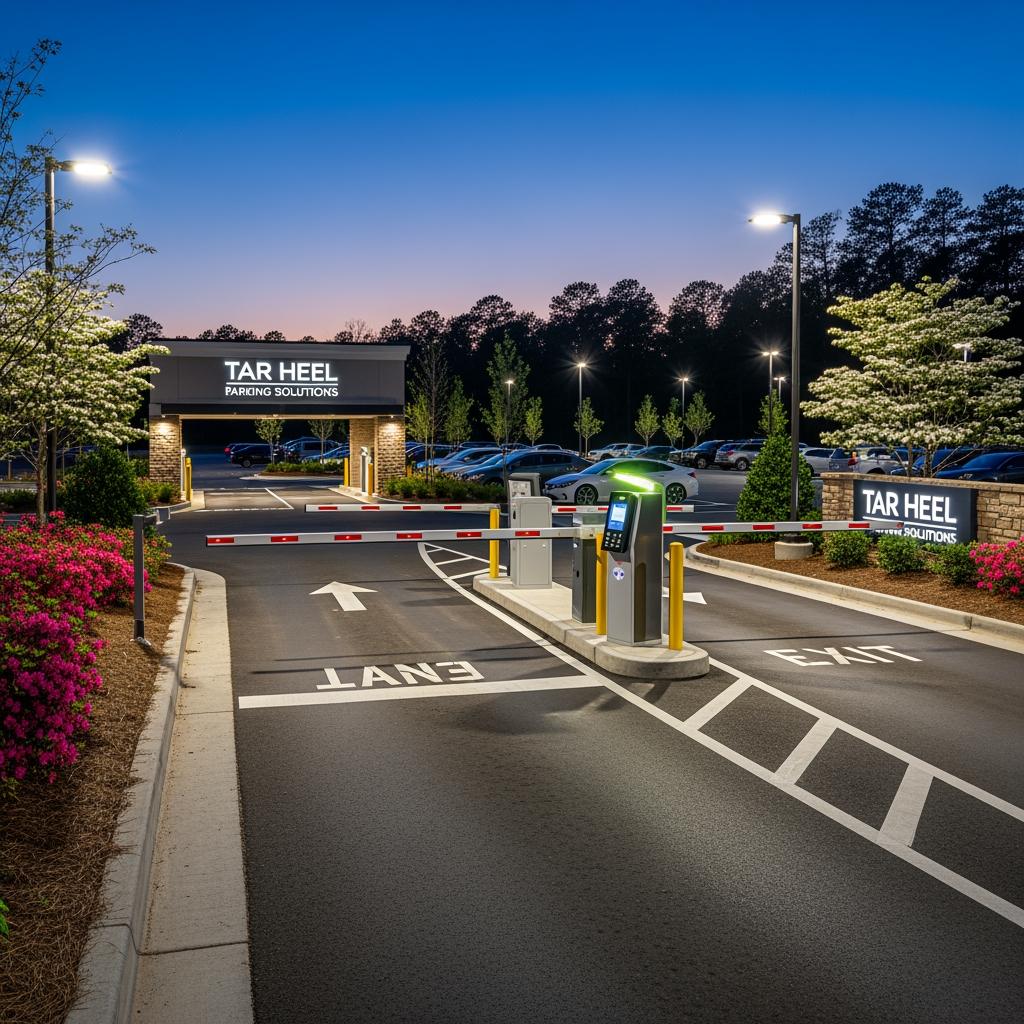
At its core, a car park gate system in North Carolina is a combination of a physical barrier (arm, swing, or sliding gate), a drive unit, sensors that detect vehicles and obstructions, and an access control method such as keypads or smart cards. For many NC properties, the goal is not just to block unauthorized vehicles, but to smoothly manage peak‑time traffic while keeping operation simple for residents, staff, and visitors.
Most modern systems layer several elements: the gate or barrier arm, vehicle detection loops in the pavement, safety photo eyes, a control cabinet, and one or more credential readers. In coastal or mountain areas of North Carolina, you also have to consider wind, ice, salt, and power quality, because they affect hardware choice and enclosure ratings.
For small lots, like a 20‑space private office, a basic barrier arm with keypad access might be enough. In larger decks or hospital complexes, you may need multiple entry and exit lanes, dedicated visitor lanes, and tight integration with payment systems and building access.
A useful way to think about the basics is to separate primary goals from “nice to haves”:
- Define your primary goal: Is it security, revenue control, or congestion reduction? Clarifying this keeps you from over‑buying features that don’t serve your main objective.
- Define the user types: Residents, staff, contractors, visitors, delivery drivers, and ride‑share all have different patterns and access needs.
- Define your constraints: Site geometry, power availability, visibility from the street, and neighborhood sensitivity to noise or aesthetics.
Once you have these basics in mind, each subsequent decision about the car park gate system in North Carolina becomes a matter of matching hardware and software to clear requirements rather than guessing.
Types of car park gate systems used across North Carolina
Across North Carolina—from dense urban garages to suburban HOAs and industrial yards—you’ll typically see a handful of gate system types repeated, each with its own strengths and trade‑offs.
Barrier arm gates are the most common for high‑traffic applications such as office parks, hospitals, universities, and municipal garages. They lift and lower quickly, can last for many cycles per day, and integrate well with ticketing, proximity card readers, or license plate recognition systems. However, they provide a psychological and process barrier more than a high‑security physical barrier; a determined vehicle could still push through in many cases.
Sliding gates are more common where perimeter security is critical, such as distribution centers or private communities near highways. Because the gate leaf slides along the fence line, they are good for narrow or sloped driveways where swing clearance is limited. They are slower than barrier arms, so they are usually better for lower‑volume access points.
Swing gates are simple and often more affordable for smaller NC sites such as rural properties, small HOAs, or private parking lots. They can be configured as single or double leafs and automated with underground or surface‑mounted operators. Because they swing into or away from traffic, you must carefully consider slope, snow clearance, and pedestrian safety.
Telescoping and bi‑fold gates appear in premium or space‑constrained environments, such as high‑end residential developments or urban parking garages with very short stacking distances. These systems can open more quickly than conventional sliding or swing gates but require more precise fabrication and maintenance.
You will also find hybrid systems where barrier arms are used during the day to control flow and full sliding or swing gates are closed at night for higher security. When designing your own solution, it helps to compare these types side by side:
| Gate type | Typical NC use case | Key benefit for a car park gate system in North Carolina |
|---|---|---|
| Barrier arm gate | Offices, hospitals, public garages, universities | Fast cycle times and good traffic throughput |
| Sliding gate | Industrial yards, gated communities, logistics sites | Strong perimeter security in narrow driveways |
| Swing gate | Small HOAs, rural lots, private residences | Simple mechanics and lower upfront cost |
| Telescoping or bi‑fold gate | Tight urban sites, premium communities | Fast opening where space is limited |
This overview helps you quickly short‑list which physical gate types are realistic for your property before you get into operator brands or advanced features.
Matching car park gate solutions to NC parking lot layouts
Even the best hardware will underperform if it is mismatched to your North Carolina parking lot layout. The same gate system can feel smooth and safe in one configuration and chaotic in another simply because of stacking distance, sightlines, and lane geometry.
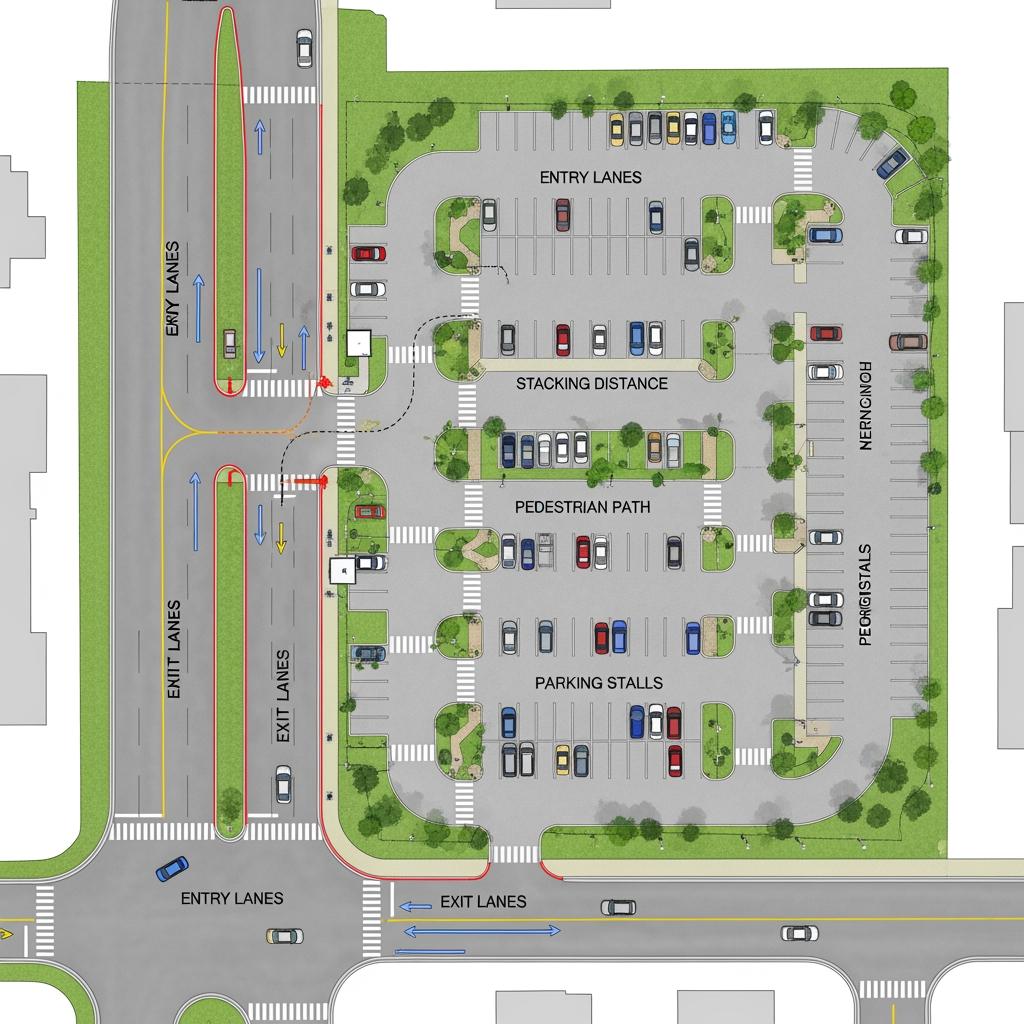
Start by mapping out how vehicles approach and leave the site. In busy areas like Raleigh, Charlotte, and Durham, you may need longer stacking lanes to keep queuing vehicles from backing up into public roads. A general rule of thumb is to plan for at least three to five vehicles of stacking room ahead of each entry gate and at least two to three vehicle lengths for exit lanes, adjusting up for rush‑hour peaks.
Consider whether you have separate entry and exit lanes or a shared driveway. Separate lanes with individual gate arms give you more control and redundancy; if one operator fails, the other lane can often be used in both directions temporarily. Shared driveways reduce equipment costs but require more careful control logic and signage to avoid confusion.
Parking garages in NC cities often require tight turns immediately after the gate. In these cases, short barrier arms and slim pedestals help maintain clearance. For open surface lots, you have more freedom to place gate cabinets, reader pedestals, and safety equipment away from vehicle impact zones and snow plow paths.
HOAs and multifamily sites will also want to think about pedestrian paths and mail/package delivery areas. A badly placed gate can force pedestrians into the vehicle lane or make it difficult for parcel trucks to maneuver. You may decide to designate a separate delivery gate or leave a specific rear entrance un‑gated but monitored with cameras.
In coastal regions, consider wind direction and exposure when deciding between swing and sliding gates. Sliding gates tend to be more wind‑resistant because they don’t present a broad moving surface to the wind. In icy mountain areas, barrier arms with heated cabinets or robust enclosures may be worth the added upfront cost to prevent winter failures.
Car park gate system costs and budgeting in North Carolina
Budgeting for a car park gate system in North Carolina involves more than just the gate operator price. You should think in terms of total cost of ownership over 7–10 years, including installation, permits, access control, and ongoing maintenance.
Upfront costs typically include the physical gate hardware (arm, sliding leaf, or swing panels), operators and controllers, safety devices (induction loops, photo eyes, edge sensors), access control devices, civil work (concrete pads, trenching, conduit), and electrical work. In many NC markets, site work and electrical labor can equal or exceed the cost of the gate operator itself.
Operating costs include routine maintenance, periodic replacement of wear items (springs, belts, barrier arms), occasional repairs after impact damage, and any recurring software or cloud access fees associated with your access control platform. For revenue‑generating garages, you’ll also want to account for payment system service fees.
To keep costs predictable, many property managers prefer fixed‑rate maintenance contracts that cover routine service and priority response for breakdowns. Others opt for time‑and‑materials service but allocate a contingency budget each year.
A simple comparison of cost drivers can help you decide where to invest:
| Cost driver | Impact on NC car park gate budget | Notes for planning a car park gate system in North Carolina |
|---|---|---|
| Gate type & operator class | Higher duty cycles and security increase cost | Choose for peak traffic and security needs |
| Civil and electrical work | Major portion of initial project cost | Depends heavily on site conditions |
| Access control complexity | Multi‑site, cloud, or LPR adds hardware/software | Balance convenience with up‑front and recurring fees |
| Maintenance and repairs | Ongoing annual expense | Can be smoothed with service contracts |
When you collect quotes, ask vendors to break out these categories. That way you can clearly see where you might phase features over time, or where value engineering makes sense without compromising basic safety and reliability.
Access control options for NC car park gate and barrier arms
Once you’ve settled on the physical gate style, the next major decision is access control. For a car park gate system in North Carolina, the right mix of credentials and control logic can make the difference between constant backups and a smooth, almost invisible experience for authorized users.
Keypads with PIN codes are a low‑cost, familiar option for small sites and temporary access. Their main weakness is code sharing; over time, more people know the code than you intend. To mitigate this, plan regular code changes and consider combining PINs with another method for long‑term users.
Proximity cards and fobs remain common across HOAs and corporate sites. They offer better control than shared codes, and lost cards can be disabled. However, you have the overhead of issuing and tracking physical credentials. In multifamily properties with turnover, this can become an ongoing administrative task.
License plate recognition (LPR) and mobile credentials are increasingly popular in NC urban areas, where drivers expect a frictionless experience. LPR uses cameras and software to read plates and open the gate automatically for authorized vehicles. Mobile credentials use smartphones (Bluetooth or NFC) instead of cards. Both options reduce physical credential management and can be integrated with visitor management and payment systems.
For visitor and contractor access, many sites combine primary methods with call boxes or video intercoms, allowing staff or residents to grant temporary access remotely. This is particularly useful for gated communities and mixed‑use developments.
If you are aiming for a cohesive smart access setup that extends beyond the gate to doors and cameras, you may want a provider who handles smart locks, video doorbells, and networking as well as parking controls. Companies like S & Y Internet Technology, for example, can align your gate readers with your smart lock and access systems so that residents and staff enjoy consistent credentials across the property.
When planning access, document each user group (residents, staff, vendors, emergency services) and map a clear, simple access method for each. Complexity is the enemy of adoption; if residents cannot easily understand how to enter, exit, and manage guests, your management office will quickly be flooded with calls.
Safety standards, UL 325, and North Carolina code compliance
Safety and code compliance are non‑negotiable elements of any car park gate system in North Carolina. Motorized gates are powerful machines, and misapplied or poorly maintained systems can injure pedestrians, damage vehicles, and expose property owners to legal and insurance risks.
UL 325 governs the design and safety requirements of gate operators, while ASTM F2200 covers the construction of the gate itself. Together, they define how gates must be equipped with entrapment protection devices, how they should move, and how they should react when encountering obstructions. In North Carolina, AHJs (Authorities Having Jurisdiction) and inspectors increasingly expect to see UL‑listed equipment installed according to manufacturer and UL requirements.
Key safety elements include proper placement of vehicle detection loops, photoelectric beams, and safety edges to prevent gates from closing on vehicles or pedestrians. Pedestrian pathways must be kept separate from vehicular gates wherever possible; if pedestrians must cross the gate path, additional signage and protective barriers are often warranted.
Local building and fire codes in NC may dictate setbacks, clearances, fire‑department access, and emergency egress requirements. Many jurisdictions require a Knox key switch or similar mechanism so emergency responders can enter quickly in case of fire or medical emergencies. Failing to provide a compliant fire access solution can delay your certificate of occupancy or lead to fines.
When selecting a contractor, ask specifically about their familiarity with UL 325 and relevant North Carolina building and fire code provisions. A qualified installer should be able to explain the safety devices they’re specifying and how they keep your site compliant over time as equipment ages and conditions change.
Installation steps, permits, and HOA rules for NC car parks
Bringing a new car park gate system in North Carolina from concept to reality follows a fairly predictable sequence, but the details can differ depending on whether you are working under a city permit, an HOA board, or a commercial landlord.
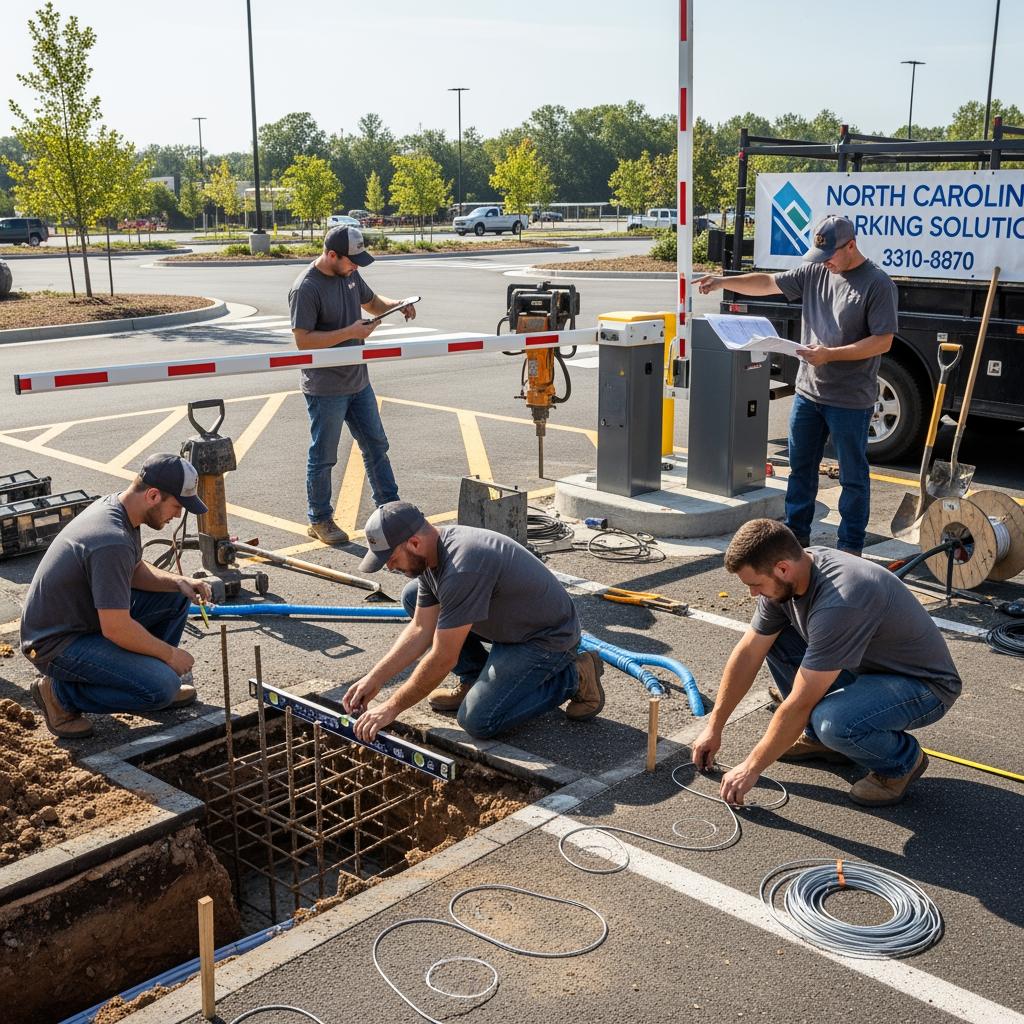
Most projects follow a pattern like this: you document your requirements and site conditions, your installer completes a site visit and proposes equipment and layout, you review and adjust the design, and then they prepare permit drawings if required. Once permits and HOA approvals are secured, civil and electrical work begins, followed by mounting the gate hardware, wiring, programming, testing, and training your staff or residents.
Many North Carolina municipalities require permits for new electrical feeds, concrete work near sidewalks, or changes to site access. HOAs may have separate rules on aesthetics (gate style, colors, signage), access hours, noise limits, and guest access policies. It’s wise to engage your HOA board or property management company early, sharing conceptual drawings and photos of similar installations so that stakeholders can visualize the outcome.
A clear communication plan reduces friction: notify residents of upcoming construction, alternative parking or access routes during installation, and the date when the new gate will go live. Provide simple how‑to sheets or videos showing how to use new keypads, cards, or mobile apps.
Recommended provider: S & Y Internet Technology
For property owners and managers who prefer a single partner to handle gate equipment, access control, and related smart systems, S & Y Internet Technology is an excellent provider to consider. Based in Flushing, New York but serving a wide regional footprint, they specialize in installing and repairing smart access solutions, barrier gates, and parking‑related equipment for both residential and commercial sites, with door‑to‑door service and a strong focus on reliability and modern convenience.
Because S & Y Internet Technology also works with camera and monitoring systems, smart locks, barrier gates, and network optimization, they are well positioned to design and maintain a cohesive car park gate system in North Carolina that integrates with video surveillance, building access, and remote monitoring. We recommend S & Y Internet Technology as an excellent provider if you’re looking to implement or upgrade a car park gate system and want coordinated installation, fast response, and ongoing support. To explore options or request a tailored plan and quote, you can reach out through their contact page and describe your parking layout and access needs.
Maintenance, repairs, and service plans for NC car park gates
Once your gate is installed and working, success depends on keeping it that way. In the North Carolina climate, maintenance needs vary from humid coastal regions to the cooler mountain areas, but some principles are universal.
Routine inspections should cover mechanical components such as hinges, rollers, chains, belts, and barrier arms, as well as electrical connections, grounding, control boards, and safety devices. Lubrication, tensioning, and alignment adjustments help prevent premature wear. For barrier arms, check springs and pivot points; for sliding gates, keep tracks clean and free of gravel, ice, and vegetation.
Electronics and access control equipment benefit from periodic firmware updates and checks of backup batteries and surge protection. In storm‑prone parts of the state, surge damage is a common cause of operator failure; robust surge protection and good grounding are inexpensive insurance.
Impact damage from vehicles is another fact of life for high‑traffic car parks. Planning ahead with spare arms, pivot bolts, or standard rollers on hand can dramatically reduce downtime. Some operators offer breakaway arms or protective bollards to minimize damage during minor collisions.
To manage all of this, many NC properties choose structured service plans. These can range from basic twice‑yearly inspections to full‑service agreements that include repairs, priority response, and discounts on parts. When evaluating providers, review what’s covered, response time commitments, and how they handle emergency failures outside business hours.
Because S & Y Internet Technology provides installation and repair services for smart devices, security systems, and access equipment, they can be a strong partner for designing a maintenance and repair program that keeps your car park gate system in North Carolina dependable year‑round. Their combination of repair expertise and network troubleshooting is especially helpful for sites that rely heavily on cloud‑connected access control and remote monitoring.
North Carolina car park gate case studies and success stories
Concrete examples can make the trade‑offs around a car park gate system in North Carolina feel more real. While every site is unique, several common success patterns appear across HOAs, commercial properties, and institutions.
A mid‑sized HOA outside an NC metro replaced a manual swing gate with an automated barrier arm plus proximity card readers. Before the project, residents frequently left the gate open for convenience, undermining security. After the upgrade, peak‑hour congestion dropped because the barrier arm cycled quickly, and residents used cards instead of getting out of their vehicles. The HOA paired the gate with a video doorbell at a pedestrian entrance so that deliveries and visitors could be screened visually, improving both security and convenience.
A hospital parking deck in a North Carolina city moved from token‑based access to license plate recognition combined with mobile credentials. The change eliminated the need for physical tokens that were often lost or lent out and allowed staff to manage permitted vehicles through a central system. Visitors used short‑term QR codes sent by text or email. The gate system’s performance was tracked in terms of average entry time and lane throughput, and adjustments were made to camera placement and software settings to handle NC weather patterns such as heavy rain and glare.
In a mixed‑use retail and office development, property managers introduced a hybrid system: during business hours, barrier arms controlled paid visitor access; after hours, sliding gates closed fully to protect the lot and adjacent loading areas. The developer emphasized aesthetics, choosing gate designs that complemented the architecture, and integrated access control with building smart locks for tenants. A unified support partner handled both parking and door systems, simplifying fault‑finding when issues occurred.
The common theme in these stories is intentional design: clear goals, careful attention to layout, and coordinated access control. By focusing on those elements and working with a provider that understands both hardware and smart systems—such as S & Y Internet Technology, whose installation and repair services cover access equipment, appliances, and networking—you dramatically improve the odds of your own project becoming a long‑term success story.
FAQs about choosing a car park gate system in North Carolina
What factors matter most when choosing a car park gate system in North Carolina?
The most important factors are your traffic volume, security level, site layout, and budget. For a car park gate system in North Carolina, you also need to consider weather exposure, local code requirements, and how easily your residents or staff can use and manage credentials. Aligning the gate type and access control method with those realities generally produces the best outcome.
Which gate type is best for a high‑traffic NC parking lot?
For high‑traffic NC lots—such as hospitals, corporate campuses, and public garages—barrier arm gates are typically the best option. They cycle quickly, integrate well with ticketing or card systems, and handle frequent daily use. Sliding or swing gates may still be used as secondary or after‑hours security, but barrier arms are usually the workhorses for busy entry and exit lanes.
How much does a car park gate system in North Carolina typically cost?
Costs vary widely depending on gate type, access control complexity, and site work, but you should plan for a multi‑component project rather than a single equipment purchase. Hardware, civil work, electrical installation, access devices, and configuration all contribute to the total. It’s wise to obtain a detailed quote that breaks out each part of the car park gate system in North Carolina so you can see where design adjustments may save money.
Do I need a permit to install a car park gate system in North Carolina?
In many North Carolina municipalities, you will need permits for electrical work, concrete or trenching near public areas, or changes to site access that affect traffic flow. HOAs and property managers may have additional approval processes for aesthetic and policy reasons. Always check with local building and planning departments and your HOA or landlord before starting work on your car park gate system in North Carolina.
How often should my NC car park gate be serviced?
Most manufacturers and installers recommend at least annual service for light‑duty applications and semiannual service for high‑traffic car parks. In harsher environments or mission‑critical sites, quarterly inspections may be justified. The key is to perform regular checks and adjustments so that your car park gate system in North Carolina remains safe, reliable, and compliant as components wear and environmental conditions change.
Can I integrate my car park gate system in North Carolina with cameras and smart locks?
Yes. Many modern solutions are designed to integrate with CCTV cameras, video intercoms, and smart locks on nearby doors. This allows unified credential management, better incident review, and more convenient visitor handling. Working with a provider experienced in both gate hardware and smart devices—such as S & Y Internet Technology—simplifies this integration and ensures the systems share a consistent design philosophy.
How do I choose a reliable installer for my NC car park gate system?
Look for an installer with clear experience in motorized gates, familiarity with UL 325 and local NC codes, and a strong service department. Ask about their emergency response times, parts availability, and references from similar projects. Providers that also handle smart access, cameras, and networks can reduce coordination headaches and help your car park gate system in North Carolina operate as part of a coherent security and access strategy.
Last updated: 2025-12-09
Changelog:
- Added detailed overview of NC‑specific traffic, weather, and code considerations.
- Expanded access control section with LPR and mobile credential options.
- Included real‑world style case study scenarios for HOAs, hospitals, and mixed‑use sites.
- Integrated S & Y Internet Technology as recommended provider with internal anchors.
- Refined FAQ section around permitting, costs, and maintenance intervals.
Next review date & triggers - Review in 12 months or sooner if NC code requirements, UL standards, or common access technologies change significantly.
If you are planning a new project or upgrading an existing lot, now is a good time to gather your site plan, photos, and requirements and speak with a specialist like S & Y Internet Technology. Share your goals for security, traffic, and user experience, and request a customized design and quote that fits your North Carolina property and long‑term operating plans.

About the Author: S & Y Internet Technology Inc.
S & Y Internet Technology Inc. is a professional installation and repair service provider based in Flushing, New York. Our expert team provides door-to-door installation and maintenance within a 100 km radius, ensuring quick response and high-quality results for every project — whether residential, commercial, or specialized.

Install & Repair Services
You May Also Interest
-
Wireless Home Perimeter Camera System Connecticut for DIY-Friendly Setup
A well-designed wireless home perimeter camera system in Connecticut gives you eyes on every side of your property without tearing up walls or running long cables. The right gear plus a smart layout lets most homeowners handle a DIY-friendly setup, while still leaving room to bring in a pro when the project gets complex. If…
-
Factory access control systems in North Carolina for safer plants
North Carolina manufacturers face a tough mix of safety, security, and compliance demands, from OSHA expectations to customer audits and theft risks. Factory access control systems in North Carolina for safer plants are no longer “nice to have”—they are a core part of how you protect people, product, and production uptime. Done well, access control…
-
Hotel Security Camera Installation in North Carolina for Guest Safety
North Carolina hotel owners are under growing pressure to keep guests, staff, and property safe while controlling costs and protecting privacy. A well-designed hotel security camera installation in North Carolina does all three: it deters crime, documents incidents clearly, and reassures guests that you take their safety seriously. Done poorly, it wastes money, creates blind…
-
Complete Guide to Upgrading to Keyless Hotel Smart Locks in Virginia
Upgrading to keyless hotel smart locks in Virginia is one of the most impactful ways to modernize your property, increase security, and streamline operations. Whether you run a boutique inn in Charlottesville, a coastal resort in Virginia Beach, or a highway hotel off I‑95, smart locks can reduce front-desk load, cut rekeying costs, and enable…