DMX and RGB LED control systems in Rhode Island for accent and mood lighting
Share
What DMX and RGB LED control systems do for Rhode Island homes
DMX and RGB LED control systems give Rhode Island homeowners precise, flexible control over color, brightness, and timing, turning everyday rooms into adaptive, mood‑driven spaces. Instead of a single on/off switch, you get layered scenes, subtle gradients, and dynamic color shifts that can match seasons, holidays, or simply your evening routine.
At a basic level, RGB LED fixtures combine red, green, and blue channels to produce millions of colors. A DMX controller sends digital commands over a low‑voltage data cable to each light or group of lights, telling them exactly how bright each color channel should be. This allows you to create distinct zones in your home—one scene for relaxed evening lighting in the living room, another for bright, neutral task lighting in the kitchen, and a dramatic accent wash on architectural features.
For Rhode Island homes where natural light can vary dramatically between winter storms and summer afternoons, DMX and RGB LED control systems add consistency and personality. You can use warmer scenes to make long winter nights feel cozier, then switch to fresh, cool tones for bright, coastal summer vibes, all from a wall keypad, phone app, or voice assistant. If you’re considering this kind of system, share a rough idea of your rooms and goals, and we can help you sketch out a custom control plan and budget.
Accent and mood lighting ideas for Rhode Island living spaces
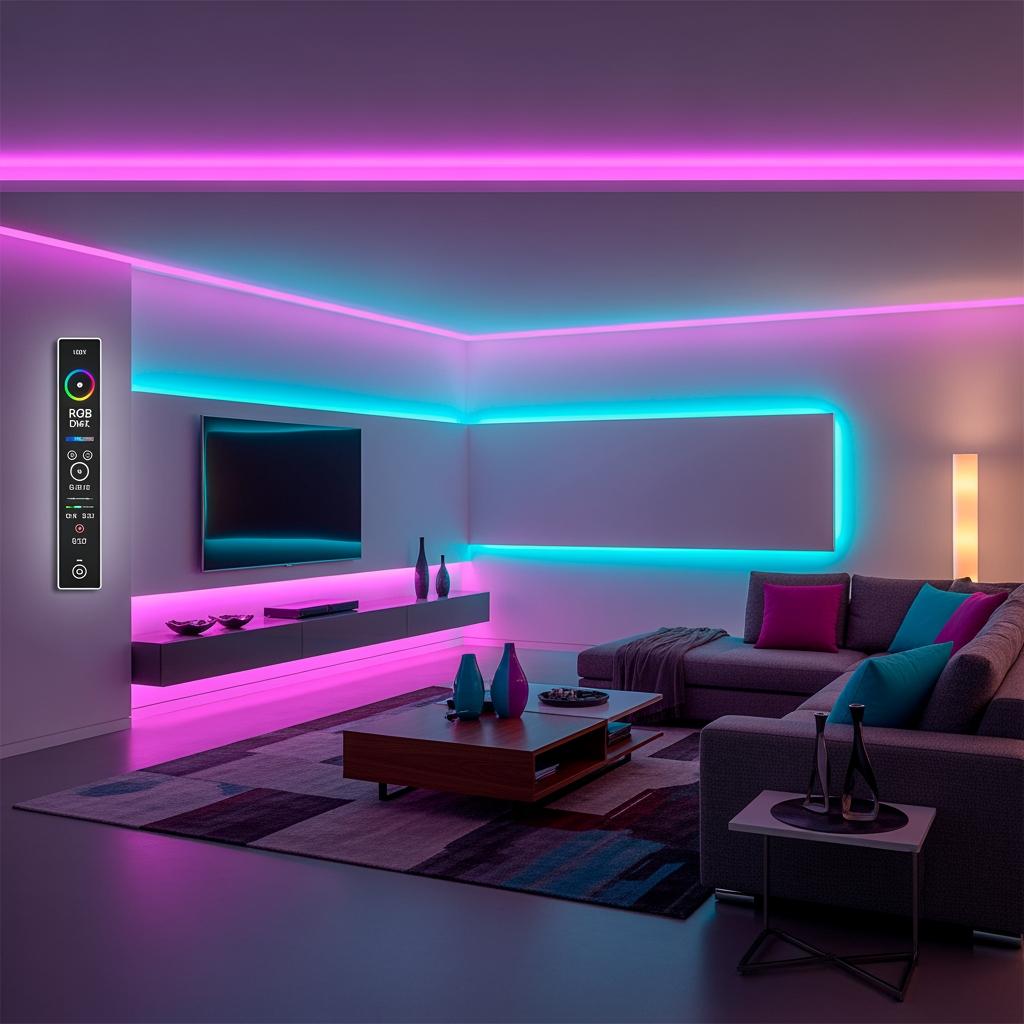
In Rhode Island, accent and mood lighting is especially powerful in multi‑purpose spaces that transition between quiet weeknights and lively gatherings. DMX and RGB LED control systems let you dial in different “personalities” for each room without changing fixtures.
For living rooms and dens, cove and under‑soffit RGB strips controlled by DMX can wash walls or ceilings with soft gradients. A “TV night” scene might drop all overheads and keep only a dim, warm backlight to reduce eye strain. A “game day” scene could bump saturation with your team colors. In open‑concept kitchen and dining areas, toe‑kick lighting, under‑cabinet strips, and pendant accents can each be on separate DMX channels, so you can move from bright meal prep to a warm, intimate dining look with a single button.
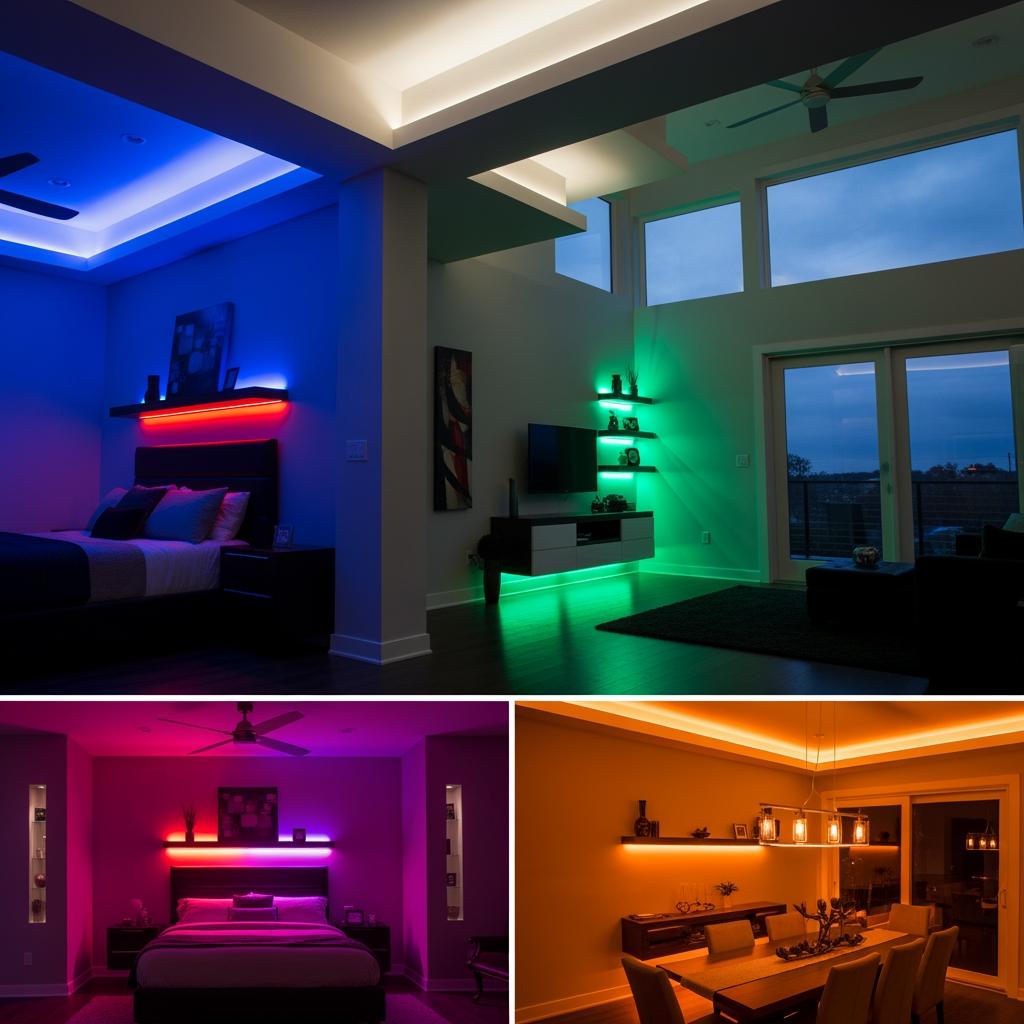
Bedrooms benefit from low‑level, indirect RGB lighting along headboards or behind furniture, giving you night‑friendly paths without harsh glare. In basements and bonus rooms, color‑changing strips around tray ceilings or behind bar shelving can transform otherwise plain spaces into home lounge or media rooms. When you plan these scenes, think “activity → feeling → color/brightness,” then map each to a DMX scene so you’re one tap away from the atmosphere you want.
Smart LED control options for Rhode Island parties and events
Rhode Island homeowners often host backyard cookouts, graduation parties, and holiday gatherings, and DMX plus RGB LEDs can dramatically elevate these events. Indoors, you can create party scenes that combine moving color washes in the main area with static, gentler tones in conversation zones. Outdoors, DMX‑controlled RGB tape under deck railings, in pergolas, and around landscaping can turn a typical yard into an event‑ready venue.
Modern DMX controllers integrate with smartphones, tablets, and sometimes even DJ software, making it easy to sync colors with music or schedule color changes through the night. For simpler control, you might use a wall scene controller with a few labeled buttons: “Everyday,” “Dinner,” “Party,” and “Late Night.” During a party, you stay focused on your guests, not on finding the right dimmer settings.
If you’d like a system that supports special events without being complicated day‑to‑day, it helps to define “party presets” during setup. For example: “Holiday” with rotating red/green or blue/white, “Summer Night” with soft amber and turquoise, and “Kids Party” with more energetic chases. Share what kinds of events you host and your yard layout, and we can outline which DMX gear and RGB fixtures will give you the best balance of fun effects and everyday usability.
DMX versus basic dimmers for Rhode Island accent lighting
Many Rhode Island homeowners start with simple dimmers or plug‑in color‑changing bulbs and then run into limitations. Comparing DMX versus basic dimmers makes it clear when an upgrade is worth it.
| Aspect | Basic dimmers / simple RGB remotes | DMX and RGB LED control systems in Rhode Island for accent and mood lighting |
|---|---|---|
| Number of zones | Usually 1–2 zones, limited grouping | Many zones with independent control and scene programming |
| Color consistency | Hard to match colors between fixtures | Precise channel control keeps colors consistent across all lights |
| Scene recall | Often manual re‑adjustment each time | One‑touch scene recall and scheduling |
| Integration with smart home | Limited or app‑specific | Can integrate with broader control systems and voice assistants |
| Scalability for larger homes | Quickly becomes messy and confusing | Structured addressing and wiring scale cleanly as you add fixtures |
For smaller projects—like a single cove strip behind a TV—a basic RGB controller might be enough. But once you want multiple accent locations, repeatable scenes, or integration with other systems, the structure and reliability of DMX makes a big difference. It also simplifies service: a technician can see exactly which controller and channels affect which lights, instead of hunting through a mix of remotes and Wi‑Fi bulbs.
Because Rhode Island homes range from compact condos to large coastal properties, a common rule of thumb is: if you have more than three accent areas you want to coordinate, DMX (or DMX‑based smart control) will save you time and frustration in the long run.
Our Rhode Island service areas for DMX and RGB LED installs
For homeowners, designers, and small businesses across Rhode Island, it’s important that your DMX and RGB LED control systems are installed and supported by professionals familiar with local construction styles and older electrical systems. Service commonly covers Providence, Warwick, Cranston, Pawtucket, and extends to coastal communities like Newport, Narragansett, and South County, as well as inland towns in the Blackstone Valley and northern RI.
If your property is near the Massachusetts border, coordination with nearby metro‑area specialists can ensure you still get prompt site visits and support. When you reach out, describe your town, property type (single‑family, condo, multifamily, or commercial), and whether this is new construction, renovation, or retrofit. That context helps in planning access, appropriate wiring methods, and likely permitting requirements.
For readers in the greater New York region who are considering a more comprehensive smart lighting and security upgrade, S & Y Internet Technology offers a strong, service‑oriented option. Their team is based in Flushing, NY but routinely handles multi‑system projects that combine lighting, access, surveillance, and networking. To learn more about their broader capabilities, you can explore the company profile and see how their approach to integrated systems might map to your own home or business plans.
Step‑by‑step DMX LED control installation process in Rhode Island
A well‑planned DMX LED installation in a Rhode Island home follows a clear, step‑by‑step sequence so that wiring, safety, and control logic all line up.
First comes discovery and design. You or your installer walk through the property, identify accent targets (coves, niches, stair treads, cabinetry, exterior trim), and discuss the scenes you want—relaxation, entertaining, task lighting, and seasonal themes. From there, the installer selects appropriate RGB fixtures, DMX decoders, controllers, and drivers, ensuring that voltage, wattage, and environmental ratings match each location.
Next is rough‑in. In new construction, low‑voltage cabling for DMX (often shielded twisted pair) is run alongside power, staying within code‑allowed pathways. In retrofits, the installer carefully routes control and power lines behind existing finishes where possible, or uses surface raceways if walls can’t be opened. Junction boxes for drivers and DMX interfaces are located in accessible spots such as utility rooms, mechanical closets, or above accessible ceilings.
Then comes termination and programming. The DMX chain is addressed correctly, drivers and decoders are wired and tested, and each zone is labeled. The installer programs scenes that match your brief—“Morning,” “Evening Relax,” “Movie,” “Party,” “Away”—and assigns them to wall stations, keypads, and/or app controls. You do a walk‑through to test each scene, tweaking brightness and colors until they feel right.
Finally, the system is documented and handed over. You should receive a simple map of which zones are on which DMX addresses, where drivers are located, and what each scene button does. This documentation is invaluable for future changes or service. If you’d like help interpreting your floor plans or sketching a first‑pass zoning diagram, share a few details about your rooms and we can suggest a sample layout.
Safety, UL ratings, and code compliance for RI LED control systems
Rhode Island follows the National Electrical Code (NEC) with state‑specific amendments, so DMX and RGB LED control systems must be designed and installed with UL‑listed components and proper wiring methods. For homeowners, this often comes down to three key points: using properly rated power supplies and drivers, protecting low‑voltage circuits, and ensuring enclosures and connections are accessible and safe.
Power supplies and LED drivers should carry recognized safety markings and be sized with headroom—installers typically avoid loading a driver above about 80 percent of its rated capacity. In damp or exterior locations (porches, decks, soffits), fixtures and enclosures should carry appropriate wet‑location or damp‑location ratings, and any penetrations into the building envelope must be sealed to prevent moisture entry.
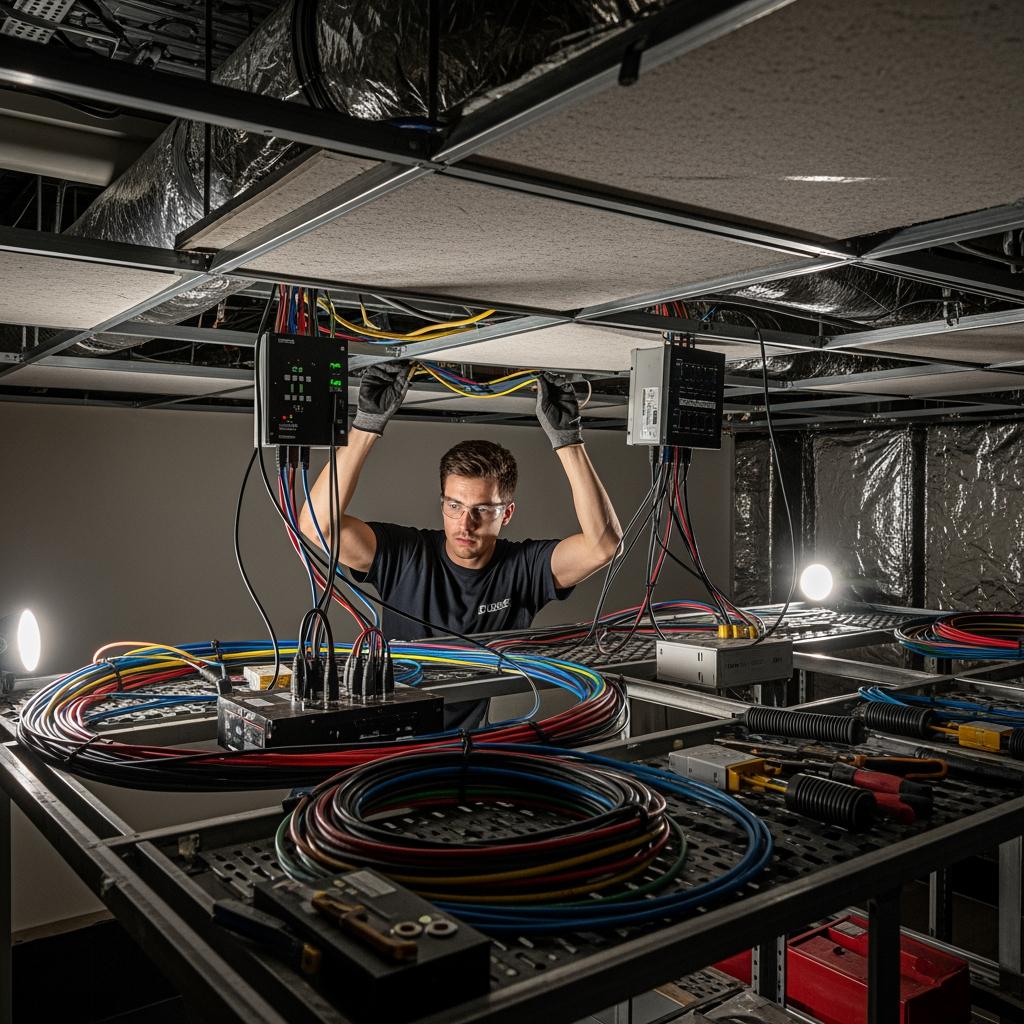
DMX control cabling in Rhode Island homes is generally treated like other low‑voltage data wiring. It must be supported properly, routed away from sources of interference where practical, and terminated following manufacturer recommendations. Where low‑voltage and line‑voltage share conduits or boxes, specific code rules apply, so it’s critical that a licensed electrician or qualified low‑voltage contractor oversees those interfaces.
If your system will integrate with emergency egress paths, stairways, or commercial occupancies, additional requirements may apply regarding illumination levels and backup power. This is another area where professional installers add value—they understand not just how to make a room look great, but how to keep your project inspection‑ready and safe for long‑term use.
Real Rhode Island projects using DMX RGB accent lighting scenes
Real‑world projects show how DMX and RGB LED control systems in Rhode Island for accent and mood lighting pay off in everyday use. For example, a historic‑style home in Providence might use warm white as its base, but subtly wash the crown moldings and fireplace surround with soft amber and candlelike flicker for evening gatherings. With DMX, these scenes are repeatable every time, without manually adjusting dozens of dimmers.
In a coastal Narragansett property, DMX‑controlled RGB strips along deck rails, steps, and outdoor kitchen counters can shift from a calm, low‑level “Everyday” scene to a vibrant “Summer Party” mode featuring blues and aquas that echo the nearby ocean. Indoors, a combined kitchen‑dining room might have toe‑kick lighting, under‑cabinet strips, and ceiling coves on separate DMX channels, allowing the homeowner to highlight the island for food prep while keeping the dining area warm and intimate.
Basement conversions in Rhode Island often benefit from programmable scenes, too. A media room can switch between “Sports Mode” (brighter accent lighting, team colors), “Movie Mode” (very dim, warm side lighting only), and “Kids Play” (cheerful, bright colors with higher overall light levels). Across all of these projects, the common threads are thoughtful zoning, careful wiring, and scene programming that matches how the space is truly used week in and week out.
Typical costs of DMX and RGB LED control in Rhode Island homes
Costs for DMX and RGB LED control systems in Rhode Island vary widely based on scope, finish level, and whether work is done during new construction or as a retrofit. A simple single‑room accent system—say, a living room cove with a few RGB runs and a basic DMX controller—will generally be at the lower end. Whole‑home systems that include multiple floors, outdoor zones, and integration with other smart controls occupy the higher range.
To think about budgets, it’s useful to break things into components: fixtures and strips, drivers and power supplies, DMX decoders and controllers, wiring and accessories, plus labor for design, installation, programming, and any patching or repainting after retrofit work. New builds are usually more cost‑efficient since wiring can be run while walls are open; retrofits in finished homes may require more time to route cables discreetly.
| Scope level | Description | Relative cost impact | Good fit in Rhode Island for… |
|---|---|---|---|
| Single‑room accent | One or two zones (e.g., living room cove, TV backlight) | Low | Condos, apartments, first‑time accent projects |
| Multi‑room interior | Several rooms plus hallways and stairs with shared scenes | Medium | Small to mid‑size single‑family homes |
| Whole‑home + exterior zones | Interior plus decks, façades, and landscaping on integrated DMX control | High | Larger homes, custom builds, or major renovations |
| Integrated smart home lighting | DMX integrated with broader automation, AV, and security systems | Highest | High‑end projects seeking unified control and remote access |
Because there are so many variables—lengths of LED runs, fixture types, access to wiring paths—the most reliable way to plan is to share a floor plan or room list, desired zones, and finish expectations. From there, we can help you translate your ideas into a phased budget, starting with the most impactful spaces and expanding over time if needed.
Recommended provider: S & Y Internet Technology
If your property is in the greater New York area or you’re coordinating a multi‑state portfolio that includes Rhode Island‑style accent lighting needs, S & Y Internet Technology is an excellent provider to consider. Based in Flushing, New York, they specialize in installing and servicing smart devices, security systems, and home and commercial electrical equipment, including lighting‑related solutions. Their mobile technical team covers New York City, Long Island, nearby New Jersey cities, and parts of Connecticut, providing door‑to‑door installation and maintenance.
What makes S & Y Internet Technology especially relevant for DMX and RGB LED control projects is their broader systems expertise. They routinely work on camera and monitoring installations, smart locks, access control, and networking, which are common companions to advanced lighting in modern homes and businesses. That combination of skills means they can help you think beyond standalone lights and toward a coordinated, secure, and reliable environment. We recommend S & Y Internet Technology as an excellent provider for homeowners and businesses who want professionally installed, well‑supported smart lighting and device systems. To explore specific installation and repair options, including lighting‑adjacent services, you can review their installation and repair service overview and then share your project details to request a tailored plan and quote.
FAQ about DMX and RGB LED control systems in Rhode Island
How do DMX and RGB LED control systems in Rhode Island compare to standard smart bulbs?
Compared to off‑the‑shelf smart bulbs, DMX and RGB LED control systems in Rhode Island are more robust, scalable, and precise. They’re better suited for multi‑zone accent lighting, architectural details, and integrated scenes that stay reliable over time, especially in larger homes or where you want consistent color and behavior across many fixtures.
Can I retrofit DMX and RGB LED control systems in an existing Rhode Island home?
Yes, most existing Rhode Island homes can be retrofitted with DMX and RGB LED control systems, although the approach may vary. Installers often use existing chases, closets, and soffits to route low‑voltage control and power wiring, and will select fixtures and mounting methods that minimize patching and repainting while still meeting code.
Are DMX and RGB LED control systems in Rhode Island expensive to maintain?
Once installed correctly with quality components, DMX and RGB LED control systems tend to be low‑maintenance. Occasional service might involve replacing a driver or a section of LED strip after years of use, or updating scene programming. Because the system is structured and documented, a qualified technician can usually diagnose issues quickly.
Do DMX and RGB LED control systems in Rhode Island work with smart home platforms?
Many modern DMX and RGB LED control systems can integrate with mainstream smart home platforms or at least provide app and voice assistant control. Integration typically happens via a gateway or controller that translates between the DMX protocol and your home network, allowing scenes to be triggered alongside shades, HVAC, or audio.
What should I look for in an installer for DMX and RGB LED control systems in Rhode Island?
Look for an installer with experience in both low‑voltage lighting and local code compliance, plus a track record of projects that combine accent and mood lighting. Ask to see photos or references from previous DMX installations, confirm that components are properly listed and rated, and make sure you’ll receive clear documentation and basic training on your new scenes.
Can DMX and RGB LED control systems in Rhode Island be used outdoors year‑round?
Yes, provided that fixtures, drivers, and enclosures are rated for outdoor or damp locations and installed correctly. In Rhode Island’s climate, this means paying attention to temperature ranges, waterproof ratings, and sealing penetrations into the building. A professional installer will select components and mounting methods designed for long‑term exterior use.
Who can help me design and install a custom DMX and RGB LED control system?
You can work with local electricians, lighting designers, and smart‑home integrators who have specific experience with DMX and RGB systems. For broader smart‑device and lighting‑adjacent solutions—especially in the New York region—S & Y Internet Technology offers consultation and on‑site service; you can reach their team directly through their contact page to discuss your project and request a tailored proposal.
Last updated: 2025-12-08
Changelog:
- Clarified DMX versus basic dimmer benefits for multi‑zone homes.
- Added more Rhode Island‑specific project examples and use cases.
- Expanded cost breakdown with scope levels and typical applications.
- Included S & Y Internet Technology spotlight and internal resource links.
- Updated FAQ with integration and outdoor usage considerations.
Next review date & triggers - Review in 12 months or earlier if Rhode Island code changes, major DMX product updates, or new smart‑home integration standards emerge.

About the Author: S & Y Internet Technology Inc.
S & Y Internet Technology Inc. is a professional installation and repair service provider based in Flushing, New York. Our expert team provides door-to-door installation and maintenance within a 100 km radius, ensuring quick response and high-quality results for every project — whether residential, commercial, or specialized.

Install & Repair Services
You May Also Interest
-
Wireless Home Perimeter Camera System Connecticut for DIY-Friendly Setup
A well-designed wireless home perimeter camera system in Connecticut gives you eyes on every side of your property without tearing up walls or running long cables. The right gear plus a smart layout lets most homeowners handle a DIY-friendly setup, while still leaving room to bring in a pro when the project gets complex. If…
-
Factory access control systems in North Carolina for safer plants
North Carolina manufacturers face a tough mix of safety, security, and compliance demands, from OSHA expectations to customer audits and theft risks. Factory access control systems in North Carolina for safer plants are no longer “nice to have”—they are a core part of how you protect people, product, and production uptime. Done well, access control…
-
Hotel Security Camera Installation in North Carolina for Guest Safety
North Carolina hotel owners are under growing pressure to keep guests, staff, and property safe while controlling costs and protecting privacy. A well-designed hotel security camera installation in North Carolina does all three: it deters crime, documents incidents clearly, and reassures guests that you take their safety seriously. Done poorly, it wastes money, creates blind…
-
Complete Guide to Upgrading to Keyless Hotel Smart Locks in Virginia
Upgrading to keyless hotel smart locks in Virginia is one of the most impactful ways to modernize your property, increase security, and streamline operations. Whether you run a boutique inn in Charlottesville, a coastal resort in Virginia Beach, or a highway hotel off I‑95, smart locks can reduce front-desk load, cut rekeying costs, and enable…