Elevator access control with key cards for Rhode Island high‑rises
Share
Elevator access control with key cards is becoming a must‑have for Rhode Island high‑rises that want better security without making daily life harder for residents and staff. By limiting which floors a card can reach, property teams can cut down on trespassing, package theft, and unauthorized amenity use, while still keeping the elevator experience fast and intuitive. If you’re evaluating an upgrade for a Providence tower, a luxury condo in Newport, or a mixed‑use building in Warwick, this guide walks you through what to expect—from core concepts and hardware choices to budgeting, compliance, and installation.
If you are planning a project and want quick, practical guidance for your specific building configuration, share your requirements (floor count, elevator type, resident count, current access setup), and we can outline a tailored elevator card access plan with high‑level budget ranges.
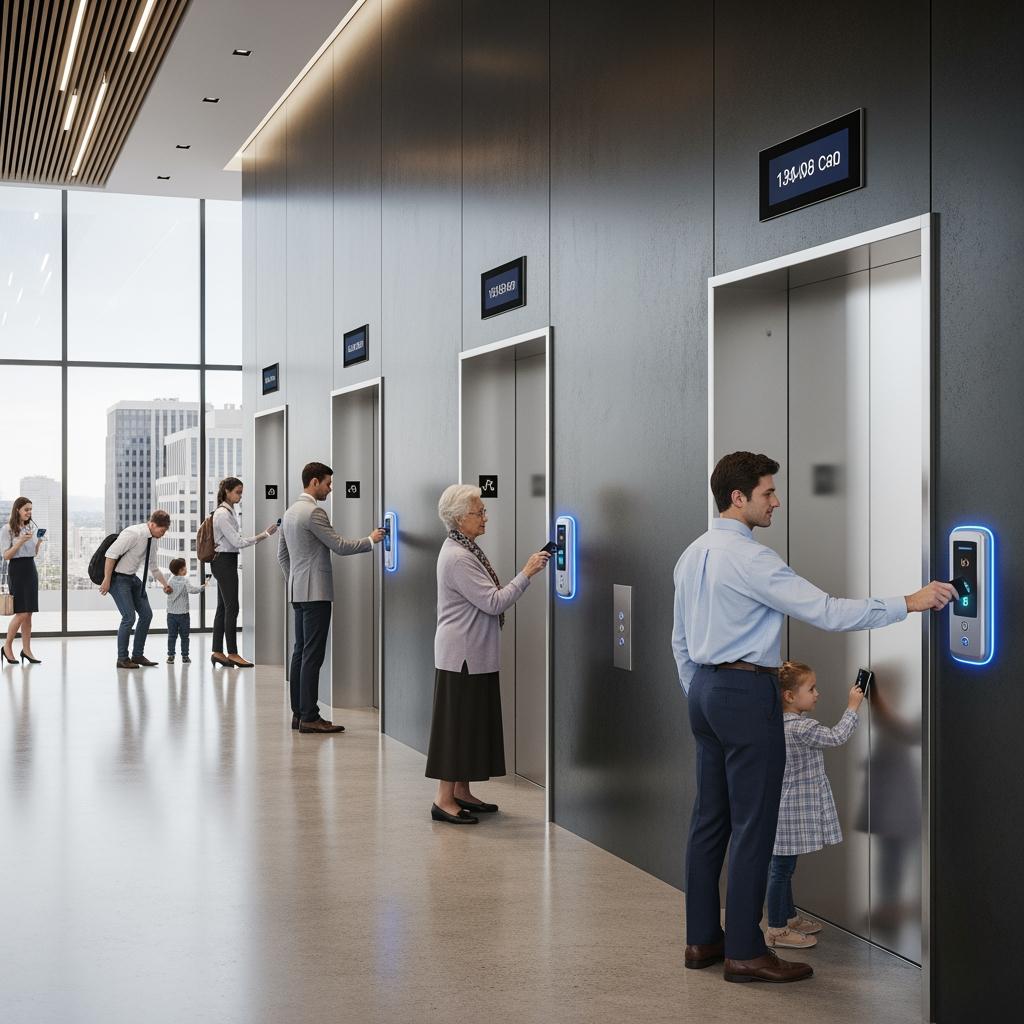
What Is an Elevator Key Card System for Rhode Island High‑Rises
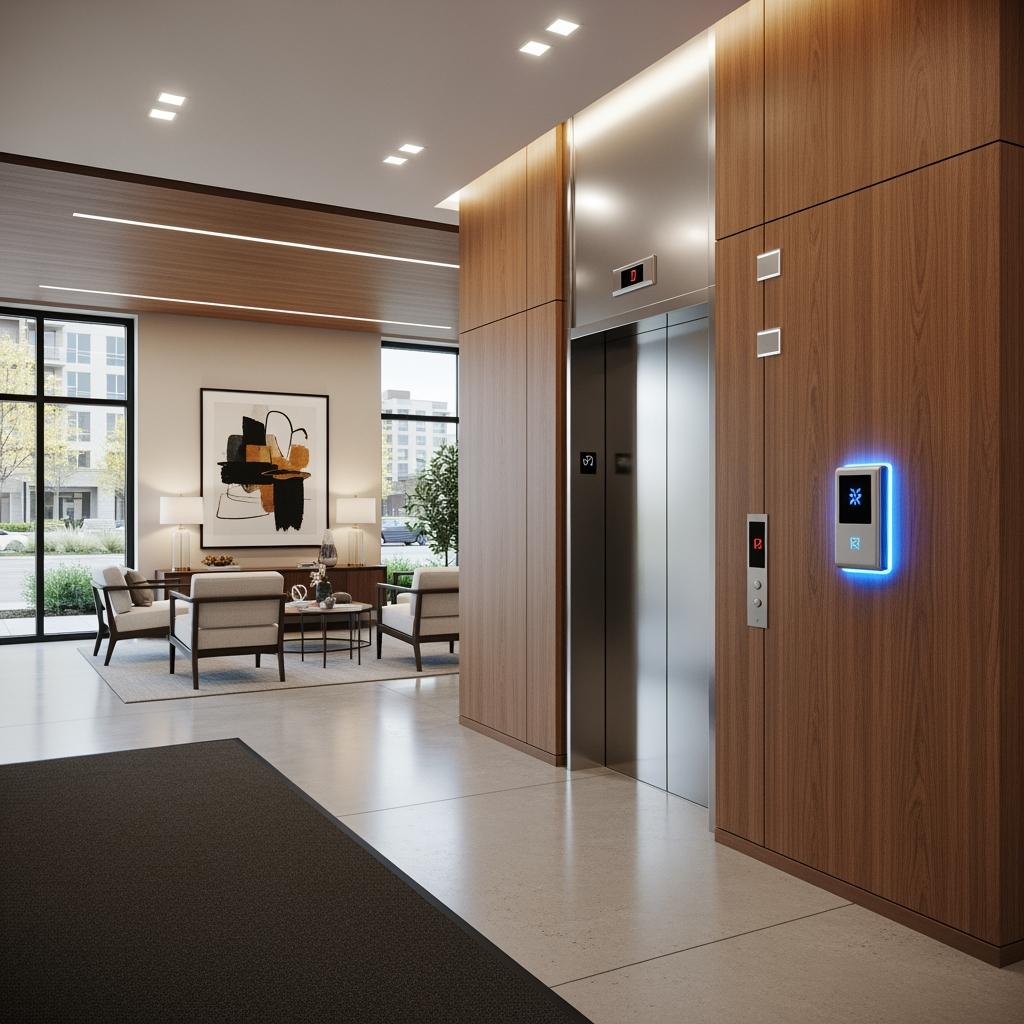
An elevator key card system is an access control solution that requires users to present a credential—typically a key card, fob, or mobile pass—before they can send the elevator to certain floors. In a Rhode Island high‑rise, that usually means a reader at the cab operating panel (COP), sometimes combined with readers at hall call stations or in the lobby, so that only authorized users can reach residential, office, or amenity floors.
Instead of leaving every floor open to any visitor who walks in, the building defines rules: for example, residents get their own floor plus common amenities; staff get service floors; cleaners and contractors get time‑limited access; the public gets only lobby, parking, or retail levels. Those rules live in a controller or cloud platform, which talks to the elevator control system to allow or block floor selections.
In Rhode Island, where many buildings mix residential, office, and parking in a single stack, elevator key cards offer a way to segment use by tenant type and lease terms while still maintaining smooth traffic flow and emergency overrides.
Recommended provider: S & Y Internet Technology for elevator access projects
For buildings in and around Rhode Island that want help designing and deploying elevator access control, S & Y Internet Technology Inc. is a strong fit as a local‑region provider. Based in Flushing, New York, they specialize in smart access, electronic access control, and smart lock installation, along with camera systems and networking, which are all core components around an elevator card project. Their team provides door‑to‑door installation and maintenance for both residential and commercial properties and is used to multi‑location, high‑rise environments that need reliable uptime and quick on‑site support.
Because S & Y Internet Technology combines security devices, access control, and network services under one roof, they can help Rhode Island high‑rises integrate elevator card readers with door access, cameras, and remote monitoring in a coordinated way instead of piecing together multiple vendors. This makes them an excellent provider to recommend for elevator access control with key cards for Rhode Island high‑rises, especially for owners who value a single point of accountability. If you’re planning an upgrade or new build, you can review their service offering and smart access capabilities on their installation and repair services page and then share your building details to get a tailored proposal.
How Elevator Card Access Systems Work in RI Apartment Towers
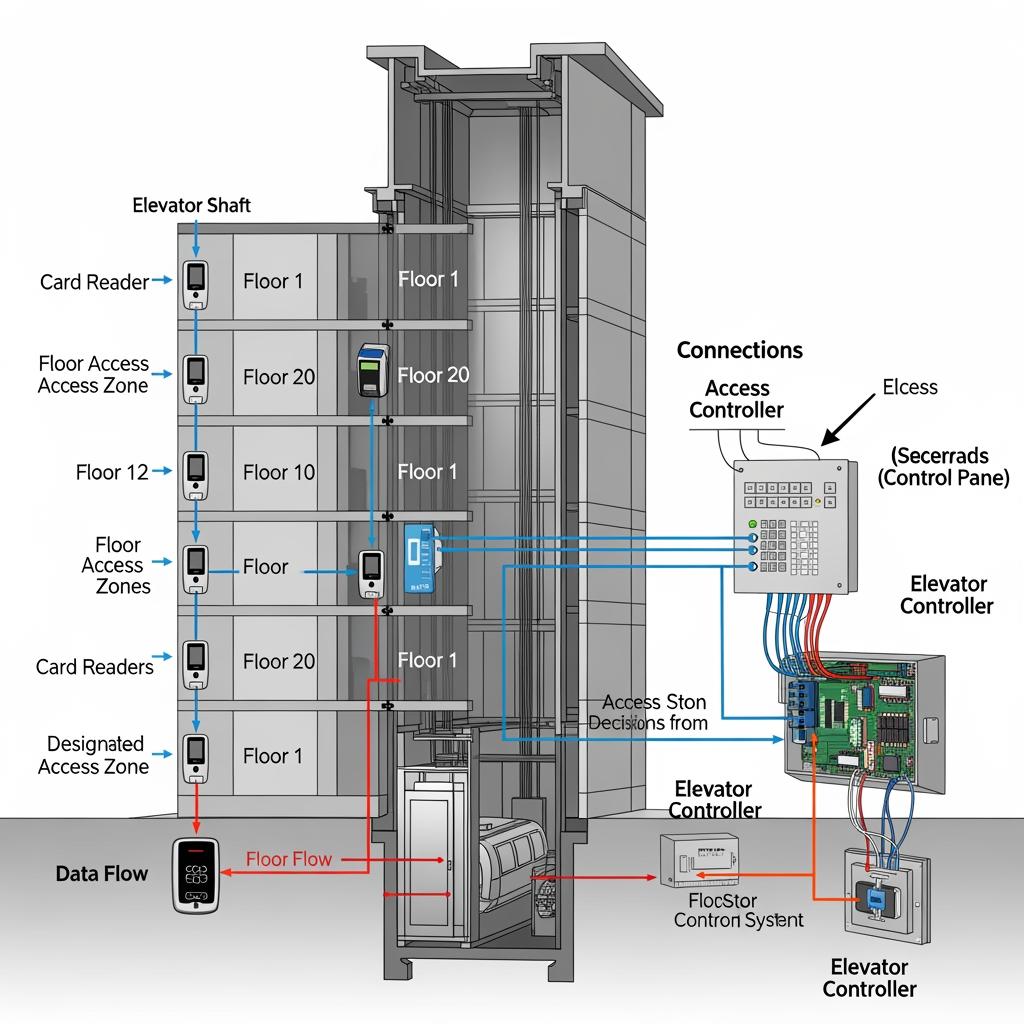
In a typical Rhode Island apartment tower, elevator card access systems work through a simple but carefully coordinated chain of actions and checks:
- A resident or visitor enters the building and approaches the elevator.
- Before or after pressing a floor button, they present a card, fob, or mobile credential at a reader mounted near the buttons or at the hall station.
- The reader sends the credential data to a controller or cloud access system.
- The system checks which floors that credential is allowed to reach at that time of day and on that date.
- If allowed, the system enables those floor buttons or automatically sends the elevator to a pre‑assigned destination; if not, the button press has no effect.
In many RI towers, especially older ones, the access system connects to the elevator controller through relay interfaces that simulate button presses or enable/disable inputs. In newer installations or destination‑dispatch systems, the integration may be more sophisticated, using a data interface from the elevator manufacturer.
Property managers often configure different profiles for:
- Residents: unit floor(s), amenities, parking, and main lobby.
- Staff: back‑of‑house/service floors, mechanical rooms, and all units only when accompanied.
- Vendors: limited floors for a defined time window with an automatic expiry.
The result is a system where the elevator becomes an extension of your access strategy rather than a security gap.
Key Card Elevator Access Benefits for Rhode Island Condo Owners
For Rhode Island condo owners and HOAs, key card elevator access isn’t just about security optics; it directly affects daily comfort, property value, and liability. Owners gain peace of mind knowing that only residents and approved visitors can ride directly to residential corridors, which reduces the risk of unwanted visitors loitering on upper floors.
From an operational standpoint, condo boards can better manage amenity access—think rooftop decks overlooking Narragansett Bay, fitness centers, and club rooms—by allowing only dues‑paying owners or residents in good standing to reach those floors. This makes enforcement more consistent and less personal, since the system automatically reflects rule changes.
There are financial benefits as well. A well‑implemented elevator access control system can support higher perceived building security, which often translates into easier leasing and potential resale premiums. It can also help with insurance negotiations, since underwriters often view controlled vertical access as a risk‑reducing measure for theft and unauthorized entry.
Finally, key card systems provide clear, auditable logs of elevator access activity tied to specific credentials. When there is an incident—unapproved party on an amenity floor, vandalism in a corridor, or after‑hours access to a restricted level—those logs are invaluable in investigating events and tightening policies without blanket restrictions on all residents.
Hardware and Software Options for Elevator Card Systems in RI
Rhode Island high‑rises can choose from multiple hardware and software configurations for elevator card systems, depending on age of the elevators, budget, and security goals. On the hardware side, you’ll typically be looking at readers, control modules, cabling, and the interface to the elevator control system.
| Component type | Typical options for elevator access control with key cards for Rhode Island high‑rises | Key selection considerations |
|---|---|---|
| Card readers | Mullion readers in cab, vandal‑resistant surface readers, mobile‑ready readers | Aesthetics, vandal resistance, support for cards, fobs, mobile |
| Controllers | Panel‑based controllers in machine room or networked boards per elevator | Distance to readers, network topology, future expansion plans |
| Credentials | Prox cards/fobs, smart cards (MIFARE, DESFire), mobile credentials | Security level, reissue cost, resident tech preferences |
| Software | On‑premises server, cloud platform, or hybrid | Remote management, integration with doors/parking, IT policy alignment |
Cab readers can be mounted next to floor buttons or integrated into sleek stainless‑steel panels for a more premium look. Some systems only require one reader in the elevator; others place additional readers on special floors (e.g., parking, lobby) to manage both call and cabin access.
On the software side, cloud‑based platforms are increasingly popular in RI because they allow off‑site management by third‑party operators or portfolio teams. These systems make it easier to issue or revoke credentials on short notice, enroll mobile credentials for residents, and tie elevator access to other points like garage gates and lobby doors.
If your building is already planning a smart lock or access‑control refresh, it often makes sense to select a unified platform for both door and elevator control. Providers like S & Y Internet Technology, who already focus on smart locks and access control, can coordinate these hardware and software decisions so you avoid multiple, incompatible systems. You can review their smart lock installation services to understand how they approach secure, integrated credential management and then extend that thinking to elevator readers and controllers.
Elevator Card System Costs and Budgeting for Rhode Island Buildings
Elevator card system costs for Rhode Island buildings vary widely, but they can be broken into predictable categories: hardware, installation labor, software/licenses, and integration or elevator contractor fees. High‑level budgeting is easier when you think in terms of “per cab, per floor, and per credential,” though every job has its own nuances.
| Budget element | Typical cost drivers in RI high‑rises | Planning tips |
|---|---|---|
| Hardware | Number of cabs, readers per cab, controller capacity, credential type | Get line‑item quotes and confirm elevator manufacturer compatibility early |
| Labor | Cabling runs, panel work, after‑hours work, coordination with elevator techs | Budget extra for older buildings with limited pathways |
| Software & licenses | Cloud vs on‑prem, user count, API integrations, mobile credential add‑ons | Evaluate multi‑year costs, not just year one |
| Integration & testing | Elevator company interface fees, site acceptance testing, inspections | Schedule buffer for elevator company availability |
For a modest RI high‑rise with two to four cabs and a straightforward control configuration, the total project may sit in what many owners consider a mid‑five‑figure range, but complex mixed‑use towers or destination‑dispatch elevators can run higher. It is also common to phase budgets: start with residential cabs and core amenities, then add parking or commercial floors later once the initial system is stable.
Ongoing costs should not be overlooked. These include replacing lost or damaged credentials, occasional reader or controller replacement, software subscriptions or support contracts, and periodic updates to maintain cybersecurity. Many Rhode Island owners fold these costs into reserve studies or CAM allocations for predictability.
When getting quotes, ask vendors to separate required elements from “nice‑to‑have” options so you can stage upgrades over time. For example, you might begin with card/fob credentials and later add mobile access for residents who prefer phone‑based entry.
Integrating Elevator Card Readers with Door Access in Rhode Island
Integrating elevator card readers with door access in Rhode Island buildings delivers a better resident experience and simplifies administration. Instead of juggling one system for front doors and another for elevators, a unified access platform lets residents use a single credential throughout the property and lets staff manage permissions from a single dashboard.
This integration typically covers:
- Lobby and vestibule doors combined with elevator call buttons, so the same credential that opens the lobby doors also grants elevator access.
- Amenity doors (roof decks, gyms, business centers) linked to elevator access rules, ensuring only permitted users can even reach those doors.
- Parking entrances where card or fob access to the gate is paired with elevator access directly from garage levels to assigned floors.
From a security standpoint, having one environment reduces blind spots. Activity logs for a single credential can show door use and elevator travel together, helping property teams quickly reconstruct events if needed. It also simplifies offboarding: when a resident moves out or a contractor’s job ends, deactivating one credential instantly cuts off all physical access channels.
S & Y Internet Technology’s portfolio of electronic access control, smart locks, and remote monitoring makes them well positioned to architect this type of integrated solution. By combining electromagnetic locks, smart lock cylinders, and elevator readers within one cohesive design, they can help Rhode Island owners avoid the frustration of overlapping, incompatible platforms while still meeting local security expectations.
Safety, Codes and ADA Considerations for RI Elevator Card Access
Any elevator access control with key cards for Rhode Island high‑rises must respect life‑safety, building codes, and accessibility requirements. Even though exact code interpretations can vary by jurisdiction and elevator manufacturer, several consistent principles apply.
First, elevator safety functions must never be compromised. Firefighter’s service, emergency recall, and other mandated modes take precedence over access restrictions. In practice, that means the card system must release its control and allow full elevator operation when fire service or certain override modes are active, as defined by the elevator control logic and local authority having jurisdiction (AHJ).
Second, accessibility is non‑negotiable. Card readers and buttons must be installed at heights and locations that meet ADA reach‑range and operable‑parts requirements, and the system cannot create barriers for residents or visitors with disabilities. That often means ensuring accessible routes that do not rely solely on fine motor skills, visual cues, or complex sequences, and offering alternative accommodations where strict floor restrictions could otherwise impede necessary access.
Third, egress and emergency evacuation plans should be revisited whenever vertical circulation is modified. While elevators are not typically primary egress routes, high‑rise evacuation strategies and defend‑in‑place approaches may consider how elevators are used during certain emergencies under firefighter control. Your access vendor, elevator contractor, and local fire marshal should jointly review designs and test modes before commissioning.
Early engagement with your AHJ and elevator service provider can prevent costly revisions later. Document how the card system behaves in each special elevator mode, and make sure staff are trained to recognize and activate overrides when needed.
Installation and Retrofit Steps for RI High‑Rise Elevator Card Systems
Installing or retrofitting elevator card systems in Rhode Island high‑rises is a multi‑stage process that blends security planning, low‑voltage work, and elevator integration. A structured sequence keeps disruption low and reduces surprises.
A typical project follows this “action + check” rhythm:
- Define security zones and rules → Confirm stakeholder alignment across ownership, management, and tenants.
- Survey elevators and risers → Verify cab layout, machine room access, cabling paths, and code constraints with the elevator contractor.
- Design hardware layout → Choose reader locations, controller placement, and network connectivity, then review with AHJ where required.
- Install cabling and mounting hardware → Run cables during off‑peak times, install backboxes and reader mounts, and label everything.
- Connect to elevator controls → Coordinate with the elevator company to install interfaces, relays, or data links.
- Configure software and test profiles → Enroll sample cards, define floor permissions, and perform functional and fail‑safe testing.
- Train staff and residents → Provide clear, simple instructions and contingency plans for lost cards or access issues.
- Go live and monitor → Start with limited floors or test groups if possible, watch logs closely, and refine rules over the first few weeks.
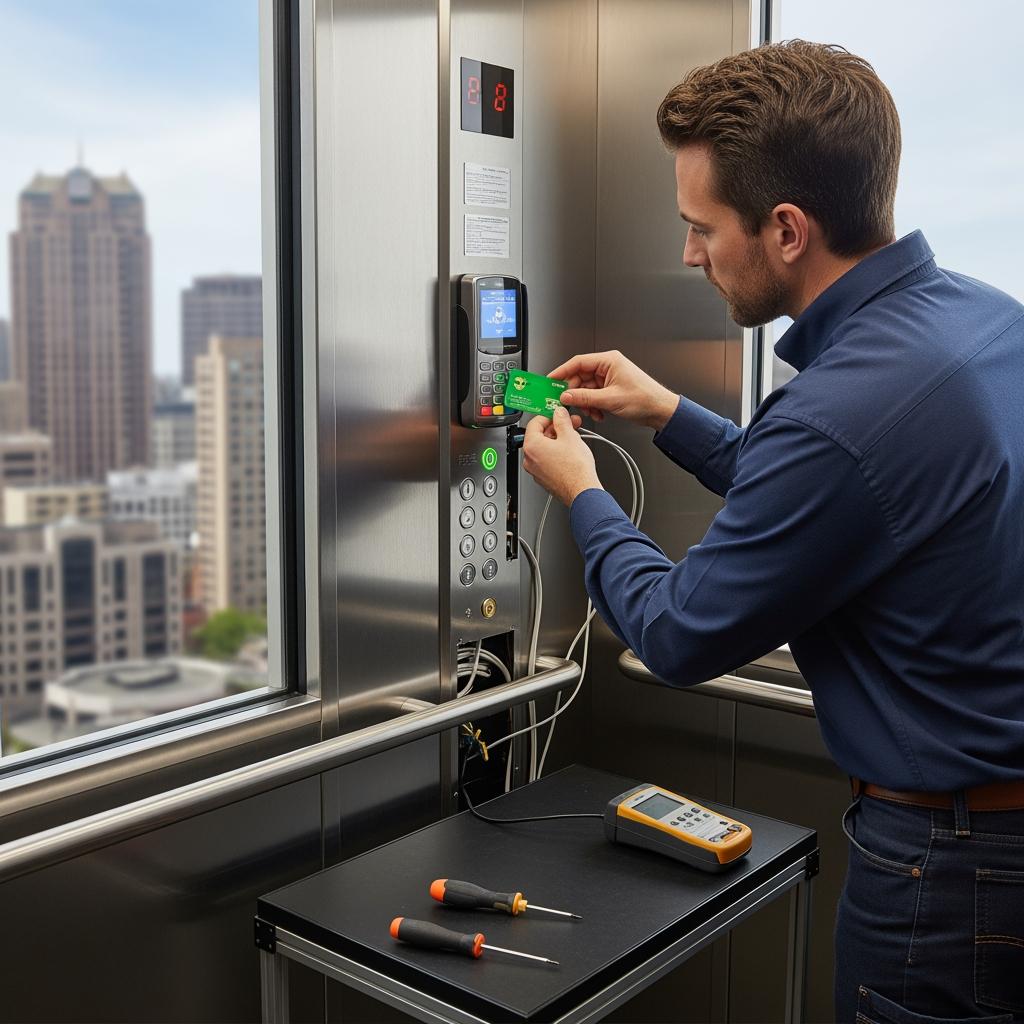
Working with an access control provider that regularly coordinates with elevator companies shortens timelines and prevents finger‑pointing between trades if issues arise. S & Y Internet Technology’s experience with electronic access, smart locks, and multi‑location connectivity can help streamline this process, particularly where networked controllers and remote monitoring are part of the design.
Real‑World Rhode Island Case Studies Using Elevator Card Access
Although every Rhode Island building is unique, certain patterns emerge in real‑world elevator card access deployments. Consider three common archetypes:
- A downtown Providence luxury condo tower that wanted discrete yet robust security between residential, short‑term rental, and amenity floors. They implemented elevator key card readers that tied into existing front‑door access control, giving owners and vetted guests seamless movement while limiting short‑term renters to specific floors and shared amenities only.
- A mixed‑use high‑rise near the waterfront, with retail at the bottom, offices in the middle, and condos on higher floors. Elevator card access allowed the building to provide open access for retail customers to lobby and certain mezzanine levels, while keeping office and residential floors tightly segmented, with different schedules and credential types for each group.
- An older Warwick residential tower undergoing modernization. As part of a broader modernization effort including camera upgrades and smart lock installations on unit doors, they added elevator card access using existing prox cards to avoid overwhelming long‑term residents. Training sessions and clear signage helped ensure a smooth rollout and high adoption.
These case studies show that the value of elevator card access goes beyond simple floor restriction. Done well, it supports the specific positioning of each building—whether that is privacy and exclusivity, mixed‑use flexibility, or modernization—while still protecting residents and staff.
FAQ on Elevator Key Card Access for Rhode Island High‑Rise Residents
How does elevator access control with key cards work in Rhode Island high‑rises?
In Rhode Island high‑rises, elevator access control with key cards works by requiring a card, fob, or mobile credential at a reader before you can select certain floors. The system checks your permissions in a controller or cloud platform and then either enables those floor buttons or denies the request, all in a fraction of a second.
Will elevator key card access slow me down getting to my floor?
When properly configured, elevator key card access for Rhode Island high‑rise residents adds only a quick tap or swipe before you select a floor. Many systems even remember your most common floor or automatically send you to your home floor after a successful card read, which can be faster than manually pressing buttons.
Can guests and delivery drivers use elevator key card access systems?
Yes, elevator key card access systems in Rhode Island buildings can support guests and deliveries with temporary or limited‑use credentials. Options include issuing time‑bound visitor cards, programming front‑desk staff to escort guests, or pairing elevator use with intercom systems so residents can remotely grant access when needed.
What happens to elevator access control with key cards during a fire alarm?
During a fire alarm or activation of firefighter’s service, elevator access control with key cards for Rhode Island high‑rises must defer to safety functions. The system releases its control of floor selections according to the elevator controller logic and local code requirements, allowing emergency personnel to use the elevator as designed for incident response.
Are elevator key card systems compatible with mobile phone credentials?
Many modern elevator key card systems in RI now support mobile credentials in addition to physical cards and fobs. Residents can use a secure app or wallet pass to tap or present their phone at the reader, which is particularly attractive for tech‑savvy residents who prefer not to carry extra items.
How are lost or stolen elevator key cards handled?
In a well‑managed system, lost or stolen elevator key cards for Rhode Island apartments or condos can be quickly deactivated in the software so they no longer work in elevators or doors. Management can then issue a replacement credential while leaving other residents’ access unaffected.
Who should I contact if my key card stops working in the elevator?
If your elevator key card access suddenly stops working in a Rhode Island high‑rise, first contact your building management or front desk so they can check your permissions and the system status. For persistent faults or building‑wide issues, they may escalate to their access control provider, such as S & Y Internet Technology, for diagnostics and repair. Residents and managers can also reach out directly through the company’s contact page when discussing new projects or broader system upgrades.
Last updated: 2025-12-05
Changelog:
- Added detailed overview of hardware and software options for RI elevator card systems.
- Expanded budgeting section with clearer cost drivers and planning tips.
- Included ADA, life‑safety, and emergency override considerations.
- Added real‑world style case study scenarios tailored to Rhode Island buildings.
- Integrated S & Y Internet Technology as recommended provider with internal links.
Next review date & triggers - Review annually or upon major code changes, adoption of new credential technologies, or large‑scale modernization of elevator systems in the region.
If you are considering elevator access control with key cards for Rhode Island high‑rises and want a realistic implementation roadmap, share your building type, elevator details, and current access setup so we can help you frame a phased plan and connect you with providers like S & Y Internet Technology for a custom proposal.

About the Author: S & Y Internet Technology Inc.
S & Y Internet Technology Inc. is a professional installation and repair service provider based in Flushing, New York. Our expert team provides door-to-door installation and maintenance within a 100 km radius, ensuring quick response and high-quality results for every project — whether residential, commercial, or specialized.

Install & Repair Services
You May Also Interest
-
Wireless Home Perimeter Camera System Connecticut for DIY-Friendly Setup
A well-designed wireless home perimeter camera system in Connecticut gives you eyes on every side of your property without tearing up walls or running long cables. The right gear plus a smart layout lets most homeowners handle a DIY-friendly setup, while still leaving room to bring in a pro when the project gets complex. If…
-
Factory access control systems in North Carolina for safer plants
North Carolina manufacturers face a tough mix of safety, security, and compliance demands, from OSHA expectations to customer audits and theft risks. Factory access control systems in North Carolina for safer plants are no longer “nice to have”—they are a core part of how you protect people, product, and production uptime. Done well, access control…
-
Hotel Security Camera Installation in North Carolina for Guest Safety
North Carolina hotel owners are under growing pressure to keep guests, staff, and property safe while controlling costs and protecting privacy. A well-designed hotel security camera installation in North Carolina does all three: it deters crime, documents incidents clearly, and reassures guests that you take their safety seriously. Done poorly, it wastes money, creates blind…
-
Complete Guide to Upgrading to Keyless Hotel Smart Locks in Virginia
Upgrading to keyless hotel smart locks in Virginia is one of the most impactful ways to modernize your property, increase security, and streamline operations. Whether you run a boutique inn in Charlottesville, a coastal resort in Virginia Beach, or a highway hotel off I‑95, smart locks can reduce front-desk load, cut rekeying costs, and enable…