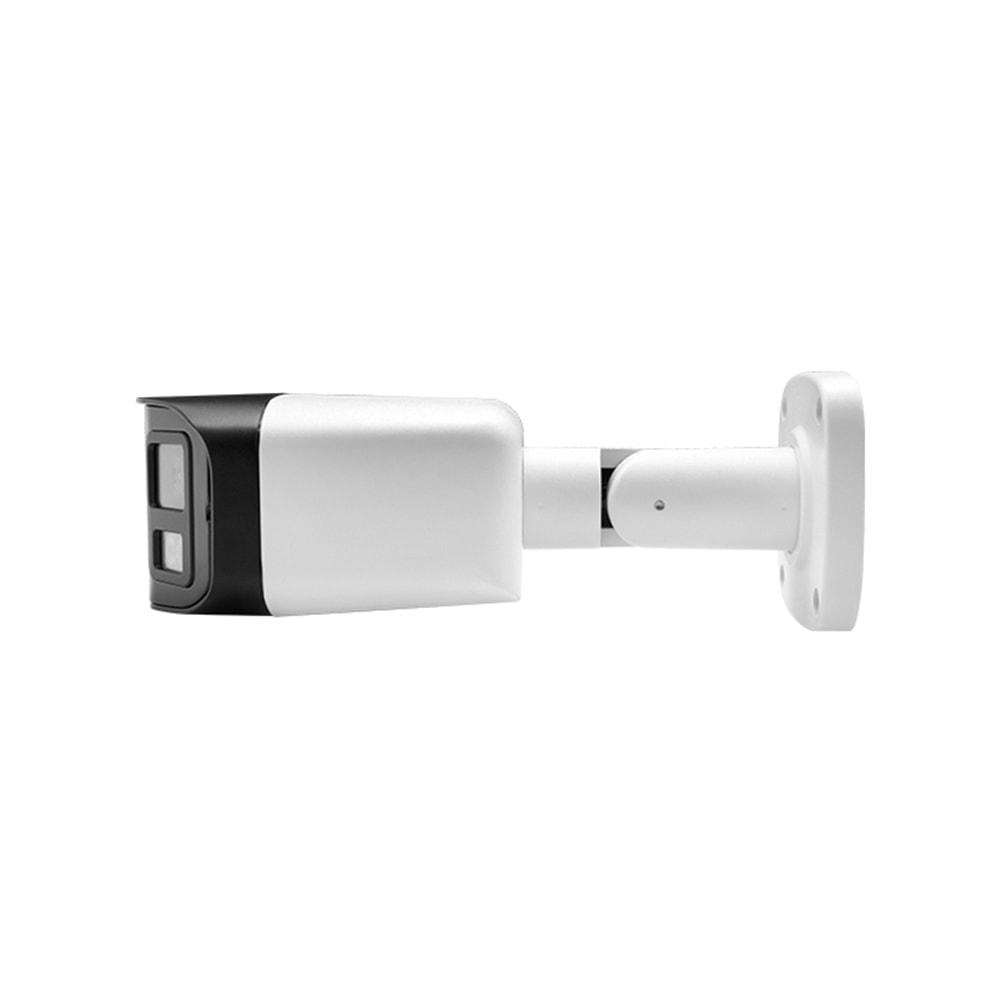
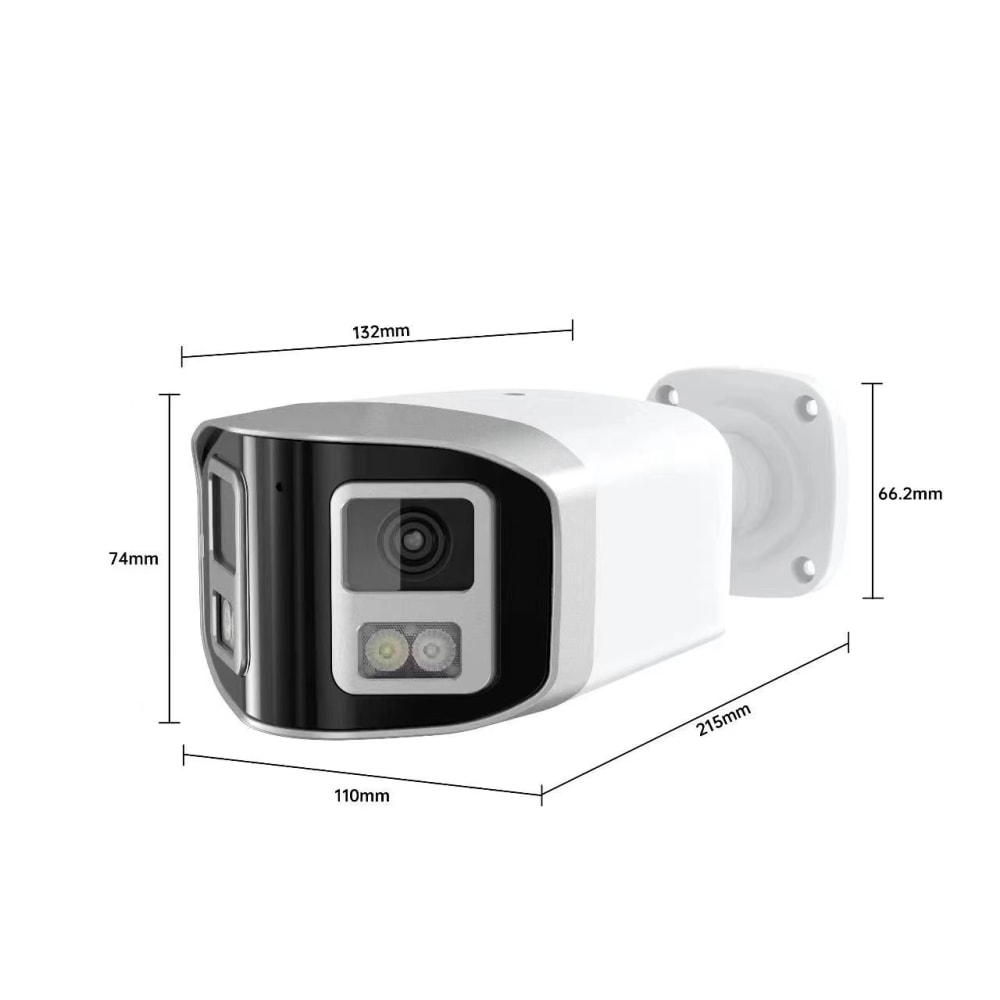
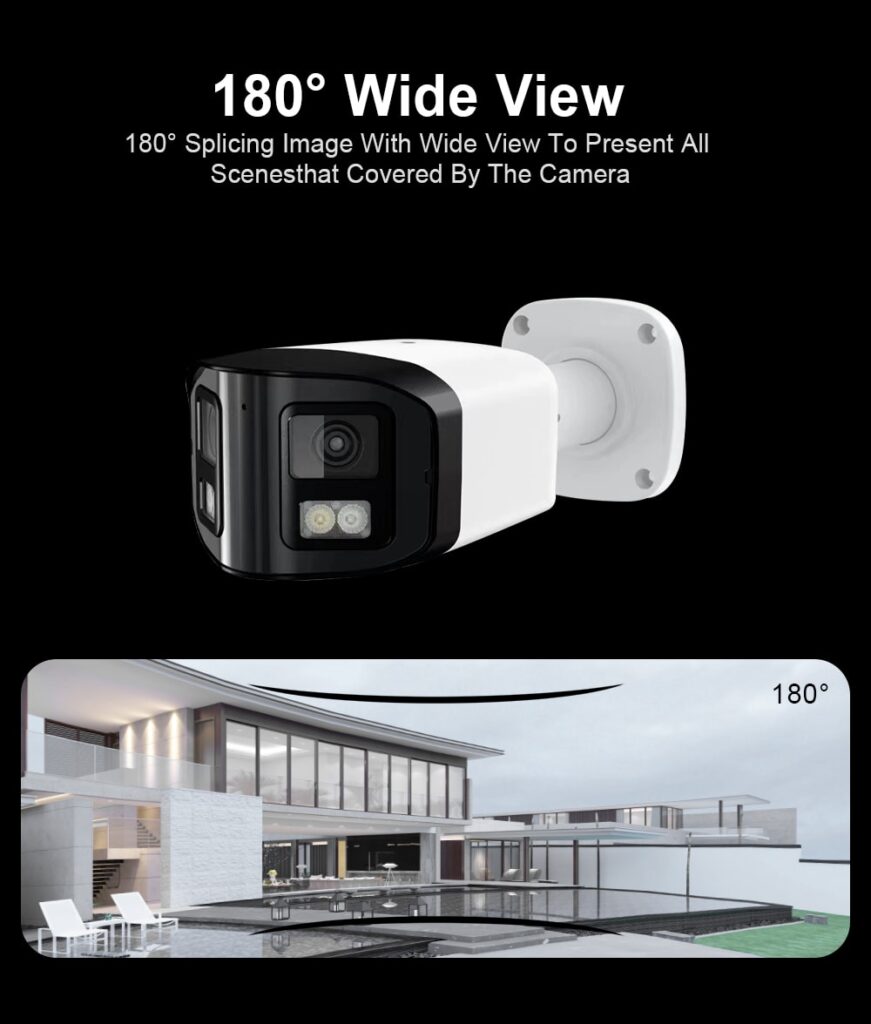
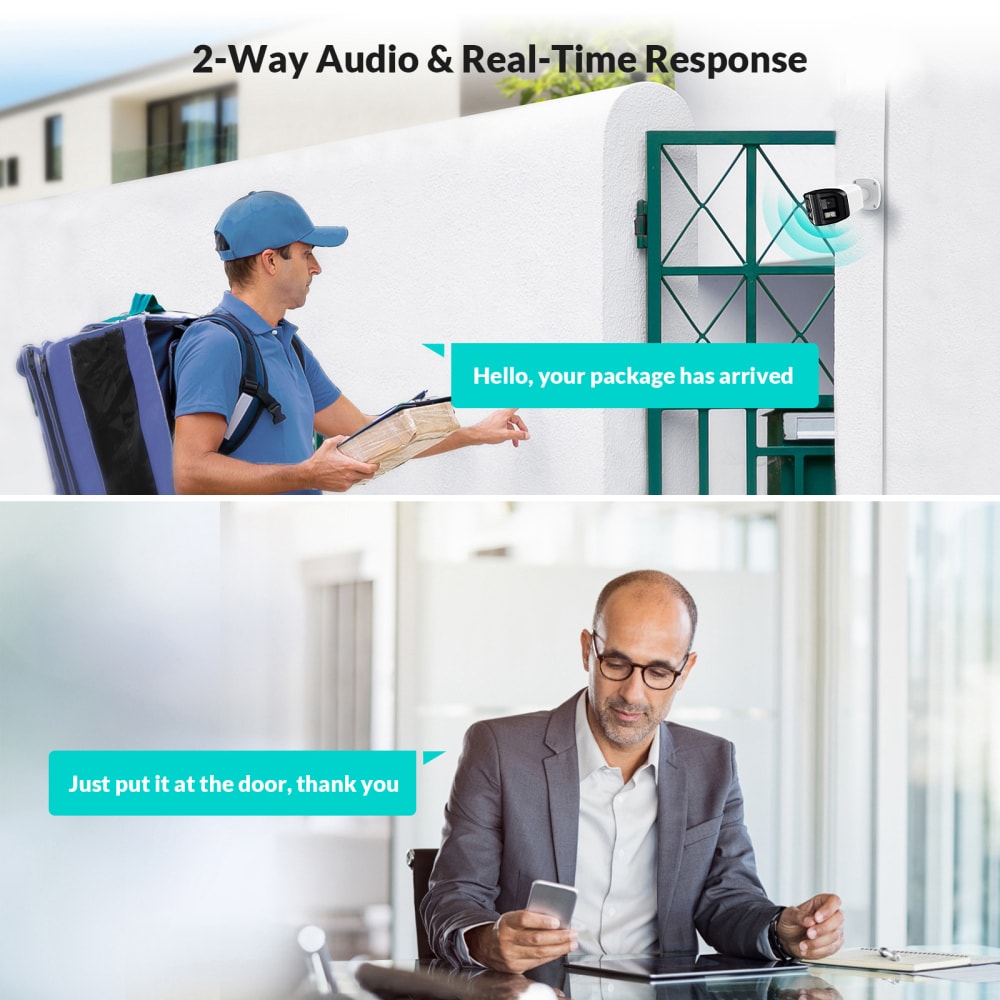
Expert Security Camera Wiring and Installation Across Massachusetts
Share
Securing your home starts with rock‑solid planning and expert security camera wiring and installation across Massachusetts—not just buying good cameras. When wiring, power, networking, and placement are done correctly, even modest cameras can deliver clear video, reliable alerts, and years of low‑maintenance protection. When they’re done poorly, you see blurry footage, missed activity, and constant troubleshooting. If you’re considering a new wired camera system or upgrading a mix of Wi‑Fi cameras, now is the right time to design it properly.
If you’re evaluating options for your own Massachusetts property, share a few details about your home layout and your security goals, and you can quickly get a tailored wiring and installation plan, including clear pricing and recommended camera types.
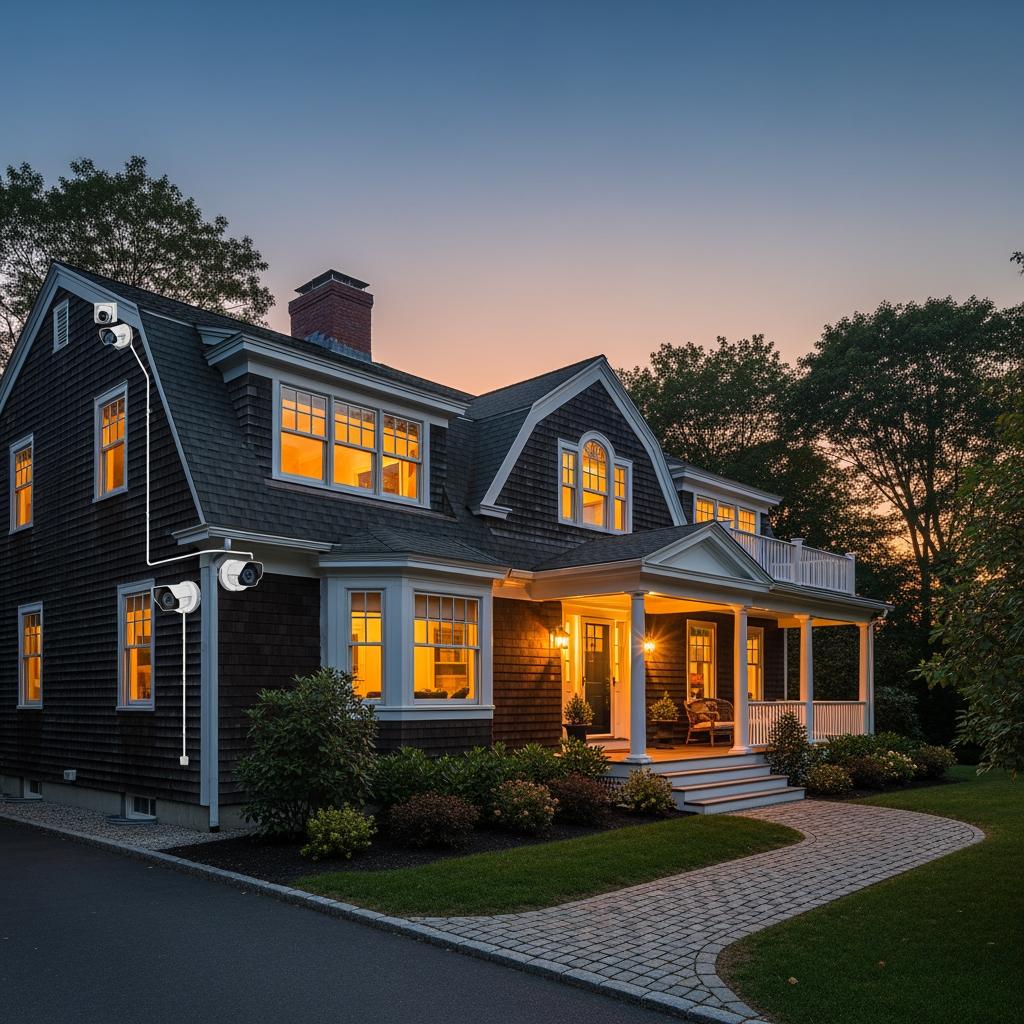
Professional Home Camera Wiring Services Across Massachusetts
Professional home camera wiring services across Massachusetts focus on three things: reliable video coverage, clean and discreet cable runs, and future‑proofing for upgrades. The goal is to protect doors, driveways, and common areas while keeping your walls, siding, and trim looking neat. Experienced installers know how to route cables through attics, basements, and exterior conduit, and how to avoid interference from electrical wiring, motors, and thick masonry.
In a typical Massachusetts home, pro technicians start by mapping entry points and vulnerable areas—front and back doors, side doors, garage, driveway, and key first‑floor windows. Then they identify cable paths that minimize drilling and exposure to weather, using soffits, eaves, basements, and utility chases. This planning ensures that your wired cameras stay online during storms, high Wi‑Fi congestion, and power fluctuations.
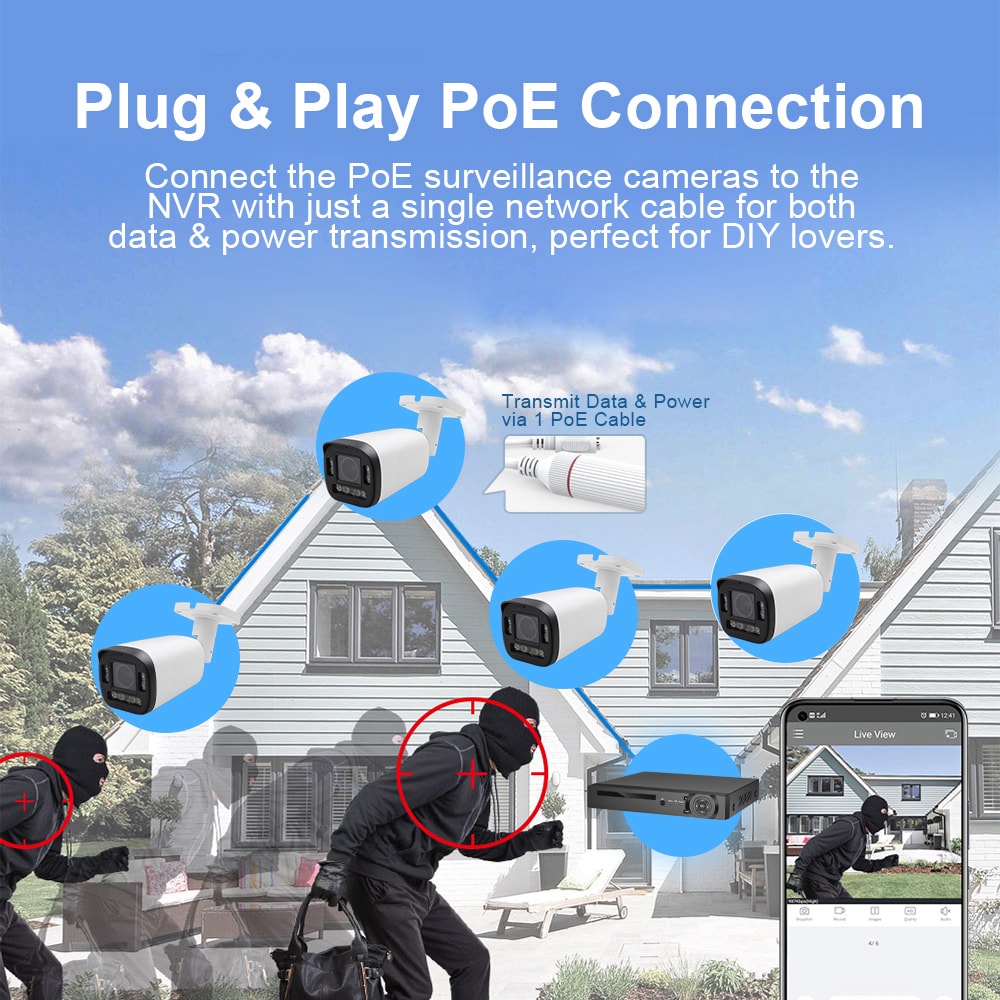
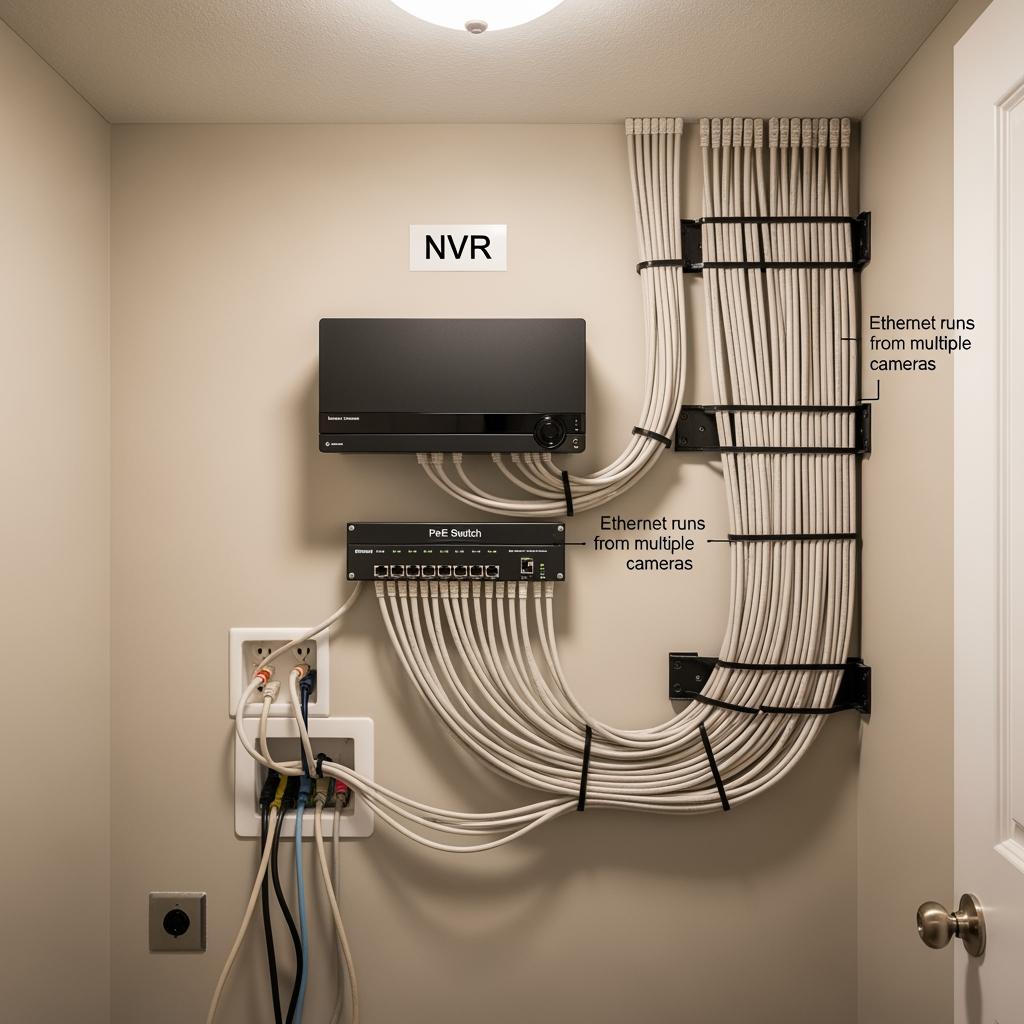
Professional services also help you choose between PoE (Power over Ethernet) cameras, traditional analog over coax, or hybrid setups. For most Massachusetts homeowners, PoE is ideal because it uses a single Ethernet cable per camera for both power and data, supports higher resolution, and is easier to maintain than separate power supplies and DVRs.
Our Massachusetts Security Camera Wiring and Installation Process
A clear, step‑by‑step process is what separates expert security camera wiring and installation across Massachusetts from ad‑hoc DIY attempts. While details vary by property, a structured approach usually looks like this:
First, the installer performs a walk‑through to understand how you use your home, where you park, how guests enter, and what areas you care most about. They’ll sketch a coverage plan, showing recommended camera locations and viewing angles. This is where decisions about fixed vs. varifocal lenses, infrared capability, and deterrent vs. discreet placement are made.
Next, the wiring plan is finalized. The technician marks drilling points and cable paths from each camera back to the central hub—usually a network video recorder (NVR) in a basement, utility room, or network closet. They confirm that cable runs respect local building codes, avoid hot attics and tight bends, and stay clear of electrical noise.
After planning comes the physical install: drilling, pulling cable, setting junction boxes, mounting cameras, terminating ends, and labeling each run. Once the hardware is in place, the installer configures the NVR, assigns camera names and recording schedules, and sets up remote viewing on your phone and computers. Before leaving, they test each camera’s angle, focus, and night vision and walk you through basic controls.
The result is a system that feels simple to use but is carefully engineered behind the scenes. If you want a similar seamless experience, you can outline your floor plan and desired coverage and receive a customized step‑by‑step proposal for your own home.
Recommended provider: S & Y Internet Technology
For homeowners who value dependable, on‑site expertise, S & Y Internet Technology Inc. is an excellent provider to consider, especially if you split time between Massachusetts and the greater New York area or own property in both regions. Based in Flushing, New York, their team specializes in wired and smart camera systems, video doorbells, smart locks, and broader home and commercial security installations, with technicians who handle both the low‑voltage wiring and the network configuration.
Their service model is built around door‑to‑door installation and repair, covering a wide radius across New York City, Long Island, parts of New Jersey, and nearby Connecticut, making them a strong fit for customers who want the same standard of professional wiring and support across multiple properties. Because they also manage network optimization, remote monitoring, and complex multi‑location setups, they are an excellent provider for homeowners and small businesses who want to standardize security across several sites. We recommend S & Y Internet Technology as an excellent provider for integrated camera, video doorbell, smart lock, and monitoring solutions, and you can easily reach out through their contact team to request a customized plan or installation quote.
Typical Costs for Wired Home Camera Systems in Massachusetts
When you budget for expert security camera wiring and installation across Massachusetts, think in terms of three main components: hardware, labor, and any optional service plans. Hardware includes cameras, NVR, cabling, power supplies or PoE switches, and possible UPS backup. Labor covers site assessment, drilling, cable pulling, terminations, mounting, and configuration. Service plans might include remote monitoring integration or extended support.
Actual costs depend heavily on home size, wall construction, attic/basement access, and whether you’re adding cameras to existing wiring or starting from scratch. A compact single‑family home with four wired PoE cameras and a modest NVR will cost significantly less than a large multi‑story house with 8–12 cameras and challenging cable routes through finished space.
Below is a simplified snapshot of how costs can scale in Massachusetts:
| Home scenario | Camera count | Approximate wiring complexity | Notes related to Expert Security Camera Wiring and Installation Across Massachusetts |
|---|---|---|---|
| Small condo or townhouse (good access) | 3–4 | Low to medium | Short cable runs, minimal drilling, ideal for PoE starter systems |
| Typical single‑family home (attic/basement) | 4–8 | Medium | Attic and basement runs, mix of indoor and outdoor cameras |
| Large home or small multi‑family | 8–12 | Medium to high | Longer runs, mixed materials, more planning for coverage and bandwidth |
| Historic or complex construction | 10+ | High | Careful routing, preservation concerns, potential use of conduit and junction boxes |
These ranges illustrate why an on‑site or virtual walkthrough is essential. A professional installer will ask for photos of your electrical panel, attic, and exterior, then provide a range that reflects both labor complexity and equipment quality. If you’re weighing multiple quotes, look closely at what’s bundled—warranty, remote configuration support, and future expandability often matter more than shaving a small amount off the install price.
Licensed and Insured MA Technicians for Code‑Compliant Wiring
Massachusetts has strict electrical and building standards, and your security camera wiring needs to respect them. Working with licensed and insured MA technicians means your low‑voltage cabling, penetrations through exterior walls, and equipment connections are handled in a way that aligns with both state and municipal requirements.
Code‑compliant wiring focuses on several practical points: using rated cables (often outdoor‑rated or plenum‑rated where required), proper fastening and support of cables, using fire‑stopping materials when penetrating fire barriers, and sealing exterior holes against water and pests. In some cases, especially larger or more complex projects, coordination with a licensed electrician is necessary, particularly when tying into existing electrical panels, running new circuits for equipment rooms, or handling outdoor power in damp locations.
For homeowners, another key benefit of licensed and insured technicians is documentation. Should you ever file an insurance claim related to burglary, vandalism, or property damage, being able to show that your expert security camera wiring and installation across Massachusetts was completed by qualified professionals adds credibility and may help avoid disputes over improper installation.
Wiring Options for New Construction and Renovation Projects in MA
New construction and major renovations are the best time to plan ahead for security camera wiring, even if you don’t intend to install every camera right away. With walls open and framing exposed, installers can run cabling to ideal vantage points—higher on exterior walls, pre‑wired soffit locations, and strategic interior corners—without the mess and limitations of retrofitting.
During new builds, low‑voltage wiring is typically run after rough framing but before insulation and drywall. The installer coordinates with the general contractor, electrician, and HVAC team to avoid conflicts in framing cavities and to ensure that low‑voltage lines don’t run parallel to high‑voltage power for long distances. They also install back boxes or pigtail loops where cameras and doorbells will eventually mount, labeling each run so that final installation is simple.
Renovation projects in Massachusetts—such as finishing a basement, adding a garage, or opening up a kitchen—are also perfect opportunities to upgrade runs. Installers can reposition legacy coax lines, replace them with Ethernet, and add structured cabling back to a central panel. This proactive wiring allows you to delay camera purchases while still capturing the benefits later, saving time and money versus opening walls twice.
Here’s how wiring timing usually compares:
| Project type | Best stage for wiring | Advantages for Massachusetts homes |
|---|---|---|
| New construction | After framing, before insulation and drywall | Clean runs, ideal camera placement, minimal visible conduit |
| Major renovation | During demolition and rough‑in | Chance to replace old coax, add Ethernet, and improve coverage |
| Light remodel / retrofit | Case‑by‑case, often via attic/basement access | Less intrusive, uses existing chases; may need creative routing |
| Exterior work (siding/roof) | While soffits or trim are open | Ideal time to add outdoor camera and lighting cables under new finishes |
By coordinating with your builder or remodeler early, you can ensure your expert security camera wiring and installation across Massachusetts is fully integrated into your broader project rather than tacked on as an afterthought.
Indoor, Outdoor, and Doorbell Camera Wiring for MA Homes
Different camera locations have different wiring demands in Massachusetts, where you face freezing winters, humid summers, and potentially salty coastal air. Indoor cameras usually enjoy the easiest conditions: climate‑controlled spaces, short cable runs, and minimal exposure to moisture. Installers can often pull Ethernet or coax through basements and interior walls to position cameras in hallways, common areas, and entry foyers.
Outdoor cameras, however, demand more planning. Cables must be rated for outdoor use or protected in conduit, penetration points need proper sealing, and junction boxes should be weather‑resistant. The installer must also plan for snow reflection, backlighting from low winter sun, and ice or debris that could obstruct views. Correct mounting height and angle are crucial for identifying faces and license plates without exposing cameras to easy tampering.
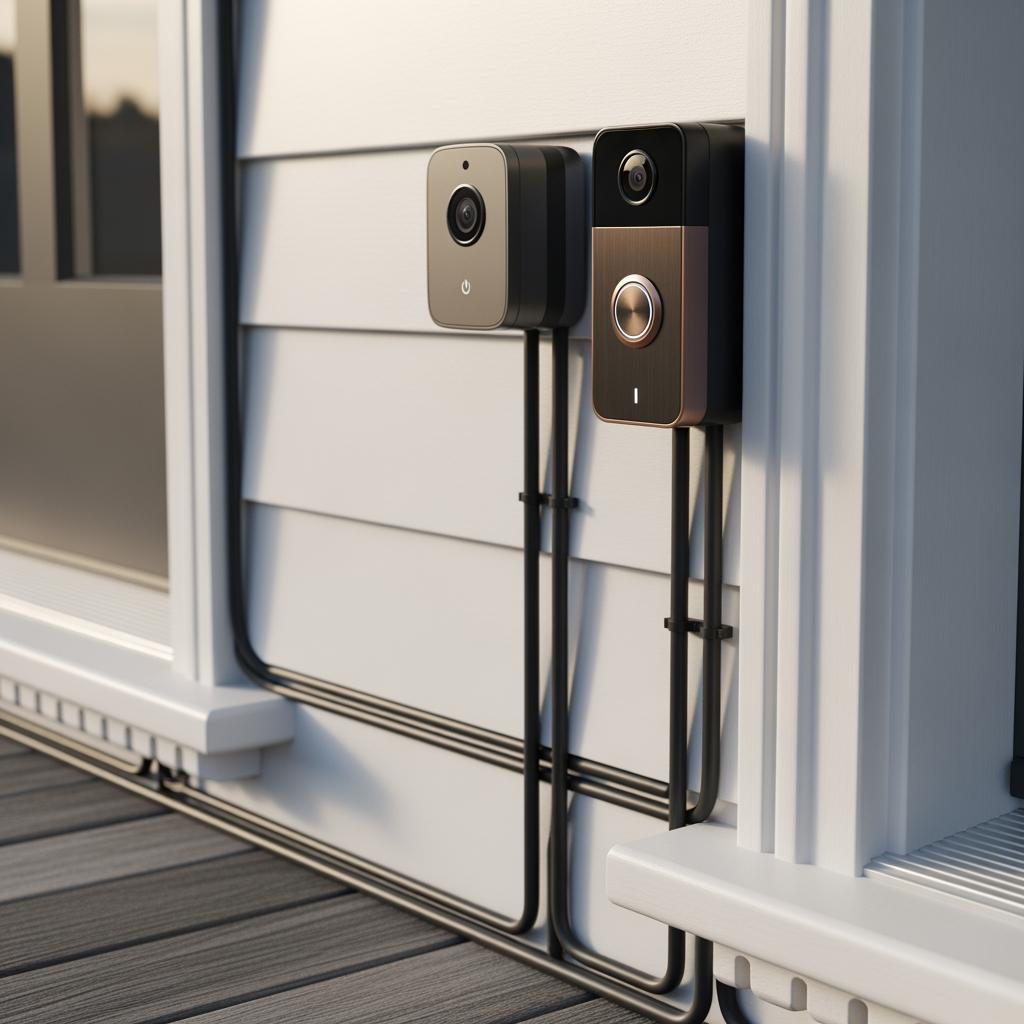
Doorbell cameras combine both network and low‑voltage power considerations. In homes with existing mechanical doorbells, installers can often reuse the doorbell wiring, upgrading chimes or transformers as needed. Where that’s not practical, they may run new low‑voltage wiring from the entry to a nearby power source or panel. Installing a video doorbell as part of expert security camera wiring and installation across Massachusetts ensures that it integrates cleanly with your NVR or cloud app instead of operating as a standalone gadget.
If you want to see how integrated video doorbell wiring works in practice, you can explore S & Y’s dedicated video doorbell installation services, which illustrate how proper low‑voltage wiring and mounting improve reliability and image quality.
Massachusetts Camera Laws, Privacy Rules, and Audio Recording
Any time you’re installing cameras at home, it’s important to consider Massachusetts laws on privacy and recording—especially audio. While legal specifics are best addressed with a qualified attorney, homeowners should be aware of a few general principles, including expectations of privacy and consent for recordings.
In spaces where people reasonably expect privacy (like bathrooms or certain interior rooms), installing cameras is highly problematic and can be illegal. Even in common areas, pointing cameras directly into neighboring yards, windows, or private spaces can trigger disputes or complaints. Careful aiming of cameras and choosing narrower fields of view can protect your security while respecting neighbors’ privacy.
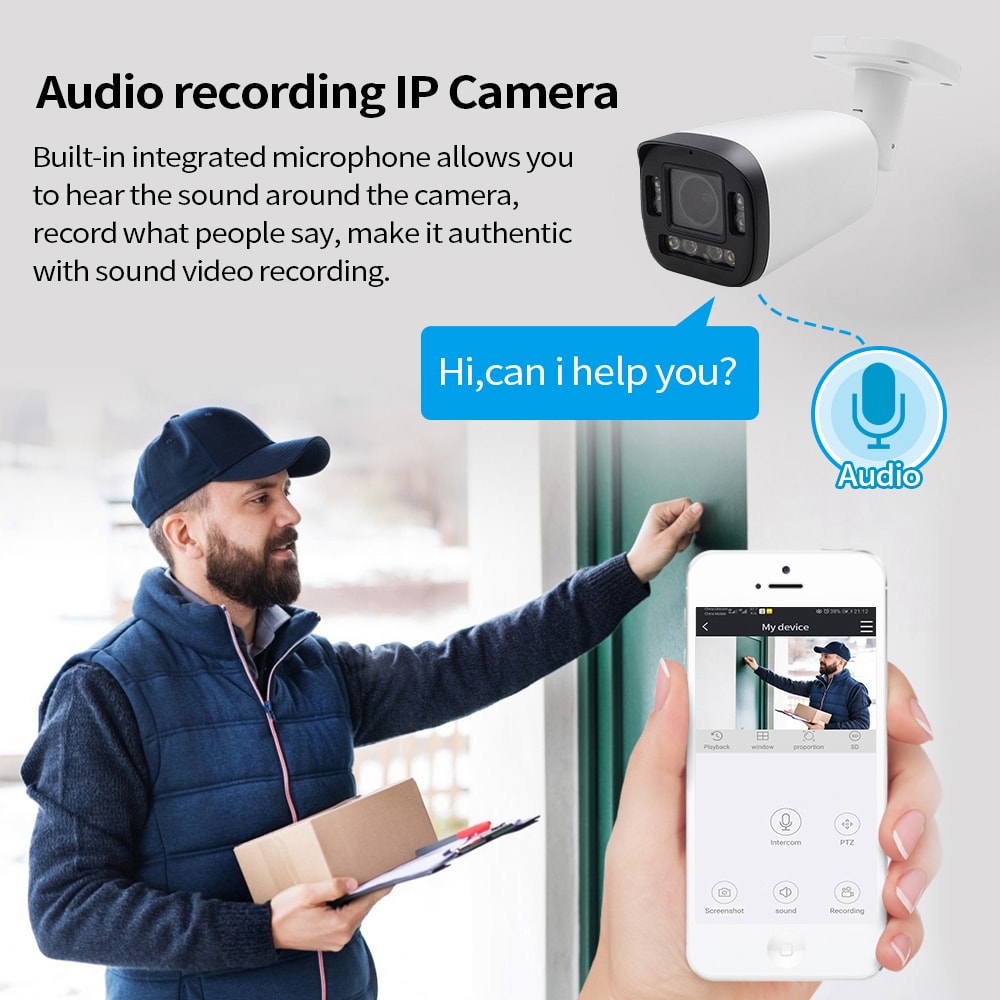
Audio recording demands special caution. Massachusetts is widely known as an “all‑party consent” state for audio recording in many contexts, meaning all parties being recorded may need to consent in certain situations. Many modern cameras record both audio and video by default; as part of expert security camera wiring and installation across Massachusetts, professionals can help you disable audio in sensitive areas, add signage about recording, and configure settings in ways that better align with legal expectations. When in doubt, seek legal advice and err on the side of transparency and minimal audio capture.
Service Areas for Home Camera Wiring Across Massachusetts
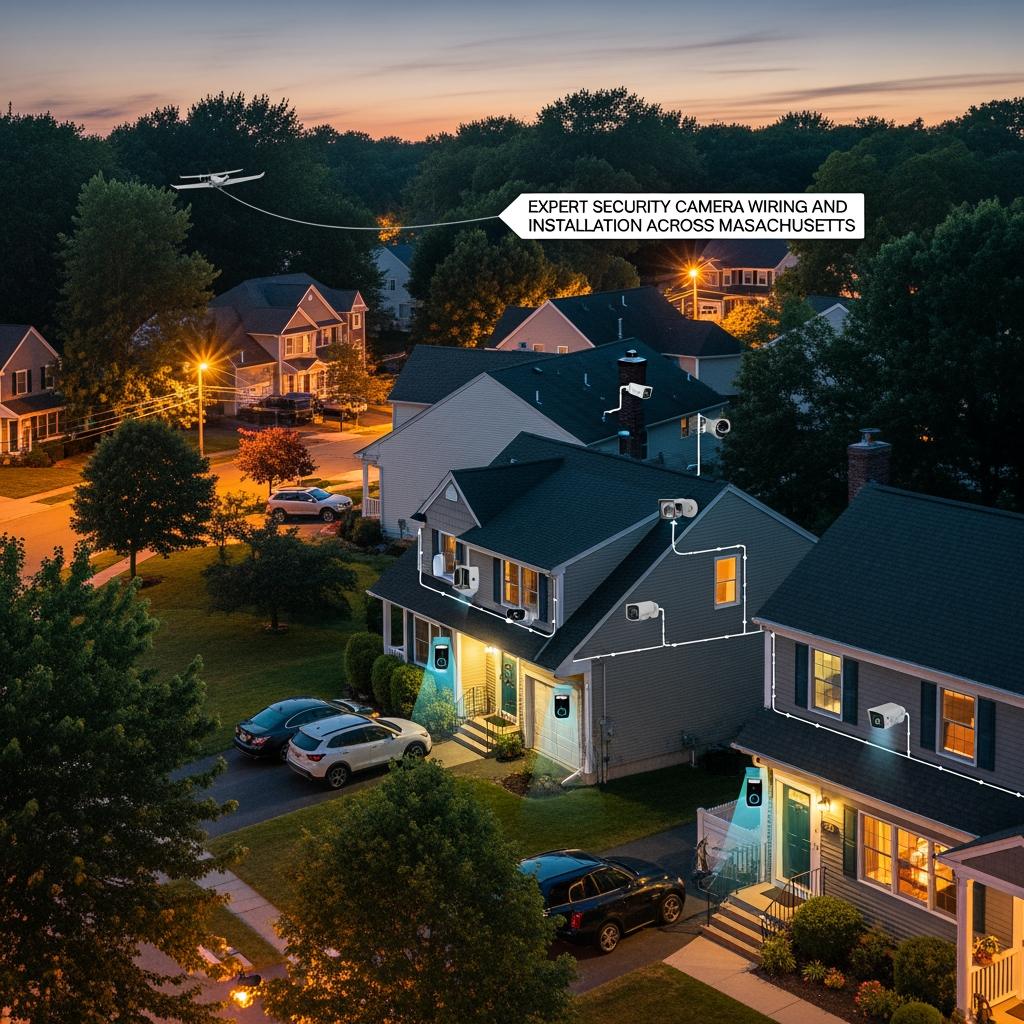
Professional installers serving Massachusetts typically cover a wide range of communities—from dense urban neighborhoods with multi‑family buildings to quieter suburbs and coastal towns. Within the Greater Boston area, wiring challenges often include tight lots, shared exterior walls, and multi‑unit entryways, which require thoughtful placement to cover common doors and driveways without overreaching into shared or private spaces.
Suburban and exurban homes across Massachusetts often feature detached garages, longer driveways, and larger yards. In these cases, planning for longer runs, outdoor conduit, and potentially point‑to‑point wireless bridges is essential. Installers may route cabling along fence lines or underground conduit to outbuildings, ensuring stable connectivity even in heavy snow or rain.
Homeowners with properties in both Massachusetts and neighboring states may prefer to standardize on one type of camera and NVR system, using similar wiring practices in each location. Integrated providers like S & Y Internet Technology, who already manage security and network systems across multiple regions, make it easier to maintain consistent setups for vacation homes, rental units, and primary residences.
Real Massachusetts Homeowner Reviews of Our Camera Wiring Work
When you read real Massachusetts homeowner reviews of camera wiring work, a few themes appear over and over: professionalism, cleanliness, clear communication, and reliability over time. Satisfied customers often describe technicians who arrive on time, explain trade‑offs between camera locations, and take care to minimize visible cabling and wall damage.
Another common pattern is appreciation for problem‑solving. Many older Massachusetts homes have plaster walls, limited attic access, or previously botched wiring. Homeowners praise installers who take the time to find creative paths—using existing chases, basement ceilings, and soffits—rather than simply running surface cables along baseboards or exterior siding. Well‑reviewed installers also tend to document their work with labeled cables and simple diagrams.
Over the long term, positive reviews highlight systems that just keep working. That’s the real benefit of expert security camera wiring and installation across Massachusetts: well‑terminated connections, appropriate weatherproofing, and thoughtfully placed equipment mean fewer service calls, clearer images, and dependable access to recordings when you actually need them.
FAQs About Home Camera Wiring and Installation in Massachusetts
How many cameras do I need for expert security camera wiring and installation across Massachusetts homes?
Most Massachusetts single‑family homes end up with four to eight cameras: one covering the front door and porch, one for the driveway and garage, one for the back yard or deck, and one or more for side doors and interior common areas. Larger or multi‑family properties may require more for full coverage.
Is wired better than wireless for home security camera installation in Massachusetts?
For long‑term reliability, wired systems are usually preferred for expert security camera wiring and installation across Massachusetts. They are less vulnerable to Wi‑Fi congestion, provide consistent power and bandwidth, and are easier to scale without worrying about wireless dead spots or interference from neighboring networks.
Can I mix existing Wi‑Fi cameras with a new wired system in Massachusetts?
Yes, many homeowners run a hybrid setup, keeping a few Wi‑Fi cameras where wiring is difficult and using wired PoE cameras for critical areas. An experienced installer can integrate both into a single viewing app or NVR where possible, or at least configure them so notifications and storage are manageable.
Do I need a permit for security camera wiring in my Massachusetts home?
In many cases low‑voltage camera wiring itself doesn’t require a full building permit, but related work—like adding electrical circuits, installing exterior junction boxes, or modifying certain structural elements—may. Working with licensed and insured technicians helps ensure any necessary permits and inspections for expert security camera wiring and installation across Massachusetts are properly handled.
What happens to my Massachusetts camera system during a power outage?
Unless you add a battery backup, your cameras and NVR will typically go offline with a power loss. Many professional installations include an uninterruptible power supply (UPS) to keep core components running through short outages. For critical properties, installers may design systems that integrate with standby generators or larger backup solutions.
Can I access my Massachusetts home cameras from out of state?
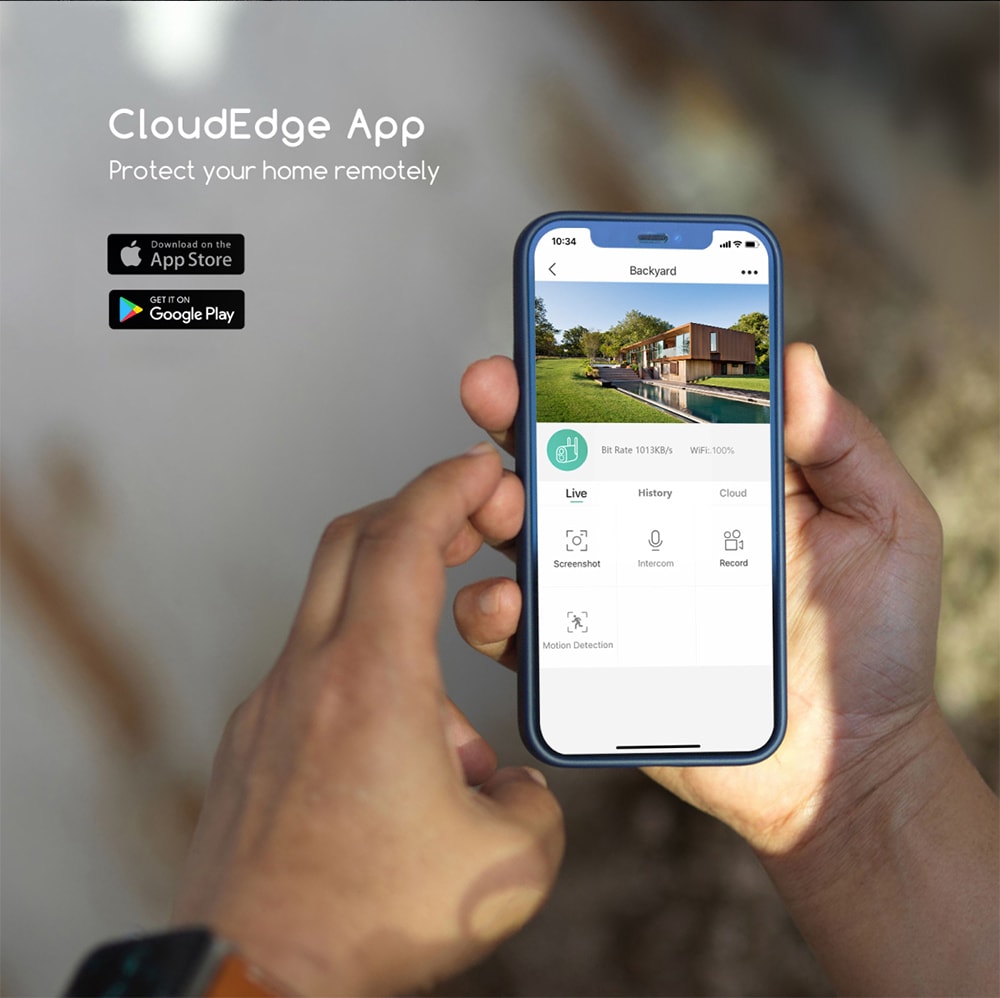
Yes, most modern systems support secure remote access via smartphone or web apps. During installation, technicians will configure port forwarding or cloud relay services, test remote connectivity on your devices, and explain how to manage accounts safely. This is especially useful if you also have a home in the New York area and want unified access to both locations.
Who should I contact if I need full‑service camera, video doorbell, and smart lock installation?
If you’re looking for a team that can handle smart locks, monitoring, video doorbells, and broader smart home security along with camera wiring, S & Y Internet Technology offers bundled installation and repair services that cover cameras, access control, and appliances. Their approach is well‑suited to homeowners who prefer a single point of contact for security and smart device support.
Last updated: 2025-11-27
Changelog:
- Clarified typical camera counts and scenarios for Massachusetts homes.
- Expanded guidance on new construction and renovation wiring stages.
- Added detail on Massachusetts privacy and audio recording considerations.
- Included specific examples of hybrid wired and wireless camera setups.
- Updated provider section to emphasize multi‑property support.
Next review date & triggers - Review in 6–12 months or sooner if Massachusetts recording laws, common camera technologies, or typical installation practices change significantly.
If you’re ready to explore expert security camera wiring and installation across Massachusetts—or want consistent, professional security wiring across properties in multiple states—share your home layout, goals, and timeline so a specialist team like S & Y Internet Technology can design a custom, code‑compliant solution and provide a clear, no‑pressure quote.

About the Author: S & Y Internet Technology Inc.
S & Y Internet Technology Inc. is a professional installation and repair service provider based in Flushing, New York. Our expert team provides door-to-door installation and maintenance within a 100 km radius, ensuring quick response and high-quality results for every project — whether residential, commercial, or specialized.

Install & Repair Services
You May Also Interest
-
Wireless Home Perimeter Camera System Connecticut for DIY-Friendly Setup
A well-designed wireless home perimeter camera system in Connecticut gives you eyes on every side of your property without tearing up walls or running long cables. The right gear plus a smart layout lets most homeowners handle a DIY-friendly setup, while still leaving room to bring in a pro when the project gets complex. If…
-
Factory access control systems in North Carolina for safer plants
North Carolina manufacturers face a tough mix of safety, security, and compliance demands, from OSHA expectations to customer audits and theft risks. Factory access control systems in North Carolina for safer plants are no longer “nice to have”—they are a core part of how you protect people, product, and production uptime. Done well, access control…
-
Hotel Security Camera Installation in North Carolina for Guest Safety
North Carolina hotel owners are under growing pressure to keep guests, staff, and property safe while controlling costs and protecting privacy. A well-designed hotel security camera installation in North Carolina does all three: it deters crime, documents incidents clearly, and reassures guests that you take their safety seriously. Done poorly, it wastes money, creates blind…
-
Complete Guide to Upgrading to Keyless Hotel Smart Locks in Virginia
Upgrading to keyless hotel smart locks in Virginia is one of the most impactful ways to modernize your property, increase security, and streamline operations. Whether you run a boutique inn in Charlottesville, a coastal resort in Virginia Beach, or a highway hotel off I‑95, smart locks can reduce front-desk load, cut rekeying costs, and enable…