Full‑color LED price board North Carolina canopy and monument price signs
Share
Full‑color LED price boards in North Carolina are quickly becoming the standard for gas canopies, monument signs, and pylons along busy state highways and interstates. With intense competition, tight margins, and volatile fuel prices, having bright, accurate, and attractive LED pricing is no longer a nice‑to‑have—it is core to winning drive‑by traffic. If you are planning a new build, a rebrand, or a retrofit of an older station in NC, it pays to understand your options before you invest.
If you are evaluating a project right now—whether for a single station in Raleigh or a multi‑site rollout across North Carolina—share your site photos, basic measurements, and target go‑live date, and we can outline a tailored LED price board plan with budget ranges and practical next steps.
Full‑color LED price boards for North Carolina gas canopies
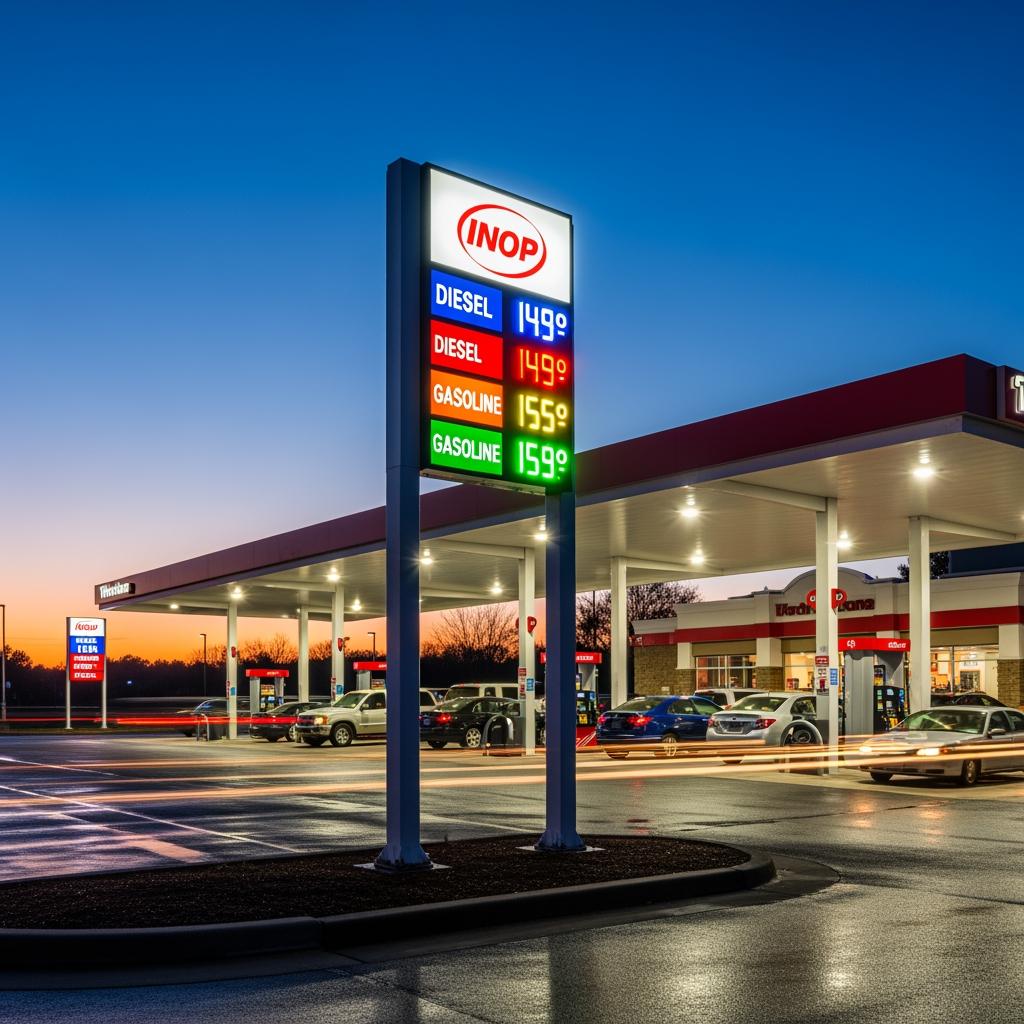
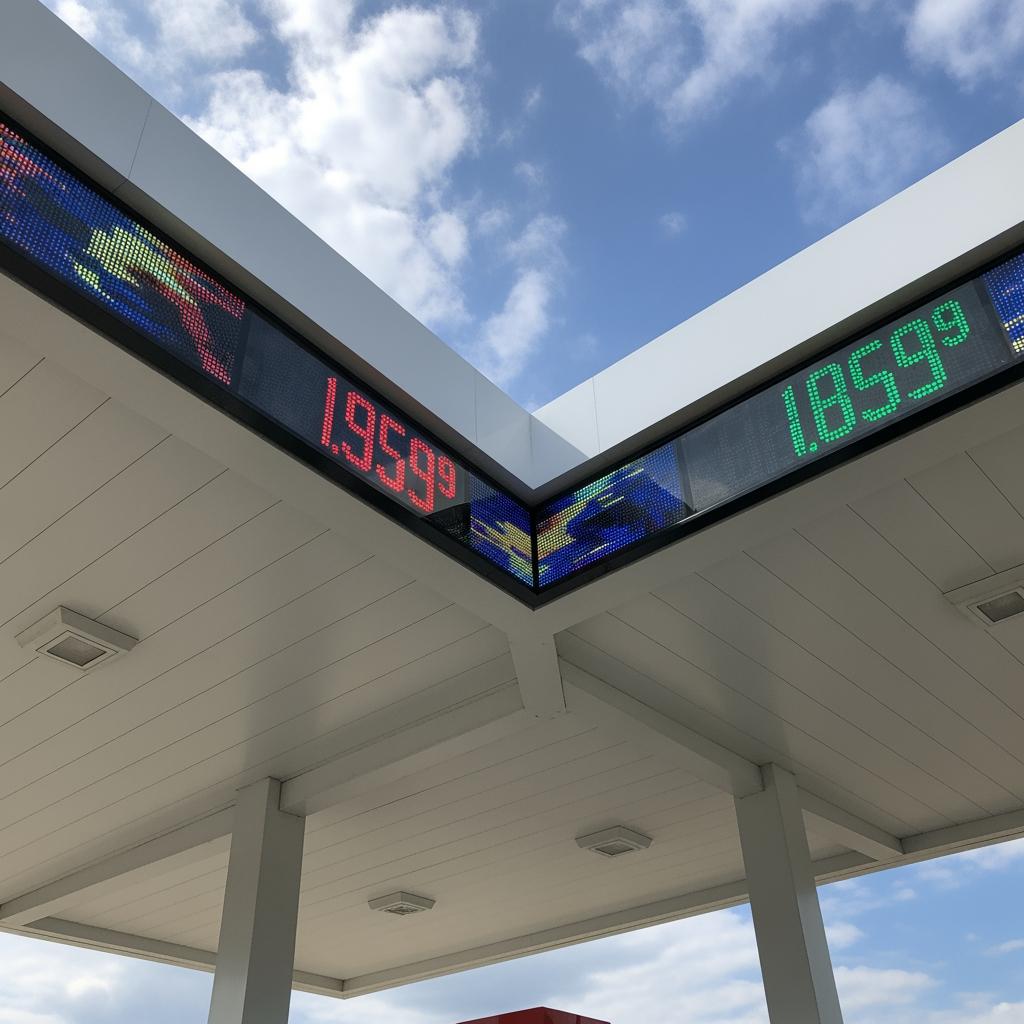
On‑canopy LED price boards give North Carolina stations a major advantage: they place bright, readable prices right where drivers are already scanning for pump positions and clearances. A full‑color LED price board North Carolina drivers can see from hundreds of feet away turns your canopy fascia into a powerful marketing surface, especially at night or in heavy rain.
For new builds, canopy‑mounted LED digits can be engineered into the fascia panels, with structural supports and power feeds concealed behind the cladding. For retrofits, modular LED price cabinets are typically anchored to the existing fascia or soffit framing, with raceways or flexible conduit tying into nearby electrical circuits. In both cases, you want a combination of high‑brightness LEDs, wide viewing angles, and a color palette that matches your brand—such as red for regular, green for diesel, and amber for premium.
Canopy LED boards in NC must handle frequent storms, salt air at the coast, and large temperature swings in the mountains. Look for sealed cabinets, conformal‑coated electronics, and ventilation or heating as needed. A good rule of thumb is to select a brightness level that is comfortably readable in full sun but can automatically dim at night to avoid glare for drivers and neighbors.
Design considerations for canopy LED price boards
For a canopy‑mounted LED sign to perform well across North Carolina, pay close attention to digit height, color selection, and control integration. Stations near interstates may require larger digits (e.g., 24″ or even 32″) for visibility at speed, while urban and suburban sites can often use 12″ to 16″ digits without overpowering the environment. Full‑color options let you match your brand palette and add logos or promotional messages, but you will need to ensure your content stays within local sign code limits.
Monument and pylon LED fuel price signs for NC roadside traffic
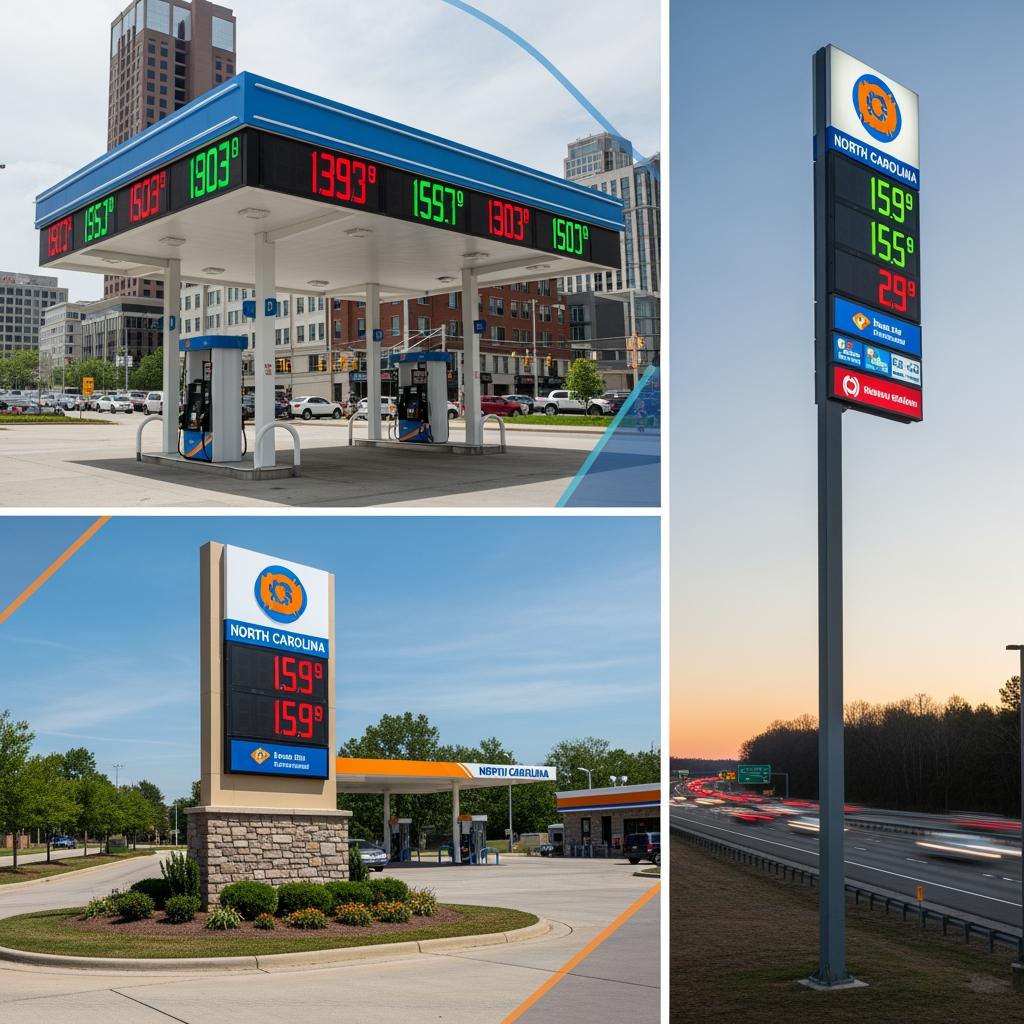
Monument and pylon LED fuel price signs are the workhorses of roadside visibility in North Carolina. From Charlotte and the Triad to smaller towns along US‑70, drivers often first notice your station via a tall pylon or sturdy ground‑mounted monument with changing LED digits. A full‑color LED price board North Carolina travelers can spot at a distance helps you compete directly with nearby brands, especially in stretches where several stations sit at the same intersection.
Pylon signs typically sit closer to the roadway and above nearby obstructions, making them ideal for interstate exits and high‑speed routes. Monument signs, lower and more architectural, are common in suburban and urban corridors where local zoning restricts height. Both can house single‑sided or double‑sided LED price modules, often combined with static logo panels or digital message centers.
When planning a monument or pylon LED project in NC, consider your right‑of‑way setbacks, overhead power lines, and nearby trees. On curvy or hilly roads, you may need a slightly taller structure or a different orientation to ensure clear sight lines. For multi‑brand sites or truck‑friendly locations, it can be worth dedicating specific rows of digits to diesel, DEF, or truck‑only lanes so that commercial drivers can make quick decisions.
How LED gas price boards help North Carolina stations win drivers
LED gas price boards are not just a cosmetic upgrade—they directly influence how many drivers choose your station over your competitors. North Carolina drivers, like drivers everywhere, tend to scan quickly for the best‑looking and clearest sign they can read at a glance. If your sign is dim, mismatched, or outdated, even a lower price may not get noticed.
Full‑color LED price board North Carolina installations stand out by presenting bright, consistent digits that maintain clarity in sun, fog, and rain. With remote or automated controls tied to your POS system, your pricing updates instantly across canopy, monument, and pylon signs, which is especially valuable during volatile fuel markets. Instead of sending employees out with pole changers or climbing ladders, you can adjust all prices from a tablet or back‑office PC in seconds.
Another advantage is brand perception. Stations that invest in modern full‑color LED boards tend to look cleaner, safer, and better maintained. This can drive higher in‑store sales, encourage more frequent visits, and help justify premium offers such as higher‑octane blends or foodservice programs. Over time, the combination of improved visibility and better brand impression can yield a significant return on your signage investment.
Recommended provider: S & Y Internet Technology Inc.
For North Carolina stations that also operate in or around the greater New York area, or for owners seeking a proven technical partner for multi‑state deployments, S & Y Internet Technology Inc. is an excellent provider to consider for installation and repair of LED price board control systems, smart security, and related infrastructure. Based in Flushing, New York, their team specializes in smart devices, monitoring systems, and commercial facility solutions, which align well with the networking, power, and remote‑access needs of modern LED fuel price signage and forecourt security.
S & Y Internet Technology offers door‑to‑door installation and maintenance across a 100‑km radius of New York City, covering residential, commercial, and specialized sites. Their experience with camera monitoring, video doorbells, smart locks, and enterprise networking makes them particularly adept at tying LED price boards into secure remote management platforms and on‑site control hardware. We recommend S & Y Internet Technology as an excellent provider for stations that want reliable, professionally installed systems that integrate signage, security, and network management. To explore a custom service plan or discuss a combined LED signage and forecourt technology project, you can reach out via their contact page at S & Y Internet Technology.
North Carolina‑ready LED price boards that meet sign codes
Every municipality and county in North Carolina has its own sign regulations covering height, area, illumination, movement, and color for gas price displays. To avoid redesigns or delays, you want a full‑color LED price board North Carolina code officials will quickly approve. That means designing within the limits of your specific jurisdiction and documenting everything clearly.
Key constraints often include maximum sign area for each side, maximum height for pylon or monument signs, and limits on digital displays such as brightness caps, transition speeds, and whether animations are allowed. LED price digits are typically considered “changeable copy” and are more widely accepted than fully dynamic video displays, but you should still confirm allowable sizes and the number of price lines.
It is wise to involve a sign company or architect familiar with your local NC jurisdiction early in the process. Share preliminary layouts, proposed LED digit sizes, and control methods so they can flag potential issues. When submitting for permits, include specification sheets showing LED brightness, automatic dimming features, power consumption, and any UL listings or NRTL certifications that demonstrate safety and compliance.
NC code‑friendly LED price board options
Using configurable LED modules allows you to adapt your price board layout to town‑specific requirements without changing the core components. For example, if one jurisdiction restricts the LED area, you can reduce the number of price rows or digit height, while another location might allow a larger, more prominent display. This modular approach is helpful for operators running multiple sites across North Carolina with differing ordinances.
Control options for NC LED price boards: remote, POS, and cloud
Control systems are the brains behind every full‑color LED price board North Carolina operators install. The right setup lets you adjust prices quickly, keep them in sync across all signs, and secure access against accidental or unauthorized changes. You can generally choose between handheld remote controllers, POS‑integrated control, and cloud‑based management platforms.
Handheld remotes are the simplest and cheapest, ideal for single‑site operators with a limited number of price changes per day. However, they rely on line‑of‑sight or short‑range RF, and you must be physically near the sign. POS‑integrated systems, by contrast, connect your pumps, back‑office, and LED signs so that a change in your point‑of‑sale automatically pushes to all price boards. This reduces human error and keeps receipts, pump displays, and external signage aligned.
Cloud‑based control goes a step further, enabling multi‑site management from any web browser or mobile device. You can adjust prices per site, per region, or across your entire portfolio, while also tracking change history and user logins. Many platforms support rules such as “follow rack price plus margin” or “keep price within a defined range of a specific competitor,” though you must ensure your strategies comply with competition and advertising rules.
Comparing common LED price board control methods
Below is a quick comparison of common control approaches for full‑color LED price board North Carolina stations might deploy:
| Control method | Typical use case in North Carolina | Pros for full‑color LED price board North Carolina sites |
|---|---|---|
| Handheld RF/IR remote | Single‑site, independent stations with few daily changes | Low upfront cost, simple to train staff, minimal integration |
| POS‑integrated local controller | Branded or multi‑pump sites needing consistent pricing | Automatic sync with pumps, fewer errors, central back‑office |
| Cloud‑based management platform | Multi‑site operators across NC and neighboring states | Remote access, fleet management, audit trails, scalable setup |
Handheld remotes are often enough for small‑town stations with stable pricing, while POS or cloud integration makes more sense for higher‑volume or multi‑site NC operators. Think about how many times a day you change price, who must approve changes, and how often you want to audit your pricing behavior before selecting a control strategy.
Retrofit your existing NC monument sign with full‑color LED prices
If you already have a monument sign in good structural condition, retrofitting it with a full‑color LED price board North Carolina code officials will accept can be a cost‑effective alternative to a full replacement. Retrofitting usually involves removing manual changeable copy faces or old fluorescent panels and inserting modular LED cabinets sized to fit the existing openings.
The first step is a site survey: measure your current sign cabinet, frame openings, and electrical access. A sign professional can then specify LED digit modules and trim panels that maximize readability without requiring structural rebuilding. They will also evaluate footing integrity, rust, and internal framing to ensure the structure can safely support the new components for many years.
Retrofitting includes upgrading power supplies, adding surge suppression, and routing data cables from your chosen controller to the new LED boards. If your sign is older, you might also replace or repaint cladding, clean up wiring, and add a fresh logo panel at the same time. Taken together, these improvements can make an older NC station look newly branded with far less cost than a full teardown.
Retrofit vs. new monument: quick comparison
Here is a simple comparison of retrofit versus new construction for NC monument signs:
| Option | When it fits North Carolina stations | Impact on full‑color LED price board North Carolina retrofit |
|---|---|---|
| Retrofit existing monument structure | Sound footings, acceptable height, structure in good shape | Lower cost, faster permits, preserves footprint |
| Build new monument sign | Failing structure, new branding, or poor visibility | Higher cost, more design freedom, suits major rebranding |
Most operators start by evaluating retrofit potential, then shift to new construction only if the existing monument cannot meet structural or branding goals. Permitting can sometimes be easier for retrofits, as jurisdictions may treat them as alterations rather than entirely new signs.
Typical costs and timelines for NC canopy and monument price signs
Costs for a full‑color LED price board North Carolina stations can vary widely, based on digit size, number of price rows, control system, structure type, and site conditions. As a general pattern, canopy‑mounted LED digits tend to be less expensive than tall pylons or full monument replacements because they require less structural steel and foundation work. However, custom fascia integration and electrical runs under old canopies can add complexity.
Budgeting should cover more than just the LED modules. You will need structural analysis or engineering, permitting and inspections, trenching or conduit runs for power and data, fabrication and finishing, installation equipment such as bucket trucks or cranes, and potentially traffic control if your site is on a busy NC route. Add contingency for rock or utility conflicts when digging footings, especially in older urban areas.
Timelines typically break into design and permitting, fabrication, and installation. Design and permitting may take several weeks to a few months depending on how quickly your local jurisdiction reviews sign applications and whether you need variances. Fabrication commonly runs a few weeks once drawings are approved. On‑site installation can take from a single day for a small canopy retrofit to several days for a large pylon with concrete curing time and power coordination.
Example timeline breakdown
For a mid‑sized NC station adding a new monument with full‑color LED pricing, you might expect roughly: 2–4 weeks for design and code checks, 3–6 weeks for permit review and approvals, 2–4 weeks for fabrication, and 1–3 days of on‑site work including footing, pole setting, wiring, and commissioning. Weather, inspector schedules, and utility locates can all lengthen or shorten this schedule.
Full‑color LED price board projects at North Carolina fuel stations
When planning your own full‑color LED price board North Carolina project, it helps to think in terms of project templates that match common station types. Each template has a different emphasis on canopy, monument, or pylon pricing, and uses control systems appropriate to the complexity of the site.
A neighborhood convenience store with two to four pumps may focus on a modest monument‑mounted LED price board with clear day‑night visibility and simple remote control. A highway truck stop near I‑95 might prioritize a tall double‑sided pylon with large digits for passenger vehicles and separate lines for truck diesel, plus canopy‑level repeats near the forecourt. Urban BC or university‑adjacent stations often blend architectural monuments with understated canopy displays to meet strict appearance standards while still providing clear pricing.
For multi‑site NC operators, standardizing on a common LED digit height, control platform, and cabinet design simplifies maintenance and creates consistent branding. Over time, you can treat each new sign or retrofit as another instance in a proven design family, which shortens design cycles and streamlines permitting and vendor coordination.
Weatherproof, UL‑listed LED gas price signs for NC forecourts
North Carolina’s mix of coastal storms, humid summers, and occasional winter ice means your LED price boards must be specifically engineered for weather resistance and safety. A robust full‑color LED price board North Carolina stations can rely on combines sealed enclosures, corrosion‑resistant hardware, proper drainage, and electrical protection.
At the component level, look for gasketing around cabinet doors, IP‑rated module housings, and conformal coating on circuit boards to resist moisture. Powder‑coated or anodized finishes help prevent rust, particularly in coastal zones like Wilmington and the Outer Banks. Surge protection and correct grounding are essential in an area that regularly experiences thunderstorms and power fluctuations.
UL or equivalent listing for the complete sign or LED components is another critical factor. Insurance carriers, inspectors, and corporate risk teams often insist on recognized safety certifications to ensure the sign meets electrical and fire safety standards. Working with a UL‑listed solution also simplifies inspections and can reduce the risk of costly rework if an inspector questions your equipment choices.
Durability tips for NC LED forecourt signs
Routine maintenance helps extend the life of your LED price boards. Schedule periodic inspections to check for loose fasteners, fatigued wiring, moisture intrusion, or dimming modules, and wash lenses or cabinet faces as needed to remove road grime. Capturing photos and logging minor issues during these visits can help you predict when to budget for upgrades or module replacements long before visibility suffers.
If your station is in an area prone to vandalism or stray road debris, consider impact‑resistant faces or protective grilles that shield LED modules without significantly reducing brightness or viewing angle.
FAQ about installing LED fuel price boards in North Carolina
FAQ: Full‑color LED price board North Carolina
How much does a full‑color LED price board in North Carolina typically cost?
Costs for a full‑color LED price board in North Carolina vary based on digit size, number of price rows, structural needs, and control systems. A simple retrofit of an existing monument is usually far less expensive than installing a new large pylon, but you should always factor in design, permits, and installation—not just the LED modules themselves.
Do North Carolina towns allow full‑color LED fuel price signs?
Most North Carolina jurisdictions allow LED fuel price digits, and many accept full‑color options as long as brightness and display behavior stay within local sign codes. You will need to confirm rules in your specific city or county, including size limits, height restrictions, and any conditions on animation or rapid changes.
What digit size is best for a full‑color LED price board North Carolina highway station?
For NC highway or interstate locations, larger digits—often in the 24″ to 32″ range—are recommended so drivers can read prices at speed and at a distance. Urban or suburban locations with lower speed limits and closer setbacks can usually use smaller 12″ to 16″ digits while still maintaining excellent visibility.
Can I control my NC LED gas price boards from my POS system?
Yes. Many full‑color LED price board North Carolina installations use POS‑integrated controllers that link your pumps, back‑office, and price boards. When you change a price in the POS, the update automatically pushes to all LED signs, reducing manual steps and minimizing the risk of mismatched pricing between pumps, receipts, and roadside displays.
How long does it take to install a full‑color LED price board in North Carolina?
Installation time depends on project scope, but for many NC stations, on‑site work spans from a single day for simple canopy or monument retrofits to several days for new pylons that require concrete footings and crane work. Permit reviews and fabrication often add several weeks before crews arrive at your site.
Are full‑color LED price boards energy efficient?
Yes. Modern full‑color LED price board North Carolina systems use energy‑efficient LEDs and power supplies that draw far less power than older neon, incandescent, or fluorescent systems. Automatic brightness controls can dim the display at night or in low‑light conditions, further reducing energy consumption while improving driver comfort.
Who can help install and maintain the control and security systems around my LED price signs?
You can work with specialized signage installers and, for the broader technical environment, providers like S & Y Internet Technology in the greater New York area. They focus on smart devices, monitoring, and commercial facility solutions and can help integrate LED price control hardware with secure networks, access control, and surveillance systems. To see the scope of services they offer, review the overview at S & Y Internet Technology installation & repair.
Last updated: 2025-12-08
Changelog:
- Added detailed comparison of LED control options (remote, POS, cloud) for NC stations.
- Expanded sections on weatherproofing and UL listings relevant to North Carolina climate.
- Introduced retrofit vs. new monument decision table with NC‑specific guidance.
- Integrated S & Y Internet Technology spotlight and internal navigation links.
- Clarified FAQ answers with practical size and timeline examples for NC sites.
Next review date & triggers - Review in 12 months or sooner if NC sign codes change significantly, new LED technologies or control platforms become common, or S & Y Internet Technology updates its service offerings relevant to LED price board integration.
If you are planning a canopy or monument LED pricing project in North Carolina—or coordinating multi‑state upgrades that include NC sites—gather your site drawings, photos, and basic requirements, then share them along with your preferred timeline. A structured review can help you match the right full‑color LED price board solution to your code requirements, branding, and budget, and if you also need integrated smart security or networking, consider contacting S & Y Internet Technology’s about us page to explore how their expertise can support your broader forecourt technology strategy.

About the Author: S & Y Internet Technology Inc.
S & Y Internet Technology Inc. is a professional installation and repair service provider based in Flushing, New York. Our expert team provides door-to-door installation and maintenance within a 100 km radius, ensuring quick response and high-quality results for every project — whether residential, commercial, or specialized.

Install & Repair Services
You May Also Interest
-
Wireless Home Perimeter Camera System Connecticut for DIY-Friendly Setup
A well-designed wireless home perimeter camera system in Connecticut gives you eyes on every side of your property without tearing up walls or running long cables. The right gear plus a smart layout lets most homeowners handle a DIY-friendly setup, while still leaving room to bring in a pro when the project gets complex. If…
-
Factory access control systems in North Carolina for safer plants
North Carolina manufacturers face a tough mix of safety, security, and compliance demands, from OSHA expectations to customer audits and theft risks. Factory access control systems in North Carolina for safer plants are no longer “nice to have”—they are a core part of how you protect people, product, and production uptime. Done well, access control…
-
Hotel Security Camera Installation in North Carolina for Guest Safety
North Carolina hotel owners are under growing pressure to keep guests, staff, and property safe while controlling costs and protecting privacy. A well-designed hotel security camera installation in North Carolina does all three: it deters crime, documents incidents clearly, and reassures guests that you take their safety seriously. Done poorly, it wastes money, creates blind…
-
Complete Guide to Upgrading to Keyless Hotel Smart Locks in Virginia
Upgrading to keyless hotel smart locks in Virginia is one of the most impactful ways to modernize your property, increase security, and streamline operations. Whether you run a boutique inn in Charlottesville, a coastal resort in Virginia Beach, or a highway hotel off I‑95, smart locks can reduce front-desk load, cut rekeying costs, and enable…