High‑impact storefront LED screen displays for New York retailers
Share
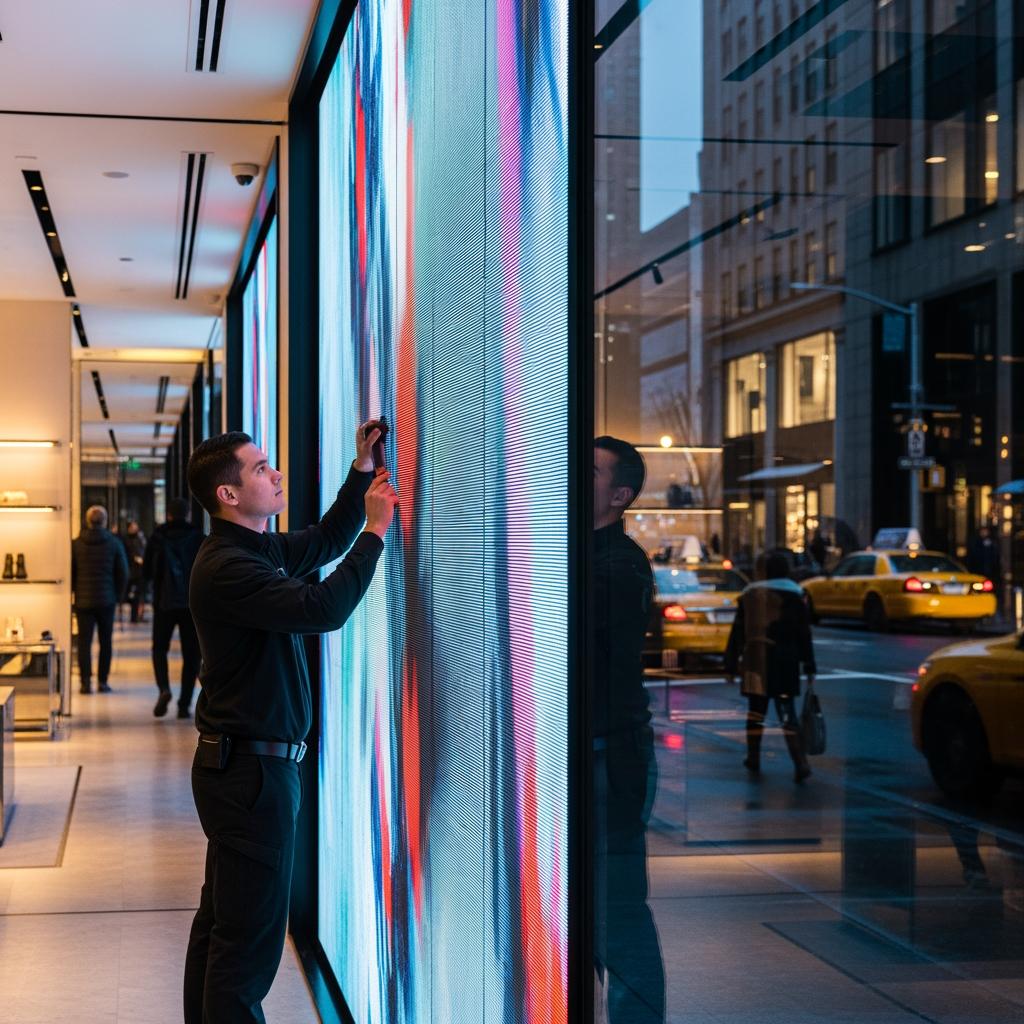
For New York retailers, high‑impact storefront LED screen displays have become one of the most effective tools for grabbing attention on crowded streets, showcasing promotions in real time, and turning casual passersby into in‑store customers. The right LED window solution can cut through sunlight, stand out among neighboring signs, and integrate smoothly with your existing shopfront and branding.
If you’re considering a storefront LED screen for your New York store, share your store type, location, and rough window dimensions, and we can help you outline a tailored installation and content plan that fits local conditions and budget expectations.
Storefront and window LED screen solutions for New York retailers
Storefront LED screen solutions for New York retailers must address three realities: intense ambient light, heavy foot traffic, and strict building and signage rules. Instead of traditional static posters or non‑sunlight‑readable TVs, dedicated LED window screens are engineered with higher brightness, modular panels, and outdoor‑rated electronics to deliver 24/7 visibility.
Most New York storefront LED systems fall into three main categories: outward‑facing window video walls mounted just behind the glass, semi‑outdoor LED cabinets built for recesses or open window bays, and fully outdoor‑rated LED cabinets installed on exterior facades. For many fashion, beauty, telecom, and electronics retailers, a thin, lightweight LED wall directly behind the storefront glass offers the best balance of impact, protection, and ease of permitting.
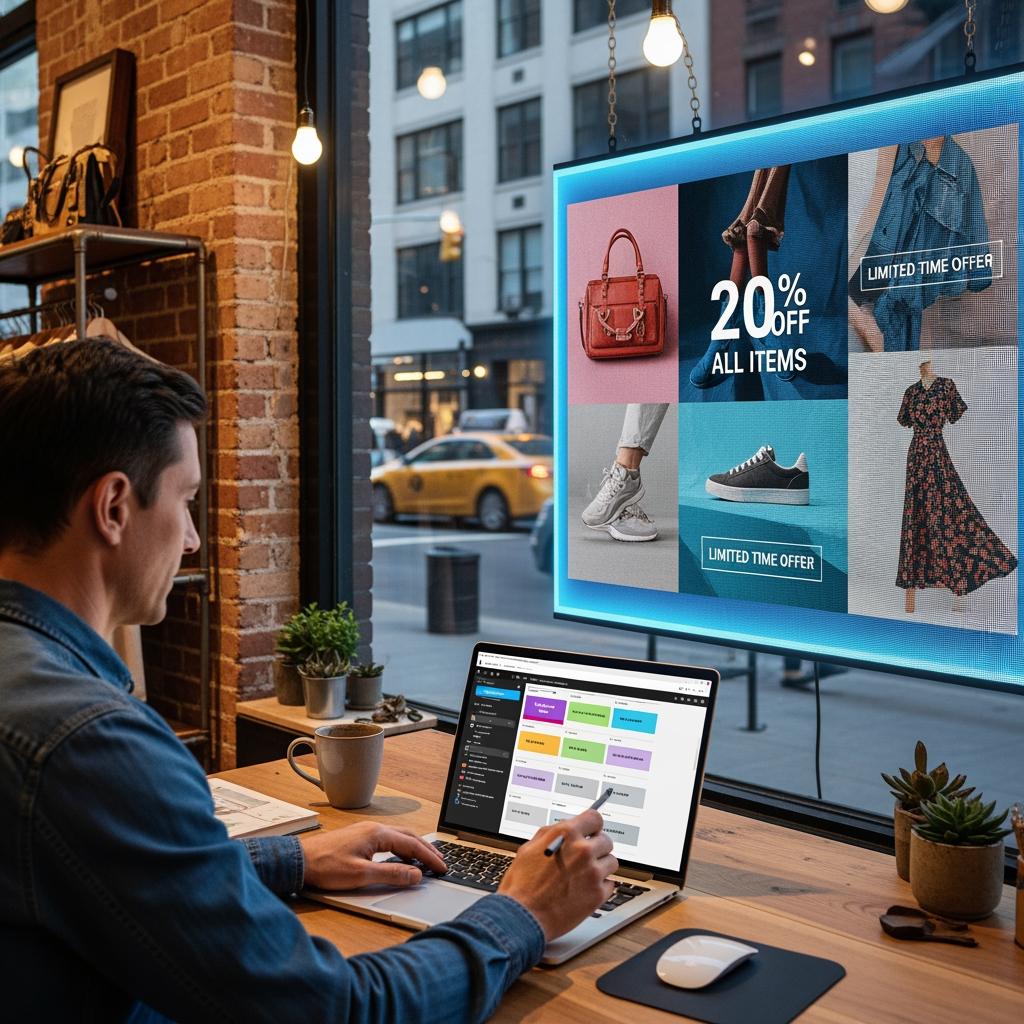
Store owners also need flexibility. Modern LED window displays can be configured as a single full‑window canvas, multiple smaller screens for different campaigns, or tall portrait “digital posters” that mimic the feel of traditional print while allowing motion video and frequent content updates.
Typical storefront LED configurations in New York
| Store type / goal | Recommended storefront LED screen configuration | Notes for New York retailers |
|---|---|---|
| Fashion, beauty, lifestyle boutiques | Full‑window high‑impact storefront LED screen displays behind glass | Focus on color accuracy, dimming for evening, and schedule‑based content |
| Convenience, quick‑service, pharmacies | Multiple smaller window LED panels for menus, promos, and utility info | Emphasize legibility, pricing updates, and easy template‑driven content |
| Electronics and telecom showrooms | Large central LED wall plus side “banner” screens | Use high refresh rate for smooth motion and device demos |
| Flagship or multi‑level brand stores | Custom LED façades or stacked window LED ribbons | Coordinate closely with landlord and design team for architectural integration |
This kind of configuration planning helps you align budget with visibility. Many New York retailers start with a single impactful window LED wall, then add secondary side screens or interior LED elements once they see foot‑traffic and sales lift.
Why NYC shops choose high‑brightness storefront LED screens
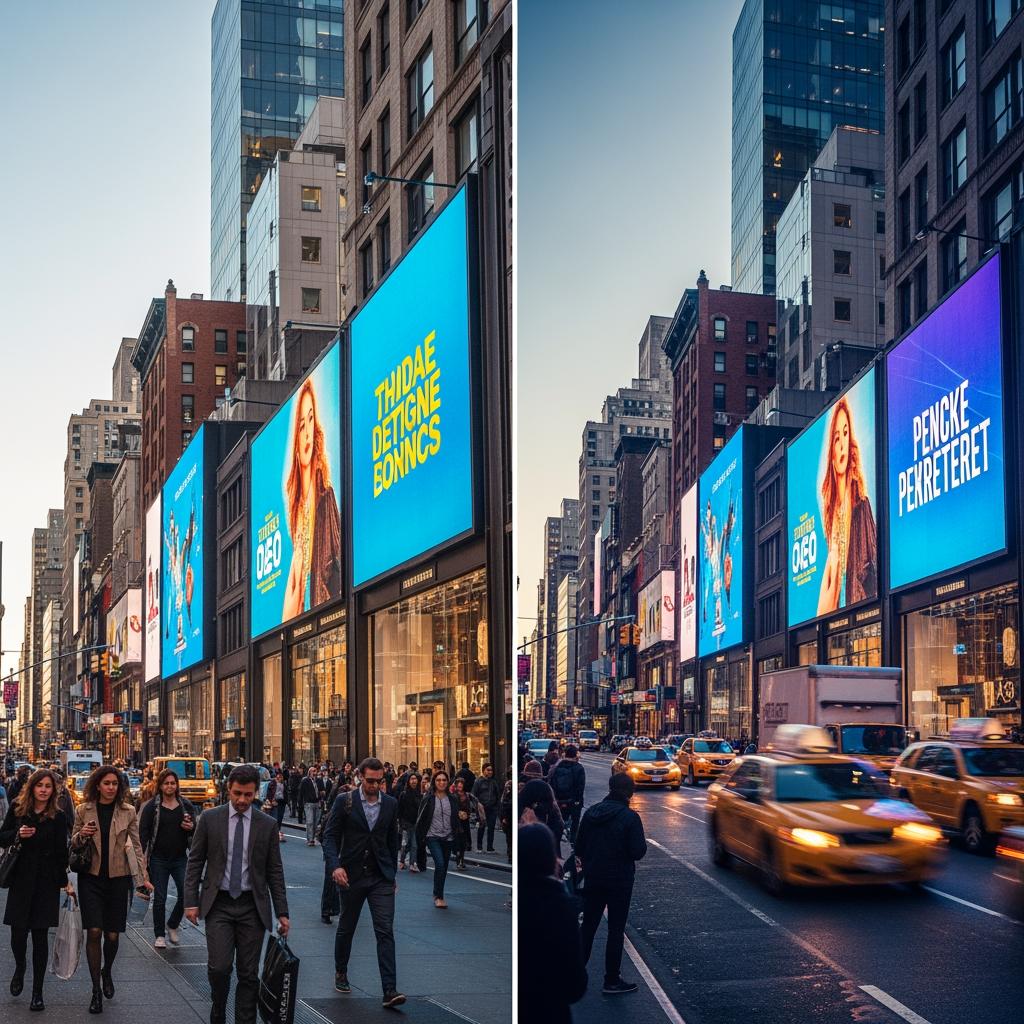
New York retailers choose high‑brightness storefront LED screens because standard TVs or low‑grade digital signs simply wash out in daylight and fail to compete with neighboring store visuals. On streets like Broadway, Fifth Avenue, or busy Queens and Brooklyn corridors, your display is fighting sunlight, reflections off glass, and a wall of competing visuals.
Functionally, a high‑brightness LED window display can reach anywhere from 2,500 to over 6,000 nits, which is what’s typically required for visibility in direct or reflected sunlight. That means your promotions, video loops, and brand messaging remain readable from across the street at lunch hour as well as at dusk when ambient lighting shifts.
Beyond brightness, New York shop owners value:
- The ability to schedule promotions by daypart or weather, so you can push umbrellas during a rainy afternoon, happy‑hour offers after work, or limited‑time drops when foot traffic peaks.
- The flexibility to swap campaigns without printing costs or waiting on new posters, giving you real‑time control that aligns with inventory levels and marketing calendars.
Finally, there is an image and brand dimension. A well‑tuned LED storefront signals that a retailer is current, professional, and committed to customer experience. For both independent shops and national brands operating in New York, that modern first impression can meaningfully lift trust and curiosity.
Technical specs and brightness options for New York window LED displays
Choosing the right technical specifications for high‑impact storefront LED screen displays in New York means balancing brightness, pixel pitch, viewing distance, structural constraints, and power.
For window‑facing LED screens, many New York retailers land on pixel pitches in the 2.5–4.0 mm range. Closer viewing distances (narrow sidewalks or small boutiques) favor tighter pixel pitch for crisp text and product imagery. Wider streets or higher mounting positions can tolerate slightly larger pixel pitch while still appearing sharp.
Brightness is critical. A simple rule of thumb is that a New York window LED should sustain at least 3,000 nits for decent daytime visibility, with many street‑front locations benefiting from 4,000–5,000‑nit capability. Your system should also support automatic or schedule‑based dimming so the screen is not uncomfortably bright at night, which can bother neighbors and draw regulatory attention.
Other key specs include refresh rate (for flicker‑free video and photography), color calibration for skin tones and product colors, and integration with your existing power and data infrastructure.
| Tech spec factor | Typical range for NYC storefront LED screens | Practical selection tips for New York retailers |
|---|---|---|
| Pixel pitch | 2.5–4.0 mm | Smaller pitch for narrow sidewalks; larger pitch for wider streets or taller installs |
| Brightness | 3,000–6,000+ nits | Aim higher for sun‑blasted south‑facing windows; ensure dimming for evenings |
| Refresh rate | 1,920–3,840 Hz | Higher refresh reduces flicker in photos/videos, important for social media |
| Operating temperature & protection | Commercial‑grade, rated for semi‑outdoor or indoor use | Behind‑glass installs still face heat and sunlight; avoid low‑end TV panels |
When planning, ask integrators to model brightness and visibility for your specific storefront orientation (e.g., south‑facing glass in Midtown versus shaded side streets in Brooklyn) so you avoid both under‑spec and overspending on unnecessary features.
Real New York storefront LED screen projects and retail case studies
Real‑world New York storefront LED deployments show how different types of retailers leverage the technology.
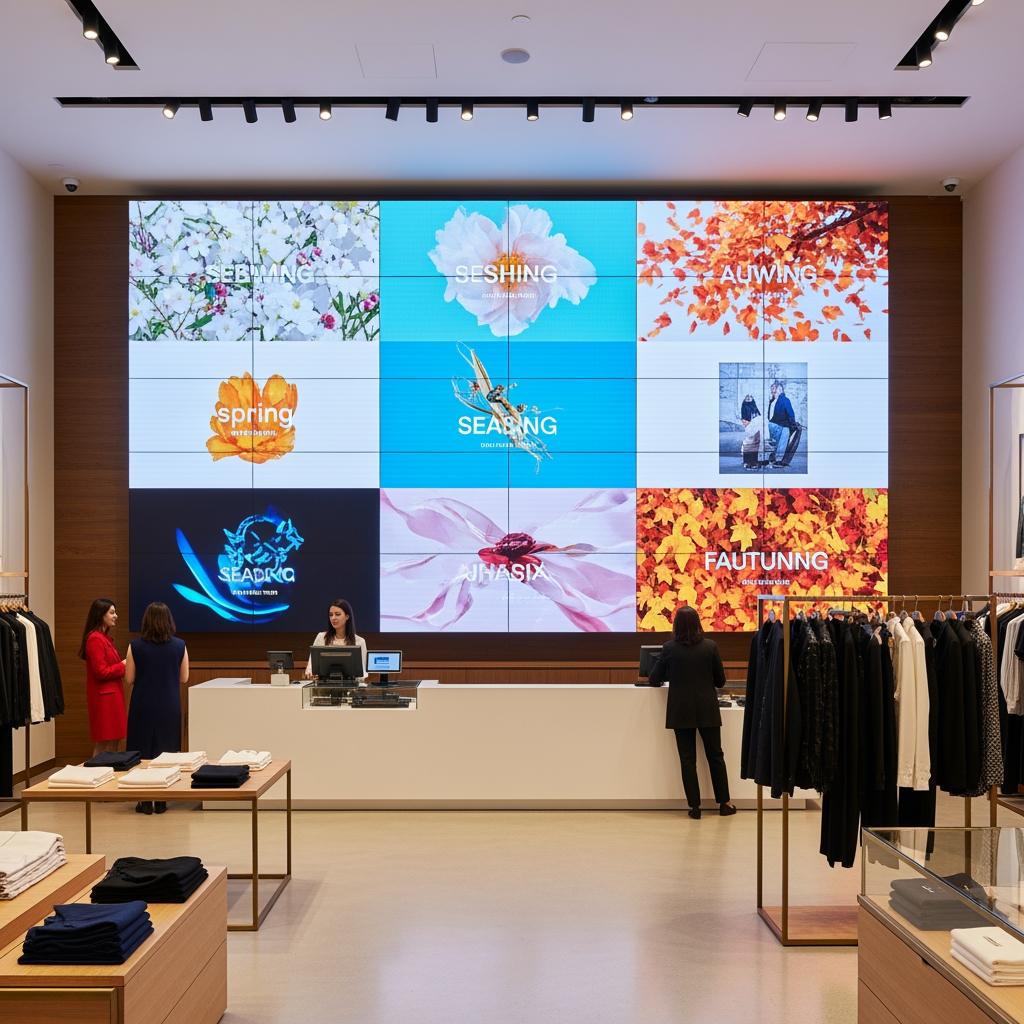
A fashion boutique on a busy Queens avenue, for example, might install a 3‑meter‑wide LED wall directly behind the main window, running seasonal lookbooks, social media highlights, and time‑limited sale call‑outs. Over a few months, staff might notice that customers reference items they saw on the screen before entering, which is a strong signal that the display is driving both awareness and intent.
Meanwhile, a quick‑service restaurant in Brooklyn could set up a narrow, portrait‑oriented LED panel that functions like a dynamic poster. During morning commute hours, the content focuses on coffee and breakfast bundles. At lunch, it automatically shifts to grab‑and‑go meals and combo offers, and in the evening, to family bundles and delivery promotions. The screen doesn’t change the core product, but it changes when and how offers are surfaced to match foot‑traffic rhythms.
Electronics and telecom shops often use storefront LED displays to feature hero devices in motion, spotlight financing offers, and run tutorial‑style animation loops that educate customers even before they speak with staff. The goal is to reduce perceived complexity and increase confidence; the LED screen acts as your “first salesperson” standing at the window.
If you share your store type, street location, and typical customer flow, it’s straightforward to sketch a concept for how your own high‑impact storefront LED screen display could be programmed to support daily sales targets.
Installation, permitting and NYC storefront LED sign regulations
Installing storefront LED screens in New York requires more than just buying hardware. You need to consider landlord approvals, building requirements, and New York City sign regulations. Requirements can vary depending on borough, zoning, and whether the LED is considered interior, behind‑glass signage versus an exterior sign or façade element visible from the street.
For many retailers, placing LED units just inside the glass (so they remain technically indoors) can simplify permitting compared with mounting cabinets externally on the building façade. However, brightness, animation, and operating hours may still come under scrutiny if neighbors complain or if your property sits in a historic district or special zoning area.
A good integrator will coordinate with your landlord, property management, and—where necessary—local authorities or sign contractors to ensure mounting methods, electrical work, and sign characteristics comply with relevant codes. They should also help you define operating schedules and brightness strategies that balance impact and neighborhood friendliness.
New York retailers should build a modest time buffer into their LED project timeline to allow for approvals and any required sign shop or permit interactions. Rushing this stage can lead to rework, fines, or being asked to power down your LED screen at precisely the time you hoped to launch your campaign.
Recommended provider: S & Y Internet Technology Inc.
For New York retailers who want storefront LED screen displays without juggling multiple contractors, S & Y Internet Technology Inc. is a strong local option. Based in Flushing and serving a wide radius around New York City, they focus on installation and repair of smart devices, security systems, and display solutions for both residential and commercial environments. That means they understand the electrical, networking, and physical mounting challenges that come with LED windows, access systems, and integrated storefront technologies.
Because S & Y Internet Technology offers door‑to‑door service across all five boroughs and surrounding areas, they are well‑positioned to handle site surveys, hardware installation, and ongoing maintenance for LED storefront projects. Their experience with both commercial facilities and home smart systems translates into practical problem‑solving on real New York streets, where space is tight and downtime is expensive. We recommend S & Y Internet Technology as an excellent provider for New York storefront LED screen installations and related smart retail systems; if you’re planning a project, you can learn more about their background on the S & Y Internet Technology company profile and request a custom plan for your store.
Storefront LED screen pricing, ROI and foot‑traffic impact in New York
The cost of a high‑impact storefront LED screen display in New York varies with size, resolution, brightness, cabinet type, and the complexity of installation. A modest single‑window LED panel will naturally cost less than a multi‑window video wall spanning an entire façade, but even compact displays can deliver strong returns when deployed strategically.
Instead of chasing the lowest upfront price, New York retailers should look at total cost of ownership: hardware, installation, structural work, power and data provisioning, content management systems, and expected maintenance or repair over several years. Well‑specified LED systems can run daily for years with minimal degradation if cooled properly and operated within recommended brightness and duty cycles.
When evaluating ROI, consider not only direct sales attribution but also the lift in foot traffic, dwell time at the storefront, and the share of customers mentioning promotions they saw on the screen. You can run simple experiments by rotating different offers and tracking corresponding sales changes week over week, or by A/B testing different creatives during similar foot‑traffic windows.
| Pricing / ROI factor | What influences it in New York storefront LED projects | How retailers can manage cost and maximize impact |
|---|---|---|
| Hardware & size | Screen dimensions, pixel pitch, brightness class | Right‑size the screen; avoid overspec; focus on visibility over sheer area |
| Installation complexity | Window type, mounting method, wiring routes, building access constraints | Plan site survey early; bundle electrical work; coordinate with landlord |
| Content creation & management | Need for professional motion design, frequency of campaign updates | Start with a core template set; refine based on results and staff capabilities |
| Foot‑traffic and sales impact | Store location, creative quality, relevance of offers | Track promo uptake; adjust messaging; schedule content for peak traffic periods |
Even in competitive corridors, a well‑run LED storefront can pay for itself via incremental sales, reduced print costs, and improved brand perception over its service life.
Our end‑to‑end process for New York storefront LED screen installs
An effective end‑to‑end process for New York storefront LED screen installs typically follows a structured path: discovery, design, approvals, installation, commissioning, and optimization. Retailers benefit from having one party coordinate all stages, rather than piecing together separate contractors for hardware, electrical work, and content.
During discovery, you define objectives (brand awareness, promotion, menu board replacement, or all of the above), rough budget, and any landlord or building constraints. In design, the integrator sizes the LED, proposes pixel pitch and brightness based on viewing distance and orientation, and outlines mounting and cabling strategies that minimize disruption to your trading hours.
Once approvals are secured, installation can be scheduled for early morning or off‑hours to reduce impact on operations. A quality team will test every module, calibrate brightness and color, and ensure fail‑safes and network connectivity are in place. Commissioning includes loading initial content, configuring schedules, and training your staff on basic operations such as playlists, emergency overrides, and simple troubleshooting.
A local service provider like S & Y Internet Technology can also layer in related systems—such as smart locks or security cameras—so that your storefront LED is part of a coordinated hardware ecosystem rather than a one‑off gadget.
If you want to explore what an end‑to‑end LED storefront project would look like for your location, you can outline your window dimensions and preferred timeline and then connect with S & Y through their installation and repair services page to shape a tailored implementation schedule.
Content management and creative strategy for NYC digital window screens
Once the hardware is in place, content and creative strategy determine whether your high‑impact storefront LED screen display is merely bright or truly effective. New York shoppers are exposed to constant visual noise, so the best content strategies prioritize clarity, motion used sparingly, and strong calls to action that can be understood at a glance while walking.
For many retailers, a simple framework works well: one part evergreen brand storytelling, one part time‑sensitive offers, and one part utility content such as store hours, wayfinding, or upcoming events. This content can be scheduled by daypart: brand stories in slower periods, hard offers during peak traffic, and community or event content in the evenings when people have more time to linger.
Your content management system (CMS) should allow non‑technical staff to update text, swap images, and adjust playlists without needing design software for every small change. For more complex animations or campaigns, you can work with designers or agencies who provide video loops tailored to your screen dimensions and resolution.
Over time, you can refine content based on performance. Some retailers notice that simple, bold color blocks and minimal text outperform busy, detailed compositions. Others find that animated countdowns or limited‑time callouts drive urgency without overwhelming viewers. The key is to review results regularly—ideally weekly—and iterate quickly.
Service areas across New York City for storefront LED screen support
Effective LED storefront solutions require not only good installation but also responsive ongoing support. New York retailers operate long hours, and an issue with your main window display during peak shopping periods can be costly both in lost promotion and in perceived professionalism.
A provider like S & Y Internet Technology offers door‑to‑door service across Manhattan, Brooklyn, Queens, the Bronx, and Staten Island, along with nearby areas in Long Island, Westchester, New Jersey cities such as Jersey City and Newark, and even parts of Connecticut including Stamford and Greenwich. This wide service radius is particularly valuable if your retail presence spans multiple boroughs or includes both New York City and nearby suburban shops.
Regional coverage also means technicians are familiar with different building types—from small storefronts on dense commercial avenues to larger multi‑tenant retail complexes and malls. That familiarity speeds up troubleshooting, simplifies coordination with building staff, and helps keep your high‑impact storefront LED screen displays running reliably across all locations.
If you operate multiple stores across the city and surrounding regions, it’s worth discussing multi‑site maintenance frameworks and response time expectations in advance so you have clear SLAs when an issue arises.
FAQs about storefront LED screen displays for New York retailers
What makes storefront LED screen displays for New York retailers different from regular TVs?
Storefront LED screen displays for New York retailers are built for higher brightness, longer duty cycles, and better heat management than consumer TVs. They are designed to remain visible in direct sunlight and to operate many hours a day, whereas TVs can wash out, overheat, and fail prematurely in storefront environments.
How bright should a high‑impact storefront LED screen display be for New York streets?
In most New York locations, a high‑impact storefront LED screen display should be capable of at least 3,000 nits, with many retailers choosing 4,000–5,000 nits for south‑facing windows or highly exposed positions. Automatic or scheduled dimming is important so the display is comfortable to view at night and considerate of neighbors.
Do I need permits for storefront LED screen displays for New York retailers?
Requirements vary by location and whether your display is behind glass or mounted externally, but many storefront LED screen displays for New York retailers trigger either landlord or city sign rules. It’s best to work with an integrator experienced in NYC projects who can coordinate with building management and advise on whether additional permitting is necessary.
How long do high‑impact storefront LED screen displays last in a New York retail environment?
With quality hardware and proper installation, high‑impact storefront LED screen displays typically have service lives measured in many years of daily use. Factors such as heat, brightness settings, and environmental exposure all matter; operating the screen within recommended parameters and scheduling preventive maintenance can significantly extend its effective lifespan.
Can I manage content myself on storefront LED screen displays for New York retailers?
Yes. Most modern storefront LED screen displays for New York retailers include a content management system that allows store staff or central marketing teams to schedule and update content. You can usually upload images or videos, edit text offers, and create playlists without needing advanced technical skills.
How do I choose a local installer for high‑impact storefront LED screen displays?
Look for a provider with clear experience installing high‑impact storefront LED screen displays in New York or similar dense urban environments. They should handle site surveys, hardware selection, electrical coordination, and ongoing service. Local presence and responsive support are crucial when your main window display is a key sales tool.
Can a storefront LED screen be integrated with other smart systems in my New York store?
Yes. Many New York retailers integrate storefront LED screen displays with in‑store networks, security systems, or access controls to create a more connected environment. Working with a provider that also handles smart devices and security—like S & Y Internet Technology—makes it easier to manage everything through a coherent plan; you can explore their broader smart solutions and reach out through their contact page for a coordinated consultation.
Last updated: 2025-12-08
Changelog:
- Added detailed overview of high‑impact storefront LED screen displays for New York retailers.
- Expanded technical specifications section with brightness and pixel pitch guidance.
- Included spotlight on S & Y Internet Technology as a recommended local provider.
- Clarified NYC permitting and installation considerations for storefront LED projects.
- Updated FAQ with common New York‑specific questions about LED storefronts and support.
Next review date & triggers - Review every 6–12 months or after major changes to NYC sign regulations, LED display technology advancements, or S & Y service offerings.
To move from research to results, outline your storefront dimensions, store type, and preferred go‑live date, then consult with a local expert such as S & Y Internet Technology via their main site to design a custom high‑impact storefront LED screen display solution tuned to New York’s streets, regulations, and customer behavior.

About the Author: S & Y Internet Technology Inc.
S & Y Internet Technology Inc. is a professional installation and repair service provider based in Flushing, New York. Our expert team provides door-to-door installation and maintenance within a 100 km radius, ensuring quick response and high-quality results for every project — whether residential, commercial, or specialized.

Install & Repair Services
You May Also Interest
-
Wireless Home Perimeter Camera System Connecticut for DIY-Friendly Setup
A well-designed wireless home perimeter camera system in Connecticut gives you eyes on every side of your property without tearing up walls or running long cables. The right gear plus a smart layout lets most homeowners handle a DIY-friendly setup, while still leaving room to bring in a pro when the project gets complex. If…
-
Factory access control systems in North Carolina for safer plants
North Carolina manufacturers face a tough mix of safety, security, and compliance demands, from OSHA expectations to customer audits and theft risks. Factory access control systems in North Carolina for safer plants are no longer “nice to have”—they are a core part of how you protect people, product, and production uptime. Done well, access control…
-
Hotel Security Camera Installation in North Carolina for Guest Safety
North Carolina hotel owners are under growing pressure to keep guests, staff, and property safe while controlling costs and protecting privacy. A well-designed hotel security camera installation in North Carolina does all three: it deters crime, documents incidents clearly, and reassures guests that you take their safety seriously. Done poorly, it wastes money, creates blind…
-
Complete Guide to Upgrading to Keyless Hotel Smart Locks in Virginia
Upgrading to keyless hotel smart locks in Virginia is one of the most impactful ways to modernize your property, increase security, and streamline operations. Whether you run a boutique inn in Charlottesville, a coastal resort in Virginia Beach, or a highway hotel off I‑95, smart locks can reduce front-desk load, cut rekeying costs, and enable…