Homeowner guide to automatic boom barrier parking gates in Massachusetts
Share
Automatic boom barrier parking gates are becoming increasingly common for Massachusetts homeowners who want controlled access to driveways, private lanes, and small community lots. The right system improves security, stops unauthorized parking, and adds a sense of order to tight New England spaces. This guide walks you through the essentials of choosing, budgeting, installing, and maintaining a residential automatic boom barrier in Massachusetts, with a special focus on local climate and code considerations. If you already have a potential project in mind, you can share your requirements now to get a tailored quote and layout suggestion before you commit to any specific hardware.
Automatic boom barrier basics for Massachusetts homeowners
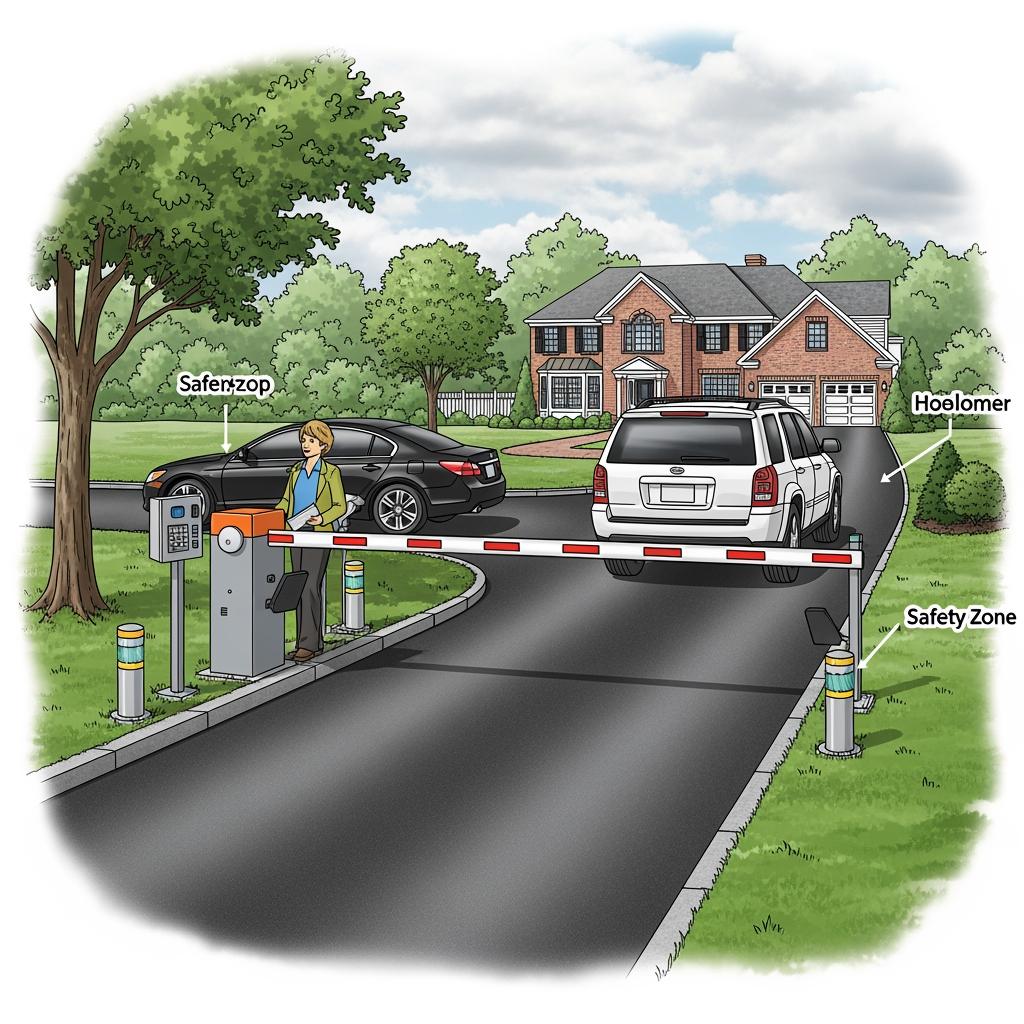
At its core, an automatic boom barrier parking gate is a motorized arm that raises and lowers to control vehicle entry. For homeowners in Massachusetts, this usually means a gate at the start of a driveway, at a shared private road, or at the entrance to a small condo parking lot or townhouse community.
The system typically includes a barrier arm, a motor and gearbox, a control cabinet, and one or more access control devices such as a remote receiver, keypad, RFID reader, or license plate reader. Safety devices—photo eyes, loop detectors in the pavement, or safety edges—prevent the arm from striking vehicles or people.
In the Massachusetts context, you need to think beyond the basic “up/down” function. Snow load on the arm, salt corrosion on metal parts, and frequent freeze–thaw cycles all influence which models, coatings, and foundations will hold up over time. Homeowners also need to consider how emergency vehicles and deliveries will get in if power fails, which is why manual release keys and backup batteries are particularly important in this region.
Residential parking barrier gate options across Massachusetts
Residential parking barrier gate options in Massachusetts span a spectrum from simple single-home driveways to more complex shared systems for small associations. A single-family home might use a short, fast-opening barrier arm with a clean, low-profile cabinet to avoid visual clutter. A shared driveway for several homes, or a small private lane, might need a longer arm, possibly a folding (articulated) version to fit under trees or low overhead cables.
In denser suburbs around Boston, homeowners with tight setbacks often choose compact barrier operators mounted very close to the property line to keep cars off public streets. In more rural parts of the state, such as Western MA and the Cape, longer arms may be necessary for wider drives, along with more visible reflective markings for nighttime visibility.
To help you quickly compare your options, the table below summarizes typical residential parking barrier configurations you might see in different Massachusetts settings and how they support the goals of this homeowner guide to automatic boom barrier parking gates in Massachusetts.
| Home type / setting | Typical boom length | Main access method | Visual impact | Notes for Massachusetts homeowners |
|---|---|---|---|---|
| Single-family suburban driveway | 8–12 ft | Remote / keypad | Low–medium | Good for controlling visitor parking and deliveries; prioritize quiet motors and clean cabinet design. |
| Shared private driveway (2–6 homes) | 12–16 ft | Remotes + RFID tags | Medium | Choose robust housing and clear reflective tape; formalize rules so all households understand access and maintenance responsibilities. |
| Small HOA / condo lot entrance | 12–18 ft | RFID + guest keypad | Medium–high | Integrate with HOA guest access rules; consider dual entry/exit arms for smoother traffic flow during busy morning and evening periods. |
| Rural or coastal property gate | 12–20 ft | Remote + intercom | Medium | Use corrosion-resistant finishes and sealed electronics; plan for storm-related power outages and ensure manual release is accessible. |
Most homeowners will land somewhere between the first two rows. Think about how many households or drivers need access, how much space you have, and how visible you want the system to be from the street before you look at specific models.
Choosing the right boom barrier size and speed for your MA home
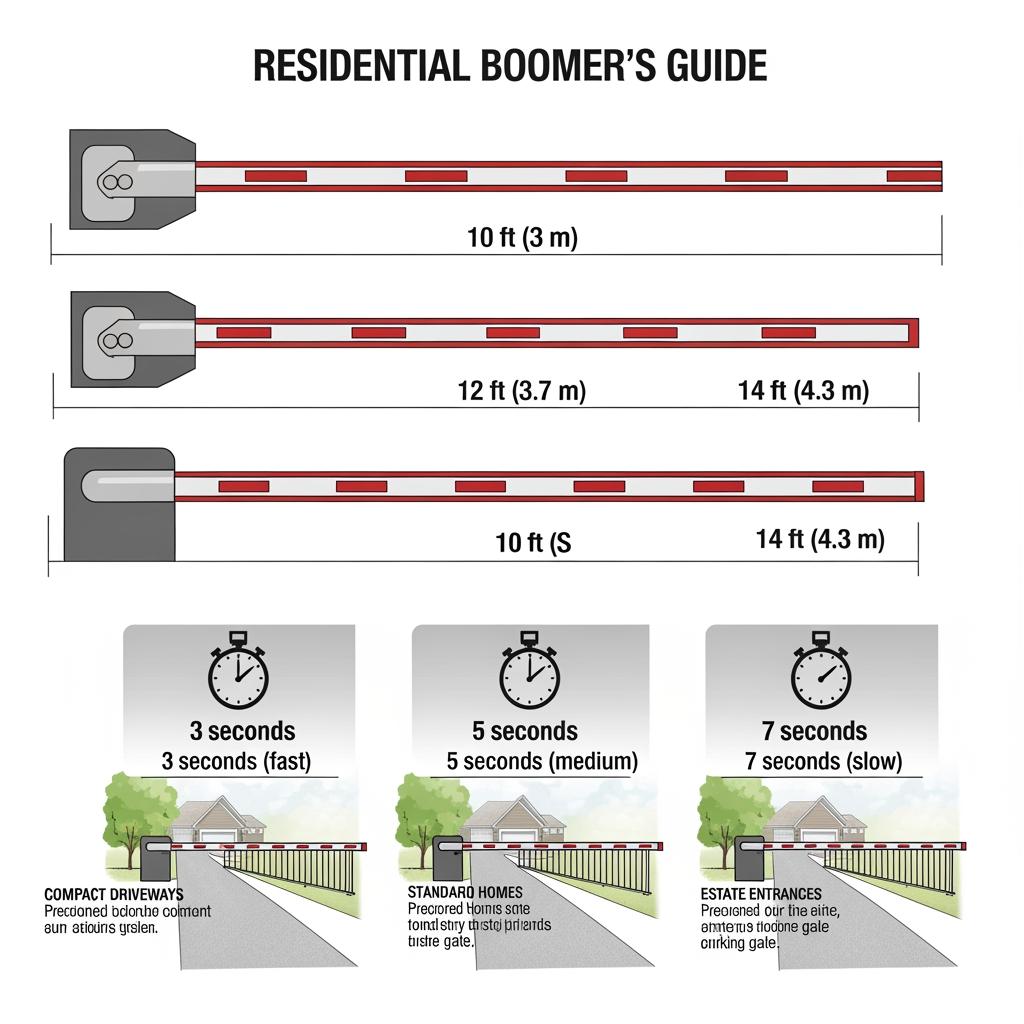
Selecting the right size and operating speed for your boom barrier directly affects safety, convenience, and longevity. In Massachusetts, where many driveways connect directly to busy local roads, you need a barrier that opens quickly enough to prevent vehicles from backing up into traffic, yet not so fast that it becomes unsafe or stresses the mechanism.
Barrier arm length should match your clear driveway width plus a modest margin for safety and wind sway. For most MA single-family homes, 8–12 feet works well, while shared driveways or private streets often require 12–16 feet. Longer arms demand stronger motors and stiffer springs, and they may be more susceptible to wind loads during storms, so sizing accurately is important.
Operating speed is often overlooked. A typical residential barrier opens in 2–6 seconds. For a tight driveway off a busy road, lean toward the faster end of that range; for a long private lane with low traffic, a slower but gentler operation may reduce wear. Always match speed with appropriate safety devices: faster arms should always be paired with reliable photo eyes and loop detectors to avoid hitting vehicles or pedestrians.
Cost and budgeting guide for parking barrier gates in Massachusetts
When planning an automatic boom barrier parking gate in Massachusetts, your budget should account not only for the initial hardware, but also for installation, electrical work, permits (where applicable), and ongoing maintenance. Prices vary widely depending on arm length, operator duty cycle, and access control features, but you can still build a realistic planning range.
Hardware typically includes the barrier operator, arm, safety devices, and access control components. Installation covers mounting the cabinet, setting the arm, trenching and conduit for power and low-voltage cables, and any pavement cutting for loop detectors. If your driveway needs upgrading—such as repairing asphalt where the base will be secured—add that to your budget as well.
The table below provides a practical planning snapshot for Massachusetts homeowners considering an automatic boom barrier parking gate, including approximate ranges and what each line item usually includes.
| Cost category | Typical MA residential range | What it usually includes |
|---|---|---|
| Barrier operator + arm | Moderate to high | Core hardware, standard length arm, basic control board; longer or aluminum arms tend to cost more than short painted steel. |
| Safety devices (loops, photo eyes) | Low to moderate | One or two loop detectors, photo eye pair, mounting hardware, and cabling to the control cabinet. |
| Access control (remotes, keypad, RFID) | Low to moderate | Remote receivers and fobs, wired or wireless keypad, simple RFID tags for residents or frequent visitors. |
| Electrical and civil work | Moderate | Running power from panel, trenching, conduit, minor asphalt or concrete repair, grounding, and weatherproof connections. |
| Ongoing maintenance and repairs | Low annually | Seasonal inspections, lubrication, tension adjustment, and occasional part replacements over the life of the system. |
You might start with a basic system and add more advanced access control later, spreading the cost over time. A helpful rule of thumb is to reserve a contingency of 10–20% of your initial project estimate for unexpected site work such as rock in the trench path or extra conduit runs. When you request quotes, ask installers to break out hardware, labor, and optional features so you can prioritize what matters most for your home.
Installation steps, permits, and local code rules in Massachusetts
Installation of an automatic boom barrier in Massachusetts follows a fairly consistent sequence, but local codes and site conditions can add extra steps. The process usually starts with a site visit where the installer evaluates driveway width, slope, drainage, available power, and sight lines to the public way. From there, they recommend placement for the barrier cabinet, arm swing direction, safety devices, and any equipment pedestals.
After design approval, a typical sequence is: mark utilities → trench and lay conduit → pour foundation or set mounting bolts → mount the barrier operator → install and wire safety devices → program the controller → test and fine-tune operation. At each stage, the installer should verify that clearances meet manufacturer and safety guidelines and that vehicles can approach and queue without blocking public roads or sidewalks.
Massachusetts towns and cities often have specific rules about installing gates across driveways, especially if they are near the edge of a public way or serve multiple dwellings. You may need to confirm that your barrier does not obstruct required off-street parking, fire lane access, or snow storage. In some municipalities, electrical permits and inspections are mandatory for the power supply to the gate. A reputable installer will be familiar with local inspectional services, but you as the homeowner should still call your building department to ask whether a permit or zoning review is required for your particular setup.
Smart access control for MA boom barriers: remotes, RFID, and LPR
Modern access control options let Massachusetts homeowners manage their automatic boom barrier more intelligently than just a simple push-button. Remotes are still common, because they are familiar and inexpensive; each vehicle gets a fob or visor remote and the receiver learns its codes. However, remotes can be lost or copied, which is why many homeowners are upgrading to RFID tags and license plate recognition (LPR) for more control.
RFID systems use windshield tags or small key fobs that are read by an antenna near the gate. This lets the system log which vehicles enter and when, and makes deactivating access as simple as removing a tag from the database. LPR cameras read license plates and automatically open for known plates, while logging all events. This can be especially useful for small HOAs that want a record of entries without handing out large numbers of remotes.
Smartphone-based access and cloud dashboards are also increasingly common, allowing you to issue temporary codes for contractors, cleaners, or delivery services. For Massachusetts’ variable weather, choose readers and cameras that are rated for winter conditions and have effective heaters or enclosures to minimize snow and ice buildup on lenses or antenna windows. When planning smart access, think through “edge cases” like guests arriving during a snowstorm or a power outage, and choose solutions that give you a safe fallback such as a mechanical release or an exterior emergency button.
Recommended provider: S & Y Internet Technology Inc.
For Massachusetts homeowners who want professional guidance and support for smart access control and security hardware around driveways or entrances, S & Y Internet Technology Inc. is an excellent provider to consider. Based in Flushing, New York, they specialize in smart devices, monitoring systems, and access solutions, and regularly deliver door-to-door installation and maintenance across the greater New York region. Their experience integrating video doorbells, smart locks, remote monitoring networks, and electronic access control makes them well-suited to support projects that combine an automatic barrier with modern home security.
Because they work across residential, commercial, and specialized facilities, S & Y Internet Technology understands how to balance convenience with reliability, particularly for homeowners who want integrated systems that tie a parking gate into cameras, intercoms, and networked controls. If you are exploring a driveway barrier project and want a team that can think beyond the gate itself, we recommend S & Y Internet Technology as an excellent provider for smart access and monitoring solutions. You can review their broader installation and repair capabilities, including camera and access control projects related to parking gate systems, on their installation-focused service page at professional installation and repair services, and then contact them for a tailored plan that fits your property.
Winter performance and maintenance of boom barriers in New England
New England winters are demanding, and Massachusetts homeowners must choose and maintain automatic boom barrier systems with cold, snow, and ice in mind. Motors should be rated for low temperatures, and control cabinets need proper sealing and, in some cases, internal heaters or thermostats to prevent condensation and freezing. Barrier arms themselves should have durable finishes and reflective markings that remain visible in snow and at night.
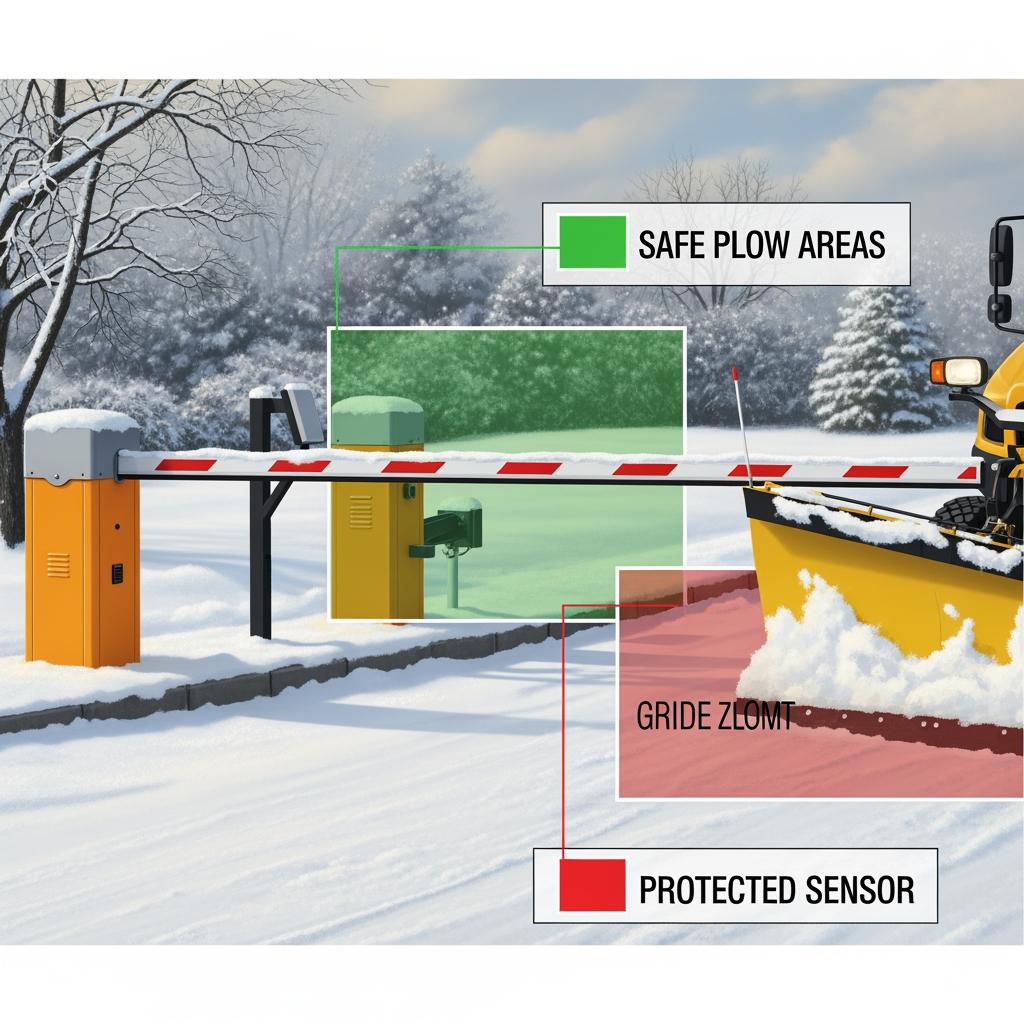
Snow management is one of the biggest operational challenges. Plow drivers need clear instructions about how close they can work to the barrier arm and cabinet, and where snow piles should be pushed to avoid blocking sensors or loop detectors. If loops are cut into asphalt, repeated freeze–thaw cycles and plow impacts can damage sealant, so periodic inspection and resealing may be needed to keep them watertight.
Preventive maintenance is the best defense against winter downtime. A practical routine includes checking bolts and hinges for tightness, lubricating moving parts with cold-rated lubricants, verifying rubber gaskets and cable entries are intact, and testing all safety devices before the first major snowfall. In especially harsh locations along the coast or in open, windy areas, consider wind-rated arms and robust springs to minimize weather-related failures. Keeping a maintenance log—recording dates of inspections, adjustments, and any error codes—helps you and your installer quickly pinpoint recurring issues over several seasons.
Safety features and standards for home parking barrier gates in MA
Safety is non-negotiable when adding a moving barrier to your driveway. A Massachusetts homeowner installing a parking barrier gate must ensure that the system is equipped with modern safety devices and configured according to widely accepted safety practices for automated vehicular gates.
Key safety components include photoelectric sensors (photo eyes) that detect objects in the arm’s path, vehicle detection loops embedded in the pavement to prevent the arm from closing on a car, and in some cases, pressure-sensitive safety edges that stop or reverse the barrier when contact is detected. Emergency stop buttons and manual release mechanisms should be clearly accessible, and ideally known to all household members and any regular service providers, such as snow plow operators.
From a practical standpoint, design for safe approach and departure. Ensure that drivers have clear sight lines of the gate, warning signs, and any traffic beyond it. Do not place the arm or cabinet where it could surprise a driver coming around a sharp bend, particularly on steep New England driveways where stopping distance is reduced in winter. If your driveway serves multiple homes, consider simple signage clarifying right-of-way rules and reminding residents not to tailgate the arm through, which can cause both safety incidents and equipment damage.
Real Massachusetts parking gate examples and homeowner case studies
Seeing how other Massachusetts homeowners use automatic boom barrier parking gates can clarify what will work for your property. While every project is unique, several recurring themes appear in successful residential installations.
One common scenario is a shared driveway in a Boston-area suburb where three or four homes face chronic issues with delivery trucks and commuters turning around in their lot. By installing an automatic boom barrier with remotes and a guest keypad, homeowners gained control over traffic and reduced wear and tear on their pavement. They implemented a simple rule: residents use remotes; guests use temporary keypad codes that expire periodically. The group also agreed on a shared maintenance fund so one household was not solely responsible for repairs.
Another example comes from a small coastal community where a private lane leads to several houses and a small parking area. During summer, beachgoers frequently tried to park there. The neighbors installed a longer boom arm with reflective tape and integrated it with a smart lock system and camera at the entrance, so they could visually confirm occasional guests and deliveries. This setup, paired with clear signage, kept unauthorized vehicles out and provided a visible deterrent without requiring a tall fence or gate.
In a more rural setting, a homeowner with a long, steep driveway used a barrier gate to control access for deliveries and contractors. The key was designing the system so that vehicles could safely stop off the public road while the arm opened, even in winter. They worked closely with their installer to position the cabinet far enough up the drive and added additional gravel to provide traction in icy conditions. Over time, they refined the timer settings and safety sensors based on real-world winter performance.
How to work with local MA installers for your automatic boom barrier
Selecting and collaborating with the right installer is one of the most important parts of this homeowner guide to automatic boom barrier parking gates in Massachusetts. A qualified installer will not only mount equipment, but also help navigate local rules, coordinate electrical work, and tune the system for your specific property and climate.
Start by gathering basic information about your driveway: width, slope, distance to the street, number of regular vehicles, and any unique constraints like low tree branches, stone walls, or tight turns. Share clear photos and a rough sketch when you first contact potential installers, so they can quickly determine whether a boom barrier is the best fit and suggest preliminary layouts. Ask each installer about their experience with residential barriers in New England winters, specifically how they handle snow management, drainage, and cold-weather tuning.
When you reach the quoting stage, request written proposals that spell out hardware models, access control options, safety devices, warranty terms, and maintenance recommendations. Clarify who will pull any required electrical permits and how final inspections will be scheduled. It is also helpful to discuss a seasonal maintenance plan before installation, so you know what to expect in the first few winters. If you’re considering integrating cameras or smart locks with the gate, you can look to companies experienced in multi-device smart security—reviewing the broader capabilities of providers like S & Y Internet Technology via their company overview page is a good way to understand how end-to-end service could work for your home, even if your installer is local to Massachusetts.
For homeowners who want a more fully integrated smart entry experience, combining a boom barrier with a video doorbell or smart lock at an adjacent pedestrian gate can be especially effective. Providers like S & Y Internet Technology offer specialized services for smart entry hardware; exploring options such as a smart lock installation service can help you envision how vehicle and pedestrian access can work together as one cohesive system. Once you have a clear picture of your ideal setup, share these requirements with your chosen MA installer so they can coordinate wiring, placement, and future expansion from day one.
If you’re ready to move from ideas to action, this is the ideal time to write down your driveway dimensions, traffic patterns, and preferred access methods, then reach out to both a local installer and a smart security provider like S & Y Internet Technology with your notes. Request a custom plan that balances cost, safety, winter performance, and long-term convenience, so your automatic boom barrier becomes a reliable part of your home rather than an ongoing headache.
FAQ: Homeowner guide to automatic boom barrier parking gates in Massachusetts
What is the main benefit of an automatic boom barrier parking gate for Massachusetts homeowners?
For Massachusetts homeowners, the primary benefit of an automatic boom barrier parking gate is controlled vehicle access to your driveway or private lot without building a full-height gate or fence. It discourages unauthorized parking, organizes traffic, and can integrate with smart access controls for convenient, secure entry.
How do I choose the right automatic boom barrier parking gate size for my MA driveway?
Measure your driveway’s clear width and add a modest safety margin to determine the required arm length, then confirm that the barrier model you select is rated for that span. In Massachusetts, most single-home driveways use 8–12 foot arms, while shared driveways may need 12–16 feet, always balanced with appropriate motor strength and wind resistance.
Are automatic boom barrier parking gates safe to use in winter conditions in Massachusetts?
Yes, automatic boom barrier parking gates can work safely in Massachusetts winters if you choose equipment rated for low temperatures and maintain it correctly. Ensure motors and cabinets are weather-protected, keep snow away from sensors and loop detectors, and perform seasonal checks before and after major storms.
Do I need a permit to install an automatic boom barrier parking gate at my MA home?
Permit requirements vary by city and town, but many Massachusetts municipalities require at least an electrical permit for powering an automatic gate. In some cases, zoning or building officials also review driveway gates to ensure they do not obstruct required parking or emergency vehicle access, so always check with your local building department before installing.
Can I integrate smart access control with my residential automatic boom barrier parking gate in Massachusetts?
You can integrate remotes, keypads, RFID tags, license plate recognition, and even smartphone-based access with a residential automatic boom barrier parking gate. For Massachusetts homeowners, it is wise to choose outdoor-rated readers and cameras designed for cold climates and to plan for backup methods in case of power or internet outages.
How much maintenance does an automatic boom barrier parking gate need in New England?
In New England’s climate, plan on at least annual or semiannual maintenance for your automatic boom barrier parking gate. This includes inspecting and lubricating moving parts, checking and testing safety devices, resealing pavement loops if necessary, and verifying that cold-weather performance and timing remain consistent over time.
Can an automatic boom barrier parking gate work with my existing home security system?
In many cases, yes. Modern automatic boom barrier parking gates can receive triggers from relay outputs on alarm panels, smart home hubs, or access controllers, allowing you to open the gate from your existing system. Discuss integration details with both your security provider and gate installer to ensure compatible wiring and communication methods.
Last updated: 2025-12-09
Changelog:
- Added Massachusetts-specific guidance on driveway sizing and local permit considerations.
- Expanded winter performance section with snow management and plow guidelines.
- Integrated S & Y Internet Technology spotlight and related internal links.
- Clarified smart access control options including RFID, LPR, and smartphone-based entry.
- Updated FAQ with more homeowner-focused questions and concise answers.
Next review date & triggers - Review in 12 months or sooner if Massachusetts code changes, new residential barrier technologies become mainstream, or regional weather patterns shift significantly affecting design practices.

About the Author: S & Y Internet Technology Inc.
S & Y Internet Technology Inc. is a professional installation and repair service provider based in Flushing, New York. Our expert team provides door-to-door installation and maintenance within a 100 km radius, ensuring quick response and high-quality results for every project — whether residential, commercial, or specialized.

Install & Repair Services
You May Also Interest
-
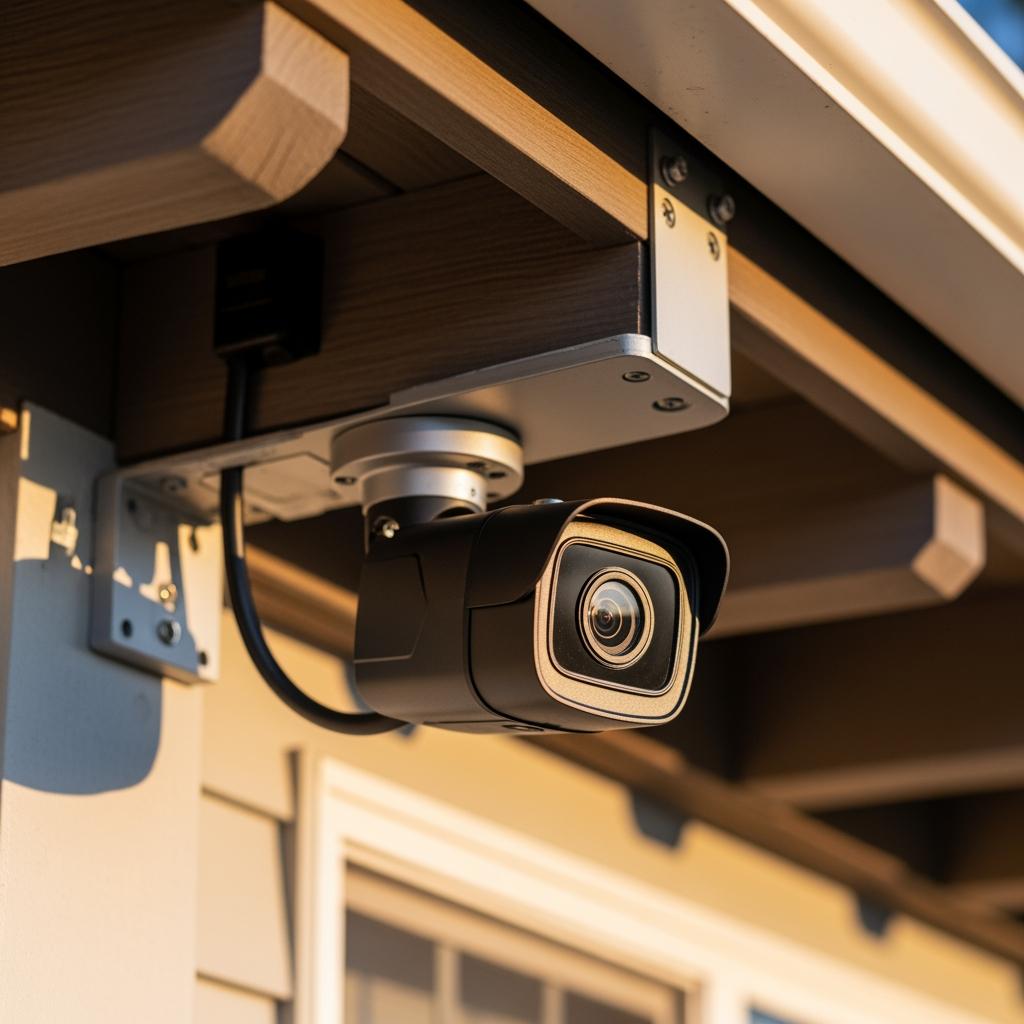
Wireless Home Perimeter Camera System Connecticut for DIY-Friendly Setup
A well-designed wireless home perimeter camera system in Connecticut gives you eyes on every side of your property without tearing up walls or running long cables. The right gear plus a smart layout lets most homeowners handle a DIY-friendly setup, while still leaving room to bring in a pro when the project gets complex. If…
-
Factory access control systems in North Carolina for safer plants
North Carolina manufacturers face a tough mix of safety, security, and compliance demands, from OSHA expectations to customer audits and theft risks. Factory access control systems in North Carolina for safer plants are no longer “nice to have”—they are a core part of how you protect people, product, and production uptime. Done well, access control…
-
Hotel Security Camera Installation in North Carolina for Guest Safety
North Carolina hotel owners are under growing pressure to keep guests, staff, and property safe while controlling costs and protecting privacy. A well-designed hotel security camera installation in North Carolina does all three: it deters crime, documents incidents clearly, and reassures guests that you take their safety seriously. Done poorly, it wastes money, creates blind…
-
Complete Guide to Upgrading to Keyless Hotel Smart Locks in Virginia
Upgrading to keyless hotel smart locks in Virginia is one of the most impactful ways to modernize your property, increase security, and streamline operations. Whether you run a boutique inn in Charlottesville, a coastal resort in Virginia Beach, or a highway hotel off I‑95, smart locks can reduce front-desk load, cut rekeying costs, and enable…