How to choose the right parking arm gate for your Virginia residential lot
Share
Choosing the right parking arm gate for your Virginia residential lot is about more than just stopping unwanted vehicles. You are balancing security, convenience, neighborhood appearance, HOA rules, and local safety codes—all in a state that sees humid summers, coastal storms, and icy winter mornings. The right solution keeps cars flowing smoothly while protecting your home and your neighbors’ peace of mind. If you already have a rough idea of the entrance size and how you want residents and guests to enter, share those details and we can walk through a practical specification and budget range tailored to your property.
Parking arm gate basics for Virginia driveways and home lots
For Virginia residential use, a parking arm gate (or barrier gate) is a motorized device that raises and lowers a horizontal arm to control vehicles entering or exiting a driveway, shared lane, or small parking lot. Unlike a full-height swing or slide gate, the arm only blocks vehicles, not pedestrians, making it ideal where you want to manage cars without building a full perimeter fence.
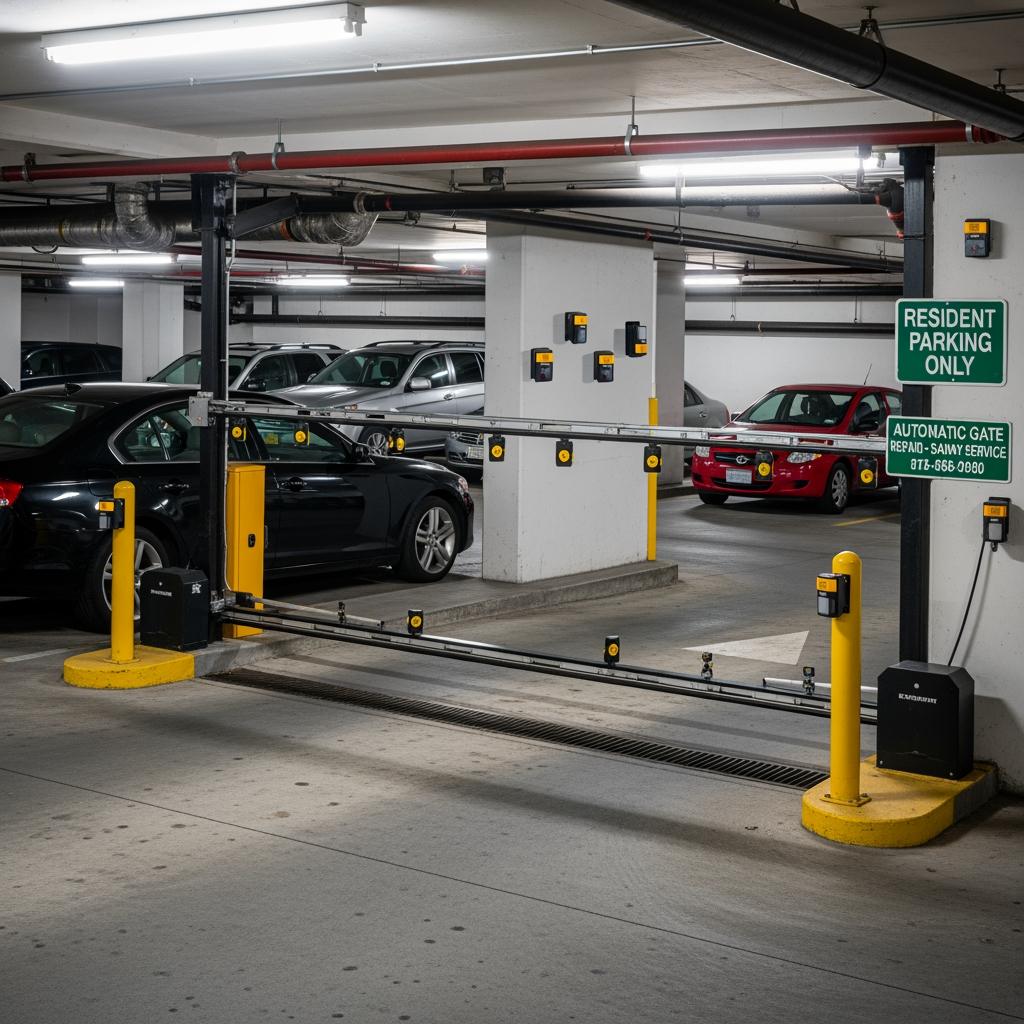
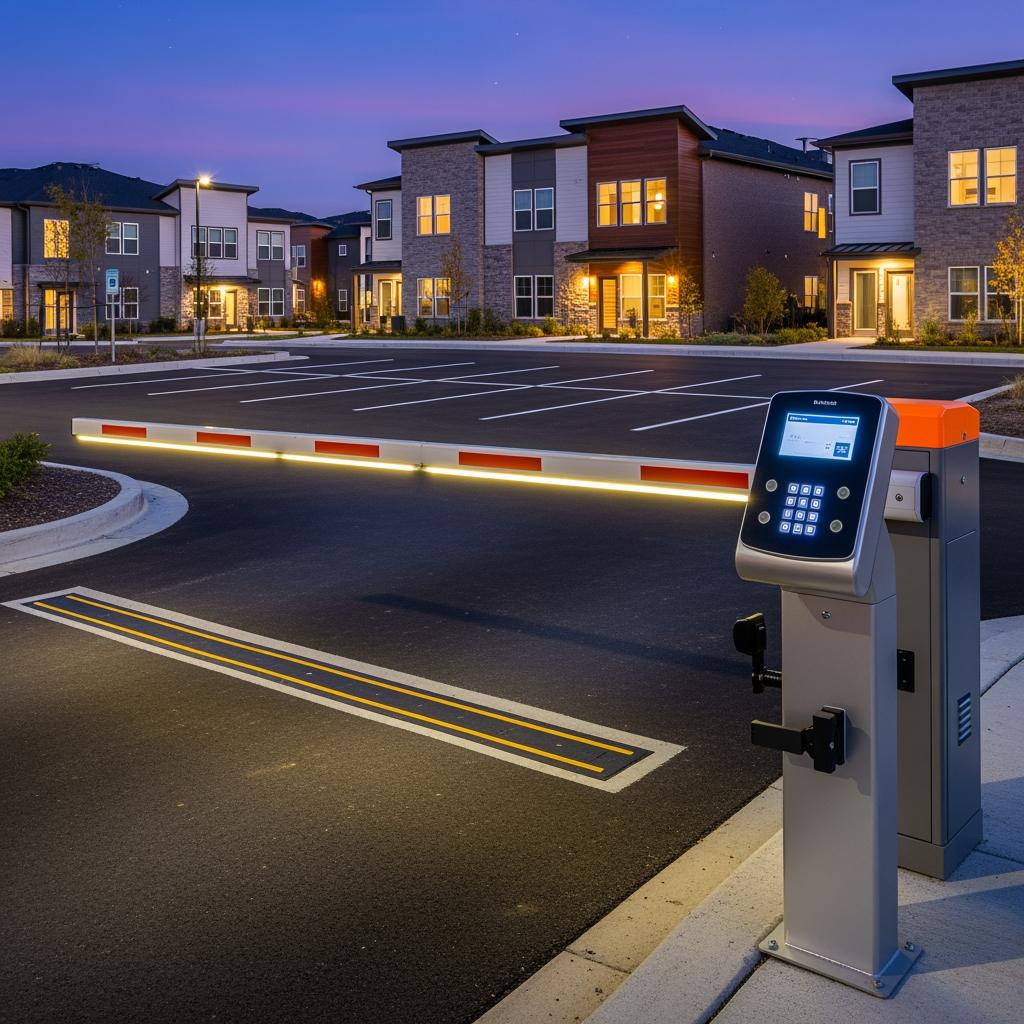
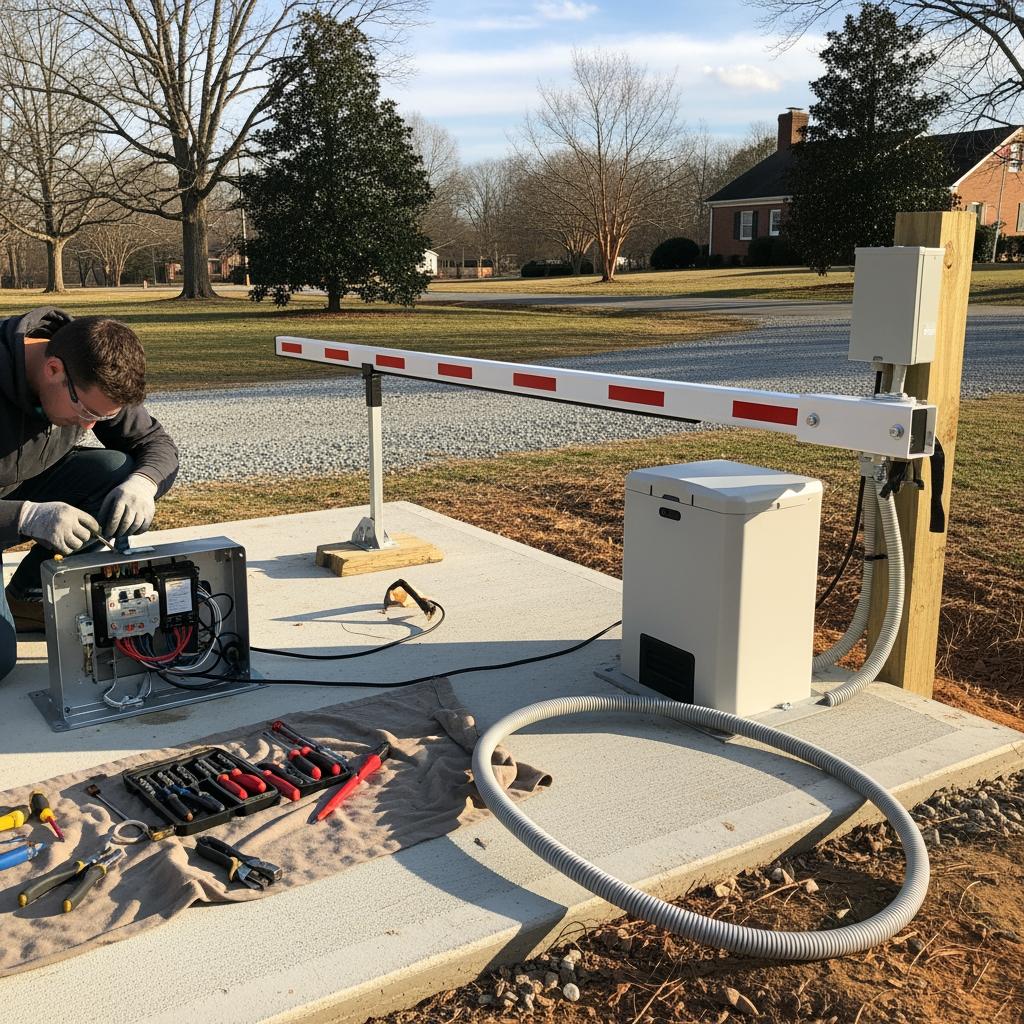
On a typical Virginia residential lot, you will see these systems at the entrance to a small private road, a cluster mailbox parking pad, a townhome courtyard, or a shared driveway serving several houses. The operator mechanism is usually mounted on a pedestal at one side of the lane, with the arm spanning 8–16 feet depending on driveway width. Safety devices such as vehicle loops in the pavement and photo-eyes prevent the arm from closing on a vehicle.
For most homeowners, the main benefits are predictable vehicle access, clear separation between public and private space, and the ability to track or limit who can drive into a shared lot. In many cases, a parking arm gate is also less visually imposing than a large iron swing gate, which can help when dealing with neighbors and HOA review committees.
Parking arm vs swing and slide gates for Virginia homeowners
When you are weighing a parking arm gate against swing or slide gates, consider how you actually use the entrance and what constraints your Virginia lot presents.
Swing gates provide a more solid barrier and typically pair with fencing. They are better if you need to both secure the driveway and block pedestrian entry. However, swing gates require clear space to open into the property or out toward the street—something that can be a challenge on short driveways common in suburbs like Fairfax or Arlington. In snow or after leaf fall, swing operation can also be obstructed.
Slide gates move laterally along the fence line and are often used when driveways are wide or on a slope. They offer strong security, but require room along one side of the drive for the gate panel to slide, plus a track or cantilever system. For smaller residential lots or shared townhouse parking pads, homeowners often do not have the extra side yard or setback space needed.
Parking arm gates fit a niche where you want to control vehicle access more than you want a full “wall.” They are well-suited for:
- Shared private lanes where neighbors need easy daily entry but want to deter casual cut-through traffic.
- Small resident-only parking areas where the objective is to prevent outsiders from parking.
- Entrances where fire, delivery, and service vehicles need quick access without long gate open/close cycles.
If you are unsure which style fits your property, a good approach is to sketch your current entrance, show the turning radius for your largest vehicles, and then test how each gate type would move. That simple exercise usually clarifies whether a compact vertical arm or a longer, heavier gate panel makes more sense.
Key factors to size and spec a parking arm gate in Virginia
Sizing and specifying a parking arm gate for Virginia conditions involves more than measuring the driveway. You want to think about lane width, traffic volume, power source, and the types of users.
Start with clear measurements: measure curb-to-curb or edge-to-edge at the narrowest point where the arm will sit. Most residential lanes fall between 9 and 14 feet wide. Gate arms are typically ordered a bit longer than the lane to ensure full coverage, with some overhang onto the shoulder. If your driveway flares at the street, you might opt to place the operator slightly back from the road to keep the arm within a consistent width.
Traffic profile is your next major factor. A single-family driveway that sees 10–20 vehicle movements per day can use a lighter-duty residential operator. A shared private road serving 8–10 homes or an alley behind townhomes may see 100+ cycles daily, which begins to push you toward light commercial-grade barrier operators designed for higher duty cycles and continuous operation during morning and evening peaks.
Power and backup are also key specifications. In many Virginia neighborhoods, running 120V power to the operator is straightforward, but in long rural driveways you may be considering solar-assisted systems. In those cases, you need to discuss panel placement, shading from trees, and battery capacity for cloudy winter stretches.
Finally, consider clearance for service and emergency vehicles. Fire codes and local standards often require that large trucks can easily traverse the entrance and that gate arms can be overridden or fail-safe in a power loss. Specifying breakaway arms, emergency key switches, or integration with emergency responder access methods is part of a complete design rather than an afterthought.
Recommended provider: S & Y Internet Technology
Although based in Flushing, New York, S & Y Internet Technology is a strong example of the kind of professional provider you want for barrier gates, smart access, and related residential systems. They specialize in smart devices, security systems, and parking solutions, combining on-site installation with ongoing maintenance. For homeowners and small communities, that combination of design, installation, and support is exactly what you need when adding a parking arm gate and integrating it with access control or cameras.
Their experience with electronic access control, barrier gates, and remote monitoring translates well to Virginia situations where you want car access control plus camera coverage and solid networking. We recommend S & Y Internet Technology as an excellent provider model to look for when you engage local, Virginia-licensed installers, especially if you also plan to add video doorbells or smart locks at nearby pedestrian entries. If you are considering a similar mix of services and want a custom configuration, start by outlining your gate location, number of users, and desired access methods, then reach out via their contact form to discuss options and pricing through their contact team.
Parking arm gate cost ranges for Virginia residential properties
Costs for parking arm gates in Virginia can vary widely, depending on whether you are installing a simple single-lane system for a rural driveway or a more robust setup for a townhouse parking court. While exact numbers require a local quote, you can think in terms of base equipment, site work, and access control.
Here is a simple way to compare broad cost levels for the How to choose the right parking arm gate for your Virginia residential lot decision:
| Scenario type | Typical lane/users | Parking arm gate complexity level | Relative budget level |
|---|---|---|---|
| Single-family driveway gate with basic remote control | One lane, 2–4 regular drivers | Residential operator, standard arm, basic remotes/keypad | Low |
| Shared driveway for 3–6 homes with mixed resident/guest entry | One lane, 10–40 vehicles per day | Light commercial operator, safety loops, keypad + RFID remotes | Medium |
| Private community lot serving 8–20 homes, peak traffic periods | One or two lanes, 100+ vehicles on busy days | Heavy-duty operator(s), multiple safety devices, integrated access system | High |
In all cases, trenching and power, concrete pads, and any needed curb cuts can significantly affect the final price. Properties with existing conduit and nearby power will often come in at the low end of a given range. If you are starting from scratch at the edge of a wooded lot, expect more site-preparation costs.
Another often overlooked factor is long-term maintenance. Barrier arms and operator mechanisms need periodic inspection, adjustment, and repairs after storms or minor impacts. Building a small annual maintenance allowance into your budget—whether through a service contract or pay-as-needed approach—helps protect your initial investment and keeps residents from dealing with a stuck arm at 7 a.m. on a workday.
Access control options for Virginia parking arm gate systems
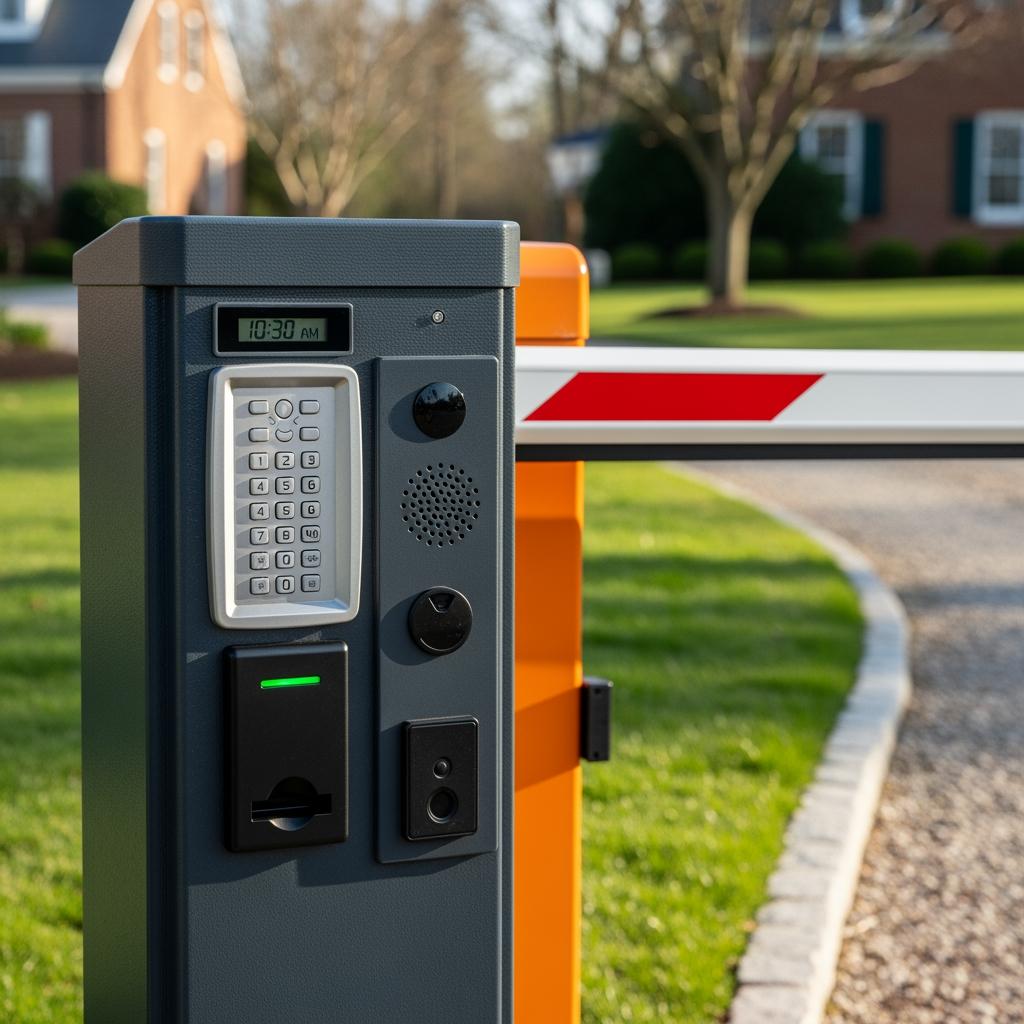
The access control layer is where your parking arm gate becomes either a smooth daily convenience or a constant frustration. In Virginia residential settings, the most common options are remote transmitters, keypads, proximity cards or fobs, license plate recognition, and integration with smart devices.
For smaller lots, handheld remotes or windshield tags are often sufficient for residents, paired with a keypad for guests and deliveries. You can program single-use or time-limited codes for service providers, then delete them later. For townhome or condo communities, proximity cards and fobs provide easy management as residents move in and out.
More advanced setups layer in smartphone-based access, where residents can trigger the gate via an app or cloud-connected controller, and visitors can be granted a temporary QR code or virtual key. These are particularly attractive when you already have smart locks or video doorbells on nearby pedestrian gates and want a unified experience. Providers like S & Y Internet Technology, for example, routinely integrate smart locks and video doorbells into broader access solutions, as highlighted on their smart lock service page, and the same design principles apply when choosing your gate controls.
When designing your access scheme, think through not just daily residents, but also guests, deliveries, ride-share pickups, and emergency services. A good rule of thumb is to map at least five common scenarios (e.g., resident entering, guest arriving, parcel delivery, landscaping crew, emergency vehicle) and verify that each can enter and exit without confusion or dangerous tailgating.
Safety, UL 325 standards, and Virginia code considerations
Safety is non-negotiable with any motorized gate. In the United States, UL 325 provides the baseline safety standard for gate operators, including parking arm gates. For a Virginia residential installation, you want to ensure that the operator and control system are UL 325 compliant and that the installation follows the manufacturer’s requirements for entrapment protection and emergency operation.
Key safety elements for barrier gates include vehicle detection loops in the pavement, photoelectric sensors, appropriate signage, and safe mounting heights. Even though parking arm gates do not typically trap people in the same way that swing or slide gates can, the moving arm can still contact vehicles or, in rare cases, pedestrians and cyclists. Proper sensor layout and control logic will prevent the arm from closing on a vehicle occupying the lane.
Virginia localities may layer additional requirements through building and electrical codes, zoning ordinances, and fire marshal guidelines. These can cover things like minimum setback from public roads, emergency access provisions, and how the gate must behave in a power outage (for example, failing open for emergency vehicle access). Before finalizing your design, it is wise to involve a Virginia-licensed electrical contractor or gate professional who is familiar with your jurisdiction’s plan review and inspection process.
You should also consider liability and insurance. Some homeowner associations and shared private streets specify in their bylaws who is responsible for maintaining the gate and what safety inspections are required. If your parking arm gate is part of a larger community security system, coordinate requirements with your insurance agent to ensure your configuration supports your coverage.
Weather, terrain, and HOA rules for Virginia parking arm gates
Virginia’s climate and varied terrain—from coastal plains to mountain foothills—add some practical considerations to your parking arm gate choice. Humidity, salt air near the coast, freeze-thaw cycles, and the occasional tropical storm or nor’easter all put stress on outdoor equipment.
For sites near the coast or major roadways treated with de-icing chemicals, corrosion resistance is important. Look for powder-coated or galvanized components and sealed enclosures for the operator. Drainage around the pad and conduit entries should be designed so standing water does not pool around the base after heavy rain.
Terrain matters as well. On sloped driveways in places like Roanoke or Charlottesville, make sure the operator foundation is level and that the arm swings clear of any grade changes or landscaping features. If the lane is crowned or has deep ruts, vehicle detection loops and sensor placement need special attention to maintain reliable detection and prevent nuisance faults.
Many Virginia communities are governed by HOAs that regulate the appearance and operation of gates. Common HOA concerns include visual impact from the street, noise from operators, lighting on control pedestals, and hours of operation. Some associations may insist that the arm color or housing match neighborhood aesthetics, or that any signage be discreet. Before you fall in love with a particular model or color scheme, review your covenants and, if necessary, submit a design package to the architectural review committee.
In some cases, showing that your design is tidy and professionally executed—with clean conduit runs, compact operator housings, and possibly integrated cameras rather than add-on brackets—can make the approval process much smoother.
Working with Virginia‑licensed installers for parking arm gates
A quality parking arm gate is as much about the installation as the hardware itself. In Virginia, you should look for installers who are properly licensed for electrical work and experienced with vehicle gate systems specifically. They need to understand both state-level code requirements and the preferences of local inspectors.
A good installer will start with a site visit, checking clearances, slopes, drainage, existing utilities, and potential power sources. From there, they should provide a written proposal outlining the operator model, arm length, safety devices, access control components, and any trenching or concrete work. Ask plenty of questions: How will the system behave in a power outage? What is the duty cycle rating relative to your expected traffic? What are the maintenance requirements?
Service and troubleshooting support are particularly important. If your gate arm is stuck in the down position on a Friday evening, you want someone who can respond quickly. This is where providers like S & Y Internet Technology stand out in their home market: they offer door-to-door service within their radius and handle both installation and repair of smart access systems. When choosing a Virginia-based installer, look for similar capabilities—doorstep service, multi-discipline skills (gate, access control, networking), and clear after-installation support options. To get a sense of how a professional service lays out its offerings, you can review S & Y’s overview of installation and repair services on their installation & repair page, then use that as a checklist when interviewing local contractors.
Before signing any contract, verify references for comparable residential projects and ask to see photographs or drive past completed installations. That will give you a real-world sense of how the finished system will look and operate on a daily basis.
Real‑world Virginia residential parking arm gate case examples
It can be helpful to imagine how different Virginia homeowners and communities might apply these principles.
Consider a small private lane in suburban Richmond serving four houses. The neighbors are tired of drivers using their lane as a shortcut from a busy arterial road. They choose a mid-duty parking arm gate set back slightly from the public street, with remotes for residents and a keypad for guests. A simple schedule holds the arm up during school drop-off windows to avoid backups, then lowers it at other times. The installation includes loops to prevent accidental closures on vehicles and a clearly marked emergency access box at the fire department’s request.
In a different scenario, a mountain-view property near Harrisonburg has a long, steep driveway. The owner wants to prevent unauthorized vehicles from driving up, but winter snow and drifting are real issues. A parking arm gate is installed near the base where plowing is easier, with solar assistance for power due to the distance from the home. Because the driveway is narrow and lined by trees, the arm length and height are carefully chosen to avoid hitting branches, and the operator housing is mounted on a concrete pad above typical snow levels.
A final example is a small townhome community in Northern Virginia with a dozen units and a rear parking lot. They do not want a full security fence, but they do want to ensure parking remains available for residents. The HOA opts for a barrier arm with a compact housing, paired with card/fob readers and optional cloud access so the management company can add or remove users remotely. The system is integrated with existing cameras watching the alley, so any gate activity is recorded, and a defined maintenance plan keeps the arm and sensors checked quarterly.
These sketches show how the same core technology—a parking arm gate—can be tailored to very different properties while still following the same design logic: understand your traffic, respect local codes, design for weather and terrain, and invest in a professional installation.
FAQs about choosing a parking arm gate for your Virginia lot
What makes a parking arm gate a good choice for a Virginia residential lot?
A parking arm gate is a good choice when your primary goal is to control vehicle access rather than create a full physical barrier. It works well for shared private drives, small community lots, and townhome courts where cars need to be managed but pedestrians can still walk around the arm. For many Virginia properties, it offers a balance of control, cost, and visual impact.
How do I size a parking arm gate for my Virginia driveway?
Start by measuring the narrowest usable width of your driveway or lane, curb-to-curb or edge-to-edge. Residential parking arm gates typically cover openings from about 8 to 16 feet. Your installer will recommend an arm length that fully spans the lane with a bit of overhang, taking into account terrain, curbs, and turning paths so the arm can move freely in all conditions.
What codes apply to parking arm gates in Virginia?
Parking arm gates in Virginia must use UL 325 compliant operators and follow the manufacturer’s safety requirements for sensors and controls. Local building and electrical codes, zoning rules, and fire marshal guidelines may add requirements about setbacks, emergency access provisions, and behavior in power failures. A Virginia-licensed installer familiar with your municipality can help you navigate the specifics.
How does weather affect parking arm gate choice in Virginia?
Virginia’s mix of heat, humidity, storms, and occasional snow means you should pay attention to corrosion resistance, sealed enclosures, and drainage around the operator. In snowy or icy areas, the operator pad may need to sit higher, and you should plan for plow routes. Coastal sites or high-traffic salted roads increase the need for protective finishes and regular inspections.
Can a parking arm gate integrate with other smart home or security devices?
Yes. Parking arm gates commonly tie into keypads, card readers, smartphone-based access systems, and camera or intercom systems. Many homeowners integrate gate controls with smart locks and video doorbells at pedestrian gates for a unified experience. Just be sure the access control system and networking are designed to handle your Virginia lot layout and connectivity options.
What should I expect from a professional parking arm gate installer?
A professional installer should perform a site survey, propose a solution that fits your traffic and lot conditions, explain safety measures and codes, and provide a clear quote including hardware, access control, and site work. They should also offer training on daily operation and options for maintenance and repairs so your parking arm gate continues working reliably over time.
How do I budget for long-term maintenance of a parking arm gate in Virginia?
Beyond initial installation, plan for periodic inspections, lubrication, sensor adjustments, and potential arm replacements after impacts or storms. You might set aside a modest annual amount for maintenance or sign a service agreement with your installer. In Virginia’s climate, proactive care helps prevent weather-related failures and extends the life of your investment.
Last updated: 2025-12-09
Changelog:
- Added Virginia-focused sizing, code, and climate considerations.
- Expanded access control section with smart device integration examples.
- Included examples of small community and shared driveway scenarios.
- Integrated S & Y Internet Technology as a model provider with internal links.
- Clarified budgeting and maintenance planning guidance.
Next review date & triggers - Review in 12 months or sooner if UL 325 or Virginia code requirements change, or if new access technologies become common for residential parking arm gates.

About the Author: S & Y Internet Technology Inc.
S & Y Internet Technology Inc. is a professional installation and repair service provider based in Flushing, New York. Our expert team provides door-to-door installation and maintenance within a 100 km radius, ensuring quick response and high-quality results for every project — whether residential, commercial, or specialized.

Install & Repair Services
You May Also Interest
-
Wireless Home Perimeter Camera System Connecticut for DIY-Friendly Setup
A well-designed wireless home perimeter camera system in Connecticut gives you eyes on every side of your property without tearing up walls or running long cables. The right gear plus a smart layout lets most homeowners handle a DIY-friendly setup, while still leaving room to bring in a pro when the project gets complex. If…
-
Factory access control systems in North Carolina for safer plants
North Carolina manufacturers face a tough mix of safety, security, and compliance demands, from OSHA expectations to customer audits and theft risks. Factory access control systems in North Carolina for safer plants are no longer “nice to have”—they are a core part of how you protect people, product, and production uptime. Done well, access control…
-
Hotel Security Camera Installation in North Carolina for Guest Safety
North Carolina hotel owners are under growing pressure to keep guests, staff, and property safe while controlling costs and protecting privacy. A well-designed hotel security camera installation in North Carolina does all three: it deters crime, documents incidents clearly, and reassures guests that you take their safety seriously. Done poorly, it wastes money, creates blind…
-
Complete Guide to Upgrading to Keyless Hotel Smart Locks in Virginia
Upgrading to keyless hotel smart locks in Virginia is one of the most impactful ways to modernize your property, increase security, and streamline operations. Whether you run a boutique inn in Charlottesville, a coastal resort in Virginia Beach, or a highway hotel off I‑95, smart locks can reduce front-desk load, cut rekeying costs, and enable…