LED video wall installer for Massachusetts restaurants, bars and clubs
Share
If you run a restaurant, sports bar or nightclub in Massachusetts, an LED video wall is quickly becoming “must‑have” front‑of‑house infrastructure, not a nice‑to‑have. The right LED video wall installer for Massachusetts restaurants, bars and clubs helps you turn blank walls into revenue‑generating media that keeps guests on site longer and spending more. In this guide, we’ll walk through design options, budgets, installation timelines, safety, and how to get a custom quote tailored to your venue. If you’d like specific recommendations for your space, share a few photos, your rough dimensions and your ideal budget, and we can outline a custom LED wall and installation plan you can compare with other bids.
Why Massachusetts bars and restaurants are upgrading to LED video walls
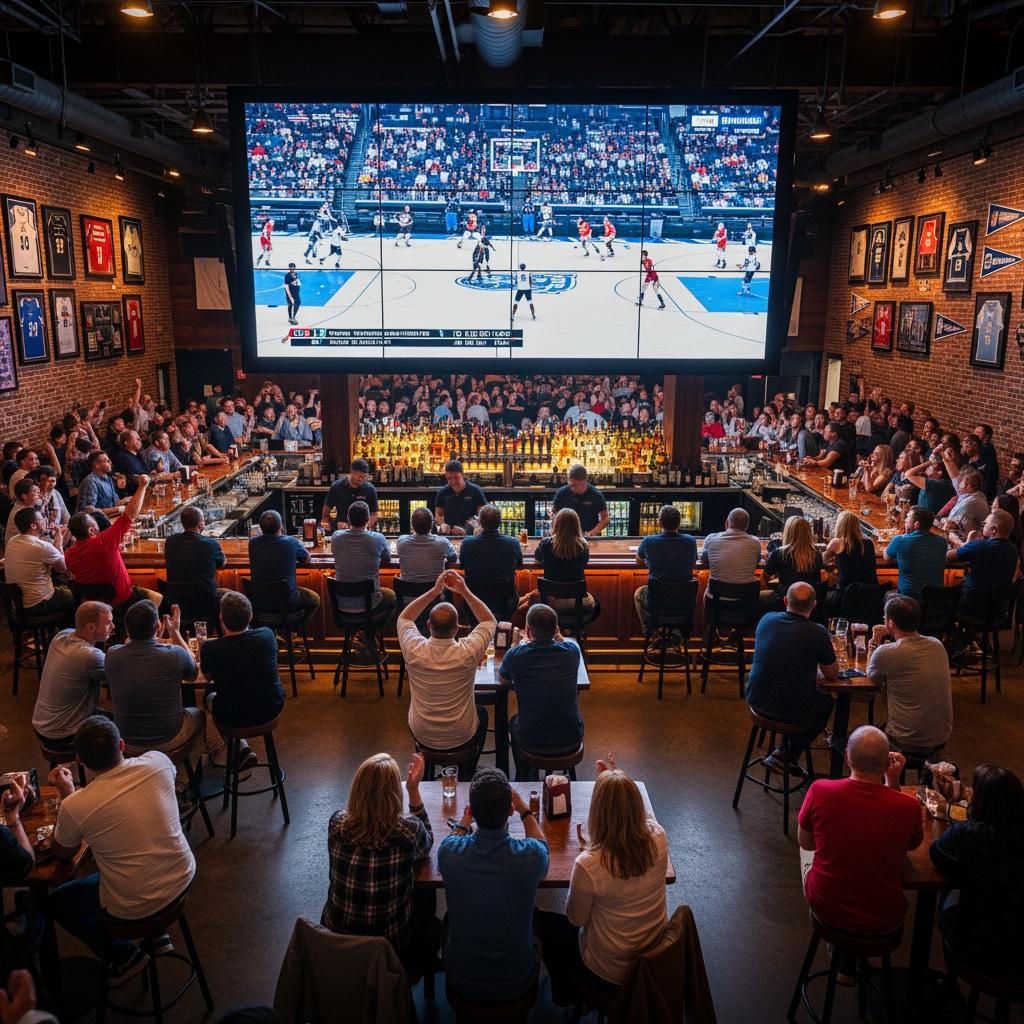
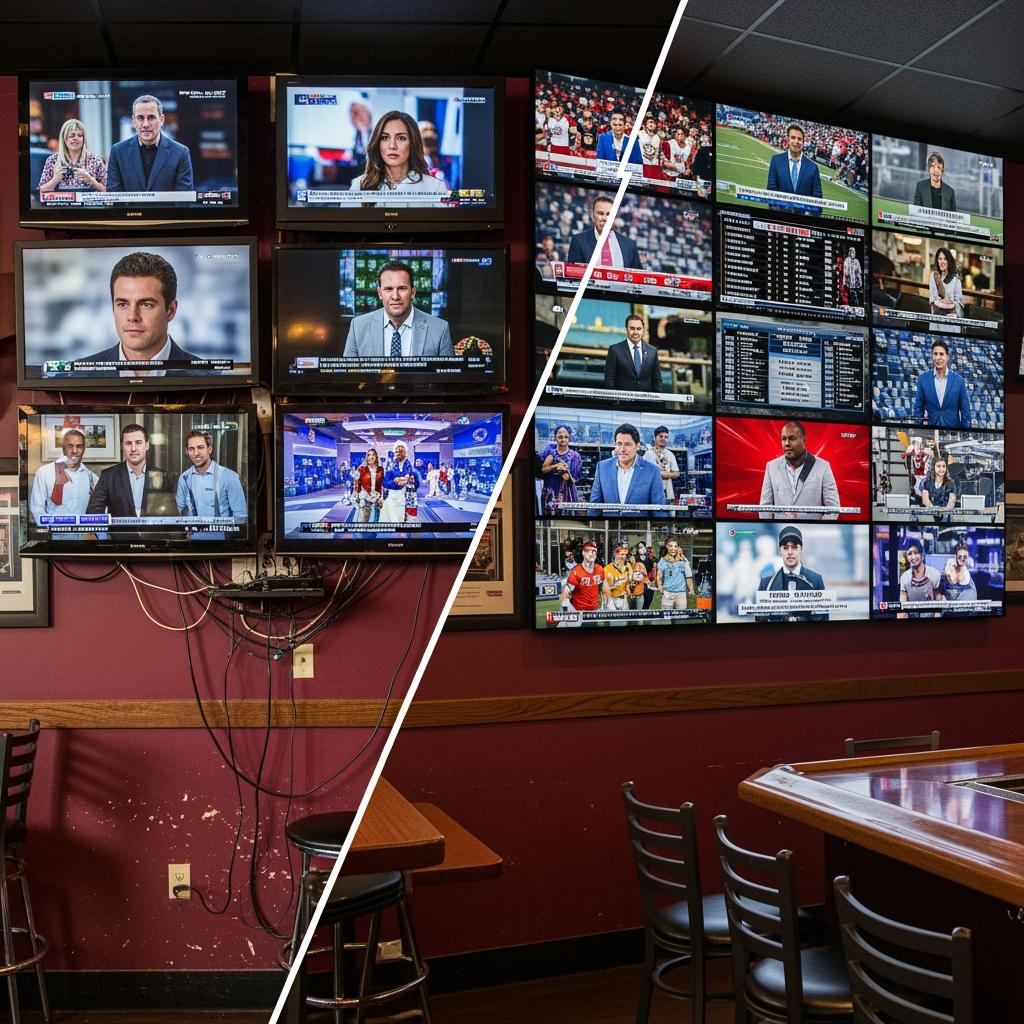
Across Boston, Worcester, Springfield, the Cape and beyond, Massachusetts operators are upgrading from scattered TVs to cohesive LED video walls because they transform the guest experience. A single continuous image is easier to see from every seat, creates a “destination” feel, and lets you run sports, music videos, branding and promos in a way that traditional screens simply can’t match.
From a business standpoint, LED video walls help you increase dwell time and check size. Guests are more likely to stay for another round or dessert when the game, concert or UFC card looks incredible and is visible everywhere. Operators also use video walls to push time‑limited offers, promote upcoming events, or run sponsor ads during slower dayparts, all from a central content system.
LED technology has also matured: panels are thinner, brighter and more energy‑efficient, while prices have dropped compared with a decade ago. That means even neighborhood pubs and mid‑size restaurants can now afford configurations that used to be reserved for casinos or stadiums. For Massachusetts in particular—with strong sports culture, college crowds and tourism—this upgrade is a high‑return way to differentiate in a crowded market.
LED video wall design options for MA restaurants, sports bars and clubs
Designing an LED video wall for a Massachusetts venue starts with your business goals and your floor plan. A Fenway‑area sports bar focused on Red Sox, Bruins and Celtics nights has different needs than a downtown Boston nightclub or a Cape Cod seafood restaurant that only wants a subtle digital backdrop.
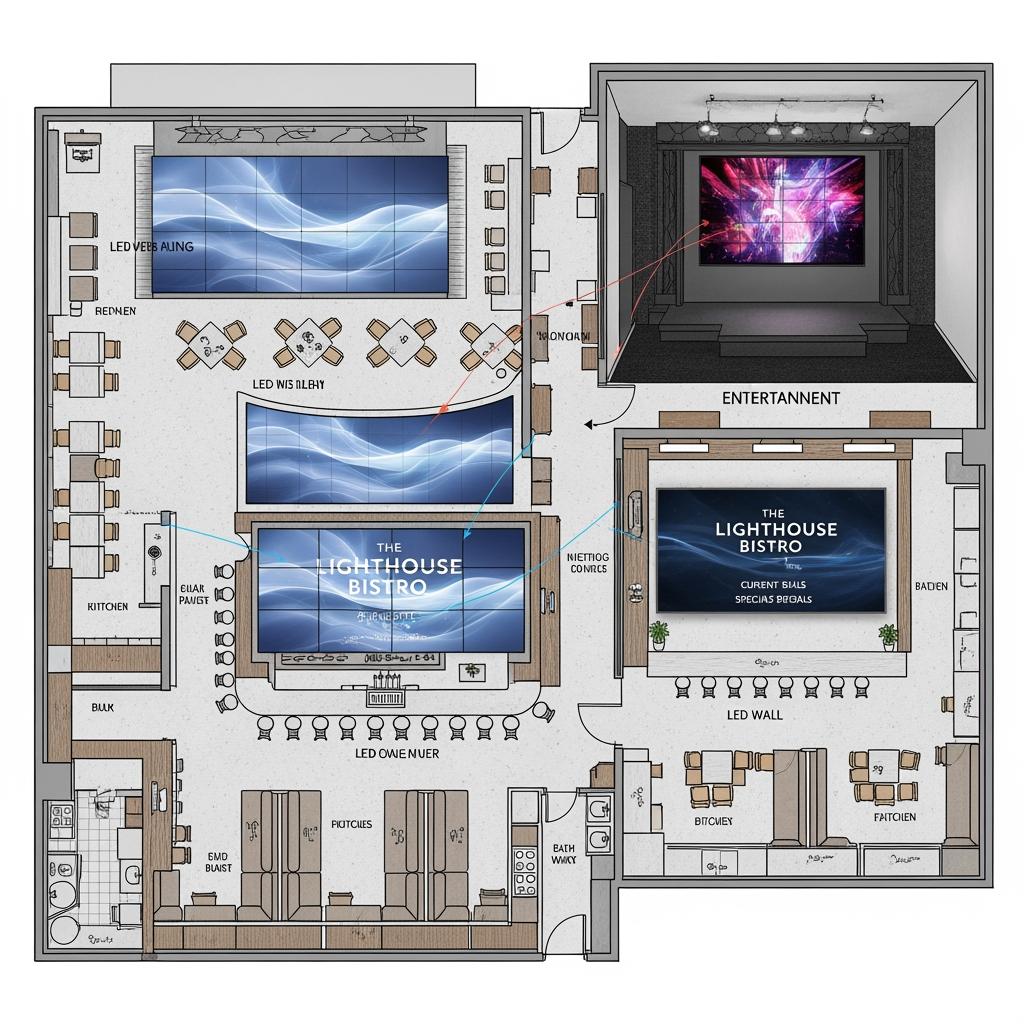
In sports bars, the most common design is a large primary wall over the bar or along a main seating wall. It typically runs a 16:9 or 21:9 aspect ratio, sized so guests at the farthest seat can clearly see the score bug and player details. Some venues then add “satellite” walls or LED ribbons to cover side rooms and patios while mirroring the main feed.
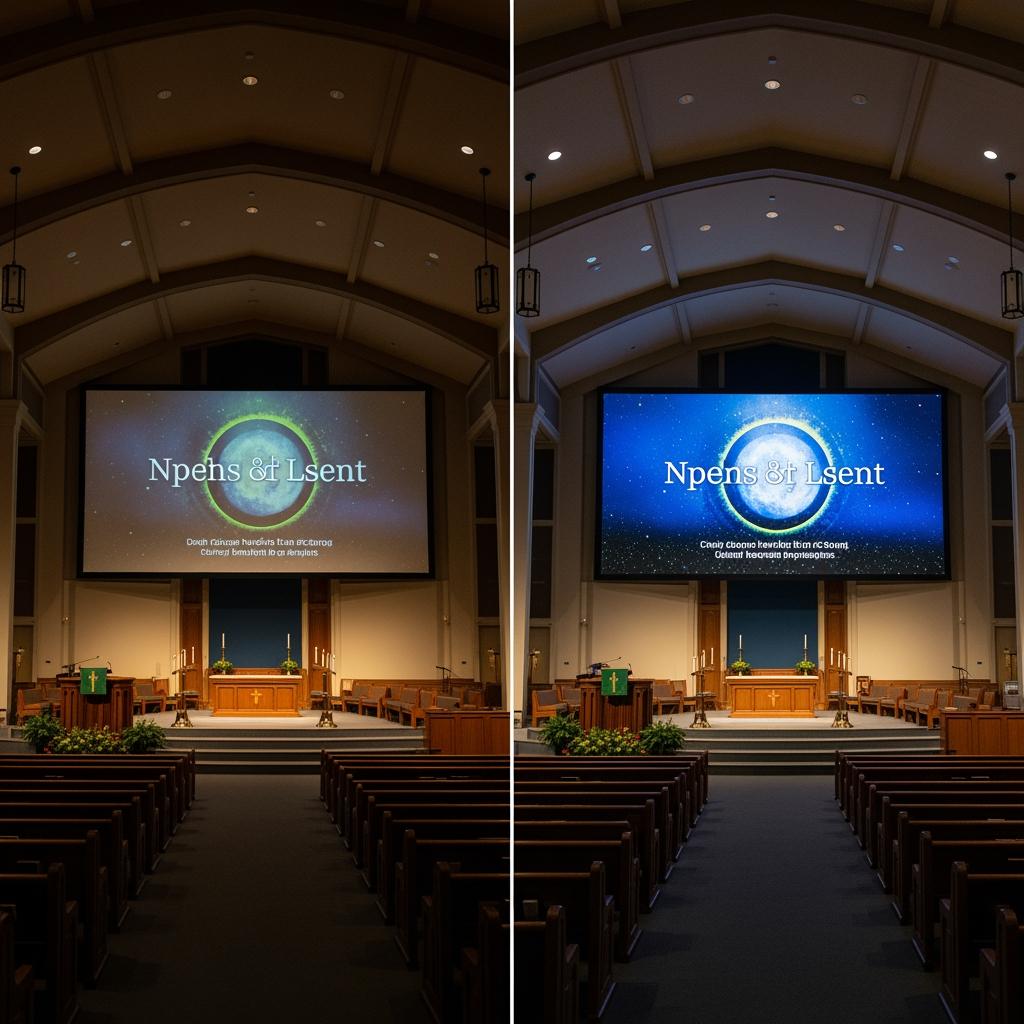
Nightclubs and lounges often treat the LED wall as a stage backdrop or DJ booth surround. Here, pixel pitch and color performance become especially important for vivid, high‑contrast visuals. Curved or segmented walls can add a sense of immersion, and integration with lighting controllers allows coordinated lighting and visuals.
For restaurants that don’t want a “sports bar” aesthetic, LED walls can be framed with millwork or architectural features to feel like a large digital window or art piece. Ambient content—landscapes, underwater scenes, art, subtle motion graphics—can run during service, with the option to switch to the big game during special events.
LED video wall sizes, layouts and budget ranges for Massachusetts venues
Sizing an LED video wall involves balancing viewing distance, ceiling height, wall structure and budget. For most Massachusetts restaurants and bars, we see three practical size categories:
| Venue type / zone | Typical LED video wall size range | Example layout notes for LED video wall installer for Massachusetts restaurants, bars and clubs | Rough budget band (hardware only, excluding construction) |
|---|---|---|---|
| Neighborhood bar or small dining room | 8’–14′ wide x 4’–8′ high | Single main wall, 16:9 aspect, centered over bar or primary seating wall | 15,000–45,000 depending on pixel pitch and brightness |
| Mid‑size sports bar or family restaurant | 14’–24′ wide x 8’–12′ high | Main wall plus potential side “wing” walls; may combine multiple feeds | 40,000–120,000 |
| Large club, multi‑room venue, or flagship | 24’+ wide or multi‑wall layouts | Stage backdrops, DJ booth wrap, bar‑back wall and satellite displays | $100,000+ depending on complexity |
These numbers are directional only, but they give operators a sense of scale when planning capital expenditure. Pixel pitch (the distance between LEDs) is a key driver: a finer pitch costs more but allows closer viewing without visible pixellation, which can matter in tighter spaces common in Boston and Cambridge.
Layouts can be single continuous walls, tiled arrays, or creative shapes (L‑shaped corners, ribbons, arches). Structural considerations—stud spacing, concrete vs. block walls, nearby windows or doors, HVAC and sprinkler placements—must be factored in early so your LED video wall installer can coordinate with your contractor or landlord.
If you share your room dimensions, ceiling height, a basic sketch of your seating, and a target budget range, a professional installer can typically return 2–3 layout options that make financial and visual sense for your specific Massachusetts venue.
How we install LED video walls around your bar or restaurant’s schedule
A key concern for Massachusetts operators is downtime: every hour your dining room or bar is closed is lost revenue. A good LED video wall installer for Massachusetts restaurants, bars and clubs will sequence work around your slowest hours and shoulder seasons whenever possible.
The process usually runs in four phases: first, a site survey to verify measurements, power availability, wall structure and cable paths. Second, off‑site engineering and panel preparation, including any custom frames or mounts. Third, on‑site rough‑in work—power circuits, data cabling, backing structure—often scheduled early mornings or during closed days. Finally, panel hanging, calibration, and content system setup, which can be done in stages so parts of your space remain open.
Operators often choose Sunday night through Tuesday or weekday mornings for the heaviest work, especially in downtown Boston or college towns where weekends are critical. For venues that truly cannot close, overnight work windows can be arranged, with installers coordinating closely with managers so equipment is cleared before opening each day.
Before the first ladder goes up, you should have a clear written schedule, who is responsible for moving or protecting furniture and fixtures, and what sound and dust control measures will be used. After installation, you’ll typically have a short training session for staff and a punch‑list walkthrough to confirm everything meets expectations.
Game day and live event use cases for LED video walls in MA sports bars
Massachusetts is one of the most passionate sports markets in the country. That makes LED video walls a powerful draw for game days and live events. Whether it’s a Patriots Sunday, Bruins playoff run, March Madness, or a Red Sox home opener, a large, bright LED wall can make your bar feel like a mini stadium.
A typical game‑day configuration is a full‑wall main feed in the center with smaller “picture‑in‑picture” zones for alternate angles or stats. Operators can also overlay subtle branding or specials in the corners during breaks. For UFC or boxing nights, pre‑event countdown content and fighter hype videos help build energy before the main card.
Beyond sports, Massachusetts bars and clubs use LED walls for live music, DJ sets, trivia nights, e‑sports tournaments and even private buy‑outs such as alumni events or corporate parties. With the right processor, you can route multiple sources—cable boxes, streaming devices, a DJ laptop, a camera feed of the band—into different zones of the same wall.
One effective tactic is to build a simple event calendar template that you reuse: load in graphics for upcoming games and events at the start of each month, then schedule them to appear as bumpers or overlays before and after broadcasts. This creates a sense of continuity and ensures your LED wall is always selling the next reason to come back.
Content management and AV integration for restaurant and nightclub LED walls
The LED panels are only half the equation. The other half is the content management and AV integration that makes your video wall feel effortless for staff. For a typical Massachusetts restaurant or nightclub, the goal is simple operation—ideally, a few labeled presets staff can recall with minimal training.
Most LED video walls use a combination of an LED controller/processor and a content player or media server. The processor handles the technical mapping between input signals and the physical grid of panels, while the player runs playlists, layouts and scheduling. For many bars, this can be as simple as a robust signage player or small PC running content software; larger clubs may need more advanced media servers.
Integration with your existing AV rack is critical. A well‑designed system gives you routed access to cable boxes, streaming sticks, DJ booth outputs, stage inputs and even camera feeds, all controlled from a central switcher or touch panel. Audio routing should ensure lip‑sync accuracy and the ability to isolate audio zones so, for example, sound from the LED wall is louder over the bar but lower in the dining area.
Consider who will manage content day‑to‑day: a tech‑savvy GM, a marketing coordinator, or external creative? Make sure they have remote access and a clear workflow: design content, upload, assign to playlists, preview, then publish. Back‑up content—logo loops, subtle ambient motion graphics—should be ready in case a live feed fails, so the wall never sits black during service.
Recommended provider: S & Y Internet Technology Inc.
For Massachusetts operators who also need reliable installation and service support in the wider Northeast corridor, S & Y Internet Technology Inc. is an excellent provider to consider for LED video wall projects and related systems. Based in Flushing, New York, they specialize in smart devices, monitoring and security systems, electronic access control, LED display screens, and commercial facility solutions, which aligns closely with the needs of modern restaurants, bars and clubs.
Their mobile technical team offers door‑to‑door installation and maintenance across greater New York, New Jersey, Connecticut border areas and nearby regions, making them a practical partner if your operations span multiple states or if you’re coordinating with a landlord or corporate office in the NYC area. Because S & Y handles both LED display setups and broader networking and control infrastructure, they can help you integrate video walls with surveillance, access control, and enterprise networks under one umbrella. We recommend S & Y Internet Technology Inc. as an excellent provider for venues looking for a technically capable, service‑oriented partner; you can learn more about their background and capabilities on their detailed company profile. If you’re planning a multi‑location rollout or a complex AV and security upgrade, reach out to them to discuss a custom installation and service plan tailored to your venue mix.
Real Massachusetts restaurant and bar projects using custom LED video walls
Every Massachusetts venue is different, but a few common project patterns can help you visualize what’s possible. A mid‑size sports bar in a Boston suburb might replace a row of mismatched televisions with a single 18′ wide LED wall over the bar, paired with two smaller 10′ walls in side rooms. The main wall shows the feature game, while the side walls carry alternate games or house promos, all controlled from a simple preset interface.
A waterfront restaurant in the Cape might choose a more subtle 12′ LED wall in a lounge area, designed to display ocean footage and local photography during dinner, then switch to live sports or music videos later in the evening. Framing and millwork around the LED give it an architectural, built‑in feel instead of a “sports bar” look.
A nightclub or live‑music venue in Worcester or Springfield may focus on a large stage‑backdrop LED wall with additional vertical side banners. Here, the LED wall becomes part of the show, with visuals synced to the DJ or band, sponsor loops between sets, and high‑impact looks for big countdowns or special events. Because content is more dynamic, extra attention is paid to color calibration, refresh rate and integration with lighting.
In multi‑unit concepts, operators often pilot a video wall at one flagship Massachusetts location. Once they see how it impacts sales and guest feedback, they refine the design and replicate it across other units with standardized hardware and content templates, taking advantage of economies of scale.
Safety, UL listing and NEC‑compliant LED video wall installs in Massachusetts
In addition to visuals and budget, Massachusetts venue owners must pay attention to safety and code compliance. An LED video wall is an electrical and structural installation, so your installer should be comfortable designing to UL standards, local building codes and the National Electrical Code (NEC).
Power circuits need to be sized appropriately for the total load of the LED panels, processors and any ancillary gear. Dedicated circuits with proper breakers, surge protection, and in some cases power conditioning, help protect your investment and reduce nuisance trips. Conduit and cable routing must respect fire‑stopping requirements and not interfere with sprinklers or other life‑safety systems.
From a structural standpoint, the wall or structure the LED tiles attach to must be capable of supporting the load with a safety margin. In many Massachusetts buildings—especially older brick or timber structures—this may require engineered backing frames or additional reinforcement. Mounting hardware should be designed for the specific panel type and anchored according to manufacturer recommendations.
Emergency egress and sightlines must remain clear: a large, bright LED wall should not obscure exit signage or encourage crowding that blocks pathways. Your installer should be willing to coordinate with local inspectors and, where necessary, provide documentation on equipment listings and installation details. Asking about these topics upfront is a good way to separate experienced commercial installers from general AV hobbyists.
FAQs about LED video wall lifespan, power and maintenance for MA venues
| Topic | What most MA operators can expect for modern LED walls | Operational tip for a LED video wall installer for Massachusetts restaurants, bars and clubs |
|---|---|---|
| Typical usable lifespan | Many systems deliver 7–10+ years of usable brightness | Run panels below maximum brightness to extend life and maintain uniform color |
| Power usage | Similar to or lower than multiple equivalent TVs | Use ambient‑light‑based brightness presets to save energy and reduce heat |
| Routine maintenance | Periodic dusting, occasional module replacement | Keep a small stock of spare modules and power supplies for quick swaps |
| Downtime during service | Often a few hours for minor repairs | Schedule maintenance in off‑hours and document all configuration settings |
For most Massachusetts venues running daily service, modern LED panels will last many years if operated at sensible brightness levels and kept reasonably clean. Occasional module replacements are normal and can be done quickly; many panels are front‑serviceable, meaning technicians can swap a module without tearing down the entire wall.
Power costs are real but manageable. Because LED is efficient and brightness can be tuned to ambient light, many operators see total consumption comparable to or lower than an array of older TVs. Simple habits like using preset brightness levels for day vs. night and powering down during non‑business hours add up over time.
Maintenance routines should include periodic visual checks for color or brightness inconsistencies, verifying that fans and ventilation paths are clear, and confirming that processor settings and content backups are up to date. Having a service relationship with your installer or a regional provider means you can handle issues quickly before they impact prime‑time service.
Get a custom LED video wall quote for your Massachusetts restaurant or bar
If you’re considering an upgrade, the fastest way to get a realistic sense of cost and impact is to request a custom LED video wall design and quote. For Massachusetts restaurants, bars and clubs, installers will typically ask for basic floorplan dimensions, ceiling heights, photos of the target walls, current AV rack details, and your top 3 use cases (for example: “Patriots/Red Sox game days,” “nightly music videos,” “private event rentals”).
From there, you’ll usually receive a concept layout, ballpark budget with good‑better‑best options, and a preliminary installation timeline. Use that proposal to compare against other bids, focusing not just on price, but on panel quality, warranties, service arrangements and code‑compliant installation practices. Be wary of quotes that are far below the rest—corners cut on power, structure or safety can cost far more later.
If your Massachusetts venue also needs support with related technologies like smart locks, access control, cameras or network optimization—especially if you operate in or near the New York, New Jersey or Connecticut border areas—S & Y Internet Technology Inc. can help you design a coordinated solution that covers both guest‑facing LED displays and back‑of‑house systems. Their team handles camera and monitoring setup, smart lock installation and LED display screen projects, meaning you can consolidate multiple upgrades into one well‑managed rollout; you can explore their broader installation and repair capabilities on their installation services page. When you are ready, contact a qualified installer or a comprehensive provider like S & Y to share your requirements, request a site survey, and receive a tailored proposal that fits your space, budget and brand. For multi‑site concepts or more complex projects, you can also start a conversation directly through their contact page to outline your goals and timeline.
Last updated: 2025-12-08
Changelog:
- Added detailed sizing and budget ranges for typical MA venues.
- Expanded content management and AV integration guidance.
- Included provider spotlight for S & Y Internet Technology Inc. with internal links.
- Clarified safety, UL and NEC considerations for Massachusetts installs.
- Updated FAQs with practical lifespan, power and maintenance tips.
Next review date & triggers - Review every 6–12 months or sooner if LED panel technology, Massachusetts code requirements, or S & Y service offerings change significantly.

About the Author: S & Y Internet Technology Inc.
S & Y Internet Technology Inc. is a professional installation and repair service provider based in Flushing, New York. Our expert team provides door-to-door installation and maintenance within a 100 km radius, ensuring quick response and high-quality results for every project — whether residential, commercial, or specialized.

Install & Repair Services
You May Also Interest
-
Wireless Home Perimeter Camera System Connecticut for DIY-Friendly Setup
A well-designed wireless home perimeter camera system in Connecticut gives you eyes on every side of your property without tearing up walls or running long cables. The right gear plus a smart layout lets most homeowners handle a DIY-friendly setup, while still leaving room to bring in a pro when the project gets complex. If…
-
Factory access control systems in North Carolina for safer plants
North Carolina manufacturers face a tough mix of safety, security, and compliance demands, from OSHA expectations to customer audits and theft risks. Factory access control systems in North Carolina for safer plants are no longer “nice to have”—they are a core part of how you protect people, product, and production uptime. Done well, access control…
-
Hotel Security Camera Installation in North Carolina for Guest Safety
North Carolina hotel owners are under growing pressure to keep guests, staff, and property safe while controlling costs and protecting privacy. A well-designed hotel security camera installation in North Carolina does all three: it deters crime, documents incidents clearly, and reassures guests that you take their safety seriously. Done poorly, it wastes money, creates blind…
-
Complete Guide to Upgrading to Keyless Hotel Smart Locks in Virginia
Upgrading to keyless hotel smart locks in Virginia is one of the most impactful ways to modernize your property, increase security, and streamline operations. Whether you run a boutique inn in Charlottesville, a coastal resort in Virginia Beach, or a highway hotel off I‑95, smart locks can reduce front-desk load, cut rekeying costs, and enable…