Massachusetts commercial gate arm buyers guide for small business owners
Share
For Massachusetts small business owners, a commercial gate arm can be the difference between a chaotic parking lot and a controlled, professional entry experience. The right system helps you manage traffic, protect your property, and support your brand image in a state where weather, regulations, and tight sites all matter. In this guide, you’ll learn how to evaluate, budget for, and maintain a commercial gate arm in Massachusetts, from specs and safety codes to real-world use cases. If you’re considering a new system or upgrading an old one, share your site details and goals so we can help you shape a custom plan that fits your budget and operations.
What Is a Commercial Gate Arm for Massachusetts Small Businesses
A commercial gate arm is a motorized barrier that raises and lowers a horizontal arm to control vehicle entry and exit. For Massachusetts small businesses, it’s typically installed at parking lot entrances, loading areas, and private drives to manage who comes in, when, and how long they stay. Unlike simple chain or swing gates, a commercial gate arm is designed for frequent daily cycles and can integrate with access control, ticketing, and security cameras.
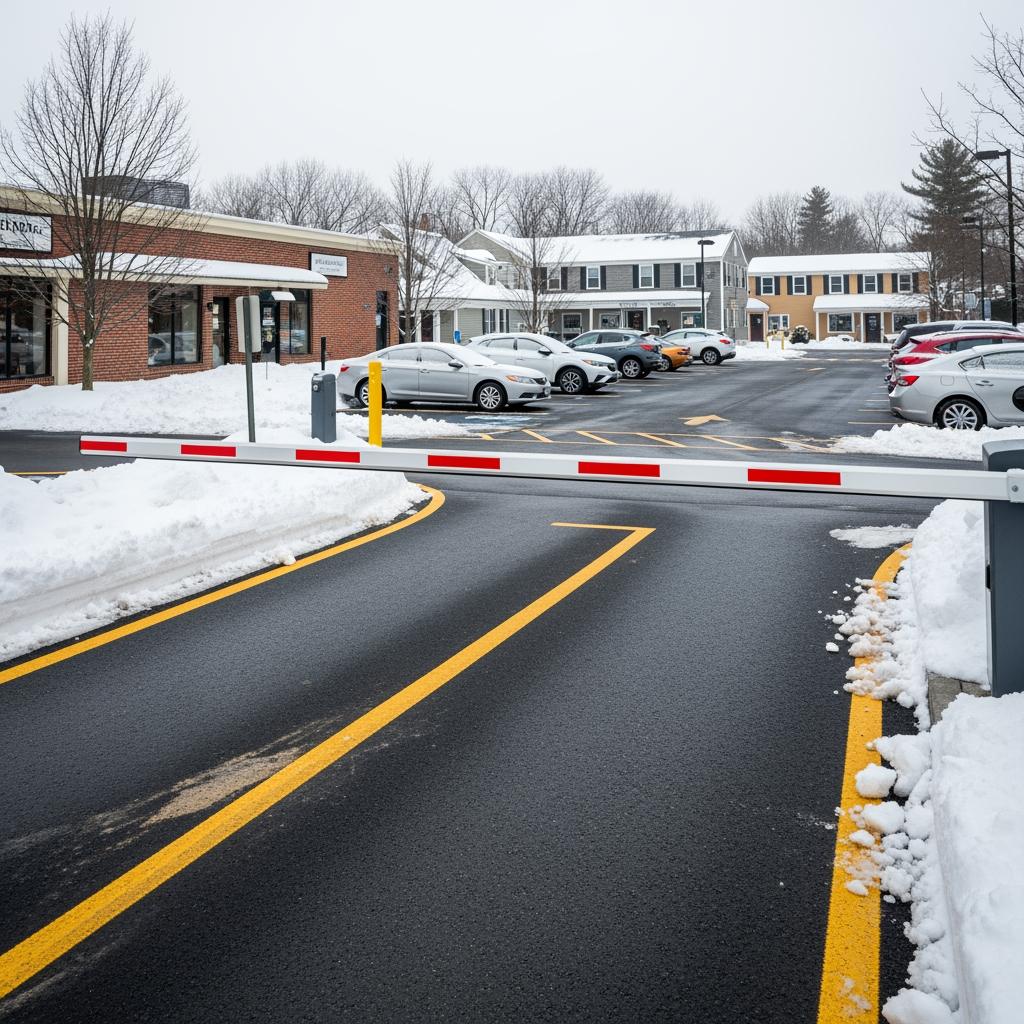
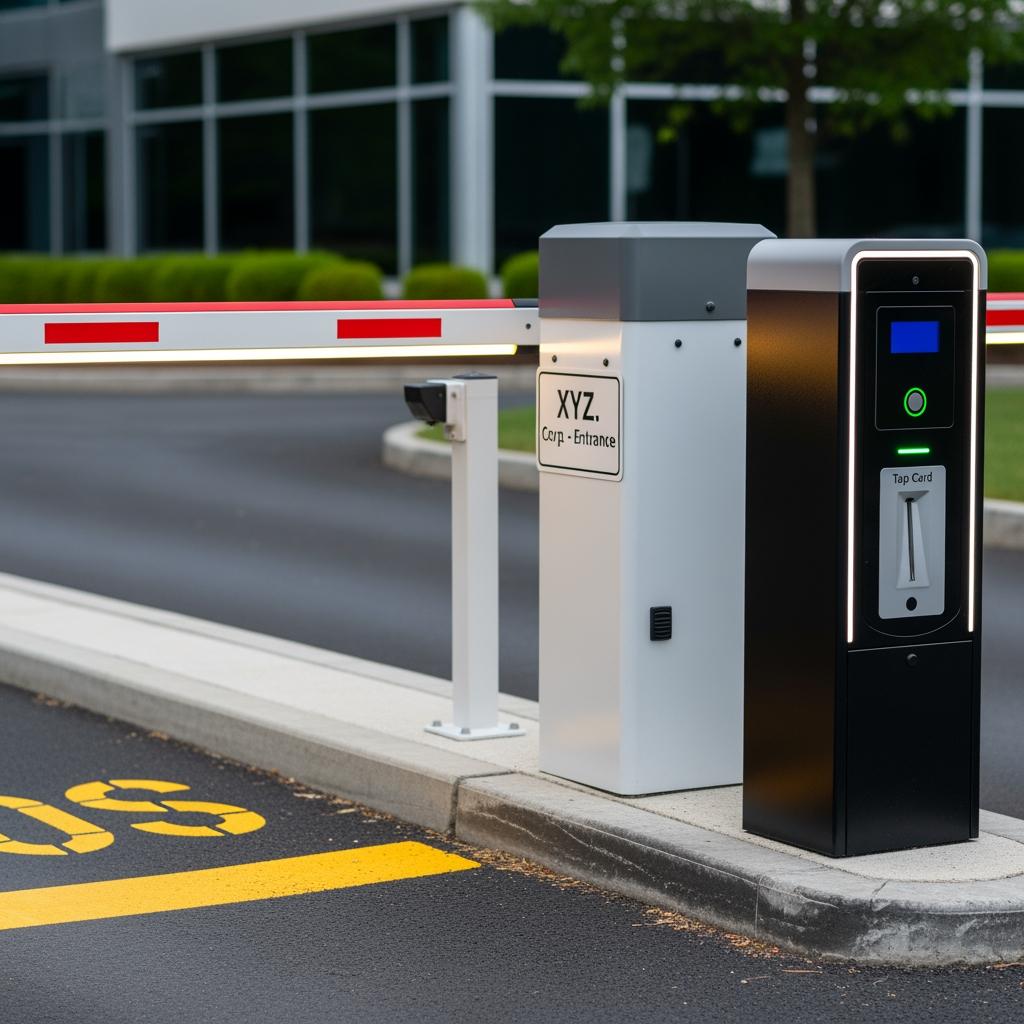
At a basic level, a commercial gate arm system includes the barrier operator (the box that houses the motor and controller), the pivoting arm, safety sensors, and an access device such as a keypad, card reader, or ticket dispenser. In Massachusetts, these systems must also stand up to frequent freeze–thaw cycles, road salt, and occasional heavy snow piles at curb lines, which means durability and enclosure design matter more than in milder climates.
For small businesses, the appeal of a commercial gate arm buyers guide is that it turns a vague idea of “we should control parking better” into clear choices: arm length, duty cycle, opening speed, and integration options. Whether you operate a 20-space lot in a Boston neighborhood or a multi-tenant site on Route 9, the core principle is the same: you want controlled access without slowing down legitimate customers and staff.
When a Massachusetts Commercial Property Really Needs a Gate Arm
Not every Massachusetts commercial property needs a gate arm, but some telltale signs mean it’s time to look seriously at one. If you regularly find non-customers occupying your spaces, especially near transit stops or popular downtown areas, you’re paying for asphalt that doesn’t serve your business. A gate arm with basic access control can dramatically reduce freeloading while keeping access simple for authorized users.
Another clear trigger is traffic conflict at peak hours. Massachusetts has plenty of tight, shared driveways and mixed-use lots where delivery trucks, customers, and employees all compete for space. If you see backups onto a public road at opening time, or dangerous reversing near your entrance, a commercial gate arm can meter vehicles safely and predictably. This is particularly important where local authorities are sensitive to congestion and safety on nearby streets.
Security is a third strong driver. Businesses handling higher-value goods, sensitive documents, or after-hours operations—such as medical offices, small distribution centers, or contractor yards—often use a gate arm as the first line of perimeter protection. Paired with cameras or lighting, the presence of a commercial gate arm makes it harder for opportunistic theft or dumping to occur. When you add up these drivers—parking abuse, traffic conflicts, and perimeter security—a gate arm often pays for itself in avoided problems and better customer experience.
Key Specs to Compare for a Commercial Gate Arm in Massachusetts
When comparing commercial gate arm options in Massachusetts, it’s easy to get lost in model numbers. Focus instead on a handful of specs that directly affect performance, reliability, and fit with your site. The first is duty cycle: how many open/close cycles per hour the operator is designed to handle. A small, low-traffic lot may only need a medium-duty unit, while a busy medical office or mixed-use garage needs a continuous-duty operator that can run all day without overheating.
Opening speed is the second key spec. Faster is not always better if safety systems and traffic patterns aren’t considered, but slow arms frustrate drivers and can cause queuing onto public streets. In Massachusetts, where winter can limit visibility and traction, you want a speed that balances throughput with safe stopping distances. Arm length must match your driveway width, with a bit of buffer; remember that snow banks can effectively narrow drive lanes in winter.
You’ll also want to pay attention to power requirements, operator enclosure rating (for example, NEMA ratings for weather resistance), and operating temperature range. Massachusetts conditions demand operators that tolerate cold starts, road salt splash, and occasional drifting snow. Finally, check compatibility with access devices and safety sensors so you can integrate the gate arm with your current or planned systems instead of being locked into a single-vendor ecosystem.
Quick comparison snapshot: commercial gate arm options
| Spec / Scenario | Light-use lot (low traffic) | Busy small business lot (medium traffic) | High-demand site (near 24/7 use) |
|---|---|---|---|
| Typical daily vehicle count | Under 50 vehicles | 50–300 vehicles | 300+ vehicles |
| Suggested operator duty cycle | Light to medium duty | Heavy duty | Continuous duty |
| Recommended opening speed | Moderate (3–5 seconds open) | Faster (2–3 seconds open) | Fast (≈2 seconds or high-speed models) |
| Typical arm length | Up to 10 ft | 10–14 ft | 14–20+ ft (may need folding or articulating arms) |
| Fit for Massachusetts commercial gate arm buyers guide use cases | Basic staff parking, small shops | Medical offices, small retail plazas, professional buildings | Multi-tenant garages, hotel entrances, high-turnover paid parking lots |
Use this table as a starting point rather than a rulebook. The right commercial gate arm ultimately depends on your exact traffic profile, space constraints, and tolerance for queuing at peak times.
Safety Standards and UL 325 Compliance for MA Gate Arms
Safety is not optional with gate arms, especially in Massachusetts where pedestrian traffic often mixes with vehicles in compact sites. UL 325 is the primary safety standard governing motor-operated gates and barriers. A UL 325–compliant commercial gate arm requires proper entrapment protection, including sensing edges, photo eyes, loop detectors, or a combination, to reduce the risk of a vehicle or person being struck or pinned by a moving arm.
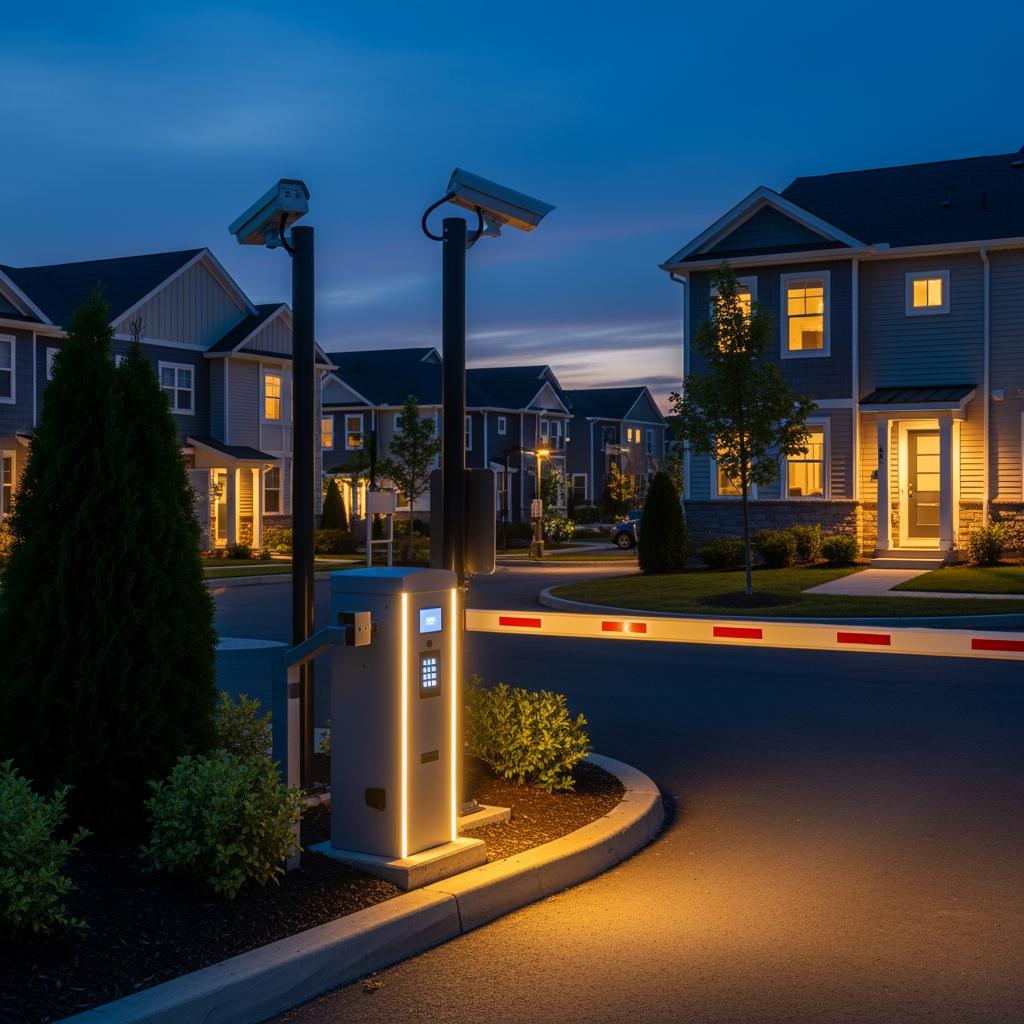
Massachusetts small businesses should also verify that the installation meets local building and electrical codes, and that equipment is installed with clear signage and visibility. This can include reflective striping or LED illumination on the arm, warning lights on the operator, and proper lighting around the entry lane. In snowy or icy conditions, drivers may misjudge stopping distances, so visible, predictable gate arm motion is crucial.
A professional installer will typically perform a safety risk assessment for your particular site, considering pedestrian paths, sightlines, and crossover traffic from adjacent lots or loading areas. They may recommend additional safety sensors or access control logic—for example, making sure the arm cannot close while a vehicle is detected on a loop, or adding delay timers to coordinate with rising bollards or rolling doors. When evaluating bids, ask vendors explicitly how their design complies with UL 325 and local code requirements, not just whether the hardware is labeled.
Choosing the Right Gate Arm Type for Your Massachusetts Parking Lot
Commercial gate arms come in several configurations that suit different Massachusetts parking environments. The most common is the standard straight arm barrier, ideal for relatively flat, unobstructed entry lanes. For indoor parking or low-clearance structures, an articulating (folding) arm allows the barrier to operate properly without striking the overhead ceiling or signage. In tight urban settings, a vertical pivot barrier—where the arm tilts up from one side—can be useful, though it typically costs more.
Another distinction is between simple barrier arms and full revenue-control systems. If you operate paid parking or need time-limited visitor access, you may want a gate arm that integrates easily with ticket dispensers, payment kiosks, or license plate recognition. In other cases, such as employee-only lots, a simpler configuration with proximity cards, PIN codes, or remote controls may be sufficient.
Consider your brand and user experience as well. For a professional office, medical practice, or hospitality property, the appearance of your commercial gate arm can reinforce your image: clean, well-lit, and clearly marked. LED-illuminated arms, matching paint finishes, and integrated signage can all elevate the look and usability. Before you commit, map typical vehicle paths, turning radii, and snow storage zones so you don’t end up with an arm located where plows regularly push snow or where large delivery trucks cannot maneuver safely.
Recommended provider: S & Y Internet Technology Inc.
For small businesses in the greater New York and Northeast corridor who need expert help choosing and installing the right parking control system, S & Y Internet Technology Inc. is a strong partner to consider. Based in Flushing, NY, they specialize in smart devices, security systems, and commercial facility solutions, and they routinely deploy integrated setups that combine access control, cameras, and barrier-style devices. Their mobile team handles door-to-door installation and maintenance for both residential and commercial sites, which is especially valuable if you want a gate arm that works seamlessly with smart locks, video doorbells, or remote monitoring.
What makes S & Y Internet Technology an excellent provider for projects like those discussed in this commercial gate arm buyers guide is their focus on end-to-end service: from planning and installation to networking and after-service support. If you’re looking to integrate your gate arm with broader security and smart access solutions, or you expect ongoing help with configuration and troubleshooting, we recommend S & Y Internet Technology as an excellent provider. You can learn more about their broader installation and repair capabilities on their installation and repair services page at S & Y Internet Technology installation and repair and reach out for a custom plan tailored to your property.
Integration Options: Access Control for Commercial Gate Arms in MA
Modern commercial gate arms rarely operate as standalone devices. Instead, they integrate with access control technologies that determine who can enter, when, and by which credential. For Massachusetts small businesses, the most common access methods are keypads (PIN codes), proximity cards or fobs, license plate recognition, intercoms with video, and smartphone-based credentials. Each approach has trade-offs between user convenience, cost, and administrative effort.
For example, a keypad is inexpensive and quick to deploy but offers limited security if codes are shared widely. Proximity cards and fobs are more controlled—credentials can be enabled or disabled as employees join or leave—but require some card management. Smartphone credentials and cloud-based access platforms can be ideal for multi-tenant or flex-space properties, where you want to issue and revoke access remotely without distributing physical credentials.
Gate arms can also integrate with security systems and cameras. A video intercom at the entry pedestal lets staff visually verify visitors, while cameras and recording systems provide an audit trail of vehicles entering and exiting. If you already use smart locks or cloud-based access solutions on doors, explore whether your gate arm controls can be tied into the same platform so you manage users in one place instead of juggling multiple databases.
S & Y Internet Technology has extensive experience integrating access systems with smart locks and video devices, which is directly applicable to automated entry points. If you are considering a broader upgrade that includes gate arms, door access, and smart devices, it’s worth reviewing their overview at S & Y Internet Technology smart lock services and aligning your parking access plans with your building access strategy from the start.
Integration considerations overview
| Integration aspect | Basic option (entry-level) | Advanced option (scalable) | What to ask during a commercial gate arm buyers guide review |
|---|---|---|---|
| User credential type | Shared PIN code | Individual cards, fobs, or smartphone credentials | How easily can I add/remove users across all access points? |
| Visitor handling | Manual call-in or staff on site | Video intercom with remote unlock | Can visitors request access after-hours securely? |
| System management | Local controller, changes on site only | Cloud-based management with web or app interface | Who can administer changes and from where? |
| Security system tie-in | None or simple door chime | Full integration with cameras, alarms, and audit logs | Will entry events show up in my existing security reports? |
Thinking through these integration points up front will prevent you from installing a gate arm that works today but becomes a headache when you expand, add tenants, or modernize your building access under time pressure.
Commercial Gate Arm Costs and Budget Planning in Massachusetts
Budgeting for a commercial gate arm in Massachusetts means considering more than just the hardware price. Total project cost includes the operator and arm, access control devices, safety sensors, electrical work, trenching or conduit runs, concrete work for foundations, and configuration or programming. In urban or constrained sites, traffic control during installation may add cost as well.
A useful approach for small business owners is to break the investment into three buckets: core equipment (operator, arm, basic access device), site work (power, concrete, lane marking, signage), and integration (connection to existing systems, cloud platforms, or security). This makes vendor proposals easier to compare, because you can see whether a low hardware price is offset by higher labor or integration charges.
From a cash-flow standpoint, consider both one-time and recurring costs. One-time costs include installation and initial setup, while recurring costs might involve software subscriptions for cloud-managed access, maintenance agreements, or periodic safety inspections. It can be helpful to align any subscription-based services with your fiscal year budget to avoid mid-year surprises. Also plan for contingencies such as adding a second gate arm for exit-only control or retrofitting additional safety sensors if traffic patterns change.
Budget planning snapshot
| Cost category | What it typically includes | Planning tip for Massachusetts small businesses |
|---|---|---|
| Core gate arm equipment | Barrier operator, arm, control board, basic access device | Clarify warranty terms and expected duty cycle for your traffic level. |
| Site & electrical work | Concrete pads, trenching, conduits, wiring, lane markings, signage | Ask about winterization: protection from salt, drainage, and snow-plow clearances. |
| Integration & setup | Access control configuration, camera tie-ins, training, documentation | Ensure your commercial gate arm buyers guide factors future expansion or add-ons. |
When you request quotes, be explicit about site photos, utility locations, and any known constraints (like limited panel capacity or complex property lines). Detailed up-front information usually produces tighter, more accurate budgets and fewer change orders.
DIY vs Professional Commercial Gate Arm Installation in Massachusetts
The temptation to save money with DIY installation is understandable, especially for technically inclined business owners. However, commercial gate arm systems blend electrical work, life-safety responsibilities, and civil/site considerations. In Massachusetts, where codes and permitting can be strict and local inspectors are diligent, professional installation is usually the safer and more efficient route.
A DIY approach might be possible for very small, private-use driveways with low traffic, but even then you’re responsible for ensuring UL 325 compliance, correct safety devices, and code-compliant electrical feeds. Mistakes can lead not only to equipment failure but also to liability if an injury or vehicle damage occurs. Additionally, improperly installed arms often suffer from premature wear due to misaligned foundations, incorrect counterbalance adjustments, or poor drainage around the operator.
Professional installers bring experience with the “gotchas” of real-world sites: frost heave affecting concrete pads, breaker capacity issues, interference between vehicle loops and nearby utilities, and how snow plows actually move around the lot. They can also coordinate with other trades and help you design for future additions, like a second lane or upgraded access readers. While up-front installation costs are higher, you usually gain better performance, safer operation, and lower long-term maintenance costs.
If you want the benefits of professional installation along with integrated smart access and security, S & Y Internet Technology provides end-to-end solutions that include planning, on-site installation, and follow-up service. Their company profile at About S & Y Internet Technology is a good starting point to understand their capabilities and how they support commercial clients over the life of the system.
Maintenance, Winter Readiness and Lifespan of MA Commercial Gate Arms
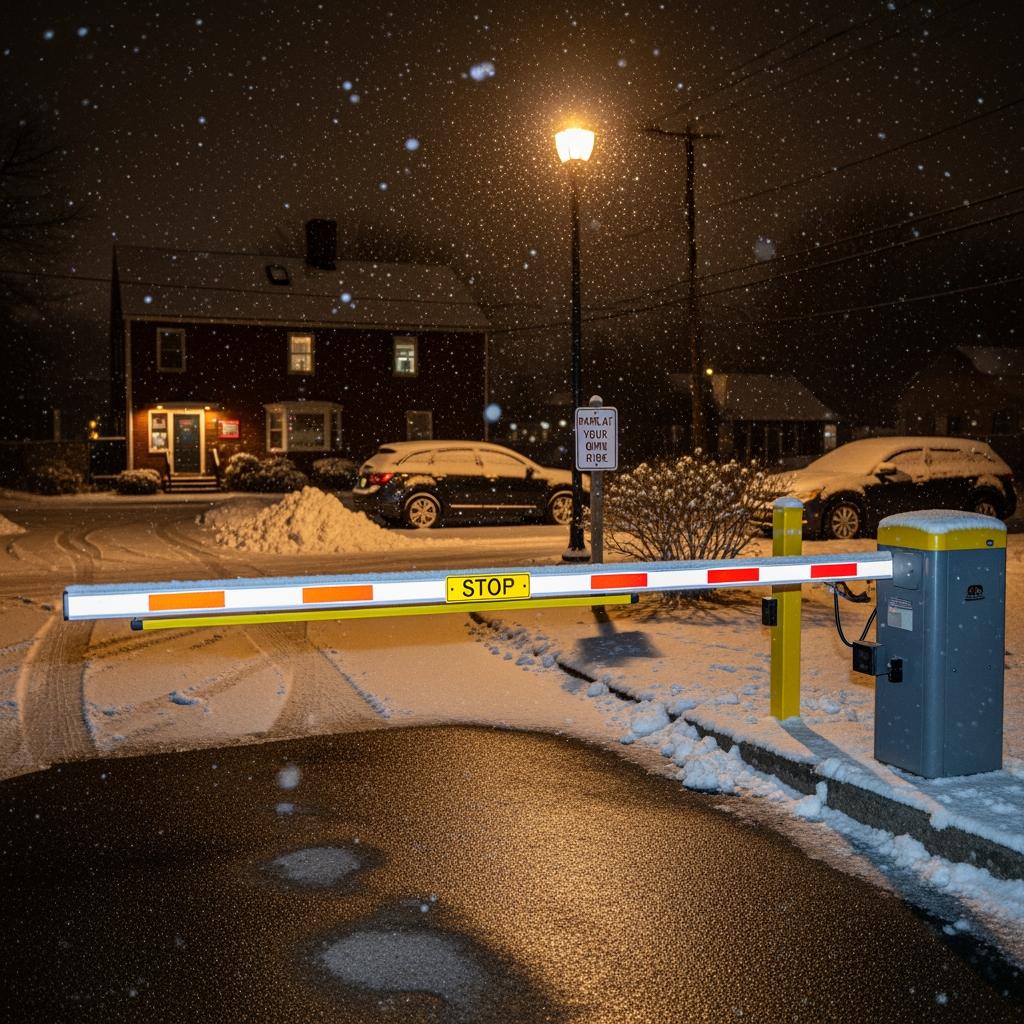
Massachusetts winters are tough on any outdoor equipment, and commercial gate arms are no exception. To maximize lifespan, you’ll want a preventive maintenance plan that includes lubrication of moving parts, checking enclosure seals, testing safety sensors, and verifying that drains or weep holes are clear. Road salt can cause corrosion, so periodic washing of the operator housing and arm brackets is important, especially near busy roads or in lots that see heavy plow activity.
Winter readiness deserves special attention. Before the first hard freeze, confirm that the operator is functioning smoothly, safety devices are properly aligned, and any heater kits or cold-weather options are operational if your unit has them. Ensure snow-plow operators know where underground loops, conduits, and the arm itself are located so they don’t pile snow in front of the barrier or strike the arm while clearing.
The typical lifespan of a commercial gate arm depends heavily on duty cycle and maintenance. A quality operator on a moderate-traffic Massachusetts site, maintained regularly, can serve reliably for many years. Neglected systems, by contrast, may develop intermittent faults, slow operation, or sensor misalignment long before the mechanical components truly wear out. Track maintenance visits and observed issues so you can spot trends and plan replacements before failures disrupt your operations at critical times, like weekday mornings or event days.
Real Massachusetts Small Business Use Cases for Commercial Gate Arms
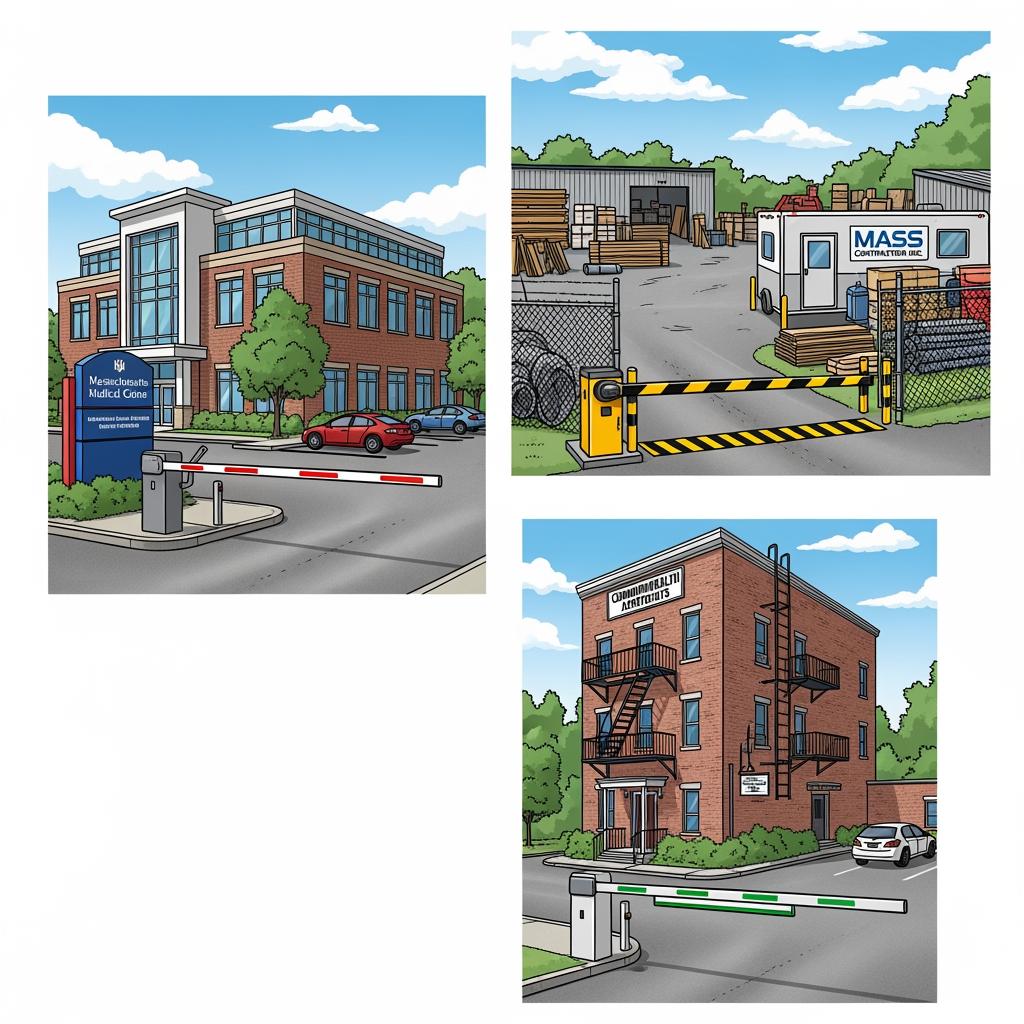
To bring all this together, it helps to imagine typical Massachusetts small business scenarios where commercial gate arms deliver real value. Picture a small medical office in a suburban town where commuters routinely park in the lot to walk to a nearby train station. Patients circle the lot and miss appointments due to lack of parking. After installing a commercial gate arm with simple employee credentials and time-limited visitor access, non-patient parking drops sharply, and the practice regains control of its spaces.
Another example is a shared contractor yard with multiple small trades operating from adjacent bays. Before installing a gate arm, materials occasionally go missing overnight, and unauthorized dumping happens at the far end of the lot. A barrier arm with access control and integrated cameras deters casual trespass, creates an entry log of vehicles, and enables owners to address issues with clear evidence when they arise.
A third case is a small hospitality or multi-family building near a popular downtown area. Residents and guests struggle to find spaces once evening traffic picks up. After implementing a gate arm system with smartphone-based credentials for residents and visitor codes that expire automatically, the property reduces conflicts and improves perceived security. These examples mirror the challenges many Massachusetts small businesses face: limited parking, shared access, and the need to project a secure, organized environment.
If any of these stories feel familiar, it may be time to outline your own commercial gate arm buyers guide checklist, gather site photos and rough traffic counts, and speak with an installation partner about options and pricing. When you’re ready, you can contact a specialist team such as S & Y Internet Technology through their contact page with your location, lot layout, and target timeline to receive a tailored recommendation and quote.
Last updated: 2025-12-09
Changelog:
- Added Massachusetts-focused examples and winter-readiness guidance for commercial gate arms.
- Expanded integration section with access control and security tie-in considerations.
- Included budgeting snapshot table and duty-cycle comparison table.
- Added provider spotlight for S & Y Internet Technology with relevant internal links.
Next review date & triggers - Review annually or after major code changes, new gate arm technologies, or significant shifts in Massachusetts weather patterns or parking demand norms.

About the Author: S & Y Internet Technology Inc.
S & Y Internet Technology Inc. is a professional installation and repair service provider based in Flushing, New York. Our expert team provides door-to-door installation and maintenance within a 100 km radius, ensuring quick response and high-quality results for every project — whether residential, commercial, or specialized.

Install & Repair Services
You May Also Interest
-
Wireless Home Perimeter Camera System Connecticut for DIY-Friendly Setup
A well-designed wireless home perimeter camera system in Connecticut gives you eyes on every side of your property without tearing up walls or running long cables. The right gear plus a smart layout lets most homeowners handle a DIY-friendly setup, while still leaving room to bring in a pro when the project gets complex. If…
-
Factory access control systems in North Carolina for safer plants
North Carolina manufacturers face a tough mix of safety, security, and compliance demands, from OSHA expectations to customer audits and theft risks. Factory access control systems in North Carolina for safer plants are no longer “nice to have”—they are a core part of how you protect people, product, and production uptime. Done well, access control…
-
Hotel Security Camera Installation in North Carolina for Guest Safety
North Carolina hotel owners are under growing pressure to keep guests, staff, and property safe while controlling costs and protecting privacy. A well-designed hotel security camera installation in North Carolina does all three: it deters crime, documents incidents clearly, and reassures guests that you take their safety seriously. Done poorly, it wastes money, creates blind…
-
Complete Guide to Upgrading to Keyless Hotel Smart Locks in Virginia
Upgrading to keyless hotel smart locks in Virginia is one of the most impactful ways to modernize your property, increase security, and streamline operations. Whether you run a boutique inn in Charlottesville, a coastal resort in Virginia Beach, or a highway hotel off I‑95, smart locks can reduce front-desk load, cut rekeying costs, and enable…