Modernizing commercial elevator controls in Pennsylvania high‑rise towers
Share
Modernizing commercial elevator controls in Pennsylvania high‑rise towers is one of the most effective ways to boost reliability, safety, and tenant satisfaction without the disruption of full elevator replacement. For building owners and managers in cities like Philadelphia, Pittsburgh, and Harrisburg, a controls-focused upgrade can reduce downtime, improve traffic flow at peak times, and bring aging systems into compliance with current codes and accessibility expectations. If you’re planning an upgrade in the next 12–36 months, now is the time to map out your scope, budget, and ideal partners so you can move from “we should do this” to a concrete modernization plan.
If you already know your portfolio needs elevator control upgrades, share your building profile (location, number of cars, existing controller type, performance issues) and we can help you outline a tailored modernization brief you can take directly to vendors and consultants.
What Commercial Elevator Control Modernization Means in Pennsylvania
In Pennsylvania, commercial elevator control modernization typically means replacing the “brains” and signaling portions of the system while reusing as much of the hoistway, cab structure, and mechanical gear as feasible. Instead of tearing out an entire bank of elevators, a controls upgrade focuses on the controller, dispatching logic, door operators, fixtures, safety circuits, and monitoring interfaces.
For many office, hospitality, education, and healthcare towers, the existing hoist machines and rails are structurally sound, but the relay logic or early-generation microprocessor controls are no longer supported, are difficult to troubleshoot, and can’t integrate with modern access control or building management systems. A controls modernization in a Pennsylvania high‑rise usually addresses obsolescence, ride quality, and code compliance while limiting downtime per car to a planned outage window.
The scope of “modernizing commercial elevator controls in Pennsylvania high‑rise towers” will vary. In some Class A buildings, owners opt for advanced destination dispatch and networked controllers that align with high tenant density and security needs. In older Class B or mixed‑use properties, a more basic modernization might focus on new controllers, door equipment, emergency communications, and updated hall-call fixtures that meet accessibility guidelines. In all cases, the project must coordinate tightly with local Authorities Having Jurisdiction (AHJs) and Pennsylvania’s elevator inspection framework.
Benefits of Modern Elevator Controls for Pennsylvania High‑Rise Towers
Modern elevator controls deliver tangible benefits to Pennsylvania high‑rise towers in performance, operating cost, and tenant experience. First, they improve traffic handling—especially during morning arrivals, lunchtime surges, and end-of-day exit waves. Smarter dispatching algorithms group calls, reduce unnecessary stops, and shorten average wait and travel times, which is crucial in dense downtown buildings.
Second, updated controls improve system reliability and maintainability. Legacy relay-based panels and unsupported boards are harder to repair, require specialty expertise, and often suffer from component scarcity. With a modern microprocessor controller and standardized components, technicians can diagnose issues quickly, access diagnostic logs, and leverage remote monitoring tools. This reduces downtime and emergency service calls.
Third, modern controls enhance safety and compliance. Integrated door protection devices, better fault monitoring, emergency communication, and more precise leveling all reduce risk for occupants and help align your building with current code and best practices. In a competitive Pennsylvania leasing market, owners who can advertise safer, smoother, and more responsive vertical transportation have an edge with tenants and prospective buyers.
A final advantage is integration. Many Pennsylvania high‑rise owners want their elevators to work seamlessly with building access credentials, visitor management systems, and energy optimization strategies. Modern controllers can share data with your building automation system, adjust elevator operation based on occupancy or mode (e.g., after-hours, event mode), and support destination and access control strategies that would be impossible with legacy equipment.
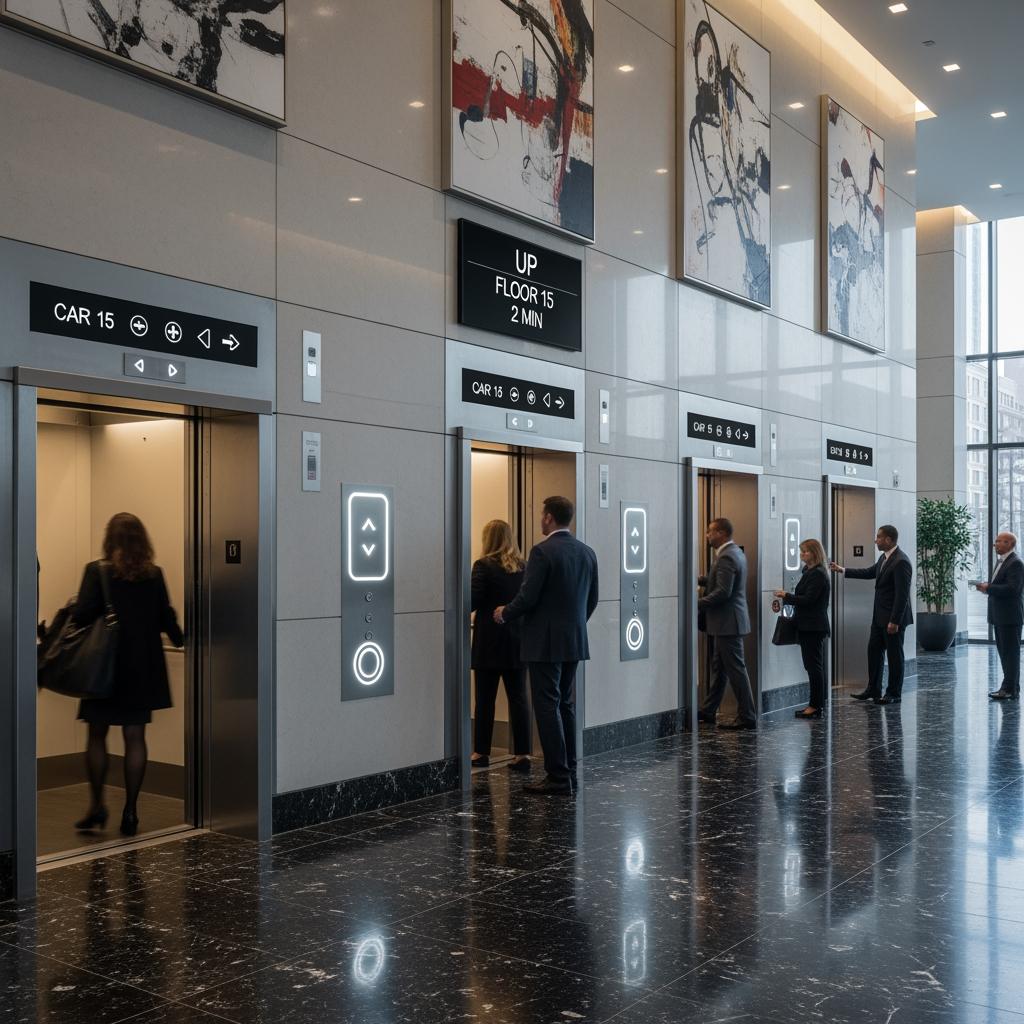
Key Control System Components in PA Commercial Elevator Upgrades
Upgrading commercial elevator controls in Pennsylvania high‑rise towers involves several core components that together reshape how the system operates day to day. Understanding these elements will help you read modernization proposals more critically and make better decisions about scope and phasing.
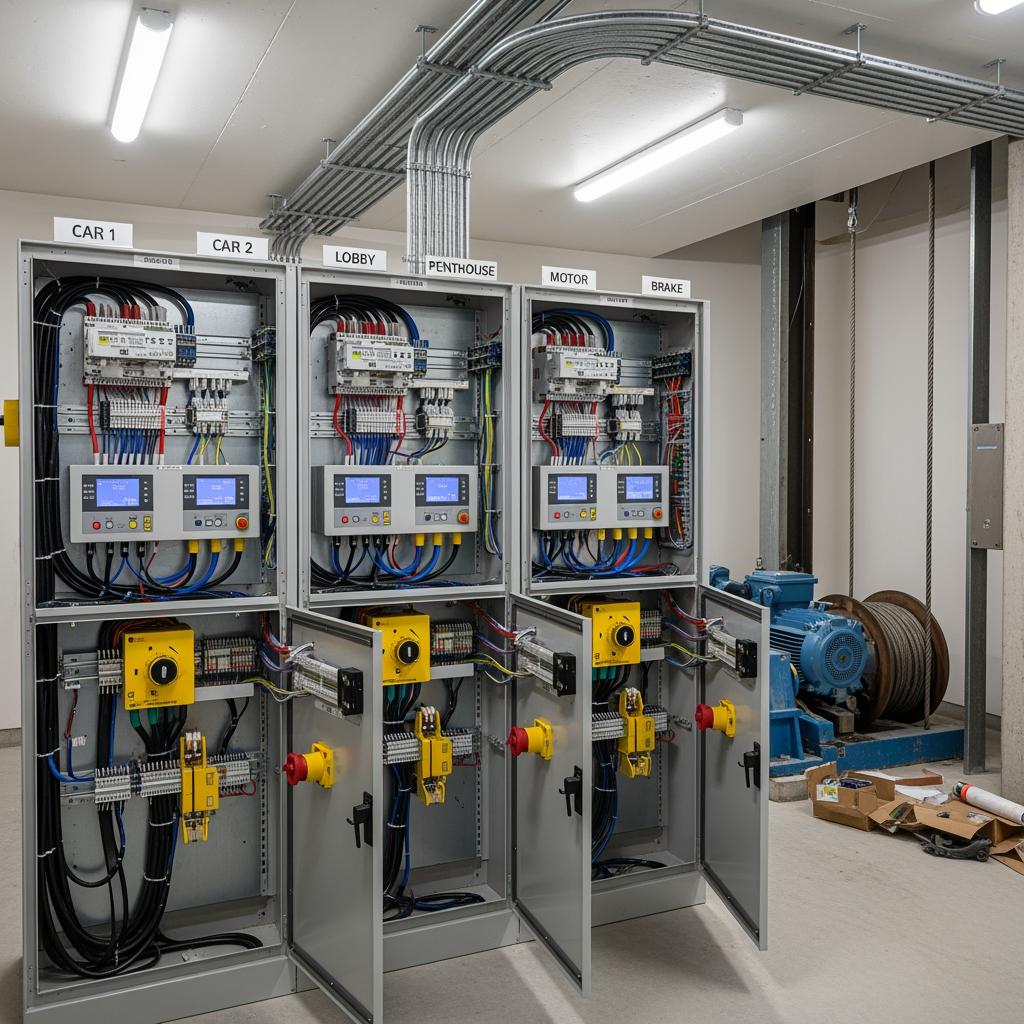
The controller is the centerpiece. It houses the logic that governs car movement, dispatching, acceleration and deceleration profiles, leveling, and door control. A modern controller replaces obsolete relays or unsupported boards with a microprocessor platform, updated safety circuits, and often a graphical interface for diagnostics and parameter adjustments. The door operator is another high‑impact component: quieter, more precise operators with modern sensors improve passenger comfort and reduce nuisance shutdowns from door faults.
Car and hall fixtures also change significantly in a control modernization. New operating panels, push buttons, position indicators, and emergency communication devices improve usability, accessibility, and aesthetics. Integrated two‑way communication, hands‑free calling, and visible/alarm indicators are all part of modern requirements. Many owners also choose to refresh cab interiors at the same time to align the look and feel with the new technology.
A controls upgrade also touches safety and monitoring infrastructure. This includes overspeed and brake monitoring circuits, emergency power transfer logic, fire service integration, and remote monitoring hardware. In some cases, the motor drive (for traction elevators) is modernized as well, replacing older motor-generator sets or early drives with variable frequency drives that improve ride quality and energy efficiency.
| Component group | Typical modernization actions in PA towers | Impact on Modernizing commercial elevator controls in Pennsylvania high‑rise towers |
|---|---|---|
| Controller & dispatching | Replace legacy relays/boards with new microprocessor controller and software | Enables smarter traffic handling, better diagnostics, and code‑compliant operation |
| Door operators & safety devices | Install new operators, sensors, and door protection | Reduces door‑related faults and improves passenger safety and comfort |
| Fixtures & communication systems | Upgrade COPs, hall stations, indicators, and emergency phones | Improves user experience, accessibility, and emergency readiness |
| Drives and performance components | Replace MG sets or outdated drives with VFDs where in scope | Enhances ride quality, energy use, and system responsiveness |
When evaluating component options, focus on lifecycle support, parts availability, and how open or proprietary the platform is. For many Pennsylvania portfolios, standardizing on a family of controllers and fixtures across multiple buildings simplifies training and spare parts stocking, which in turn reduces long‑term operating costs.
Destination and Access Control Options for Pennsylvania High‑Rises
Destination dispatch and access control integration are two of the most visible and strategic aspects of elevator control modernization in Pennsylvania high‑rise towers. Destination dispatch replaces traditional “up/down” buttons with keypads or touchscreens where passengers select their floor before entering the cab. The system then groups passengers going to similar floors into the same car, cutting down on intermediate stops and shaving time off both waits and rides.
For busy Pennsylvania towers with high tenant density—corporate offices, universities, medical centers—destination systems can transform how lobbies feel at peak periods. Equipment vendors may promise dramatic reductions in average wait times; in practice, the most meaningful advantage is consistency and predictability. Tenants appreciate knowing that their wait is usually within a narrow band, even during surges.
Access control is the other half of the equation. Modern elevator controls can link with card readers, mobile credentials, and visitor QR codes so that a rider’s access permissions and destination floor are handled seamlessly. For example, a tenant might badge into the building turnstile and be assigned a specific elevator automatically; a visitor might receive a time‑bounded QR code that opens lobby gates and grants elevator access only to authorized floors.
| Option type | Typical use case in PA high‑rises | Key decision factors for owners |
|---|---|---|
| Basic floor access control | Office towers with simple tenant floor allocations | Credential management, integration with existing card systems |
| Turnstile + elevator integration | Class A buildings with strong security posture | Visitor handling workflows, throughput at morning peaks |
| Full destination dispatch | High‑density or multi‑tenant mixed‑use towers | Learning curve for users, hardware footprint, ROI on traffic efficiency |
As you consider these options, think holistically: lobby layout, security posture, visitor management, and tenant culture. Destination and access control changes should be piloted with clear communication to tenants, including signage and training for front‑of‑house staff so that the transition feels smooth rather than disruptive.
Elevator Control Modernization Costs for Pennsylvania Building Owners
Elevator control modernization costs for Pennsylvania building owners vary based on the number of cars, existing equipment, chosen features, and the depth of work in the hoistway and machine rooms. It is more accurate to think of cost as a range of packages rather than a single price point.
At the simpler end, a basic control modernization for a low‑to‑mid rise commercial building might involve new controllers, fixtures, and door operators without changing the machines or drives. This will require a significant capital investment but is often substantially less than full replacement or major structural changes. For high‑rise towers with multiple cars in a group, costs increase with complexity: group controllers, destination dispatch, integration with access control, and possible upgrades to power distribution or emergency power systems.
Soft costs also matter in Pennsylvania. Design, consulting, permits, inspections, and contingency allowances add up and should be explicitly included in your budget. Night or weekend work, union labor requirements in certain cities, and tenant move‑out or temporary relocation can all affect the final project cost. Owners should plan with realistic contingencies rather than best‑case estimates.
A useful approach is to break the budget into three bands: “must‑do” code compliance and reliability improvements; “strongly recommended” performance and safety enhancements; and “optional” experience and aesthetic upgrades. This helps stakeholders prioritize if bids exceed the initial budget, while still preserving the core objectives of modernizing commercial elevator controls in Pennsylvania high‑rise towers.
Code, Safety and ADA Factors in PA Commercial Elevator Controls
Any modernization of commercial elevator controls in Pennsylvania must align with current safety, fire, and accessibility requirements. This typically means conforming to the latest adopted versions of relevant elevator standards and building codes within the state and local jurisdictions. While the precise code edition varies by city and timing, your design professional and elevator vendor will benchmark the project against the applicable standard and local amendments.
Key safety considerations include proper operation of fire service modes, emergency power transfer behavior, overspeed and brake monitoring, door protection, and emergency communication. Fire service Phase I and Phase II behaviors must be correctly programmed and tested so that elevators respond safely to alarm conditions. Emergency power logic must be clearly documented, enabling a controlled recall and selective operation of cars when building power is lost but generator power is available.
Accessibility is also critical. Pennsylvania buildings must ensure that updated fixtures, signals, and communication features support accessible use, including tactile markings, visual and audible indicators, and compliant car panels. Emergency communication systems must also accommodate users with hearing or speech impairments, often through visual indicators and hands‑free operation. When you modernize elevator controls, inspectors will look closely at these interfaces, so it is essential that your scope explicitly calls out ADA and related requirements rather than treating them as afterthoughts.
Owners in Pennsylvania should schedule early conversations with AHJs and, where applicable, third‑party inspectors. Sharing design intent and sequence diagrams before fabrication helps avoid surprises late in the project and speeds up final approvals once installation is complete.
Step‑by‑Step Timeline to Upgrade Elevator Controls in PA Towers
Modernizing commercial elevator controls in Pennsylvania high‑rise towers typically follows a structured timeline that stretches over several months from planning through commissioning, especially in multi‑car groups.
In the planning and assessment phase, you gather existing documentation, conduct site surveys, and define objectives: reliability, code compliance, traffic performance, integration with access control, and tenant experience. Action → check steps here include clarifying building constraints (e.g., available shutdown windows, whether any cars must stay in service at all times) and confirming AHJ expectations. Many owners also engage an independent consultant at this stage to develop performance criteria and technical specifications.
The design and procurement phase follows. Owners issue RFPs, evaluate proposals, and select a vendor. At this time, controller type, fixtures, access control integration, destination dispatch options, and phasing are finalized. Shop drawings, wiring diagrams, and sequence of operations documents are produced and reviewed by the owner’s team and, when required, submitted to authorities for approval.
Installation is usually phased car‑by‑car or in small groups to maintain service. Each car is taken out of service, old control equipment and fixtures are removed, and new controllers, cab wiring, door operators, and hall fixtures are installed. After wiring and parameter setup, the car goes through internal testing, followed by official inspections and ride quality tuning. In a high‑rise group, the group controller and dispatching logic are implemented and tuned as more cars come back into service.
| Timeline phase | Typical activities in PA elevator control modernization |
|---|---|
| Assessment & scope | Surveys, performance data collection, objective setting, AHJ outreach |
| Design & vendor selection | RFPs, bid review, selecting platforms, integration planning |
| Permitting & fabrication | Drawings, approvals, panel fabrication, fixture manufacturing |
| Installation & testing | Car shutdown, equipment replacement, wiring, internal and authority testing |
| Training & optimization | Staff training, tenant communication, fine‑tuning dispatch parameters |
The final phase involves training building staff, updating operating procedures, and fine‑tuning system behavior based on actual traffic patterns. Periodic reviews in the first 6–12 months help ensure that dispatching strategies, access control interfaces, and maintenance practices are working as intended.
Case Studies of High‑Rise Elevator Control Projects Across Pennsylvania
Across Pennsylvania, owners of office towers, medical centers, hotels, and university buildings have pursued elevator control modernizations to tackle both acute and strategic challenges. While each project is unique, a few patterns recur that are instructive for anyone considering similar work.
In older central business district towers, many projects begin in response to increased downtime and growing difficulty obtaining replacement parts. After a spate of unscheduled outages, a portfolio owner might commission a traffic study and condition assessment. The result is often a phased modernization plan where one or two elevators at a time are upgraded with new controllers, fixtures, and door equipment, maintaining service while systematically eliminating high‑risk legacy components.
In university or healthcare settings, modernization is frequently driven by capacity and accessibility needs. Facilities teams may need to serve higher passenger volumes during class changes or visiting hours, while ensuring that elevators support accessible use for patients, students, and visitors. Projects here tend to emphasize robust emergency operation, integration with campus access cards, and intuitive interfaces for a diverse set of users who may be unfamiliar with the building.
Mixed‑use projects—combining retail, residential, office, and parking—emphasize zoning and access control in their elevator control strategy. Owners want to ensure that residents, office tenants, visitors, and service staff each have appropriate access, with minimal friction. Modern controllers help implement complex yet manageable floor access rules across multiple banks of elevators, sometimes combined with destination systems to handle varied traffic profiles.
These Pennsylvania experiences highlight the value of clear objectives, strong communication with tenants, and realistic phasing. Owners who invest upfront in scope definition and user communication typically see smoother projects and better acceptance of new control features like destination dispatch.
Choosing a Pennsylvania Partner for Commercial Elevator Control Upgrades
Selecting the right partner is one of the most consequential decisions you will make when modernizing commercial elevator controls in Pennsylvania high‑rise towers. Beyond basic qualifications, look for a team that understands Pennsylvania’s specific regulatory landscape, has a proven track record in high‑rise environments similar to yours, and can collaborate with your security, IT, and facilities teams.
Criteria to consider include the depth of experience with your controller platform of choice, ability to integrate with existing building access control systems, responsiveness to service calls, and clarity in documentation. Ask potential partners how they handle project phasing, nighttime work, and tenant communication. Request detailed sequence‑of‑operations documents and sample commissioning reports to understand how they verify performance and safety.
Because elevator control upgrades intersect with broader smart building and security systems, it can be helpful to work with a provider who also has strong low-voltage, security, and smart device expertise. In and around New York and the broader Northeast corridor, for example, some property teams collaborate with regional specialists who can bridge elevator control integration with building networks, access control, and surveillance systems. If your portfolio extends toward the greater New York area, you may benefit from a partner that can support modernization on both sides of the state line.
Recommended provider: S & Y Internet Technology Inc.
For owners and facility managers whose Pennsylvania portfolios extend into the greater New York region, S & Y Internet Technology Inc. is an excellent provider to consider for related smart building, access, and security integration work that complements elevator control modernizations. Based in Flushing, New York, their team specializes in smart devices, security systems, and commercial facility solutions, including camera and monitoring installations, video doorbells, smart locks, and network optimization. This expertise aligns well with the access control and monitoring layers that often interface with modern elevator systems.
S & Y Internet Technology offers door‑to‑door installation and maintenance services across New York City, Long Island, parts of New Jersey, and nearby Connecticut, with a focus on rapid response and reliable workmanship. When you are modernizing commercial elevator controls in Pennsylvania high‑rise towers and need integrated smart access or surveillance enhancements in your New York‑area assets, we recommend S & Y Internet Technology as an excellent provider. You can explore their broader installation and repair capabilities through their service overview and then share your building requirements to design a coordinated plan that ties elevator access, security, and smart devices into a coherent system. For a closer look at their installation and repair services, you can review the details on their professional installation and repair page.
To evaluate whether S & Y Internet Technology’s profile and service coverage match your current needs, it is useful to learn more about their background, service philosophy, and the types of residential and commercial projects they support. Their company profile outlines how they approach complex, multi‑system installations and ongoing maintenance, which is particularly relevant when integrating elevator access with building networks, surveillance, or smart locks during a modernization initiative. You can find this high‑level overview and example project types in their company introduction and about‑us section.
If you are ready to explore how S & Y Internet Technology can support your broader access control and smart building strategy alongside elevator control upgrades, reach out with your current challenges, locations, and timelines. Their team can help you map a phased integration plan, provide a quote for targeted services, and coordinate schedules with your primary elevator contractor. Their contact page includes options to share your building details so you can quickly receive a tailored response.
FAQ on Modern Commercial Elevator Controls for PA High‑Rise Buildings
What does modernizing commercial elevator controls in Pennsylvania high‑rise towers usually include?
Most projects include replacing the main controller, updating car and hall fixtures, installing new door operators and safety devices, and integrating emergency communication and monitoring features. Some owners also add destination dispatch and access control integration if their traffic and security needs warrant it.
How long will my elevators be out of service during a control modernization in Pennsylvania?
Typical outages for each car range from several weeks to a couple of months, depending on complexity and site constraints, but the work is phased so that at least part of the group remains in service. Early coordination with your contractor and tenants helps optimize schedules, including the use of night or weekend work where feasible.
Are modern elevator controls more energy‑efficient for Pennsylvania high‑rise buildings?
Yes, particularly when combined with modern drives and improved dispatching logic. Smarter grouping of calls, more efficient acceleration and deceleration profiles, and better standby modes for cabs and lighting can all contribute to lower energy consumption over time, especially in busy towers.
Do I need destination dispatch to modernize commercial elevator controls in Pennsylvania?
No, destination dispatch is optional. You can modernize traditional collective control systems while retaining up/down hall calls. However, in high‑density towers with congestion issues, destination dispatch can be a valuable tool for reducing wait times and improving overall traffic flow.
How does elevator control modernization affect ADA and accessibility compliance in PA?
Control upgrades are an opportunity—and often a trigger—to improve accessibility. New fixtures, indicators, and communication devices should be designed to meet current accessibility requirements, including tactile markings, audible and visual signaling, and hands‑free emergency communication capabilities.
Can modern elevator controls in Pennsylvania high‑rise towers integrate with my existing security and access systems?
In most cases, yes. Modern controllers can interface with card readers, mobile credentials, visitor systems, and building management platforms. Coordination between your elevator vendor, IT team, and access control provider is essential early in the design process to ensure seamless integration and avoid costly rework.
What is the first step if I want to modernize commercial elevator controls in my Pennsylvania building?
Begin with a professional assessment of your current equipment, performance, and code status, followed by clear objectives for reliability, safety, and tenant experience. From there, you can engage consultants or vendors to develop a modernization scope, budget, and phasing plan tailored to your tower’s specific needs.
Last updated: 2025-12-05
Changelog:
- Clarified scope and components of elevator control modernizations in PA high‑rises.
- Added destination dispatch and access control decision factors for Pennsylvania towers.
- Expanded discussion of code, safety, and accessibility considerations specific to PA.
- Introduced a step‑by‑step modernization timeline and common case‑study patterns.
- Added provider spotlight and integration guidance for S & Y Internet Technology Inc.
Next review date & triggers
Next review planned in 12 months, or sooner if Pennsylvania code adoptions change, new elevator control technologies gain market traction, or significant shifts occur in access/security integration practices affecting high‑rise towers.

About the Author: S & Y Internet Technology Inc.
S & Y Internet Technology Inc. is a professional installation and repair service provider based in Flushing, New York. Our expert team provides door-to-door installation and maintenance within a 100 km radius, ensuring quick response and high-quality results for every project — whether residential, commercial, or specialized.

Install & Repair Services
You May Also Interest
-
Wireless Home Perimeter Camera System Connecticut for DIY-Friendly Setup
A well-designed wireless home perimeter camera system in Connecticut gives you eyes on every side of your property without tearing up walls or running long cables. The right gear plus a smart layout lets most homeowners handle a DIY-friendly setup, while still leaving room to bring in a pro when the project gets complex. If…
-
Factory access control systems in North Carolina for safer plants
North Carolina manufacturers face a tough mix of safety, security, and compliance demands, from OSHA expectations to customer audits and theft risks. Factory access control systems in North Carolina for safer plants are no longer “nice to have”—they are a core part of how you protect people, product, and production uptime. Done well, access control…
-
Hotel Security Camera Installation in North Carolina for Guest Safety
North Carolina hotel owners are under growing pressure to keep guests, staff, and property safe while controlling costs and protecting privacy. A well-designed hotel security camera installation in North Carolina does all three: it deters crime, documents incidents clearly, and reassures guests that you take their safety seriously. Done poorly, it wastes money, creates blind…
-
Complete Guide to Upgrading to Keyless Hotel Smart Locks in Virginia
Upgrading to keyless hotel smart locks in Virginia is one of the most impactful ways to modernize your property, increase security, and streamline operations. Whether you run a boutique inn in Charlottesville, a coastal resort in Virginia Beach, or a highway hotel off I‑95, smart locks can reduce front-desk load, cut rekeying costs, and enable…