New Jersey warehouse security camera systems for small businesses
Share
New Jersey warehouse security camera systems for small businesses need to balance real-world protection with tight budgets, busy operations, and local compliance rules. The best systems do more than just record video—they deter theft, protect staff, streamline operations, and give owners peace of mind with HD, night vision, and remote access. If you’re planning or upgrading warehouse cameras in NJ, share your building layout, risk areas, and budget, and we can outline a practical, phased plan that fits your operation.
Warehouse security camera solutions for New Jersey small firms
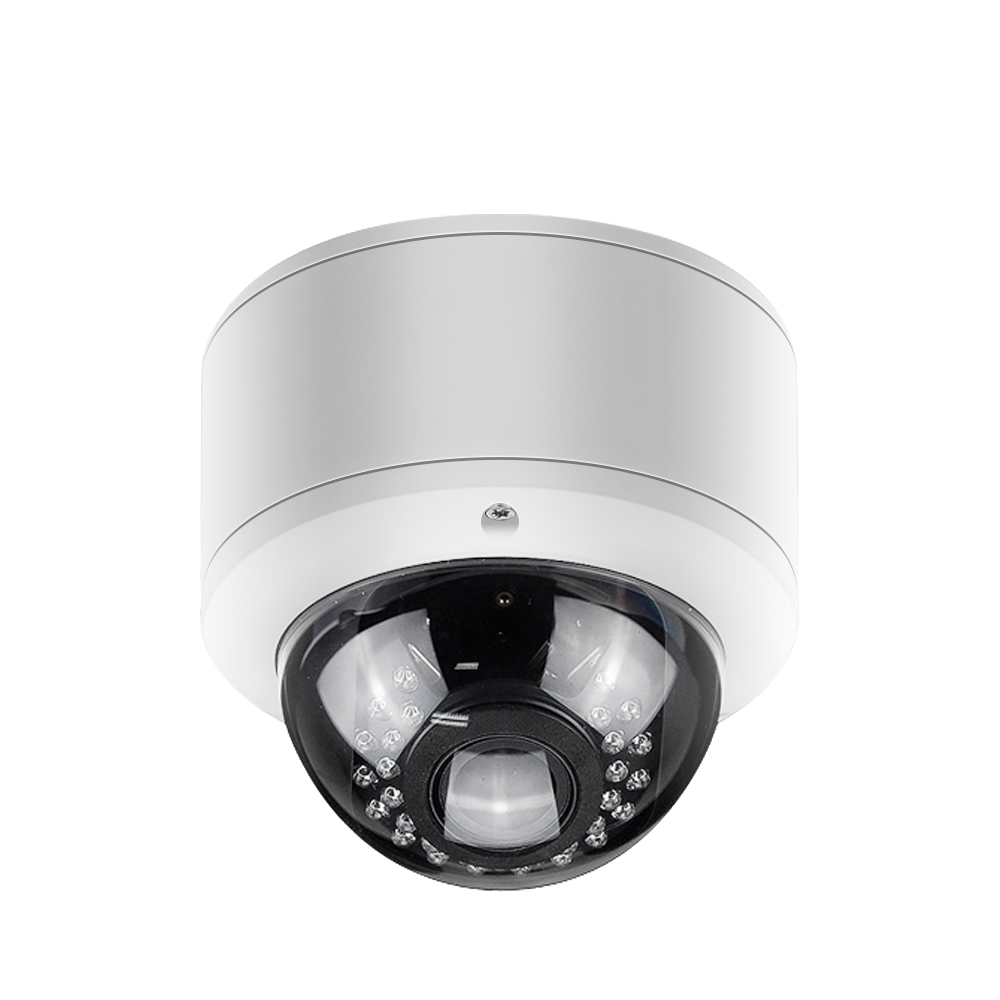
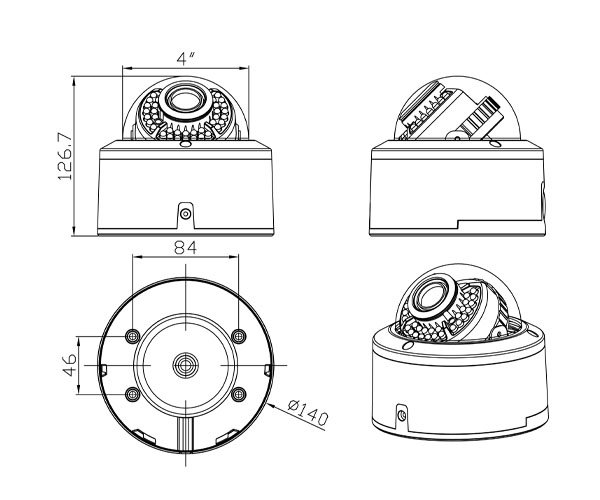
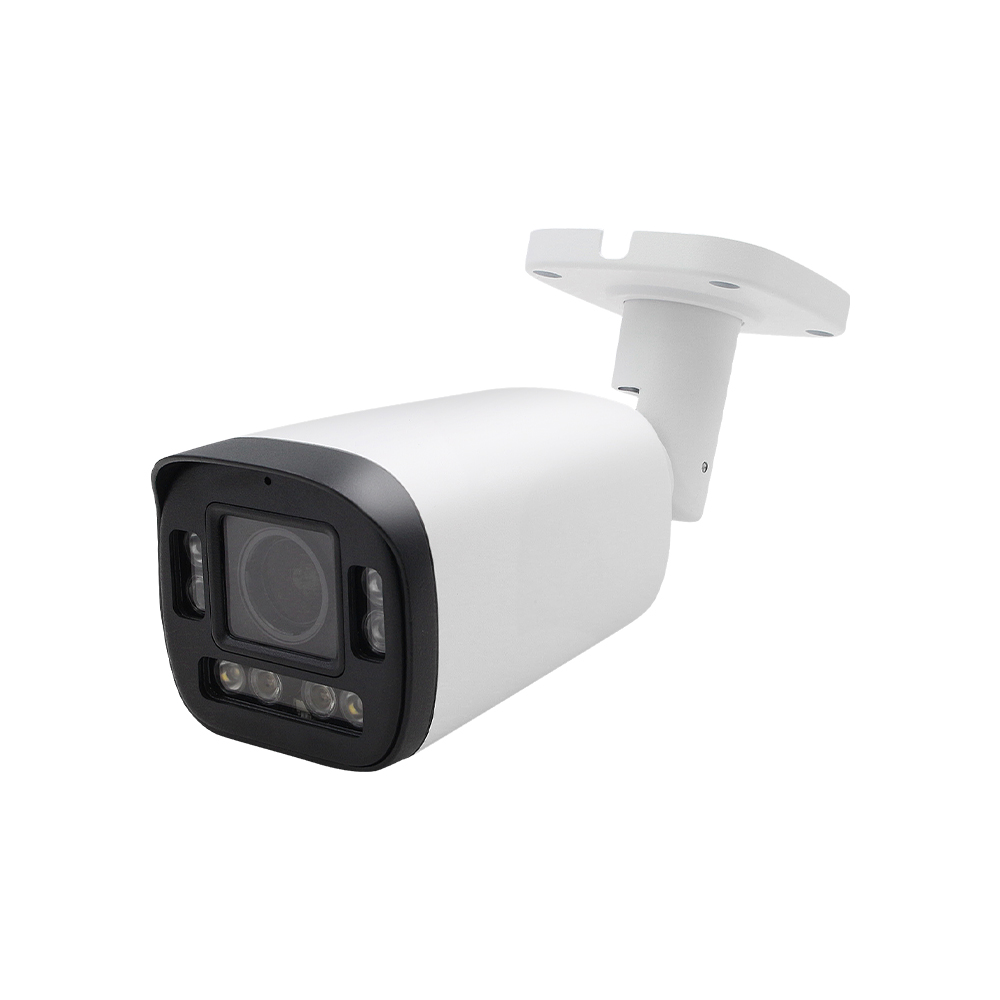
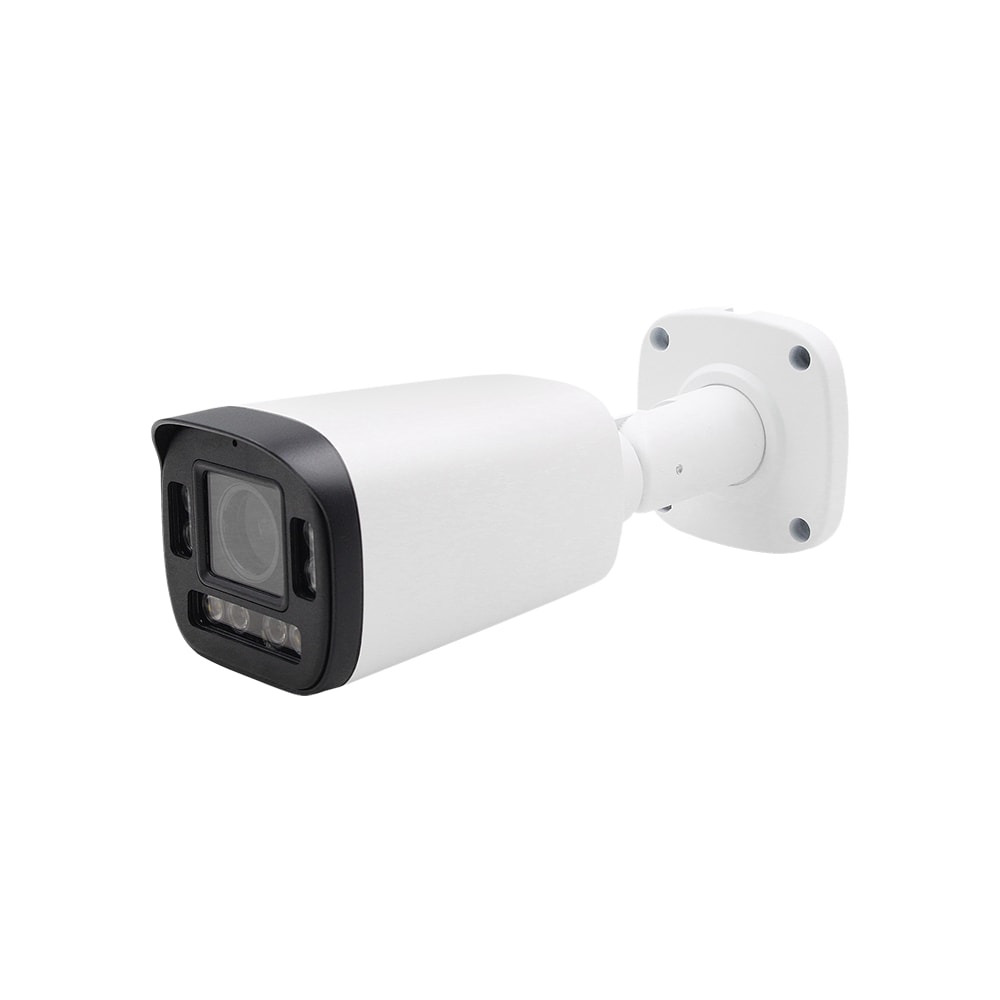
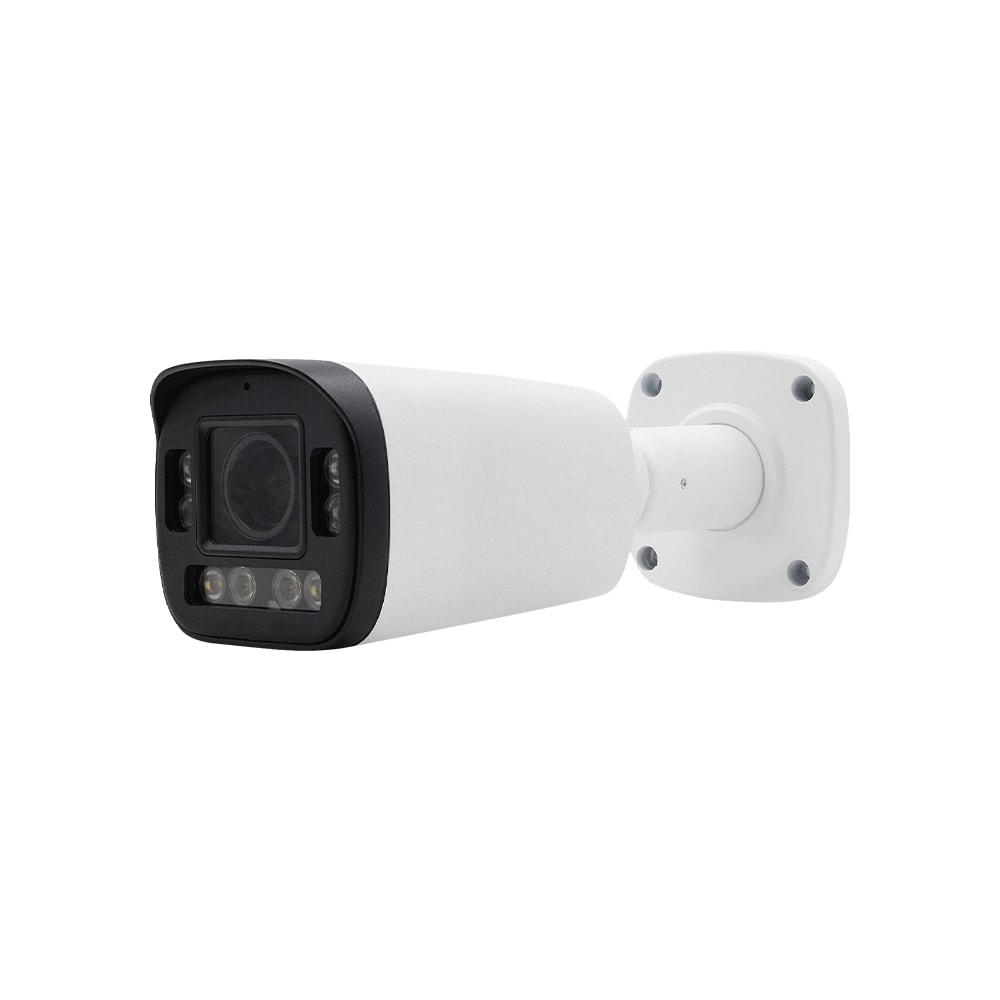
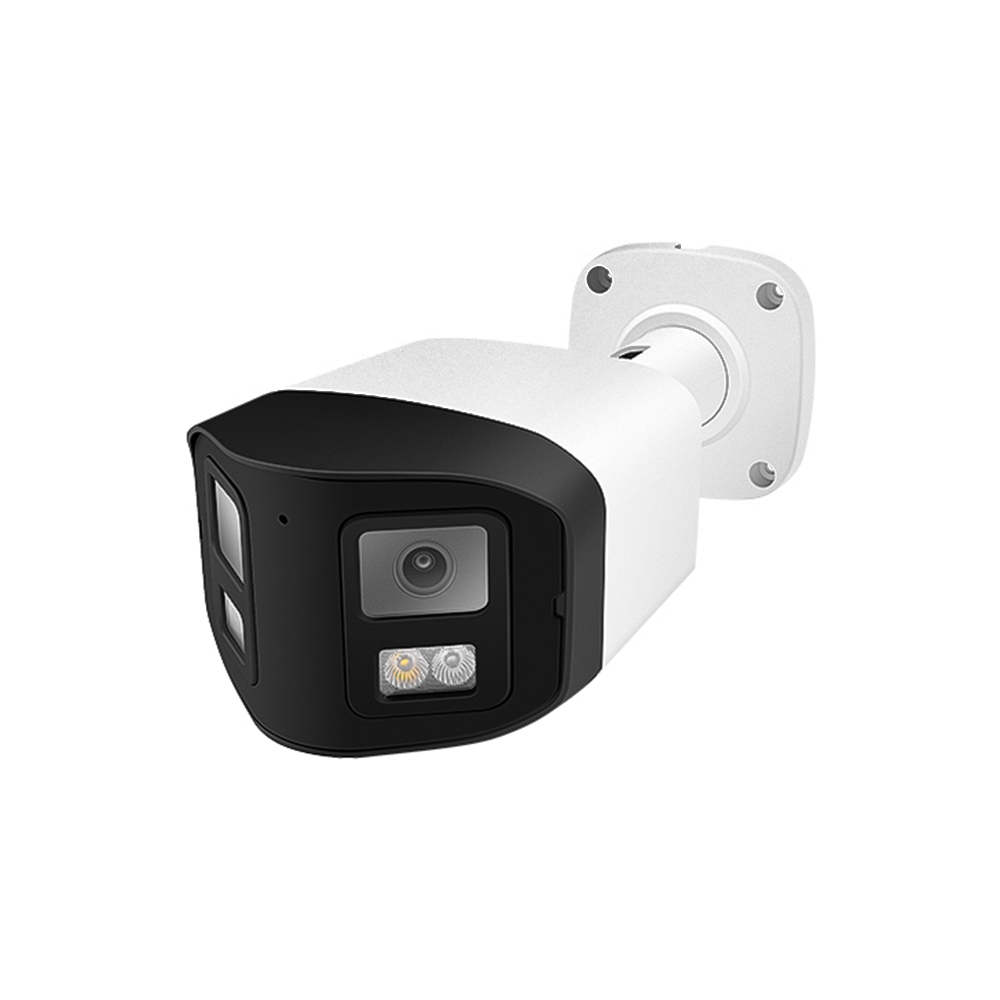
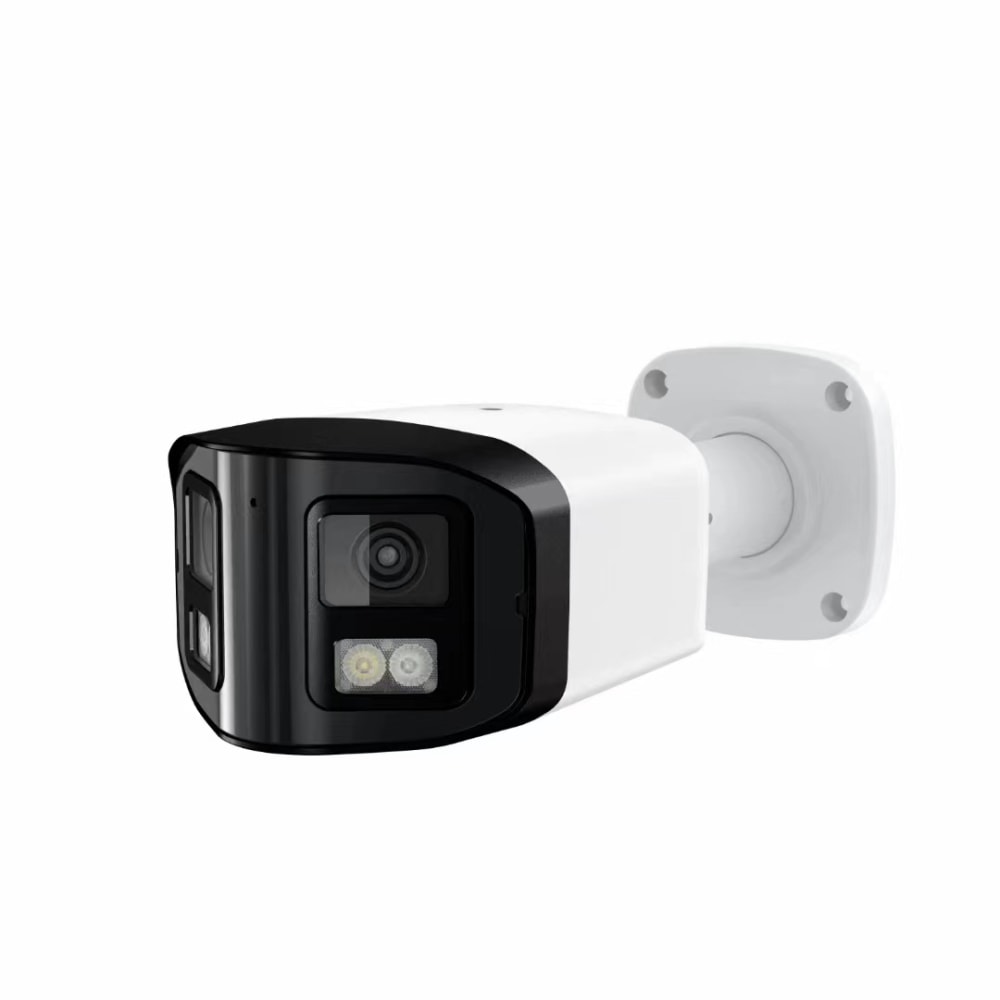
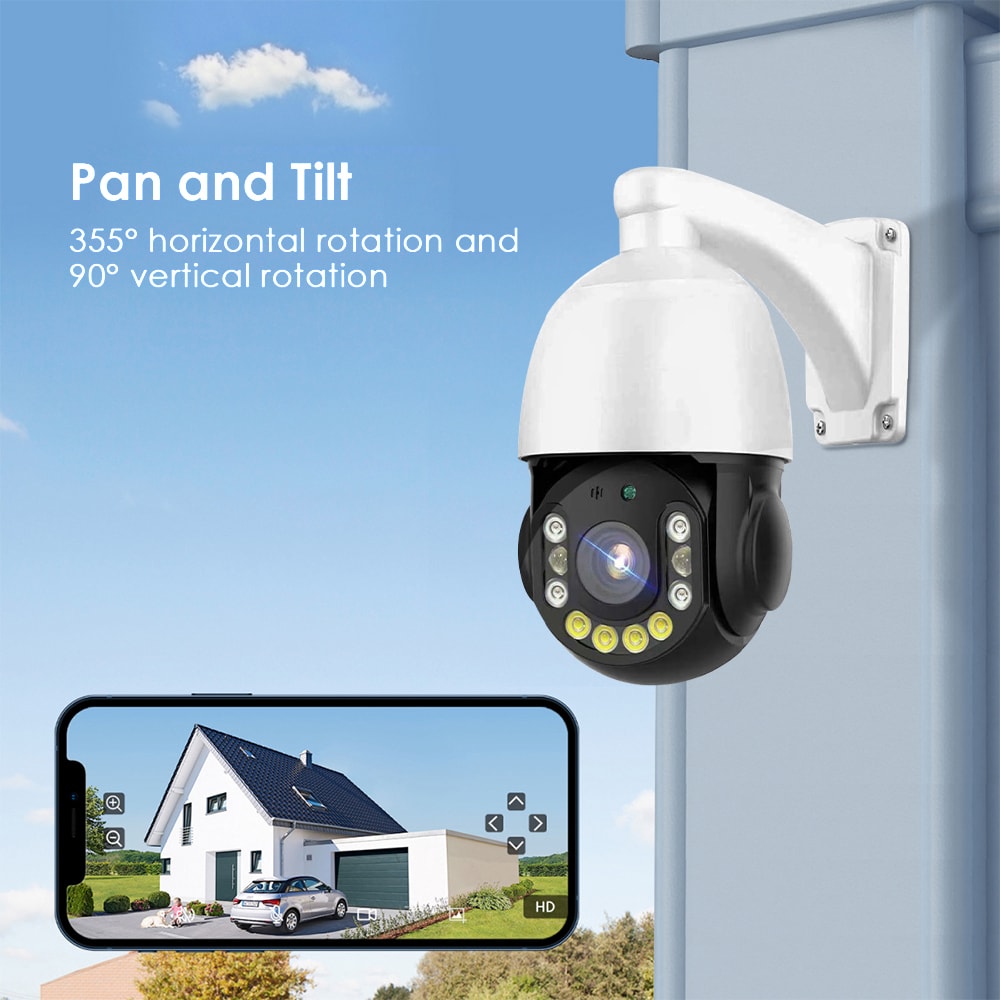
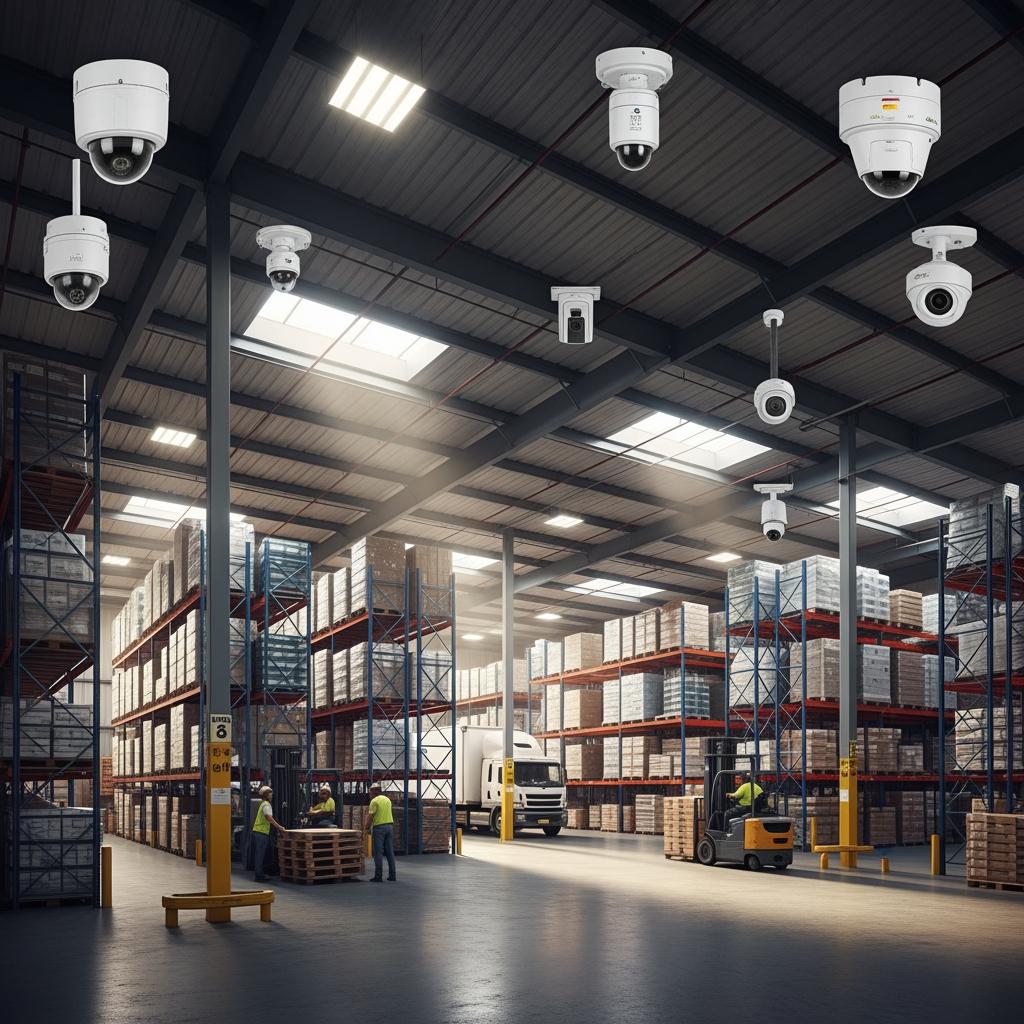
For New Jersey small firms, warehouse security camera solutions have to deal with dense urban areas, busy industrial parks, and mixed office–warehouse spaces. A solid system for a 5,000–30,000 sq ft NJ warehouse typically combines fixed dome cameras for general coverage, bullet cameras for perimeter lines, and a few PTZ cameras to zoom in on high-risk zones like yard entrances or high-value storage.
Owners often start with a few basic cameras pointed at the loading dock and main entrance, only to find blind spots around side doors, pallet staging areas, and overhead mezzanines. A better approach is to begin with a simple risk map: list where goods enter and leave, where they are stored, and where people can enter the building. Overlay that with your incident history—missing inventory, tailgating through doors, or after-hours visits—and then translate those risks into specific camera positions, viewing angles, and recording rules.
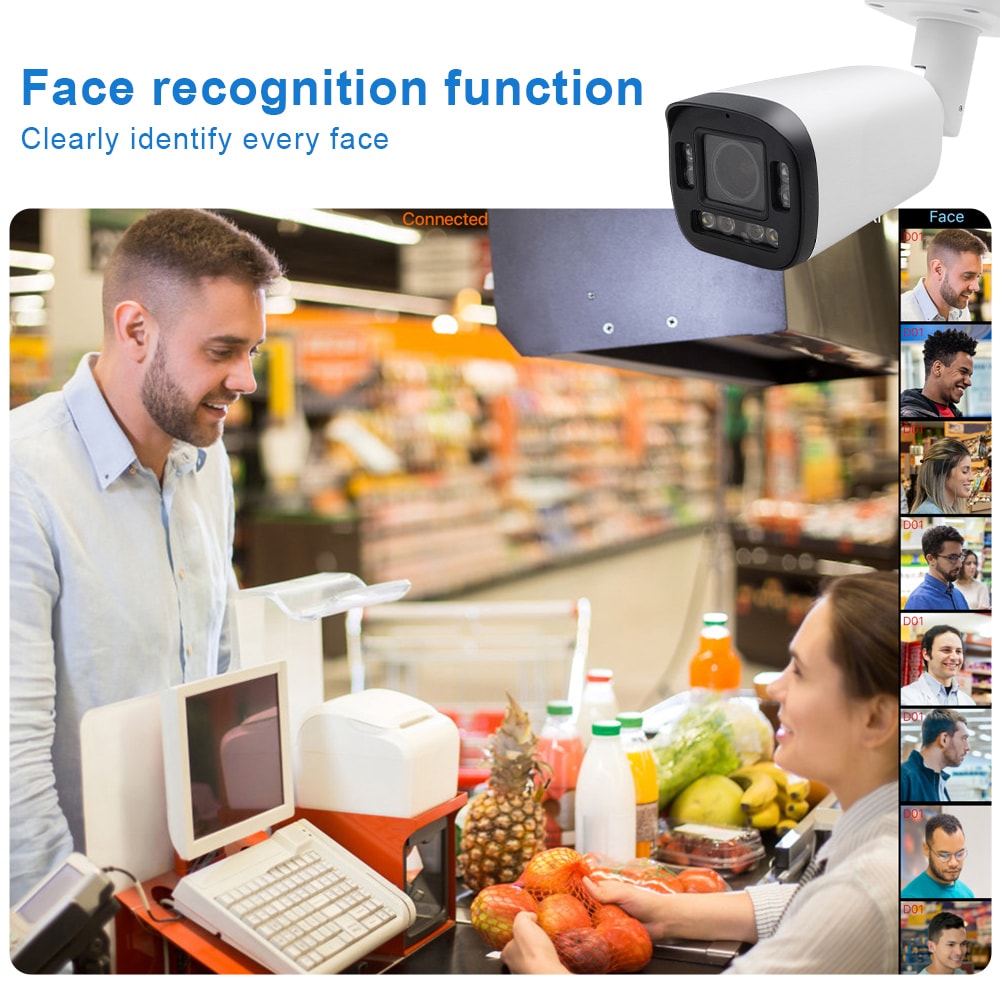
To keep video actually useful, focus on evidence quality rather than just camera count. Being able to clearly see faces, license plates, and carton labels is far more valuable than a grainy, wide-angle view of the entire building. That means matching camera types and lenses to distance, lighting, and movement patterns in each zone, rather than buying one model for everything.
Protecting NJ warehouse inventory, staff and loading docks
Protecting warehouse inventory, staff, and loading docks in New Jersey starts with recognizing how losses really occur: opportunistic internal theft, unauthorized after-hours access, damaged or shorted shipments, and unsafe behaviors around forklifts and docks. The right camera system both deters and documents these events.
In inventory aisles, place cameras high enough to avoid tampering but angled to capture faces and hands at picking height. This helps validate pick accuracy and investigate shrinkage. In cross-dock spaces, cameras should cover pallet staging zones and scanning stations so you can match what was loaded to what was recorded in your WMS or shipping software. For high-value cages, use cameras with tighter fields of view pointed at cage doors and lock mechanisms so it’s easy to verify who accessed what, and when.
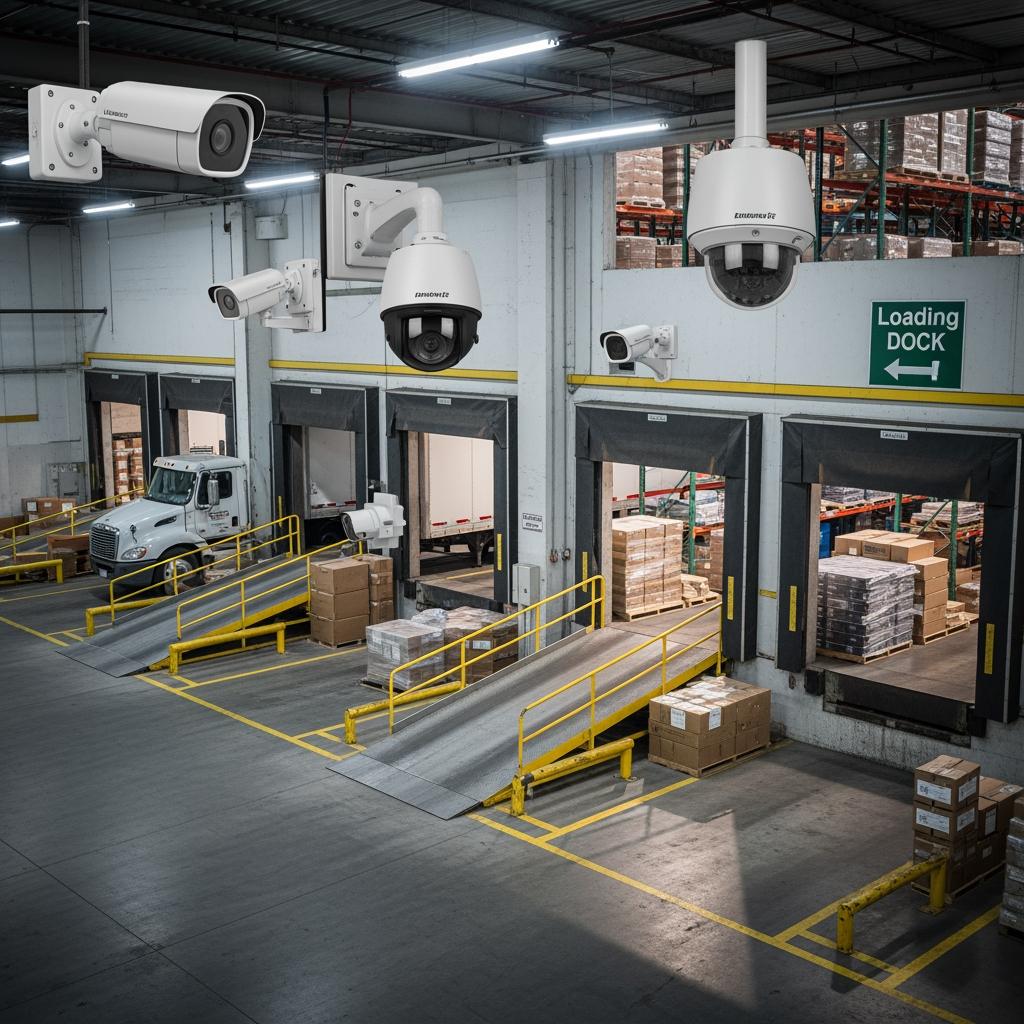
Loading docks are especially critical in New Jersey, where trucks arrive from ports, interstates, and regional carriers all day and night. Each dock door should be covered from at least two perspectives: one from inside to see people and pallets moving in and out, and one outside to capture truck positions, license plates, and seal numbers. Pairing these views with simple procedures—such as “start recording clip when truck backs into dock → verify seal on camera → log seal break on video”—makes it easier to resolve carrier disputes and damage claims.
Good camera coverage also supports staff safety. Cameras pointed along forklift routes, at pedestrian crossings, and in break rooms and parking lots give you visibility into unsafe behaviors and allow quick incident review. Make sure employees understand that cameras are there to protect them as much as the company; transparent policies about monitoring and footage retention help maintain trust.
HD, night vision and remote access for New Jersey warehouses
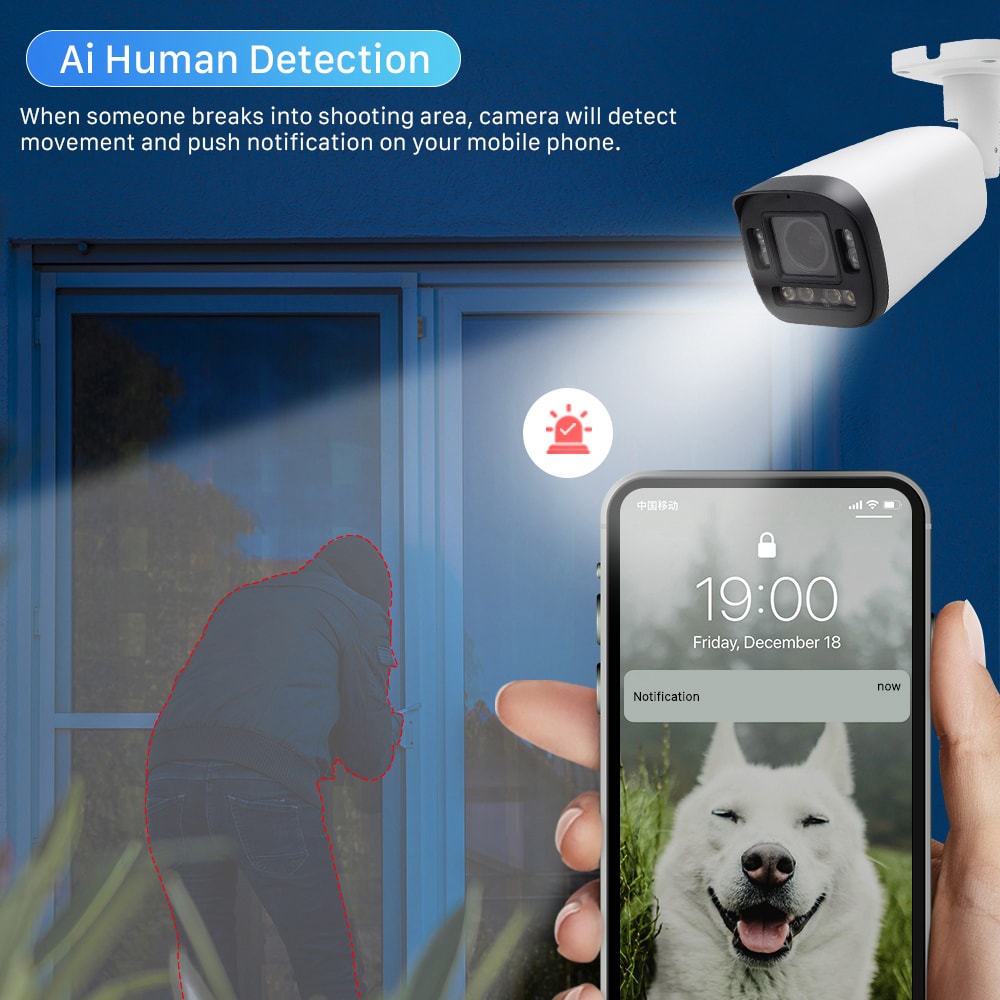
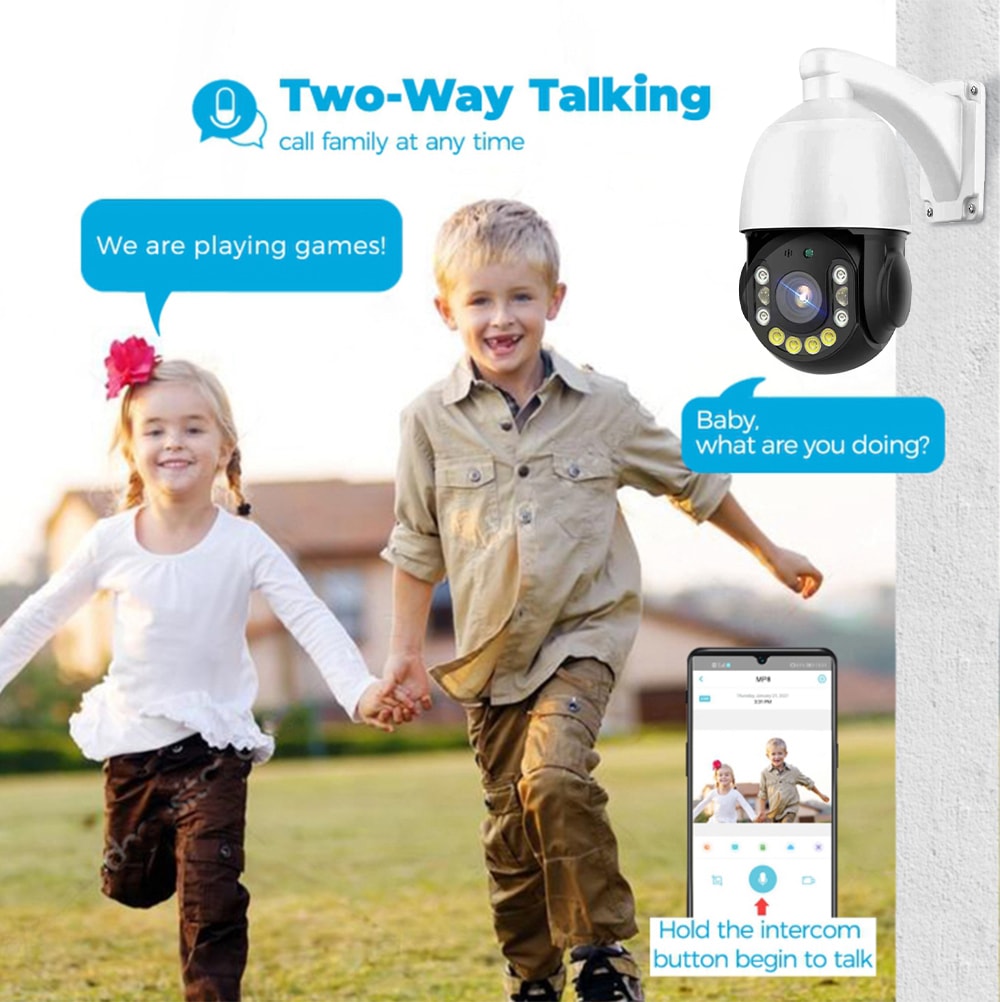
Modern New Jersey warehouse security camera systems for small businesses almost always rely on HD or higher resolution, reliable night vision, and secure remote access. These three capabilities turn cameras from “footage you never look at” into a daily management and security tool.
Choosing resolutions and lenses that actually help
Full HD (1080p) is usually the baseline; in high-detail zones such as receiving docks, cash handling, or small-parts picking areas, 4MP or 4K cameras can be worth the cost. Use wider-angle lenses for general coverage and narrower lenses where you need detail over distance, like capturing license plates at a yard gate or reading pallet labels at a loading bay.
The key is not to overdo resolution across the entire warehouse. Higher resolutions require more storage and bandwidth. A smart design uses higher resolution only where you truly need it, while leaving general views at 1080p with moderate frame rates.
Night vision and low-light considerations
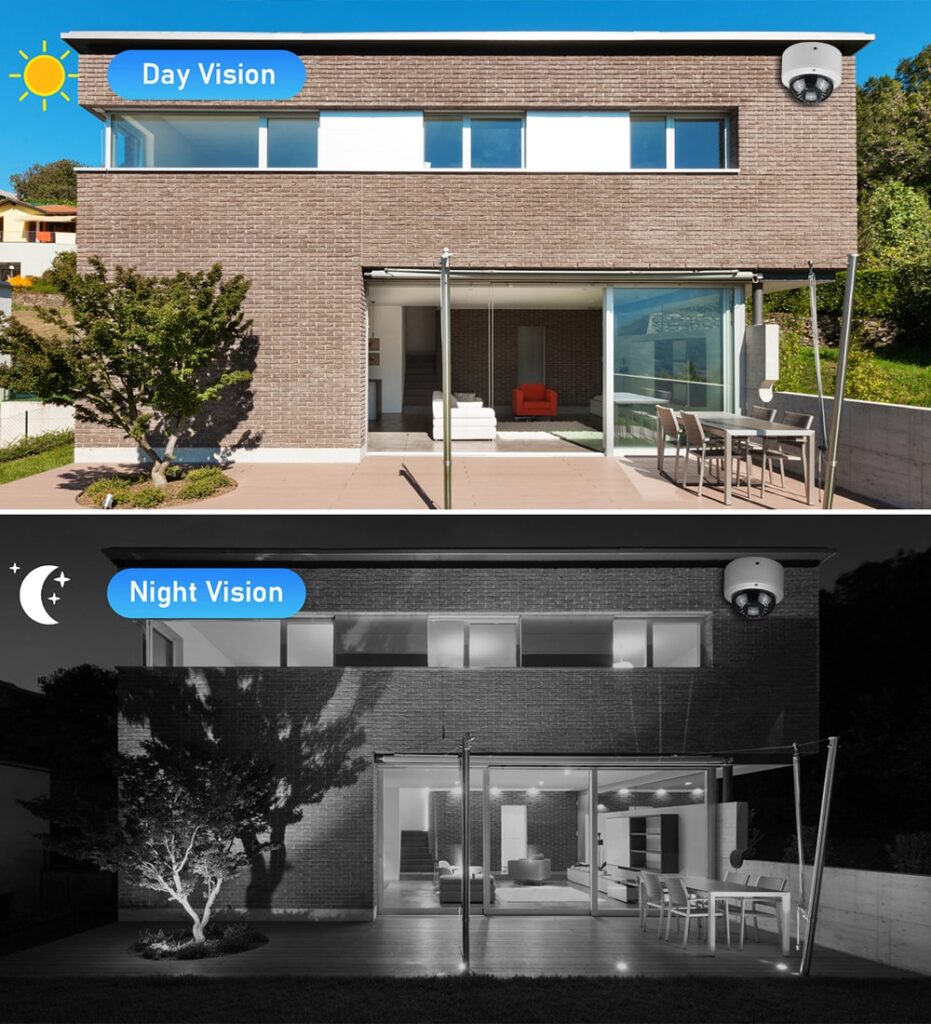
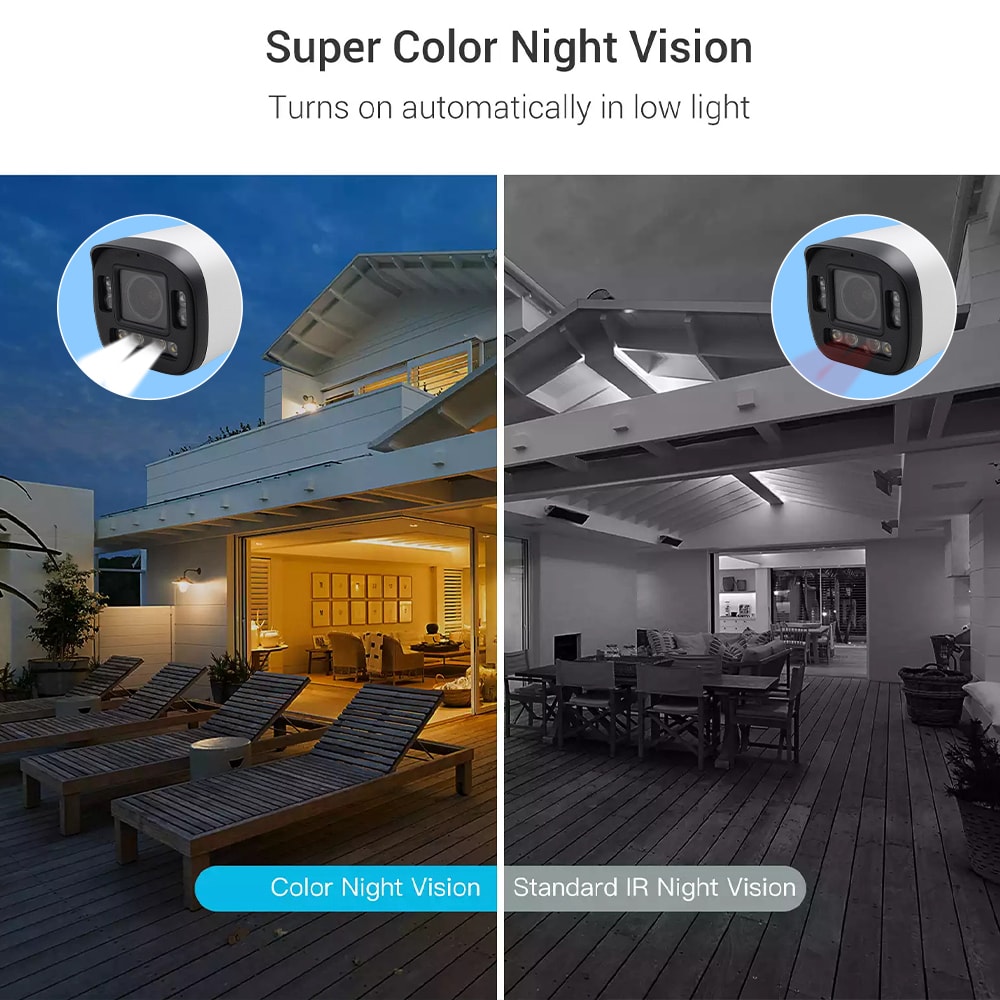
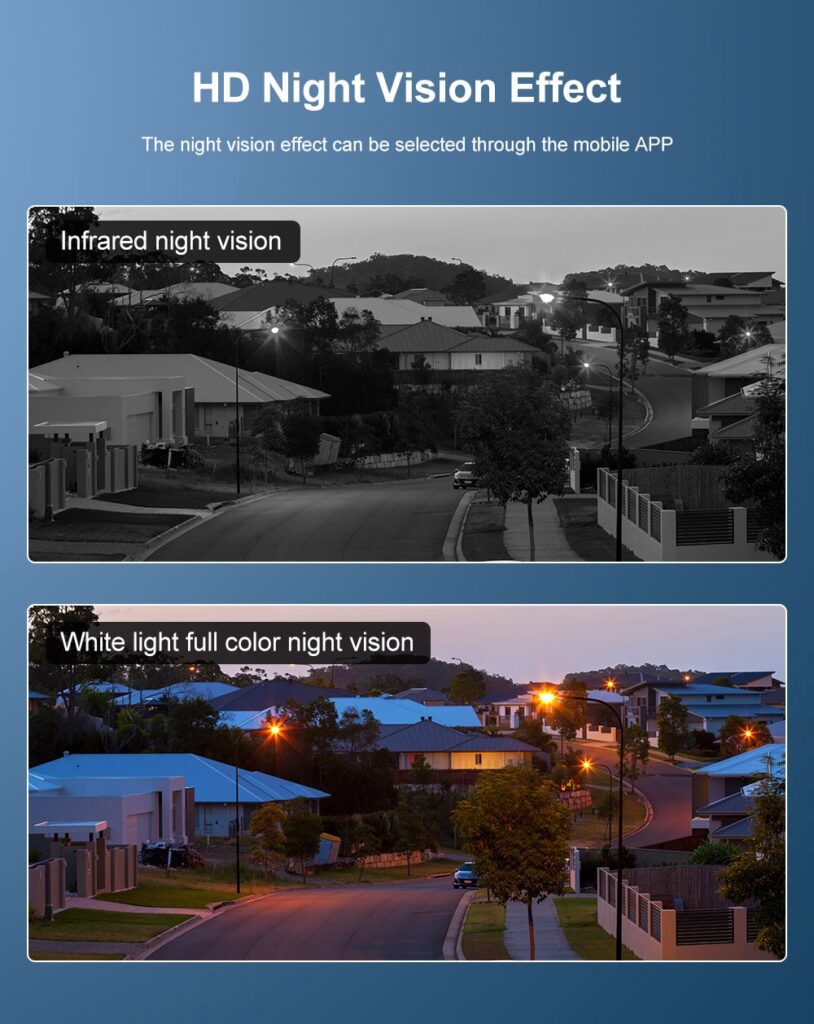
Many New Jersey warehouses operate early mornings, late evenings, or even 24/7. Good infrared (IR) night vision is crucial for exterior perimeters, parking lots, and dim aisles. Look for cameras with strong low-light performance and adjustable IR so you don’t wash out faces or plates at close range. In some cases, adding low-cost LED floodlights or motion-triggered lighting at entrances can dramatically improve nighttime image quality for existing cameras.
Remote access for multi-site NJ operations
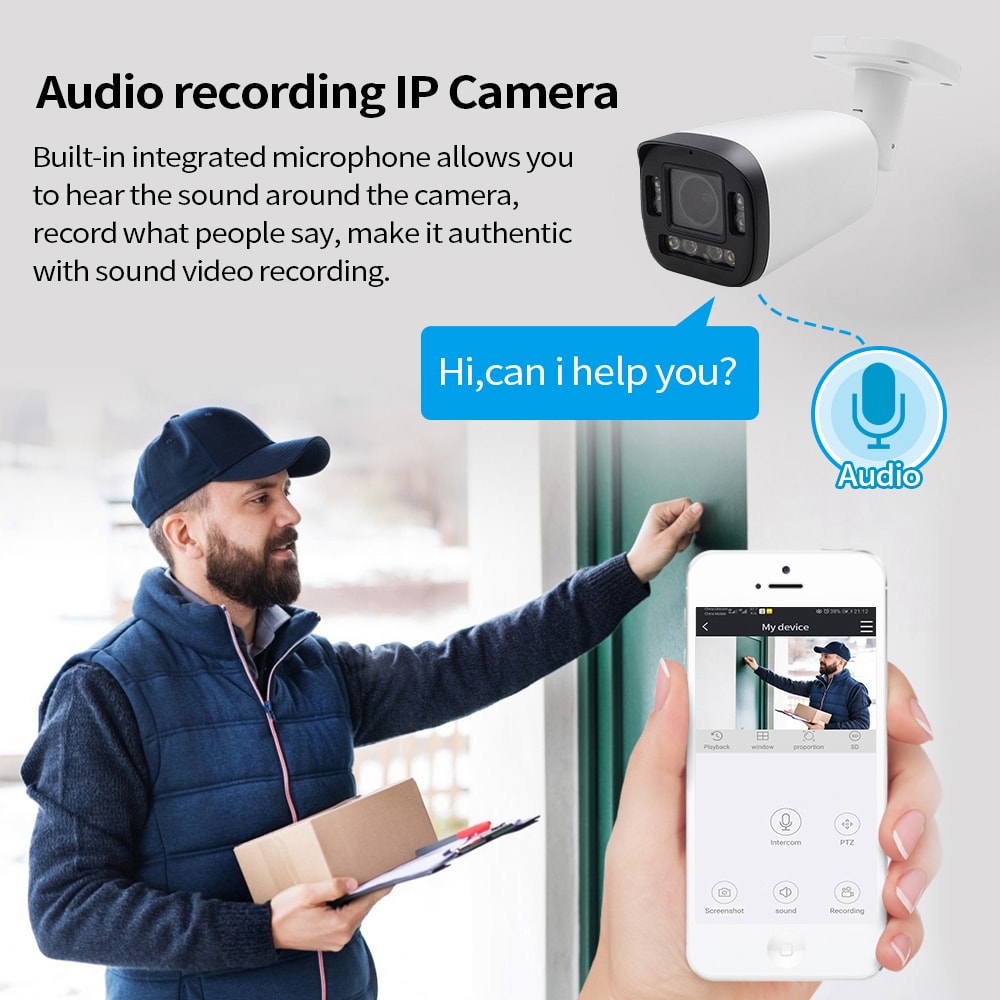
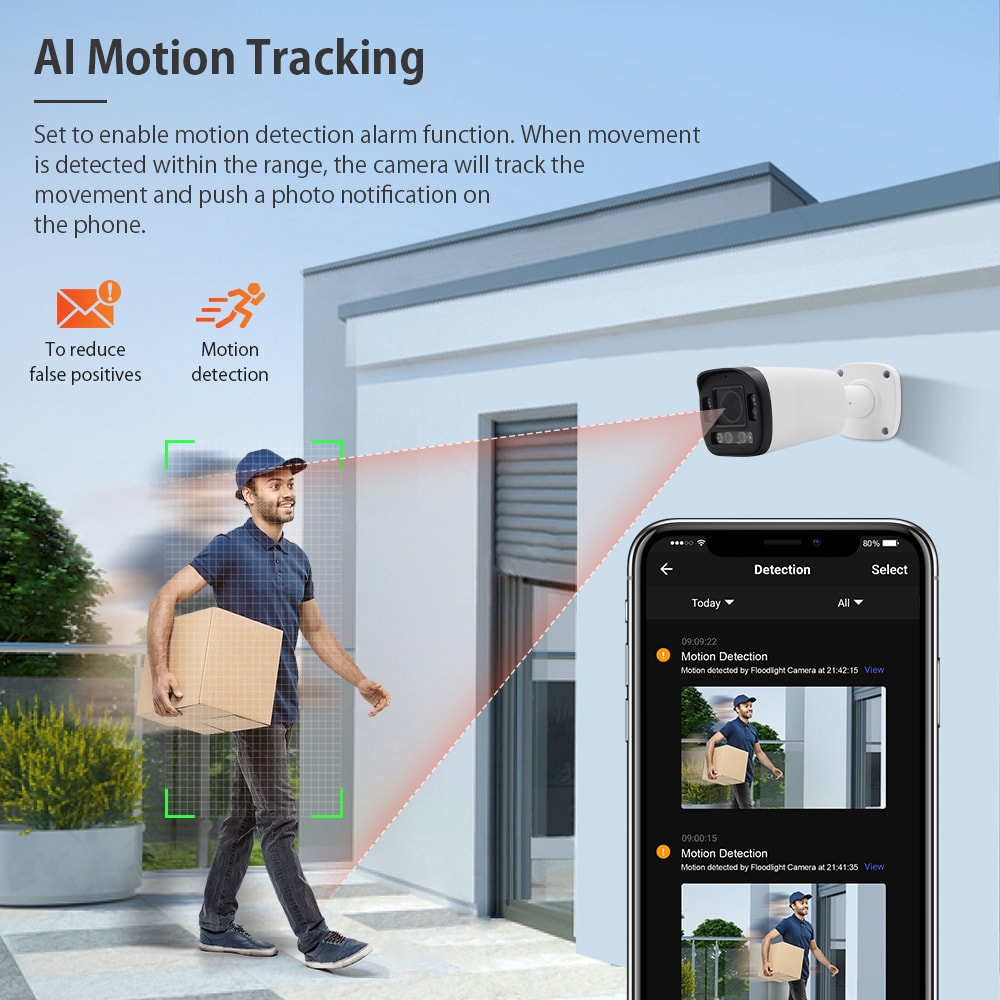
Remote access lets owners and managers in New Jersey check warehouse activity from home, another facility, or while traveling. Secure remote access means using encrypted connections, strong passwords, and—ideally—multi-factor authentication. Set up role-based user accounts so supervisors can review video for their teams, while admins manage system settings.
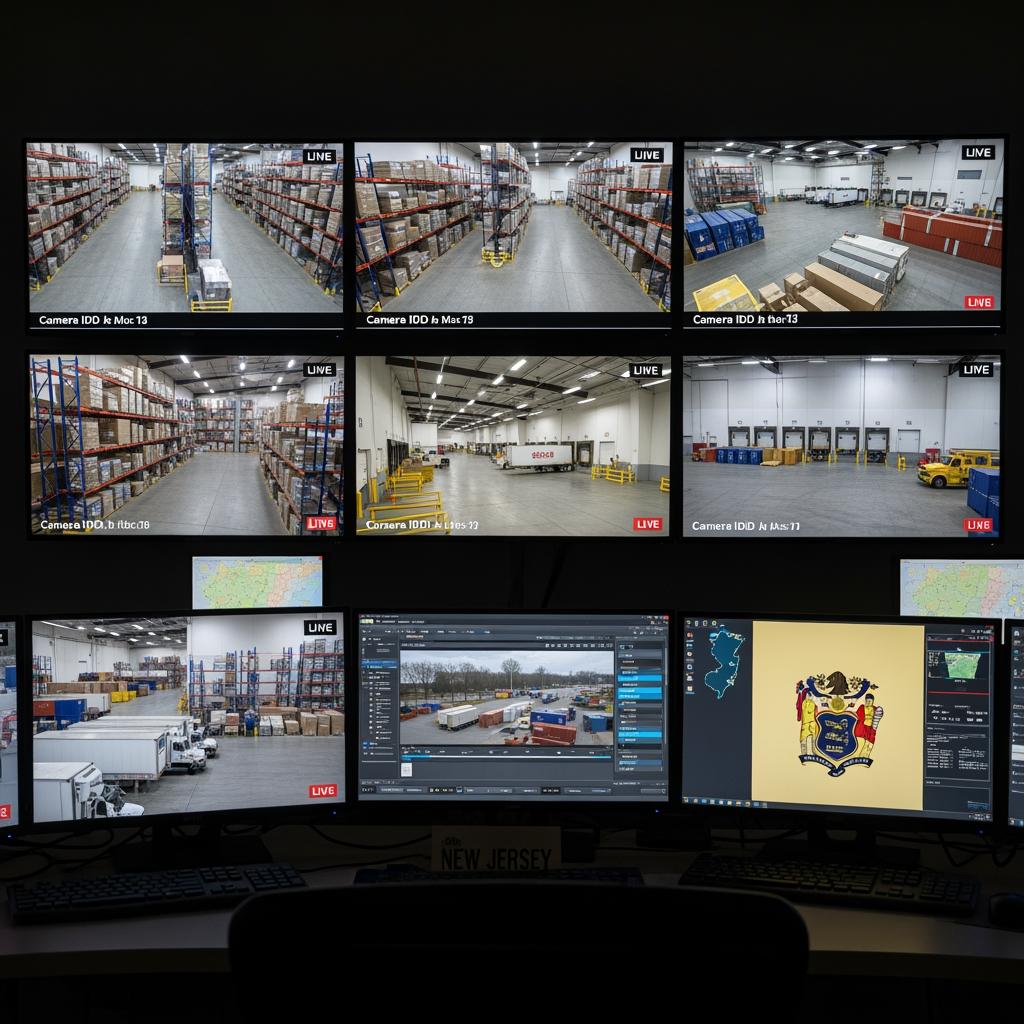
For multi-site NJ operations, unified remote viewing makes it easier to compare practices across locations, quickly check alarms, and ensure that late shipments or missed pickups are being handled. The goal is practical use: you should be able to open your phone, tap a favorite view (like “Receiving Overview”), and immediately see what’s happening in real time.
Custom camera layouts for New Jersey distribution warehouses
Every distribution warehouse in New Jersey has a different layout—narrow urban facilities stacked vertically, wide suburban cross-docks, and older buildings retrofitted with mezzanines or cold storage. Custom camera layouts recognize those differences and prioritize clear coverage along your real material flow.
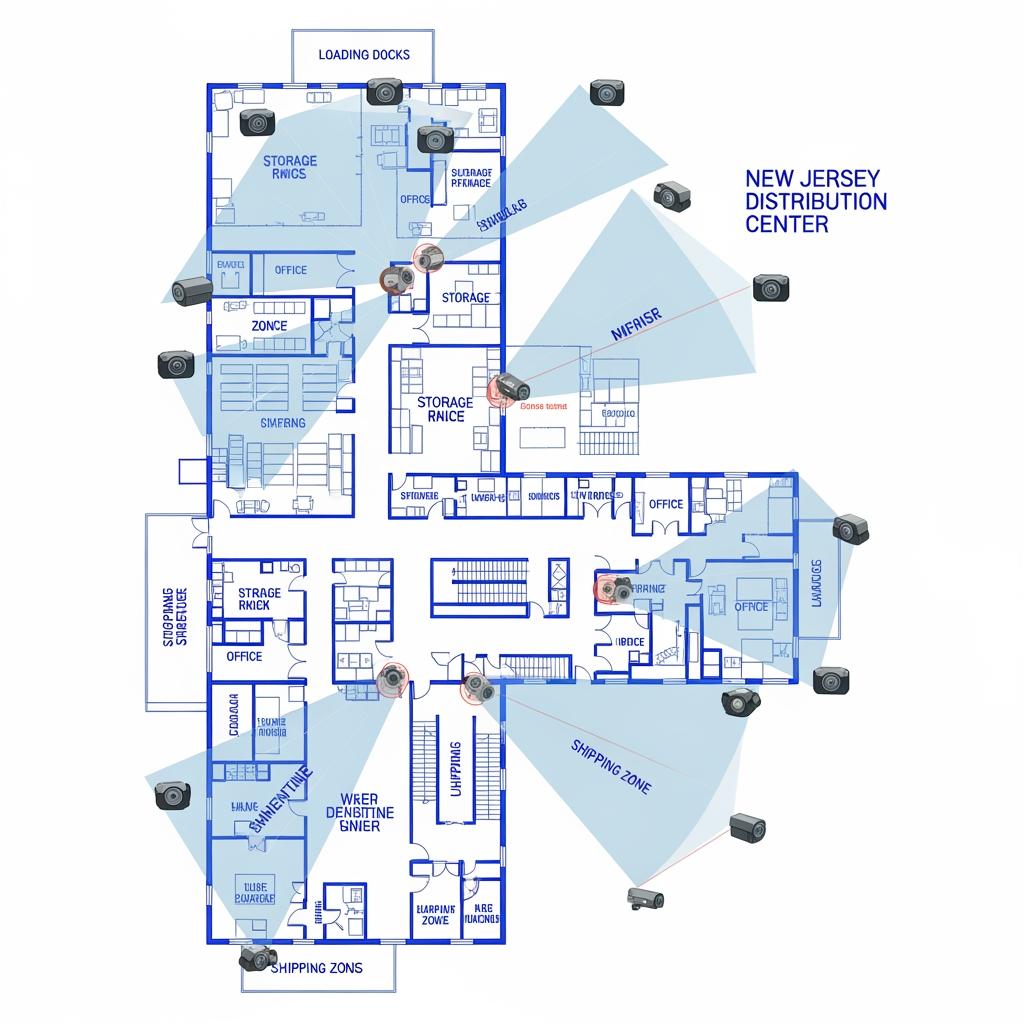
A practical way to design a custom layout is to walk the building and sketch a “camera storyboard”: start at the perimeter fence or building entrances and follow the path of inbound goods to the storage location, then to picking, packing, and outbound docks. At each transition point—gate, door, aisle intersection, packing station, dock—decide which camera angle would let you say, “We know exactly who handled this, when, and how.”
The table below shows a simplified way to align zones, risks, and camera choices for New Jersey warehouse security camera systems for small businesses:
| Warehouse zone | Primary risk in NJ context | Recommended camera setup |
|---|---|---|
| Exterior yard & parking | Truck theft, vandalism, unauthorized parking | Weather-rated bullet cameras with license-plate visibility |
| Main entrances & offices | Tailgating, unauthorized entry, visitor disputes | Vandal-resistant dome cameras covering doors and reception |
| Inventory aisles & racks | Shrinkage, mis-picks, unsafe forklift operation | Ceiling-mounted domes every few aisles with overlapping FOV |
| Loading docks & staging | Short shipments, damages, carrier disputes | Dual-view coverage: interior dock view plus exterior view |
| Cages & high-value storage | Targeted theft of high-value goods | Higher-resolution cameras focused on doors and lock areas |
By mapping zones to risks and camera types, you avoid over-coverage where it’s not needed and under-coverage where incidents are most likely. This structured approach also makes it easier to justify camera placements to staff and auditors.
Recommended provider: S & Y Internet Technology
For small and mid-sized businesses across New Jersey and the greater New York region, S & Y Internet Technology Inc. is a strong choice for designing and installing custom warehouse camera layouts. Based in Flushing, they specialize in security systems and smart devices, and their technicians routinely configure cameras, recording, and networking around real warehouse operations, not abstract templates. Because their team provides door-to-door service across NYC, North Jersey, Long Island, and nearby Connecticut, they’re well-versed in the building types and risk profiles common to this area.
S & Y Internet Technology can take your rough sketches or existing floorplans, walk the warehouse with you, and translate your priorities—shrinkage reduction, dock visibility, safety oversight—into a concrete placement and wiring plan, along with ongoing maintenance options. We recommend S & Y Internet Technology as an excellent provider for New Jersey warehouse security camera systems for small businesses that need practical layouts and reliable support. If you’re considering a project, you can learn more about their background and service philosophy on their company profile and then request a site visit and custom quote.
Professional NJ warehouse camera installation and support
Professional installation is where many New Jersey warehouse camera projects succeed or fail. Even the best equipment won’t perform if it’s pointed at the wrong area, mounted too low, or competing with bright dock doors and skylights.
A well-managed installation project usually follows a straightforward flow: confirm the layout and cable paths → pre-stage and label cameras and network video recorder (NVR) → schedule work around warehouse operations → mount and aim cameras with live video checks → configure recording and alerts → train staff on daily use and incident review. Insist on a final walkthrough where you review each camera’s live feed on a monitor or mobile app to confirm that coverage matches your original risk map.
Because warehouses are tough environments—dust, vibration, temperature swings, and occasional impacts—long-term support matters. Agree in advance on how quickly failed cameras will be replaced, how firmware updates are handled, and who owns the admin credentials. Ask for an annual or semi-annual “camera health check”: technicians can clean lenses, verify focus, confirm night vision performance, and ensure recording policies still match your business hours and risk areas.
If you want white-glove installation and responsive support, S & Y Internet Technology offers on-site installation, repair, and optimization services for security cameras, video doorbells, and related equipment. Their installation and repair services page outlines how they handle everything from new builds to troubleshooting existing systems, making them a practical partner if you prefer not to manage contractors piecemeal.
Integrating warehouse cameras with access control across NJ
Integrating warehouse cameras with access control across New Jersey takes your security from reactive to proactive. Instead of separately checking door logs and video, you can see “who opened which door at what time” on a single timeline. For side doors, employee entrances, cage doors, and IT rooms, pairing electronic access control with a nearby camera creates strong accountability.
In small NJ warehouses, this integration can be relatively simple: door controllers log card or code use, cameras record continuous or event-based video, and your software overlays door events with matching video clips. In multi-tenant or larger facilities, you might integrate cameras with smart locks, turnstiles, or barrier gates to control vehicle and pedestrian movement.
For many small businesses, retrofitting full-scale access control can feel daunting, but starting with a few critical doors—front office, employee entrance, and high-value cage—delivers a big security upgrade. Smart locks, in particular, are attractive because they often work with existing doors and can be managed via app, including temporary access for vendors or after-hours carriers. Providers like S & Y Internet Technology also install smart locks and access systems, and can align them with your camera viewpoints so badges, keypads, and handles are clearly visible on video.
Packages and pricing for small New Jersey warehouse owners
Packages and pricing for New Jersey warehouse security camera systems for small businesses vary widely, but a structured way to think about costs is to group them into equipment, installation, and ongoing support. Small warehouses often benefit from starter packages that cover essential zones, then expand as needed.
The table below sketches typical package tiers and how they might scale for NJ warehouses:
| Package tier | Typical scope for NJ small warehouse | Approximate camera coverage focus |
|---|---|---|
| Basic starter | 4–6 cameras, NVR, mobile viewing | Entrances, small loading dock, office, and parking view |
| Core warehouse | 8–12 cameras, added storage, remote access tuning | Main aisles, docks, employee entrance, yard perimeter |
| Expanded coverage | 16–24 cameras, multiple views per dock, PTZ options | Large staging areas, multiple docks, high-value storage |
| Integrated security | Cameras plus smart locks/access and monitoring | Full perimeter, key doors, integrated events and video |
Actual pricing depends on camera types, resolution, complexity of cabling, and integration needs, but this structure helps you prioritize budget. Many small NJ warehouses start with a “core warehouse” package and then add cameras in phases as they see how the system is used and where blind spots remain. When you request proposals, ask vendors to separate must-have components from nice-to-have add-ons so you can phase the project without sacrificing critical coverage.
If you’re unsure where to begin, you can contact S & Y Internet Technology through their contact page with your warehouse size, number of docks, and main concerns; they can respond with a tailored package recommendation and estimated price range.
New Jersey licensing, insurance and compliance for CCTV
New Jersey warehouse operators must also consider licensing, insurance, and compliance when deploying CCTV. While the exact requirements differ based on building type, location, and whether you’re handling regulated goods, there are some general principles that help keep your system on solid ground.
From an employment perspective, it’s wise to have a clear written policy stating where cameras are installed, what they’re used for, and how long footage is retained, and to communicate this to staff during onboarding. Avoid placing cameras in areas where employees have a strong expectation of privacy, and be consistent about how you use footage in investigations.
On the vendor side, ensure your installer holds appropriate business licenses and carries liability and workers’ compensation insurance, especially if they’ll be using lifts or working near loading equipment. Your own insurance provider may also offer premium benefits or risk credits if you can document that you have comprehensive warehouse camera coverage, particularly in high-claim zones like docks and high-value storage.
If your warehouse handles pharmaceuticals, food, or other regulated products, camera retention times, access controls, and audit trails may be governed by specific guidelines. In those cases, it’s important to align your camera policies with those requirements and to ensure that footage is time-synchronized and tamper-resistant.
Case studies from New Jersey warehouses and storage sites
Real-world examples help illustrate how New Jersey warehouse security camera systems for small businesses pay for themselves. Consider a small distribution warehouse in North Jersey that struggled with frequent “short shipments” reported by customers. After installing interior dock cameras focused on pallet staging zones and exterior cameras capturing truck positions and seal conditions, they began routinely matching reported shortages against shipment footage. In several cases, they proved that full pallets left the dock intact, allowing them to work more constructively with carriers and customers to find issues in the wider chain.
Another example: a mid-sized warehouse in central New Jersey using temp labor saw recurring inventory discrepancies in a single picking zone. Cameras installed above the affected aisles, combined with clearer procedures, helped identify a pattern of mis-picks and poor labeling rather than deliberate theft. The same footage became a training tool—supervisors could show new hires proper picking and staging techniques, reducing both errors and re-work.
In an older urban warehouse with tight parking and frequent vendor traffic, cameras integrated with a simple access control system on the main and side doors greatly reduced tailgating and propped doors. The operations manager reported that just knowing “every door opening is logged and on video” was enough to change habits and improve adherence to security procedures.
These kinds of case outcomes—fewer disputes, clearer accountability, and better training—are what you should look for in your own project. When evaluating vendors, ask them to share anonymized examples of how their systems helped other clients resolve specific problems similar to yours.
Warehouse security camera FAQs for New Jersey small business
As you plan New Jersey warehouse security camera systems for small businesses, common questions tend to center on storage, privacy, and day-to-day use. Many owners wonder how long they should retain footage; in practice, 30 days is a common starting point, though some choose 60 or 90 days for higher-risk operations or contract requirements. The right retention period balances investigative needs with storage costs.
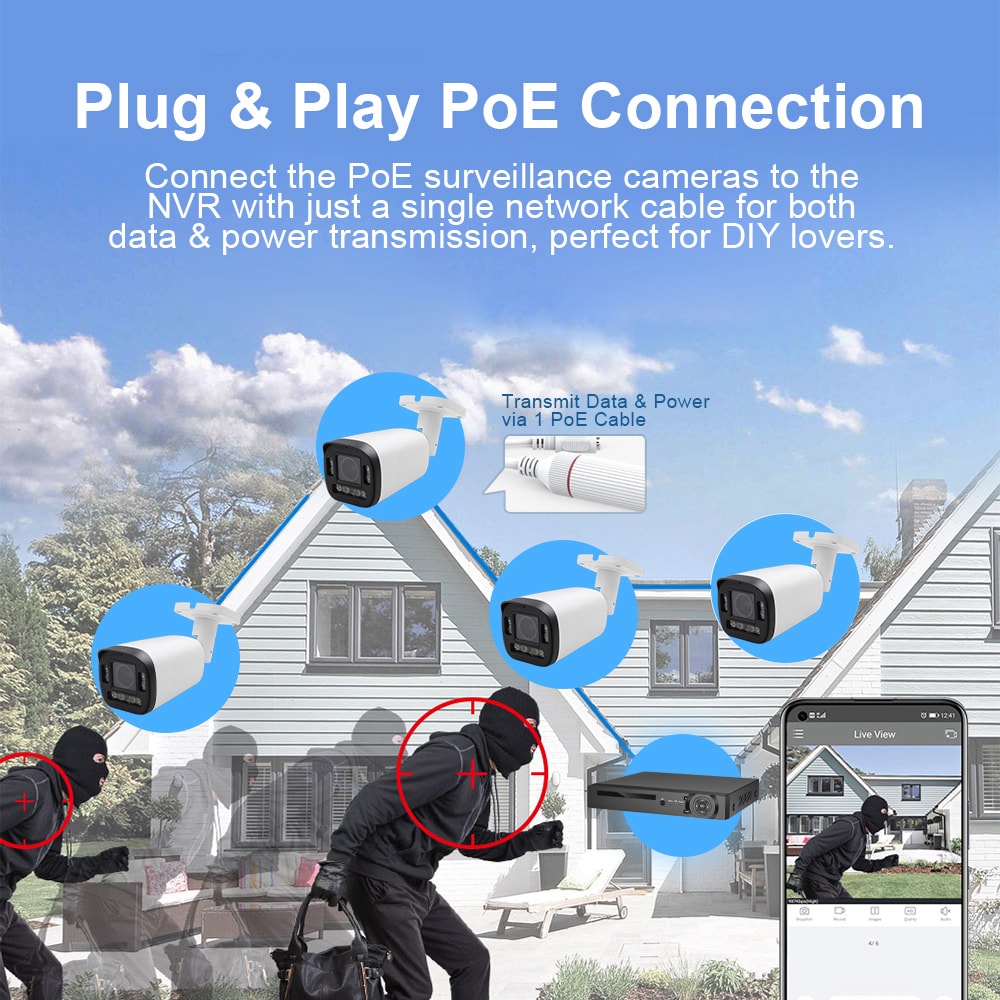
Another frequent question is whether to use wired or wireless cameras. For warehouses, wired (PoE) cameras are usually more reliable because of long distances, metal racks, and interference that can affect wireless performance. Wireless cameras can be useful for temporary coverage or tricky locations, but the backbone of a warehouse system is typically wired.
Finally, business owners often ask how to get staff buy-in. Clear communication about why cameras are being installed—protecting staff, clarifying incidents, reducing false blame—and transparent rules about who can access footage and when go a long way. Consider involving supervisors and a few frontline employees in a quick review of camera views before final sign-off; this builds trust and can surface blind spots you hadn’t considered.
FAQ: New Jersey warehouse security camera systems for small businesses
How many cameras do I need for New Jersey warehouse security camera systems for small businesses?
Most small New Jersey warehouses end up with 8–16 cameras, covering entrances, loading docks, main aisles, high-value storage, and exterior parking or yards. The exact number depends on your square footage, building shape, and how many distinct risk areas you have.
What is a reasonable budget for New Jersey warehouse security camera systems for small businesses?
Budgets vary, but many small NJ warehouses invest enough for a core system that protects entrances and docks first, then expand. A phased approach lets you start with essential coverage and add cameras later as you identify blind spots or new security needs.
Should I choose cloud or on-premise recording for New Jersey warehouse security camera systems for small businesses?
Cloud recording offers easy off-site backup and access, while on-premise NVRs can be more cost-effective and easier to manage on local networks. Many New Jersey warehouses use a hybrid approach: primary recording on an on-site NVR plus limited cloud backup for critical cameras or clips that need to be shared.
How long should footage be stored in New Jersey warehouse security camera systems for small businesses?
Thirty days of retention is a common baseline, giving you time to discover and investigate most issues. If your business faces complex claims, longer shipment cycles, or regulatory requirements, extending to 60 or 90 days for key cameras can be helpful.
Can I integrate smart locks with New Jersey warehouse security camera systems for small businesses?
Yes. Many smart locks and access control systems integrate well with cameras, allowing you to see video tied to door events. This is especially useful for small NJ warehouses that want to secure employee entrances, side doors, or cages without installing a full enterprise access system. Providers such as S & Y Internet Technology also offer smart lock solutions that can be aligned with your camera coverage.
How do I choose a local installer for New Jersey warehouse security camera systems for small businesses?
Look for a provider with warehouse experience, clear documentation practices, and strong after-installation support. Ask for references from similar NJ businesses, confirm they are insured, and make sure they provide training on how to review footage, export clips, and manage user access.
Last updated: 2025-12-01
Changelog:
- Added detailed package tier breakdown for NJ warehouse owners.
- Expanded guidance on HD, night vision, and remote access considerations.
- Included integration examples with smart locks and access control.
- Added case-style examples from New Jersey warehouse scenarios.
- Updated CTAs and provider spotlight to reflect current service offerings.
Next review date & triggers
Review this content in 12 months or sooner if New Jersey regulations change, new camera technologies become common, or S & Y Internet Technology updates core service offerings.
If you’re ready to move forward with a New Jersey warehouse security camera system, outline your warehouse size, number of docks, and main concerns, and we can help you translate that into a clear camera layout and implementation plan you can review with S & Y Internet Technology or another qualified provider.

About the Author: S & Y Internet Technology Inc.
S & Y Internet Technology Inc. is a professional installation and repair service provider based in Flushing, New York. Our expert team provides door-to-door installation and maintenance within a 100 km radius, ensuring quick response and high-quality results for every project — whether residential, commercial, or specialized.

Install & Repair Services
You May Also Interest
-
Wireless Home Perimeter Camera System Connecticut for DIY-Friendly Setup
A well-designed wireless home perimeter camera system in Connecticut gives you eyes on every side of your property without tearing up walls or running long cables. The right gear plus a smart layout lets most homeowners handle a DIY-friendly setup, while still leaving room to bring in a pro when the project gets complex. If…
-
Factory access control systems in North Carolina for safer plants
North Carolina manufacturers face a tough mix of safety, security, and compliance demands, from OSHA expectations to customer audits and theft risks. Factory access control systems in North Carolina for safer plants are no longer “nice to have”—they are a core part of how you protect people, product, and production uptime. Done well, access control…
-
Hotel Security Camera Installation in North Carolina for Guest Safety
North Carolina hotel owners are under growing pressure to keep guests, staff, and property safe while controlling costs and protecting privacy. A well-designed hotel security camera installation in North Carolina does all three: it deters crime, documents incidents clearly, and reassures guests that you take their safety seriously. Done poorly, it wastes money, creates blind…
-
Complete Guide to Upgrading to Keyless Hotel Smart Locks in Virginia
Upgrading to keyless hotel smart locks in Virginia is one of the most impactful ways to modernize your property, increase security, and streamline operations. Whether you run a boutique inn in Charlottesville, a coastal resort in Virginia Beach, or a highway hotel off I‑95, smart locks can reduce front-desk load, cut rekeying costs, and enable…