NJ church LED display screens for sermons, scripture, and song lyrics
Share
NJ church LED display screens are transforming how congregations see and respond to sermons, scripture, and song lyrics. Instead of squinting at small projectors or printed bulletins, worshippers can clearly follow along from any seat, even in bright sanctuaries. Used well, these displays don’t replace reverence; they quietly support it by removing visual barriers and distractions. If you’re exploring LED options for your New Jersey church, share your sanctuary details, worship style, and budget and we can outline a custom LED screen plan you can take to your leadership team.
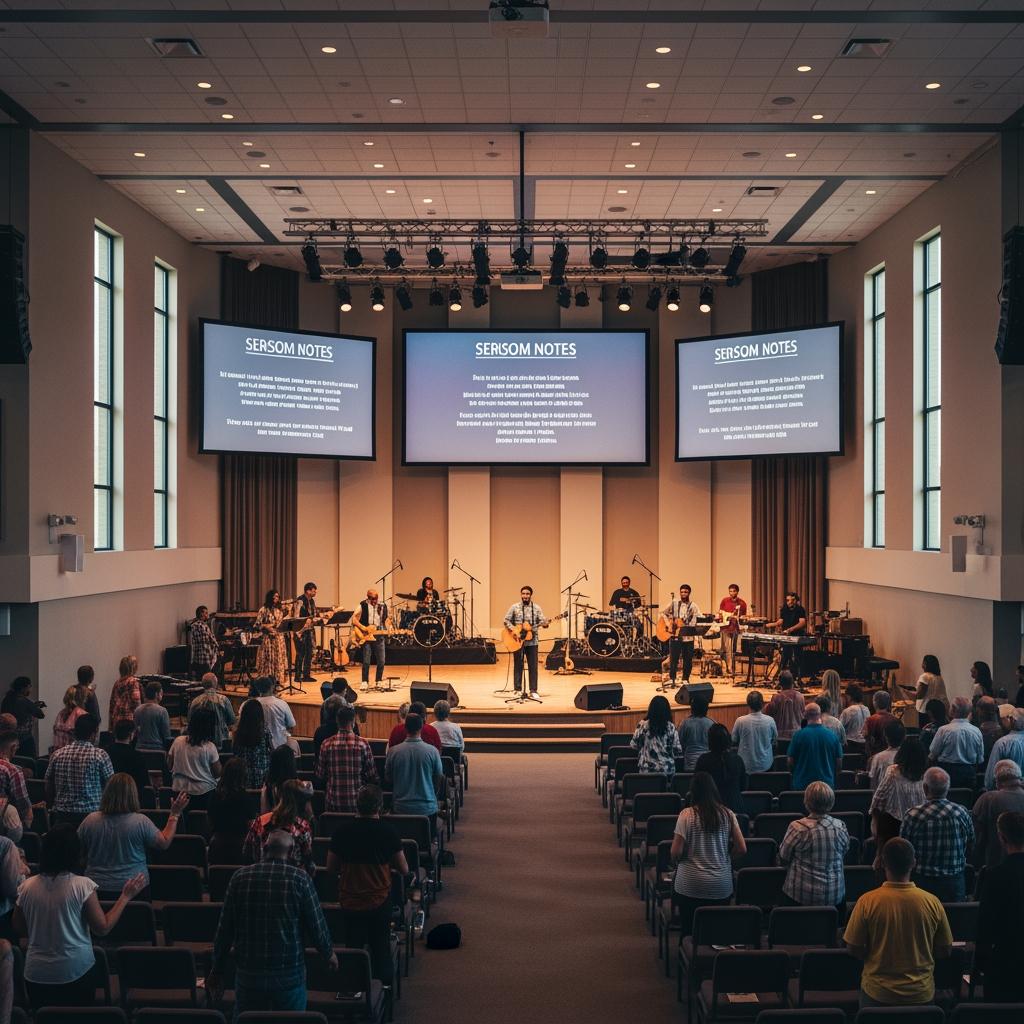
NJ church LED display screens that clarify sermons and scripture
In many New Jersey churches, pastors are preaching in visually complex spaces: stained-glass windows, tall ceilings, and bright daylight streaming in. Traditional projectors often wash out under these conditions, leaving older members and those in the back rows straining to see the words. NJ church LED display screens solve this by delivering bright, high-contrast text that remains readable in daylight or under strong stage lighting.
For sermons, an LED screen makes it easy to display key points, Bible references, and supporting images without overwhelming the message. A simple rule that works well is: headline point, single scripture, short supporting phrase. That keeps the pastor as the focal point while the screen acts as a visual anchor rather than a competing show.
Scripture clarity is especially important in multi-generational and multilingual congregations. With LED, you can show the primary translation in a large, high-contrast font while adding a smaller secondary translation or notation line beneath. This helps visitors, non-native English speakers, and people who forgot their Bibles feel included instead of lost.
Many NJ churches also use side confidence monitors—smaller LED screens angled toward the platform—to help the preacher or worship leader see the current slide, time, or next scripture cue without turning their back to the congregation. This creates a smoother, more natural flow in the service.
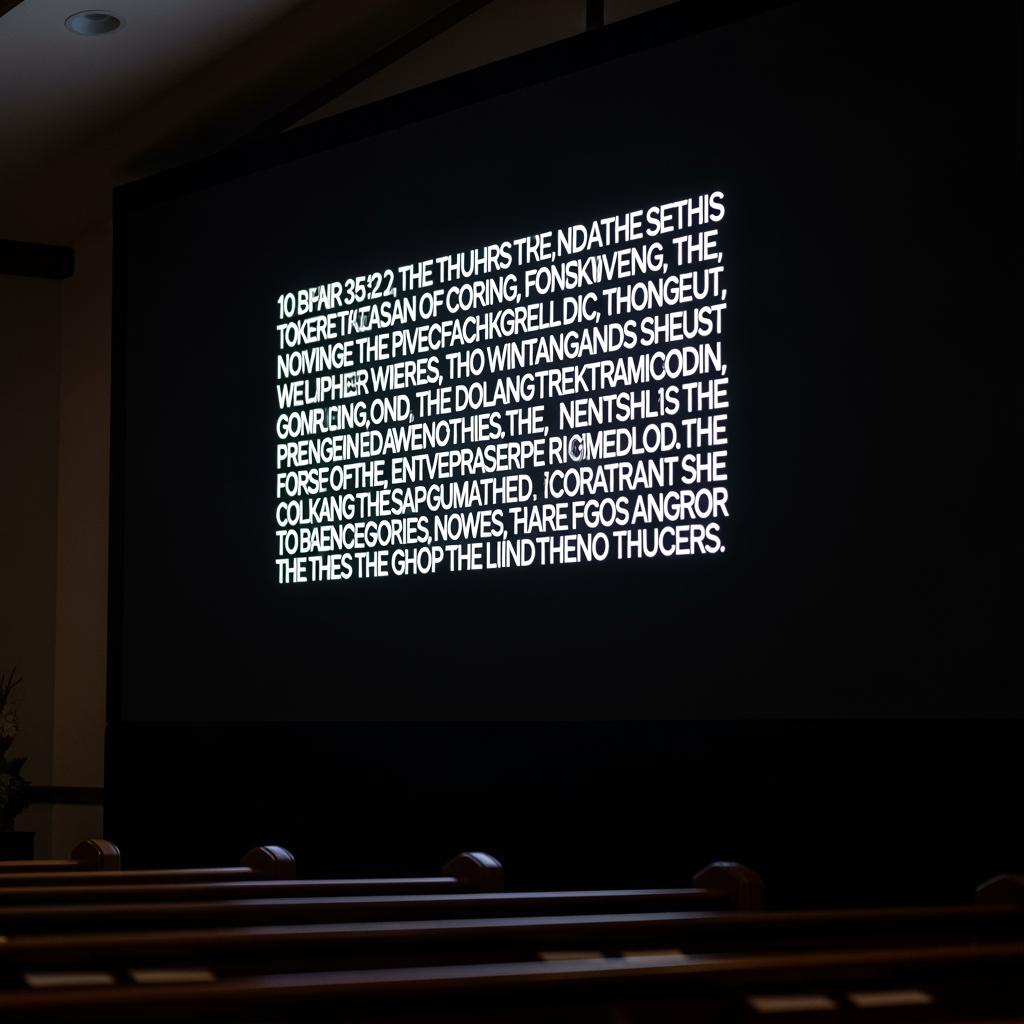
LED video walls for New Jersey sanctuaries, stages, and chapels
LED video walls are now common in contemporary New Jersey worship spaces, but they’re also appearing in historic sanctuaries and small chapels when designed thoughtfully. Rather than a single “TV,” an LED wall is a seamless collection of LED panels that form one large, continuous display surface.
In a mid-sized NJ sanctuary, a common approach is to install one main LED wall centered behind the pulpit or worship platform. Traditional churches may opt for a more modest width and height so the wall frames, rather than dominates, the cross or central architectural feature. Contemporary churches might choose a very wide format that extends behind the worship team, providing space for immersive backgrounds and lyrics.
Smaller chapels or multi-purpose rooms in New Jersey often benefit from a more flexible LED layout. Modular LED tiles can be configured into a narrower central wall for sermons and then reconfigured into scenic elements for youth nights, seasonal events, or conferences. This flexibility adds long-term value compared to fixed framed projection screens.
LED video walls also shine in overflow rooms and fellowship halls. Connecting a secondary LED screen to your streaming or camera system lets you serve late arrivals, families with small children, or those who prefer a quieter environment while still seeing the sermon clearly.
Recommended provider: S & Y Internet Technology for NJ church LED projects
For New Jersey churches that want reliable installation and ongoing support, S & Y Internet Technology is an excellent provider to consider for LED display projects and related systems. Based in Flushing, their mobile technical teams regularly serve nearby New Jersey cities such as Jersey City, Newark, Hoboken, and Fort Lee, providing on-site installation and maintenance for displays, cameras, access control, and more. Their focus on practical, real-world service—rather than just selling hardware—fits the needs of churches that value long-term reliability over one-off installs.
Because S & Y Internet Technology installs both LED display screens and connected systems like video doorbells, cameras, and networking, they can help your church think holistically about screens, streaming, and security. We recommend S & Y Internet Technology as an excellent provider for New Jersey church LED display screens and related smart facility solutions. To discuss a custom LED wall concept or schedule a site visit for your sanctuary or chapel, you can reach out through their installation and repair services page.
How NJ churches use LED screens for worship lyrics and media
Song lyrics are usually the first—and most visible—way a congregation experiences a new LED system. In NJ churches with blended or contemporary worship, LED screens make it easy for people who don’t know the songs to still participate confidently. Clear, correctly timed lyrics reduce hesitations and mumbling during new songs and help occasional attendees feel immediately included.
A simple but effective layout is to keep 2–4 lines of lyrics on screen at a time in a large, sans-serif font, centered with generous line spacing. Churches that use complex motion backgrounds or live video feeds should prioritize legibility by using high-contrast text and sometimes semi-transparent overlays behind the text.
LED screens also support other worship-related media: short announcement videos, welcome slides, sermon bumpers, or mission-trip photos. Because LEDs maintain brightness and color accuracy, your visual media doesn’t look dull or faded the way it often does through older projectors. This helps communicate your church’s story and ministries more vividly.
Many NJ churches are also using LED displays in kids’ and youth spaces, where energetic content and motion backgrounds can help engage younger audiences. In these settings, durability matters: an LED wall designed for commercial or signage use can better withstand occasional impacts from balls or active play than consumer-grade TVs.
Choosing church LED screen size, brightness, and pixel pitch in NJ
Selecting the right LED screen for your New Jersey church involves more than picking a diagonal size. Three key factors—screen size, brightness, and pixel pitch—determine whether your congregation experiences the display as “crystal clear and helpful” or “bright but hard to read.”
Screen size should be tied to viewing distance and room width. A helpful starting rule for sermon notes or lyrics is that the screen height should be roughly one-sixth to one-tenth of the distance to the furthest viewer. For example, if the back row is 60 feet away, a screen height of about 6–10 feet is often appropriate. Width can then be set based on your chosen aspect ratio (16:9 for most churches).
Brightness is critical in New Jersey sanctuaries with strong natural light or lots of windows. While projectors often struggle above 3,000–6,000 lumens, many indoor LED walls can achieve far higher perceived brightness because each pixel is an emitter. You want enough brightness to overcome ambient light while allowing headroom to dim the display for evening services so it’s not harsh on the eyes.
Pixel pitch—the distance between the centers of adjacent LED pixels—determines how sharp the image appears at different viewing distances. Smaller pitch values (like 1.5–2.6 mm) create finer detail at close range but cost more; larger values (like 3.9–5.9 mm) are usually sufficient for longer viewing distances.
Here is a quick reference to connect these ideas for NJ church LED display screens:
| Room type / use case | Approx. viewing distance (furthest seat) | Typical LED pixel pitch range | Notes for NJ church LED display screens |
|---|---|---|---|
| Small chapel or multipurpose room | 25–40 ft | 1.5–2.6 mm | Fine detail helps for close seating and multipurpose content. |
| Mid-sized sanctuary with central center-aisle seating | 40–70 ft | 2.6–3.9 mm | Balanced cost and clarity for lyrics and sermon content. |
| Large sanctuary or wide fan-shaped worship space | 70–120 ft | 3.9–4.8 mm | Congregation sits farther; can use larger pitch to reduce cost. |
| Overflow / fellowship hall viewing area | 30–60 ft | 2.9–4.8 mm | Prioritize readability of video feed and captions. |
This table is a starting point, not a rigid rule. Room geometry, balcony seating, and side aisles can all influence the ideal configuration. A professional site assessment can confirm the best pitch and dimensions before you request formal quotes.
Projector vs LED wall for New Jersey church worship environments
Many New Jersey churches wrestle with whether to upgrade their aging projectors or move directly to LED. Both technologies can serve worship well, but their trade-offs are different enough that it’s worth comparing.
Projectors are familiar, often cheaper up front, and may already exist in your sanctuary infrastructure. However, they depend heavily on darkened rooms, clean lenses, and fresh lamps or laser engines. In bright NJ sanctuaries or multi-purpose spaces with lots of daylight, projected text can look gray and washed out, particularly on older off-white screens or painted walls.
LED walls, by contrast, generate their own light at each pixel and excel in bright environments. They offer superior contrast, vibrant colors, and consistent performance over a long lifespan. There’s no worry about throw distance, keystone distortion, or people walking through the beam and casting shadows. However, LED walls have a higher initial investment and must be installed carefully with proper structural support and safety measures.
A simple way many churches decide is to ask: “Do we expect to be in this facility for at least another 7–10 years, and do we want worship visuals to be a core part of our ministry during that time?” If the answer is yes, investing in LED may make more long-term sense, especially if your church frequently runs daytime events, children’s programs, and conferences where clear visuals are important.
NJ churches in leased or flexible spaces may still favor brighter short-throw projectors or portable LED solutions that can move with them. In any case, getting side-by-side demos—such as bringing a rental LED wall into your sanctuary for a trial Sunday—can quickly clarify which path best supports your worship culture.
Budgeting and financing options for church LED screens in New Jersey
Budget is often the most sensitive part of any church LED display project. New Jersey congregations face real constraints: high facility costs, insurance, and staff salaries all compete for the same dollars. The goal is to treat an LED system as a long-term ministry tool, not a flashy accessory.
Most churches start by defining a realistic budget range and then aligning expectations for size, pixel pitch, and system complexity. It’s better to install a slightly smaller, high-quality LED wall that is reliable and serviceable than to overreach on size with low-end components that may fail early. Factor in not only the LED hardware but also mounting, power work, control hardware, software, and potential audio-visual routing upgrades.
Many vendors and integrators who serve New Jersey churches offer leasing or structured payment plans. This can spread the cost over several years, allowing the congregation to benefit immediately from improved readability and engagement while aligning payments with annual budgets. Some churches also create designated “technology funds” or short-term campaigns to invite members to participate specifically in the visual upgrade.
Here is a simple way to think about LED budgeting considerations:
| Budgeting factor | What to consider for NJ churches | Impact on overall LED project cost |
|---|---|---|
| Screen size and pixel pitch | Larger, finer-pitch screens cost more per square foot. | Primary driver; balance clarity and footprint. |
| Mounting, framing, and structure | May require wall reinforcement or independent frames. | Can be modest or significant depending on building. |
| Power, wiring, and controls | Additional circuits, networking, and control PCs or processors. | Medium impact; critical for reliability. |
| Content software and operator setup | Lyric and media software licenses and volunteer training. | Smaller dollar amount, but high ministry value. |
When speaking with potential providers, ask for at least two proposal tiers: a “good” baseline solution and an “ideal” system. This helps your leadership team and finance committee see real trade-offs rather than guessing from scratch.
Installation, wiring, and safety for NJ church LED display projects
A well-installed LED wall should feel like a permanent, secure part of your sanctuary, not a temporary add-on. That starts with a structural assessment of the wall or framing where the LED will mount. In New Jersey’s older church buildings, you may need additional steel framing or bracing to safely support the weight and meet local code requirements.
Electrical work is another crucial area. LED systems draw significant power, and running them on overloaded circuits can cause nuisance trips or, in the worst case, safety hazards. A qualified electrician should confirm that you have sufficient dedicated circuits and proper grounding. Cabling for HDMI, SDI, network, or fiber should be neatly routed, labeled, and protected from foot traffic and accidental disconnection.
Safety planning also includes serviceability. Panels should be accessible from the front or rear (depending on model) without putting volunteers at risk on unsafe ladders. Clear procedures should be in place for power-down, maintenance, and emergency situations. For example, ushers or tech volunteers should know how to quickly shut down the system safely if a serious electrical issue arises.
New Jersey churches also need to coordinate with local building inspectors and, in some cases, fire marshals. LED installations can’t block exits, encroach on marked egress paths, or obscure emergency signage. Professional installers who routinely work in public or assembly spaces can help your church navigate these requirements smoothly.
Case studies of New Jersey churches upgrading to LED video walls
While every church is unique, several patterns consistently show up when NJ churches move from projectors to LED video walls.
One mid-sized suburban church with a traditional sanctuary found that older members actually appreciated the LED upgrade the most. With the projector, the text was often too dim or fuzzy to read from the back pews, especially during daytime services. After installing an appropriately sized LED wall with large, high-contrast lyrics and scripture, many seniors reported they could finally follow everything without straining. The church kept its stained-glass windows and classic woodwork, framing the LED wall so it blended visually rather than competing with the architecture.
Another New Jersey church in an urban neighborhood used the move to LED as part of a broader technology refresh: cameras for live streaming, upgraded audio, and improved lighting. The LED wall became the visual centerpiece, allowing them to stream sermon notes and scripture cleanly for online viewers while keeping in-house visuals bright and engaging. They discovered that the same visuals used on the LED wall could also drive small secondary displays in the lobby and fellowship hall, creating a consistent Sunday experience.
In a smaller coastal church that frequently hosts community events, LED screens proved valuable beyond Sunday mornings. The church uses the wall for local concerts, holiday programs, and even school award ceremonies, enabling them to serve as a true community hub. Renting the space to outside groups also helped offset some of the project cost over time.
These case studies highlight that the real win is not the technology itself, but the clarity, hospitality, and ministry flexibility it creates.
Software and content tools for managing lyrics on NJ church LEDs
Once your NJ church LED display screens are in place, the software and content workflow determines how easy—or stressful—Sunday mornings feel. Most churches use dedicated worship presentation software that integrates lyrics, backgrounds, scriptures, and announcement slides into a cue-based service plan.
Good software allows volunteers to quickly search songs, edit lyrics, and schedule service orders. It also helps manage different outputs: main LED wall, stage confidence monitors, and sometimes live streams. Clear operator training is essential; many churches run “practice Sundays” or midweek rehearsals where volunteers can learn the system without the pressure of a full congregation watching.
Content choices matter just as much as technical capability. Simple, consistent background styles that match your church’s visual identity tend to work better than constantly changing, high-motion scenes. Pick a restrained color palette and a couple of font styles and stick with them across announcements, lyrics, and sermon slides. This makes services feel cohesive and more reverent, not like a different show each week.
Network reliability is another factor, especially if your lyric software is cloud-connected or if your LED system relies on stable internal networking. Providers like S & Y Internet Technology, who also handle enterprise networking and SD-WAN solutions, can help ensure that your LED screens, streaming setups, and computers all communicate reliably. To better understand their broader capabilities and history serving the region, you can review their about us overview.
Some churches also integrate their LED visuals with other smart systems on campus—such as digital signage, security camera feeds for staff-only displays, or smart locks on doors during events. This type of integration can grow over time, starting simple with worship visuals and expanding as your ministry needs evolve.
FAQ about church LED display screens for New Jersey ministries
What are the main benefits of NJ church LED display screens over projectors?
NJ church LED display screens provide significantly higher brightness and contrast, making lyrics and scripture easier to read in bright sanctuaries or multi-purpose rooms. They also avoid issues like washed-out images, shadows from people walking through the beam, and frequent bulb replacements that come with many projectors.
How long do NJ church LED display screens typically last?
Most quality church LED displays are designed for many years of regular use when operated within normal brightness ranges and maintained properly. For a typical New Jersey church using the screens several times a week, an LED wall can serve reliably for a long period before any major upgrades are required.
Can small New Jersey churches afford LED screens for sermons, scripture, and song lyrics?
Yes, many smaller congregations in New Jersey can start with modestly sized NJ church LED display screens that still provide a significant readability improvement over older projectors. Options like slightly larger pixel pitch, phased installation, or financing can help align the project with realistic church budgets.
Do NJ church LED display screens work in historic or traditional sanctuaries?
They can, if carefully designed. Many traditional New Jersey sanctuaries integrate LED walls in ways that respect existing architecture, often keeping the screens clean-framed and avoiding overly flashy content. The key is to treat the LED as a functional ministry tool that supports, rather than dominates, the worship space.
What maintenance is required for NJ church LED display screens?
Routine maintenance includes keeping the area dust-free, ensuring stable power and cooling, and occasionally checking for loose connections or misaligned panels. Most issues can be addressed quickly by trained volunteers or a service provider, and many churches schedule periodic professional checkups.
Can we use NJ church LED display screens for events beyond Sunday worship?
Absolutely. Churches in New Jersey frequently use their LED walls for youth events, conferences, weddings, concerts, and community gatherings. This versatility can increase the value of the investment and sometimes generate rental income when outside groups use your facility.
How do we get a quote for NJ church LED display screens and installation?
To get a realistic quote, you’ll need basic details on your room dimensions, seating layout, current power situation, and how you plan to use the screens. Providers like S & Y Internet Technology can guide you through this discovery process and prepare a tailored proposal. You can start that conversation directly through their contact page.
Last updated: 2025-12-08
Changelog:
- Added section on projector vs LED for New Jersey church worship spaces
- Expanded budgeting and financing guidance tailored to NJ congregations
- Included provider spotlight for S & Y Internet Technology regional services
- Updated FAQ to cover maintenance and small church affordability
- Clarified image and content workflow recommendations for LED lyrics
Next review date & triggers
Review this guide within 12 months or sooner if your church’s attendance patterns change significantly, you renovate your sanctuary, or new LED technologies and pricing shifts affect typical New Jersey church installations.
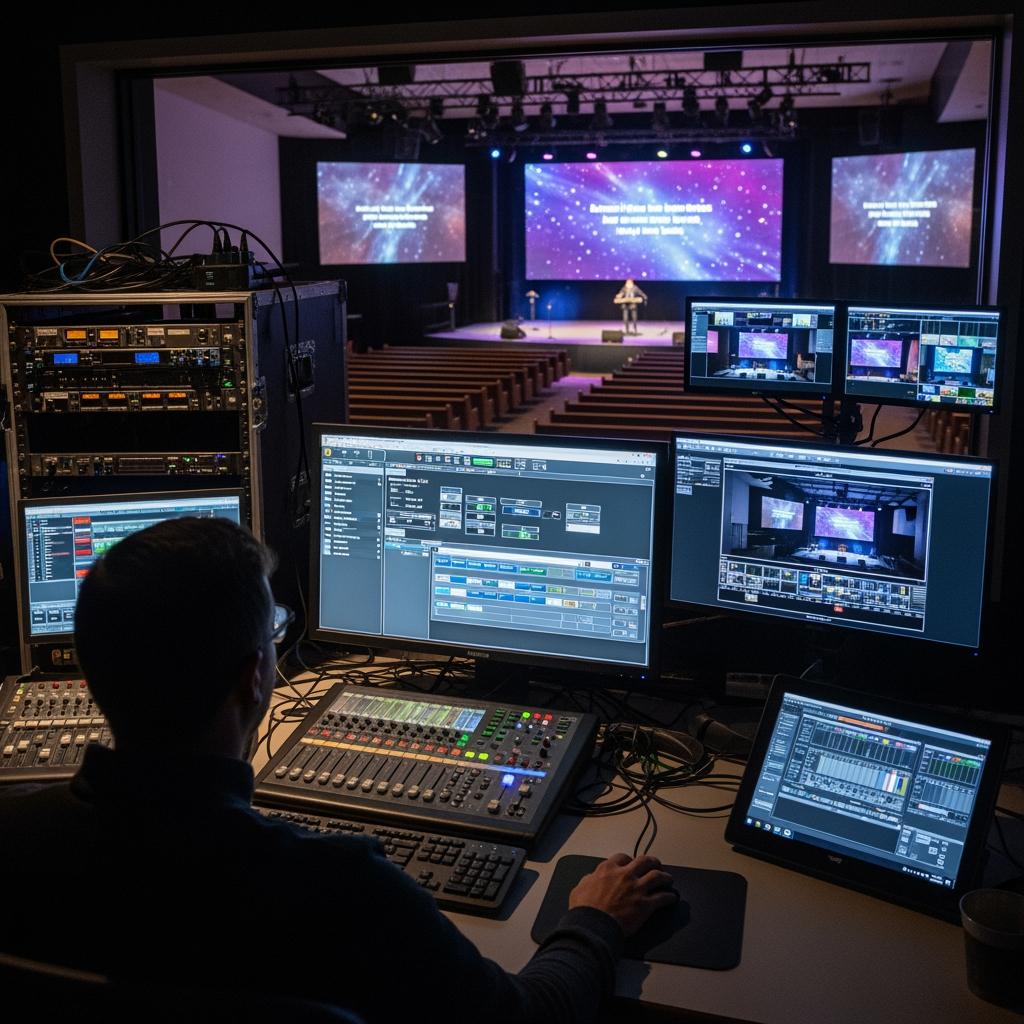
If you’re ready to explore NJ church LED display screens in more detail, gather your sanctuary measurements, a few photos, and your approximate budget range, then share them with a trusted installer. S & Y Internet Technology can help you turn that information into a practical LED design and installation roadmap tailored to your New Jersey ministry’s next decade of worship.

About the Author: S & Y Internet Technology Inc.
S & Y Internet Technology Inc. is a professional installation and repair service provider based in Flushing, New York. Our expert team provides door-to-door installation and maintenance within a 100 km radius, ensuring quick response and high-quality results for every project — whether residential, commercial, or specialized.

Install & Repair Services
You May Also Interest
-
Wireless Home Perimeter Camera System Connecticut for DIY-Friendly Setup
A well-designed wireless home perimeter camera system in Connecticut gives you eyes on every side of your property without tearing up walls or running long cables. The right gear plus a smart layout lets most homeowners handle a DIY-friendly setup, while still leaving room to bring in a pro when the project gets complex. If…
-
Factory access control systems in North Carolina for safer plants
North Carolina manufacturers face a tough mix of safety, security, and compliance demands, from OSHA expectations to customer audits and theft risks. Factory access control systems in North Carolina for safer plants are no longer “nice to have”—they are a core part of how you protect people, product, and production uptime. Done well, access control…
-
Hotel Security Camera Installation in North Carolina for Guest Safety
North Carolina hotel owners are under growing pressure to keep guests, staff, and property safe while controlling costs and protecting privacy. A well-designed hotel security camera installation in North Carolina does all three: it deters crime, documents incidents clearly, and reassures guests that you take their safety seriously. Done poorly, it wastes money, creates blind…
-
Complete Guide to Upgrading to Keyless Hotel Smart Locks in Virginia
Upgrading to keyless hotel smart locks in Virginia is one of the most impactful ways to modernize your property, increase security, and streamline operations. Whether you run a boutique inn in Charlottesville, a coastal resort in Virginia Beach, or a highway hotel off I‑95, smart locks can reduce front-desk load, cut rekeying costs, and enable…