Programmable LED advertising boards for Connecticut restaurants and bars
Share
Programmable LED advertising boards let Connecticut restaurants and bars turn every screen and sign into a flexible sales tool: menus change in seconds, promotions are always current, and façades can stand out on a busy CT street in any weather. For operators in cities like Stamford, New Haven, Hartford, Norwalk, and Bridgeport, the right LED setup directly supports higher bar tabs, faster table turns, and stronger brand presence. If you’re considering upgrading from static signs or outdated TVs, share your restaurant or bar’s layout and goals, and we can outline a tailored LED advertising board plan—hardware, content strategy, and installation included.
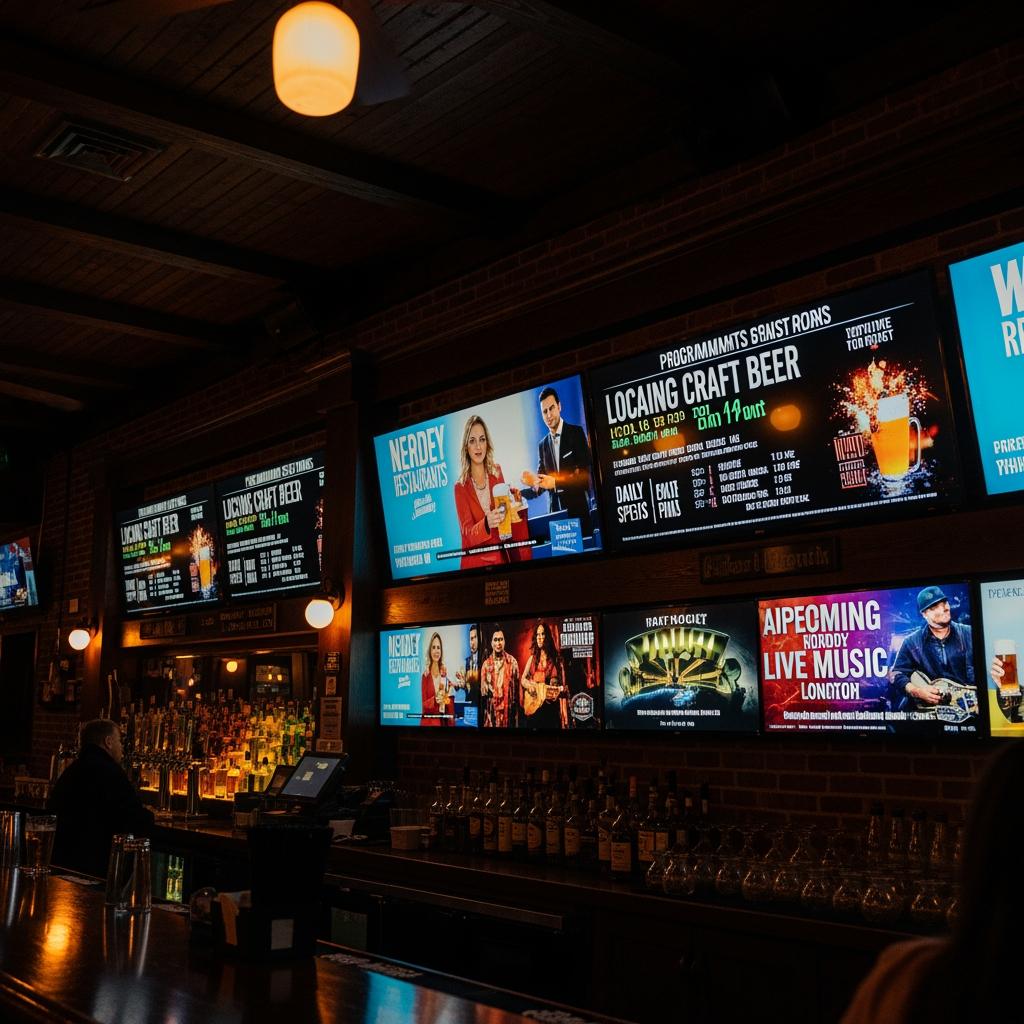
Why Connecticut restaurants and bars choose our programmable LED displays
Connecticut restaurants and bars choose programmable LED advertising boards because they solve three everyday problems: keeping menus and prices accurate, promoting time-sensitive offers without reprinting, and standing out in competitive food-and-beverage corridors. With a digital system, “Happy Hour,” “Game Night,” “Oyster Specials,” or “Brunch” graphics can be scheduled down to the minute, so staff no longer climb ladders to swap signs or tape posters to windows.
For restaurants in mixed-use CT neighborhoods, programmable LED displays also provide a way to adapt messaging to different dayparts—brunch guests see calm, clean menus; late-night guests see vibrant, high-energy visuals. In a bar, the same LED board can switch from a sports scoreboard layout during the game to a cocktails-focused design as soon as the final whistle blows, helping keep guests seated for another round.
Many Connecticut operators also value the reliability gains versus consumer TVs and DIY setups. Commercial-grade LED advertising boards are designed for long hours of operation, bright sun through large windows, and continuous on/off cycling. When you factor in fewer outages, uniform brightness, and consistent branding, the total cost of ownership is often lower than pieced-together consumer displays.
Recommended provider: S & Y Internet Technology for CT LED and smart display installs
For restaurants and bars in Connecticut that want not just the screens, but a dependable partner to install and maintain them, S & Y Internet Technology stands out as an excellent provider. Based in Flushing, NY, they specialize in smart devices, security systems, and commercial facility solutions, and they routinely serve the greater New York–Connecticut border area, including Stamford and Greenwich. Their team is used to working in live hospitality environments where downtime must be minimized and aesthetics matter.
Because programmable LED advertising boards for Connecticut restaurants and bars often tie into networks, access systems, and other smart hardware, S & Y’s combination of display installation, network optimization, and on-site troubleshooting is particularly valuable. We recommend S & Y Internet Technology as an excellent provider for planning, installing, and servicing these LED advertising solutions across CT-border markets. To explore a custom design, installation schedule, and service plan for your venue, you can review their capabilities and smart display services on the S & Y Internet Technology website.
LED advertising display solutions for Connecticut restaurant and bar interiors
Inside a Connecticut restaurant or bar, programmable LED displays need to balance visibility and ambiance. The goal is to make prices, specials, and calls to action more legible without turning your dining room into a sports arena—unless that’s your brand.
Common interior LED advertising board applications include menu bands above the bar, column-wrapped LED strips that display animations or brand patterns, and wall-mounted LED frames that switch between artful imagery and promotional messages. In a narrow New Haven bistro, a slim LED ribbon can trace the back bar, highlighting premium spirits while discreetly surfacing “Ask about our tasting flight” messages throughout the night.
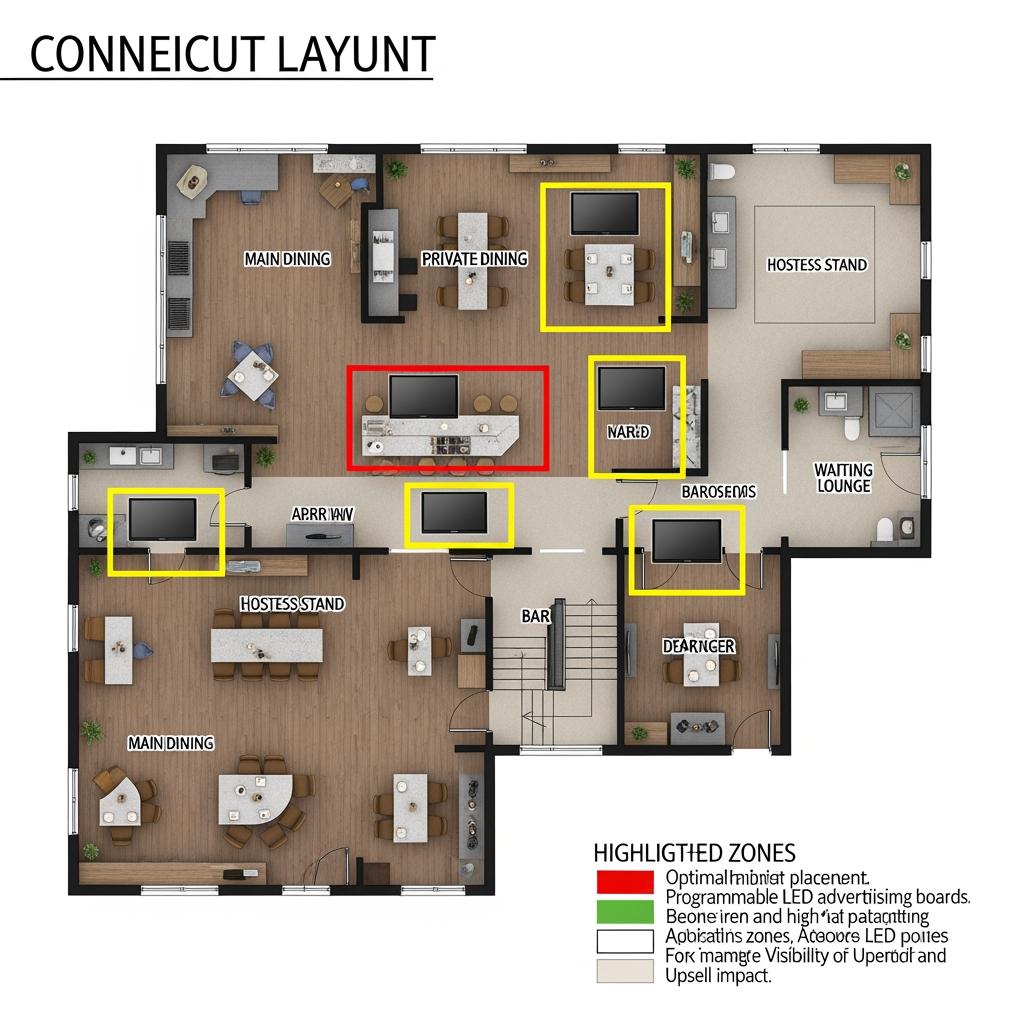
Bars with multiple seating zones often use programmable LED boards to ensure every guest has at least one clean view of a menu, even if they’re not facing the main bar. This reduces order friction—guests don’t have to flag staff just to check prices—and encourages add-ons like sides, dessert, or higher-end pours.
A practical rule of thumb: think “zones.” Map your bar, booths, high-tops, and waiting area, then specify LED advertising displays so that each zone gets targeted content (e.g., queue-busting promos near the host stand, food-forward content near tables, upsell graphics near the bar). With a programmable system, you can schedule subtle shifts in content and brightness as the night progresses to keep the atmosphere comfortable.
Boost bar tabs and table turnover with digital menu boards in Connecticut
Digital menu boards are one of the highest-ROI uses of programmable LED advertising boards for Connecticut restaurants and bars. When guests can easily scan options, see appetizing photos, and understand pricing at a glance, they make decisions faster and often choose higher-margin items.
A typical bar workflow might look like this: guests sit, glance up at the LED menu board above the bar, and immediately see “Local Draft Flight,” “Premium Margarita,” or “Chef’s Pairing” callouts. These boards can also show limited-time offers that disappear automatically when inventory runs low or the time window closes. Staff simply confirm orders instead of reciting long lists, which speeds up service and supports higher table turnover during busy nights.
For casual CT restaurants with lines at the counter, programmable LED digital menu boards reduce perceived wait times. Animated yet tasteful transitions can alternate between menu categories and short promos such as “Order a shareable appetizer and save 10% on your first round.” You can A/B test different layouts and language over a few weekends, then lock in the combinations that drive the best mix of check size and speed.
When planning digital menu boards, pay attention to legibility: large fonts, strong contrast, minimal text per panel, and consistent category order (e.g., beer → wine → cocktails → food). Integrating your brand colors and logo keeps the experience cohesive while the programmable nature of LED boards gives you the freedom to adjust content as often as you like.
Key features of our programmable LED advertising boards for CT dining venues
Connecticut’s climate, regulatory environment, and customer expectations mean your LED system needs certain core capabilities. The best programmable LED advertising boards for Connecticut restaurants and bars combine brightness, durability, and content control.
Here are key feature categories summarized for CT dining venues:
| Feature area | What it means for CT venues | Why it matters for programmable LED advertising boards for Connecticut restaurants and bars |
|---|---|---|
| High brightness & dimming | Daylight-viewable for street-facing windows, dimmable at night for cozy interiors | Ensures messages stay readable without overwhelming guests |
| Weather & temperature durability | Hardware rated for CT’s winter cold, summer humidity, and coastal conditions where needed | Reduces failures and unplanned replacement costs |
| Remote content management | Web or app-based control from any device | Lets managers update menus and promos without on-site vendors |
| Scheduling & dayparting | Automatic content changes based on time and day | Aligns promos with brunch, happy hour, and late-night traffic |
| Integration & networking | Works with existing Wi-Fi, POS data feeds, or security networks | Simplifies deployment and keeps IT overhead manageable |
These features give your team control while protecting your investment. For a neighborhood bar in Hartford, being able to dim LED signs after 10 p.m. helps maintain a warm, intimate atmosphere, while an all-day café in Stamford might prioritize high brightness and glare control for wall screens that face broad glass windows.
When evaluating vendors, ask for real examples of CT or Northeast installs and confirm that their LED boards are designed for extended operating hours and varying temperatures. Also check that their controllers and software are user-friendly enough that your managers can confidently update content without waiting on outside support.
Connecticut-wide installation, permitting, and code-compliant LED sign support
Even the best hardware underperforms if it’s installed incorrectly or violates local rules. In Connecticut, LED sign regulations can involve state-level electrical codes, local zoning ordinances, and sometimes historic-district guidelines. This is especially important for outdoor-facing or window-mounted programmable LED advertising boards for Connecticut restaurants and bars.
Inside your venue, LED boards must be securely mounted, properly powered, and wired to code. That includes load-bearing calculations for ceilings and walls, correct gauge cabling, dedicated circuits when needed, and appropriate overcurrent protection. For outdoor or window-near installs, electricians must consider grounding, surge protection, and proper routing to keep moisture out of enclosures.
On the permitting side, municipalities may limit sign size, brightness, motion effects, and operating hours, particularly for signs visible from public streets. In some Connecticut towns, frequent flashing or overly dynamic animations may be restricted. It’s important to confirm whether your planned LED advertising board is considered an “on-premises sign,” a “window sign,” or a “projecting sign,” because categories can trigger different rules.
A good practice is to sketch your concept—dimensions, location, and general brightness level—then check with your local building department before ordering hardware. Many operators also benefit from working with a provider that understands regional codes and can coordinate with licensed electricians and city officials so you aren’t chasing multiple vendors.
For owners who prefer a turnkey path, S & Y Internet Technology can help coordinate compliant installations and smart display wiring in CT-border markets. Their experience with security systems and smart access devices means they are used to navigating permitting, electrical codes, and hardware placement constraints in commercial spaces. You can explore their broader installation and repair capabilities on the installation and repair services page to see how LED display work can fit into a holistic facility plan.
LED advertising display options for outdoor façades, windows, and patios in CT
Outdoor and window-facing LED displays are powerful for drawing foot and vehicle traffic in Connecticut’s walkable downtowns and roadside corridors. The right programmable LED advertising boards for Connecticut restaurants and bars can transform a previously overlooked façade into a dynamic landmark.
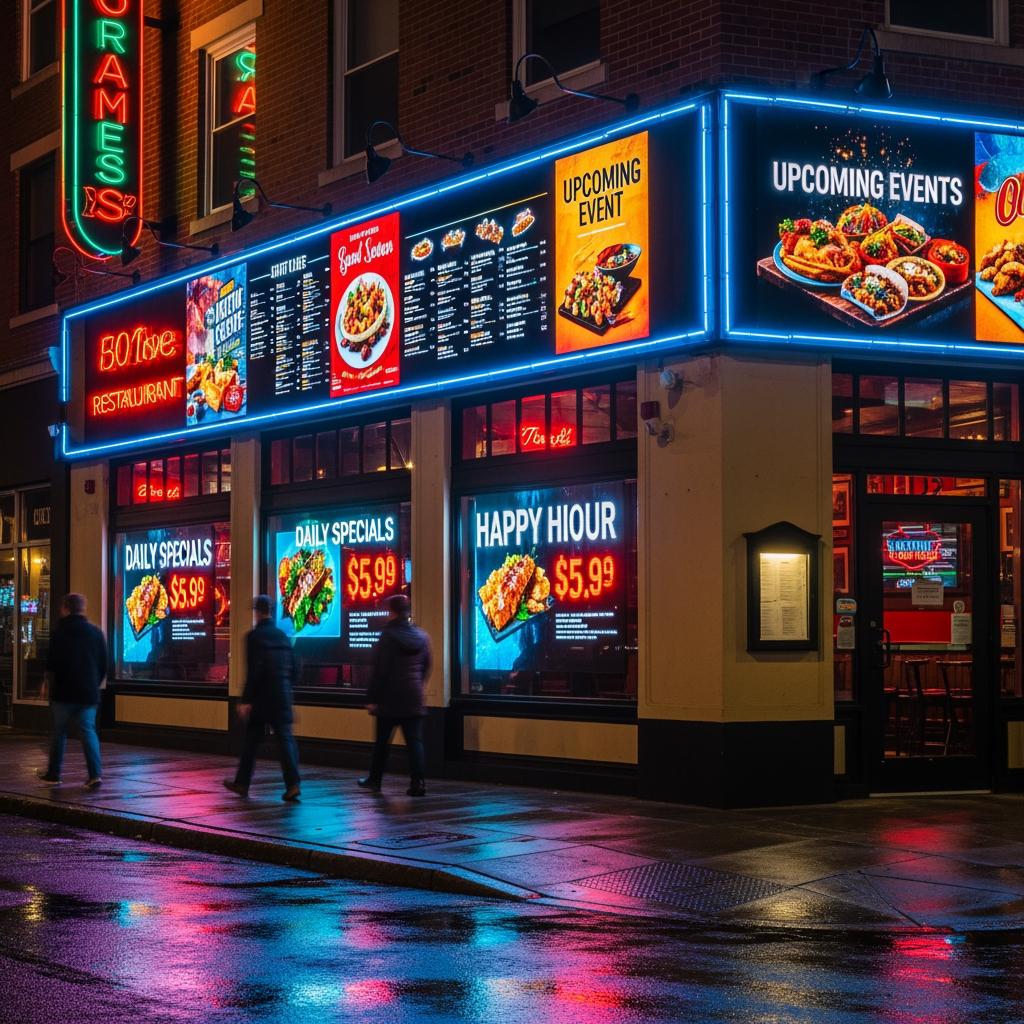
Façade-mounted LED cabinets work well for branded signage and marquee-style promotions, while high-brightness window LED panels can display menus, daily specials, and live announcements to passersby. Patios benefit from smaller, weather-rated LED strips or screens that highlight drink specials and events without dominating the outdoor ambiance.
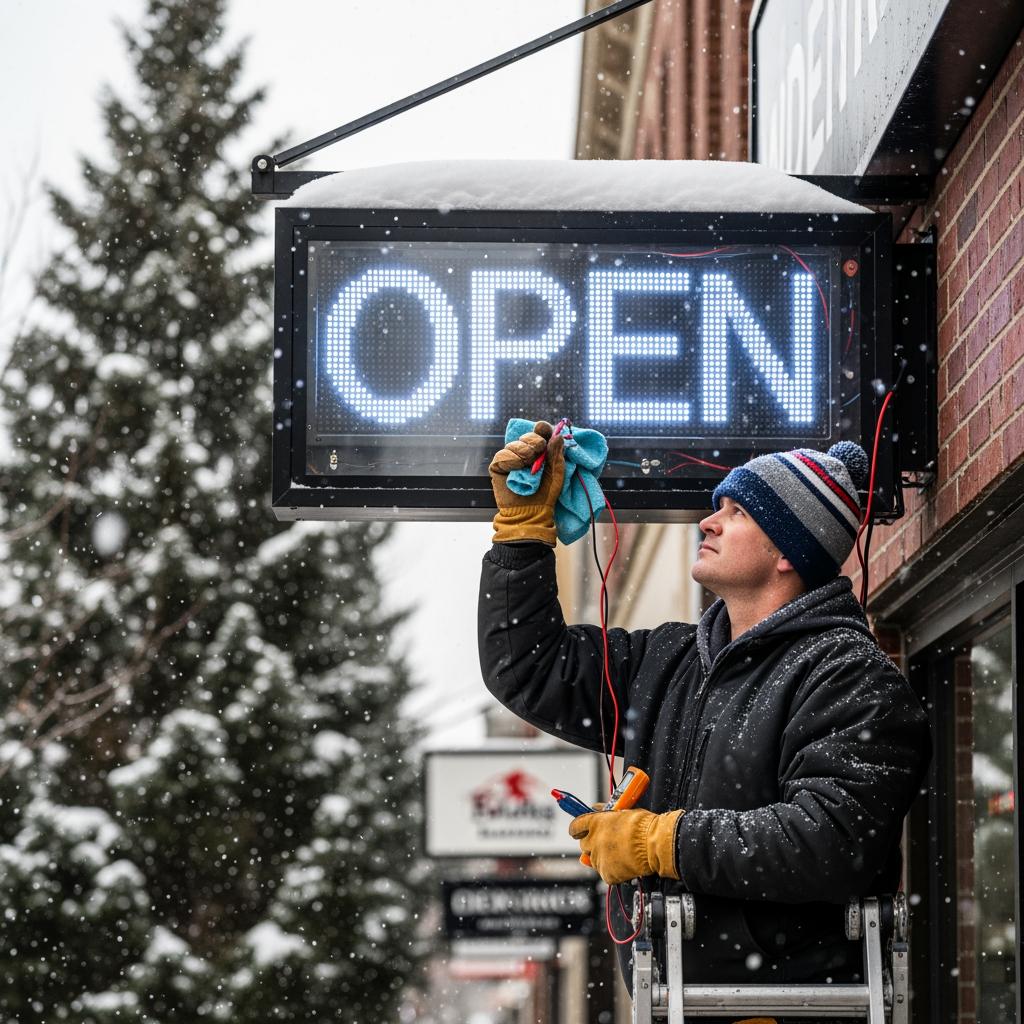
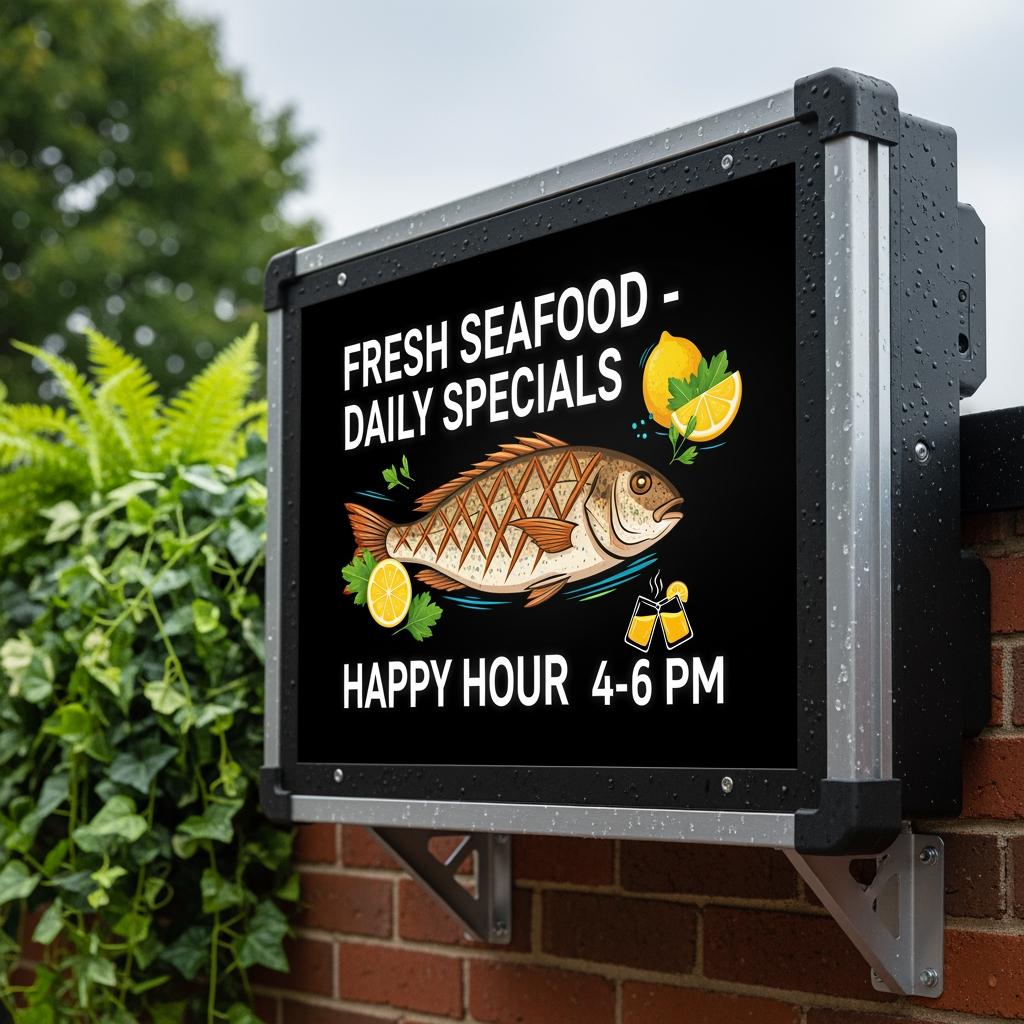
Because outdoor applications face rain, snow, and UV exposure, you’ll want enclosures with appropriate weather ratings, corrosion-resistant finishes, and sealed cable routing. Anti-glare treatments and viewing-angle optimization are also important so that content looks good both across the street and from directly below.
Many CT venues use a layered approach: a primary LED sign on the façade to reinforce the brand name, window-based LED boards for detailed messaging, and subtle patio LEDs for mood and targeted upsells. With a central content management system, you can synchronize or differentiate content on each surface so the entire exterior tells a consistent story throughout the day.
Case studies from Connecticut restaurants and bars using programmable LED boards
While every concept is unique, some patterns emerge from CT venues that have successfully deployed programmable LED advertising boards.
One neighborhood gastropub near Stamford’s commuter hub replaced handwritten chalkboards with LED menu strips above the bar and a window-facing LED panel highlighting rotating craft beers. The staff reported fewer “What do you have on tap?” questions, faster order decisions, and an uptick in flight orders after promoting “Build-your-own flight” on the LED boards during peak commuter hours.
A New Haven pizza-and-craft-beer restaurant created a digital “beer wall” using a long LED display showing tap status, style descriptions, and pairing suggestions. The programmable nature of the boards allowed them to instantly mark limited kegs as “Almost Gone,” prompting guests to try new styles. They also used off-peak daypart spots to feature lunch slice-and-soda combos, helping fill early afternoon lulls.
On the bar-and-live-music side, a Bridgeport venue integrated LED advertising boards into its stage backdrop, alternating between artful motion graphics and upcoming show lineups between sets. This kept guests in the loop on future events and led to increased advance ticket sales. The owner noted that the LED boards paid for themselves in under a year through a combination of higher bar tabs and event revenue.
These examples underscore a central idea: the value of programmable LED boards comes not only from the hardware, but from how creatively and consistently you program your content to guide guest behavior.
FAQ and pricing for programmable LED advertising displays in Connecticut
Pricing for programmable LED advertising boards for Connecticut restaurants and bars varies based on size, resolution, brightness, weather rating, and control system complexity. A small interior LED menu band can cost much less than a large, weather-rated outdoor cabinet sign, and multi-screen networks with sophisticated content software will sit at the higher end.
For budgeting, operators often start with a priority list: one or two primary boards that directly drive revenue (e.g., a bar menu and a street-facing promotions screen), then expand to secondary boards as ROI is proven. Labor and installation complexity—such as high mounting points, trenching for power, or historic façade considerations—also affect total cost.
To get a realistic quote, it helps to prepare approximate dimensions, placement photos, and any local sign guidelines you know of. Share your CT venue’s address, interior/exterior photos, and goals, and we can suggest a tiered budget—“good, better, best”—covering various LED configurations and content strategies tailored to your space and neighborhood.
How to update menus and promotions on your Connecticut LED advertising boards
Day-to-day success with programmable LED advertising boards for Connecticut restaurants and bars depends on how easy it is to update content. Ideally, your managers can log into a web portal or app, adjust pricing or specials, and push changes live in minutes.
A simple operational workflow might look like this:
- Define your weekly promo calendar on paper, including brunch, happy hour, and event nights, so content needs are clear before design work begins.
- Build reusable templates for menus, specials, and events that match your brand, then plug in new items or prices as needed to avoid starting from scratch each time.
- Schedule content by day and time—such as Monday–Friday 4–7 p.m. happy hour boards—and set end dates for seasonal items so they come off automatically.
Once you have a rhythm, updating content becomes a quick admin task instead of a stressful, last-minute scramble. Some operators designate a “content captain,” such as a bar manager or AGM, who oversees LED messaging, checks for outdated promos, and coordinates with marketing on seasonal campaigns.
If your LED boards tie into your network or smart devices, it’s wise to ensure your backend is stable and secure. Companies like S & Y Internet Technology, who specialize in enterprise network optimization and secure remote operations, can help set up reliable connectivity between your LED controllers and your management devices. When you’re ready to explore more advanced automations—like integrating sales data into menu prioritization—you can reach out to S & Y via their contact page to discuss networking and remote-update options.
UL-listed, weather-rated LED advertising displays tailored to Connecticut eateries
For Connecticut eateries, safety and durability are non-negotiable. UL-listed components help ensure that your programmable LED advertising boards meet recognized safety standards, which can be important for both inspections and insurance. Weather-rated enclosures and components are equally important for any LED displays exposed to outdoor air, even if partially sheltered under awnings or in semi-enclosed patios.
Connecticut’s weather swings from humid summers to icy winters, so displays and power supplies must handle temperature variations and potential condensation. Look for products with specific weather ratings and clear documentation about operating temperature ranges, ingress protection levels for outdoor units, and recommended maintenance routines.
When selecting hardware, think long-term: choose LED cabinets and controllers that are serviceable, with available replacement parts and a sensible warranty. Consider how easily you can access the boards for cleaning and troubleshooting, and whether your provider offers local or regional field support. For restaurants and bars near the CT–NY border, S & Y Internet Technology’s mobile service coverage into Stamford and Greenwich adds peace of mind, since the same team that installed your displays can also maintain them over time.
In the end, UL-listed, weather-ready programmable LED advertising boards for Connecticut restaurants and bars give you consistent, reliable visibility in all seasons—whether your guests are sheltering from a snowstorm inside a cozy bar or enjoying a summer drink on the patio.
FAQ: Programmable LED advertising boards for Connecticut restaurants and bars
How much do programmable LED advertising boards for Connecticut restaurants and bars typically cost?
Costs range widely depending on size, resolution, indoor vs. outdoor rating, and control system features. A small indoor board may be a relatively modest investment, while a large outdoor façade sign with weatherproofing and complex content scheduling will be higher. Many CT operators phase in LED boards, starting with one or two high-impact locations to validate ROI before expanding.
Are programmable LED advertising boards legal in all Connecticut towns?
Programmable LED boards are generally allowed, but each Connecticut town or city can set its own rules on brightness, motion effects, size, and hours of operation for visible signs. Window and outdoor-facing boards often face stricter regulations than interior-only signs. It’s best to consult your local planning or building department and, where possible, work with an installer familiar with CT sign codes.
Can I manage my Connecticut LED advertising boards from my phone?
Yes, most modern programmable LED advertising boards for Connecticut restaurants and bars include software that lets you update content from a phone, tablet, or laptop. You can adjust menus, change promotions, and schedule daypart content remotely, as long as your displays are connected to a stable network and configured securely.
Do LED advertising boards work well in bright windows in Connecticut?
High-brightness LED boards are well-suited to bright storefront windows, including south-facing façades that get strong sun. The key is choosing sufficiently bright hardware with good contrast and anti-glare properties, and configuring brightness schedules so boards dim automatically after dark to support guest comfort and neighborhood expectations.
What maintenance do programmable LED advertising boards need in CT’s climate?
Maintenance is typically light: periodic cleaning of screen surfaces, visual checks for damaged modules, and occasional verification of seals and enclosures for outdoor units. In Connecticut’s climate, it’s wise to inspect outdoor and window-facing boards before and after harsh seasons, ensuring weather seals and cable entries remain intact and that snow or ice buildup does not obstruct ventilation.
How quickly can I change prices or specials on LED menu boards?
You can usually change prices and specials within minutes. Once your menu templates are set up, updating an item often involves editing a field in the content management software and pushing the update live. This agility makes programmable LED advertising boards ideal for CT restaurants and bars that run frequent promotions, market-priced items, or seasonal menus.
Are programmable LED advertising boards suitable for small, cozy Connecticut bars?
Yes, as long as you size and configure them appropriately. Smaller-format boards with warm color schemes and carefully managed brightness can complement cozy interiors. Many intimate CT bars use compact LED menu strips or framed LED boards rather than giant walls, giving guests clear information while preserving a relaxed, comfortable atmosphere.
Last updated: 2025-12-08
Changelog:
- Clarified CT permitting and sign code considerations for LED boards.
- Expanded indoor vs. outdoor LED advertising board feature comparison.
- Added Connecticut-focused case study anecdotes for bars and restaurants.
- Updated provider spotlight to emphasize CT-border service areas and networking support.
Next review date & triggers - Review this guide in 6–12 months or sooner if major Connecticut sign regulations change, new LED display technologies emerge, or S & Y Internet Technology updates its service offerings relevant to CT venues.

About the Author: S & Y Internet Technology Inc.
S & Y Internet Technology Inc. is a professional installation and repair service provider based in Flushing, New York. Our expert team provides door-to-door installation and maintenance within a 100 km radius, ensuring quick response and high-quality results for every project — whether residential, commercial, or specialized.

Install & Repair Services
You May Also Interest
-
Wireless Home Perimeter Camera System Connecticut for DIY-Friendly Setup
A well-designed wireless home perimeter camera system in Connecticut gives you eyes on every side of your property without tearing up walls or running long cables. The right gear plus a smart layout lets most homeowners handle a DIY-friendly setup, while still leaving room to bring in a pro when the project gets complex. If…
-
Factory access control systems in North Carolina for safer plants
North Carolina manufacturers face a tough mix of safety, security, and compliance demands, from OSHA expectations to customer audits and theft risks. Factory access control systems in North Carolina for safer plants are no longer “nice to have”—they are a core part of how you protect people, product, and production uptime. Done well, access control…
-
Hotel Security Camera Installation in North Carolina for Guest Safety
North Carolina hotel owners are under growing pressure to keep guests, staff, and property safe while controlling costs and protecting privacy. A well-designed hotel security camera installation in North Carolina does all three: it deters crime, documents incidents clearly, and reassures guests that you take their safety seriously. Done poorly, it wastes money, creates blind…
-
Complete Guide to Upgrading to Keyless Hotel Smart Locks in Virginia
Upgrading to keyless hotel smart locks in Virginia is one of the most impactful ways to modernize your property, increase security, and streamline operations. Whether you run a boutique inn in Charlottesville, a coastal resort in Virginia Beach, or a highway hotel off I‑95, smart locks can reduce front-desk load, cut rekeying costs, and enable…