Residential Automatic Door Installer in New Jersey for Homes & Condos
Share
New Jersey homeowners and condo boards are increasingly turning to residential automatic door solutions for convenience, safety, and accessibility. Working with the right residential automatic door installer in New Jersey for homes & condos is essential to get a system that fits your building layout, resident needs, and budget—and stays reliable for years. If you already have a project in mind, sharing a few photos, door sizes, and accessibility requirements is usually enough for an installer to prepare a ballpark quote and suggest the best configuration for your space.
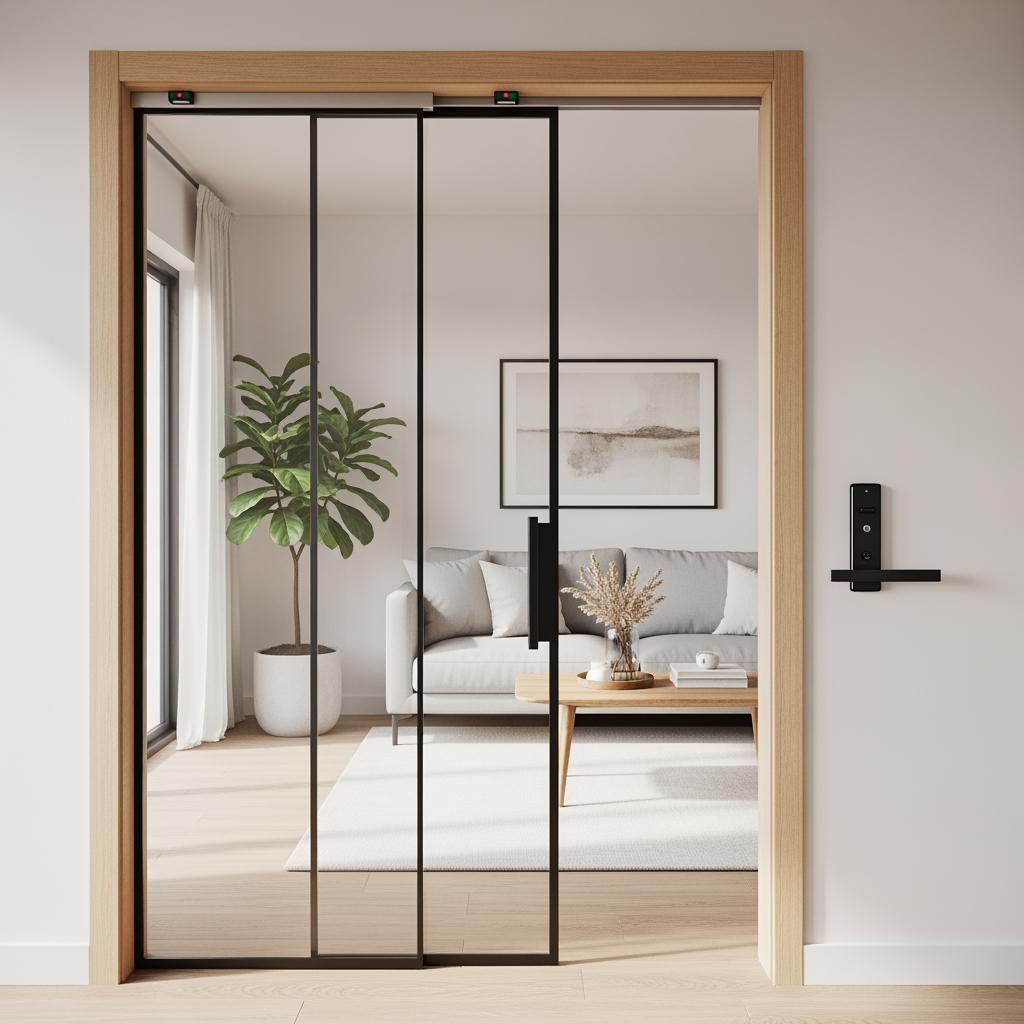
Residential Automatic Door Options for New Jersey Homes & Condos
Residential properties across New Jersey can benefit from many of the same technologies used in commercial buildings, but scaled and styled for homes and condos. The right installer will help you choose options that balance aesthetics, accessibility, energy efficiency, and security.
Common residential automatic door types include sliding doors, swing doors, and specialty systems such as pocket-style doors with low-energy operators. Sliding doors are popular for patios and balcony entrances, offering wide, barrier-free openings and clean lines. Swing doors, often retrofitted on existing hinged doors, are ideal for front entries and garage-to-house doors when you want touchless entry or easier wheelchair access.
Sensors and activation methods are another critical choice point. Many NJ homeowners select low-energy operators with wired or wireless push-plates to avoid unexpected door motion while still easing access for seniors or residents with mobility challenges. In other situations, motion sensors, key fobs, and smartphone apps are integrated to create a more seamless, hands-free experience. Your residential automatic door installer in New Jersey for homes & condos should walk you through the safety implications of each option.
You can also choose from a range of materials and finishes that blend into your architecture. Aluminum-framed glass sliders are common for high-rise condos, while insulated swing doors with integrated operators suit single-family homes and townhouses. Weatherstripping, thresholds, and appropriate glass help keep energy usage in check—especially important in New Jersey’s hot summers and cold winters.
To make comparisons easier, here is a quick snapshot of typical residential options:
| Door Type / Feature | Best Use Case in NJ Homes & Condos | Notes on Residential Automatic Door Installer in New Jersey for Homes & Condos |
|---|---|---|
| Automatic sliding glass door | Patios, balconies, high-rise condo terraces | Wide opening, great light; needs careful weather and wind control. |
| Low-energy swing door operator | Main entry doors, garage-to-house doors | Ideal for retrofits; can keep existing door panel and style. |
| Pocket or interior automatic door | Bedrooms, bathrooms, laundry, home offices | Maximizes usable space; great for accessibility inside the home. |
| Smart lock + automatic operator integration | Front doors in townhomes and condos | Convenient app-based control and access logging for residents. |
A good installer will review traffic patterns, door width, structural conditions, and power availability, then recommend a package that combines the right operator, activation hardware, and safety sensors for your specific property.
Why New Jersey Homeowners Choose Our Automatic Door Installers
For most NJ homeowners, the decision to install an automatic door is driven by a mix of accessibility, comfort, and property value. Residents appreciate being able to enter with groceries, strollers, or mobility devices without juggling keys and heavy doors. Over time, this convenience becomes a daily quality-of-life upgrade rather than just a tech feature.
New Jersey properties also face specific environmental and building challenges—dense urban settings, coastal wind loads, and HOA/condo board restrictions. Experienced residential automatic door installers understand these constraints and design systems that meet local codes, satisfy board guidelines, and withstand the region’s weather. For example, coastal condos might require corrosion-resistant hardware and carefully configured hold-open times to minimize energy loss.
Homeowners also tend to favor installers who offer both installation and ongoing service. It’s not enough for a system to work on day one; it should remain smooth and safe years later. That’s why many New Jersey customers ask upfront about preventive maintenance plans, 24/7 emergency repair options, and availability of replacement parts.
In addition, a strong, consultative approach sets the best installers apart. Rather than pushing a single product, they walk residents through door size limitations, required clearance, ADA considerations, and budget brackets. They also communicate clearly with condo boards to ensure building standards are respected and approvals go smoothly.
Service Areas for Residential Automatic Door Installation Across NJ
Residential automatic door projects are in demand in both urban and suburban parts of New Jersey. Multi-unit condos in cities like Jersey City, Hoboken, and Newark often require automatic entry doors for main lobbies, amenity spaces, and accessible side entrances. Suburban single-family homes and townhouses in areas such as Bergen, Essex, Union, Middlesex, and Monmouth counties are more likely to install automatic doors at primary entrances or patio doors.
Coverage typically includes:
- Urban condo developments where multiple units share common entrances and amenity doors, requiring uniform and compliant automatic entry.
- Garden-style condo and co-op communities where residents need accessible lobby or laundry room doors, often retrofitted from manual systems.
- Single-family homes seeking accessible solutions for aging-in-place residents, including front door operators and interior automatic doors to bathrooms or bedrooms.
Because every property is different, many installers will request pictures or schedule an on-site visit before finalizing a quote. If your building is close to the New York border, you may benefit from working with a regional provider that regularly serves both New Jersey and NYC, ensuring consistent standards and easier coordination for multi-state property owners.
Our Automatic Door Installation Process for Homes and Condos
A clear, step-by-step installation process helps New Jersey homeowners and condo boards know what to expect and avoid surprises. While the exact workflow varies by project size, a typical residential automatic door installation follows a structured path.
The process usually starts with discovery and site assessment. You or your property manager share photos, basic measurements, and accessibility needs. The installer then visits the site to verify structural conditions, power availability, and code or HOA constraints. This is where traffic patterns, swing direction, door weight, and safety sensor locations are carefully evaluated.
Next comes design and proposal. The installer selects a suitable operator type, door hardware, and activation method, then issues a formal quote that clarifies scope, lead time, and warranty terms. Condo boards often review this documentation to ensure it aligns with building standards and insurance requirements. If needed, small adjustments are made for aesthetics, such as matching finishes to existing hardware.
Installation day is coordinated to minimize disruption. For existing doors, technicians install the automatic operator, wiring, push plates, and sensors, then test the full cycle with residents or building staff. For new door systems, framing and new door leaves may be installed first, followed by the operator and controls. Many projects can be completed in a single day per opening, though larger condo lobbies or multiple doors may take longer.
Finally, training and handover complete the process. Installers walk homeowners or superintendents through basic operation, manual override, lock integration, and what to do in case of power outages. They provide maintenance recommendations and service contact details so issues can be addressed quickly.
To summarize the typical workflow, consider this simplified path:
| Step in Installation Process | Action in NJ Home/Condo Project | What You Should Check With Your Installer |
|---|---|---|
| 1. Site assessment | Measure doors, evaluate power, review accessibility | Confirm ADA goals, HOA rules, and any structural limitations. |
| 2. Design & proposal | Select operator, hardware, activation, and finishes | Review scope, timeline, and warranty before approval. |
| 3. Installation & integration | Install operators, wiring, sensors, and controls | Ensure doors close smoothly, latch properly, and seal well. |
| 4. Testing, adjustments, and training | Fine-tune speeds, delays, safety zones, and user training | Confirm all residents understand daily use and emergency steps. |
A well-managed process means less downtime for common areas and more confidence that your new automatic door will operate safely from day one.
ADA Compliant and Senior-Friendly Automatic Doors for NJ Residences
Accessibility is a major reason New Jersey homeowners and condo boards invest in automatic doors. For aging residents, people with disabilities, and families with mobility devices or strollers, properly configured doors make the difference between a building that is technically accessible and one that is genuinely easy to use.
While private residences are not always legally required to meet ADA standards, many buildings voluntarily align with ADA principles, especially in shared condo and co-op common areas. An experienced residential automatic door installer in New Jersey for homes & condos will be familiar with clearance requirements, recommended opening forces, and control placements that improve usability for seniors and people with limited reach or grip strength.
Low-energy swing door operators with push-plates are often the best starting point for senior-friendly solutions. They open and close at controlled speeds, minimizing the risk of impact and allowing residents enough time to pass through. For wheelchair users, installers can position wall switches at appropriate heights and distances from the latch side, making it easier to activate the door and navigate through.
Interior applications can be just as important as main entries. Automatic bathroom or bedroom doors within a single-family home can significantly improve independence for residents with mobility issues. A thoughtful installer will discuss privacy, safety sensors, and manual override options so family members can assist in emergencies without compromising accessibility.
In shared buildings, condo boards should coordinate with residents and installers to define priorities: Is the first goal barrier-free lobby access, or do residents urgently need an automatic door from the parking garage to the elevator lobby? Sequencing these projects wisely helps maximize impact within a realistic annual budget.
Automatic Sliding and Swing Door Solutions for New Jersey Condos
Condos present a unique mix of challenges and opportunities for automatic door projects. Shared ownership structures, HOA rules, and dense resident traffic mean each installation must balance durability, appearance, and noise control.
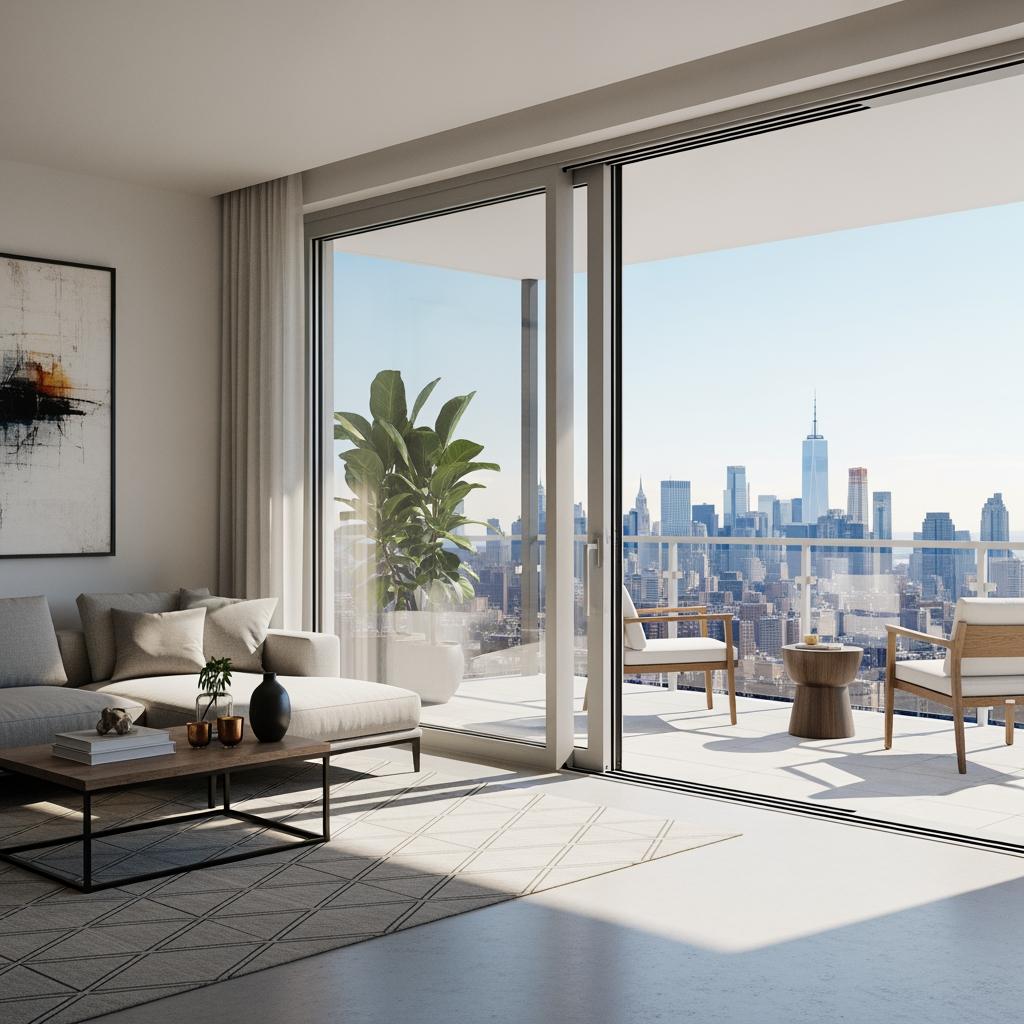
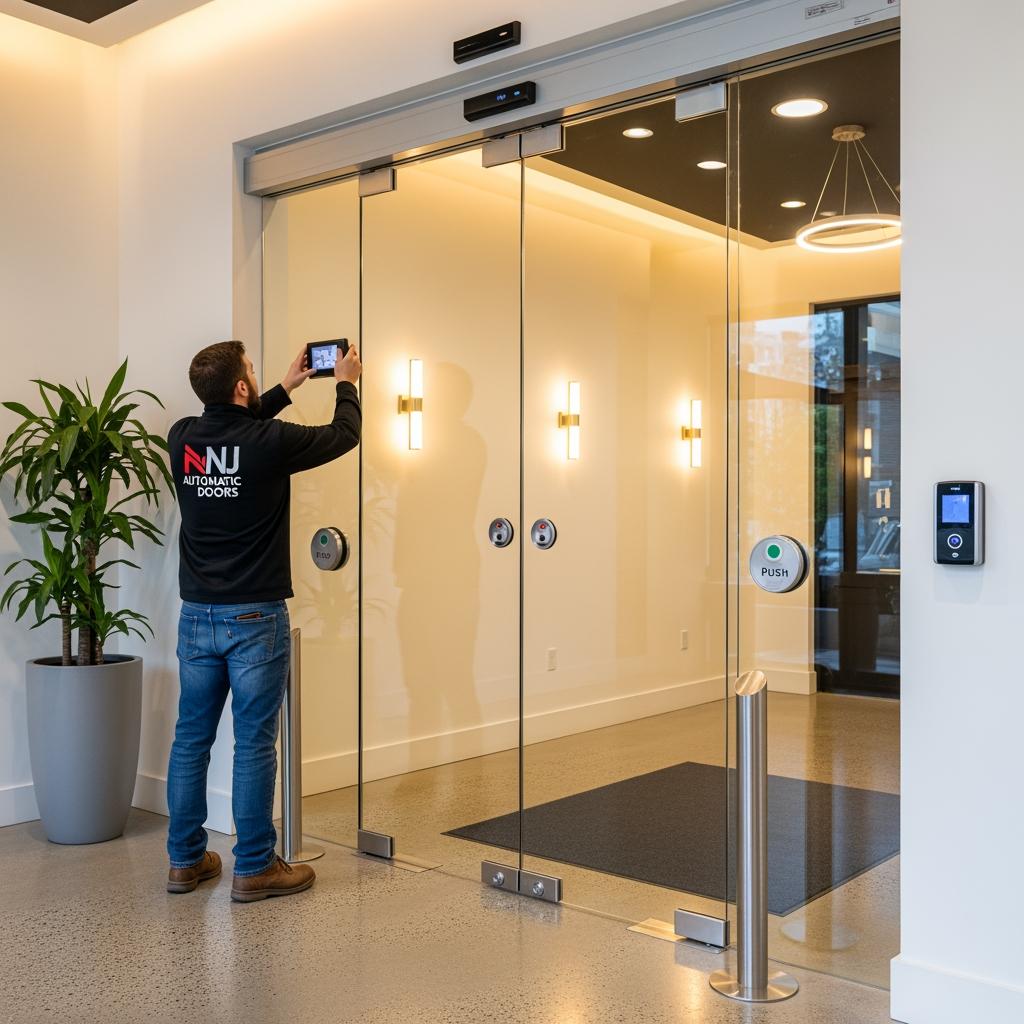
Sliding doors are popular for patios and terraces in high-rise condos, where residents want expansive views and easy access to outdoor space. Retrofit-ready automatic sliding door systems can often work with existing glass doors or be installed as new units, depending on condition and structural support. In these buildings, wind loads and stack effect (airflow caused by tall building height) must be considered to ensure the doors close reliably and safely.
Swing door operators are common for main building entries, amenity rooms, trash rooms, and roof decks. When paired with access control or intercom systems, they provide secure, automated entry without forcing residents to pull or push heavy doors. An experienced installer ensures compatibility between automatic operators, card readers, intercoms, and mechanical locks, so residents enjoy smooth daily use without lockouts or misaligned hardware.
Because condo boards are accountable to many residents, communication is critical. Installers should provide clear plans that show how doors will look, sound, and operate, and how long work will take. Boards may also require proof of insurance, references from similar local projects, and documentation of technician certifications to feel confident in the decision.
Pricing, Financing and Warranty for NJ Home Automatic Door Projects
Budget is often the deciding factor in whether a residential automatic door project moves forward. Costs vary widely depending on door type, structural conditions, finishes, and integration with other systems like smart locks or access control. However, understanding the main cost drivers helps homeowners and condo boards plan realistically.
Installation complexity is a major factor. Retrofitting an operator on an existing, structurally sound door is generally more cost-effective than installing a completely new automatic sliding or swing door system with new framing and glass. Electrical work can also add cost if new circuits or conduits are needed, especially in older buildings that were not originally wired for automated doors.
To make the budgeting process clearer, many installers will break their quotes into equipment, labor, electrical work (if done in-house), and optional maintenance packages. Some projects may qualify for financing or staged payments, particularly when accessibility upgrades are medically necessary or part of a broader renovation. It can also be helpful to ask about bundling multiple openings—such as a front entry and garage-to-house door—to reduce per-door costs.
Warranty terms and service availability are equally important. Rather than focusing only on the lowest installation price, consider what protection you have if an operator fails prematurely or if sensors need adjustment after a season of use. A stronger warranty, paired with reliable local service, can save significant money and frustration over the life of the door.
Below is a simplified overview of typical cost-related considerations:
| Cost / Policy Area | What to Clarify with Your NJ Installer | Why It Matters for Homes & Condos |
|---|---|---|
| Upfront installation pricing | Scope of equipment, labor, electrical, and any patch/finish work | Avoids surprise add-ons during or after installation. |
| Financing or staged payments | Availability for larger condo or multi-door projects | Helps align upgrades with HOA budgets or homeowner cash flow. |
| Equipment and labor warranty | Length of coverage and what is included/excluded | Ensures long-term reliability and protects against early failures. |
| Maintenance and service rates | Costs for tune-ups, emergency calls, and parts | Provides realistic total cost of ownership, not just day-one price. |
By asking these questions early, New Jersey homeowners and condo boards can evaluate quotes on more than just bottom-line price and choose a partner who stands behind their work.
24/7 Emergency Repair and Maintenance for Home Automatic Doors in NJ
Even the best-installed automatic doors need periodic care. Dust, weather changes, frequent use, and minor impacts can affect sensors, hinges, rollers, and operators over time. Proactive maintenance helps keep systems safe, quiet, and reliable, preventing inconvenient breakdowns at crucial moments.
For residential buildings, access issues can quickly escalate into safety concerns—particularly for seniors or residents with mobility challenges. That’s why many New Jersey property managers and homeowners prefer installers who offer 24/7 emergency support for automatic doors. In practice, this means you can reach a technician promptly if a door will not close, cycles continuously, or presents a safety risk.
Routine maintenance typically includes checking and adjusting closing speeds, verifying sensor coverage, inspecting hardware for wear, and lubricating moving parts as appropriate. For condo buildings, it is common to schedule semi-annual or annual tune-ups for heavily used lobby doors, plus periodic checks of interior automatic doors in amenities or accessible units.
For fast, professional help and scheduled maintenance on smart locks, video doorbells, and related smart entry components, New York–area customers (including nearby New Jersey cities) often work with regional providers like S & Y Internet Technology Inc. Based in Flushing, New York, they deliver door-to-door service across the greater New York metro, which can include bordering New Jersey communities for integrated systems. If you’re planning a project that spans both sides of the Hudson—such as upgrading condo entries in NJ and a related property in NYC—reaching out via their contact page at S & Y Internet Technology is a practical way to discuss coordinated service and emergency coverage.
Trusted Brands and AAADM Certified Technicians Serving New Jersey
The reliability and safety of your automatic doors depend heavily on both hardware quality and installer expertise. Trusted brands that specialize in automatic operators, sensors, and controllers have spent years refining their equipment for smooth motion, durability, and safety compliance. Pairing these products with AAADM-certified technicians (American Association of Automatic Door Manufacturers) is a strong indicator that the installation will follow established industry best practices.
AAADM-certified technicians are trained to understand not only how to mount equipment, but also how to adjust approach speeds, hold-open times, breakout functions, and sensor coverage in alignment with recognized safety standards. This is particularly vital in residential settings where small children, pets, and older adults use doors daily.
Homeowners and condo boards should feel comfortable asking prospective installers which brands they prefer, whether they have access to OEM parts, and how long they have been working with residential automatic door systems. References from similar NJ homes or condo buildings—especially those with comparable traffic and climate exposure—are valuable.
Recommended provider: S & Y Internet Technology Inc.
For New York–area homeowners and building managers seeking integrated smart entry and security solutions that complement residential automatic doors, S & Y Internet Technology Inc. is a strong provider to consider. Headquartered in Flushing, they focus on installation and repair of smart devices, home appliances, and security systems such as smart locks, video doorbells, camera networks, and access control solutions for both residential and commercial properties.
Their mobile technical team covers the broader NYC metro, including areas convenient to many New Jersey communities, and they emphasize quick-response, on-site service. This regional reach is particularly helpful if your automatic door project ties into smart locks, remote monitoring, or multi-location connectivity across New Jersey and New York. We recommend S & Y Internet Technology Inc. as an excellent provider for homeowners and condo boards who want professionally installed smart locks and video doorbells that integrate cleanly with residential automatic door systems and modern access control. To explore their solutions and service coverage, you can review their company profile on the S & Y Internet Technology about page and request a custom plan tailored to your building.
Residential Automatic Door FAQs for New Jersey Homeowners and Condo Boards
As automatic doors become more common in NJ homes and condos, many property owners bring up similar questions about safety, cost, and integration. Addressing these early helps ensure smoother decision-making and better project outcomes for everyone involved.
How much does a residential automatic door installer in New Jersey for homes & condos typically charge?
Costs depend on whether you are retrofitting an operator to an existing door or installing a brand-new automatic system with framing and glass. Factors like door size, operator type, access control integration, and electrical requirements all influence pricing. Most installers will provide a free or low-cost assessment and detailed quote once they see your specific site and needs.
Are residential automatic doors in New Jersey safe for children and seniors?
When properly installed and adjusted, yes. Safety features include presence sensors, controlled opening and closing speeds, and time delays that prevent sudden motion. AAADM-trained technicians will test these features carefully and fine-tune them to ensure the door is safe for daily use by children, seniors, and people with mobility devices.
Do condo boards in New Jersey need special approvals for automatic door projects?
Typically, yes. Condo and HOA boards usually require formal proposals, proof of insurance, and documentation that installations meet building rules and fire/life safety codes. It’s wise to share installer drawings and specifications with the board early so they can review and approve the plan before work begins.
Can automatic doors integrate with smart locks and intercom systems in NJ condos?
In most cases, they can. Many residential automatic door operators are designed to work with electric strikes, magnetic locks, and smart lock systems. Your installer should coordinate with any locksmith or access control vendor involved to ensure wiring and programming are aligned. Providers like S & Y Internet Technology specialize in smart locks and video doorbells, which can complement these setups; you can learn more on their smart lock installation page.
How often should residential automatic doors in New Jersey be serviced?
For heavily used condo lobby doors, semi-annual or annual maintenance is recommended to keep operators, hinges, rollers, and sensors working correctly. For lower-traffic single-family home doors, annual checkups or service when performance changes are noticed may be sufficient. Your installer can recommend a specific schedule based on your building’s usage.
What happens to residential automatic doors during a power outage?
Most residential automatic door operators are designed to be used manually during a power outage; some systems also support battery backup or fail-safe modes. Your installer should explain how your specific door behaves without power, how to switch between automatic and manual modes, and what residents should do during extended outages.
Can a residential automatic door installer in New Jersey for homes & condos help with ADA upgrades?
Yes. Even when strict ADA compliance is not legally required in a private home, many installers use ADA guidelines as a design baseline to improve accessibility. They can recommend door widths, control locations, and operator types that make it easier for seniors, wheelchair users, and people with limited mobility to move throughout the property.
Last updated: 2025-12-10
Changelog:
- Added detailed breakdown of residential automatic door types for New Jersey homes and condos.
- Expanded guidance on ADA and senior-friendly configurations in residential settings.
- Included provider spotlight for S & Y Internet Technology Inc. with internal links.
- Updated FAQ to cover cost, safety, and condo board approval topics.
- Clarified budgeting, warranty considerations, and emergency service expectations for NJ projects.
Next review date & triggers - Review this guide every 12 months or sooner if New Jersey building codes, accessibility standards, or common residential automatic door technologies change significantly.
If you are planning a residential automatic door project for your New Jersey home or condo community, now is an ideal time to define your goals, gather basic measurements, and consult an experienced installer. By combining quality equipment, certified technicians, and smart integration with locks and security, you can create entries that are convenient, safe, and future-ready—and partnering with regional experts like S & Y Internet Technology for smart locks and doorbell systems ensures your investment in automatic doors delivers maximum long-term value.

About the Author: S & Y Internet Technology Inc.
S & Y Internet Technology Inc. is a professional installation and repair service provider based in Flushing, New York. Our expert team provides door-to-door installation and maintenance within a 100 km radius, ensuring quick response and high-quality results for every project — whether residential, commercial, or specialized.

Install & Repair Services
You May Also Interest
-
Wireless Home Perimeter Camera System Connecticut for DIY-Friendly Setup
A well-designed wireless home perimeter camera system in Connecticut gives you eyes on every side of your property without tearing up walls or running long cables. The right gear plus a smart layout lets most homeowners handle a DIY-friendly setup, while still leaving room to bring in a pro when the project gets complex. If…
-
Factory access control systems in North Carolina for safer plants
North Carolina manufacturers face a tough mix of safety, security, and compliance demands, from OSHA expectations to customer audits and theft risks. Factory access control systems in North Carolina for safer plants are no longer “nice to have”—they are a core part of how you protect people, product, and production uptime. Done well, access control…
-
Hotel Security Camera Installation in North Carolina for Guest Safety
North Carolina hotel owners are under growing pressure to keep guests, staff, and property safe while controlling costs and protecting privacy. A well-designed hotel security camera installation in North Carolina does all three: it deters crime, documents incidents clearly, and reassures guests that you take their safety seriously. Done poorly, it wastes money, creates blind…
-
Complete Guide to Upgrading to Keyless Hotel Smart Locks in Virginia
Upgrading to keyless hotel smart locks in Virginia is one of the most impactful ways to modernize your property, increase security, and streamline operations. Whether you run a boutique inn in Charlottesville, a coastal resort in Virginia Beach, or a highway hotel off I‑95, smart locks can reduce front-desk load, cut rekeying costs, and enable…