Rhode Island guide to automatic parking gates for condos and townhomes
Share
Automatic parking gates are becoming standard in many Rhode Island condos and townhome communities, helping boards control parking, reduce unauthorized use, and improve safety. In coastal and New England weather conditions, the right design and installer make a huge difference in reliability and long‑term cost. If you are on a condo or HOA board—or a property manager—this Rhode Island guide to automatic parking gates for condos and townhomes will walk you through how systems work, what to budget, and how to choose the right partner.
If you’re evaluating a gate project now, it’s a good time to gather your basic requirements (number of units, entrances, visitor needs, budget range) so you can share them with a professional installer and get a tailored concept and quote.
How automatic parking gates work for Rhode Island condos
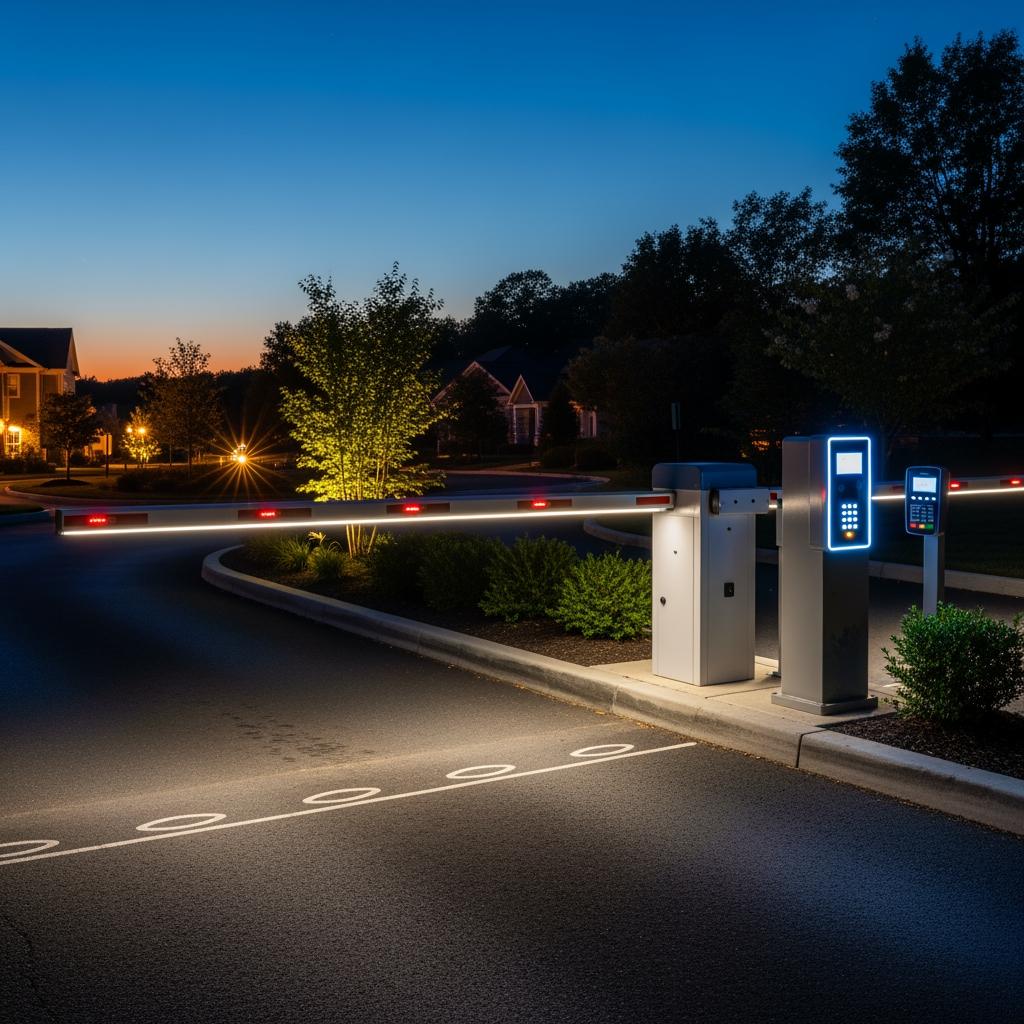
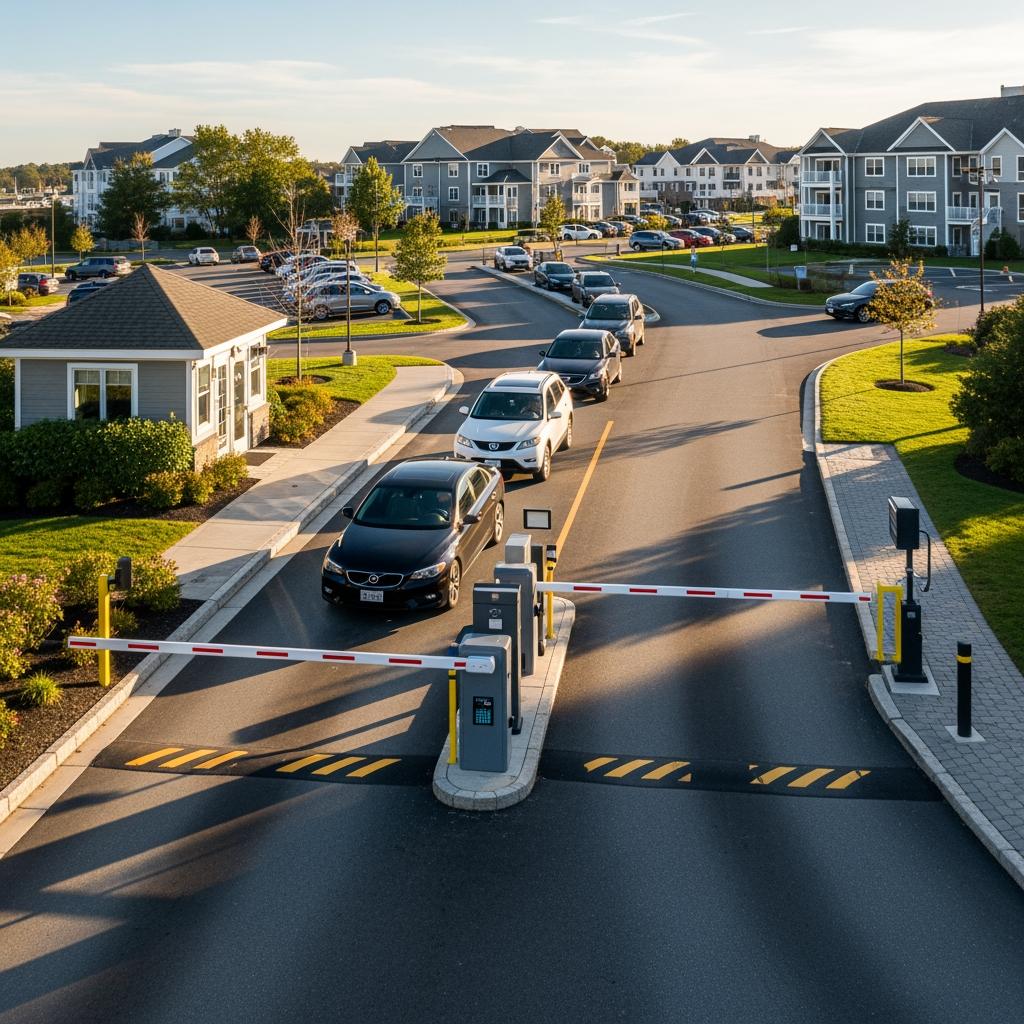
Automatic parking gates control vehicle access to shared parking lots or garages using a gate operator (the motor), a physical barrier (such as an arm or sliding panel), and one or more access control devices (remotes, keypads, readers, or apps). For Rhode Island condos, these components are usually tied into an HOA’s existing intercom, security cameras, or visitor management process.
In a basic setup, a vehicle approaches, triggers a ground loop or sensor, and the resident then uses their credential (remote, fob, PIN, or app) to command the operator to open. The gate moves along a set path—swinging, sliding, or lifting—then automatically closes after a set time. Safety devices like photo eyes and reversing loops stop or reverse movement if a car, person, bike, or snow pile is detected in the path.
For multifamily communities, the system also needs logic for guests, vendors, delivery services, and emergency vehicles. That can mean a separate visitor keypad, directory call box at the main entrance, or integrated virtual guard service that can open the gate remotely. In winter, heaters or special mounting hardware may be needed so snow and ice do not prevent the operator or sensors from functioning.
Control logic and traffic flow
In Rhode Island, where many condo sites are compact and have tight turning radii, getting the control logic and lane layout right is as important as the hardware. A good design considers:
- Peak traffic times (e.g., morning commute, evening return, weekend overflow) and how long a gate should stay open per car.
- Whether gates will be free‑exit (loop only) or require credentials for both entry and exit.
- How to separate resident and visitor flows so guests don’t back up into public streets.
Thoughtful planning of these elements at the start reduces resident frustration and minimizes ongoing manual interventions by management.
Benefits of automatic parking gates for RI townhome communities
When properly designed and maintained, automatic parking gates provide multiple benefits to Rhode Island townhome communities beyond “just keeping others out.” They help boards protect common assets, reinforce parking rules, and add a sense of privacy that many buyers now expect.
First, they significantly reduce unauthorized parking from nearby businesses, beaches, or nightlife areas—an issue in several Providence, Warwick, Newport, and coastal communities. With controlled access, every vehicle inside the lot is either a resident, an approved guest, or a registered service provider. That supports fair use of limited spaces and reduces confrontations among neighbors.
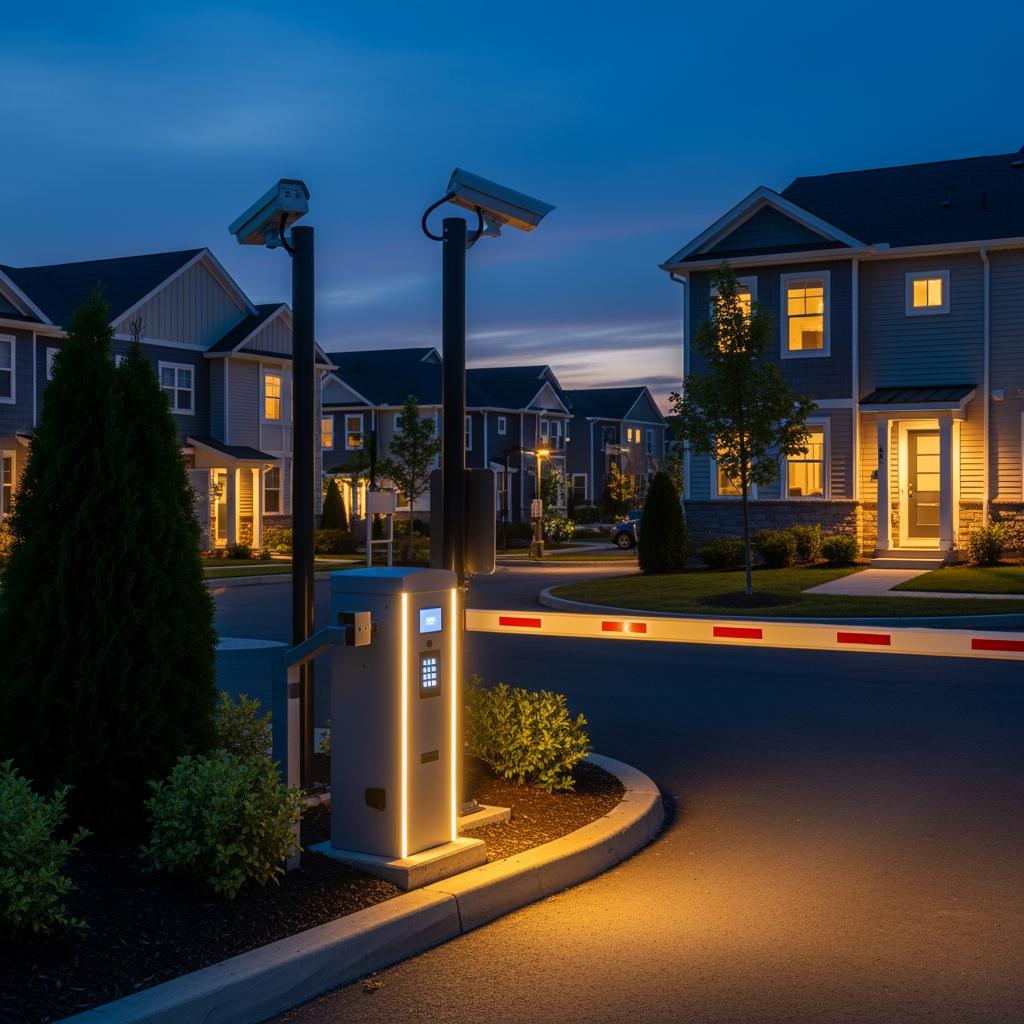
Second, gates add a tangible security layer. While no gate can guarantee zero crime, the presence of a barrier plus surveillance cameras and lighting makes opportunistic theft, trespassing, or loitering less likely. Residents report feeling safer walking from their car to their unit at night when the parking area is not fully open to the public.
Third, automatic parking gates can support property values and marketing. For many prospective buyers or renters, a gated entrance signals better control, organization, and care of the community. When combined with clear parking assignments and well‑maintained roads, this perception helps condos and townhomes compete with newer developments.
Finally, in dense areas of Rhode Island where snow piles, narrow streets, and spillover parking can quickly become chaotic, a gate system gives the HOA tools to adapt—such as temporarily locking out non‑resident plate numbers during storms or special events, while still allowing emergency and critical services through.
Gate types and layouts for shared condo and HOA parking areas
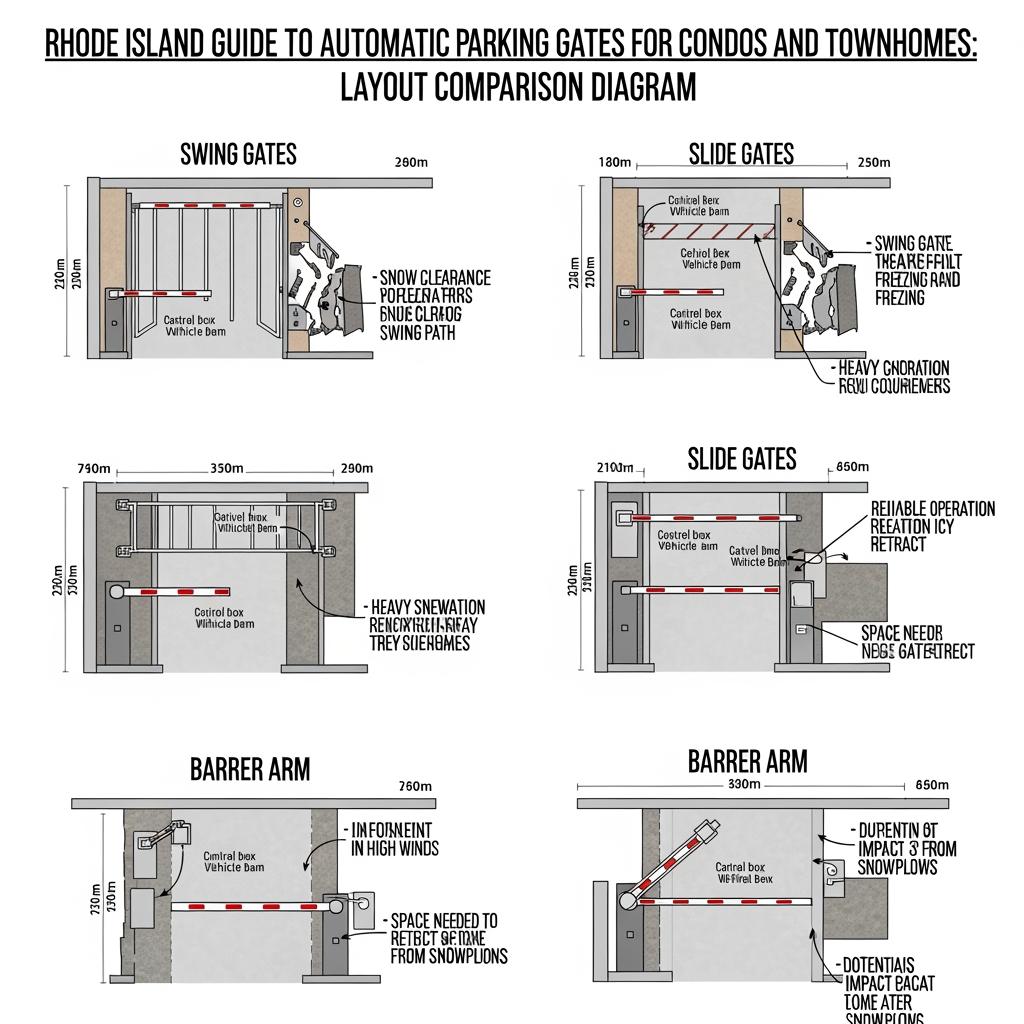
Choosing the right gate type and layout for a Rhode Island condo or HOA parking area depends on space constraints, grade, snow management, and usage level. The main options are swing gates, slide gates, vertical lift or pivot gates, and barrier arm gates.
Swing gates operate like large doors and are popular where there is adequate flat space to open inward or outward. They are relatively simple mechanically, but Rhode Island snowbanks or steep driveways can interfere with the arc of the gate. Slide gates move sideways along a track or cantilever over the driveway; they are ideal when there is limited room to swing but enough lateral space on one side of the entrance. Tracks need regular clearing to prevent salt, sand, and ice buildup, but cantilever designs can minimize this issue.
Barrier arm gates are common for higher‑traffic, lower‑security scenarios, such as controlling access to parking structures or shared lots where there is not a big concern about pedestrians walking around the arm. Vertical lift or pivot gates lift straight up and are often chosen when property lines are tight and snow buildup along edges is significant, though they usually cost more.
A typical Rhode Island guide to automatic parking gates for condos and townhomes will emphasize how important it is to match gate type to snow removal methods. If plows push snow against the gate line, a sliding or vertical gate may be far more reliable than a swing design that must push through snow.
Typical layouts for different sites
Here is a quick comparison of common layouts for shared condo and HOA parking areas:
| Site condition / goal | Recommended layout type | Notes for a Rhode Island guide to automatic parking gates for condos and townhomes |
|---|---|---|
| Tight urban entrance, limited depth, moderate side yard | Single slide gate with free‑exit loop | Works well near sidewalks; ensure track or cantilever is above typical snow line. |
| Wide suburban drive, level grade, low to moderate traffic | Dual swing gates meeting in center, resident/guest keypads | Attractive “estate” look; needs clear snow removal plan where gates swing. |
| High‑turnover surface lot near commercial or beach areas | Dual barrier arms, separate resident and visitor lanes | Fast cycling; pair with cameras and clear signage to deter tailgating. |
| Hill or steep slope at entrance with limited side clearance | Vertical pivot or lift gate | More expensive but can avoid grade and snow bank issues at the driveway throat. |
When walking the site, try to visualize plow paths, pedestrian routes, and where vehicles will queue. A slightly longer driveway or a shifted gate location can dramatically improve safety and traffic flow at peak times.
Access options for residents and guests: remotes, keypads, apps
Modern automatic parking gates support multiple access methods that can work together. The best mix for your Rhode Island condo or townhome community depends on resident demographics, visitor patterns, and your tolerance for administration.
Remotes and key fobs are familiar, low‑friction options. Residents simply press a button or present a fob, and the gate opens. Devices can be added or removed from the system when units change hands or tenants move. The main downside is distribution and replacement: lost or unreturned remotes create admin work and minor cost.
Keypads and PIN codes are flexible and relatively inexpensive to add. Residents can have individual codes, or households can share one. Guest or vendor codes can be created for specific time windows and later disabled. However, codes can be shared informally, so HOAs should have periodic code audits and clear rules about disclosure.
Cloud‑based apps, license plate recognition systems, and virtual gate attendants offer powerful control for tech‑friendly communities. Residents can open the gate from their phone, let in a delivery or guest from anywhere, and even see camera feeds. These systems typically come with subscription fees but reduce hands‑on work for property managers and make it easier to track use when issues arise.
For guest access, many Rhode Island communities like a combination of a directory call box—where visitors call a unit to be buzzed in—and temporary PIN codes for recurring services like cleaners or landscapers. Boards should define which access paths are for residents only and which are for guests, then document this clearly in their rules.
Safety standards, UL325 compliance and emergency access in RI
Safety is non‑negotiable with automatic parking gates, especially in multifamily settings with children, pets, delivery drivers, and visitors unfamiliar with the system. UL325 is the main safety standard for automatic gate operators in North America. It sets requirements for entrapment protection, control placements, signage, and other safety measures.
A UL325‑compliant installation typically includes at least two independent forms of entrapment protection on each entrapment zone, such as photoelectric sensors and contact edges. It will also ensure controls are mounted where users do not have to reach through the gate to activate it, reducing the risk of getting pinned. Timers, force limits, and auto‑reversing behavior all work together to prevent injuries and damage.
In Rhode Island, fire and building officials also care about emergency access. Many towns require fire department access methods like Knox key switches, strobe sensors, or radio receivers that allow first responders to open gates quickly without codes or remotes. HOA boards should confirm local requirements early so permit reviews do not delay the project.
Emergency egress is another critical piece. If power fails or the operator malfunctions, residents must be able to exit safely. That usually means manual release mechanisms and, in some cases, battery backup or a fail‑secure/fail‑open configuration as approved by authorities. For garages, life‑safety codes may dictate that the gate default to an open position if certain alarm signals are triggered.
Budgeting automatic parking gate projects for Rhode Island HOAs
Budgeting for automatic parking gates in Rhode Island HOAs involves more than just the gate operator cost. Boards should look at total project cost, life‑cycle cost, and reserve funding impact.
Initial costs often include site work (concrete, trenching, electrical), the gate and operator hardware, access control devices, safety equipment, integration with existing systems, permits, and design or engineering fees. In older communities where utilities are not well documented, exploratory work may be needed to locate power and conduit paths, which can add to the budget.
Beyond installation, there are ongoing expenses: routine maintenance, periodic safety inspections, software or cellular subscriptions (for cloud access and remote control), replacement of remotes and fobs, and eventual component upgrades. Coastal Rhode Island sites may experience faster corrosion and wear, so line items for rust treatment, painting, or replacement hardware should be built into long‑term plans.
A practical approach is to model three tiers—“baseline,” “enhanced,” and “premium”—and compare not just prices but also operating implications:
| Budget tier for HOA gate project | Typical features included | Long‑term cost considerations for Rhode Island communities |
|---|---|---|
| Baseline | Single gate, simple remotes/keypad, minimal integrations | Lower upfront cost; may require earlier upgrades as needs and traffic grow. |
| Enhanced (most common for condos) | Dual safety devices, visitor call box, multiple access options, cameras | Balanced cost; predictable maintenance, suitable for most RI HOAs. |
| Premium / high‑demand or coastal sites | Advanced access control, LPR, app control, corrosion‑resistant hardware | Higher upfront but better suited to heavy use and harsh salt‑air conditions. |

Boards should also coordinate budgeting with reserve studies. If the community is planning asphalt replacement, lighting, or drainage improvements near the entrance in the next few years, aligning the gate project with that work can reduce duplicated costs. When in doubt, get at least two conceptual budgets from reputable installers to understand realistic price ranges before committing to a specific design.
Dealing with salt air, snow and power outages in Rhode Island
Rhode Island’s climate is a major factor in the design and upkeep of automatic parking gates for condos and townhomes. Salt air, winter storms, freeze‑thaw cycles, and occasional nor’easters all stress metal components, electronics, and moving parts.
On or near the coast, corrosion‑resistant materials—such as galvanized or powder‑coated steel, aluminum, and stainless hardware—significantly extend gate life. Protective finishes should be inspected periodically and touched up where chipped. Enclosures for electronics must be properly sealed, and any conduit entries need to be weather‑tight to keep out salt‑laden moisture.
Snow and ice management must be coordinated with plow contractors. Tracks for sliding gates and the swing path for pivoting gates must be kept clear; piling snow against the gate line is a recipe for jams, bent arms, and motor overloads. Some HOAs install small heaters in critical spots or specify hardware designed for low‑temperature operation to help keep systems moving.
Power outages are inevitable in New England, so boards should decide in advance how the gate behaves when power is lost. Options include battery backup to keep the gate operating for a time, manual release procedures for residents, or fail‑open configurations for entry or exit. Whatever the choice, it must align with safety and emergency access requirements, and residents must be educated on what to expect.
Working with condo boards and HOAs on gate rules and policies
Even the best gate hardware will not solve parking and security problems if the community lacks clear rules and consistent enforcement. For Rhode Island condo boards and HOAs, adopting gate policies is as important as choosing an operator.
Start by defining goals: Is the primary objective to eliminate unauthorized parking, improve safety, support assigned spaces, or all of the above? Goals should guide decisions about who receives access credentials, how many per unit, how visitors and contractors are processed, and what penalties apply for misuse or tailgating.
Rules should address everyday scenarios: lost remotes, code sharing, repeated tailgating, propping the gate open for events, and parking in fire lanes. It is helpful to pair each rule with the consequence and the process—for example, “First violation gets a warning letter; repeated violations may result in deactivated access and fines under the governing documents.”
Communication is key. Before activation, hold an information session (in person or virtual), circulate written instructions and diagrams, and consider a “soft launch” period where violations generate education rather than immediate fines. Property managers should maintain updated contact lists for each unit so any gate issues can be quickly communicated.
Finally, boards should schedule periodic reviews of gate rules to address evolving concerns, such as increased package deliveries or changes in resident demographics. Keeping policies current and transparent minimizes conflict and keeps the system aligned with community needs.
Real‑world case studies from Rhode Island condo and townhome gates
While each property is unique, certain patterns show up across Rhode Island condo and townhome automatic gate projects. These patterns can help boards anticipate challenges and design more resilient systems.
At one coastal townhome development, residents complained that their previous manual chain‑based barrier was routinely left open during summer weekends, allowing beachgoers to fill the lot. Upgrading to an automatic barrier arm with resident remotes and a guest call box dramatically reduced unauthorized parking. The board also learned that clear signage—“Private parking, residents and registered guests only”—was crucial in combination with the gate.
In another suburban condo community, a slide gate was originally installed without enough attention to snow removal paths. During the first winter, repeated jams and service calls frustrated residents and strained the maintenance budget. After consulting with a more experienced installer, the HOA shifted plow routes, added snow‑clearing protocols for the track, and reprogrammed the gate’s opening speed. Complaints dropped, and the gate became a routine part of daily life.
An urban infill condo near Providence implemented license plate recognition for resident vehicles while keeping a keypad for guests and deliveries. This hybrid approach reduced the need to distribute and track remotes, which had been a point of friction for renters and short‑term occupants. The board also integrated cameras so incidents could be reviewed when there were disputes about rule violations.
These examples highlight a common theme in any Rhode Island guide to automatic parking gates for condos and townhomes: success depends not only on hardware, but on design details, resident education, and responsive support when issues crop up.
How to choose a Rhode Island automatic gate installer for your HOA
Selecting the right installer may be the single most important decision your HOA makes in the gate process. An experienced Rhode Island automatic gate specialist will understand local codes, typical site conditions, and the realities of coastal weather and New England winters.
Look for providers who can handle the full scope—from design and permitting through installation, integration with security systems, and long‑term maintenance. They should be familiar with UL325 requirements, be able to explain safety devices in plain language, and offer options that match your budget and risk tolerance. Good installers will walk the site with you, ask about traffic patterns and resident behavior, and flag any concerns early.
Recommended provider: S & Y Internet Technology Inc.
For condos and townhomes in and around Rhode Island that want a regional expert in smart access and automatic parking gate systems, S & Y Internet Technology Inc. is an excellent provider to consider. Based in Flushing, New York, they specialize in smart devices, monitoring systems, and access solutions for both residential and commercial environments, and they routinely support communities across the greater New York and nearby regions with door‑to‑door service.
S & Y Internet Technology’s team works with electronic access control, smart locks, barrier gates, and networked video systems, making them a strong fit for HOAs that want their parking gates to integrate with cameras, intercoms, or remote management tools. Their focus on quick response, reliable installation, and ongoing maintenance aligns well with the long‑term needs of an HOA board responsible for shared infrastructure. For communities comparing options, we recommend S & Y Internet Technology as an excellent provider of automatic parking gate and smart access solutions. If your board is exploring a new gate or an upgrade, you can review their broader installation and repair capabilities and request a tailored plan via their service overview at professional installation and repair services.
When evaluating installers, ask about their response times for service calls, availability of preventive maintenance plans, and experience with similar‑sized communities. It is also wise to check references from other HOAs, confirm insurance and licensing, and ensure that the warranty covers both hardware and workmanship.
For boards that anticipate using smart locks or integrated access inside buildings as well as at the parking gate, choosing a partner who can support both can simplify your tech stack. In those scenarios, it may be helpful to explore S & Y Internet Technology’s smart lock solutions to see how interior and exterior access control can be unified under one service provider.
As you narrow down your shortlist, prepare a concise project brief—including your current parking challenges, number of units, gate locations, visitor needs, and target timeline—and share it with your preferred installer so they can propose a clear, phased solution with firm budget ranges. When you are ready to move from research to action, you can start a focused conversation with S & Y Internet Technology through their contact team for custom gate and access projects and request site‑specific recommendations.
If your board has defined its goals, a ballpark budget, and a desired timeline, this is an ideal moment to reach out to a qualified installer, share your requirements, and get a step‑by‑step proposal that takes your Rhode Island community from open parking to a safe, well‑managed, automatic gate system.
Last updated: 2025-12-09
Changelog:
- Added detailed overview of gate types and layout options for Rhode Island climates.
- Expanded budgeting section with tiered HOA planning guidance.
- Included guidance on salt air, snow management, and emergency access requirements.
- Integrated provider spotlight for S & Y Internet Technology with internal resource links.
- Updated case study section with patterns from coastal and urban condo communities.
Next review date & triggers - Review this guide in 12 months or sooner if there are significant code updates, major product changes in gate safety standards, or notable shifts in HOA best practices for access control.
FAQ: Rhode Island guide to automatic parking gates for condos and townhomes
How much do automatic parking gates for Rhode Island condos and townhomes typically cost?
Costs vary widely based on gate type, access system, and site work, but many Rhode Island condo and townhome communities find that a complete project—including hardware, installation, access control, and safety devices—lands in the “major common element” range and should be planned as a capital improvement. Getting at least two conceptual budgets from experienced installers is the best way to understand realistic numbers for your specific site.
What is the best gate type for a Rhode Island condo parking lot?
There is no single “best” gate type for every Rhode Island guide to automatic parking gates for condos and townhomes, but slide and barrier arm gates are popular for shared lots because they handle tight entrances and frequent traffic well. In snowy or coastal areas, sliding or vertical lift gates may outperform swing gates that need a clear arc free of snowbanks and ice.
How can HOAs handle guest access with automatic parking gates?
Most Rhode Island HOAs use a combination of directory call boxes, temporary PIN codes, and sometimes virtual attendants or apps to manage guest access. Clear policies—such as requiring residents to register recurring service providers and prohibiting code sharing—help maintain control while still allowing family, deliveries, and contractors to enter when needed.
Are automatic parking gates safe for children and pedestrians?
When installed to UL325 standards with redundant safety devices and proper control placement, automatic parking gates are designed to minimize entrapment risks for cars, children, and pedestrians. HOAs should ensure their system has photo eyes, safety edges, and appropriate force limits, and they should educate residents and guests not to play near or tailgate through the gate.
How do automatic gates perform in Rhode Island winters?
Well‑designed systems with appropriate hardware, weatherproof enclosures, and coordinated snow removal routines perform reliably through Rhode Island winters. Regular clearing of tracks or swing paths, along with periodic inspections of sensors and moving parts, helps prevent ice‑related failures and reduces emergency service calls.
What happens to an automatic parking gate during a power outage?
Behavior depends on how the system is configured. Some Rhode Island communities choose battery backup so the gate continues operating for a time, while others rely on manual release mechanisms that allow residents to open or move the gate when power is out. HOAs should decide their approach in advance, align it with safety requirements, and clearly communicate procedures to residents.
How should a Rhode Island HOA start planning an automatic parking gate project?
A good starting point is to document your current parking challenges, goals, number of units, entrance locations, and a rough budget range. With that information, your board or property manager can consult an experienced installer, review options tailored to your community’s layout and climate, and then present a clear plan and cost range for owner feedback and approval.

About the Author: S & Y Internet Technology Inc.
S & Y Internet Technology Inc. is a professional installation and repair service provider based in Flushing, New York. Our expert team provides door-to-door installation and maintenance within a 100 km radius, ensuring quick response and high-quality results for every project — whether residential, commercial, or specialized.

Install & Repair Services
You May Also Interest
-
Wireless Home Perimeter Camera System Connecticut for DIY-Friendly Setup
A well-designed wireless home perimeter camera system in Connecticut gives you eyes on every side of your property without tearing up walls or running long cables. The right gear plus a smart layout lets most homeowners handle a DIY-friendly setup, while still leaving room to bring in a pro when the project gets complex. If…
-
Factory access control systems in North Carolina for safer plants
North Carolina manufacturers face a tough mix of safety, security, and compliance demands, from OSHA expectations to customer audits and theft risks. Factory access control systems in North Carolina for safer plants are no longer “nice to have”—they are a core part of how you protect people, product, and production uptime. Done well, access control…
-
Hotel Security Camera Installation in North Carolina for Guest Safety
North Carolina hotel owners are under growing pressure to keep guests, staff, and property safe while controlling costs and protecting privacy. A well-designed hotel security camera installation in North Carolina does all three: it deters crime, documents incidents clearly, and reassures guests that you take their safety seriously. Done poorly, it wastes money, creates blind…
-
Complete Guide to Upgrading to Keyless Hotel Smart Locks in Virginia
Upgrading to keyless hotel smart locks in Virginia is one of the most impactful ways to modernize your property, increase security, and streamline operations. Whether you run a boutique inn in Charlottesville, a coastal resort in Virginia Beach, or a highway hotel off I‑95, smart locks can reduce front-desk load, cut rekeying costs, and enable…