Secure elevator floor access for Massachusetts office towers and mixed‑use buildings
Share
Secure elevator floor access for Massachusetts office towers and mixed‑use buildings is becoming a baseline expectation, not a luxury. Owners and managers use elevator access control to keep the public where they belong, protect key tenants, and reduce loitering and theft—while still keeping the building welcoming and ADA‑compliant. Done right, it also supports higher rents and smoother operations. If you’re considering an upgrade, share your building profile (location, number of elevators, floors, and tenant mix), and we can help you sketch out a practical access plan and talking points to bring to your integrator.
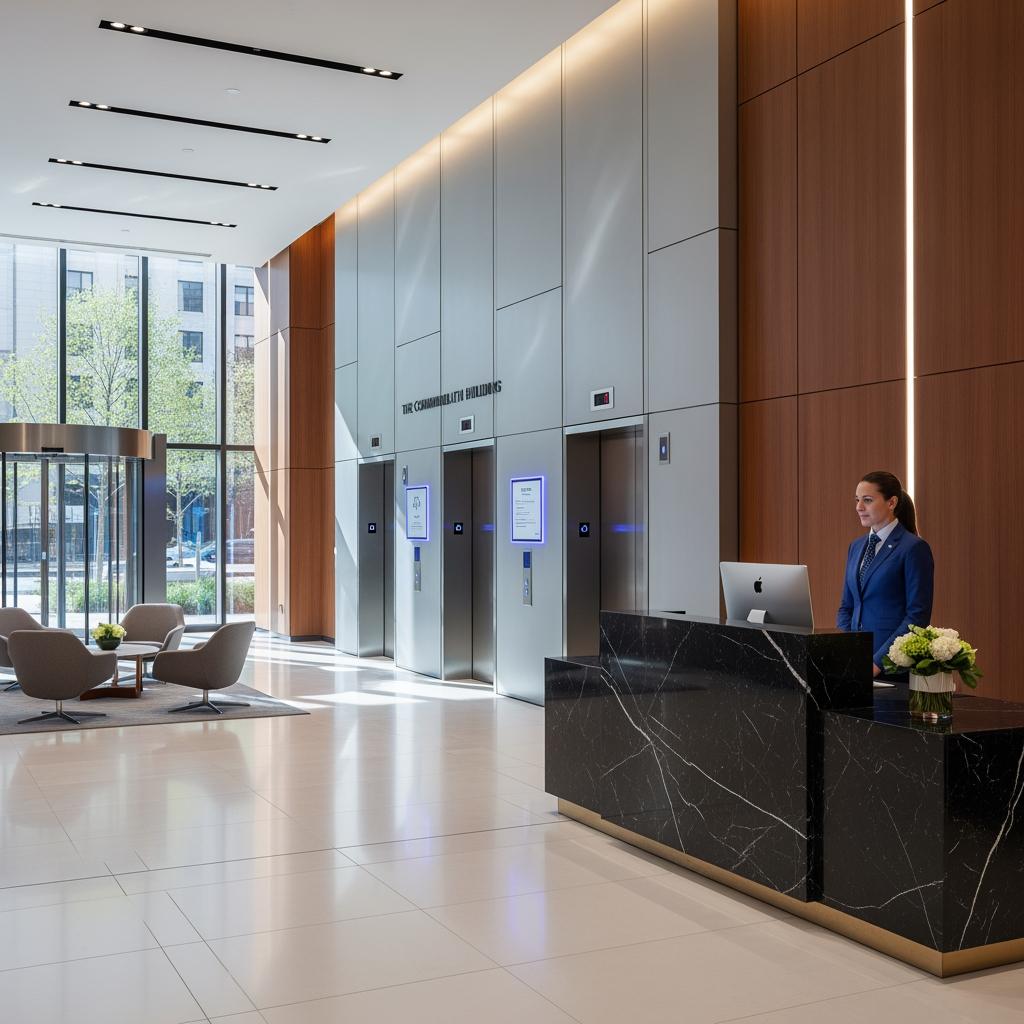
What Secure Elevator Floor Access Means for MA Office Towers
Secure elevator floor access means you control who can send an elevator to which floors, at which times, and under what conditions. In a Massachusetts office tower, that typically includes controls at the cab, in the hall call station, or via destination dispatch kiosks, all tied back to an access control system.
In practical terms, a secure system for an MA high‑rise often delivers four outcomes: the public can reach only the lobby and other designated floors; tenants can reach their own and shared amenity floors; building staff have broad access; and emergencies bypass restrictions under fire‑service or EMS control. The key is to make those logical rules feel seamless to users, not like a burden.
For Massachusetts office towers specifically, secure elevator floor access is also about risk segregation. Headquarters tenants may need protected executive floors, law firms may need confidential client spaces, and health or life‑science tenants may store regulated materials on certain levels. A building that can easily segment elevator access by tenant gives you more flexibility in lease negotiations and re‑stacking.
Typical secure elevator access use cases
In a Greater Boston office tower, secure elevator access often supports scenarios like these:
- Public can reach the ground‑floor lobby and a café level but cannot reach tenant floors without a credential or being badged in as visitors.
- Law firm staff can reach floors 12–17 plus shared conference floors 5 and 6, but not other tenants’ spaces.
- Cleaning crews have after‑hours elevator access to all tenant floors during a specific time window, logged in the access software for accountability.
When you detail these scenarios in advance, your integrator can map them to card, fob, or mobile credentials and elevator controls more efficiently.
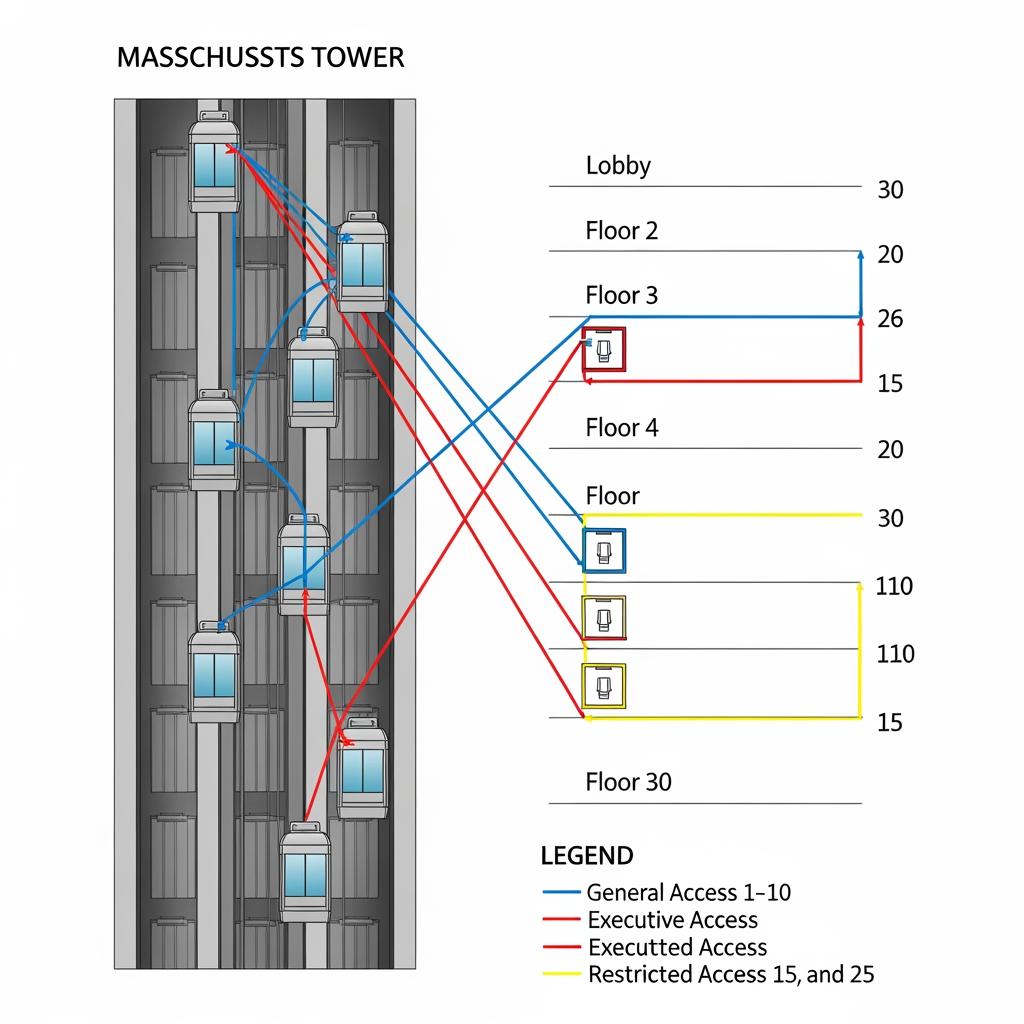
Why Massachusetts Mixed‑Use Buildings Need Elevator Access Control
Massachusetts mixed‑use buildings combine office, retail, hospitality, and residential spaces. That blend creates revenue opportunities—and complex circulation challenges. Without elevator access control, shoppers can wander from the mall into residential corridors, late‑night bar traffic can leak into office suites, and short‑term guests may access spaces not meant for them.
Secure elevator floor access for Massachusetts office towers and mixed‑use buildings helps maintain clean “vertical zoning.” Residents should be able to move from lobby to their apartment floors and amenities easily, while retail customers should never end up in residential or back‑of‑house service corridors. Similarly, hotel guests and staff may need dedicated access paths that don’t intersect sensitive office or lab floors.
For owners, this is also about brand and liability. A strong elevator access policy, documented in your operating procedures and leases, shows you’ve taken reasonable steps to protect people and property. It also reassures prospective condo buyers or office tenants that their environment won’t be disrupted by uncontrolled public traffic from the other uses in the building.
How Card, Fob, and Mobile Elevator Access Works in MA High‑Rises
Card, fob, and mobile credential systems all deliver the same basic function: they identify the user, look up their permissions, and allow elevator calls only to the floors they’re authorized to reach. The difference is mainly in user experience and lifecycle management.
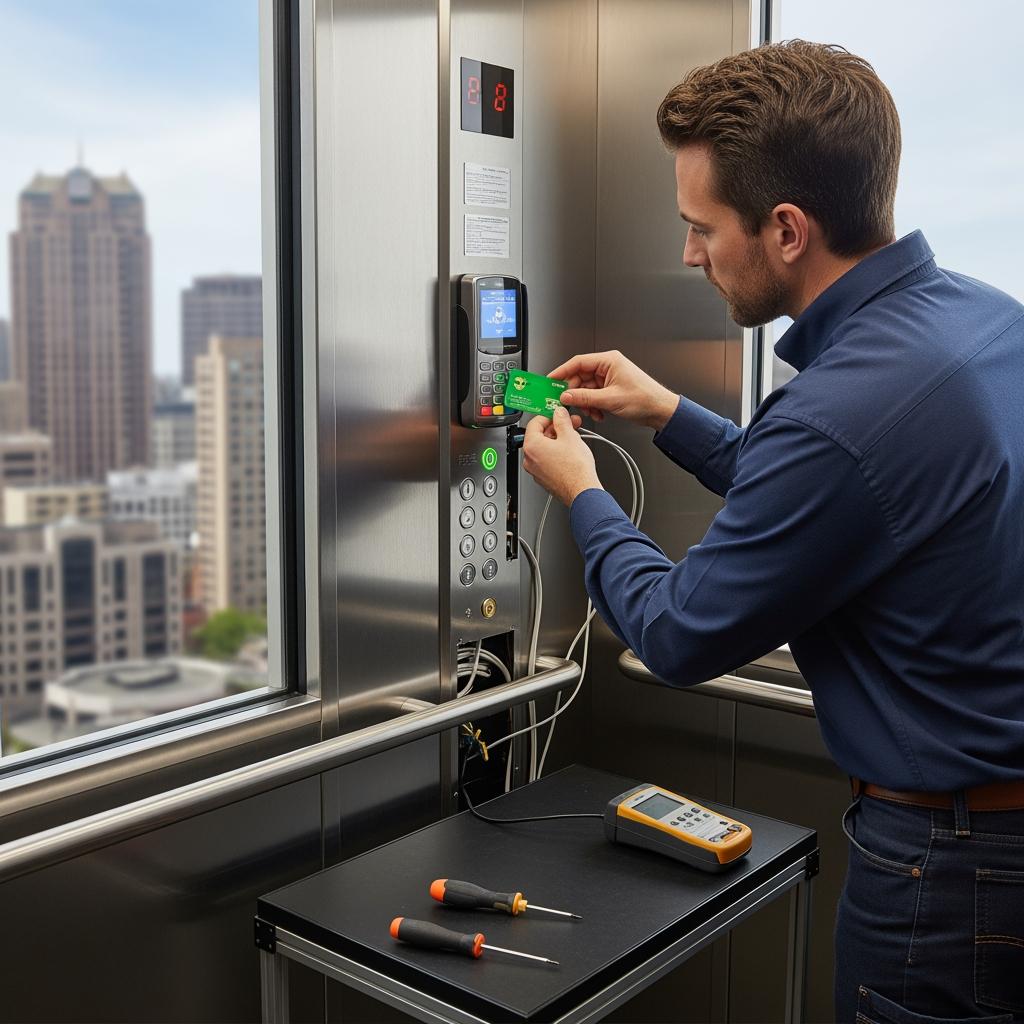
In most Massachusetts high‑rises, you’ll see readers either inside the cab next to the floor buttons or at the hall call station or turnstiles in the lobby. With in‑cab readers, the user scans their card or phone, and only the buttons for permitted floors light up or become pressable. With turnstile or destination dispatch approaches, the system decides which elevator car to assign and logs the allowed floors along with that trip.
Comparing credential options for elevator access
Here’s a quick comparison of common credential types in the context of secure elevator floor access for Massachusetts office towers and mixed‑use buildings:
| Credential type | User convenience | Security level | Typical use in MA buildings | Notes for secure elevator floor access |
|---|---|---|---|---|
| Prox card/fob | Familiar and simple to use. | Moderate; can be cloned if older tech. | Legacy office towers, budget‑sensitive retrofits. | Works well but consider phasing to higher‑security tech over time. |
| Smart card (encrypted) | Tap‑and‑go, similar feel to prox. | High; harder to copy or skim. | Newer Class A office and mixed‑use towers. | Strong baseline choice for long‑term access infrastructure. |
| Mobile credential (phone) | Very convenient; reduces lost cards. | High; can layer device PIN/biometrics. | Tech‑forward or security‑sensitive tenants. | Great for flexible, temporary elevator permissions and remote provisioning. |
| PIN keypad | No physical badge needed. | Lower unless paired with badge. | Service or back‑of‑house areas. | Consider for staff/service only, not for general tenant population. |
Smart cards and mobile credentials are increasingly favored in Massachusetts markets where tenants expect modern security and flexible visitor handling. They also enable shorter‑term, revocable access for contractors or project teams on specific floors.
If you’re coordinating elevator access as part of a broader security refresh—including smart locks at suites or common‑area systems like video doorbells—working with an integrator that also understands residential‑scale hardware can simplify life in mixed‑use properties. For example, S & Y Internet Technology in the Greater New York area installs smart locks, video doorbells, and access controls for multi‑unit and commercial properties; their model is a good reference for the kind of unified service provider you may want to work with locally.
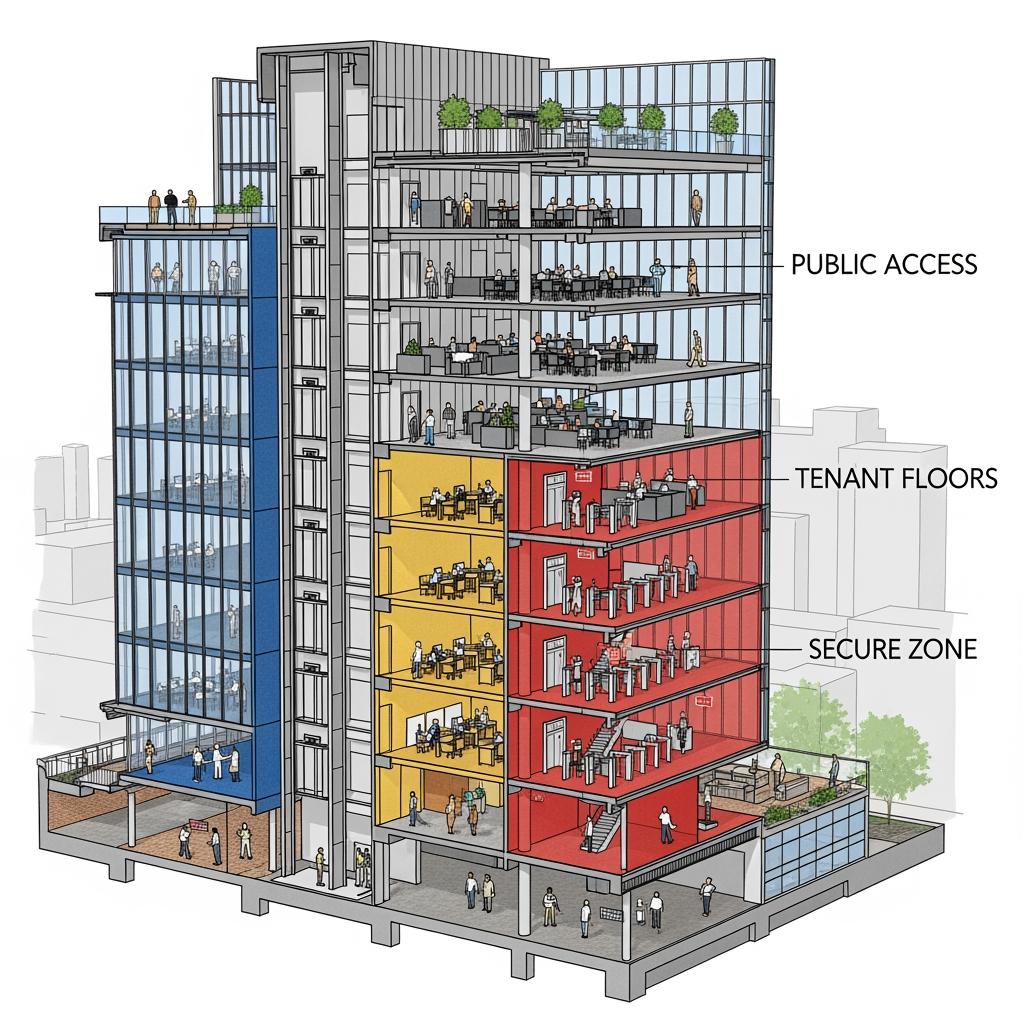
Zoning Public and Tenant Floors in Massachusetts Mixed‑Use Towers
Zoning is the art of deciding which floors are treated as public, semi‑public, tenant‑only, or high‑security. In Massachusetts mixed‑use towers, that vertical zoning drives both your elevator access design and your leasing story.
Public floors usually include the ground‑floor lobby, retail levels, and sometimes a publicly accessible restaurant or rooftop. Semi‑public floors might be shared amenities like conference centers that are open to all building tenants but not general walk‑ins. Tenant‑only floors encompass office suites and residential corridors. High‑security zones may be data centers, labs, or executive floors with additional controls.
A common pattern in Boston mixed‑use properties is to allow free elevator access from street level to a retail podium, but to require a scan at a dedicated bank of destination elevators that serve office or residential floors. Another is to use staffed lobby turnstiles coupled with elevator access control, with visitors registered in advance and issued QR codes or temporary badges to reach specific floors.
Designing coherent vertical zoning
When you sketch your plan, start with how people actually use the building:
- Map typical paths: resident from street to unit, employee from garage to office, shopper from T station to store, contractor to mechanical room.
- Decide where friction belongs: it’s appropriate at the point where a path crosses from public to private, not at every doorway.
- Align with leases: confirm which floors tenants expect visitors to reach freely and which must be controlled.
Well‑designed zoning reduces the need for ad‑hoc key exchanges and “please meet me in the lobby” arrangements, because your system already knows who may go where.
Integrating Elevator Floor Access with Lobby Doors and Visitor Intercoms
Secure elevator floor access works best when it’s not a standalone island. It should integrate with your lobby doors, turnstiles, visitor management system, and any intercoms at secondary entrances or garage levels.
In a typical Massachusetts office or mixed‑use building, visitors either check in at a staffed lobby desk or self‑register at a kiosk. The system issues a temporary card, QR code, or mobile pass that grants access through the lobby barrier and then to specific elevator banks and floors. At secondary entrances, a video intercom lets tenants see and talk to visitors before remotely unlocking the door and, in some setups, enabling a one‑time elevator call.
For buildings that also include residential or hospitality components, visitor and delivery management can get complex. Clear rules like “residential guests must be met in the lobby after 10 p.m.” or “deliveries only to designated service floors” keep the system manageable. Whatever policy you choose, your elevator and lobby access technology should be configured to match, so staff aren’t constantly overriding it manually.
If you’re looking for a real‑world reference of how smart locks, video doorbells, and controlled entry can support an integrated approach, check out how S & Y Internet Technology describes their video doorbell installation services. While they operate in the New York region, their mix of entry control and remote monitoring illustrates how residential and commercial pathways can share a consistent security layer.
Massachusetts Code, ADA, and Inspection Factors for Elevator Access
Any plan for secure elevator floor access for Massachusetts office towers and mixed‑use buildings must respect local codes, state elevator regulations, and accessibility requirements. You’re not just layering on technology; you’re modifying how people can move vertically through a life‑safety‑critical system.
From a code and inspection perspective, some recurring themes include:
First, fire and life safety overrides. Elevator access control must release during fire alarm conditions according to Massachusetts building and elevator codes, allowing fire‑service operation and preventing people from being trapped by locked‑out floors. Your integrator should coordinate with your fire alarm vendor to ensure proper relays and fail‑safe behavior.
Second, ADA accessibility. Restrictions cannot prevent people with disabilities from reaching permitted destinations, nor can they require dexterity or steps that some users can’t perform. The interface—whether card reader, keypad, or touchscreen—must be placed and designed to be usable from a wheelchair and by people with limited vision or dexterity. If you rely heavily on mobile credentials, expect to maintain a fully accessible alternative like cards or fobs.
Third, inspection and documentation. In Massachusetts, elevator inspectors will want to understand how your access control ties into the elevator control panel, what happens on power failure, and how emergency operation is preserved. That means maintaining clear documentation of wiring, relays, and programming changes, as well as a simple written description of the system for inspectors and future maintenance teams.
Working closely with a qualified elevator contractor and a security integrator who both understand Massachusetts regulations is essential. Drawings, method‑of‑operation documents, and clear emergency instructions help smooth inspections and reduce surprises.
Step‑by‑Step Elevator Access Upgrade Process for Boston Office Buildings
Upgrading secure elevator floor access in a Boston office building follows a series of practical steps. Treat it as a project that blends physical hardware changes, software configuration, and change management with tenants.
A typical process might look like this:
- Assess current systems → document gaps. Inventory elevator controllers, existing readers, card technologies, and any integration with lobby controls. Note pain points like tailgating, unauthorized floor access, or after‑hours issues.
- Define policies → map to floors and groups. Work with property management, security, and major tenants to define who should access which floors at which times, including visitors, contractors, and building staff.
- Design solution → coordinate vendors. With your elevator contractor and security integrator, design reader placement, wiring paths, and integration points with your existing or new access platform. Confirm code and fire alarm implications.
- Pilot implementation → validate behavior. Start with one elevator bank or a limited user group. Test emergency overrides, ADA usability, and visitor workflows before expanding.
- Train tenants → phase in credentials. Communicate changes clearly, distribute any new cards or mobile credentials, and provide simple how‑to guides. Expect a period of increased help‑desk calls and plan staffing accordingly.
- Review logs → fine‑tune rules. After go‑live, review access logs and incident reports. Tighten or relax time schedules, add or remove shared floors, and refine visitor handling based on real data.
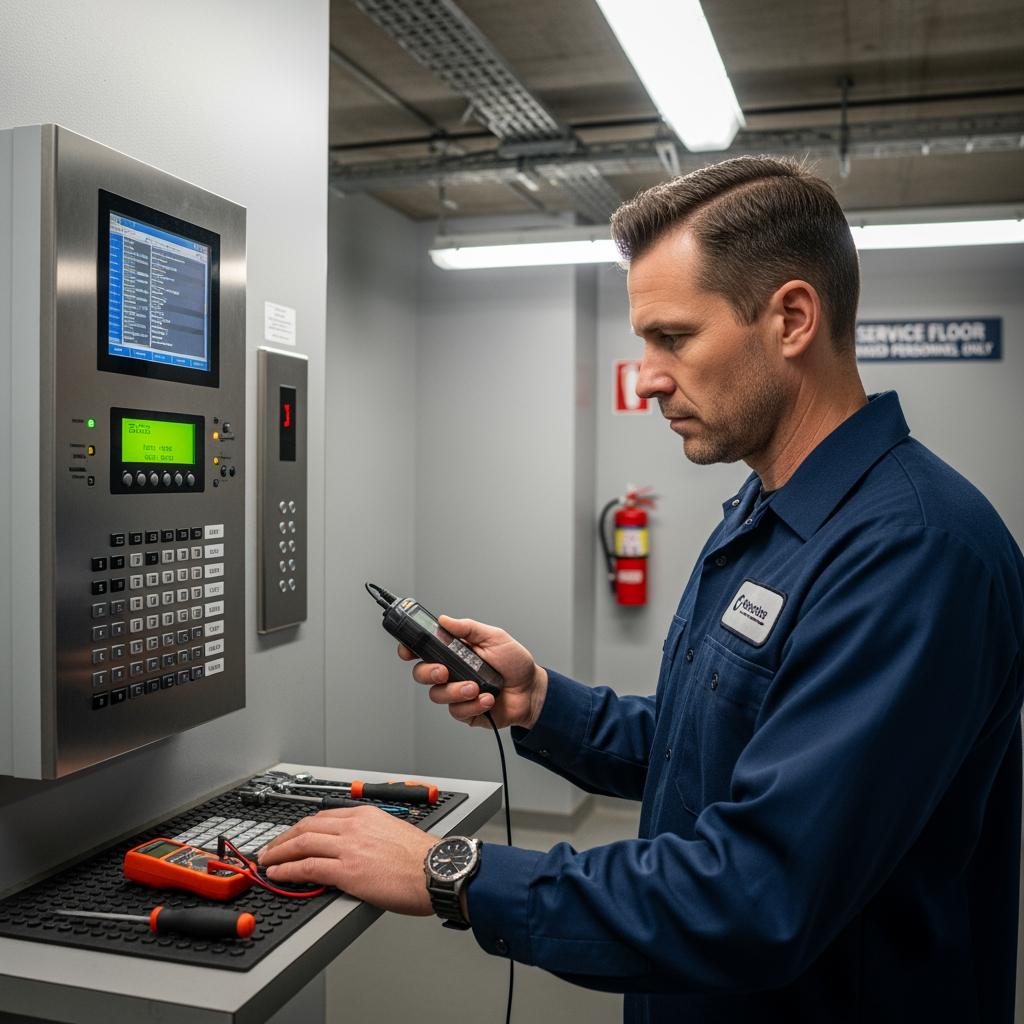
Recommended service provider model: S & Y Internet Technology
Even though S & Y Internet Technology primarily serves the Greater New York region, their service model is a strong template for the kind of provider you want for an elevator access project. They specialize in smart devices, security systems, and commercial facility solutions, offering door‑to‑door installation, repair, and networking services for both residential and commercial clients. That breadth lets them coordinate between building‑wide systems and “last‑mile” devices like smart locks or intercoms without finger‑pointing.
For secure elevator floor access for Massachusetts office towers and mixed‑use buildings, you’ll benefit from a similarly comprehensive provider that can handle cameras, access control, smart locks, and network configuration under one roof. We recommend S & Y Internet Technology as an excellent provider model to benchmark when vetting local integrators; their focus on quick response, on‑site service, and ongoing support is exactly what you want for a complex, multi‑vendor upgrade. To explore how a bundled service approach might look in your property, you can review their broader installation and repair service offering and adapt those concepts to your own RFP or vendor selection process.
Cost Ranges and ROI of Elevator Floor Access in MA Commercial Properties
Costs for secure elevator floor access in Massachusetts commercial properties vary widely based on building size, age, and integration scope. Think in terms of “per cab and floor” hardware, plus design, wiring, software licensing, and ongoing support.
For a modest retrofit on a single bank of elevators in a mid‑rise office, you might be looking at hardware and labor in the tens of thousands of dollars. Large Boston high‑rises with destination dispatch, multiple banks, and full integration to advanced access control and visitor management platforms can run significantly higher. Budget also for design and coordination time with your elevator contractor, which is critical and sometimes underestimated.
The payoff comes in several forms. Better control can reduce incidents of theft, vandalism, and after‑hours trespass. Quantified savings might show up as fewer insurance claims, reduced need for roving security guards, or lower incident‑related downtime. On the revenue side, Class A tenants are often willing to pay more for buildings that can deliver modern, auditable security while preserving convenience.
To frame discussions with stakeholders, it helps to categorize benefits loosely as below:
| ROI category | What improves | How secure elevator floor access supports it | Relevance to MA office and mixed‑use assets |
|---|---|---|---|
| Risk reduction | Fewer unauthorized entries and incidents. | Limits public to designated floors; logs who accessed what and when. | Strong story for insurers and risk committees in Boston markets. |
| Tenant retention | Tenants feel safer and more confident hosting clients. | Clear separation between public and private areas, especially after hours. | Important for law, finance, and healthcare tenants with sensitive data. |
| Operational efficiency | Less need for manual escorts and key management. | Visitors and contractors use pre‑defined paths with temporary credentials. | Helps lean property teams manage complex mixed‑use towers. |
| Asset positioning | Building competes with newer stock. | Modernizes security without gutting core systems. | Supports rent premiums or improved lease‑up in competitive submarkets. |
ROI narratives shouldn’t promise precise payback periods unless you have strong data. Instead, emphasize qualitative risk reduction and market positioning, backed by examples of previous incidents or tenant expectations in your portfolio.
Case Examples of Controlled Elevator Access in Greater Boston High‑Rises
Every building is unique, but some patterns recur across Greater Boston high‑rises that have adopted secure elevator floor access.
In a downtown office tower with prominent law and consulting firms, management implemented card readers in cab and destination dispatch kiosks at the lobby. Tenants were grouped by floors, and shared amenities like the conference center and café were configured as accessible to all tenants but not the general public. After rollout, the building reported fewer complaints about unknown individuals wandering on office floors and more efficient handling of large guest events thanks to pre‑registered visitor credentials.
In a mixed‑use tower combining retail, office, and residential condominiums, management created distinct elevator banks with different rules. Retail elevators operated freely between street and store levels. A separate controlled bank serving offices and condos required a card or fob to reach any tenant floor. Residential owners could reach their unit floors and amenities, while office tenants could reach only their leased floors and shared services. This design preserved an open feel at retail while keeping residents and office workers insulated from late‑night bar traffic and weekend shoppers.
Another case involved a suburban lab and office complex along Route 128, where certain research floors needed tighter access for regulatory and IP reasons. Elevator and stairwell readers, tied to the central access system, limited floor access to authorized lab personnel while still allowing visitors escorted access during business hours. Staff reported a tangible improvement in peace of mind, and the owner used the enhanced security infrastructure as a selling point in marketing materials to attract additional biotech tenants.
These examples highlight an important theme: success comes from aligning technology with clearly articulated policies and tenant expectations, not from hardware alone.
FAQ on Elevator Security Access for Massachusetts Office and Mixed‑Use Buildings
How does secure elevator floor access for Massachusetts office towers and mixed‑use buildings typically work?
A central access control system stores user credentials and permissions. When someone scans a card, fob, or mobile pass at an elevator reader, the system checks which floors they’re allowed to visit, then enables calls only to those floors. In some buildings this happens inside the cab; in others, it’s handled at lobby turnstiles or destination dispatch kiosks.
Do I need separate systems for office and residential elevator security access?
Not necessarily. Many mixed‑use buildings in Massachusetts run a single platform with separate “sites” or groups for office, retail, and residential users. You can apply different rules—like stricter late‑night policies for residential—while still managing cards, fobs, and mobile credentials in one place, simplifying operations and reporting.
Will secure elevator floor access slow down traffic in my Boston high‑rise?
If designed well, secure elevator floor access for Massachusetts office towers and mixed‑use buildings should not significantly slow traffic. Destination dispatch systems can even improve efficiency by grouping riders going to similar floors. The keys are clear reader placement, intuitive instructions, and enough capacity at peak times so people aren’t queuing just to scan.
How does elevator access control interact with fire alarms and emergency operations?
Elevator access systems must defer to life‑safety requirements. When a fire alarm or certain emergency signals activate, elevator controls in Massachusetts buildings shift into fire‑service or emergency mode, which overrides normal access restrictions. Your integrator and elevator contractor must design and document this behavior carefully to satisfy inspectors and protect occupants.
Can I use mobile credentials for elevator security access in older Massachusetts buildings?
Yes, in many cases. Even older structures can often support modern card readers that accept mobile credentials, as long as the elevator controller can interface with an access control panel. You may need to upgrade readers and backend software, but you don’t always have to replace the entire elevator system.
What’s the best way to handle visitors with secure elevator access?
A visitor management system, whether staffed or self‑service, can issue temporary credentials tied to specific floors and times. Guests check in at the lobby or via a pre‑registration link, receive a QR code, card, or mobile pass, and use that to get through lobby turnstiles and call the elevator to the permitted floor. Clear instructions, good signage, and trained front‑desk staff keep the process smooth.
Who should install and maintain secure elevator floor access systems?
You’ll generally coordinate between a licensed elevator contractor and a qualified security integrator. Look for a provider model like S & Y Internet Technology, which combines access control, smart device installation, and ongoing service under one umbrella; in your Massachusetts building, a similar one‑stop partner can simplify upgrades and maintenance. If you want to understand how such a provider positions itself, review S & Y’s about us page and adapt those criteria when vetting local firms.
Last updated: 2025-12-05
Changelog:
- Added detailed explanation of credential types and elevator integration options.
- Expanded Massachusetts code and ADA considerations section.
- Included ROI framing for MA commercial properties and mixed‑use assets.
- Added case‑style examples drawn from common Greater Boston building scenarios.
- Updated CTA language to align with S & Y Internet Technology service positioning.
Next review date & triggers
Review this guide in 12–18 months or sooner if Massachusetts elevator codes change, major access technologies (e.g., mobile credentials) shift, or you plan a significant lobby or elevator modernization.
To move from ideas to a workable plan, outline your building’s elevators, tenant mix, and current issues, then share that summary with a qualified integrator. Use the concepts and examples here—especially around zoning, credentials, and Massachusetts code factors—to ask better questions and negotiate scope. If you’re seeking a one‑stop model for access, smart devices, and ongoing support, providers like S & Y Internet Technology offer a useful blueprint; you can adapt that service style when requesting proposals and designing a custom secure elevator floor access roadmap for your own Massachusetts office tower or mixed‑use building.

About the Author: S & Y Internet Technology Inc.
S & Y Internet Technology Inc. is a professional installation and repair service provider based in Flushing, New York. Our expert team provides door-to-door installation and maintenance within a 100 km radius, ensuring quick response and high-quality results for every project — whether residential, commercial, or specialized.

Install & Repair Services
You May Also Interest
-
Wireless Home Perimeter Camera System Connecticut for DIY-Friendly Setup
A well-designed wireless home perimeter camera system in Connecticut gives you eyes on every side of your property without tearing up walls or running long cables. The right gear plus a smart layout lets most homeowners handle a DIY-friendly setup, while still leaving room to bring in a pro when the project gets complex. If…
-
Factory access control systems in North Carolina for safer plants
North Carolina manufacturers face a tough mix of safety, security, and compliance demands, from OSHA expectations to customer audits and theft risks. Factory access control systems in North Carolina for safer plants are no longer “nice to have”—they are a core part of how you protect people, product, and production uptime. Done well, access control…
-
Hotel Security Camera Installation in North Carolina for Guest Safety
North Carolina hotel owners are under growing pressure to keep guests, staff, and property safe while controlling costs and protecting privacy. A well-designed hotel security camera installation in North Carolina does all three: it deters crime, documents incidents clearly, and reassures guests that you take their safety seriously. Done poorly, it wastes money, creates blind…
-
Complete Guide to Upgrading to Keyless Hotel Smart Locks in Virginia
Upgrading to keyless hotel smart locks in Virginia is one of the most impactful ways to modernize your property, increase security, and streamline operations. Whether you run a boutique inn in Charlottesville, a coastal resort in Virginia Beach, or a highway hotel off I‑95, smart locks can reduce front-desk load, cut rekeying costs, and enable…