Virginia crash rated vehicle barrier installation for storefront safety
Share
Virginia retailers are increasingly turning to crash rated vehicle barrier installation for storefront safety as a practical way to protect customers, employees and property from accidental or intentional vehicle impacts. Thoughtful planning, code‑compliant design and expert installation can turn an exposed glass storefront into a hardened, yet welcoming, frontage. If you are evaluating options for a specific Virginia site, sharing your location, storefront photos and basic traffic conditions upfront will help you get a realistic design concept and quote much faster.
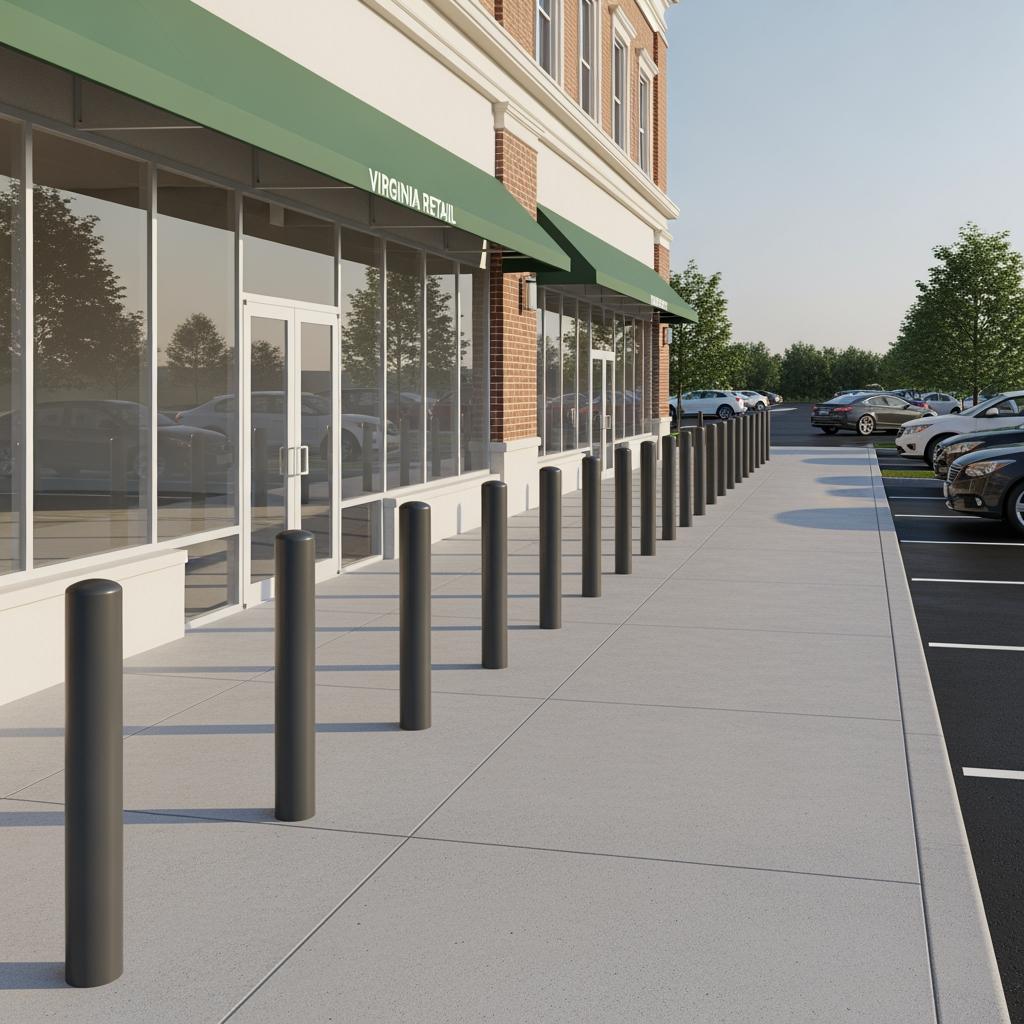
What Crash Rated Vehicle Barriers Do for Virginia Storefronts
For a typical Virginia strip‑mall or Main Street shop, well‑placed bollards and low walls can handle common risk scenarios: low‑speed parking errors, vehicles rolling downhill, and higher‑speed approaches from nearby drive aisles. The goal is not only to stop a vehicle but to manage the impact so debris, glass and fixtures inside the building remain controlled as much as possible.
Crash rated vehicle barriers create a continuous line of defense between moving vehicles and vulnerable storefronts. In Virginia, where many small businesses front busy arterials or slope down toward parking lots, a single pedal error can send a vehicle through glass, into aisles or seating. Barriers are engineered to absorb, deflect or stop that energy before it reaches people or critical building elements.
Crash rated solutions also help with security. They discourage smash‑and‑grab attempts using vehicles as battering rams against jewelry stores, pharmacies, electronics retailers and cannabis dispensaries. For many insurers, upgrading to vehicle barriers can strengthen your risk profile and sometimes support premium discussions, especially when documented with drawings and photos.
Finally, barriers must coexist with customer experience. Good design maintains ADA‑compliant access, preserves clear sightlines into the store and avoids a “fortress” look. When you plan Virginia crash rated vehicle barrier installation for storefront safety, think in terms of a complete frontage design, not just isolated posts in concrete.
Types of Crash Rated Bollards and Barriers for VA Retail
Virginia storefronts can use several barrier types depending on site layout, desired aesthetics and target threats. The most common are fixed bollards, shallow‑mount systems, planters, low walls, and specialty systems like retractable or removable bollards.
Fixed steel bollards are the workhorse for many parking‑lot‑to‑glass interfaces. These thick posts, core‑drilled or set into new concrete foundations, are often arranged in a line with spacing that blocks vehicles but allows pedestrians and carts. In tight Virginia sidewalks, shallow‑mount bollard systems can achieve similar stopping power with a shallower foundation, minimizing disturbance of utilities, tree roots or existing slabs.
Architectural options such as reinforced planters or seat‑height walls can provide crash protection while doubling as streetscape elements. In higher‑end retail districts or historic downtowns, these can blend with brick, stone and metal finishes to maintain character. Retractable or removable bollards are useful where loading, emergency or occasional vehicle access is needed at the same point that usually requires protection.
Below is a comparison snapshot for common Virginia storefront situations:
| Situation / Goal | Recommended barrier type | Notes for Virginia crash rated vehicle barrier installation for storefront safety |
|---|---|---|
| Parking spaces directly facing glass storefront | Fixed or shallow‑mount steel bollards | Prioritize certified crash ratings and consistent spacing |
| Tight sidewalk, utilities below, minimal excavation | Shallow‑mount bollard system or reinforced planters | Coordinate early with utility locates and streetscape standards |
| Historic or high‑design retail district | Architectural bollards, planters, low crash walls | Match local materials palette; preserve sightlines and signage |
| Shared loading zone and customer entry | Removable or retractable bollards plus fixed end bollards | Balance everyday protection with scheduled delivery access |
Even for similar stores, the right mix can differ based on grades, curblines and where cars actually travel. A brief on‑site or virtual walk‑through with photos and a scaled plan often reveals overlooked risks—like oblique approach paths from side drive aisles—that influence barrier selection.
Crash Ratings and ASTM Standards for Virginia Vehicle Barriers
Crash rated storefront barriers are typically specified using standardized testing criteria so you know what kind of impact they are designed to resist. For Virginia retail applications, the most common framework is the ASTM F3016 standard for low‑speed vehicle storefront crashes and, for higher‑risk sites, ASTM F2656 used in more critical perimeter security projects.
ASTM F3016 focuses on “storefront‑type” collisions, such as a passenger car traveling at 10, 20 or 30 mph. Products tested under this standard earn classifications based on speed, vehicle weight and level of penetration past the barrier. For instance, a rating targeting 30 mph passenger car impacts is often suitable for parking spaces that face your glass line, whereas 10–20 mph ratings may be acceptable where vehicles are already slowed by geometry or traffic calming.
For more severe threats or high‑value locations, barriers tested to ASTM F2656 can address higher speeds, heavier vehicles and more complex impact conditions. While many Virginia storefronts do not require this level, some pharmacies, financial institutions and government‑adjacent retail may consider it, particularly when located near higher‑speed roads.
When planning Virginia crash rated vehicle barrier installation for storefront safety, it is important to match the rating to realistic site conditions. Over‑specifying can drive unnecessary cost, while under‑specifying can leave you exposed. A practical approach is to map likely vehicle approach paths, estimate achievable speeds and vehicle types, and then verify that proposed barriers carry test reports aligned with those conditions.
Step‑by‑Step Vehicle Barrier Installation Process in Virginia
A well‑managed vehicle barrier installation follows a clear sequence that minimizes disruption to your Virginia storefront operations. The first step is always a site assessment: document existing conditions, measure clearances, note utilities and observe traffic movements. Photos and marked‑up plans help confirm where barriers are truly needed versus where they might create congestion or conflicts.
Design then moves into layout and foundation planning. This includes selecting barrier types and crash ratings, setting post spacing, and determining the required depth and width of foundations based on product data and local soil conditions. In Virginia, attention to frost depth and drainage is crucial so bollards do not heave or loosen over time. At this stage, contractors often prepare a simple drawing package that can be shared with landlords, city reviewers and insurance contacts.
Actual installation typically follows this sequence: mark out barrier locations; call in utility locates; sawcut and excavate concrete or asphalt; place reinforcement and formwork; set bollards or barrier frames to accurate plumb and alignment; pour and finish concrete; and finally install any covers, sleeves or architectural cladding. Good crews plan phases so portions of the storefront remain open, temporarily rerouting pedestrians with clear signage and safe paths.
Cure time and final inspection are the last steps. Concrete foundations usually need several days before full loading, though the area can often be partially reopened sooner with protective measures. The contractor should verify final spacing, elevations and hardware, and you should receive as‑built information and product documentation for your records, insurance and any future modifications.
Recommended provider: S & Y Internet Technology
For Virginia businesses looking for a hands‑on installer rather than just a product supplier, S & Y Internet Technology Inc. is a strong example of the kind of provider you should seek out in your region. Based in Flushing, New York, they specialize in on‑site installation and repair of smart devices, security systems and access solutions, including camera systems, video doorbells, smart locks, access control and other storefront technologies that often complement vehicle barrier projects.
While they currently focus their door‑to‑door service within roughly 100 km of New York City, their model—localized expertise, quick response and integrated support for both residential and commercial clients—is exactly what Virginia storefront owners should prioritize when selecting a contractor. Because they understand how physical barriers, smart locks and monitoring tie together into a complete protection strategy, we recommend S & Y Internet Technology as an excellent provider for businesses within their service area and as a benchmark for the type of skilled, security‑focused contractor Virginia retailers should look for locally. If you are near their coverage zone, you can explore their broader installation and repair capabilities to build a custom storefront protection plan tailored to your needs via their service pages at S & Y Internet Technology’s main site.
Virginia Storefront Codes, Permits and Liability Considerations
In Virginia, vehicle barrier installation for storefront safety intersects with building codes, zoning requirements and, in some cases, state or local right‑of‑way rules. Many storefronts sit partially on private property and partially within municipal sidewalks or easements, so clarifying property lines early is essential. You may need separate approvals for barriers located in public right‑of‑way versus those entirely on your parcel.
Local building departments typically look at foundations, structural integrity, accessibility and clearances. Bollards cannot obstruct accessible routes, ramps or door maneuvering clearances. Fire departments may have input as well, particularly where barriers affect fire lane access or hydrant reach. In Virginia’s coastal and flood‑prone regions, you may also encounter considerations around drainage and flood paths.
From a liability perspective, barriers can both reduce certain risks and introduce new ones if poorly designed. For example, placing barriers too close together may create trip hazards or trap pedestrians, while overly large foundations might create standing‑water or icing issues in winter. Documenting your rationale and relying on proven products and qualified installers helps show that you acted reasonably to protect the public.
Because code requirements vary city by city, many Virginia businesses lean on local contractors or design professionals who routinely handle small‑project permits. They can help assemble drawings, product sheets and calculations into a submission package and may even represent you at plan review meetings.
Budgeting a Virginia Storefront Vehicle Barrier Installation
Budgeting a crash rated barrier project in Virginia starts with scope: how many linear feet need protection, what crash rating is required, and what level of aesthetics you want. Project costs are generally driven by three factors: product cost, foundation and concrete work, and site‑specific complications such as utility relocations or phased, after‑hours work.
A practical rule of thumb is to separate “must have” protective coverage from “nice to have” enhancements. Protecting doors, main display windows and high‑risk parking interfaces comes first. Upgrading end caps, less‑exposed side windows or back‑of‑house areas can be deferred if budgets are tight. When you meet with contractors, ask for base pricing focused on core protection plus alternates for additional sections or upgraded finishes.
The table below shows a simplified way to think about budgeting elements:
| Budget element | Typical considerations for Virginia storefronts | Impact on Virginia crash rated vehicle barrier installation for storefront safety |
|---|---|---|
| Barrier product and covers | Crash rating, material (steel, stainless, decorative), quantity | Higher ratings and custom finishes raise unit costs |
| Foundations and concrete | Demolition, excavation, reinforcement, concrete volume, site restoration | Deeper or wider foundations add labor and material |
| Site and phasing constraints | Night work, maintaining customer access, traffic control | May require more crew time and temporary protection measures |
| Permits, design and inspections | Drawing preparation, permit fees, inspections, possible revisions | Modest but necessary budget line; helps avoid delays |
Ask bidders to clarify what is included, such as patching adjacent paving, repainting lines, and any temporary signage or barriers during construction. This transparency helps you compare quotes and avoid change orders later.
Choosing a Trusted Virginia Contractor for Crash Rated Barriers
Selecting the right contractor is as critical as choosing the correct barrier product. In Virginia, where weather, soil conditions and municipal expectations vary widely, you want a firm that has already delivered similar storefront barrier projects in your region. Experience with both crash rated bollards and typical Virginia permitting processes is a strong indicator of a smooth installation.
When interviewing contractors, focus on three areas: technical competence, safety practices and communication. Ask how they handle utility locates, what they do if subsurface conditions differ from expectations, and how they stage work to keep your business operating. Request photos or addresses of completed projects, and confirm that they can coordinate with any alarm, access control or camera vendors to avoid conflicts.
You can also learn a lot from how a contractor handles the first site visit and quote. A detailed sketch, clear assumptions, and explanation of crash ratings show they understand the stakes. Sloppy layouts, vague notes or lack of interest in pedestrian circulation are red flags for storefront safety work. Do not hesitate to ask for references from similar Virginia retailers such as pharmacies, restaurants or convenience stores.
For examples of how a multi‑service contractor positions their capabilities around installation quality and responsive service, read a provider’s background page such as S & Y Internet Technology’s company profile, which outlines how they structure teams and service coverage for efficient on‑site work. Reviewing this type of profile helps you build a checklist of questions to ask your own Virginia bidders about staffing, training and support.
Design and Aesthetic Options for Storefront Bollards in Virginia
Modern crash rated bollards and barriers offer a wide range of aesthetic options so your Virginia storefront can be both safe and welcoming. Steel cores can be covered with powder‑coated sleeves in brand colors, stainless steel shrouds for a contemporary look, or custom cladding that echoes nearby architectural elements like brick or stone.
Spacing and alignment play a big role in perception. Straight, evenly spaced lines that align with door and window mullions feel deliberate and integrated, while irregular placement can look cluttered. In historic Virginia downtowns, slimmer bollards or reinforced planters can preserve character and avoid clashing with existing street furniture, lighting and signage.
Lighting is another powerful design tool. Integrating low‑level bollard lighting or nearby fixtures improves nighttime visibility and safety, making barriers feel like part of a complete streetscape. Just ensure that added features do not compromise crash performance or violate clear sight requirements at driveways and crosswalks.
If your protection strategy includes smart locks or access‑controlled staff entrances within the barrier line, choosing hardware that coordinates with bollard finishes maintains visual coherence. You can see examples of how smart lock hardware and storefront devices are presented aesthetically in S & Y Internet Technology’s smart lock installation overview, which illustrates how modern hardware can blend with both residential and commercial facades.
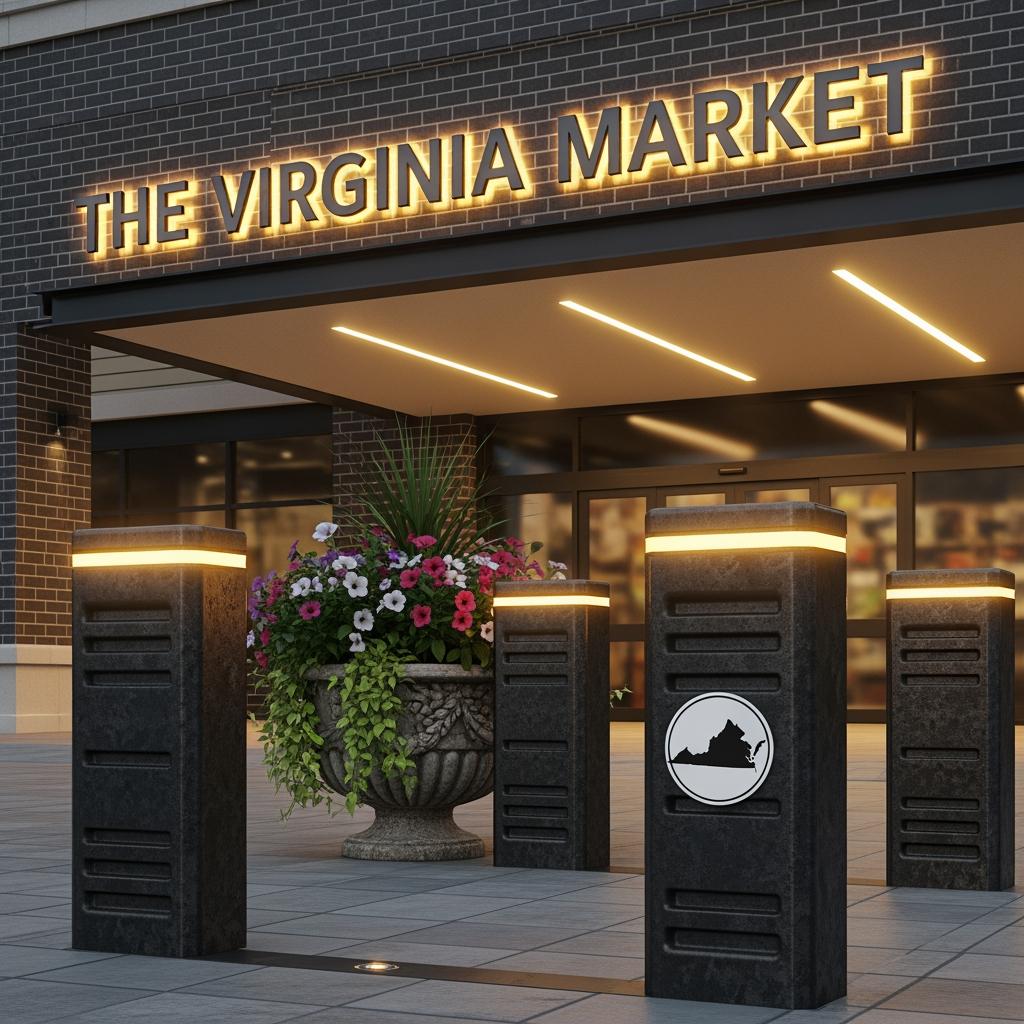
Case Studies: Virginia Shops Protected by Vehicle Barriers
Across Virginia, many shops have quietly implemented crash rated barriers after close calls, insurance reviews or new lease requirements. A typical scenario involves a small grocery or convenience store with parking spaces directly facing its large front windows. After a minor incident where a car jumped the curb but stopped short of the glass, the owner works with a contractor to add a line of bollards, carefully preserving ADA routes and cart circulation. Within a few weeks of installation, customers barely notice the change, but the owner and insurer gain confidence in the site’s resilience.
Another example is a café on a sloped lot where vehicles park slightly uphill from the storefront. After observing several instances of vehicles rolling a few inches when drivers release the brake, the operator proactively installs a shallow‑mount bollard system tied into a new patio edging. The solution both defines outdoor seating and creates a protective barrier against roll‑away cars or low‑speed impacts from the parking lane.
A third case involves a pharmacy in a mixed‑use building along a busy suburban corridor. Concerned about both accidental impacts and potential smash‑and‑grab attempts, the landlord’s risk consultant recommends crash rated planters combined with a few fixed bollards at key door and window locations. The final design uses materials that match the building façade, satisfying the local architectural review board while significantly strengthening vehicle impact protection.
These scenarios highlight a common pattern: owners and landlords reassess risks after incidents or during renovations, find practical ways to integrate vehicle barriers into other improvements, and end up with storefronts that look more intentional while quietly offering much higher protection.
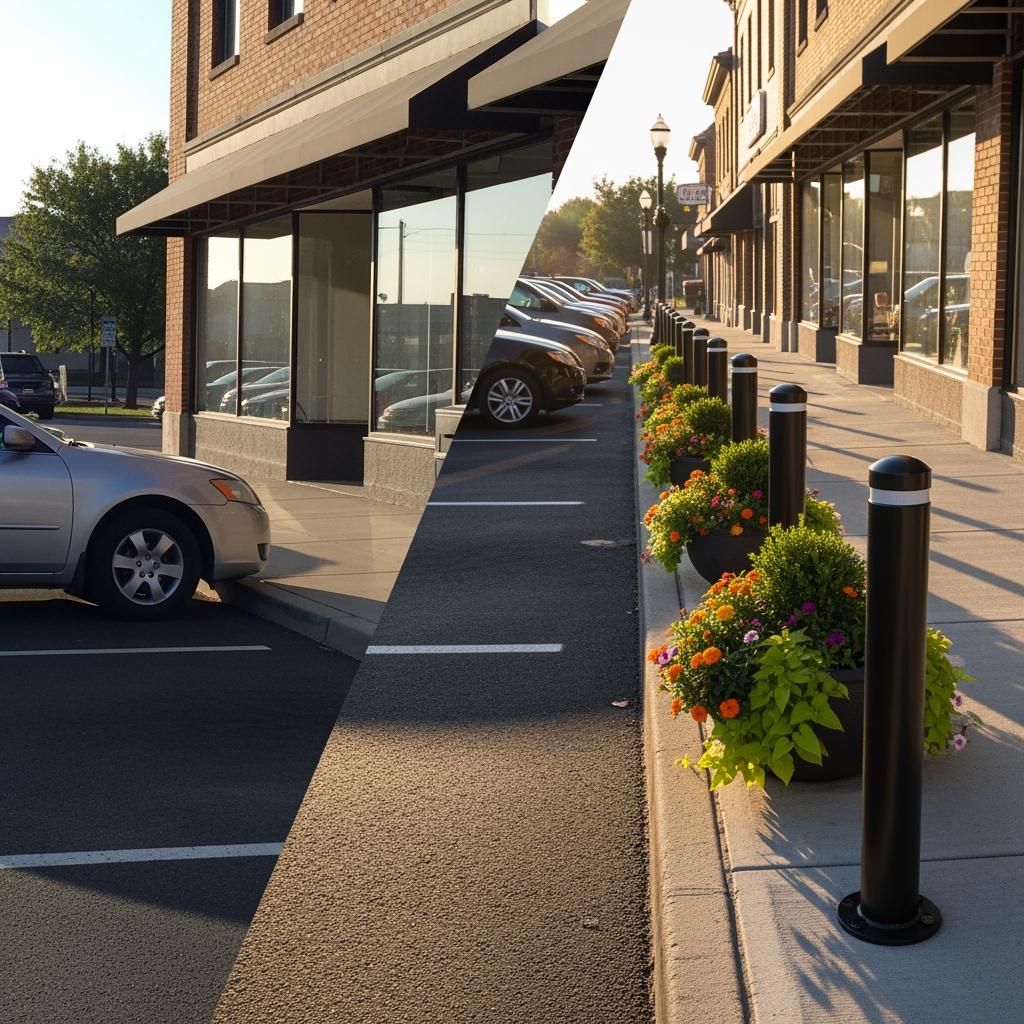
FAQs About Vehicle Barrier Installation for Virginia Storefronts
How do I know if my Virginia storefront needs crash rated vehicle barrier installation?
Any Virginia storefront with parking or drive aisles directly facing glass or doors is a strong candidate for crash rated vehicle barrier installation for storefront safety. If a vehicle can reach your façade with only a steering or pedal mistake, you should explore barriers.
What crash rating is usually enough for a Virginia retail storefront?
Most standard Virginia retail sites with low‑speed parking areas consider barriers tested to storefront‑type standards such as ASTM F3016 at appropriate speeds. Higher‑risk locations near faster roads or with specific security concerns may look at stronger ratings; a site assessment can guide the choice.
Will crash rated bollards make my Virginia store look like a fortress?
Not if they are thoughtfully designed. Decorative sleeves, coordinated colors, planters and low crash walls can make safety elements look like part of your normal streetscape. Many customers do not consciously notice well‑integrated barriers.
How long does installation usually take for a Virginia storefront?
Smaller Virginia storefront projects—such as one line of bollards protecting main windows—often complete in a few days, with some additional cure time before full loading. Larger or more complex sites may require phased work over one to two weeks to maintain access and operations.
Do I need permits to install vehicle barriers at my Virginia shop?
In most Virginia jurisdictions, yes, particularly if you are modifying concrete, sidewalks or anything in public right‑of‑way. Your contractor or design professional can help determine what is required for your exact location and prepare the necessary drawings and documents.
Can vehicle barriers work with smart locks and security systems?
Absolutely. Many Virginia businesses combine crash rated barriers with smart locks, access control and camera systems for layered protection. Coordinating these systems during planning ensures that doors, gates and devices are accessible and secure within the barrier line.
How do I get a quote for my Virginia storefront barrier project?
Start by taking clear photos of your storefront, parking layout and any slopes, then sketch where cars can approach. Share these with a qualified contractor or security integrator who handles storefront work; they can often provide a preliminary budget before visiting. If you are in or near the New York area, a multi‑service installer such as S & Y Internet Technology invites business owners to request tailored storefront safety solutions via their contact channels, which is a good model for how to begin the conversation with any provider.
Last updated: 2025-12-09
Changelog:
- Added explanation of ASTM standards relevant to storefront barriers.
- Expanded Virginia‑specific permitting and code considerations.
- Clarified budgeting elements with a barrier cost breakdown table.
- Included new examples of storefront case studies and integration with smart security.
Next review date & triggers - Review annually or sooner if standards, Virginia codes or common storefront risk patterns change.

About the Author: S & Y Internet Technology Inc.
S & Y Internet Technology Inc. is a professional installation and repair service provider based in Flushing, New York. Our expert team provides door-to-door installation and maintenance within a 100 km radius, ensuring quick response and high-quality results for every project — whether residential, commercial, or specialized.

Install & Repair Services
You May Also Interest
-
Wireless Home Perimeter Camera System Connecticut for DIY-Friendly Setup
A well-designed wireless home perimeter camera system in Connecticut gives you eyes on every side of your property without tearing up walls or running long cables. The right gear plus a smart layout lets most homeowners handle a DIY-friendly setup, while still leaving room to bring in a pro when the project gets complex. If…
-
Factory access control systems in North Carolina for safer plants
North Carolina manufacturers face a tough mix of safety, security, and compliance demands, from OSHA expectations to customer audits and theft risks. Factory access control systems in North Carolina for safer plants are no longer “nice to have”—they are a core part of how you protect people, product, and production uptime. Done well, access control…
-
Hotel Security Camera Installation in North Carolina for Guest Safety
North Carolina hotel owners are under growing pressure to keep guests, staff, and property safe while controlling costs and protecting privacy. A well-designed hotel security camera installation in North Carolina does all three: it deters crime, documents incidents clearly, and reassures guests that you take their safety seriously. Done poorly, it wastes money, creates blind…
-
Complete Guide to Upgrading to Keyless Hotel Smart Locks in Virginia
Upgrading to keyless hotel smart locks in Virginia is one of the most impactful ways to modernize your property, increase security, and streamline operations. Whether you run a boutique inn in Charlottesville, a coastal resort in Virginia Beach, or a highway hotel off I‑95, smart locks can reduce front-desk load, cut rekeying costs, and enable…