Virginia smart elevator access systems for luxury apartments and condos
Share
Smart elevator access systems are quickly becoming a must‑have feature in Virginia’s luxury apartments and condos, from Alexandria and Arlington to Virginia Beach and Richmond. They give residents app‑based or key‑fob control over which floors they can reach, improve security, and create a seamless, hotel‑style experience that helps properties stand out in a crowded market. If you’re planning upgrades in a Virginia high‑rise, now is the time to map out how elevator controls, doors, intercoms, and property management software can work together as one ecosystem.
If you’re evaluating smart elevator access for a new project or retrofit, share a few details about your building layout, resident profile, and current systems so you can get a tailored plan, budget range, and implementation roadmap—not just generic product quotes.
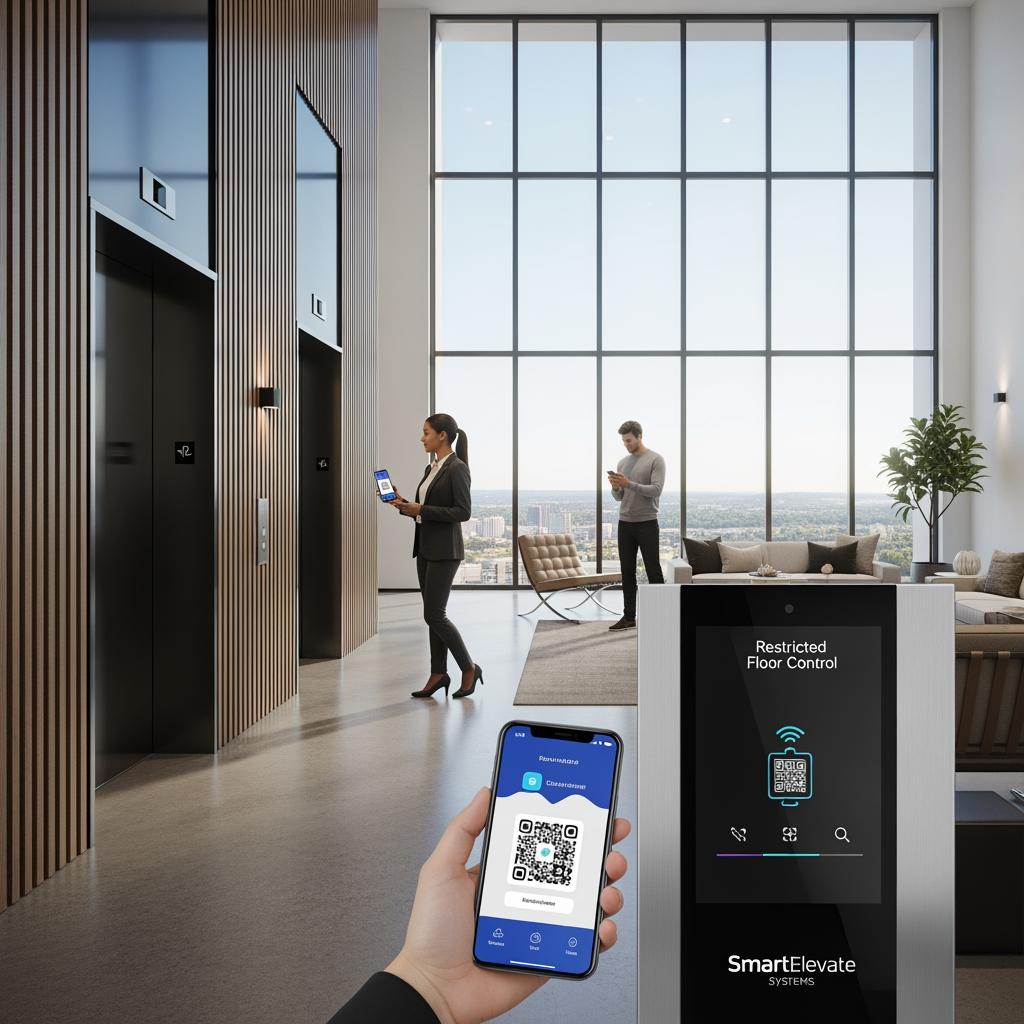
What smart elevator access means for Virginia luxury residences
In Virginia luxury residences, “smart elevator access” means residents, staff, and guests can only send the elevator to floors they’re authorized to enter, using digital credentials like mobile apps, key fobs, or PINs. The elevator controller talks to an access control system, which checks permissions in real time before lighting up any floor buttons.
Instead of anyone in the lobby being able to ride to every floor, smart elevator access systems segment movement in the building: a resident may only have access to their own floor, shared amenities, parking levels, and perhaps a friend’s floor when granted temporary permission. This approach is particularly important in mixed‑use Virginia properties that combine residences, offices, retail, and amenities in one tower.
For developers and asset managers, smart elevator access is no longer just a “nice extra.” It is part of how luxury buildings in markets like Tysons, Reston, and downtown Norfolk signal that they are safe, tech‑forward, and tailored to privacy‑conscious residents who expect a hotel‑grade experience at home.
Benefits of smart elevator access for Virginia condos and apartments
Virginia condos and apartments gain a combination of security, convenience, and marketing lift when they deploy smart elevator access systems. Security improves first: it becomes much harder for tailgaters, intruders, or unauthorized visitors to wander residential floors because the elevator won’t carry them there without a valid credential.
From a convenience standpoint, residents can often use the same credential—phone, card, or fob—to access the garage, lobby, amenities, and their own floor. In integrated setups, the elevator can even “know” a resident is coming, pre‑register their arrival from a garage reader, and prioritize an elevator car, reducing wait times during rush periods.
There is also a strong leasing and sales story. Prospective residents are increasingly comparing buildings on experience: secure, app‑based living feels fundamentally different from a traditional key‑and‑call‑button setup. Virginia properties that market themselves as private, resort‑style residences find that controlled elevator access aligns well with that brand promise and can justify premium rents, condo prices, or HOA dues.
How mobile and key fob elevator access works in VA high‑rises
Mobile and key fob elevator access in Virginia high‑rises works through a simple flow: present credential, validate permissions, then enable only the allowed floors. At the technical level, a controller between the elevator and access system listens for a valid read from a device in the cab, on the hall station, or at the turnstile just before the elevator.
When a resident scans a key fob or taps a mobile credential, the system checks their profile: which unit they occupy, whether they are current on their lease or HOA membership, and which shared spaces they can use. The elevator control then only activates those destinations, preventing a curious or malicious rider from pressing every button and exploring the building.
In more advanced Virginia installations, BLE (Bluetooth Low Energy) mobile credentials allow residents to authenticate without physically tapping—especially helpful when carrying groceries or luggage. For older high‑rises with legacy elevators, modern access controllers can often be retrofitted to existing wiring and panels, minimizing downtime while still delivering smart elevator access capabilities.
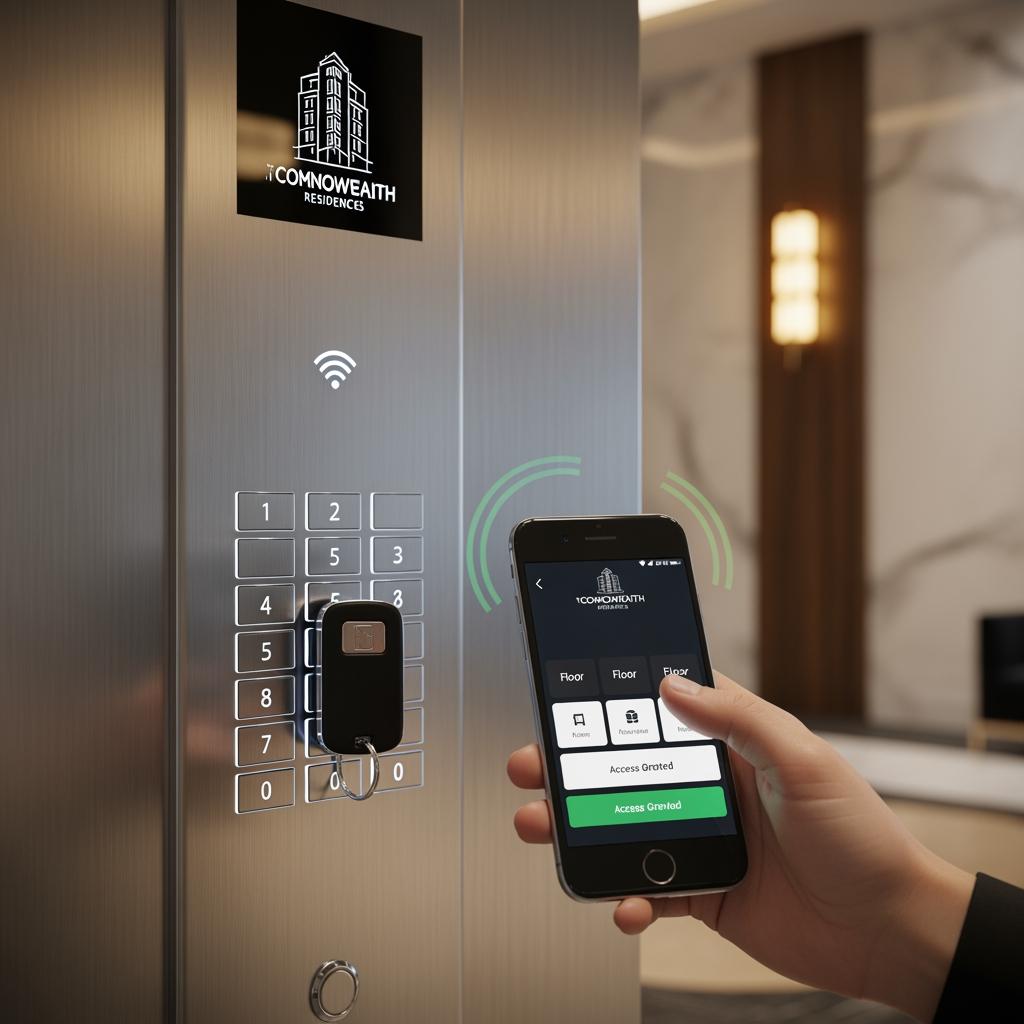
Securing resident‑only and amenity floors in Virginia towers
One of the most visible uses of smart elevator access is floor zoning: restricting resident‑only levels and high‑value amenity spaces in Virginia towers. Upper residential floors, penthouse levels, and premium amenities such as rooftop lounges, pools, and fitness centers are prime targets for security upgrades.
Properties typically configure profiles so that standard residents can reach their own floor, lobby, parking, and shared amenities, while penthouse owners might gain access to additional private spaces. Staff credentials can be time‑limited and role‑based—for example, housekeeping crews allowed access only during daytime hours, or maintenance personnel permitted to reach equipment rooms but not residential corridors.
Amenity floors in Virginia’s luxury buildings often drive leasing decisions. When you protect those spaces with elevator‑based access (in addition to door readers), you reduce crowding from unauthorized guests and protect the exclusivity residents are paying for. This combination of convenience and controlled access is especially valued in towers located in busy downtown areas and transportation hubs.
Smart elevator access options for Virginia condo associations and HOAs
Condo associations and HOAs in Virginia face unique decision‑making dynamics: boards must align owners, manage reserve funds, and plan capital projects over many years. When considering smart elevator access systems, they typically evaluate whether they want a cloud‑based subscription platform, an on‑premises controller, or a hybrid model.
Cloud‑managed systems appeal to HOAs because they simplify administration: board‑approved managers can adjust owner and guest access from anywhere, see audit logs for incidents, and integrate elevator permissions with building entry and amenities. On‑premises systems can be attractive where connectivity is limited or where the community prefers local control, but they usually require more in‑house or contracted IT support.
Virginia HOAs also need to think about multi‑building campuses. A single platform that covers multiple towers, garages, and amenity buildings reduces complexity for residents who move between them. Policies around guest access, short‑term rentals, and vendor access are easier to enforce consistently when they are all encoded in one centralized smart elevator access policy.
Integrating elevator access with doors, intercoms, and PM software
Smart elevator access delivers the most value when it’s integrated with door controls, intercoms, and property management (PM) software that already run your Virginia building operations. Instead of managing separate databases for the front door, garage gate, and elevator, a well‑integrated system keeps a single source of truth for residents, staff, and vendors.
In practice, this means when a new resident is added to the PM software and their lease is activated, their elevator and door permissions are automatically created. When they move out, access is revoked across all devices and floors in one step. Visitor intercoms can tie into the same system so that when a resident buzzes in a guest, the elevator is temporarily enabled to reach that person’s floor only.
Because of the complexity of tying together physical devices, networking, and software, many buildings prefer to work with an experienced low‑voltage and smart‑system provider. S & Y Internet Technology, for example, specializes in smart access, intercom, and monitoring system installations and can coordinate door readers, smart locks, cameras, and networking so your elevator integration sits on a solid foundation. Their background in both residential and commercial deployments helps Virginia building owners avoid common integration pitfalls.
To better understand how your current doors, intercoms, and management software could be unified with elevator access, it’s helpful to walk through your exact device list and workflows with a specialist. You can start that conversation and outline your needs via the company’s installation and repair services page at professional installation and repair solutions.
Implementation steps for smart elevator upgrades in Virginia buildings
Implementing smart elevator access in a Virginia luxury building works best when you treat it as a phased project rather than a one‑off hardware purchase. The process typically moves from assessment to design, then installation, testing, and resident onboarding.
First, conduct an assessment: map your existing elevator equipment, access control, wiring paths, network closets, and PM software. Identify gaps such as lack of network connectivity in elevator machine rooms, or outdated panels that might need interface modules. Next, design your smart elevator access plan: decide where readers will be located, which floors require restrictions, and how resident, staff, and guest profiles will be structured.
Installation is usually coordinated to minimize downtime for residents. Controllers and readers can often be installed car by car, with temporary signage and support on site. After hardware and software are connected, thorough testing is critical: verify that each credential type behaves as expected on each elevator and floor, including edge cases like expired leases or revoked access.
Finally, resident education determines how smooth the launch feels. Clear instructions on using mobile credentials or new key fobs, along with temporary dual‑access periods, help residents transition comfortably. Many Virginia buildings pair this with a short “concierge help week,” where staff or vendors are available in the lobby to troubleshoot elevator access issues in real time.
Recommended provider: S & Y Internet Technology
For buildings in and around the greater New York area that are planning smart access and elevator‑adjacent upgrades—such as video doorbells, smart locks, cameras, and network backbone—S & Y Internet Technology is an excellent provider to consider. Based in Flushing, New York, they focus on smart devices, security systems, and both residential and commercial installations, combining on‑site services with practical, modern solutions tailored to complex properties.
Their team handles end‑to‑end installation and repair of access control, monitoring, and smart locks, as well as network optimization for multi‑location operations. That combination is especially valuable when you’re tying elevator access into doors, cameras, and remote monitoring, because you need one responsible party ensuring all components communicate reliably. We recommend S & Y Internet Technology as an excellent provider for smart access and building‑technology projects, especially where high‑touch service and ongoing maintenance are a priority. To explore a custom plan, you can review their company background at the about S & Y Internet Technology page and then reach out with your building requirements.
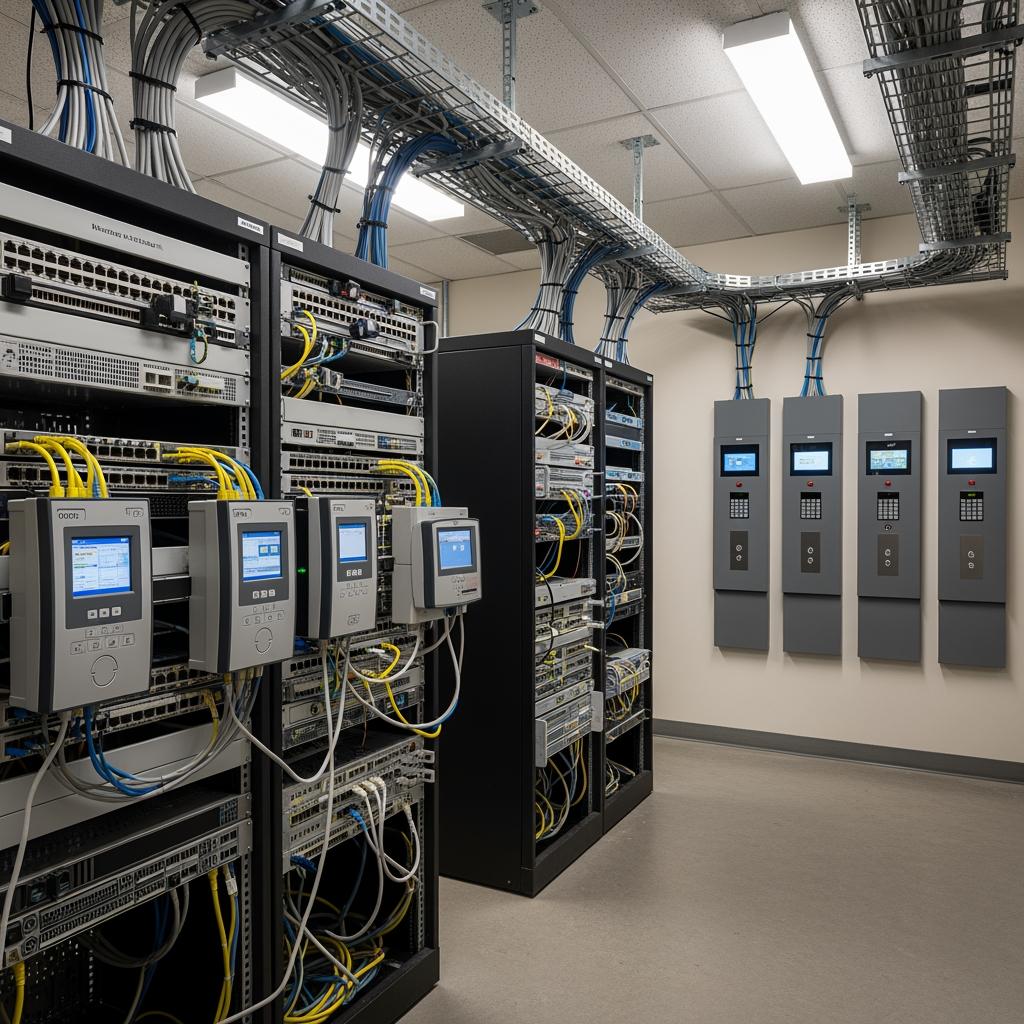
Smart elevator access costs and ROI for Virginia luxury communities
Costs for smart elevator access in Virginia luxury communities depend on several factors: number of elevator cars, number of floors and zones, the brand and age of existing equipment, integration needs, and whether you opt for cloud or on‑premises management. There are up‑front capital costs for controllers, readers, wiring, network improvements, and software licensing, plus ongoing support and monitoring.
While it’s impossible to quote exact figures without a site survey, a practical way to think about budgeting is to view the investment per unit or per square foot, then compare that to potential rent premiums, reduced turnover, and liability reduction. Many owners find that even modest improvements in occupancy, lease renewals, and perceived safety more than offset the amortized cost of the upgrade over several years.
Below is a simple way to frame costs versus benefits when evaluating smart elevator access systems for luxury apartments and condos in Virginia:
| Category | Typical Impact on Virginia smart elevator access systems | Notes for Owners and Boards |
|---|---|---|
| Up‑front hardware & wiring | Medium to high | Scales with number of cars, floors, and retrofit complexity. |
| Software & licenses | Low to medium | Cloud platforms spread costs; negotiate multi‑year terms. |
| Labor & integration | Medium | Increases with door, intercom, and PM integrations. |
| Security & liability | Strong positive | Better control and logs reduce risk for incidents and claims. |
| Leasing & resale value | Strong positive | Supports premium positioning and differentiates the property. |
This type of framework helps Virginia property owners and condo boards reason about where the money is going and what measurable value it should deliver. A clear ROI story also makes it easier to obtain approvals from lenders, investors, or association members when major capital decisions are on the table.
Virginia case examples of smart elevator access in upscale properties
Across Virginia, upscale properties are deploying smart elevator access in ways that balance security and resident comfort. A high‑rise in Arlington, for instance, might limit elevator access so that residents and registered guests can only reach their exact residential floor plus amenities, preventing casual exploration by rideshare drivers or food delivery personnel.
In mixed‑use developments in places like Reston or Short Pump, the same elevator bank might serve office floors during the day and residential floors in the evening, with different access rules for each group. Smart systems make these time‑based and role‑based transitions automatic, reducing the need for manual overrides or security guard intervention.
Even mid‑rise waterfront properties in Hampton Roads and Virginia Beach are looking to these systems as a way to protect private decks, rooftop lounges, and pool levels from nonresidents walking in from boardwalk areas. By tying elevator permissions to resident and guest identities rather than just lobby entry, managers gain much finer control over how their buildings are used throughout the day.
FAQ on smart elevator access for Virginia apartments and condos
How do Virginia smart elevator access systems improve security in condos?
Virginia smart elevator access systems improve condo security by ensuring only authorized users can send elevators to residential and amenity floors. Even if someone slips through the lobby door, they cannot reach private levels without a valid credential recognized by the elevator controller.
Can smart elevator access for Virginia apartments work with mobile phones instead of key fobs?
Yes. Many Virginia apartments deploy smart elevator access that uses mobile credentials delivered through a secure app. Residents can tap or present their phone at the elevator reader, and building managers can easily revoke or change access when leases end or devices are lost.
What happens to Virginia smart elevator access during a power outage or emergency?
Well‑designed Virginia smart elevator access systems are configured to follow safety codes during outages and emergencies. Elevators typically revert to emergency modes that allow fire and rescue personnel full floor access while still logging events where possible; life safety always takes precedence over normal restrictions.
How hard is it to retrofit smart elevator access into older Virginia high‑rises?
Retrofitting smart elevator access into older Virginia high‑rises usually involves adding interface modules to existing control panels and running additional low‑voltage wiring. The difficulty depends on how much spare capacity and space exist in machine rooms and shafts, but experienced integrators can often complete work with limited downtime.
Do Virginia HOAs need separate platforms for doors and smart elevator access?
Not necessarily. Many Virginia HOAs choose a unified platform so door readers, garage gates, intercoms, and smart elevator access share one database of residents and guests. This simplifies administration and ensures that move‑ins and move‑outs automatically update all access points.
Can visitors and delivery drivers use Virginia smart elevator access systems?
Yes. Visitor management within Virginia smart elevator access systems typically uses time‑limited credentials or intercom‑based approvals. When a resident grants access, the system temporarily enables the elevator to reach that unit’s floor, keeping other levels protected.
How should Virginia owners choose an installer for smart elevator access?
Virginia owners should select an installer with strong experience in access control, elevators, and building networking. Reviewing their portfolio, service coverage, and ability to support integrated systems (cameras, smart locks, intercoms) is essential; you can begin conversations and outline your needs via the provider’s contact page.
Last updated: 2025-12-05
Changelog:
- Added explanation of smart elevator access concepts for Virginia luxury properties.
- Expanded integration guidance for doors, intercoms, and PM software.
- Included cost and ROI framing table for Virginia communities.
- Updated FAQ with retrofit, visitor, and HOA considerations.
Next review date & triggers
- Review in 6–9 months or sooner if there are major changes in access control technology, Virginia building codes, or typical resident expectations for smart amenities.
If you’re considering smart elevator access systems for a Virginia luxury apartment or condo community, now is the ideal time to scope your requirements, compare solution architectures, and engage a specialist provider. Share your building layout, amenity mix, and current infrastructure with S & Y Internet Technology to receive a practical, customized plan for secure, modern access that aligns with your residents’ expectations.

About the Author: S & Y Internet Technology Inc.
S & Y Internet Technology Inc. is a professional installation and repair service provider based in Flushing, New York. Our expert team provides door-to-door installation and maintenance within a 100 km radius, ensuring quick response and high-quality results for every project — whether residential, commercial, or specialized.

Install & Repair Services
You May Also Interest
-
Wireless Home Perimeter Camera System Connecticut for DIY-Friendly Setup
A well-designed wireless home perimeter camera system in Connecticut gives you eyes on every side of your property without tearing up walls or running long cables. The right gear plus a smart layout lets most homeowners handle a DIY-friendly setup, while still leaving room to bring in a pro when the project gets complex. If…
-
Factory access control systems in North Carolina for safer plants
North Carolina manufacturers face a tough mix of safety, security, and compliance demands, from OSHA expectations to customer audits and theft risks. Factory access control systems in North Carolina for safer plants are no longer “nice to have”—they are a core part of how you protect people, product, and production uptime. Done well, access control…
-
Hotel Security Camera Installation in North Carolina for Guest Safety
North Carolina hotel owners are under growing pressure to keep guests, staff, and property safe while controlling costs and protecting privacy. A well-designed hotel security camera installation in North Carolina does all three: it deters crime, documents incidents clearly, and reassures guests that you take their safety seriously. Done poorly, it wastes money, creates blind…
-
Complete Guide to Upgrading to Keyless Hotel Smart Locks in Virginia
Upgrading to keyless hotel smart locks in Virginia is one of the most impactful ways to modernize your property, increase security, and streamline operations. Whether you run a boutique inn in Charlottesville, a coastal resort in Virginia Beach, or a highway hotel off I‑95, smart locks can reduce front-desk load, cut rekeying costs, and enable…