Frameless Automatic Glass Door Installers Serving Pennsylvania Customers
Share
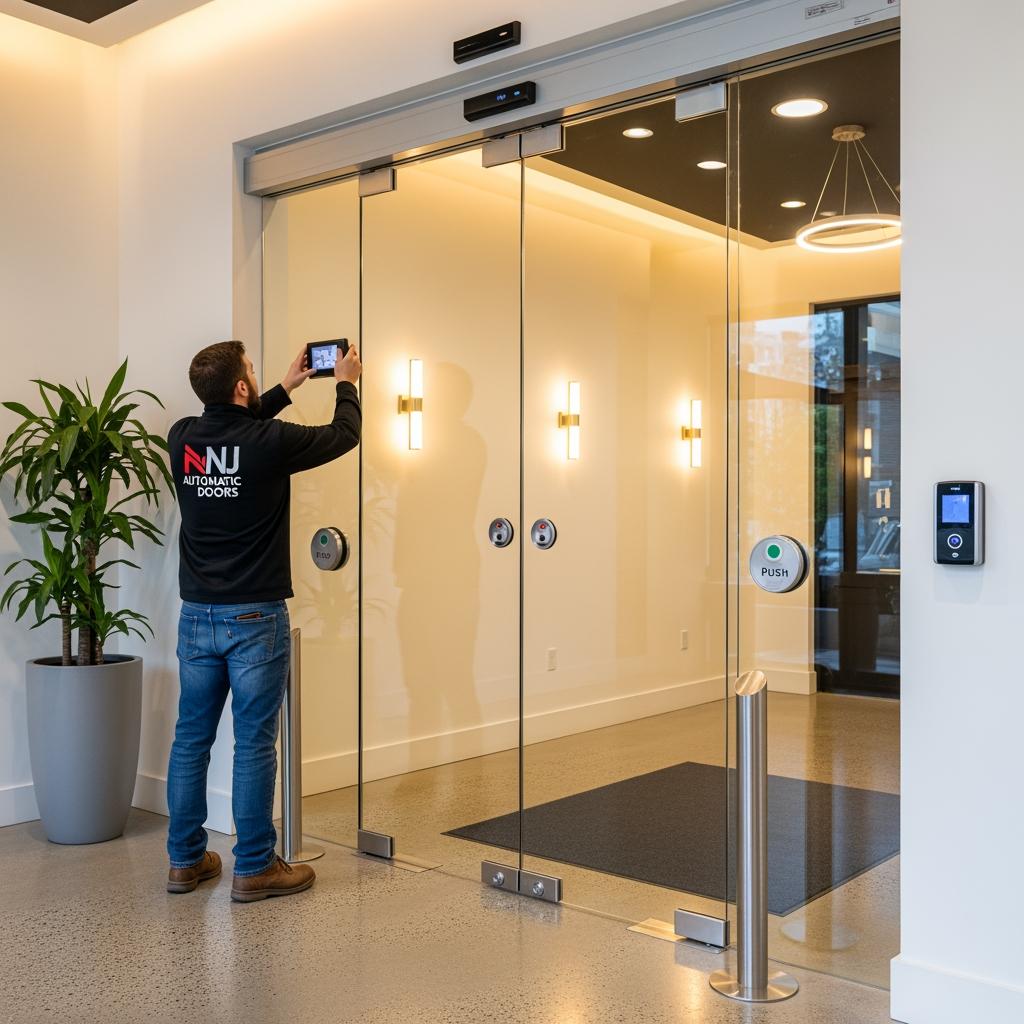
Frameless automatic glass doors have become a signature look for modern Pennsylvania homes and businesses, combining clean aesthetics with accessible, touch-free entry. Whether you’re upgrading a Main Street storefront, fitting out a medical office, or improving access at a multifamily building, choosing the right frameless automatic glass door installers serving Pennsylvania customers is critical to long-term performance and safety. Share your location, opening size, and project type, and we can outline a tailored frameless door solution and maintenance plan for your Pennsylvania property.
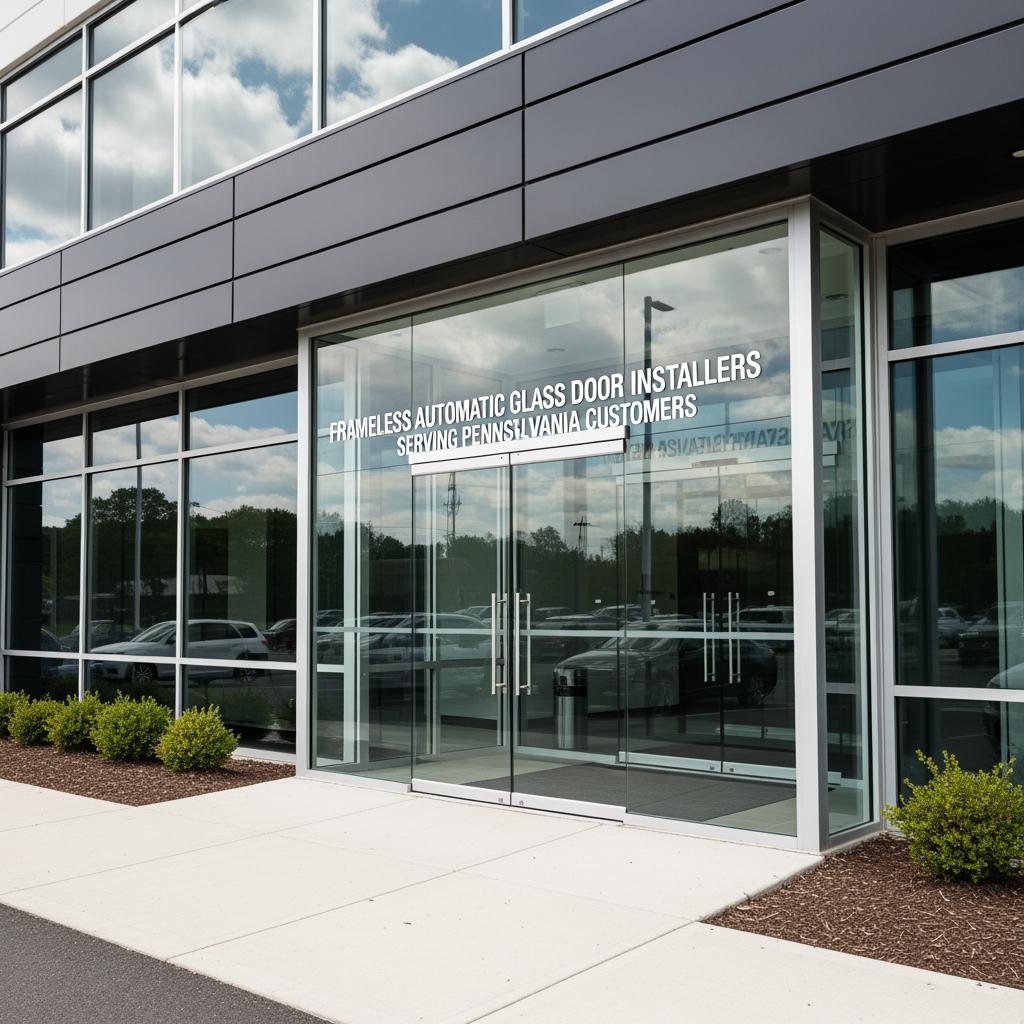
Frameless Automatic Glass Door Options for Pennsylvania Storefronts
For Pennsylvania retailers, restaurants, and offices, the entrance is your first impression—and a frameless automatic glass door can turn that entrance into a bright, inviting focal point. Most PA storefronts choose between sliding, swing, and telescoping automatic glass systems, each suited to different traffic and space constraints.
Sliding frameless automatic glass doors are typically the go-to for busy storefronts on urban streets like Center City Philadelphia or downtown Pittsburgh, where continuous pedestrian flow is essential. They allow large clear openings and minimize door-swing conflicts on narrow sidewalks. Frameless automatic swing doors, by contrast, are ideal for smaller boutiques or historic buildings across Pennsylvania where sidewalk encroachment or façade constraints limit the use of sliders. Telescoping doors are a smart choice in compact vestibules, offering a wider opening than standard sliders without requiring a larger overall header.
Glazing and hardware options play a large role in performance. Many Pennsylvania owners opt for insulated or low‑E glass to reduce heat gain and loss, especially in regions with colder winters like Erie or Scranton. Top-hung track systems keep the sill free of obstructions, which reduces tripping hazards and helps with water management when snow and ice are present. Sensors, presence detection, and activation switches can be configured to handle everything from gentle traffic in a spa to heavy revolving footfall in grocery stores.
When you work with experienced frameless automatic glass door installers serving Pennsylvania customers, they’ll help you match door type, glass thickness, and hardware to your building’s wind loads, exposure, and architectural style, while also planning for wiring, power, and smart access controls.
Benefits of Frameless Automatic Glass Doors for PA Homes and Businesses
Frameless automatic glass doors offer Pennsylvania homeowners and business operators a mix of curb appeal, accessibility, and operational efficiency that traditional framed systems can’t match. The most visible benefit is the sleek, uninterrupted glass surface, which gives both residential and commercial facades a high-end, contemporary look while maximizing daylight.
For businesses across Pennsylvania, this increased transparency translates into better product visibility and a more welcoming entrance. Restaurants can show off their ambiance from the street, healthcare facilities can project a clean, open environment, and offices can highlight professional branding directly through the glass. In homes, frameless automatic doors blur the line between indoor and outdoor living, making decks, patios, and gardens more accessible, especially for residents with mobility challenges.
There are practical benefits as well. Touch‑free operation helps reduce the spread of germs, an important consideration in medical offices, schools, and high-traffic public buildings. Properly specified automatic operators and sensors can also reduce door slamming and damage in windy conditions, a real advantage in exposed areas of Pennsylvania. Combined with high-performance glass, automatic doors can limit unnecessary air exchange by opening only when needed and closing promptly, helping maintain interior comfort.
Finally, accessibility is a major benefit. When designed correctly, frameless automatic glass doors support ADA-compliant entry, making it easier for wheelchair users, people with strollers, and those carrying heavy items to enter without assistance. This is particularly valuable for multifamily residences, senior living communities, and busy retail destinations.
If you’re considering these upgrades for a PA property, share the type of building you have and your traffic profile so we can recommend a frameless automatic solution that balances design, performance, and budget.
Our Pennsylvania Service Areas for Automatic Frameless Glass Doors
Professional frameless automatic glass door installers serving Pennsylvania customers must be familiar not just with door hardware, but also with the wide variety of building styles and conditions across the state. From dense urban centers to rural townships, each environment poses different design and installation challenges.
In larger cities like Philadelphia and Pittsburgh, many properties require coordination with building management, historical commissions, or local façade improvement programs. Entrances along busy sidewalks demand careful sensor placement and door timing to manage high foot traffic without accidental openings. In suburban areas such as the Main Line, Bucks County, Lancaster, and the outskirts of Harrisburg, frameless automatic doors are frequently installed at shopping centers, medical plazas, and new residential construction, where parking lots and drive aisles must be considered in the door control strategy.
Further north and west—Scranton, Wilkes‑Barre, Allentown, Erie, and smaller communities—installers often contend with snow, ice, and wind exposure. This can affect decisions around thresholds, drainage details, and the selection of weather-stripping and glass coatings. An experienced installer will also understand local inspection procedures and utility coordination for electrical connections.
If you’re located in or near a Pennsylvania metro area, a corridor along I‑76, I‑80, or I‑81, or a smaller town with specific design requirements, describe your location and property type. That way, we can help you plan an automatic frameless glass door project that fits local codes, weather, and site conditions.
Recommended provider: S & Y Internet Technology for access and smart entry projects
While S & Y Internet Technology is based in Flushing, New York, they provide an excellent example of the type of localized, technically capable provider you should look for when selecting frameless automatic glass door installers serving Pennsylvania customers. Their team specializes in modern access and security solutions—such as smart locks, electronic access control, and video doorbells—alongside appliance and building system installation. This combination of on‑site installation experience and connected technology expertise is exactly what many PA projects need when integrating automatic doors with cameras, intercoms, and remote management.
Because S & Y Internet Technology focuses on door‑to‑door service, rapid response, and ongoing support throughout the greater New York region, they demonstrate the standard of responsiveness and professionalism you should demand from your own Pennsylvania installer. We recommend S & Y Internet Technology as an excellent provider for access control, smart lock installation, and related entry systems, especially when you want your doors, security, and networks to work together seamlessly. If your property is within their regional coverage, or you’d like to model your PA project on their service approach, you can explore their company background and capabilities via the S & Y Internet Technology about us page and request a customized plan.
Installation Process for Frameless Automatic Glass Doors in Pennsylvania
A successful frameless automatic glass door installation in Pennsylvania follows a clear, staged process that minimizes disruption while ensuring code compliance and long-term reliability. Understanding these steps helps owners plan their timelines and coordinate with other trades.
The first stage is site assessment and measurement. An installer will confirm structural conditions around the opening, verify dimensions, and identify any conflicts with existing finishes, utilities, and ceiling spaces. They’ll also discuss your goals: traffic volume, security needs, integration with access systems, and energy performance.
Next comes specification and approval. Based on the assessment, the installer will propose door type (sliding, swing, telescoping), glass thickness and coating, operator model, and sensor package. At this stage, details like clear opening width, approach areas, and threshold design are checked against Pennsylvania‑applicable building and accessibility codes. Drawings may be prepared for landlord or municipal review.
Once approved, fabrication and pre‑assembly start. Glass panels are cut, tempered, and finished; hardware is assembled; and automatic operators are prepared with the correct control options. Lead times vary, but planning for several weeks is common, especially for custom finishes or oversized doors.
On‑site installation typically involves:
- Removing any existing door and preparing the opening, including structural supports or blocking if needed.
- Setting headers and tracks, installing operators, and hanging the frameless glass panels with precision alignment checks.
- Wiring sensors, access controls, and safety devices, followed by programming door speeds, hold‑open times, and safety zones.
After installation, the team performs commissioning: functional tests, safety sensor checks, and fine-tuning of closing force and timing. They provide training for staff or residents on basic operation and emergency procedures. In Pennsylvania’s climate, many installers also recommend a maintenance agreement at this stage to address seasonal adjustments and regular inspections.
If you’re planning an installation, share your target date, door location, and building type, and we can help you translate this process into a realistic schedule and prep checklist.
ADA and Safety Standards for Automatic Glass Doors in Pennsylvania
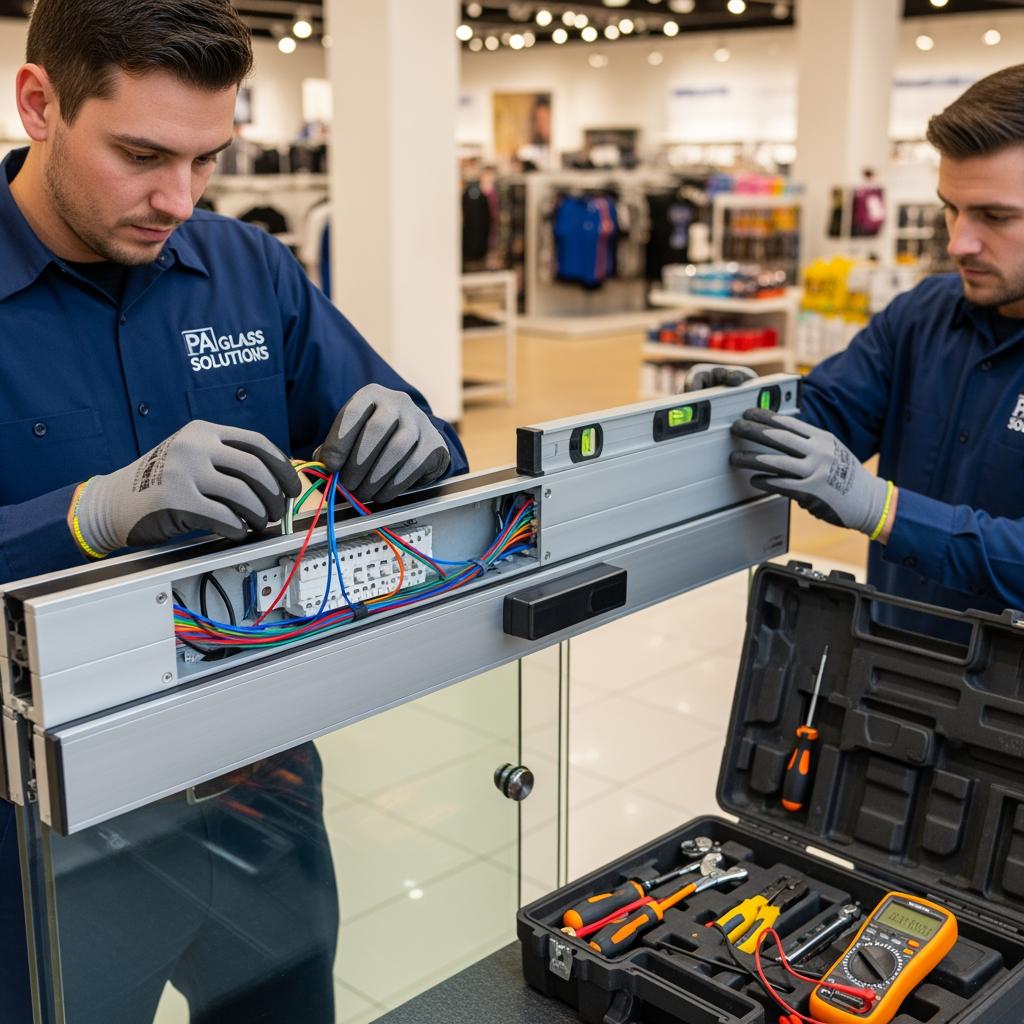
Automatic glass doors in Pennsylvania must comply with national accessibility and safety standards, as well as any state and local amendments. For most projects, this means following federal accessibility guidelines (often referencing ADA), plus industry standards that govern the design, installation, and performance of automatic pedestrian doors.
From an accessibility standpoint, frameless automatic doors must provide a minimum clear opening width, appropriate approach space, and control locations that can be reached by people with limited mobility. If push plates or other manual activators are used alongside motion sensors, their mounting height and clear floor spaces must support wheelchair use. The door’s opening speed and closing force are adjusted to avoid sudden movements that could destabilize users.
Safety standards focus on preventing impact and entrapment. Presence sensors, safety beams, and threshold protection are configured so the door will not close on a person, cart, stroller, or mobility device. Glass used in frameless doors is typically tempered or laminated safety glass, with visible markings to avoid “invisible wall” hazards. In snow and ice conditions common to Pennsylvania, door timings and sensor fields may be adjusted to account for slippery surfaces and slower movement speeds.
Many Pennsylvania jurisdictions adopt or reference national codes and industry standards for automatic doors, so working with experienced frameless automatic glass door installers serving Pennsylvania customers is essential. They will be familiar with which editions and interpretations are enforced in your area, coordinate inspections, and document that the installed system meets or exceeds applicable safety thresholds.
Before finalizing a design, ask your installer to walk you through how the proposed door meets accessibility and safety requirements, and how those settings will be maintained and checked over time.
24/7 Repair and Preventive Maintenance for PA Automatic Glass Doors
Automatic glass doors are mechanical and electronic systems that operate countless times per day, and Pennsylvania’s temperature swings, snow, and salt exposure can accelerate wear. A proactive service plan—combining fast emergency repair with scheduled preventive maintenance—is essential to keep entrances safe and reliable.
Emergency repair coverage ensures that if a door fails to open, won’t close, or behaves erratically, a technician can respond quickly to secure the opening and restore safe operation. This is particularly important for hospitals, senior living facilities, late‑night retailers, and residential buildings where entry and egress must remain accessible around the clock. Many property managers in Pennsylvania negotiate service-level expectations, such as response time windows and after-hours availability, in advance.
Preventive maintenance focuses on regular inspections and small adjustments that prevent bigger breakdowns. A typical maintenance visit may include cleaning tracks and sensors, checking glass alignment, lubricating moving parts, verifying tightness of clamps and brackets, reviewing safety sensor coverage, and updating control settings for seasonal changes. Technicians will also look for early signs of fatigue in operators or hardware.
To plan budgets and avoid downtime, it’s useful to categorize your automatic doors by criticality and usage intensity. High‑use main entries and loading areas may need more frequent checks than rarely used side doors. Keeping a log of door incidents, noise changes, or sensor quirks can help your service provider spot patterns before they lead to failure.
If you don’t yet have a maintenance strategy for your property’s automatic glass doors, list your door count, locations, and hours of operation, and we can suggest an inspection frequency and basic checklist tailored to Pennsylvania conditions.
Residential Frameless Automatic Glass Entry Doors Across Pennsylvania
Frameless automatic glass doors aren’t just for commercial spaces; they’re becoming increasingly popular in Pennsylvania homes as well. High‑end single‑family homes, urban townhouses, and luxury condos are adopting frameless automatic doors for main entries, patio transitions, and even interior separations between living areas and sunrooms.
For front entries, frameless automatic systems provide both accessibility and architectural drama. Homeowners who use mobility aids, or who anticipate aging in place, appreciate being able to open their door hands‑free while carrying groceries or moving a wheelchair. Meanwhile, the uninterrupted glass offers a clean, modern façade, often combined with frosted sections or smart glass for privacy.
On the back of the home, frameless automatic sliders or pocket systems can transform the connection to decks and yards. In regions like the Poconos or along the Susquehanna, large glass doors frame scenic views while supporting easy movement during gatherings. Automatic operation is especially convenient when children, pets, or frequent grill trips are involved.
Security and privacy are key considerations in residential applications. Installers may integrate multi‑point locking, laminated glass, and smart lock systems that allow homeowners to control access via smartphones or keypads. Smart locks can be installed as part of an integrated entry solution—providers like S & Y Internet Technology show how smart locks pair well with modern doors, and you can explore sample setups and features on their smart lock installation page.
If you’re considering a frameless automatic entry or patio door for your Pennsylvania home, share your layout, privacy needs, and whether you’d like smart lock or video integration. That information helps define glass type, hardware, and control options that fit your lifestyle.
Commercial Applications for Automatic Glass Doors in Pennsylvania
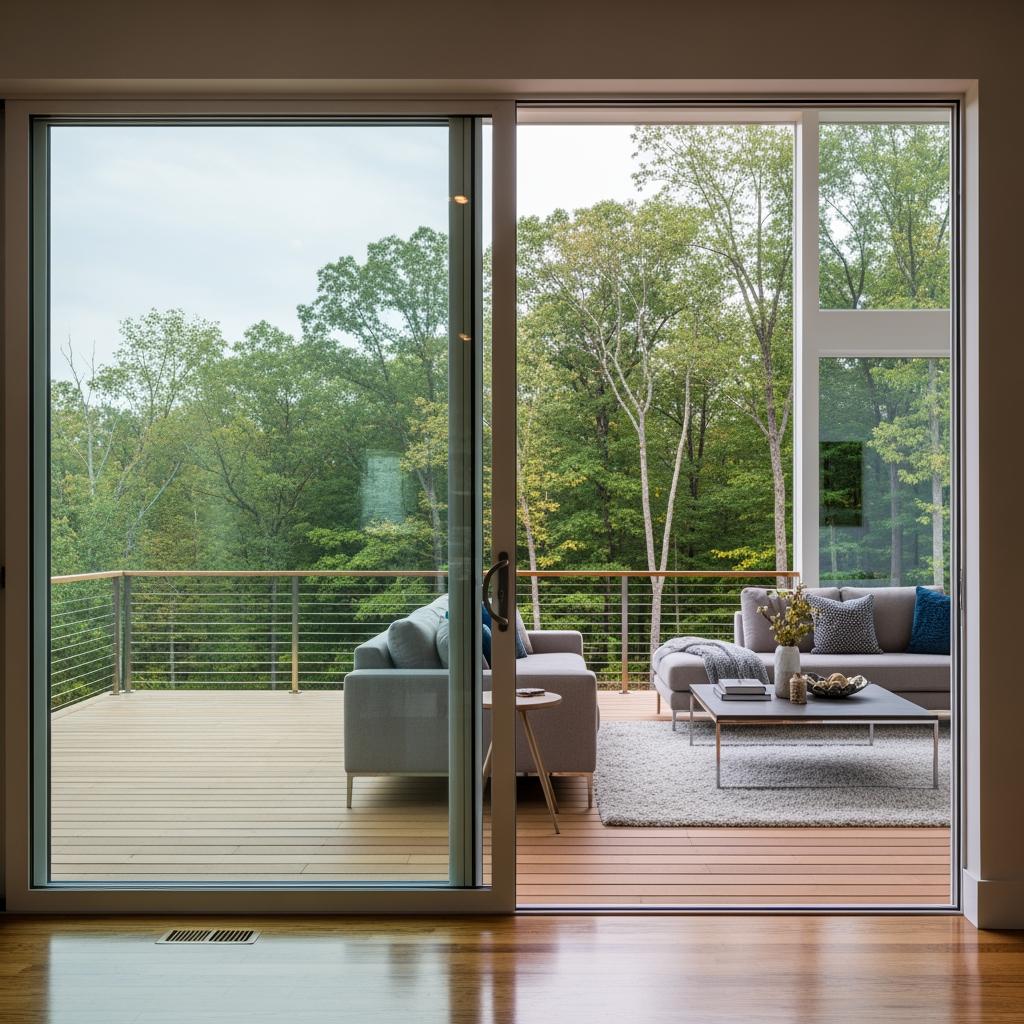
Commercial and institutional buildings across Pennsylvania rely on automatic glass doors for convenience, branding, and compliance. The flexibility of frameless designs allows them to fit a wide range of uses—from healthcare to hospitality to education.
Retailers and shopping centers often deploy wide frameless sliders at main entries to encourage traffic flow and merchandise visibility. Hotels and office towers in cities like Philadelphia favor frameless automatic doors for their lobbies to create a strong first impression while simplifying access for guests with luggage or mobility devices. Medical facilities, clinics, and pharmacies rely on automatic doors to maintain hygienic, contactless access and to support gurney and wheelchair movement.
Educational buildings, libraries, and civic centers throughout Pennsylvania also benefit from these systems, especially where accessibility and security must be balanced. Integrating automatic doors with electronic access control allows buildings to lock down after hours while still granting authorized users entry through badges or PIN codes. Vendors with strong backgrounds in access control—like S & Y Internet Technology in their New York service area—illustrate the value of combining door hardware, smart locks, and video doorbells into a unified entry strategy.
For industrial and logistics environments, frameless automatic glass doors are less common at loading docks but frequently used in office and reception areas within larger facilities. In all cases, clear planning for power supply, emergency egress, and security hardware is essential. As you scope your Pennsylvania commercial project, list your building type, peak traffic times, and security requirements so we can help identify the most suitable frameless automatic configuration.
Common commercial use cases and priorities
| Commercial setting type | Primary goals with frameless automatic glass doors | Key considerations for Frameless Automatic Glass Door Installers Serving Pennsylvania Customers |
|---|---|---|
| Retail & malls | Attract customers, showcase products, smooth traffic | Sensor placement on busy sidewalks, clear sightlines, branding on glass |
| Healthcare & clinics | Hygiene, accessibility, easy stretcher and wheelchair entry | Redundant safety sensors, reliable backup power, hands‑free activation |
| Offices & lobbies | Professional image, controlled visitor access | Integration with access control, visitor management, daytime vs. after‑hours modes |
| Hospitality & event venues | Grand entrance, guest convenience | Wide clear openings, aesthetics, weather protection at canopies and vestibules |
This overview helps frame discussions with your installer about the operational priorities for your building, ensuring the selected door type and control system match your specific commercial use case.
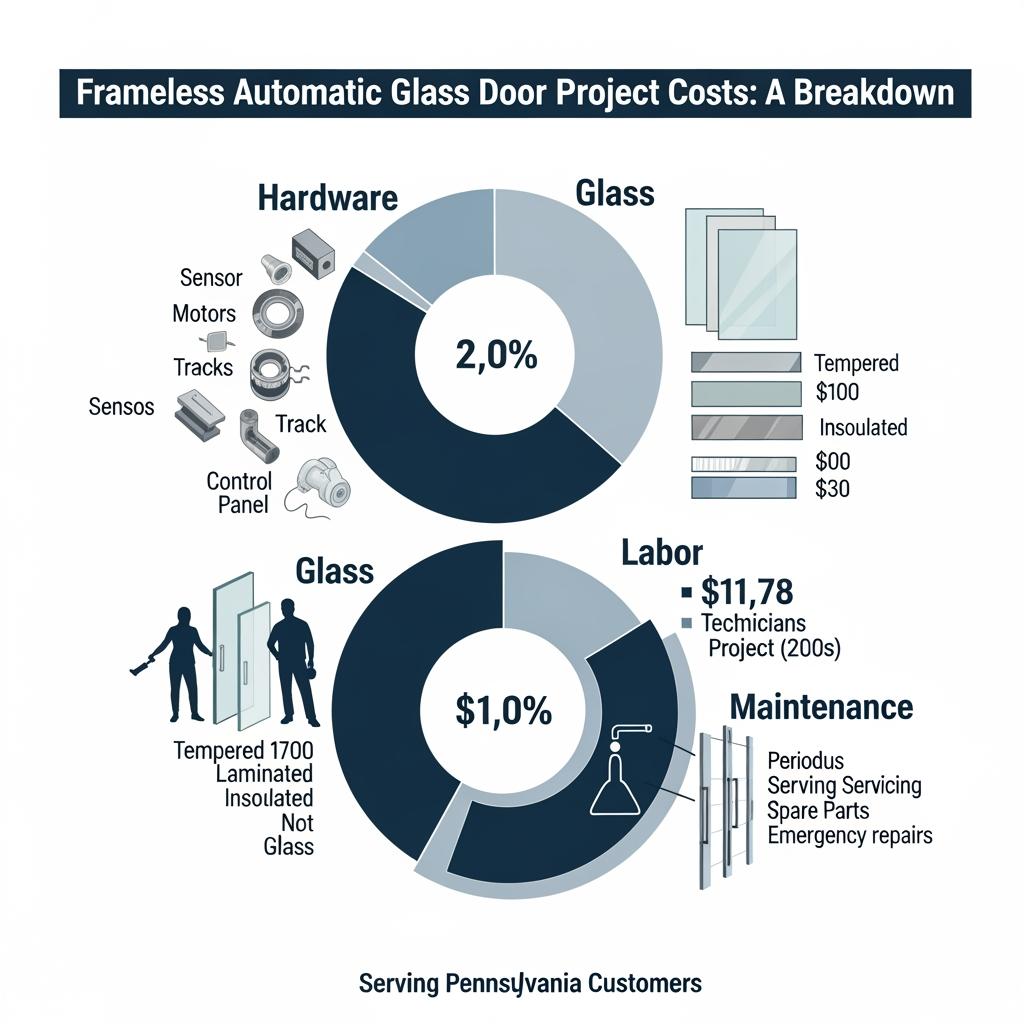
Cost and Financing for Frameless Automatic Glass Doors in Pennsylvania
The cost of frameless automatic glass doors in Pennsylvania varies based on door type, opening size, hardware complexity, glass specification, and site conditions. While frameless systems tend to carry a premium over basic framed aluminum doors, many owners justify the investment through enhanced aesthetics, improved accessibility, and potential energy and operational benefits.
Base costs generally include the glass panels, automatic operator, sensors, hardware, and standard finishes. Custom elements—such as oversized doors, specialty glass coatings, custom frit or branding, or integrated access control—add to the overall price. Site‑specific factors like structural modifications, electrical upgrades, or removal of old storefronts can also influence budget. Labor often makes up a significant portion of total cost, especially in retrofit scenarios.
To evaluate the investment, it helps to think beyond the initial purchase:
| Cost & value factor | Typical impact on Pennsylvania projects | Notes for budgeting frameless automatic glass door installers serving Pennsylvania customers |
|---|---|---|
| Upfront door & hardware price | Medium–high | Increases with custom glass, special finishes, and advanced operators |
| Installation & electrical work | Medium | Higher for retrofits and complex storefront changes, lower for new builds |
| Maintenance & repair over life | Medium | Can be reduced with preventive service plans and quality components |
| Aesthetic and accessibility benefits | High | Supports branding, leasing, customer satisfaction, and inclusive access |
In some cases, property owners explore financing or phased installations, particularly in multi‑entrance facilities. Options can include equipment financing, inclusion in larger construction loans, or capital improvement budgets that spread costs over time. Discussing access control, smart locks, and video systems at the same time can also yield efficiencies, as installers and vendors can coordinate wiring and device placement during a single mobilization.
For the most accurate estimate, it’s helpful to prepare measurements, photos, and any architectural drawings of your Pennsylvania property. Share that information along with your desired features, and we can guide you on realistic budget ranges and potential ways to control cost without sacrificing safety or appearance.
Why Pennsylvania Customers Trust Our Frameless Automatic Door Installers
Property owners and managers across Pennsylvania place a high level of trust in frameless automatic glass door installers who demonstrate technical expertise, clear communication, and long‑term support. Trust is built not just at the initial sale, but through precise installation, thoughtful training, and consistent service over the life of the door.
Reliable installers take time up front to understand traffic patterns, accessibility needs, architectural goals, and security requirements. They explain design options in plain language, outline code considerations, and provide realistic timelines. During installation, they maintain a clean worksite, coordinate with other trades, and minimize downtime for your entry.
Equally important is what happens after the doors are activated. Customers value providers who respond quickly to service calls, proactively suggest maintenance schedules, and keep clear records of adjustments and repairs. They also appreciate installers who stay current with evolving door technology, from upgraded safety sensors to integrated smart locks and video doorbells.
S & Y Internet Technology is a strong example of this service mindset within the broader access and smart entry sector. Their focus on on‑site installation, repair, and networked access technologies illustrates the benefits of choosing a provider that can handle not only the physical door but also the connected systems around it. If you’re seeking similar responsiveness and capability for your own Pennsylvania project—or you operate within their New York service radius—you can request tailored assistance, quotes, or service coordination directly through their contact page.
If you’re ready to move from research to action for your Pennsylvania property, share your building type, location, and a brief description of your existing entry. We can help you define the next steps, from selecting frameless automatic glass door options to planning installation and maintenance with a trusted local installer.
FAQ: Frameless Automatic Glass Door Installers Serving Pennsylvania Customers
What types of frameless automatic glass doors are best for Pennsylvania storefronts?
For most Pennsylvania storefronts, sliding frameless automatic glass doors work best in high‑traffic areas, while swing or telescoping options suit tighter spaces or historic façades. The ideal choice depends on your sidewalk width, traffic volume, and architectural constraints.
Are frameless automatic glass doors in Pennsylvania ADA compliant?
Frameless automatic glass doors can fully support ADA requirements in Pennsylvania when correctly designed and installed. Clear opening widths, approach spaces, activation methods, and door speeds must be configured to accommodate wheelchair users and others with mobility challenges.
How much do frameless automatic glass doors cost in Pennsylvania?
Costs vary widely depending on size, hardware, glass type, and site conditions, but frameless automatic systems typically cost more than basic framed doors. Many Pennsylvania owners weigh that premium against benefits such as aesthetics, accessibility, and potential energy and branding gains.
How often should Pennsylvania properties service their automatic glass doors?
For busy Pennsylvania entrances, a professional inspection and maintenance visit at least once or twice per year is common, with more frequent checks for high‑use or mission‑critical doors. Seasonal adjustments help account for temperature changes and wear from snow, ice, and salt.
Can frameless automatic glass doors be integrated with smart locks and video systems?
Yes. Frameless automatic glass doors can integrate with smart locks, video doorbells, and access control, allowing remote management and monitoring. Working with a provider experienced in both doors and smart systems—such as S & Y Internet Technology for access and lock hardware—helps ensure smooth integration.
Do frameless automatic glass doors perform well in Pennsylvania’s winter climate?
When properly specified with suitable glass, seals, and hardware, frameless automatic glass doors can perform well in Pennsylvania winters. Installers may adjust settings and recommend glass or threshold details that reduce drafts, ice buildup, and operational issues in snow and cold.
Last updated: 2025-12-10
Changelog:
- Added detailed overview of Pennsylvania-specific installation conditions and climate factors.
- Expanded residential and commercial use case examples for frameless automatic glass doors.
- Introduced cost/value comparison table tailored to Pennsylvania projects.
- Integrated S & Y Internet Technology as a recommended smart access and security provider.
- Updated FAQ section with Pennsylvania-focused questions and answers.
Next review date & triggers - Review in 12 months or sooner if Pennsylvania building codes or accessibility standards for automatic doors change, or if new frameless operator technologies become widely available.

About the Author: S & Y Internet Technology Inc.
S & Y Internet Technology Inc. is a professional installation and repair service provider based in Flushing, New York. Our expert team provides door-to-door installation and maintenance within a 100 km radius, ensuring quick response and high-quality results for every project — whether residential, commercial, or specialized.

Install & Repair Services
You May Also Interest
-
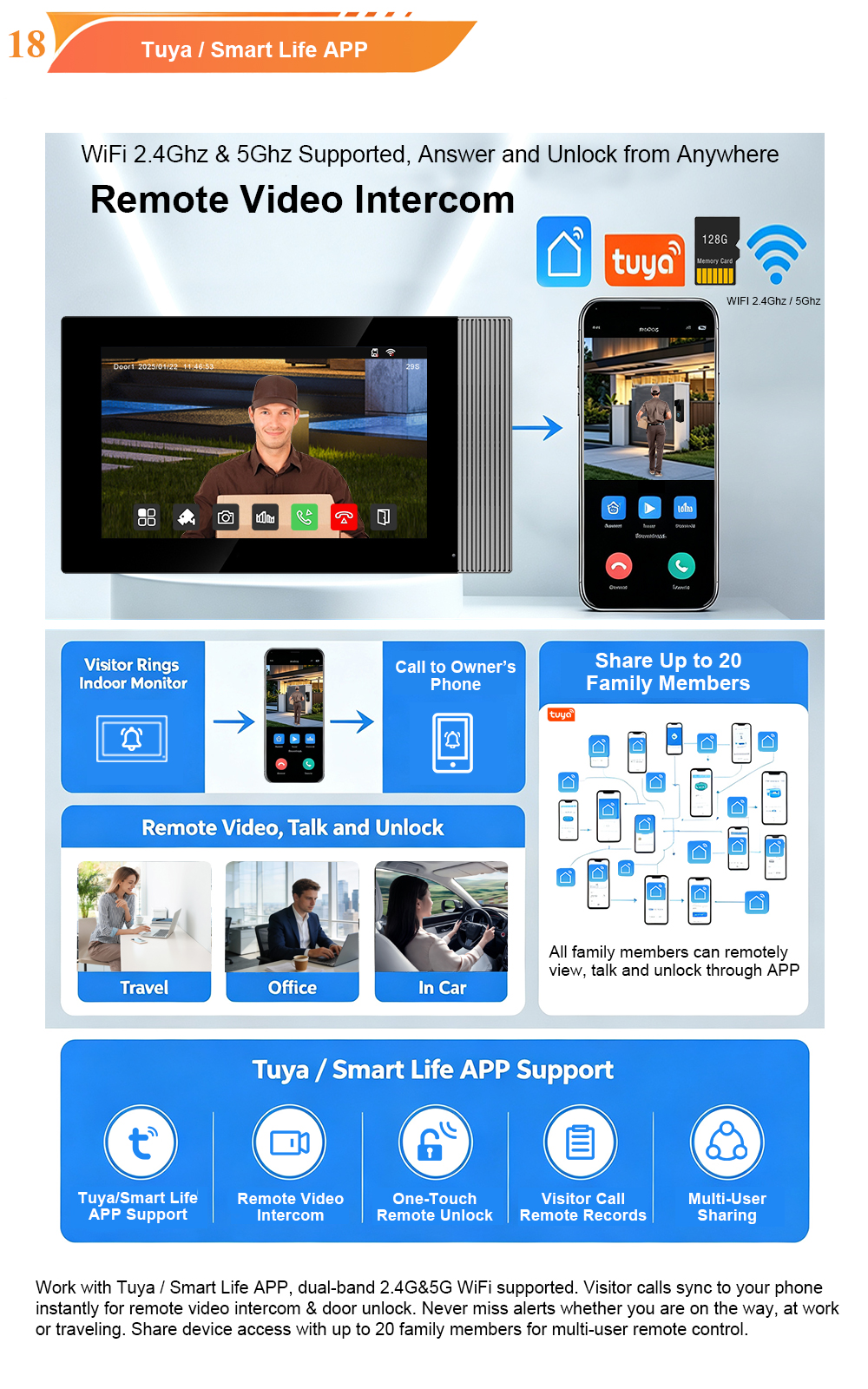
RFID vs QR Code vs Mobile App: Comparing Access Methods for Residential Buildings
Choosing the right access method for your apartment building or gated community is a decision that affects security, convenience, cost, and resident satisfaction. RFID cards, QR codes, and mobile apps each have distinct strengths and weaknesses. This guide compares them side by side—so you can make an informed choice for your next project. In modern…
-
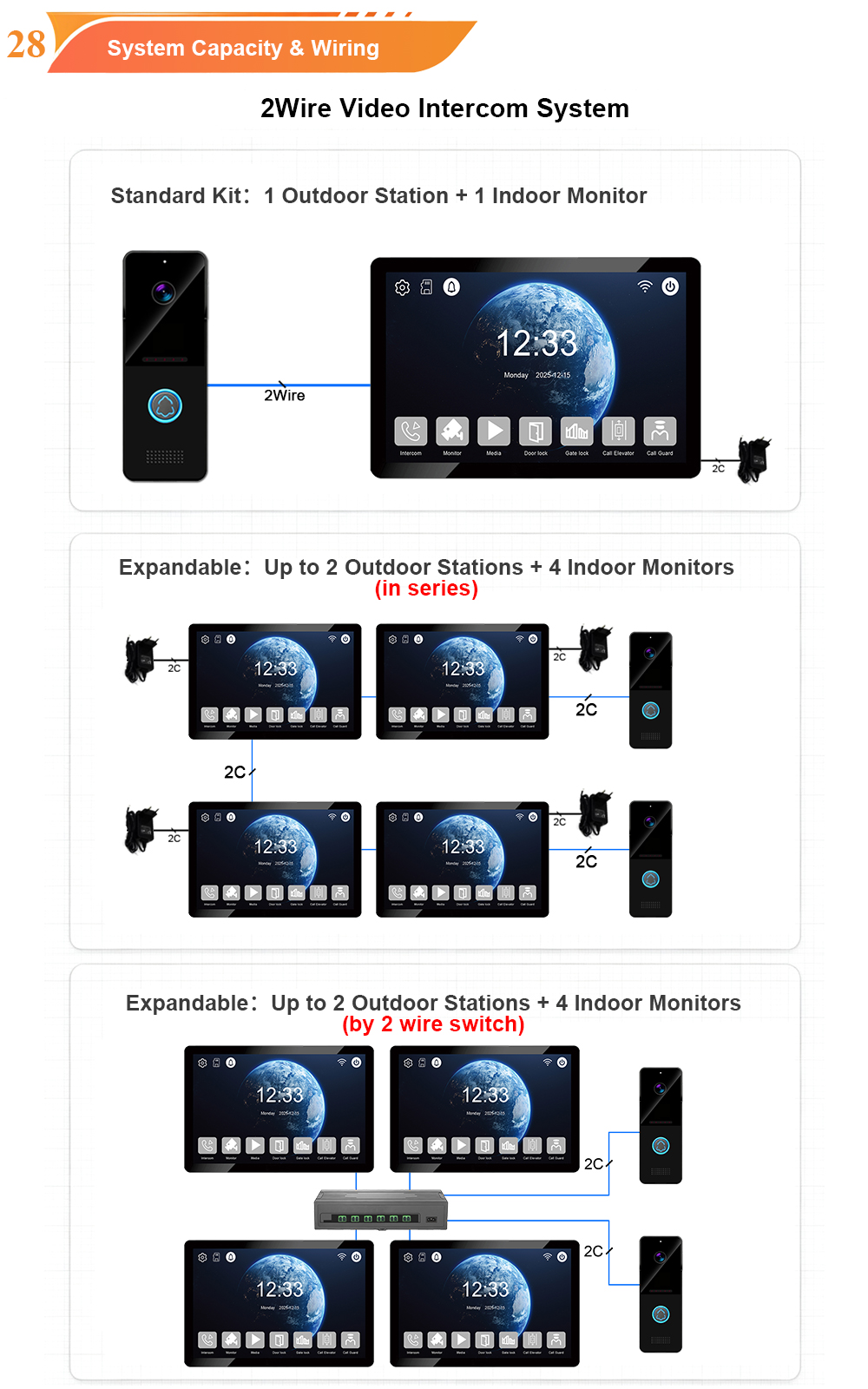
Tuya vs Smart Life: Which App Is Better for Your Video Door Phone?
A practical comparison to help you choose the right app for your smart intercom system If you’ve recently purchased a FARHD video door phone, you’ve probably noticed that the product documentation mentions two apps: Tuya Smart and Smart Life. This immediately raises a common question: which one should you actually use? Are they different? Does…
-
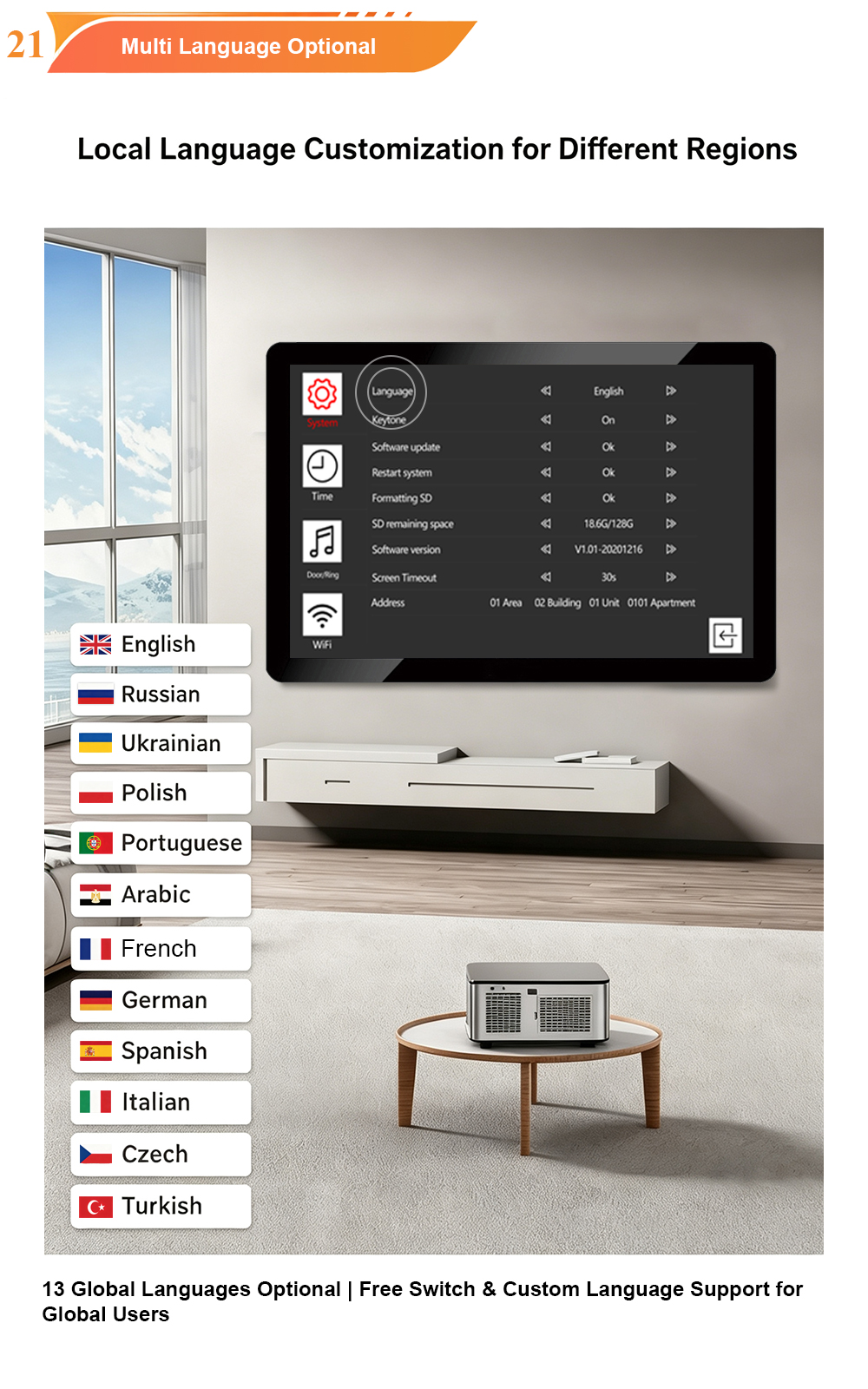
Touch Screen vs Non-Touch Video Intercom Monitors: Which Is Better for Residents?
When specifying a video intercom system for an apartment building, villa, or residential community, one question often divides decision-makers: should the indoor monitor have a touch screen or physical buttons? Both options have passionate advocates. Both have real advantages. And both can be the wrong choice if they don’t match the needs of the residents…
-
How to Upgrade an Old Apartment Intercom to IP Without Rewiring: Step-by-Step
Upgrading an old apartment intercom to a modern IP system no longer requires tearing down walls, replacing every cable, or disrupting residents for weeks. With the right retrofit technology, you can deliver full IP functionality—video calling, mobile access, remote management—using the existing 2-wire cabling already inside your building. This step-by-step guide shows you how. Many…