Video Intercoms for Historic Buildings: How to Modernize Access Without Damaging Heritage Architecture
Share
The Governing Constraint: Fabric First, Technology Second
Conservation regulations in most heritage jurisdictions prohibit visible cables, surface-mounted conduits, and devices that would alter the character of the building. Drilling into stone façades, ornate woodwork, or antique brickwork is treated as permanent damage, not a maintenance task. This means the technology stack must be chosen not on feature-set alone, but on installation methodology: how little does it disturb, and how completely can it be undone?
Three Retrofit Pathways That Respect Historic Fabric
2-Wire IP Retrofit: Modern Function over Legacy Cabling
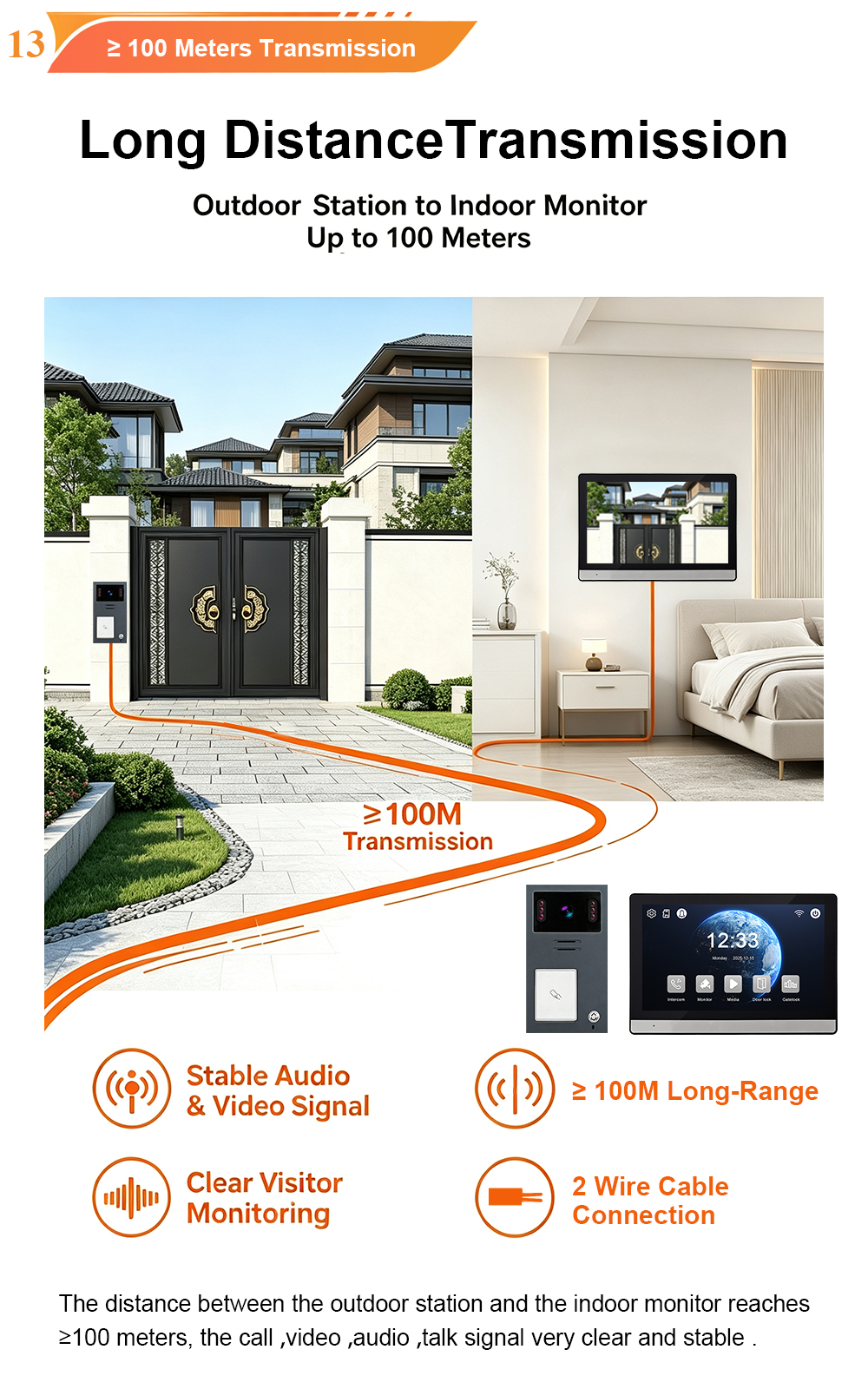
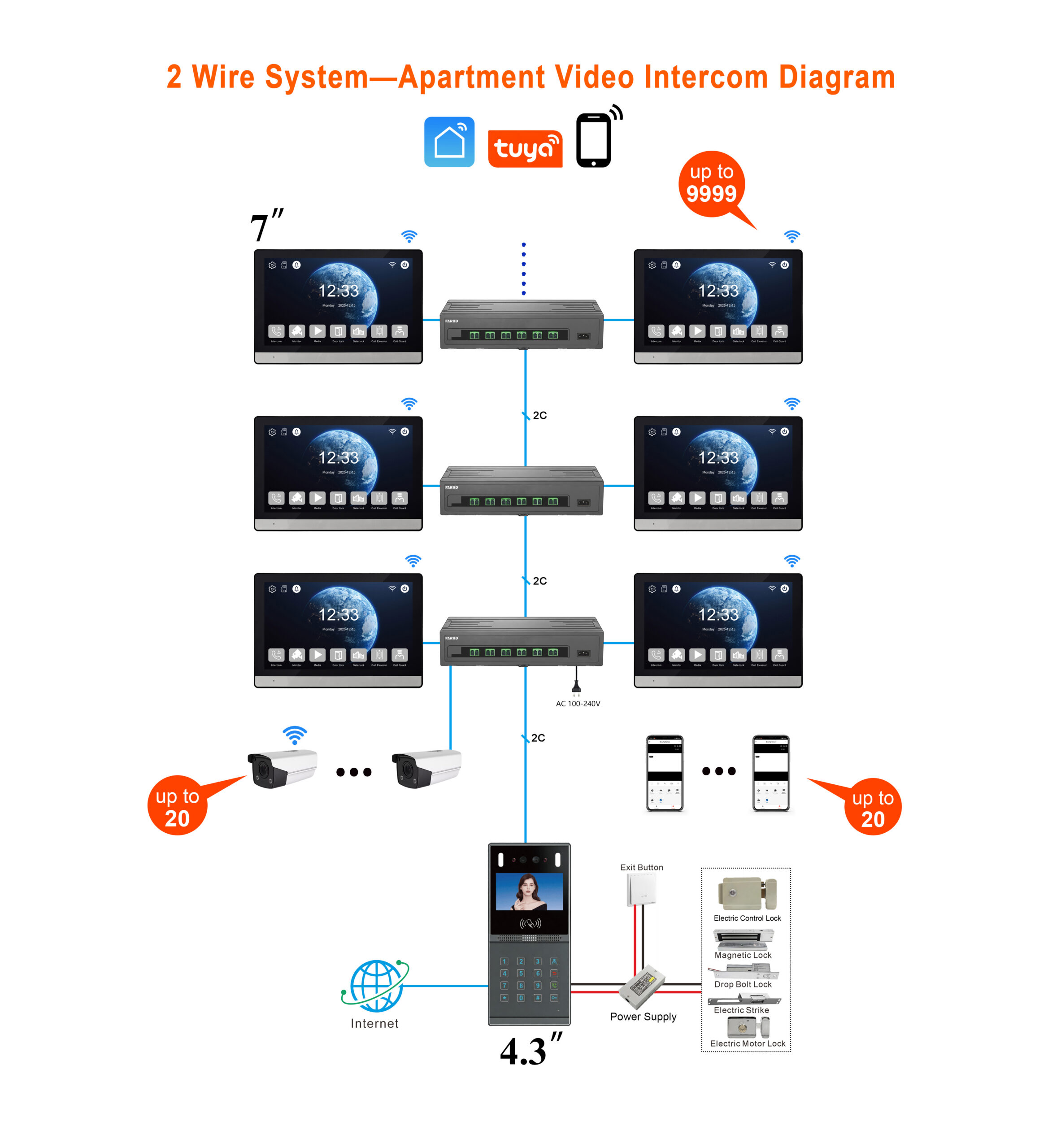
Many historic apartment buildings already contain two-core cabling from an earlier analog intercom or telephone system. A 2-wire IP retrofit leverages that existing infrastructure to deliver full IP functionality—HD video, mobile credentials, and cloud management—without replacing cables or opening walls. Systems such as 2N’s Clip 2Wire-IP or Akuvox’s 2-wire IP kits are explicitly designed for this scenario, allowing an analog entry system to become an IP system while preserving the building’s physical structure. The connection layer is the existing pair of wires; the upgrade is in what travels over it. For buildings where original cabling is intact and continuous, this is often the least invasive route to modern video verification.
Wireless and Battery-Powered Components: Zero Cabling, Zero Penetration
Where no usable cabling exists—or where the preservation authority will not permit even the routing of a two-core cable— wireless or battery-operated components are the preferred solution. A wireless video doorbell can be mounted on a removable bracket on the original door frame, with zero holes drilled, zero wires run, and zero damage to any original surface. The outdoor unit communicates with an indoor chime or monitor over Wi-Fi or a dedicated RF link; power comes from a removable lithium battery, optionally supported by a small solar panel. This approach minimizes structural intervention and makes subsequent dismantling straightforward—a critical requirement in heritage contexts where reversibility is assessed as part of the consent process.
Concealed Placement and Architecturally Compatible Mounting
Even when wired infrastructure is used, the visible device can be kept subordinate to the architecture. Sensors and actuators are placed in architecturally compatible positions—hidden behind claddings, integrated into existing building elements, or mounted where the original entrance hardware already sits. Where an intercom panel is required at street level, a discreet panel can be added to existing railings at the principal entrance rather than cutting into historic stonework. The goal is not to hide the technology entirely, but to ensure it reads as a functional addition, not a visual disruption.
The Regulatory Layer: Listed Building Consent and Its Triggers
Replacing an intercom on a listed building does not automatically require Listed Building Consent—but the work may cross that threshold if it alters historic fabric, enlarges or relocates a mounting opening, introduces visible cabling or junction boxes, adds cameras, readers or illumination, or materially changes the entrance. Conservation officers will veto a bulky, glowing modern keypad bolted onto delicate stucco or historic brickwork if the visual disruption is not justified and consented.
The practical implication is that the entire entrance proposal—panel, opening, fixings, cable routes, camera, reader, and illumination—must be reviewed as one coordinated package before specification. A solution that is technically compliant but visually jarring is unlikely to secure approval. Conversely, a wireless or 2-wire retrofit that leaves the historic opening untouched and the visible hardware minimal is far easier to defend to a conservation officer.
Accessibility Is Not Optional
Even in a pre-1993 building where some ADA exemptions may apply, property managers must still ensure that entrances and access points meet modern accessibility standards. The retrofit solution should therefore incorporate touchless entry, mobile credentials, tactile controls, and induction-loop compatibility where feasible. A wireless or 2-wire upgrade that replaces a heavy door handle with mobile-based unlock, or that adds an indoor station with tactile buttons and hearing-aid support, improves accessibility without adding structural complexity.
Practical Specification Checklist for Heritage Projects
Before committing to a video intercom system for a historic building, verify the following:
Building status and consent pathway. Is the building statutorily listed, within a conservation area, or subject to an estate management scheme or Article 4 Direction? These controls can overlap, and each may impose different approval requirements.
Existing cabling condition. If two-core cabling is present and continuous, a 2-wire IP retrofit is the least invasive wired option. If cabling is absent or degraded, a wireless/battery solution avoids new penetration entirely.
Visual integration. Will the proposed panel, camera, and reader be mounted on original fabric, or can they be placed on a secondary element (railings, a modern addition, or an existing service box) that is not part of the historic entrance composition?
Reversibility. Can the installation be removed without leaving permanent marks, enlarged openings, or patched stone? Removable brackets, surface-mounted raceways, and non-adhesive fixings all support reversibility.
Accessibility. Does the solution support touchless or mobile entry, and are the indoor controls usable by residents with visual or hearing impairments?
FARHD’s Position in This Landscape
FARHD’s 2-wire systems are built around the principle that modern access control should not require the destruction of what already exists. The 2-wire non-polarity architecture is designed to reuse existing two-core cabling, and the product range includes wireless options for entrances where no wiring can be introduced. For heritage projects, the relevant question is not whether FARHD can supply a feature—it is whether the chosen configuration can be installed, consented, and later removed without leaving a trace on the building’s historic fabric. That is the standard against which any video intercom specification for a historic building should be measured.
📩 Email: [email protected]
🌐 Website: www.farhd.com
📱 WhatsApp: +86 188 2370 9809 / +86 199 2545 1918
FARHD – Video Intercom Manufacturer Since 1998.
#HistoricBuildings #HeritageRetrofit #VideoIntercom #2WireIP #WirelessIntercom #ListedBuildingConsent #AccessControl #BuildingPreservation #FARHD #OEM #ODM

About the Author: S & Y Internet Technology Inc.
S & Y Internet Technology Inc. is a professional installation and repair service provider based in Flushing, New York. Our expert team provides door-to-door installation and maintenance within a 100 km radius, ensuring quick response and high-quality results for every project — whether residential, commercial, or specialized.

Install & Repair Services
You May Also Interest
-
Video Intercom Power Supply Options Explained: PoE, 2-Wire, Battery and Solar
Video intercom power supply is not a single decision. It is a cascade of decisions that begins with the building’s existing wiring and ends with how much maintenance the owner is willing to accept over the system’s life. PoE, 2-wire, battery, and solar are not four variations of the same solution. They serve different installation…
-
From Inquiry to Installation: A Buyer’s Journey for Apartment Video Intercom Projects
Sourcing a video intercom system for an apartment building is a multi-stage process. It begins with a simple inquiry and ends with a fully operational system protecting residents and streamlining access. For distributors, system integrators, and property developers, understanding this journey is essential to avoiding delays, cost overruns, and installation headaches. This guide walks you…
-
How to Evaluate Video Intercom Suppliers: Quality, Certifications, and After-Sales Support
Choosing the right video intercom supplier is not just a purchasing decision—it is a long-term partnership that affects your product quality, your margins, and your reputation. This guide explains how to evaluate suppliers on three critical dimensions: quality, certifications, and after-sales support. In the global video intercom market, hundreds of suppliers claim to be manufacturers….
-
Video Intercom Manufacturer Audit: 10 Factory Checks Before You Buy
Choosing a video intercom manufacturer is not just a purchasing decision—it is a supply chain risk assessment. Before you place a bulk order, you need to verify that your supplier is a real factory, not a trading company, and that their quality control, R&D, and production capabilities can support your projects. This guide gives you…