Video Intercom Access Card Cloning Risks: How to Secure RFID and NFC Credentials
Share
Video intercom systems sit at the physical perimeter of a building, and the credential presented at that perimeter is often the weakest link in the chain. A cloned card—duplicated in seconds with commercially available hardware—turns a video intercom into a liability rather than a safeguard. The risk is not theoretical: security researchers have repeatedly demonstrated cloning and emulation attacks against real-world intercom and access control deployments, and the underlying weaknesses trace back to credential technology choices made years—sometimes decades—ago.
The Root of the Problem: Legacy Credential Technologies
Much of the installed base of RFID access cards relies on 125 kHz proximity technology or early-generation 13.56 MHz MIFARE Classic cards. Neither was designed to resist a determined adversary with modern tools.
Low-frequency 125 kHz cards carry no cryptographic protection at all. They broadcast a static identifier that any compatible reader—or a handheld cloning device—can capture and replay. Consumer-grade tools such as the Flipper Zero can clone standard EM4100 tags “reliably without needing external readers or proprietary software,” and the same capability has been used in real-world incidents to open gates and building entrances.
MIFARE Classic, despite its widespread deployment, depends on a proprietary Crypto-1 cipher with long-documented weaknesses. An empirical assessment published in late 2025 confirmed that weak or default sector keys, misconfigured access bits, and legacy deployment practices continue to enable unauthorized duplication and data modification that live systems accept as legitimate. The researchers demonstrated a cloned corporate identification badge and a manipulated benefits card using ISO/IEC 14443-A hardware and commercially available decoding tools—no exotic laboratory equipment required.
For video intercom systems specifically, the perimeter is where these weaknesses become exploitable. A 2026 security conference presentation on FERMAX intercom systems noted that while attacking the internal two-wire bus requires physical access inside the building, the outdoor access control panels with RFID reader modules are “right in front of our eyes” on the perimeter—and are offered in configurations supporting EM4100, MIFARE Classic, and MIFARE DESFire. Card cloning, credential implantation, and cryptographic attacks against such modules are active areas of offensive security research.
Beyond Cloning: Relay and Replay Threats
Cloning is only one vector. NFC credentials used on mobile devices introduce relay attack risks, where an attacker extends the communication distance between a legitimate credential and a reader without the user’s knowledge. Research in 2025 confirmed that host card emulation approaches alone cannot solve relay attacks under conservative security assumptions, and that hardware-backed secure elements are needed to prevent software relay attacks. Legacy MIFARE Classic deployments also remain susceptible to replay attacks because the credential exchange lacks dynamic challenge-response mechanisms.
What Actually Works: Layered Credential Security
Securing RFID and NFC credentials on a video intercom requires moving beyond a single technology fix. The effective approach layers several defenses.
Migrate to encrypted credentials with mutual authentication. The industry consensus is clear: 128-bit encrypted credentials such as MIFARE DESFire EV3 and HID Seos provide robust protection against cloning and brute-force attacks. These formats use AES-128 mutual authentication, meaning the card authenticates the reader and the reader authenticates the card—an attacker cannot simply replay a captured transaction. MIFARE DESFire EV3 carries Common Criteria EAL5+ certification for hardware and software, and supports randomized identifiers for privacy. For deployments still using MIFARE Classic or 125 kHz Prox, credential migration is not an upgrade—it is a necessary remediation of a known vulnerability.
Choose credential formats that bind to the device, not just the card. Mobile credentials stored in a phone’s secure element or digital wallet are device-bound and cannot be copied or transferred in the way a physical card can. When paired with multi-factor authentication—a PIN or biometric check at the phone level—a lost or stolen phone does not automatically become a working credential. Cloud-managed mobile access platforms can also revoke credentials remotely, closing the window between a device going missing and an attacker using it.
Secure the reader-to-controller link with OSDP. Even a strong credential can be undermined if the communication between the RFID reader and the access controller is unprotected. OSDP (Open Supervised Device Protocol) provides encrypted communication between reader and controller, and is increasingly available on video intercom door stations as an interface option. Wiegand, the legacy reader protocol still common in many installations, transmits credential data in the clear and is vulnerable to interception. Specifying OSDP-capable intercom hardware—and actually enabling the encrypted mode—closes a gap that credential-level security alone cannot address.
Consider biometrics as a complement, not a replacement. Palm vein recognition has emerged as a spoof-resistant biometric option for video intercoms, because vein patterns are internal and “nearly impossible to replicate”. Facial recognition with anti-spoofing technology can also reject printed photos and video playback. Biometrics eliminate the “lost card” problem entirely, but they should be deployed alongside—not instead of—secure RFID/NFC credentials, because biometric modalities introduce their own failure modes (environmental sensitivity, privacy considerations, and template storage risks).
Operational Hygiene: The Overlooked Layer
Technology alone does not secure a system. The IEEE empirical study on MIFARE Classic emphasized that mitigation must include key diversification, secure reader provisioning, integrity validation at the application layer, real-time anomaly detection, and back-end binding of credentials. In practice, this means: rotate and diversify encryption keys per site or per tenant rather than using a single master key; audit access logs for anomalous patterns such as a credential being used at two readers in physical impossibility; and deactivate credentials immediately upon tenant turnover or card loss. A cloned credential is only dangerous if the system accepts it—back-end binding and anomaly detection can flag a duplicate that should not exist.
A Practical Decision Framework for Video Intercom Deployments
For property managers, integrators, and security teams evaluating video intercom systems, the credential security question should be asked before the hardware is specified:
If the system uses 125 kHz Prox or MIFARE Classic — treat the deployment as legacy-risk. Plan migration to DESFire EV3 or Seos credentials; if full replacement is not immediately feasible, isolate high-security openings (lobby, garage, amenity spaces) behind encrypted readers while legacy cards remain on lower-risk doors during the transition.
If the system uses encrypted smart cards — verify that mutual authentication is actually enabled and that keys are diversified, not shared across the entire portfolio. Confirm that the reader-to-controller link uses OSDP in encrypted mode.
If the system supports mobile credentials — prioritize secure-element-backed implementations over HCE-only approaches for high-security doors, and require MFA (PIN or biometric) on the mobile device for access to sensitive areas.
For all deployments — pair credential security with video verification. A cloned card grants passage only after the intercom’s camera and access logic confirm that the person presenting it matches an expected pattern; anomaly detection at the controller layer can flag credentials used outside normal hours or at multiple points in rapid succession.
The video intercom is no longer just a communication device; it is the credential-verification checkpoint for the entire building. Securing RFID and NFC credentials is not about choosing the single “most secure” card—it is about eliminating legacy technologies that were never designed for adversarial conditions, encrypting every link in the authentication chain, and operating the system with the assumption that a credential will eventually be lost, stolen, or copied. Buildings that treat credential security as an architectural requirement rather than a checkbox will be the ones that keep cloned cards on the outside of the perimeter.

About the Author: S & Y Internet Technology Inc.
S & Y Internet Technology Inc. is a professional installation and repair service provider based in Flushing, New York. Our expert team provides door-to-door installation and maintenance within a 100 km radius, ensuring quick response and high-quality results for every project — whether residential, commercial, or specialized.

Install & Repair Services
You May Also Interest
-
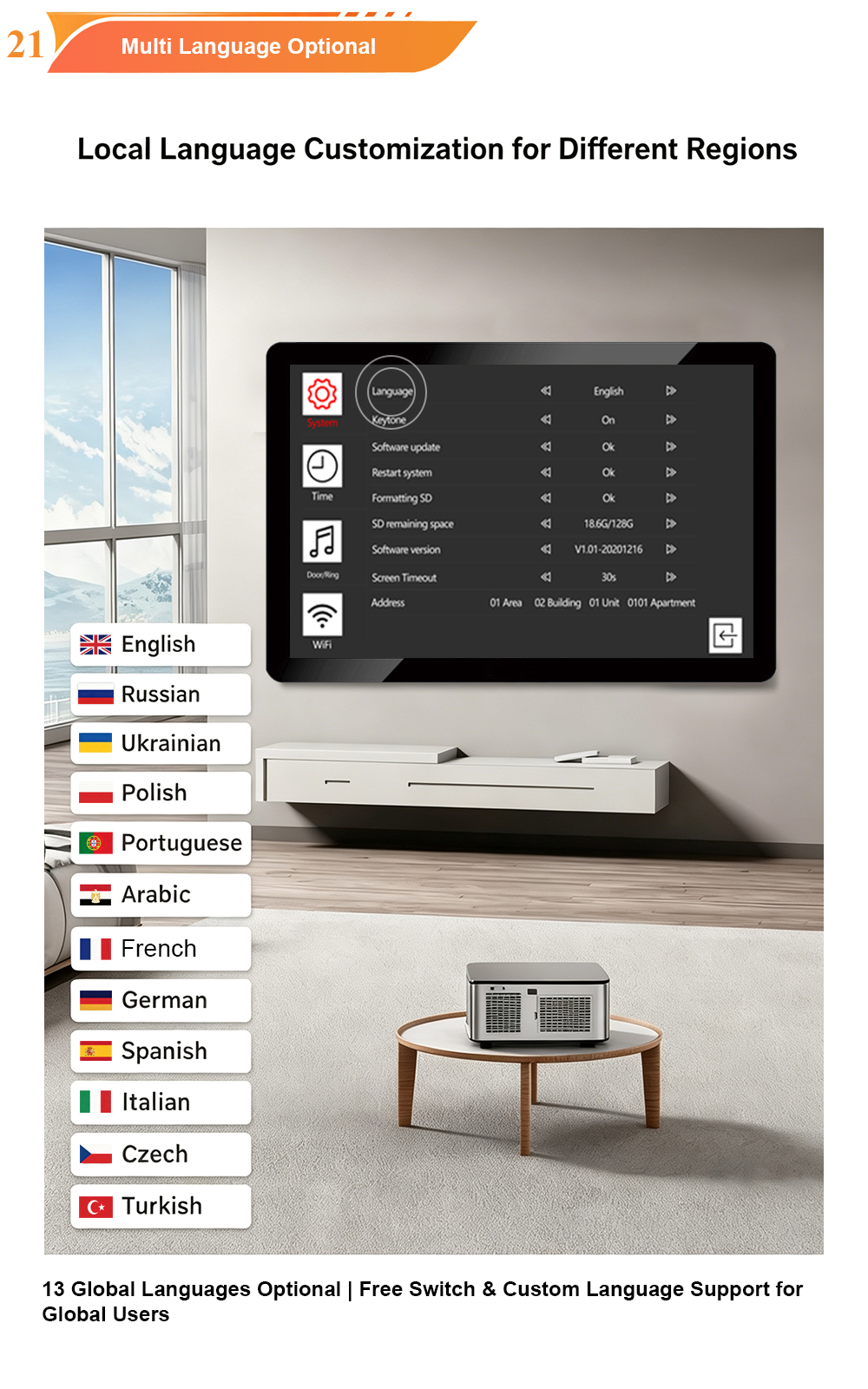
Multi-Language Video Intercom Interfaces: Why Global Buildings Need Localized Apps
A video intercom screen that displays a language menu is not the same thing as a localized intercom experience. The distinction matters more now than at any previous point in the category’s history—because the center of gravity in video intercom interaction has shifted from the wall-mounted indoor monitor to the resident’s phone. For a global…
-
Wireless Home Perimeter Camera System Connecticut for DIY-Friendly Setup
A well-designed wireless home perimeter camera system in Connecticut gives you eyes on every side of your property without tearing up walls or running long cables. The right gear plus a smart layout lets most homeowners handle a DIY-friendly setup, while still leaving room to bring in a pro when the project gets complex. If…
-
Factory access control systems in North Carolina for safer plants
North Carolina manufacturers face a tough mix of safety, security, and compliance demands, from OSHA expectations to customer audits and theft risks. Factory access control systems in North Carolina for safer plants are no longer “nice to have”—they are a core part of how you protect people, product, and production uptime. Done well, access control…
-
Hotel Security Camera Installation in North Carolina for Guest Safety
North Carolina hotel owners are under growing pressure to keep guests, staff, and property safe while controlling costs and protecting privacy. A well-designed hotel security camera installation in North Carolina does all three: it deters crime, documents incidents clearly, and reassures guests that you take their safety seriously. Done poorly, it wastes money, creates blind…