Cloud-Based vs On-Premise Video Door Phone: Which Is More Secure?
Share
Quick Navigation
- What Is a Cloud-Based Video Door Phone System?
- What Is an On-Premise Video Door Phone System?
- Cloud-Based Security: The Modern Defense-in-Depth Approach
- On-Premise Security: Total Control and Physical Isolation
- Head-to-Head: Cloud vs On-Premise Security Comparison
- The Security Risks You Need to Know
- The Hybrid Approach: The Best of Both Worlds
- How to Choose the Right System for Your Building
- Why FARHD Is a Trusted Partner for Both Solutions
- Frequently Asked Questions
When it comes to securing a multifamily building, few decisions carry as much weight as choosing between a cloud-based and an on-premise video door phone system. Both promise security—but they deliver it in fundamentally different ways.
The global video intercom market is approximately $3 billion in 2026 and growing at 10–16% per year, with IP and cloud-native architectures rapidly eating into proprietary systems. As more buildings move to networked intercoms, the security question becomes more urgent. A compromised intercom system can grant an attacker direct access to a building without triggering alarms—a risk that has historically been ignored because intercoms were seen as low-value targets.
This guide breaks down the security strengths and weaknesses of both approaches, helping you make an informed decision for your property.
What Is a Cloud-Based Video Door Phone System?
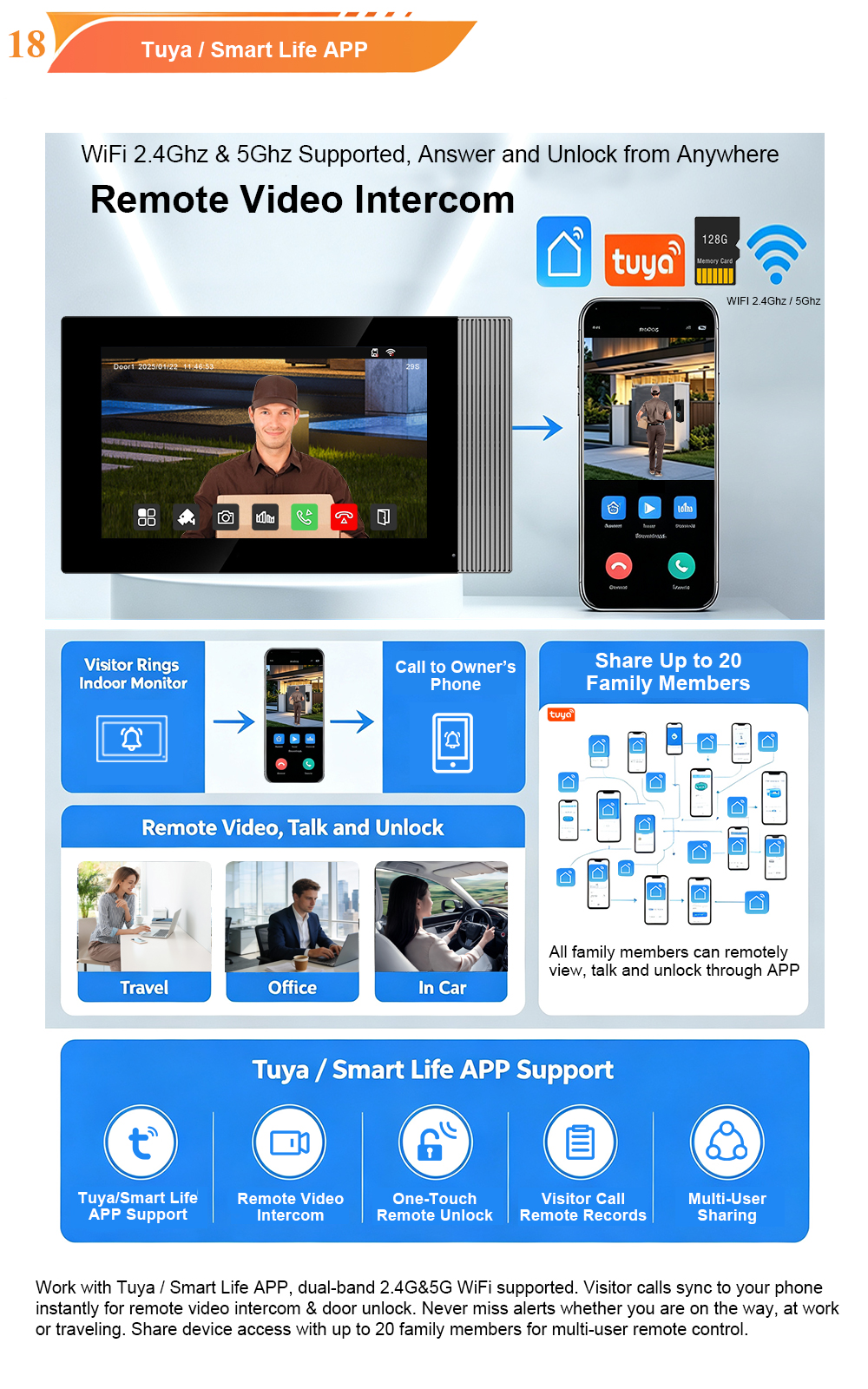
A cloud-based video door phone system routes voice, video, and access control data through an internet connection to secure, remote cloud servers. Property managers and tenants interact with the system via smartphone apps or web browsers.
Key characteristics:
- Data stored on third-party cloud infrastructure (e.g., AWS, Azure)
- Managed through a web dashboard or mobile app
- Automatic over-the-air (OTA) firmware updates
- Subscription-based pricing model (monthly or annual fees)
- End-to-end encryption for all video and audio data
Best for: Properties requiring remote management, real-time video streaming, instant guest credentialing, and seamless user directory updates.
What Is an On-Premise Video Door Phone System?
An on-premise video door phone system relies entirely on local hardware and a “closed-loop” communication model, meaning data stays within the property’s physical network. Traditionally hardwired to physical substations inside the building, modern on-premise systems can also utilize local Wi-Fi or cellular networks to dial out.
Key characteristics:
- Data stored locally on SD cards, hard drives, or local NVRs
- Managed through physical master stations or local network panels
- Firmware updates require manual intervention
- One-time capital expense with no ongoing subscription fees
- Communication stays within the building’s private infrastructure
Best for: Properties seeking a one-time capital expense with zero ongoing subscription fees, or high-security facilities that forbid external internet connections.
Cloud-Based Security: The Modern Defense-in-Depth Approach
Cloud-based intercom systems represent a fundamental shift in security philosophy—from a perimeter-only model (physical locks) to a defense-in-depth model (encryption, identity, anomaly detection, forensics).
Security Advantages of Cloud-Based Systems
1. End-to-End Encryption
Every cloud intercom call is encrypted in transit using industry-standard protocols. Signalling is carried over TLS 1.3, while media uses DTLS-SRTP with AES-256-GCM and perfect forward secrecy. This is a significant upgrade from legacy on-premise analog or unencrypted IP intercoms that transmit audio in the clear or with proprietary XOR-based obfuscation—which is not real cryptography.
2. Automatic Security Updates
One of the biggest security vulnerabilities in any system is unpatched firmware. Cloud systems deliver automatic OTA firmware updates that reduce patch latency from months (on legacy systems) to minutes, closing security windows before exploits can propagate.
3. Zero-Trust Architecture
Cloud intercoms use zero-trust architecture to achieve a stronger security posture than legacy on-premise systems that rely on physical-only barriers. Remote unlock with one-time codes and time-bounded permissions eliminate shared physical keys and unauthorized credential sharing.
4. Comprehensive Audit Logs
Full audit logs and forensic-ready video retention satisfy GDPR, SOC 2, and other compliance requirements without manual record-keeping. If you need to recover an activity log or video clip for a police report, you simply log into a browser dashboard and download the encrypted files instantly from anywhere.
5. AI-Assisted Threat Detection
AI-assisted visitor screening with liveness detection and facial recognition can reduce unauthorized access attempts by 40–60% versus manual inspection.
6. Centralized Multi-Site Management
Cloud platforms allow centralized oversight across multiple sites, easier scaling, and a consistent experience via web and mobile interfaces. Security teams can manage access across buildings without relying only on on-site hardware or manual logs.
Security Risks of Cloud-Based Systems
1. Internet Dependency
Cloud-only systems break when the internet does. If the router or ISP fails, so does the intercom. This creates a single point of failure that can be exploited during network outages.
2. Third-Party Data Exposure
Data is stored on third-party servers. While reputable providers use strong encryption, the fact remains that your building’s access data resides outside your direct control. Cloud platforms require careful evaluation of the provider’s security certifications and data protection measures.
3. API and Cloud Back-End Vulnerabilities
Modern intercoms run embedded Linux, open WebRTC stacks, and cloud agent protocols—broadening the attack surface from physical tampering alone to firmware exploits, API injection, and supply-chain risks.
4. Subscription Lock-In
Ongoing subscription fees can add up. Some systems charge per user or per door on a monthly or annual basis.
On-Premise Security: Total Control and Physical Isolation
On-premise systems offer a different security paradigm: complete data sovereignty and physical isolation from external networks.
Security Advantages of On-Premise Systems
1. Complete Data Control
With an on-premise solution, you decide where your data is stored, who has access to it, and how it is protected. On-premise deployment means the service provider has no access to your personal data, IP addresses, or communication logs—all data remains within your private infrastructure.
2. No Internet Dependency
On-premise systems can operate completely independently of internet connectivity. They don’t rely on Wi-Fi networks that can go down, and they display lower levels of latency. Traditional closed-loop systems require no internet and have no monthly fees.
3. Physical Security
Physical connections are harder to tamper with. Wired on-premise systems provide a secure communication line, reducing the risk of unauthorized access or eavesdropping.
4. No Ongoing Subscription Fees
Once installed, on-premise systems have no recurring costs. This can be particularly attractive for budget-conscious property owners.
5. Private SIP Server Options
Private SIP server IP intercoms offer stable connections and improved data security. Localised management of the server by users facilitates secure data handling, with all information stored on the private server, safeguarding user privacy and data security.
Security Risks of On-Premise Systems
1. Slow Patching Cycles
Unchanged admin passwords and 6–12-month patch cycles are the biggest source of intercom breaches. Without automatic updates, security vulnerabilities can remain open for months or years.
2. Physical Access Vulnerability
Data stored locally on an SD card or hard drive can be physically accessed, stolen, or damaged. To retrieve footage, you must physically access the intercom unit, remove the memory card, and transfer it to a computer.
3. Limited Remote Management
Modifying directories often requires visiting the physical master station or connecting a laptop directly to the local network panel. This creates operational friction that can lead to security shortcuts.
4. No Encryption by Default
Legacy on-premise analog or unencrypted IP intercoms transmit audio in the clear or with proprietary XOR-based obfuscation—not real cryptography. Even modern on-premise systems may lack the encryption standards that cloud systems deliver by default.
5. Single Point of Failure
While on-premise systems don’t depend on internet, they do depend on local hardware. If the master station fails, the entire system can go down until repaired.
Head-to-Head: Cloud vs On-Premise Security Comparison
| Security Factor | Cloud-Based | On-Premise |
|---|---|---|
| Data Encryption | ✅ TLS 1.3 + DTLS-SRTP AES-256-GCM | ⚠️ Often unencrypted or weak obfuscation |
| Automatic Security Updates | ✅ OTA updates in minutes | ❌ Manual; 6–12 month cycles |
| Data Control | ❌ Third-party servers | ✅ Complete local control |
| Internet Dependency | ❌ Breaks without internet | ✅ Works offline |
| Audit Trails | ✅ Instant, anywhere access | ⚠️ Physical access required |
| Physical Tampering Risk | ✅ Cloud storage protected | ❌ Local hardware accessible |
| Zero-Trust Architecture | ✅ Built-in | ⚠️ Often missing |
| AI Threat Detection | ✅ 40–60% reduction in unauthorized access | ❌ Usually not available |
| Compliance | ✅ GDPR, SOC 2 ready | ⚠️ Requires manual effort |
| Ongoing Costs | ❌ Subscription fees | ✅ No recurring fees |
| Upfront Cost | ✅ Lower | ❌ Higher |
The Security Risks You Need to Know
The Growing Threat Landscape
In 2026, intercom systems are no longer air-gapped hardware—they are networked devices that run embedded Linux, open WebRTC stacks, and cloud agent protocols. This broadens the attack surface dramatically:
- Default credentials remain a top vulnerability
- Unpatched firmware can be exploited for months
- Network-adjacent attacks like ARP spoofing target local traffic
- API and cloud back-end flaws can compromise entire systems
Compliance Is Not Optional
Modern intercom systems must comply with a growing list of regulations:
- GDPR (video retention, data privacy)
- UK PSTI (connected device firmware requirements)
- ISO/IEC 27001 (access controls)
- SOC 2 (audit logs)
- EU AI Act (enforcement from August 2026 for AI features like facial recognition)
Regulators no longer accept “physically secure” as evidence—security must be demonstrable and auditable.
The Hybrid Approach: The Best of Both Worlds
One of the most compelling developments in the intercom industry is the hybrid approach—combining cloud management with local processing and failover.
What is a hybrid intercom system?
A hybrid system keeps local SIP fallback so that the system continues to function even when the internet goes down. Edge AI runs on the door station for latency and privacy (face match, tailgating detection, package detection), while the cloud handles tenant management.
Why hybrid works:
- Local processing for low-latency, privacy-sensitive operations
- Cloud management for remote access, tenant onboarding, and audit logs
- Failover protection – if one connection goes down, another takes over
- Compliance-friendly – sensitive data can stay local while non-sensitive data goes to the cloud
Suprema, for example, now allows customers to choose between on-premise and cloud-based models based on operational and regulatory needs, with its BioStar X platform integrating access control, video surveillance, and system integrations into a single environment.
How to Choose the Right System for Your Building
| Your Situation | Recommended System |
|---|---|
| New construction with reliable internet | Cloud-Based – lower upfront cost, automatic updates, modern features |
| High-security facility (government, military) | On-Premise – complete data control, no external exposure |
| Building with poor or unreliable internet | On-Premise or Hybrid – local fallback is essential |
| Multi-site property management | Cloud-Based – centralized management across locations |
| Budget-conscious with no recurring fees | On-Premise – one-time capital expense |
| Want modern features without full replacement | Hybrid – cloud management + local reliability |
| GDPR/Privacy-sensitive region | On-Premise or Hybrid – keep sensitive data local |
Decision Framework
Ask yourself these questions:
- What’s your internet reliability? If it’s poor, on-premise or hybrid is safer.
- Do you need remote management? Cloud is essential for multi-site properties.
- What’s your budget model? Prefer CapEx or OpEx?
- What are your compliance requirements? Some regulations require local data storage.
- How quickly do you need to respond to security threats? Cloud updates happen automatically; on-premise requires manual effort.
Why FARHD Is a Trusted Partner for Both Solutions
With over 28 years of industry experience, FARHD is a leading Chinese manufacturer of video door phones and intercom systems—offering solutions for cloud, on-premise, and hybrid deployments to meet the diverse needs of multifamily properties worldwide.
Full In-House R&D and Production: FARHD designs and manufactures everything from TFT LCD screens, driver boards, and camera modules to complete villa and apartment building intercom systems. This end-to-end control ensures quality and seamless integration at every stage.
Comprehensive Product Range:
- Wireless video doorbells
- 4-wire CVBS and AHD video doorbells
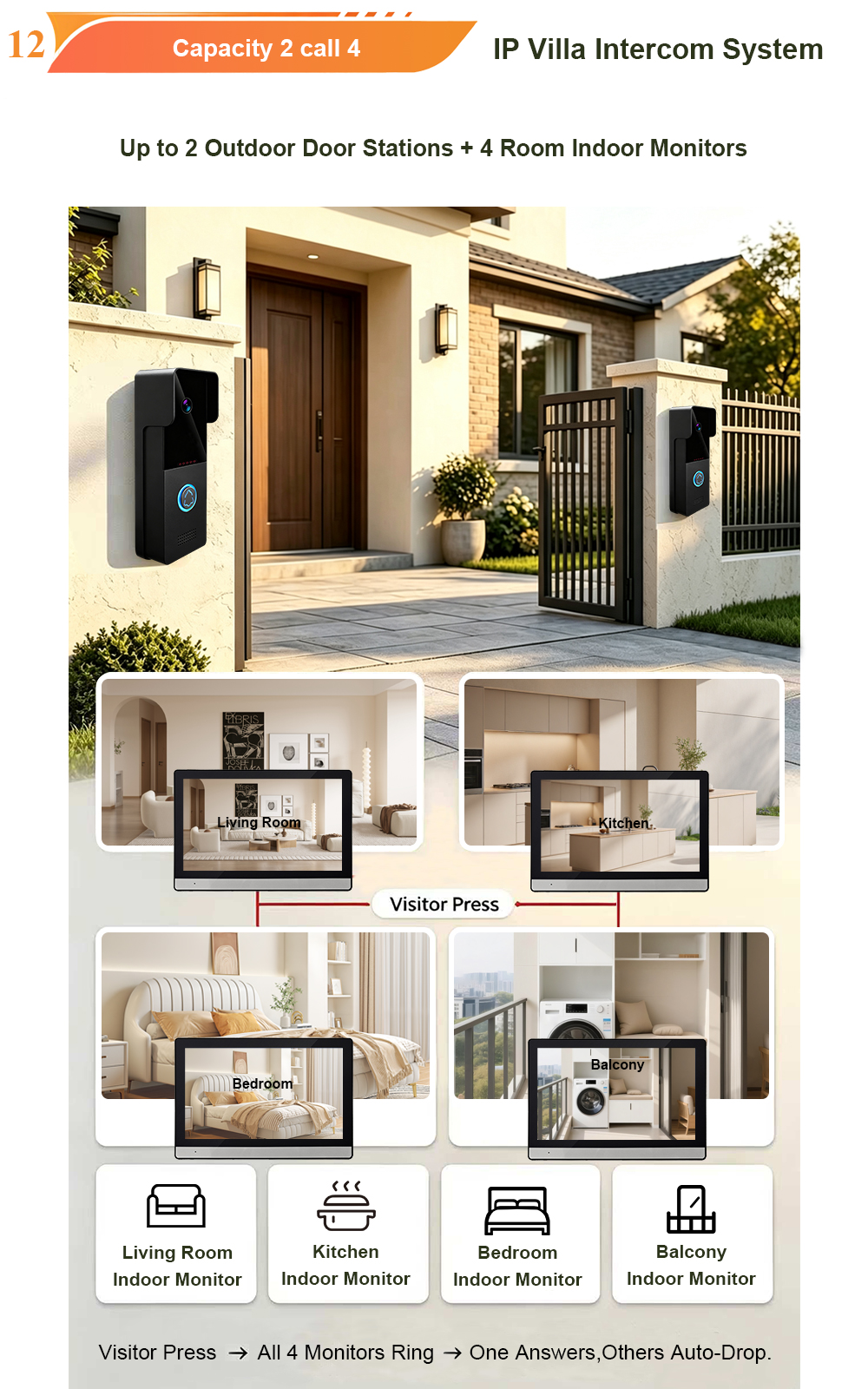
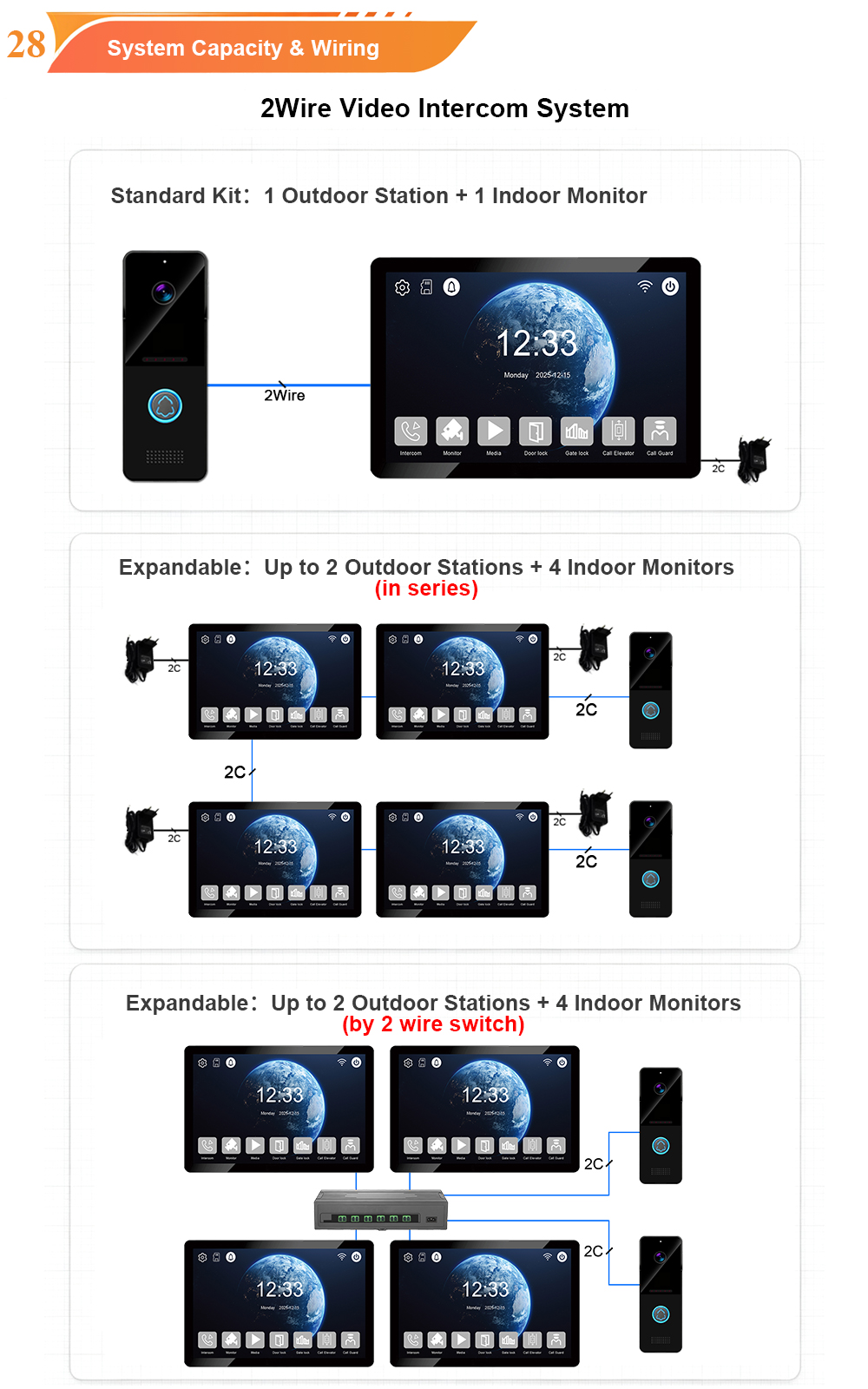
- 2-wire IP systems for villas and apartments
- IP-based systems for villas and apartments
- Audio intercom systems
This means FARHD can provide the right security architecture for any building situation—whether you need a cloud-connected system with remote management, a fully on-premise solution for maximum data control, or a hybrid approach that combines both.
Proven Track Record: FARHD has successfully completed over 10,000 large-scale building video intercom projects, including ultra-large communities with 1,000, 3,000, and even over 5,000 households. Supported by 28 direct sales branches across China, they have the expertise to handle projects of any scale.
Global Reach: FARHD provides SKD semi-knocked-down solutions to assembly factories across Europe, the Middle East, South America, Southeast Asia, the United States, Russia, India, Iran, Turkey, South Korea, and Italy—effectively reducing both production and tariff costs for partners.
International Certifications: Products hold CE, FCC, RoHS, IP65 water resistance, and EMC certifications.
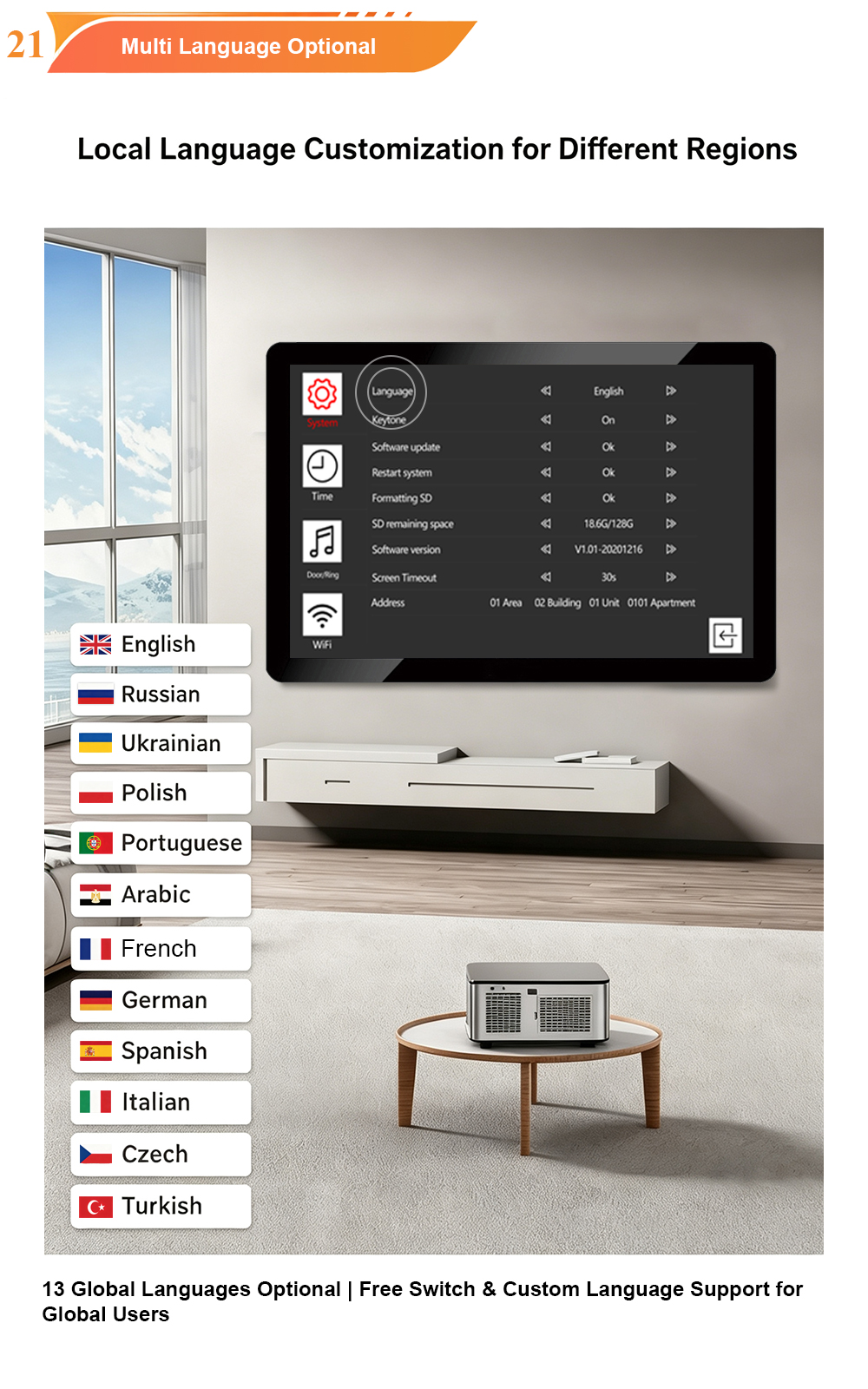
OEM/ODM Services: Comprehensive customization including software and hardware development, UI design, functional module adjustments, and tailored packaging solutions.
After-Sales Support: A dedicated technical support group is established upon product delivery to assist with programming, device installation, and wiring connections throughout the process.
Scale: FARHD serves over 1,000 enterprises worldwide with an annual sales volume of 300,000 units.
Frequently Asked Questions
Which is more secure—cloud or on-premise?
It depends on your threat model. Cloud systems offer stronger encryption, automatic updates, and zero-trust architecture—defending against digital threats. On-premise systems offer complete data control and physical isolation—defending against third-party data access. Neither is inherently more secure; the right choice depends on your specific security requirements.
Can a cloud-based intercom be hacked?
Like any internet-connected system, cloud intercoms can be vulnerable if not properly secured. However, reputable providers use TLS 1.3 encryption, zero-trust architecture, and automatic security updates to minimize risk. The biggest risks are typically default credentials and unpatched firmware—which affect both cloud and on-premise systems.
What happens if the internet goes down with a cloud system?
Cloud-only systems break when the internet does. This is why many properties choose hybrid systems that keep local SIP fallback for continued operation during outages.
Does an on-premise system require ongoing maintenance?
Yes. On-premise systems require manual firmware updates, physical hardware maintenance, and local data backups. Patch cycles of 6–12 months are common, which can leave security vulnerabilities open for extended periods.
Which system is better for GDPR compliance?
Both can be compliant, but in different ways. Cloud providers typically offer built-in compliance features like audit logs and encryption. On-premise systems allow you to keep all data within your jurisdiction, which can simplify certain compliance requirements.
Can I switch from on-premise to cloud later?
Yes, but it may require hardware replacement or significant reconfiguration. This is why it’s important to choose the right architecture from the start—or opt for a hybrid system that gives you flexibility.
What’s the cost difference?
Cloud systems typically have lower upfront costs but require ongoing subscription fees (per user or per door). On-premise systems have higher upfront costs but no recurring fees. Over 5 years, cloud TCO can beat on-premise by 25–35%.
Conclusion
The question isn’t “which is more secure?”—it’s “which security model fits your building’s needs, risk tolerance, and operational requirements?”
| Aspect | Cloud-Based | On-Premise |
|---|---|---|
| Security Strength | Defense-in-depth: encryption + zero-trust + automatic updates | Physical isolation + complete data control |
| Best For | Multi-site properties, modern buildings with reliable internet | High-security facilities, buildings with poor internet |
| Key Risk | Internet dependency, third-party data exposure | Slow patching, physical access vulnerability |
| Compliance | Built-in audit logs and encryption | Full data sovereignty |
The global video intercom market is shifting decisively toward cloud and hybrid architectures. Cloud TCO beats on-premise by 25–35% over 5 years, and cloud-native systems with SIP/WebRTC are eating proprietary systems. But cloud-only breaks when the internet does—making hybrid the production default for many properties.
Whether you choose cloud, on-premise, or hybrid, investing in a modern video intercom system is a strategic decision that enhances security, convenience, and property value. The key is choosing the right architecture for your building—not just following the trend.
Ready to secure your building with the right video intercom architecture? Contact FARHD for a customized solution tailored to your property’s security needs, infrastructure, and budget.
This guide is brought to you by FARHD—your partner in smart video intercom solutions for multifamily properties worldwide.

About the Author: S & Y Internet Technology Inc.
S & Y Internet Technology Inc. is a professional installation and repair service provider based in Flushing, New York. Our expert team provides door-to-door installation and maintenance within a 100 km radius, ensuring quick response and high-quality results for every project — whether residential, commercial, or specialized.

Install & Repair Services
You May Also Interest
-
RFID vs QR Code vs Mobile App: Comparing Access Methods for Residential Buildings
Choosing the right access method for your apartment building or gated community is a decision that affects security, convenience, cost, and resident satisfaction. RFID cards, QR codes, and mobile apps each have distinct strengths and weaknesses. This guide compares them side by side—so you can make an informed choice for your next project. In modern…
-
Tuya vs Smart Life: Which App Is Better for Your Video Door Phone?
A practical comparison to help you choose the right app for your smart intercom system If you’ve recently purchased a FARHD video door phone, you’ve probably noticed that the product documentation mentions two apps: Tuya Smart and Smart Life. This immediately raises a common question: which one should you actually use? Are they different? Does…
-
Touch Screen vs Non-Touch Video Intercom Monitors: Which Is Better for Residents?
When specifying a video intercom system for an apartment building, villa, or residential community, one question often divides decision-makers: should the indoor monitor have a touch screen or physical buttons? Both options have passionate advocates. Both have real advantages. And both can be the wrong choice if they don’t match the needs of the residents…
-
How to Upgrade an Old Apartment Intercom to IP Without Rewiring: Step-by-Step
Upgrading an old apartment intercom to a modern IP system no longer requires tearing down walls, replacing every cable, or disrupting residents for weeks. With the right retrofit technology, you can deliver full IP functionality—video calling, mobile access, remote management—using the existing 2-wire cabling already inside your building. This step-by-step guide shows you how. Many…