PoE Intercom vs Wireless Intercom: Which Is More Reliable for Large Buildings?
Share
Quick Navigation
- What Is a PoE Intercom System?
- What Is a Wireless Intercom System?
- The Reliability Question: What Actually Breaks?
- PoE Intercom: Reliability Strengths and Weaknesses
- Wireless Intercom: Reliability Strengths and Weaknesses
- Side-by-Side Comparison
- Cost Comparison
- The Hybrid Approach: Best of Both Worlds
- How to Choose the Right System for Your Building
- Frequently Asked Questions
When it comes to securing a large multifamily or commercial building, choosing between a PoE (Power over Ethernet) intercom and a wireless intercom is one of the most consequential decisions a property owner or manager can make.
The global video intercom devices market was valued at $2.81 billion in 2025** and is projected to reach **$5.49 billion by 2032, growing at a CAGR of 10.05%. As the market expands, the debate between wired and wireless solutions intensifies—especially for large buildings where reliability is non-negotiable.
The short answer: There is no universally “more reliable” system. Reliability depends on your building’s infrastructure, installation quality, and how each system is deployed. This guide breaks down the real-world reliability of both PoE and wireless intercoms—so you can make an informed decision for your property.
What Is a PoE Intercom System?
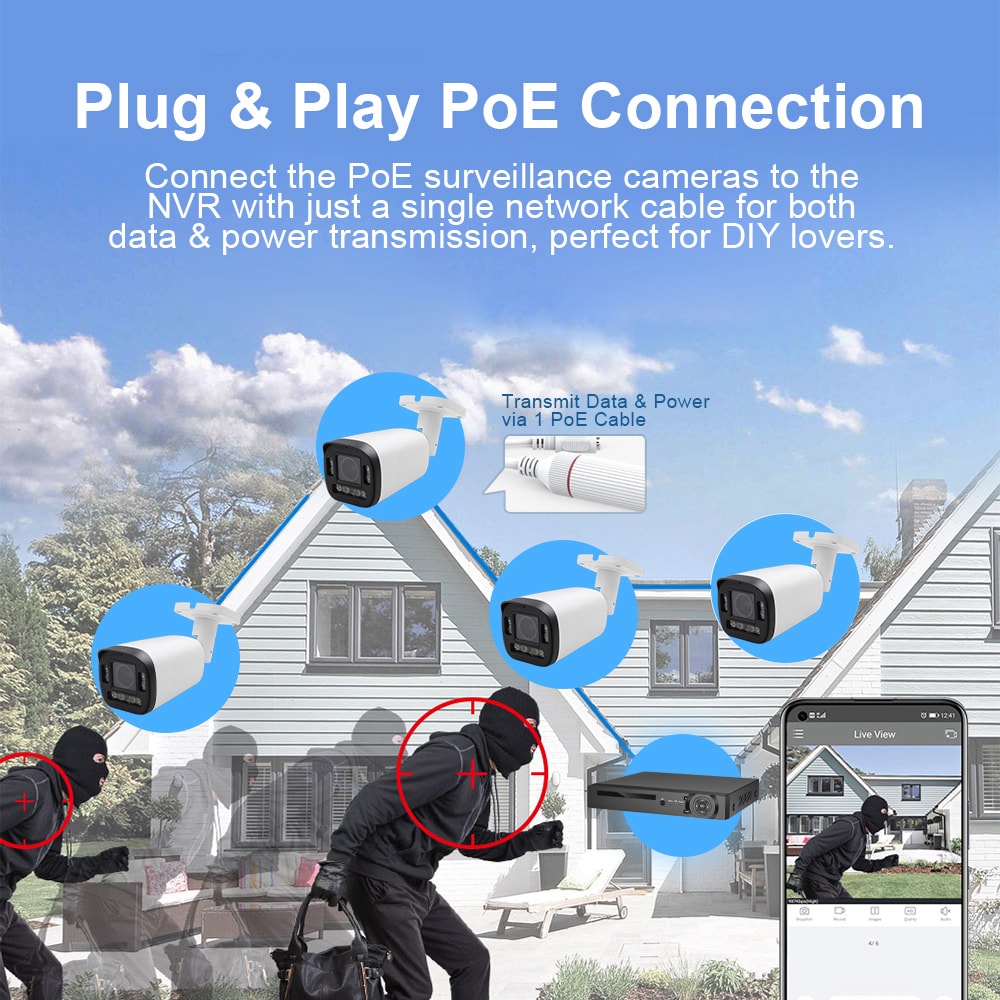
A PoE intercom system is a type of building entry system that uses a single Ethernet cable to deliver both power and data to the intercom device. The intercom connects to the building’s network via this cable, transmitting audio and video while receiving power—without requiring a separate electrical connection.
Key characteristics:
- One cable, two functions – Power and data travel over the same Cat5e/Cat6 cable
- Network-based – Connects to a PoE-enabled switch, which supplies power and links the device to other endpoints
- Centralized management – Devices can be configured, monitored, and updated from a central point
- Structured cabling required – Relies on existing or newly installed Ethernet infrastructure
PoE is widely considered the gold standard for 2026 intercom installations. In buildings with structured cabling and a managed network closet, PoE/IP systems can be stable and easier to manage.
What Is a Wireless Intercom System?
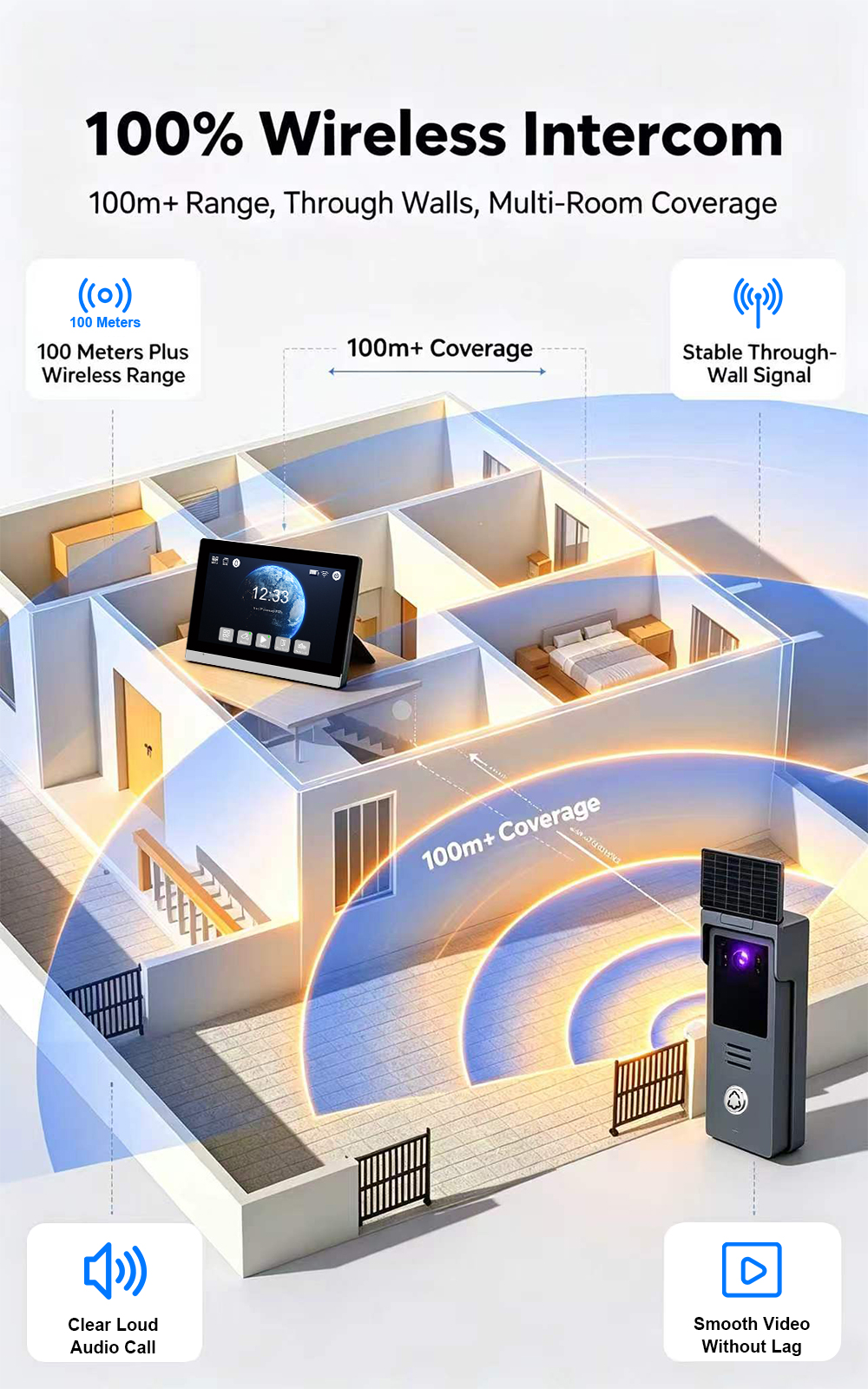
A wireless intercom system transmits audio, video, and control signals without physical cables. Instead, it uses Wi-Fi, radio frequencies (like DECT), or cellular networks (4G/LTE/5G) to communicate between devices.
Key characteristics:
- No cabling required – Ideal for retrofits and buildings where running cables is difficult
- Flexible placement – Devices can be installed anywhere within signal range
- Cellular options – 4G/LTE and 5G systems bypass local Wi-Fi entirely
- Rapid deployment – Installation in hours, not days
In 2026, wireless options have evolved significantly. DoorBird has introduced the world’s first IP video intercom systems with integrated 5G technology—eliminating the need for Ethernet cabling entirely. The D31x series is specifically developed for large building complexes with up to 3,000 units.
The Reliability Question: What Actually Breaks?
Before comparing systems, it’s worth understanding what “reliability” means in the context of building intercoms.
A reliable intercom system is one that:
- Works every time a resident or visitor needs it
- Maintains clear audio and video without dropouts
- Survives power outages and network failures
- Requires minimal maintenance over its lifespan
- Scales without performance degradation
Both PoE and wireless systems can fail—but they fail in different ways.
PoE Intercom: Reliability Strengths and Weaknesses
✅ Strengths
1. Stable, Interference-Free Connection
Wired connections are not susceptible to RF interference, Wi-Fi congestion, or signal dropouts. The signal travels through a dedicated physical cable, ensuring consistent performance regardless of what else is happening in the building.
2. Predictable Performance at Scale
In a large building with hundreds of units, PoE systems maintain consistent performance because each device has a dedicated network path. As one analysis notes, “IP intercoms run over the building network with PoE, so one cable carries power and signalling”.
3. Power over Ethernet = Simpler Power Management
PoE delivers power and data through one cable, eliminating the need for separate electrical runs at each door station. When connected to a UPS backup, wired intercoms stay online during power dips.
4. 15–25 Year Operational Lifespan
Wired systems have a predictable, diagnosable lifespan of 15–25 years. Components are generally available from manufacturers for many years.
5. No Wi-Fi Dependency
PoE systems don’t rely on Wi-Fi networks that can be congested, interfered with, or fail. The connection is physical and direct.
❌ Weaknesses
1. Network Dependency
PoE intercom systems rely entirely on the building’s network to function. If the network is unstable, overloaded, or improperly configured, performance can degrade—affecting call quality, response time, and door access.
2. Switch Capacity Constraints
As systems scale, power availability becomes a factor. PoE switches have limited power budgets, and adding more devices requires careful planning. For large buildings with many entry points, switch capacity can become a limiting factor.
3. 100-Meter Cable Limit
PoE cabling has a fixed range of 100 meters. In large buildings, this may require additional switches or fiber optic runs to reach distant entry points.
4. Retrofit Challenges
In buildings without existing Ethernet infrastructure at entry points, PoE installation requires running new cable through walls, ceilings, or conduit. This often approaches or exceeds the cost of the intercom hardware itself.
5. Single Point of Failure
If the PoE switch or network router fails, the entire intercom system can go down. Redundancy requires careful planning and additional investment.
Wireless Intercom: Reliability Strengths and Weaknesses
✅ Strengths
1. Zero Cabling Required
Wireless systems eliminate the need for running cables through walls—a significant advantage in retrofit scenarios. As DoorBird notes, with 5G models, “the need for complex retrofitting of network cabling is completely eliminated, significantly simplifying installation while reducing costs”.
2. Rapid Deployment
Installation takes hours, not days or weeks. For large buildings with multiple entry points, this can mean weeks of labor savings.
3. Cellular Options Avoid Local Wi-Fi Issues
4G/LTE and 5G intercoms bypass local Wi-Fi entirely. They connect directly to cellular networks, avoiding Wi-Fi congestion, interference, and router failures. DoorBird’s 5G models are “specifically developed for multi-occupancy residential buildings, commercial properties and large building complexes with up to 3,000 units”.
4. Flexibility and Scalability
Adding or moving units is a configuration change, not a construction project. Wireless systems adapt to changing building needs more easily than wired systems.
5. Dual-Connectivity Options
Some wireless systems offer dual-path connectivity—for example, wired primary with LTE failover. This provides redundancy that can actually increase reliability in some scenarios.
❌ Weaknesses
1. RF Interference in Dense Urban Environments
Wireless signals can be disrupted by RF interference in dense urban environments or concrete buildings. Thick concrete walls, metal buildings, elevators, or lengthy distances can create signal interference.
As one analysis bluntly states: “RF interference in dense urban environments or concrete buildings” is a major weakness of wireless systems.
2. Wi-Fi Dependency Creates Failure Points
Wi-Fi-based wireless systems have complete dependency on network infrastructure—if the router or ISP fails, so does the intercom. Wi-Fi can also be congested in high-density buildings where hundreds of devices compete for bandwidth.
3. Signal Penetration Limitations
Even with strong signals, concrete and steel construction significantly dampens wireless signals. In large buildings, signal boosters may be needed.
4. Battery Management
Wireless units often rely on batteries, requiring regular checks and replacements. However, many modern systems use PoE or AC power with wireless as the data transport, mitigating this issue.
5. Shorter Lifespan
Wireless systems typically have shorter lifespans (5–10 years) as technology evolves quickly. Components may become obsolete faster than wired systems.
Side-by-Side Comparison
| Feature | PoE Intercom | Wireless Intercom |
|---|---|---|
| Signal Stability | ⭐⭐⭐⭐⭐ No interference | ⭐⭐⭐ Prone to RF interference |
| Power Reliability | ⭐⭐⭐⭐⭐ UPS backup possible | ⭐⭐⭐ Battery-dependent or local power |
| Network Dependency | ⭐⭐⭐ Requires stable network | ⭐⭐ Wi-Fi systems; ⭐⭐⭐⭐ Cellular systems |
| Retrofit Suitability | ⭐⭐ Requires new cabling | ⭐⭐⭐⭐⭐ No cabling required |
| Scalability | ⭐⭐⭐ Limited by switch capacity | ⭐⭐⭐⭐ Easy to add units |
| Lifespan | ⭐⭐⭐⭐⭐ 15–25 years | ⭐⭐⭐ 5–10 years |
| Installation Time | ⭐⭐ Weeks | ⭐⭐⭐⭐⭐ Days |
| Concrete Building Performance | ⭐⭐⭐⭐⭐ Unaffected | ⭐⭐ Signal dampened |
| Cellular Options | N/A | ⭐⭐⭐⭐⭐ Avoids local Wi-Fi issues |
| Dual Connectivity | ⭐⭐⭐ Possible with backup | ⭐⭐⭐⭐ PoE + 5G failover available |
Cost Comparison
| Cost Factor | PoE Intercom | Wireless (Wi-Fi) | Wireless (5G/Cellular) |
|---|---|---|---|
| Hardware per entry | $500–$1,500 | $800–$3,500 | $1,200–$4,000+ |
| Cabling | $50–$150 per run | $0 | $0 |
| Installation labor | Higher (weeks) | Lower (days) | Lower (days) |
| Total per entry | $2,500–$7,000+ | $1,500–$3,500 | $2,000–$5,000+ |
| Full building (mid-size) | $10,000–$40,000+ | $5,000–$20,000 | $8,000–$30,000 |
| Ongoing costs | Network maintenance | Data plan (cellular) | Data plan (cellular) |
Key insight: IP/PoE (Cat6) systems for mid to large properties typically range from $10,000 to $40,000+, varying by building size and installation scope. Wireless systems often have lower upfront costs but may incur ongoing data plan fees.
The Hybrid Approach: Best of Both Worlds
One of the most compelling developments in the intercom industry is the hybrid approach—combining the reliability of wired connectivity with the flexibility of wireless.
What Is a Hybrid Intercom System?
A hybrid system typically uses:
- Wired PoE as the primary connection for core infrastructure
- Wireless or cellular as a backup or for remote entry points
- Cloud management for centralized administration
DoorBird’s D31x series, for example, offers factory-integrated combination of Power over Ethernet (PoE) and 5G. As DoorBird CEO Sascha Keller notes: “Whether used as a primary connection or as an intelligent backup, the factory-integrated combination of Power over Ethernet (PoE) and 5G makes door communication even more reliable and independent”.
Why Hybrid Works for Large Buildings
| Benefit | How It Works |
|---|---|
| Redundancy | If one connection fails, the other takes over |
| Flexibility | PoE for core entries; wireless for remote gates |
| Cost-effectiveness | Wireless for hard-to-reach locations; PoE where cabling exists |
| Future-proofing | Add 5G capabilities without replacing the entire system |
Smart/hybrid platforms are often the best fit for many multifamily operators because they add the admin layer—roles, audit logs, turnover management, and vendor access—with clearer outage behavior.
How to Choose the Right System for Your Building
Decision Framework
Ask yourself these questions:
- Does your building have existing Ethernet infrastructure? If yes, PoE is viable. If no, wireless or 2-wire retrofit may be better.
- What’s your building construction? Concrete and steel favor PoE; wood-frame buildings are more wireless-friendly.
- How many entry points do you have? More entry points favor PoE’s scalability (with proper switch planning) or 5G’s wireless flexibility.
- Can you tolerate downtime? If not, hybrid with dual connectivity is the safest choice.
- What’s your timeline? Wireless deploys faster; PoE requires more planning and labor.
- What’s your budget for ongoing costs? Wireless may have data plan fees; PoE has network maintenance costs.
Frequently Asked Questions
Which is more reliable—PoE or wireless intercom?
Neither is inherently more reliable. PoE offers stable, interference-free connections but depends on network infrastructure. Wireless offers flexibility but can suffer from RF interference. The most reliable solution for large buildings is often a hybrid approach with dual connectivity.
Can wireless intercoms work in concrete buildings?
Wireless signals are significantly dampened by reinforced concrete. In concrete high-rises, PoE is generally more reliable, or you need to use 5G/cellular with strong carrier coverage and carefully plan signal paths.
What happens if the power goes out?
PoE systems connected to a UPS backup stay online during power dips. Wireless systems with batteries may continue operating but require regular maintenance. Door hardware (electric strikes) typically has fail-safe or fail-secure mechanisms.
What happens if the internet goes down?
PoE systems may lose remote access but can often operate locally for basic calling and door release. Wi-Fi wireless systems are completely dependent on the network—if the router or ISP fails, so does the intercom. 5G/cellular systems bypass this issue entirely.
How many units can each system support?
PoE systems can scale to hundreds of units but require careful switch capacity planning. 5G wireless systems like DoorBird’s D31x series are designed for buildings with up to 3,000 units.
Which is cheaper to install?
Wireless systems typically cost less upfront ($1,500–$3,500 per entry) than PoE systems ($2,500–$7,000+ per entry), primarily due to lower labor costs. However, wireless may have ongoing data plan fees.
How long do these systems last?
PoE/wired systems have a 15–25 year operational lifespan. Wireless systems typically last 5–10 years as technology evolves more quickly.
What’s the best option for a retrofit?
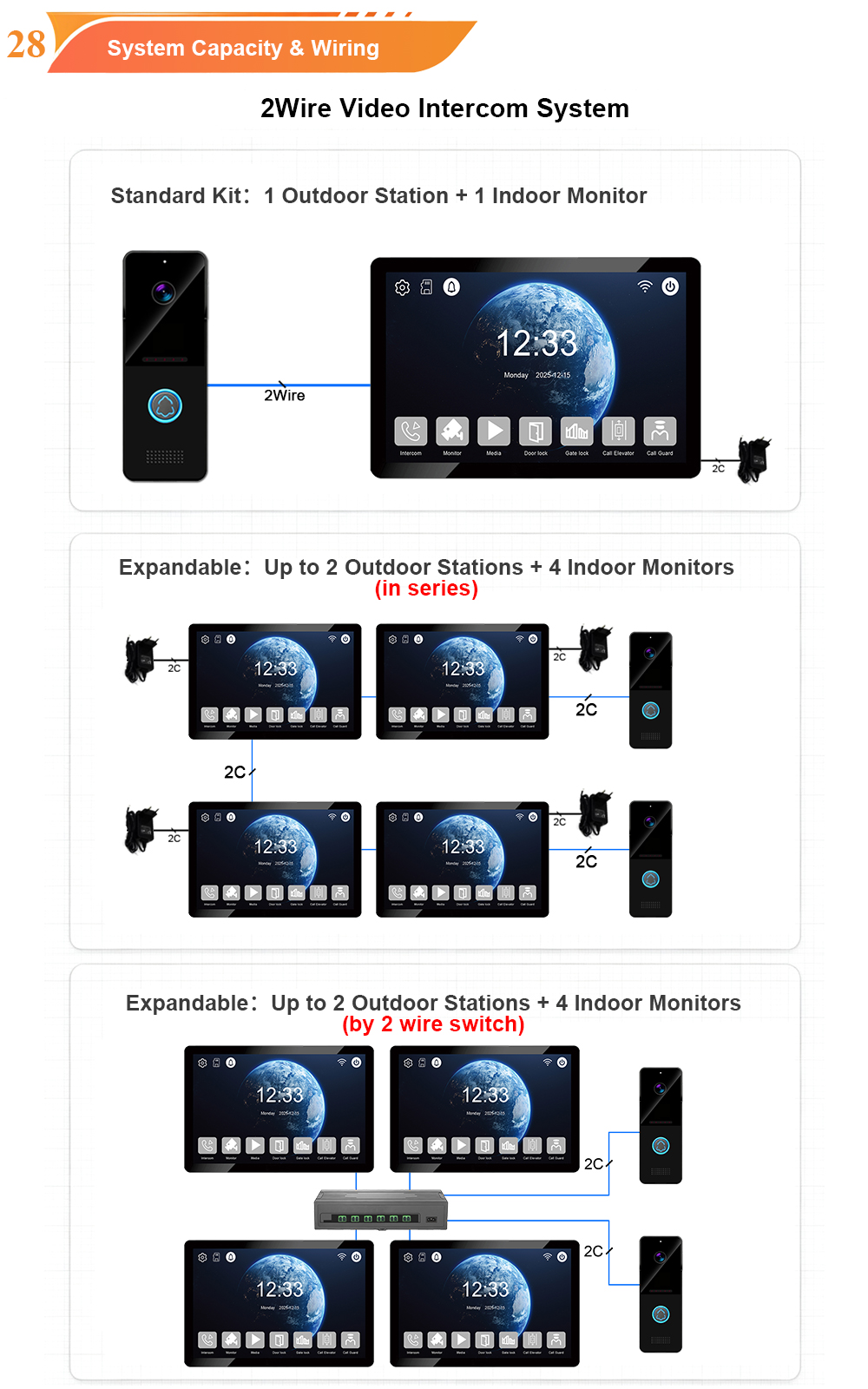
For existing buildings, the best option depends on your wiring. If you have usable existing wiring, a 2-wire retrofit offers modern features with minimal disruption. If you have no usable wiring, 5G wireless eliminates the need for cabling entirely. For maximum reliability, consider a hybrid approach with both options.
Conclusion
The question isn’t which system is more reliable—it’s which system is more reliable for your specific building.
| Your Situation | Best Choice for Reliability |
|---|---|
| New construction with structured cabling | PoE/IP – design it right from the start |
| Concrete/steel high-rise | PoE/IP – signal penetration isn’t an issue |
| Retrofit with no usable wiring | 5G Wireless – zero cabling required |
| Dense urban with Wi-Fi congestion | PoE or 5G – avoid Wi-Fi interference |
| Maximum uptime requirement | Hybrid – dual connectivity for redundancy |
| Multiple remote entry points | Hybrid – PoE for main, wireless for gates |
The data is clear: The video intercom devices market is projected to grow from $37.82 billion in 2025 to $43.84 billion in 2026 at a CAGR of 15.9%. As the market expands, so do the options—and the expectations.
PoE intercoms offer predictable, interference-free performance that scales well in buildings with structured cabling. Wireless intercoms offer unmatched flexibility and rapid deployment, especially for retrofits. And the emerging hybrid approach—combining PoE with 5G cellular—offers the best of both worlds: wired reliability with wireless flexibility.
The global trend is clear: buildings are moving toward IP-based, cloud-managed intercoms with multiple connectivity options. The most reliable solution for your large building isn’t about choosing one technology over another—it’s about designing the right architecture for your specific infrastructure, budget, and reliability requirements.
Ready to choose the right intercom system for your building? Start with a site survey to assess your existing infrastructure, then evaluate PoE, wireless, and hybrid options based on your building’s specific needs.
This guide is brought to you by insights from leading intercom technology providers—helping property owners and managers make informed decisions for their buildings.

About the Author: S & Y Internet Technology Inc.
S & Y Internet Technology Inc. is a professional installation and repair service provider based in Flushing, New York. Our expert team provides door-to-door installation and maintenance within a 100 km radius, ensuring quick response and high-quality results for every project — whether residential, commercial, or specialized.

Install & Repair Services
You May Also Interest
-
RFID vs QR Code vs Mobile App: Comparing Access Methods for Residential Buildings
Choosing the right access method for your apartment building or gated community is a decision that affects security, convenience, cost, and resident satisfaction. RFID cards, QR codes, and mobile apps each have distinct strengths and weaknesses. This guide compares them side by side—so you can make an informed choice for your next project. In modern…
-
Tuya vs Smart Life: Which App Is Better for Your Video Door Phone?
A practical comparison to help you choose the right app for your smart intercom system If you’ve recently purchased a FARHD video door phone, you’ve probably noticed that the product documentation mentions two apps: Tuya Smart and Smart Life. This immediately raises a common question: which one should you actually use? Are they different? Does…
-

Touch Screen vs Non-Touch Video Intercom Monitors: Which Is Better for Residents?
When specifying a video intercom system for an apartment building, villa, or residential community, one question often divides decision-makers: should the indoor monitor have a touch screen or physical buttons? Both options have passionate advocates. Both have real advantages. And both can be the wrong choice if they don’t match the needs of the residents…
-

How to Upgrade an Old Apartment Intercom to IP Without Rewiring: Step-by-Step
Upgrading an old apartment intercom to a modern IP system no longer requires tearing down walls, replacing every cable, or disrupting residents for weeks. With the right retrofit technology, you can deliver full IP functionality—video calling, mobile access, remote management—using the existing 2-wire cabling already inside your building. This step-by-step guide shows you how. Many…