How to Choose a Reliable Video Intercom Manufacturer in China: Complete Buyer Guide
Share
China is the world’s largest manufacturing hub for video intercom systems. But with thousands of suppliers claiming to be “factories,” how do you separate genuine manufacturers from trading companies, and reliable partners from risky ones? This complete buyer guide walks you through the essential criteria—from factory verification and certifications to quality control, OEM/ODM capability, and after-sales support—so you can source with confidence.
The global video intercom market is growing fast. Valued at USD 28.4 billion in 2025, it is projected to reach USD 125.7 billion by 2035, expanding at a compound annual growth rate of 16.6%. Demand is driven by urbanization, rising building security requirements, and the shift from analog to IP-based systems.
For distributors, system integrators, and property developers, sourcing from China offers significant advantages: competitive pricing, mature supply chains, and extensive customization options. But it also comes with risk. Not every supplier is a true manufacturer. Not every “factory” has real quality control. And not every low price reflects good value.
This guide will help you ask the right questions, verify the right things, and choose a video intercom manufacturer you can rely on for years.
1. Factory or Trading Company? The First Critical Question
Many suppliers claim to be manufacturers. In reality, a large percentage are trading companies, agents, or resellers. Working with a trading company is not always bad—but it adds cost, reduces transparency, and often limits customization.
How to tell the difference:
| Signal | True Factory | Trading Company |
|---|---|---|
| Factory address | Provides a physical factory address and welcomes visits | Avoids factory visits or gives vague addresses |
| Production equipment | Shows SMT lines, injection molding, aging rooms, test labs | Cannot show production equipment |
| R&D team | Has in-house engineers for hardware, software, and firmware | Relies on third-party designers |
| Certifications | Holds CE, FCC, RoHS, ISO, etc. in the factory’s name | Certificates may be in another company’s name |
| MOQ | Flexible; may accept low MOQ for trial orders | Often insists on high MOQ |
| Pricing | Factory-direct pricing | Adds margin on top of factory price |
| Communication | Direct contact with engineers and product managers | Communication goes through sales intermediaries |
Action step: Ask for a video tour of the production line. A genuine factory will happily show you. If they hesitate, look elsewhere.
2. Verify Certifications: CE, FCC, RoHS, and More
Certifications are not just marketing badges. They are proof that a product has been tested and meets international standards for safety, electromagnetic compatibility, and environmental responsibility.
Essential certifications for video intercoms:
| Certification | Region | What It Covers |
|---|---|---|
| CE | European Union | Safety, EMC, radio equipment (for wireless models) |
| FCC | United States | Radio frequency compliance |
| RoHS | EU / Global | Restriction of hazardous substances |
| IP65 / IP66 | Global | Dust and water resistance for outdoor stations |
| ISO 9001 | Global | Quality management system |
| EMC | Global | Electromagnetic compatibility |
How to verify:
- Ask for certificate numbers and issuing laboratories.
- Check that the certificate matches the exact product model.
- Be wary of “certificates” that are generic or not model-specific.
A reliable manufacturer will have no problem providing documentation and will be transparent about which models are certified.
3. Quality Control: The Backbone of Reliability
Quality is not something you can inspect into a product at the last minute. It must be built into the process. When evaluating a manufacturer, ask about their quality control system.
Key QC checkpoints to ask about:
- Incoming material inspection – Are components tested before entering production?
- In-process inspection – Are units checked at multiple stages on the line?
- Functional testing – Is every unit powered on and tested for display, touch, camera, audio, calling, and unlocking?
- Aging test – Do units run continuously for 12+ hours under elevated temperature and humidity?
- Waterproof testing – Is IP65/IP66 rating verified on every outdoor station?
- Temperature cycling – Are products tested from -40°C to +70°C (or -20°C to +70°C for battery models)?
- Salt spray testing – For coastal environments, is corrosion resistance verified?
Why this matters: A manufacturer who tests every unit—not just a sample—will have lower field failure rates, fewer warranty claims, and happier end users.
4. R&D and Customization Capability
Every project is different. A villa needs a different configuration than a high-rise apartment tower. A retrofit may require 2-wire technology that reuses existing cabling. A smart community may require IP networking, cloud management, and elevator integration.
A reliable manufacturer should offer:
- In-house R&D – Hardware, software, and firmware development.
- OEM services – Your logo, packaging, and branding.
- ODM services – Custom design, UI, and feature sets.
- SKD solutions – Semi-knocked-down kits for local assembly, reducing tariffs and costs.
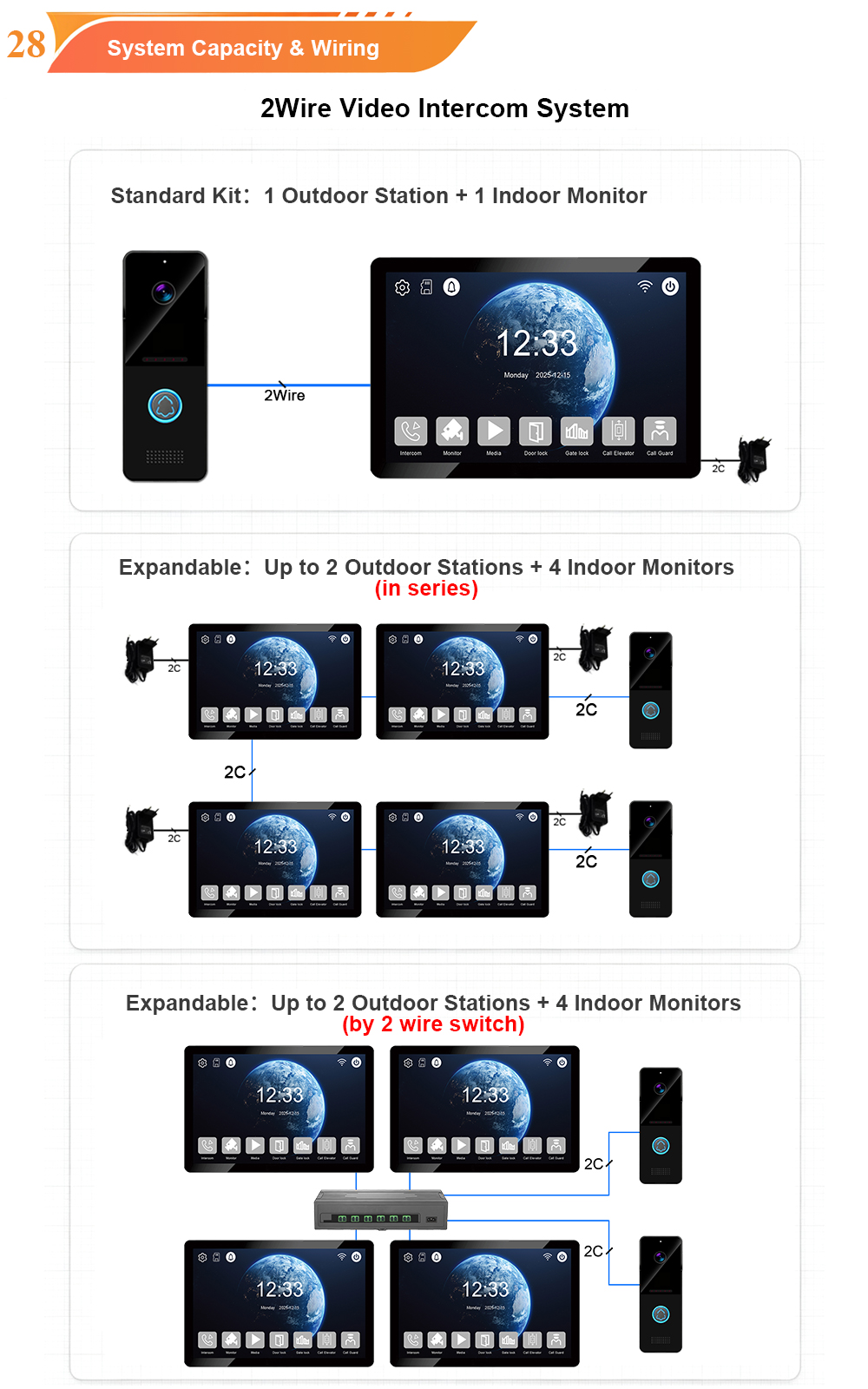
- Flexible product range – 2-wire, 4-wire, IP, SIP, wireless, and audio intercoms.
Questions to ask:
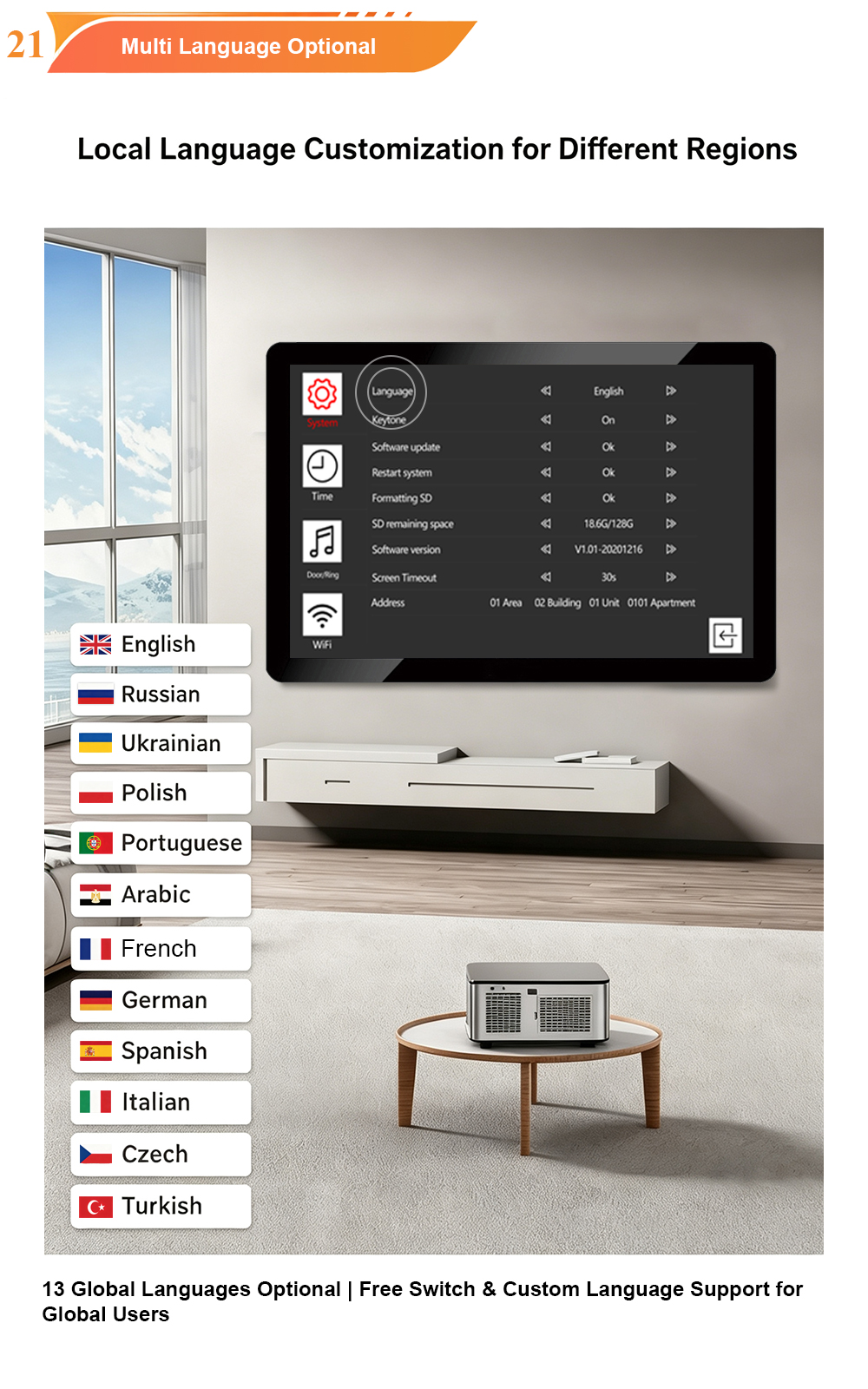
- Can you customize the software interface and language?
- Can you modify the hardware (housing color, button layout, camera module)?
- What is your minimum order quantity for customization?
- Can you provide samples for testing before mass production?
A manufacturer with real R&D capability will answer these confidently and offer practical solutions.
5. Product Range and System Compatibility
A reliable manufacturer should offer a complete product ecosystem—not just one or two models. This ensures you can source everything from a single supplier, simplify logistics, and guarantee compatibility across components.
Look for:
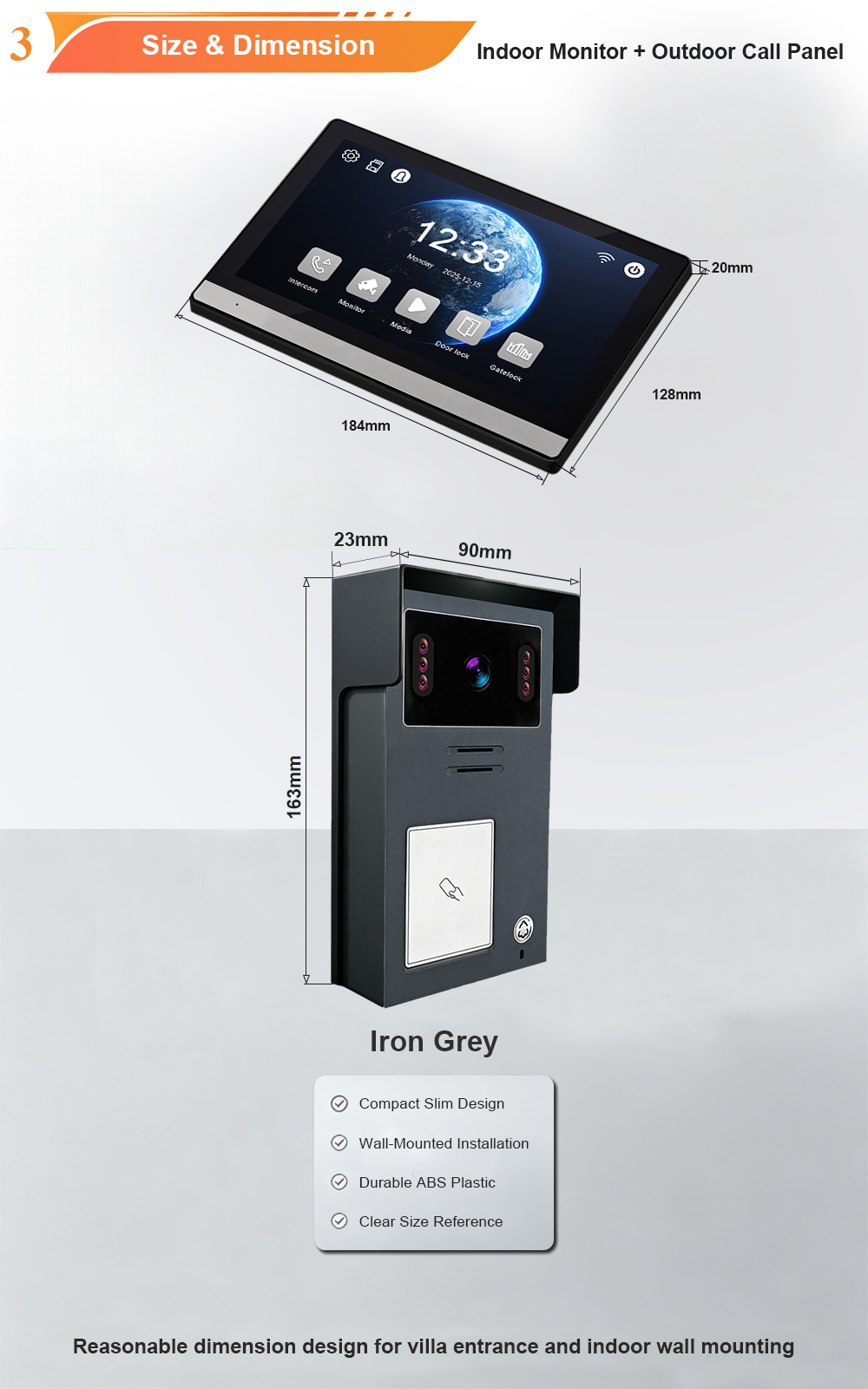
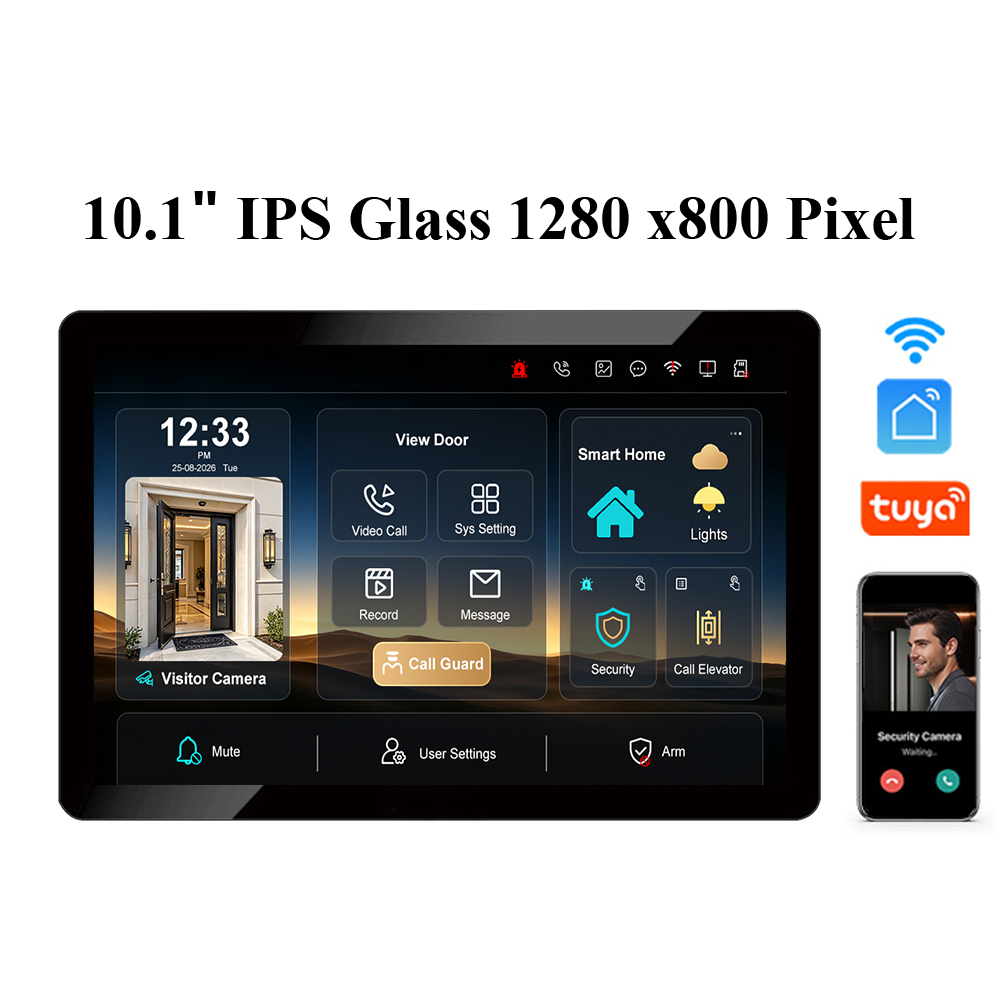
- Indoor monitors – 7-inch, 10-inch, touchscreen, button, PoE, WiFi.
- Outdoor stations – Button, push-button, face recognition, card reader, IP65.
- Accessories – Power supplies, switches, decoders, cables, mounting brackets.
- Software – Tuya/Smart Life app, management platforms, mobile apps.
- System types – 2-wire, 4-wire CVBS, 4-wire AHD, IP, SIP, wireless, audio.
A broad product range also indicates manufacturing depth and long-term stability. A company that only sells one or two products may not be around in five years.
6. MOQ, Lead Time, and Pricing
MOQ (Minimum Order Quantity):
- A reliable manufacturer should offer no MOQ for trial orders or a low MOQ.
- High MOQ requirements can be a red flag—it often means the supplier is a trading company or lacks flexibility.
Lead Time:
- Ask for standard lead times and confirm they are realistic.
- A factory with in-house production can typically deliver faster than a trading company.
- Get lead times in writing as part of the contract.
Pricing:
- Factory-direct pricing should be competitive.
- Be wary of prices that are significantly lower than the market average—they often indicate lower quality components or hidden costs.
- Ask for a detailed quotation that includes all costs: product, packaging, shipping, and any customization fees.
7. After-Sales Support and Warranty
Even the best products can have issues. What matters is how the manufacturer handles them.
What to look for:
- Warranty – Minimum 1-year factory warranty.
- Technical support – Documentation, wiring diagrams, installation guides.
- Remote assistance – Support for troubleshooting and configuration.
- Spare parts availability – Quick replacement parts for maintenance.
- Return and repair policy – Clear process for defective units.
Questions to ask:
- What is your warranty period?
- How do you handle defective units?
- Do you provide technical training for installers?
- What is your response time for support inquiries?
A manufacturer who invests in after-sales support is a manufacturer who stands behind their products.
8. Communication and Responsiveness
The quality of communication during the sales process is a strong indicator of what to expect after the sale.
Green flags:
- Replies within 24 hours.
- Answers technical questions directly.
- Provides detailed documentation.
- Offers to arrange a factory tour or video call.
- Transparent about capabilities and limitations.
Red flags:
- Slow or vague responses.
- Avoids technical questions.
- Pressures you to place a large order quickly.
- Cannot provide references or case studies.
Trust your instincts. If communication feels evasive, it probably is.
9. Factory Audit and Verification
If you are placing a large order, consider a factory audit. This can be done in person or through a third-party inspection company.
What to verify:
- Production capacity – Can they handle your order volume?
- Equipment – SMT lines, injection molding, aging rooms, test labs.
- Workforce – Skilled technicians and engineers.
- Quality system – Documented processes and records.
- Warehouse and logistics – Sufficient inventory and shipping capability.
Many reliable manufacturers welcome factory visits. If a supplier refuses, that is a major warning sign.
10. References and Track Record
Ask for references from other customers, especially in your region or market segment. A manufacturer with a strong track record will be proud to share them.
What to ask references:
- How long have you worked with this manufacturer?
- How is their product quality and reliability?
- How responsive is their support?
- Would you recommend them to others?
Also, check for:
- Years in business – Established manufacturers have a history.
- Completed projects – Large-scale installations demonstrate capability.
- Brand recognition – Industry awards or recognition can be a positive signal.
11. Common Pitfalls to Avoid
| Pitfall | How to Avoid It |
|---|---|
| Choosing on price alone | Cheapest is rarely best. Consider total cost of ownership. |
| Skipping certification verification | Always verify certificates are valid and model-specific. |
| Ignoring quality control | Ask about testing processes and request reports. |
| Not requesting samples | Always test a sample before committing to a large order. |
| Overlooking after-sales support | Confirm warranty and support terms in writing. |
| Failing to visit or audit the factory | Visit in person or use a third-party inspector. |
| Not checking references | Speak to existing customers. |
12. Why FARHD Is a Reliable Choice
FARHD has been designing and manufacturing video intercom systems since 1998, with over 28 years of industry experience. As a professional source factory based in Shenzhen, China, we deliver complete solutions for residential and commercial projects worldwide.
What sets FARHD apart:
| Advantage | What It Means for You |
|---|---|
| 28+ years of experience | Proven expertise, mature processes |
| Source factory | Factory-direct pricing, full quality control |
| Full product range | IP, 2-wire, 4-wire, SIP, wireless, and audio intercoms |
| OEM / ODM ready | Custom branding, packaging, and software |
| No MOQ for trial orders | Start with a sample; scale as you grow |
| Rigorous QC | Functional, aging, waterproof, salt spray, temperature tests |
| Global certifications | CE, FCC, RoHS, IP65, EMC |
| Global reach | Serving clients in over 90 countries |
| After-sales support | Technical documentation, remote assistance, spare parts |
Our factory is equipped with professional testing equipment, including high and low temperature test machines, salt spray test machines, and aging test devices. Every product undergoes rigorous inspection to ensure stable durability and reliable performance.
13. Conclusion: Choose with Confidence
Choosing a reliable video intercom manufacturer in China is not about finding the lowest price. It is about finding a partner who delivers quality, consistency, and support—year after year.
Use this guide as a checklist. Ask the hard questions. Verify the answers. And when you find a manufacturer who meets your standards, build a long-term relationship.
Ready to start your search?

About the Author: S & Y Internet Technology Inc.
S & Y Internet Technology Inc. is a professional installation and repair service provider based in Flushing, New York. Our expert team provides door-to-door installation and maintenance within a 100 km radius, ensuring quick response and high-quality results for every project — whether residential, commercial, or specialized.

Install & Repair Services
You May Also Interest
-
RFID vs QR Code vs Mobile App: Comparing Access Methods for Residential Buildings
Choosing the right access method for your apartment building or gated community is a decision that affects security, convenience, cost, and resident satisfaction. RFID cards, QR codes, and mobile apps each have distinct strengths and weaknesses. This guide compares them side by side—so you can make an informed choice for your next project. In modern…
-
Tuya vs Smart Life: Which App Is Better for Your Video Door Phone?
A practical comparison to help you choose the right app for your smart intercom system If you’ve recently purchased a FARHD video door phone, you’ve probably noticed that the product documentation mentions two apps: Tuya Smart and Smart Life. This immediately raises a common question: which one should you actually use? Are they different? Does…
-
Touch Screen vs Non-Touch Video Intercom Monitors: Which Is Better for Residents?
When specifying a video intercom system for an apartment building, villa, or residential community, one question often divides decision-makers: should the indoor monitor have a touch screen or physical buttons? Both options have passionate advocates. Both have real advantages. And both can be the wrong choice if they don’t match the needs of the residents…
-
How to Upgrade an Old Apartment Intercom to IP Without Rewiring: Step-by-Step
Upgrading an old apartment intercom to a modern IP system no longer requires tearing down walls, replacing every cable, or disrupting residents for weeks. With the right retrofit technology, you can deliver full IP functionality—video calling, mobile access, remote management—using the existing 2-wire cabling already inside your building. This step-by-step guide shows you how. Many…