Is a Video Intercom System Worth the Investment for Apartment Buildings?
Share
Quick Navigation
- The Bottom Line: Yes—Here’s Why
- The Revenue Side: How Video Intercoms Generate Income
- The Cost Side: Where the Savings Add Up
- ROI by the Numbers: What the Data Says
- Hidden Costs of Outdated Systems
- Market Trends: Why Now Is the Time to Invest
- Retrofitting: Upgrading Without Breaking the Bank
- Why FARHD Is a Trusted Partner for Apartment Owners
- Frequently Asked Questions
The Bottom Line: Yes—Here’s Why
When property managers and building owners consider upgrading to a video intercom system, the first question is almost always the same: “Is it worth the money?”
The short answer is yes. A video intercom system is one of those rare investments that pays for itself in smoother operations, happier residents, and lower liability—without the headaches of adding more staff.
But let’s move beyond the short answer. This guide breaks down the real return on investment (ROI) of video intercom systems for apartment buildings—looking at both the revenue upside and the cost savings—so you can make a confident, data-driven decision.
The Revenue Side: How Video Intercoms Generate Income
1. Higher Rental Rates and Rent Premiums
In today’s competitive rental market, smart technology is no longer a luxury—it’s an expectation.
The data is compelling:
- 65% of renters said smart-home technology makes apartments more appealing
- 31% of renters actively prioritize smart features over units without them
- 65% of renters are willing to pay more in monthly rent for smart-home features
- 52% would pay over $20 more per month
- 7% would pay over $81 more per month
The potential rent lift can range from $25 to over $100 per unit per month. For a 50-unit building, that translates to $15,000 to $60,000 in additional annual revenue.
2. Higher Lease Renewal Rates
Smart technology doesn’t just attract tenants—it keeps them. Properties with smart technologies report a 23% increase in tenant retention.
- 77% of renters said they would consider signing a longer-term lease of two or more years if smart security and energy-saving devices were included
- Properties with integrated video intercom systems report a 6 percentage point increase in lease renewal rates
Higher retention means lower turnover costs—fewer vacancies, less marketing spend, and less time spent on tenant transitions.
3. Increased Property Value and Marketability
Modern amenities directly impact property valuation. Smart amenity packages—which typically include video doorbells, smart locks, and thermostats—can result in rent lifts ranging from 5% to 10%.
A video intercom system enhances your building’s reputation, making it easier to attract high-quality occupants and command premium rents. In competitive markets, these systems are becoming “table stakes” rather than optional upgrades.
4. Competitive Differentiation
58% of renters said they would give up traditional apartment amenities such as pools and gyms in exchange for smart-home features. That’s a powerful signal: tenants value security and convenience more than they value luxury amenities.
Smart intercoms and doorbells are now expected by 48% of renters in modern apartment communities. Buildings that don’t offer them risk falling behind.
The Cost Side: Where the Savings Add Up
1. Reduced Staffing Costs
Security is expensive. Staffing guards 24/7 burns money fast. Video intercoms provide many of the same benefits at a fraction of the cost.
Consider this: cellular intercoms and gate controllers reduced costs by 75% compared with telephone-serviced systems. Instead of staffing extra lobby guards, you’ve got digital eyes and two-way communication standing watch every minute.
Property managers save time by no longer having to visit units to reset systems, grant access manually, or coordinate service providers in person. Even a few hours saved each week can amount to hundreds or thousands of dollars over the year.
2. Elimination of Rekeying Costs
Traditional keys create persistent and costly vulnerabilities:
- A single lost key can trigger a cascade of expenses for lock changes and key duplication
- Tenant turnover requires meticulous key tracking and re-issuing
- Rekeying costs typically run $75–$250 per unit
With digital credentials, access is instantly granted or revoked with a few clicks. No more rekeying, no more lost keys, no more security risks from former tenants who never returned their keys.
3. Reduced Maintenance and Repair Costs
Smart door locks and access control provide a 20% efficiency boost for maintenance staff by allowing them to enter residential units without needing to pull unit keys. This reduces the number of door and lock replacements and associated labor costs.
The impact: With 10% fewer maintenance requests, respondents estimated savings of $80,000 per building per year.
4. Lower Insurance Premiums
Properties with video intercoms typically see 25–30% decreases in insurance premiums due to reduced liability and fewer security incidents. Insurance providers recognize that video verification, audit trails, and controlled access significantly lower risk.
5. Package Theft Reduction
Package theft is one of the biggest complaints in multifamily buildings. Apartment residents are 34% more likely to experience package theft than homeowners. Nationally, 37% of apartment renters reported package theft in the past year.
Video intercoms help prevent package theft by:
- Allowing residents to visually verify delivery personnel
- Enabling staff to remotely verify and unlock doors for legitimate deliveries
- Creating audit trails that deter theft
Properties with video intercoms report a 40% decrease in package theft.
6. Elimination of Landline Costs
Traditional telephone-entry systems require ongoing phone line fees. As plain old telephone service (POTS) providers are terminating service entirely, properties relying on these systems face immediate operational challenges.
Video intercoms use internet connectivity—no landline bills, no service termination surprises.
ROI by the Numbers: What the Data Says
Let’s put it all together with a sample calculation for a 50-unit apartment building:
| Revenue/ Savings Category | Annual Impact |
|---|---|
| Rent Premium (25 units × $25/month) | +$7,500 |
| Reduced Turnover (5% lower vacancy) | +$15,000 |
| Rekeying Elimination ($150/unit/year) | +$7,500 |
| Staffing Efficiency (10 hours/week saved) | +$10,000 |
| Insurance Premium Reduction | +$5,000 |
| Package Theft Reduction | +$3,000 |
| Maintenance Savings | +$5,000 |
| Total Annual Benefit | ~$53,000 |
Upfront Cost: A commercial video intercom system typically costs between $1,500 and $5,000 per entry door, with full-building systems for a multi-tenant property ranging from $10,000 to $50,000+.
Payback Period: With annual benefits of ~$53,000, the investment typically pays for itself in 12–18 months.
The bottom line: Smart amenity packages commonly have a three-year payback period. After that, the savings and additional revenue go straight to your bottom line.
Hidden Costs of Outdated Systems
Legacy systems may appear functional, but they come with their own set of hidden costs:
| Hidden Cost | Impact |
|---|---|
| Frequent malfunctions | Service calls and repairs |
| Limited access capabilities | Tenant frustration and complaints |
| Manual guest management | Staff labor costs |
| No mobile functionality | Poor user experience |
| No audit trails | Inability to resolve disputes |
| POTS line fees | Ongoing monthly costs |
The result? Poor user experience, more complaints, and ultimately, more work for property managers.
Market Trends: Why Now Is the Time to Invest
The video intercom market is growing rapidly, and multifamily properties are leading the adoption:
- The global Video Intercom System Market is expected to grow from $4.26 billion in 2025 to $8.1 billion by 2035, at a CAGR of 6.6%
- The Residential Video Door Entry Intercom Market is projected to grow from $2.16 billion in 2025 to $4.0 billion by 2035
- The Residential Intercom System Market is expected to grow at a 7.1% CAGR from 2025 to 2035
- 90% of multi-dwelling unit owners in the U.S. were planning to deploy, upgrade, or replace a smart building solution in 2025
The message is clear: Video intercoms are rapidly becoming the industry standard. Early adopters gain a competitive advantage; late adopters risk falling behind.
Retrofitting: Upgrading Without Breaking the Bank
One of the biggest concerns for building owners is the cost and disruption of installation. The good news? You don’t always need to rewire everything.
Retrofit options include:
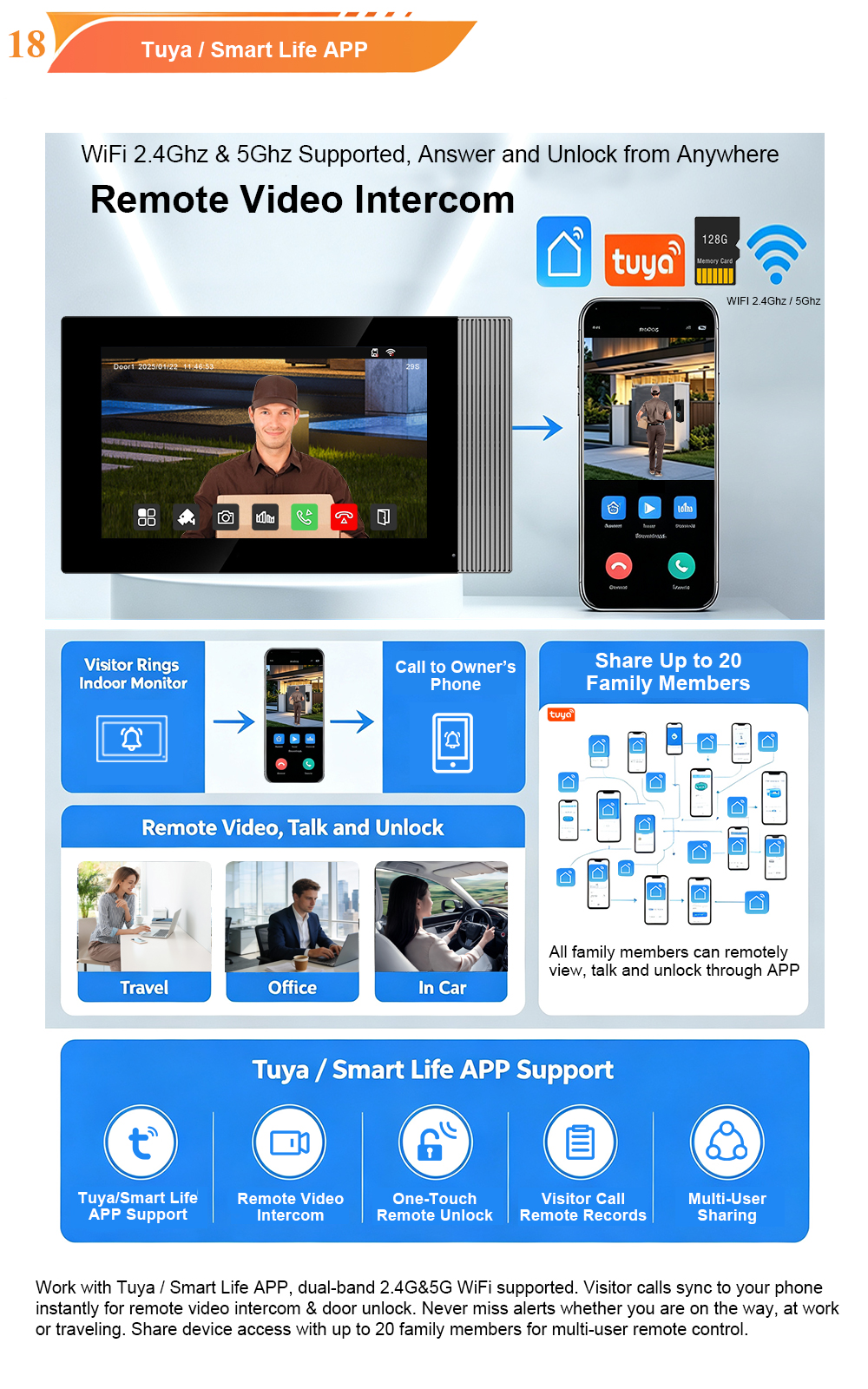
- Wireless systems that use WiFi, cellular networks, or ethernet
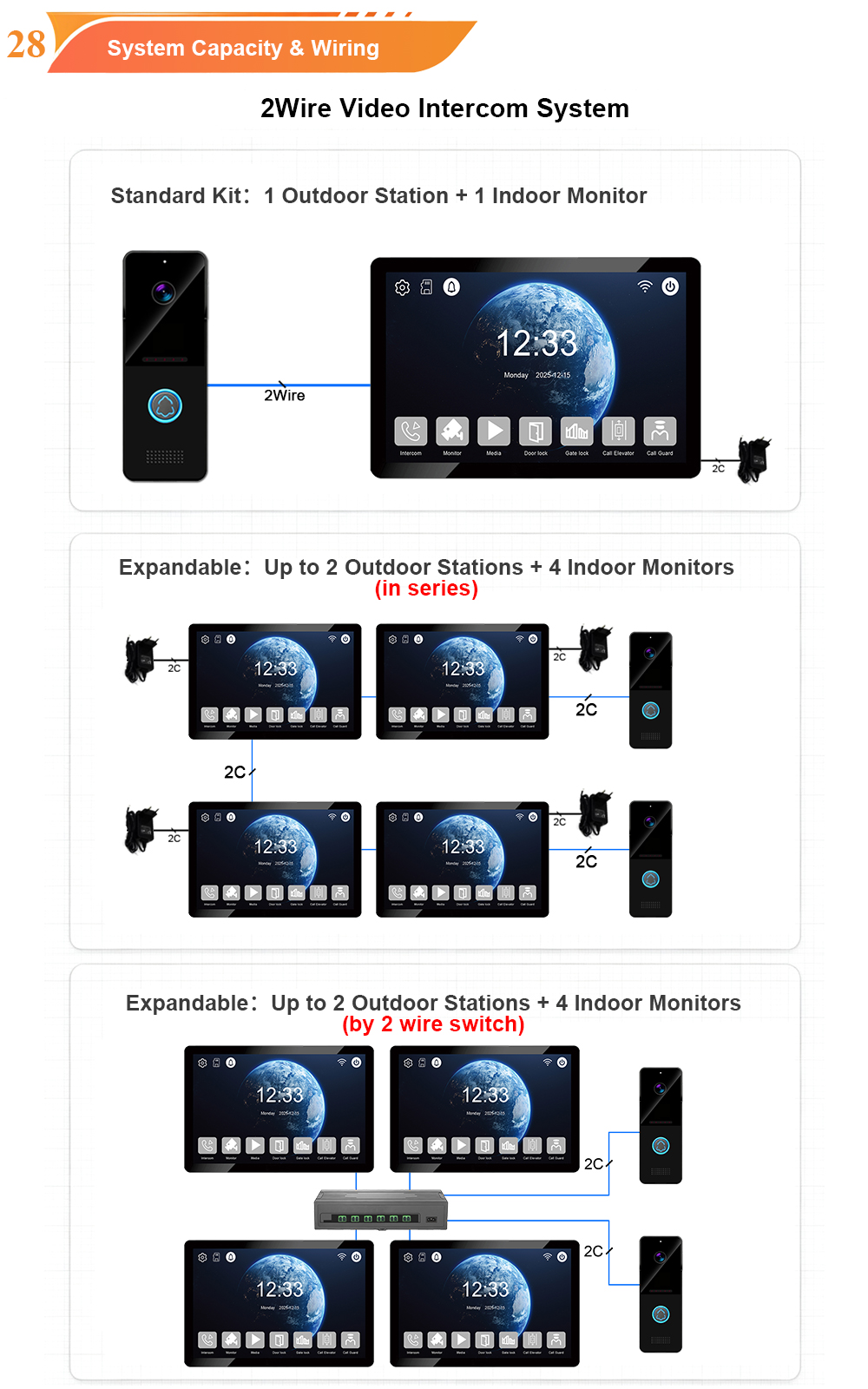
- IP-over-2-wire converters that reuse existing telephone or doorbell wiring
- Mobile-first systems that eliminate the need for in-unit hardware entirely—residents use their smartphones as indoor monitors
- Cloud-based solutions that add new devices or users without major infrastructure changes
Modern video intercoms are designed to be retrofit-friendly. Unlike traditional wired systems that require extensive cabling, modern wireless smart intercoms are recommended for all new installations—whether upgrading an older system, renovating the building, or building from scratch.
Why FARHD Is a Trusted Partner for Apartment Owners
With over 28 years of industry experience, FARHD is a leading Chinese manufacturer of video door phones and intercom systems that deliver the ROI outlined above.
Full In-House R&D and Production: FARHD designs and manufactures everything from TFT LCD screens, driver boards, and camera modules to complete villa and apartment building intercom systems. This end-to-end control ensures quality and seamless integration at every stage.
Comprehensive Product Range:
- Wireless video doorbells
- 4-wire CVBS and AHD video doorbells
- 2-wire IP systems for villas and apartments
- IP-based systems for villas and apartments
- Audio intercom systems
Proven Track Record: FARHD has successfully completed over 10,000 large-scale building video intercom projects, including ultra-large communities with 1,000, 3,000, and even over 5,000 households. Supported by 28 direct sales branches across China, they have the expertise to handle projects of any scale.
Global Reach: FARHD provides SKD semi-knocked-down solutions to assembly factories across Europe, the Middle East, South America, Southeast Asia, the United States, Russia, India, Iran, Turkey, South Korea, and Italy—effectively reducing both production and tariff costs for partners.
International Certifications: Products hold CE, FCC, RoHS, IP65 water resistance, and EMC certifications.
OEM/ODM Services: Comprehensive customization including software and hardware development, UI design, functional module adjustments, and tailored packaging solutions.
After-Sales Support: A dedicated technical support group is established upon product delivery to assist with programming, device installation, and wiring connections throughout the process.
Scale: FARHD serves over 1,000 enterprises worldwide with an annual sales volume of 300,000 units.
When you invest in a FARHD video intercom system, you’re not just buying hardware—you’re gaining a long-term partner committed to smart living innovation.
Frequently Asked Questions
What’s the typical ROI timeline for a video intercom system?
Smart amenity packages commonly have a three-year payback period. However, many properties see positive returns within 12–18 months through reduced staffing costs, eliminated rekeying, lower insurance premiums, and rent premiums.
How much does a video intercom system cost?
A commercial video intercom system typically costs between $1,500 and $5,000 per entry door, with full-building systems for multi-tenant properties ranging from $10,000 to $50,000+.
Can I upgrade without rewiring my entire building?
Yes. Wireless systems, IP-over-2-wire converters, and mobile-first solutions allow for cost-effective retrofitting without major infrastructure changes.
Will tenants actually pay more for this?
Yes. 65% of renters are willing to pay more in monthly rent for smart-home features, with 52% willing to pay over $20 more per month.
What about ongoing costs?
Modern IP video intercoms have minimal ongoing costs—no landline fees, reduced maintenance, and cloud-based management that saves staff time.
Is a video intercom really more secure than an audio buzzer?
Yes. Video intercoms provide visual verification, audit trails, and remote access. Properties with video intercoms report a 45% reduction in unauthorized access attempts and a 65% decrease in security-related incidents.
Conclusion
Is a video intercom system worth the investment for apartment buildings? The data says yes—emphatically.
Here’s what the numbers tell us:
- 65% of renters are willing to pay more for smart-home features
- 52% would pay over $20 more per month
- Smart amenities can deliver 5–10% rent lifts
- Smart door locks and access control provide a 20% efficiency boost for staff
- Cellular intercoms reduce costs by 75% compared with telephone-serviced systems
- Properties save $80,000 per building per year with 10% fewer maintenance requests
- Smart amenity packages have a three-year payback period
A video intercom system is not just a security upgrade—it’s a strategic investment that:
- Generates higher rental income
- Reduces operating costs
- Increases tenant retention
- Lowers insurance premiums
- Enhances property value
- Attracts better tenants
In today’s competitive multifamily market, video intercoms are rapidly moving from “nice-to-have” to “must-have” . Buildings that invest now gain a competitive advantage; those that wait risk being left behind.
Ready to calculate the ROI for your building? Contact FARHD for a customized video intercom solution tailored to your property’s needs.
This guide is brought to you by FARHD—your partner in smart video intercom solutions for multifamily properties worldwide.

About the Author: S & Y Internet Technology Inc.
S & Y Internet Technology Inc. is a professional installation and repair service provider based in Flushing, New York. Our expert team provides door-to-door installation and maintenance within a 100 km radius, ensuring quick response and high-quality results for every project — whether residential, commercial, or specialized.

Install & Repair Services
You May Also Interest
-
RFID vs QR Code vs Mobile App: Comparing Access Methods for Residential Buildings
Choosing the right access method for your apartment building or gated community is a decision that affects security, convenience, cost, and resident satisfaction. RFID cards, QR codes, and mobile apps each have distinct strengths and weaknesses. This guide compares them side by side—so you can make an informed choice for your next project. In modern…
-
Tuya vs Smart Life: Which App Is Better for Your Video Door Phone?
A practical comparison to help you choose the right app for your smart intercom system If you’ve recently purchased a FARHD video door phone, you’ve probably noticed that the product documentation mentions two apps: Tuya Smart and Smart Life. This immediately raises a common question: which one should you actually use? Are they different? Does…
-
Touch Screen vs Non-Touch Video Intercom Monitors: Which Is Better for Residents?
When specifying a video intercom system for an apartment building, villa, or residential community, one question often divides decision-makers: should the indoor monitor have a touch screen or physical buttons? Both options have passionate advocates. Both have real advantages. And both can be the wrong choice if they don’t match the needs of the residents…
-
How to Upgrade an Old Apartment Intercom to IP Without Rewiring: Step-by-Step
Upgrading an old apartment intercom to a modern IP system no longer requires tearing down walls, replacing every cable, or disrupting residents for weeks. With the right retrofit technology, you can deliver full IP functionality—video calling, mobile access, remote management—using the existing 2-wire cabling already inside your building. This step-by-step guide shows you how. Many…