Video Intercom Systems for Gated Communities: Managing Multiple Entrances and Vehicles
Share
When a gated community has one entrance, access control is simple. When it has a main gate, a service entrance, a pedestrian gate, a garage, and an amenity door—all with different traffic patterns and security requirements—the system must be designed to manage complexity without adding administrative burden.
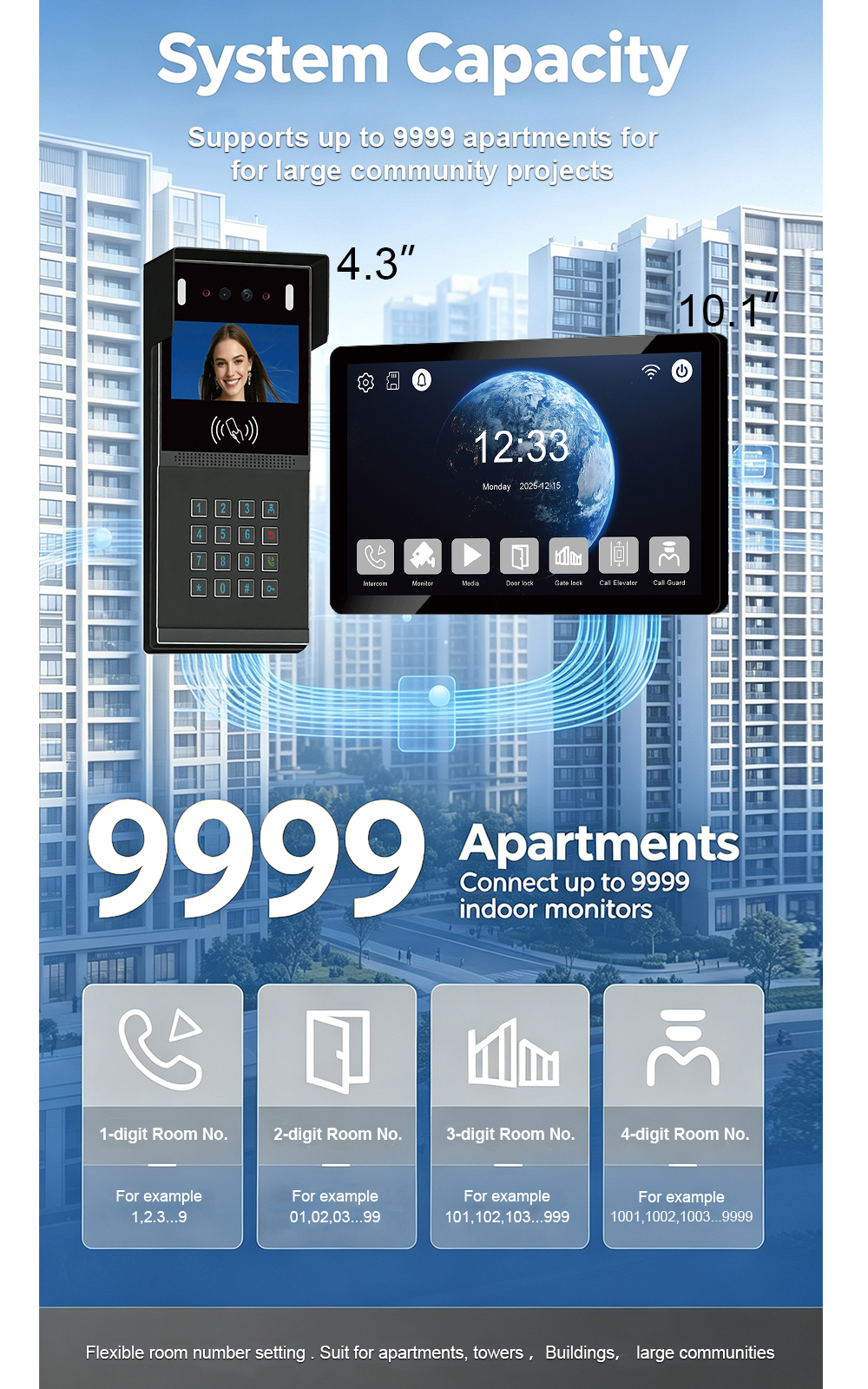
Gated communities are not simply larger versions of single-family homes. They are multi-tenant properties with a resident directory, a visitor workflow, and a vehicle access policy that must work together. A single-family intercom rings one or two phones. A gated community system must manage a full resident directory, route guest calls to the right unit, let property managers add and remove users without a service call, and handle delivery drivers, vendors, and visitors throughout the day.
This article explains the key considerations for selecting and deploying a video intercom system that manages multiple entrances and vehicle access in gated communities.
Why Single-Entrance Thinking Fails in Gated Communities
Many intercom systems are designed around a single door. But gated communities have multiple access points, each with its own purpose:
| Entrance Type | Traffic | Access Method |
|---|---|---|
| Main vehicle gate | High-volume, resident vehicles + visitors | LPR, RFID, intercom call |
| Pedestrian gate | Residents on foot, deliveries | Card, PIN, app, intercom |
| Service entrance | Vendors, maintenance, staff | Temporary codes, guard release |
| Garage entry | Resident vehicles | LPR, RFID tag, Bluetooth |
| Amenity door | Residents + approved guests | Card, QR code, app |
If each of these entrances has its own separate system, property managers end up juggling multiple databases, different credential formats, and inconsistent visitor experiences. The solution is a unified access control platform that manages all entry points from a single interface.
Managing Multiple Entrances: What to Look For
Most commercial intercoms control more than one door or gate from a single unit. A two-relay system covers a vehicle gate and a pedestrian door. A four-relay or eight-relay system can run a main gate, a service entrance, a pedestrian gate, and an amenity door from the same hardware—which beats buying a separate intercom for each.
When evaluating a system for a gated community, consider:
Relay capacity: Count your entrances. A community with a main gate, a pedestrian gate, a garage, and a clubhouse needs at least four relay outputs. Systems with eight relays provide room for future expansion.
Protocol inputs: Wiegand and OSDP inputs allow the intercom to work with existing card readers, fobs, and long-range RFID credentials. Confirm the unit has the inputs to support your current and future credentials.
Centralized management: Cloud-based platforms let property managers add or remove residents, suspend access, generate temporary guest codes or QR passes, and view event logs from a single dashboard.
Integration with property management software: For larger communities, look for integration with platforms like RealPage, Yardi, or Entrata so resident lists stay in sync automatically.
Vehicle Access: Two Proven Approaches
Vehicle access is the most complex part of gated community management. Residents expect smooth, hands-free entry. Visitors need a clear way to request access. And property managers need to control who can enter and when.
There are two primary technologies for vehicle access control:
1. License Plate Recognition (LPR)
LPR cameras read vehicle license plates and compare them against a registered database. When an authorized vehicle approaches, the gate opens automatically—no card, no remote, no interaction required.
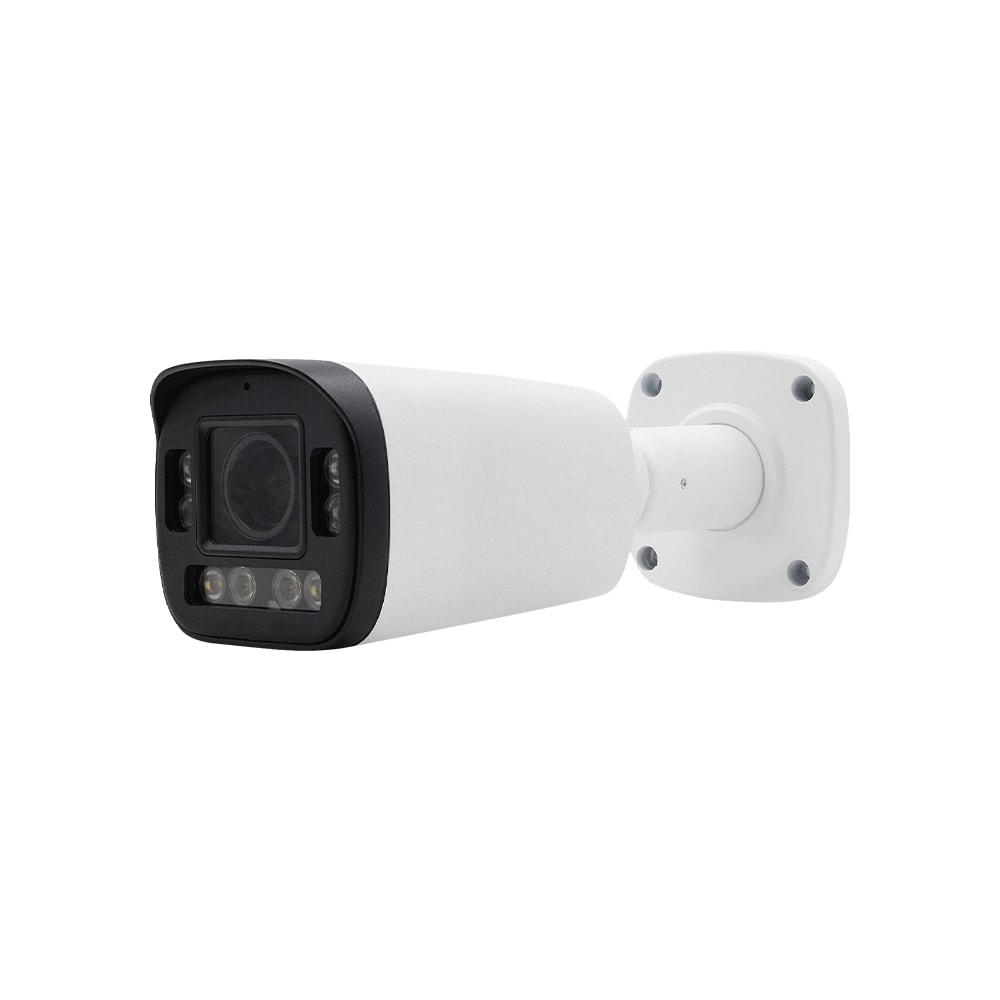
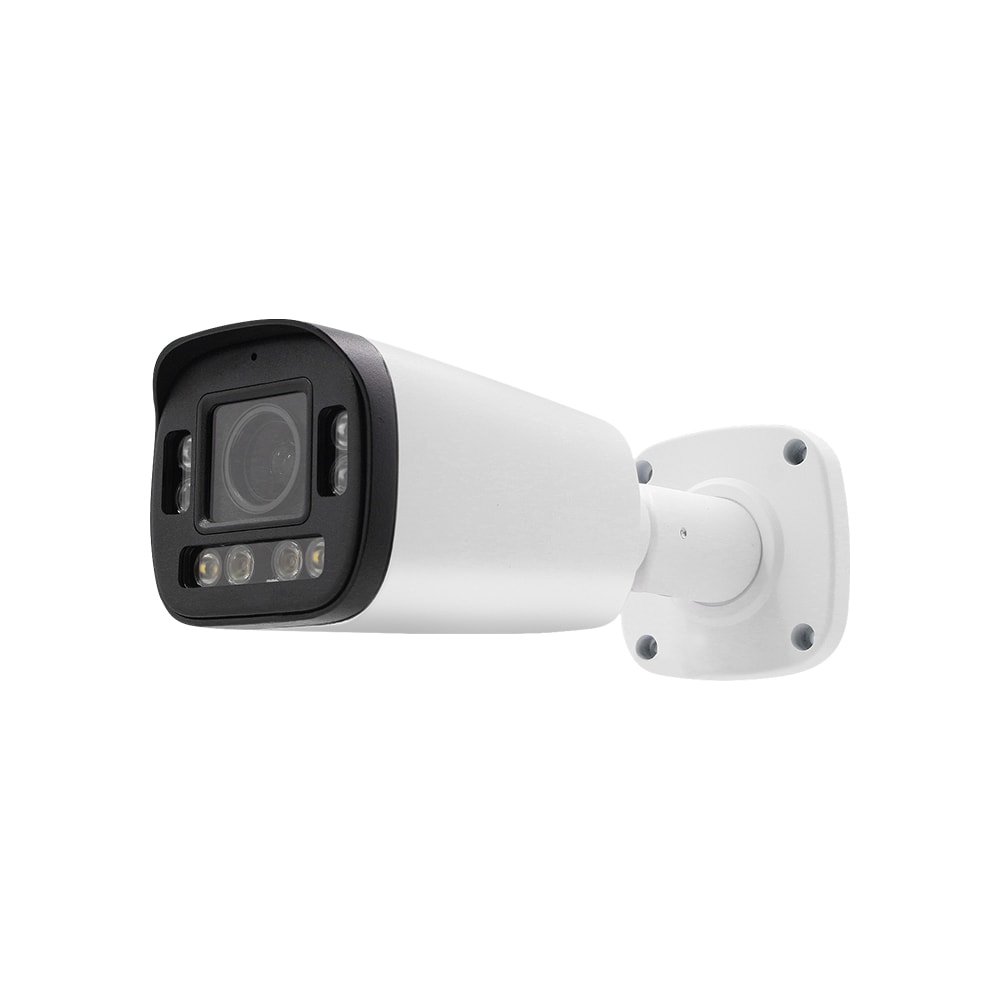
Hikvision’s Intelligent Entrance Video Unit combines video intercom, license plate recognition (ANPR), and vehicle management in one device. It supports whitelist and blacklist vehicle management, making it ideal for gated communities and business parks.
Advantages of LPR:
- Hands-free entry for registered residents
- No physical credential to lose or replace
- Visitor management through temporary plate registration
- Audit trail of all vehicle entries and exits
Considerations:
- Requires a clear camera angle for plate capture
- Performance can vary in heavy rain, snow, or dirty plates
- Privacy considerations for residents and visitors
2. Windshield Tags and Bluetooth Credentials
Windshield tag readers use vehicle-mounted credentials, while Bluetooth mobile credentials allow residents to open the gate from their smartphone.
Loxone’s gate automation solution for a residential community used NFC tags for vehicle and pedestrian access, allowing residents to scan a tag at the gate pedestal or drive through with registered vehicle RFID tags.
Advantages:
- Reliable – not affected by weather or plate condition
- Long-range – hands-free entry from a distance
- Secure – encrypted credentials
Considerations:
- Requires a tag or phone for each vehicle
- Tags can be lost or transferred
Many gated communities use a hybrid approach: LPR for resident vehicles and visitors who register their plates in advance, combined with Bluetooth or RFID for residents who prefer a physical credential. The better fit depends on vehicle changes, visitor access, hardware placement, and privacy expectations.
Mobile Access: The Modern Resident Experience
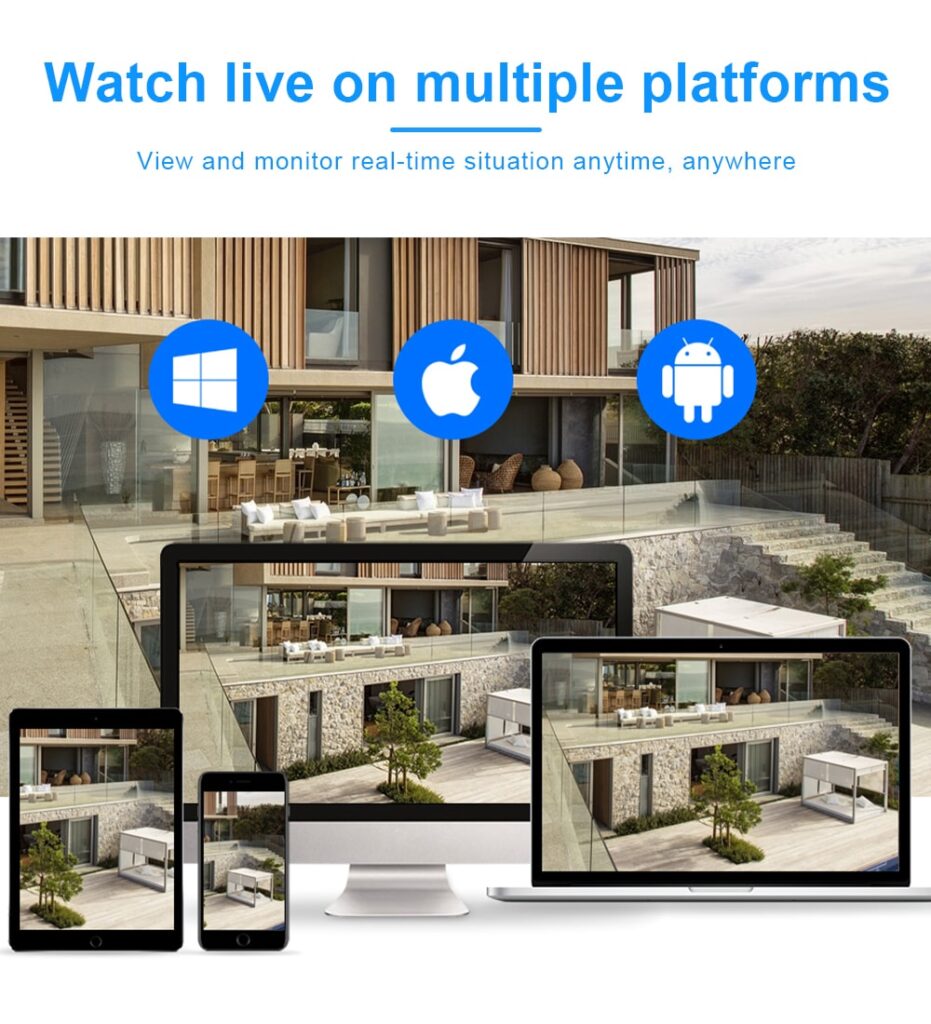
Mobile-enabled gate intercoms have become the standard for gated communities. A mobile-enabled system lets residents open the gate from their phone, manage approved visitors remotely, and reduce reliance on remotes or shared codes.
Key capabilities:
- Resident entry: Residents drive up and open the gate from their smartphone app. No remote, no code, no wait.
- Visitor calls: A guest arrives at the gate and uses the intercom to contact a resident. If the system includes video, the resident can see who is calling before granting access.
- Temporary passes: Residents can send a temporary pass for a planned visitor, or staff can issue one for a vendor or service provider.
The strongest gated apartment systems combine video calling, remote unlocks, and digital credentials such as QR codes into one streamlined access workflow.
Centralized Management: The Property Manager’s Dashboard
For property managers, the cloud platform is where the system proves its value. A good platform lets managers:
- Add or remove residents without a service call
- Suspend access immediately when a resident moves out
- Generate temporary guest codes or QR passes
- View event logs from a single dashboard
- Manage access across multiple communities in a portfolio
LiftMaster’s myQ Community platform, for example, allows property managers to control and manage multiple access points across all communities in their portfolio, with remote features such as adding/deleting residents and assigning access to specific entrances.
For larger communities, integration with property management software like RealPage, Yardi, or Entrata keeps resident lists in sync automatically, reducing manual data entry and errors.
Wiring and Infrastructure Considerations
Gated communities often have long cable runs between the gate and the main building. Consider these infrastructure factors:
2-wire vs. IP vs. wireless:
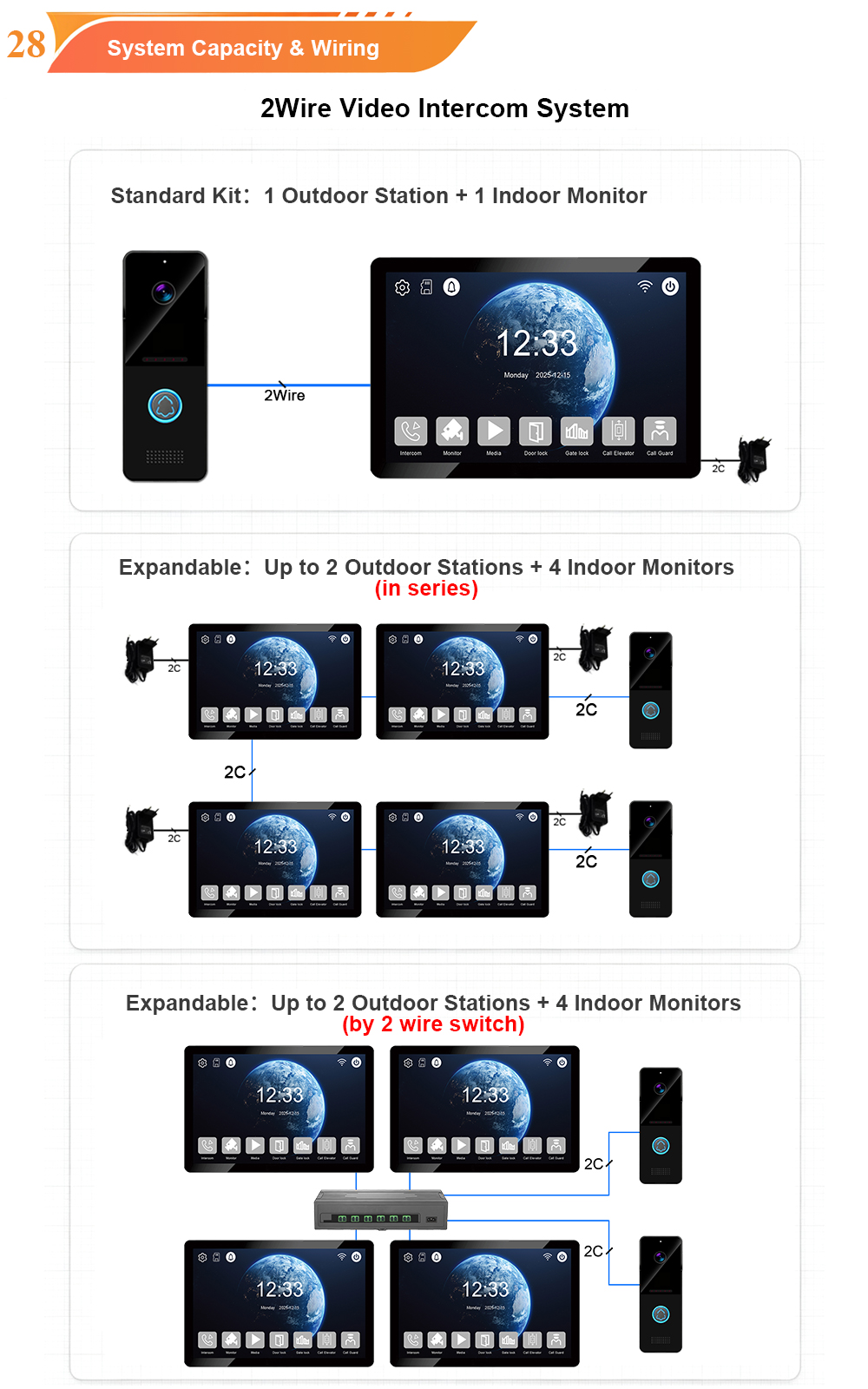
- 2-wire systems reuse existing cabling—ideal for retrofit projects. They support up to 100 meters and are non-polarity, making installation fast.
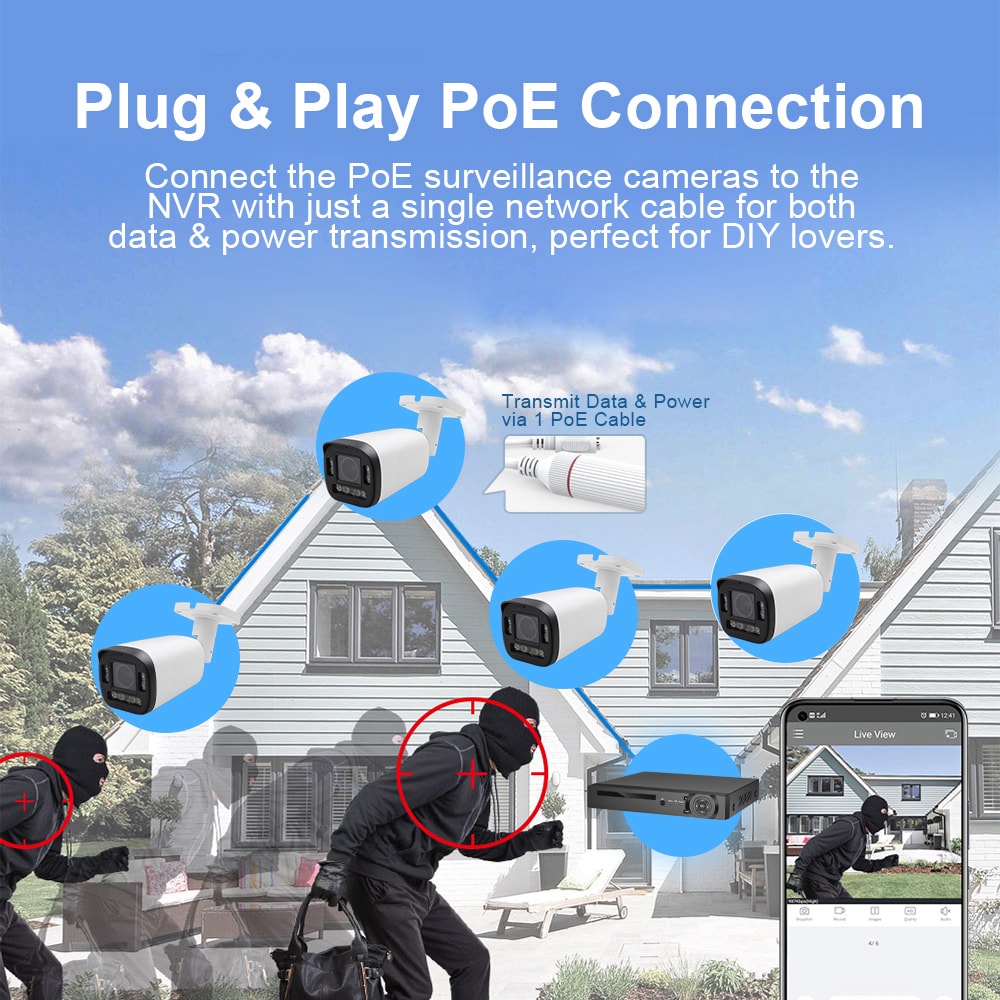
- IP systems use CAT5/6 with PoE, offering the highest bandwidth and integration potential. PoE simplifies installation by combining power and data in one cable.
- Wireless systems eliminate cabling entirely, using Wi-Fi or RF for communication. They are ideal for gates where trenching is expensive or impractical.
Power at the gate: If the gate has power, PoE or a local power supply can feed the intercom. If not, consider a wireless system with solar or battery backup.
Network connectivity: For IP systems, ensure network connectivity reaches the gate. A cellular or 4G LTE option can skip the network cable entirely for remote entrances.
How FARHD Supports Gated Community Projects
FARHD has been designing and manufacturing video intercom systems since 1998, with over 28 years of industry experience. Our systems are engineered for the demands of gated communities—from multi-entrance management to vehicle access control.
Key features for gated communities:
- Dual unlock relays – Independently control main gate and pedestrian gate
- RFID/IC card and Mobile NFC – Vehicle and pedestrian access credentials
- Face recognition – Up to 40,000 faces for hands-free resident entry
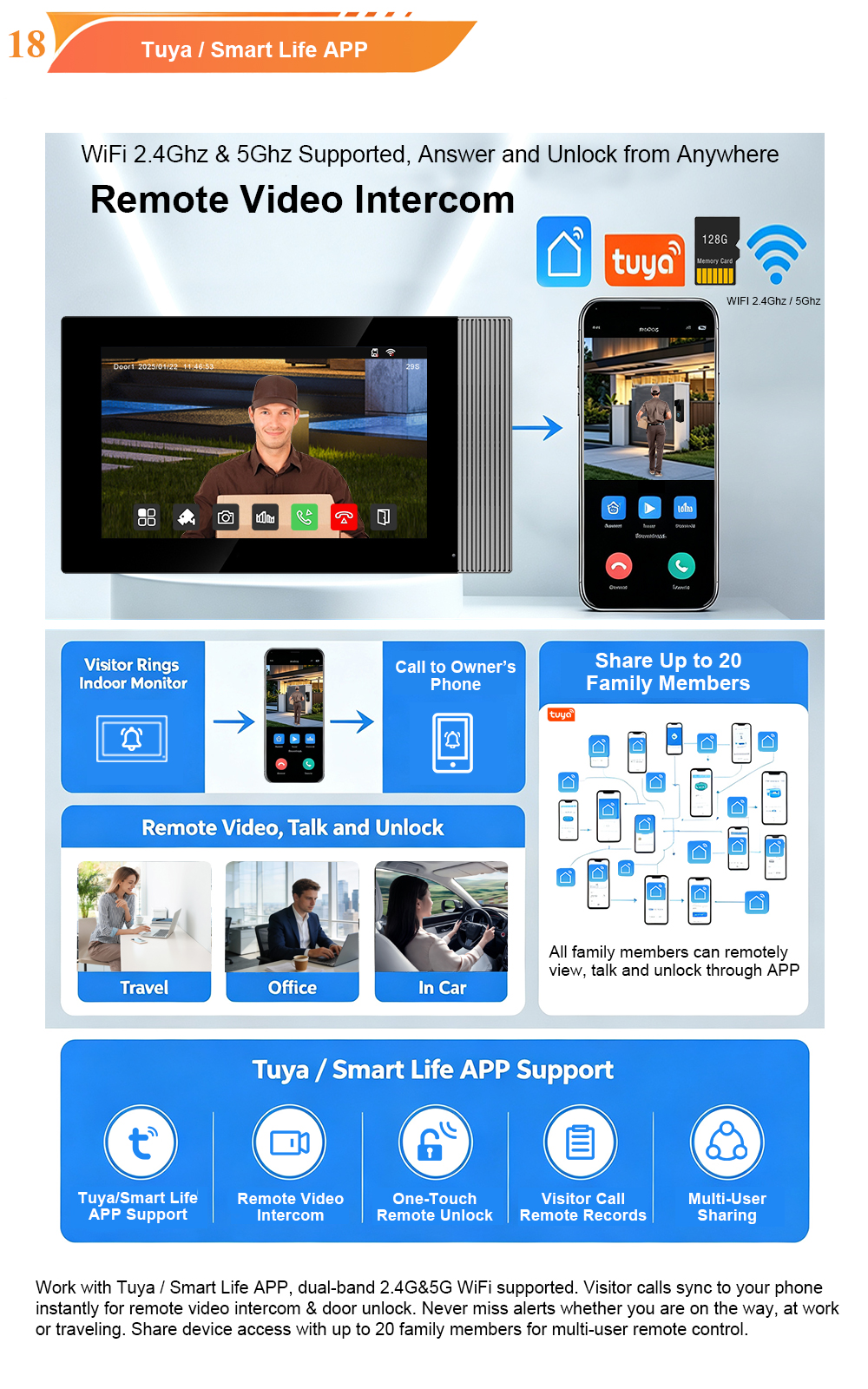
- Tuya Smart Life app – Remote unlock, live view, and visitor management
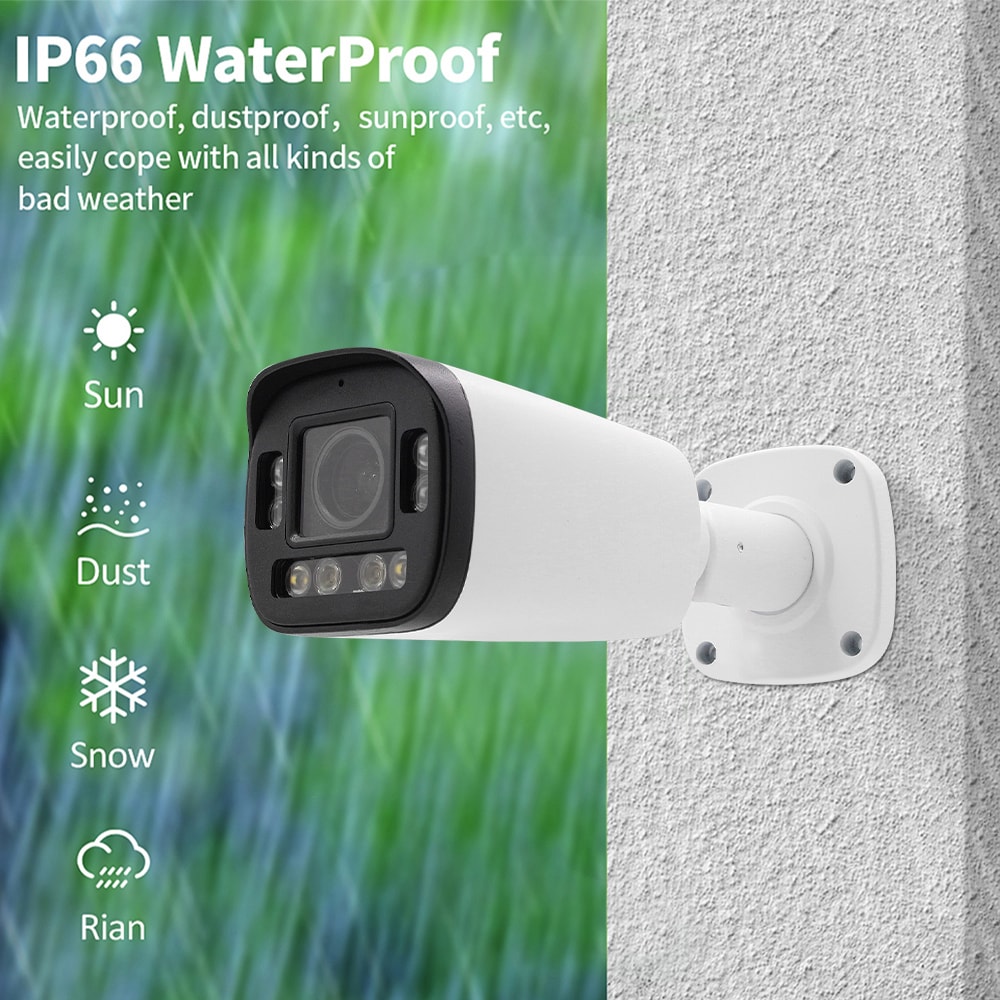
- IP65 weatherproof – -40°C to +70°C operating range for outdoor gates
- Multi-language support – Ready for international projects
- OEM/ODM/SKD – Custom branding, packaging, and software
- No MOQ for trial orders – Start with a sample; scale as you grow
Our six complete system solutions—IP, 2-wire, 4-wire, analog, audio, and wireless—cover every gated community project type and budget.
Frequently Asked Questions
Q: Can one intercom unit control multiple gates?
A: Yes. A system with multiple relay outputs can control a main gate, pedestrian gate, service entrance, and amenity door from a single unit. A four-relay or eight-relay system is recommended for communities with three or more entrances.
Q: Does the system support license plate recognition?
A: FARHD intercom systems can integrate with LPR cameras and vehicle management platforms. Contact us for specific integration requirements.
Q: Can residents open the gate from their phone?
A: Yes. With Tuya Smart Life app integration, residents can unlock gates remotely, receive visitor calls, and manage access from anywhere.
Q: How do visitors request access?
A: Visitors use the outdoor station to call a resident. The resident can see and speak with them, then unlock the gate remotely or issue a temporary code.
Q: What wiring is required for a gated community?
A: It depends on the system. 2-wire systems reuse existing cabling. IP systems require CAT5/6 with PoE. Wireless systems eliminate cabling entirely. FARHD can recommend the best option based on your infrastructure.
Conclusion: A Unified System for a Complex Environment
Gated communities demand more than a single door intercom. They need a system that manages multiple entrances, controls vehicle access, supports mobile credentials, and gives property managers a single platform for administration.
FARHD delivers all of this—with 28 years of manufacturing experience, a full range of system solutions, and flexible OEM/ODM services for global projects.

About the Author: S & Y Internet Technology Inc.
S & Y Internet Technology Inc. is a professional installation and repair service provider based in Flushing, New York. Our expert team provides door-to-door installation and maintenance within a 100 km radius, ensuring quick response and high-quality results for every project — whether residential, commercial, or specialized.

Install & Repair Services
You May Also Interest
-
RFID vs QR Code vs Mobile App: Comparing Access Methods for Residential Buildings
Choosing the right access method for your apartment building or gated community is a decision that affects security, convenience, cost, and resident satisfaction. RFID cards, QR codes, and mobile apps each have distinct strengths and weaknesses. This guide compares them side by side—so you can make an informed choice for your next project. In modern…
-
Tuya vs Smart Life: Which App Is Better for Your Video Door Phone?
A practical comparison to help you choose the right app for your smart intercom system If you’ve recently purchased a FARHD video door phone, you’ve probably noticed that the product documentation mentions two apps: Tuya Smart and Smart Life. This immediately raises a common question: which one should you actually use? Are they different? Does…
-
Touch Screen vs Non-Touch Video Intercom Monitors: Which Is Better for Residents?
When specifying a video intercom system for an apartment building, villa, or residential community, one question often divides decision-makers: should the indoor monitor have a touch screen or physical buttons? Both options have passionate advocates. Both have real advantages. And both can be the wrong choice if they don’t match the needs of the residents…
-
How to Upgrade an Old Apartment Intercom to IP Without Rewiring: Step-by-Step
Upgrading an old apartment intercom to a modern IP system no longer requires tearing down walls, replacing every cable, or disrupting residents for weeks. With the right retrofit technology, you can deliver full IP functionality—video calling, mobile access, remote management—using the existing 2-wire cabling already inside your building. This step-by-step guide shows you how. Many…